Source Flying Car Racing Track for amusement parks, malls, and resorts
Compare 30 Flying Car Racing Track units from Henan, China, featuring FRP and steel construction. Buyers can review specs like 220/380V voltage, 2.2m to 3m height, and capacities for 6 to 8 passengers across indoor and outdoor settings.
Updated
Key considerations
Products List
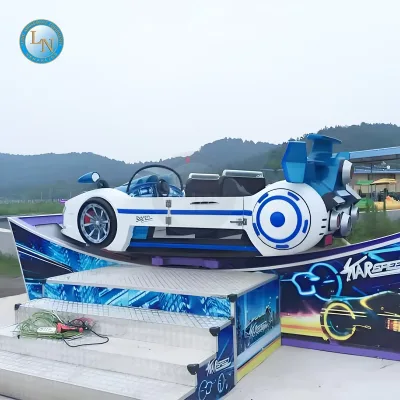
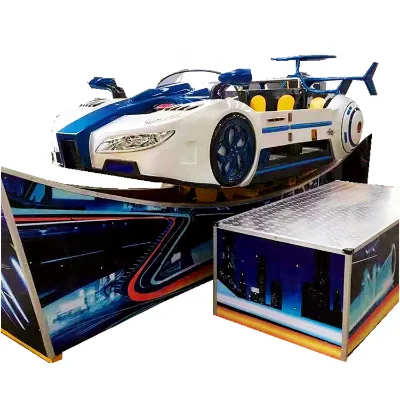
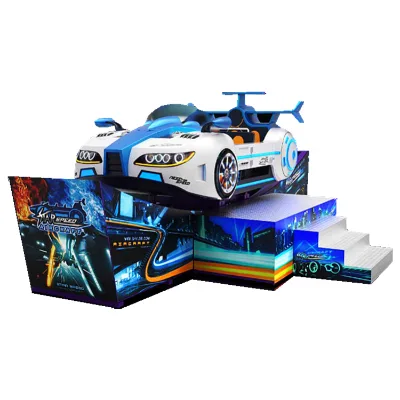
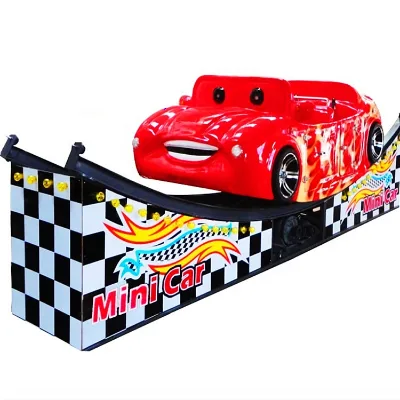


New Fashion Flying Racing Car Rides Kids and Adults Amusement Facility
$5000.00 - $8000.00
MOQ: 1 Pieces


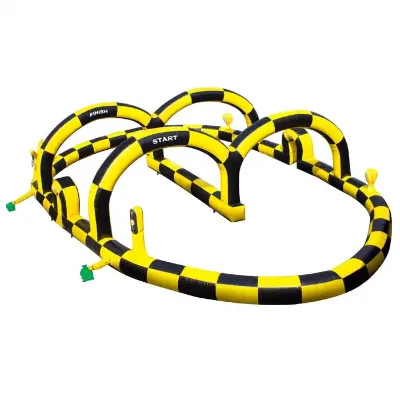


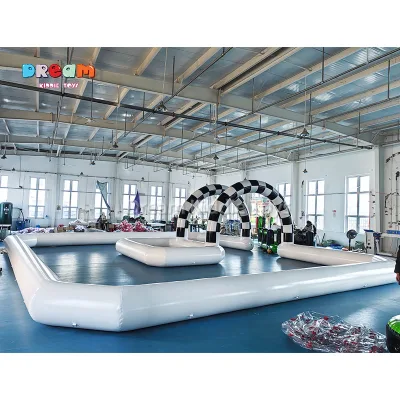
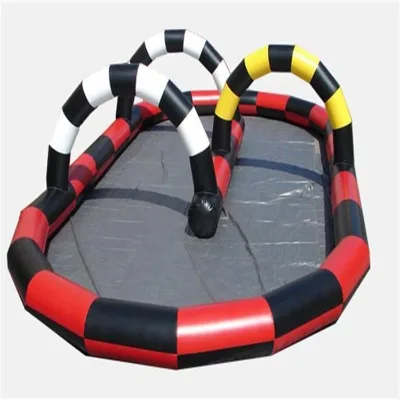
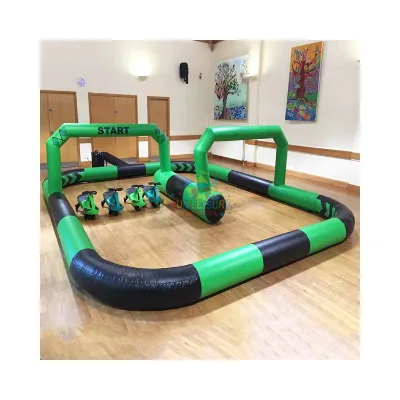
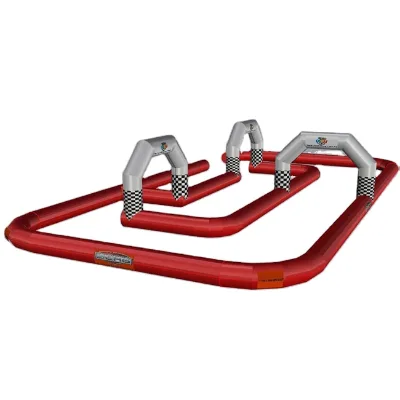
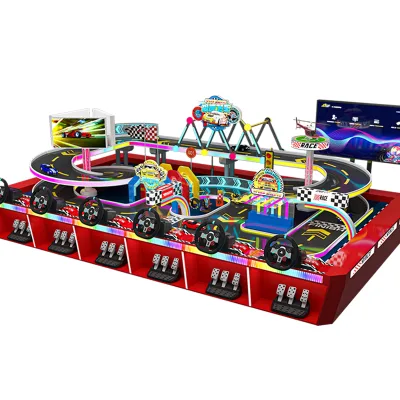


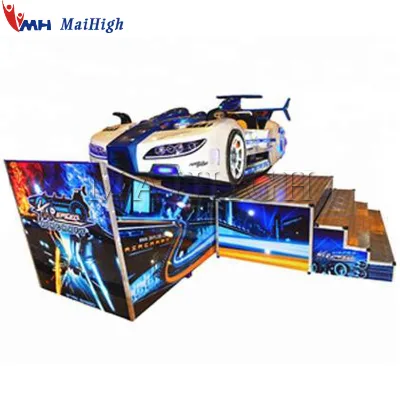
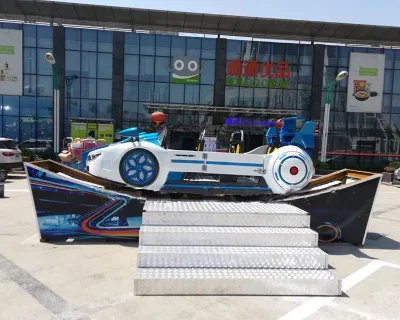
Comprehensive Sourcing Guide
Flying Car Racing Track Sourcing Guide
Procuring a Flying Car Racing Track requires careful evaluation of mechanical stability and electrical integration, particularly for indoor commercial amusement parks, trampoline parks, sports parks, kids cafes, shopping malls, and resort hotels. Buyers must distinguish between models designed for specific age groups, such as 3-6 years, 8-12 years, and adults, ensuring the ride capacity aligns with venue traffic. The observed market features units with capacities ranging from eight children to six adults, necessitating precise space planning.
Operational parameters vary significantly across listings, with speeds observed at 1.4 meters per second or rotational speeds of 6-8 revolutions per minute. Power consumption ranges from 2kw to 3.5kw, requiring adequate electrical infrastructure at the installation site. Voltage specifications typically include 220/380v or 380v at 50Hz, which must match local grid standards. Understanding these technical baselines prevents costly retrofitting and ensures seamless integration into existing facility power systems.
Product Scope and Observed Listing Signals
The product scope encompasses mini flying car games available in various configurations, including models like LN-FH05 and GR-MFC series. Materials observed include FRP, steel, fiberglass, and endurance boards, indicating diverse durability profiles. Sizes range from compact 6x2m footprints to larger 7x5m or 6m3m2.5m installations. Colors such as red, blue, green, and yellow are standard, with customization options available for specific branding needs.
Listing signals reveal that some units are non-inflatable and suitable for both indoor and outdoor use, while others are strictly outdoor. Warranty periods generally span one year, offering baseline protection against manufacturing defects. The selling unit is typically a single set, with an MOQ of one set, allowing for flexible initial procurement. Buyers should verify if the listed area dimensions include safety perimeters or just the ride footprint to avoid spatial conflicts.
Technical Specifications to Verify
Verify the structural integrity by confirming material composition, such as steel combined with FRP or fiberglass, which impacts longevity and maintenance costs. Check the height specifications, which range from 2.2m to 3m, ensuring clearance compliance with venue ceilings. Power ratings must be validated against the actual load, as discrepancies between listed 2kw and 3.5kw totals affect energy efficiency and circuit breaker sizing.
Confirm the operational speed and rotation metrics, such as 1.4m/s linear speed or 6-8 r/m rotational speed, to match the desired thrill level for target demographics. Inspect the model numbers like GR-MFC-301 or GR-MFC-201 to trace specific component origins. Ensure the version language, Chinese or English, matches the operational staff’s proficiency. Packing size, observed at 20cbm, influences logistics planning and freight cost calculations for international shipments.
Compliance and Safety Documentation
Safety certification is paramount, with CE certificates observed for several models, indicating adherence to European safety directives. Buyers must request valid test reports and ensure the certificate covers the specific model and voltage configuration. Verify that the manufacturer provides comprehensive safety manuals detailing emergency stop procedures and load limits for eight kids or six adults.
Documentation should include detailed assembly instructions and maintenance schedules to prolong the equipment’s lifespan. Check if the warranty covers both parts and labor for twelve months, clarifying exclusions for wear-and-tear items. Ensure that all electrical components meet local regulatory standards, as voltage mismatches can void warranties and create hazards. Request proof of material safety, particularly for fiberglass and steel treatments, to ensure environmental compliance.
Cost Drivers and Commercial Terms
Cost drivers include material quality, with steel and FRP combinations typically commanding higher prices than basic FRP units. Customization options, such as specific colors or branding, add to the base price. The observed price range of 100-11000 USD reflects significant variation in scale, power, and feature sets. Buyers should correlate price with capacity and power consumption to assess value.
Commercial terms often include a one-year warranty and an MOQ of one set, facilitating trial orders. Payment terms and shipping methods, influenced by the 20cbm packing size, impact total landed cost. Clarify if installation support is included or billed separately. Negotiate clear definitions of warranty coverage to avoid disputes over mechanical failures or electrical issues post-installation.
Supplier Qualification and Quality Control
Supplier qualification requires verifying the place of origin, typically Henan, China, and assessing their manufacturing capabilities. Request factory audits or video tours to confirm production quality control processes. Check for consistent branding, such as CHINA-LN or Great Rides, which may indicate established production lines. Evaluate their responsiveness to customization requests, as availability varies by model.
Quality control should include pre-shipment inspections focusing on structural welds, electrical connections, and surface finishes. Verify that the appearance is attractive and fashionable, as this impacts customer attraction. Ensure that the product type matches the description, such as indoor/outdoor suitability. Request sample photos or videos of the specific model to confirm color accuracy and build quality before finalizing the order.
Long-Term Procurement Checks
Long-term procurement checks involve monitoring warranty claims and spare parts availability. Establish a relationship with the supplier for ongoing support, especially for models with complex electrical systems. Track performance metrics like speed consistency and power consumption to identify potential degradation over time. Regular maintenance checks are essential to uphold safety standards and operational efficiency.
Consider the scalability of the procurement, as the MOQ of one set allows for phased expansion. Evaluate the supplier’s ability to provide updated models or versions as technology evolves. Maintain clear records of all certifications and documentation for regulatory audits. Plan for eventual replacement of worn components, ensuring compatibility with the original equipment manufacturer’s specifications to preserve warranty validity.
FAQs
What are the standard dimensions for a mini flying car track?
Standard models typically measure 6 by 2 meters or 6 by 3 by 2.5 meters. Specific variants like the LN-FH05 have a footprint of 6 by 2 meters, while the GR-MFC-301 requires a larger area of 6 by 3 by 2.5 meters. These dimensions ensure adequate space for safe operation and passenger boarding in commercial venues.
Can this ride operate both indoors and outdoors?
Yes, these amusement park rides are designed for both indoor and outdoor usage. The durable materials, such as FRP and steel, allow them to withstand various environmental conditions. This versatility makes them suitable for shopping malls, resorts, and outdoor parks, providing flexible deployment options for business owners seeking multi-purpose entertainment solutions.
What is the power consumption for these flying car games?
Power requirements vary by model, generally ranging from 2kw to 3.5kw. For instance, the LN-FH05 operates at 2kw, while the GR-MFC-301 requires 3.5kw. Most units support 220/380v voltage with a 50Hz frequency. Buyers should verify the specific power rating of the selected model to ensure proper electrical infrastructure installation at their venue.
Who is the target age group for this attraction?
The ride is suitable for children aged 3 to 12 years and adults over 18. It can accommodate eight children or six adults per session. The design ensures safety and enjoyment for a wide demographic, making it an ideal addition to family entertainment centers, kids cafes, and commercial amusement parks seeking broad appeal.
What certifications are available for these amusement rides?
Certain models, such as the GR-MFC-301 and GR-MFC-303, come with CE certificates. These certifications indicate compliance with relevant safety and quality standards for amusement equipment. Buyers should request specific documentation for each model to ensure regulatory compliance in their local market, as not all listed variants may carry the same certification status.
What is the minimum order quantity for these products?
The minimum order quantity is typically one set. This low MOQ allows buyers to test the market or start small without significant inventory commitment. Suppliers often offer customization options for single units, enabling businesses to tailor colors and branding to their specific venue requirements while maintaining manageable initial investment costs.