Source Folding Non-Skid Commode Chair for Elderly, Disabled, and Caregivers
Explore 30 verified options for a folding non-skid commode chair designed for elderly and disabled users. Buyers can compare specifications like adjustable height, aluminum or steel frames, and CE/ISO certifications to find the right multi-functional lavatory wheelchair for home or outdoor use.
Key considerations
Products List
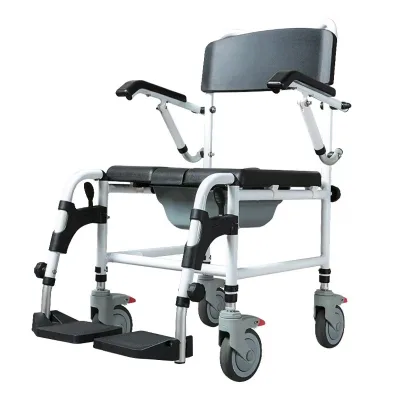


Adjustable Aluminum Lightweight Folding Commode Chair for Disabled People
$11.48 - $12.90
MOQ: 300 Pieces




Comprehensive Sourcing Guide
Strategic Sourcing Guide for Folding Non-Skid Commode Chairs
Understanding Product Classification and Core Specifications
When sourcing a folding non-skid commode chair, buyers must first distinguish between the broad category of mobility aids and the specific functional requirements of a commode unit. The product landscape includes items explicitly classified as "multi-function commode chairs" and "lavatory wheelchairs," which serve distinct but overlapping needs for disabled and elderly users. A critical observation in the current market is the variation in material composition; while some units are constructed primarily from aluminium to reduce weight, others utilize steel for enhanced durability. This distinction directly impacts the single gross weight, which can range from approximately 3 kg for lighter models to 14.0 kg for heavier, steel-based variants.
The physical dimensions of these units are not uniform and must be verified against the intended user's space and body requirements. Observed specifications indicate a standard width of 55 cm and a length of 86 cm. However, the height is a variable attribute, with specific models offering an adjustable range of 93 to 101 cm. This adjustability is crucial for ensuring proper ergonomic alignment for the user. Furthermore, the folding mechanism is a defining characteristic; units are described as "folding" and "tilted," suggesting a design that allows for compact storage and potential reclining or tilting functions. The single package size for shipping often measures around 62x56x38 cm, regardless of the assembled dimensions, which is a vital metric for logistics planning.
Wheel configuration also varies significantly between models. Some units feature small 4-inch wheels on both the front and rear, designed for indoor maneuverability and stability. In contrast, other models in the same category may be equipped with larger 24-inch wheels, which are typically associated with wheelchair classifications rather than standard commode chairs. Buyers must carefully verify the wheel size and type to ensure the product matches the intended usage environment, whether it is a confined bathroom or a broader indoor/outdoor setting. The presence of separate leg rests on both sides further differentiates high-functionality models from basic seating units.
Compliance, Certification, and Regulatory Standards
Navigating the regulatory landscape is a non-negotiable aspect of sourcing medical and assistive devices. The supplied data indicates that products in this category often carry certifications such as CE and ISO. Specifically, some listings reference CE and ISO standards, while others mention CE, ISO, and FDA. It is imperative for buyers to treat these certifications as observations of specific listed items rather than universal guarantees for all products in the category. The presence of "Class I" instrument classification suggests that these devices are generally considered low-risk, but this classification must be confirmed for each specific model number, such as the gd222 or SC-CW09(S).
Buyers should verify the specific standard numbers rather than relying on generic labels. While the text mentions "CE ISO" and "CE, FDA," it also references ISO13485 and ISO 13485:2016 in background notes. However, these background standards should not be asserted as facts for every product unless explicitly stated in the supplier's documentation. The distinction between a product that is "New" and one that is "Customized" or "Customized" (repeated in the data) also implies that compliance documentation may vary based on the level of customization requested.
When evaluating a supplier, the buyer must request the actual certificate documents to confirm the validity of the CE mark or FDA listing. The origin of the product plays a role in regulatory acceptance; products originating from Tianjin, China, or Foshan, Guangdong, may have different compliance pathways depending on the destination market. For instance, a product listed with "CE, ISO" standards may require additional testing for the US market if it claims FDA compliance. The "prod_standard" field often lists "CE ISO," but the buyer must ensure this aligns with the specific regulatory body requirements of their region. Do not assume that a "CE" mark automatically covers all European directives without verifying the specific directive number.
Cost Drivers and Pricing Dynamics
The pricing for folding non-skid commode chairs exhibits a wide variance, with observed listed prices ranging from $0.01 to $468 USD. This extreme range indicates that the market includes both basic, low-cost units and highly specialized, feature-rich models. The price is heavily influenced by the material composition, with steel models likely commanding a different price point than aluminium ones due to raw material costs and manufacturing complexity. Additionally, the inclusion of features such as adjustable heights, separate leg rests, and specific wheel sizes contributes to the final cost.
Minimum Order Quantity (MOQ) is another significant cost driver. The observed MOQ range spans from 1 set to 500 units. For buyers seeking a single unit for personal use or small-scale procurement, an MOQ of 1 set is advantageous. However, for commercial procurement or hospital supply chains, negotiating an MOQ closer to the lower end of the 500-unit range may yield better per-unit economics. The "Selling Units" are typically listed as "Single item," which simplifies the purchasing process for individual buyers but may complicate bulk ordering if the supplier requires multiple cartons.
Customization is a major factor in pricing. The data explicitly states that "Customization: Available" and "Customized: Customized" are attributes of certain products. Customizing a commode chair, such as altering the frame material, adjusting the dimensions, or adding specific accessories, will inevitably increase the unit cost and potentially the lead time. Buyers should be aware that the "Characteristics" such as "Fashion, Resistance to Heavy" or "Design Sense" may also be premium features that drive the price upward. When analyzing cost, it is essential to look beyond the base price and consider the total cost of ownership, including shipping, which is affected by the single gross weight and outer carton dimensions.
Typical Applications and Usage Environments
The intended application of a folding non-skid commode chair dictates the necessary features and durability requirements. The primary application is for the "Elderly" and "Disabled," with some models specifically targeting "Pregnant Women" as well. The versatility of these units is highlighted by their classification as "multi-functional commode chairs" and "Lavatory Wheelchairs." This dual functionality allows the user to transition from a seated position to a toilet without needing to stand, which is critical for users with limited mobility.
The usage environment is another critical consideration. Some products are designed for "Indoor" use, while others are rated for "Outdoor" use. This distinction affects the choice of materials and wheel types. For example, a unit with 4-inch wheels might be ideal for smooth indoor bathroom floors, whereas a model with larger wheels or specific non-skid features might be necessary for outdoor or uneven terrain. The "Using Site" is noted as "Back" in some contexts, which may refer to the placement of the commode hole or the backrest design.
Power supply is consistently listed as "Manual," indicating that these are passive devices without electric motors. This simplifies maintenance and reduces the risk of mechanical failure but requires the user or caregiver to physically move the chair. The "Backrest" type is often "Fixed," though some models may offer adjustable options. The "Leg Rest Type" being "Both Sides Separate" allows for easier transfer and cleaning, which is a significant advantage in healthcare settings. Buyers should match the product's ambient rating and application to the specific needs of the end-user to ensure safety and comfort.
Supplier Evaluation and Origin Verification
Evaluating suppliers for folding non-skid commode chairs requires a focus on transparency regarding product origin and manufacturing capabilities. The data identifies two primary locations of origin: Tianjin, China, and Foshan, Guangdong. These regions are known for their manufacturing capabilities in medical equipment and furniture. However, the presence of multiple model numbers, such as gd222, SC-CW09(S), SC-CW13(S), SC-CC12(A), SC-CC07(S), and WA-4806, suggests that a single supplier may offer a wide range of products, or that different suppliers specialize in different models.
Buyers should verify the "prod_model" and "prod_packing" details to ensure consistency. For instance, some models are packed as "1pccs/ Carton" while others are "1PCS/Carton." This consistency in packaging is vital for logistics and inventory management. The "Condition" is listed as "New," which is standard, but buyers should confirm that the products are not refurbished or used items. The "Characteristic" of being "Resistance to Heavy" implies a focus on durability, which should be verified through supplier documentation or third-party testing.
When assessing a supplier, do not rely solely on the presence of certifications like CE or ISO. Instead, request proof of these certifications and verify the scope of the certification. The "Customization" attribute suggests that the supplier has the flexibility to adapt products, which is a positive sign for meeting specific buyer requirements. However, buyers must ensure that the customization process does not compromise the product's safety or compliance status. The "Single gross weight" of 14.0 kg for some models provides a benchmark for evaluating the structural integrity of the supplier's offerings.
Quality Control and Long-Term Procurement Considerations
Implementing a robust quality control (QC) strategy is essential for sourcing folding non-skid commode chairs. Given the variation in materials (aluminium vs. steel) and dimensions, buyers should establish clear acceptance criteria before placing orders. The "Single package size" of 62x56x38 cm and the "outer carton dimension" of 625638cm must be consistent to prevent shipping damage. Inspections should focus on the folding mechanism, the stability of the wheels, and the integrity of the non-skid surfaces.
Long-term procurement considerations include the availability of spare parts and the durability of the product. The "Leg Rest Type" and "Backrest" design should be evaluated for ease of maintenance. If the product is intended for high-volume use in a healthcare facility, the "Resistance to Heavy" characteristic becomes a critical metric. Buyers should also consider the "Lead time," which, while not explicitly provided in the data, is often influenced by the "Customization" status and the "MOQ."
To mitigate risks, buyers should request samples that match the exact specifications of the intended order. This allows for a hands-on evaluation of the "Height" range, "Wheel Size," and overall build quality. The "prod_standard" should be strictly adhered to, and any deviation should be flagged immediately. Finally, maintaining a relationship with suppliers who offer "Customization" can provide a competitive advantage, allowing the buyer to tailor products to specific market needs without compromising on quality or compliance. By focusing on these technical and operational details, buyers can ensure a successful and sustainable procurement process for folding non-skid commode chairs.
FAQs
What certifications do folding non-skid commode chairs typically have?
Many listed models carry CE and ISO certifications, with some also including FDA approval. Buyers must verify these specific marks on individual product pages as not every unit includes all listed standards. Always request the actual certificate documents to confirm validity for your target region before purchasing.
Which material options are available for these commode chairs?
Products are constructed from either aluminium or steel to balance weight and durability. Aluminium models often weigh around 3 kg, while steel variants can reach 14 kg. Select the material based on whether you prioritize portability or heavy-duty resistance for your specific application needs.
How adjustable is the height of a folding commode chair?
Specific models offer an adjustable height range between 93 and 101 cm to fit different users. This feature ensures proper ergonomic alignment for elderly or disabled individuals. Verify the exact range for each model number, as some units may have fixed dimensions instead of adjustable ones.
Can I find suppliers with a minimum order quantity of one set?
Yes, several listings indicate a minimum order quantity of just one set for immediate procurement. This option is ideal for small-scale buyers or personal use. However, commercial buyers should check if bulk orders reduce the per-unit cost, as MOQs can range up to 500 units.
Where are these folding commode chairs manufactured?
High-confidence data shows origins in Tianjin, China, and Foshan, Guangdong. These regions are known for medical equipment manufacturing. Buyers should confirm the specific place of origin for each supplier to ensure compliance with local import regulations and to verify the manufacturing location matches their expectations.
What wheel sizes are commonly used on these chairs?
Wheel configurations vary, with some models featuring 4-inch wheels for indoor stability and others using 24-inch wheels. The 4-inch wheels are typical for commode units, while larger wheels suggest a wheelchair classification. Check the specific product specifications to ensure the wheel size matches your intended usage environment.
Is customization available for these commode chairs?
Customization is available for certain models, allowing for tailored dimensions or features. This service may affect the unit price and lead time compared to standard new items. Buyers should confirm the scope of customization and any associated costs before finalizing an order with a specific supplier.