Source Front Bumper Deer Guard for Trucks, Off-Road, and Repairs
Find and compare 30 Front Bumper Deer Guard options for truck protection, off-road durability, and repair replacements. These steel bumpers feature powder coating, custom OEM services, and various thicknesses to suit different vehicle applications.
Key considerations
Products List


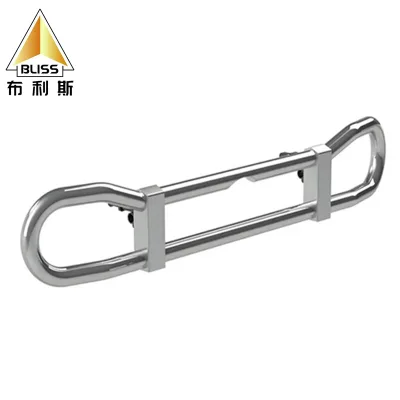


Deer Guard Truck Bumper Heavy Duty - Bull Bar Front Protection for Large Trucks
$205.00 - $425.00
MOQ: 1 Pieces

Deer Guard Buckstop Bumper - Front Protection Bar for Semi Truck and Commercial Vehicle
$205.00 - $425.00
MOQ: 1 Pieces


Steel Deer Guard Push Bumper - Front Protection Guard for Work Truck and Utility Vehicle
$205.00 - $425.00
MOQ: 1 Pieces

Custom Deer Guard Bumper - OEM Replacement Front Protection for International Trucks
$205.00 - $425.00
MOQ: 1 Pieces


Deer Guard Deer Guard Chrome with Bracket Grill Guard Semi Truck Bumper
$385.00 - $425.00
MOQ: 20 Pieces


Comprehensive Sourcing Guide
Front Bumper Deer Guard Sourcing Guide
Sourcing front bumper deer guards requires a careful balance between rugged durability and precise vehicle integration. These protective accessories are primarily designed for trucks, serving as a critical barrier against wildlife collisions, road debris, and minor impacts. Buyers must recognize that while the core function remains consistent—protecting the truck’s front end—the specific engineering, material composition, and aesthetic finish vary significantly across suppliers. The market offers a diverse range of options, from heavy-duty high-tensile steel constructions to lighter, powder-coated alternatives, each catering to different operational needs and budget constraints.
The procurement process is further complicated by the irregular nature of these products. Unlike standardized automotive parts, deer guards often come in non-uniform sizes and shapes to fit specific truck models. This variability necessitates rigorous verification of dimensions and mounting configurations before placing orders. Buyers should approach sourcing with a clear understanding that customization is not just an option but often a necessity, requiring close collaboration with manufacturers to ensure the final product meets both functional safety standards and visual expectations for the end-user.
Product Scope and Observed Listing Signals
The current market landscape for front bumper deer guards reveals a wide spectrum of product attributes, indicating a highly segmented supply chain. Observed listings show a price range between $100 and $580 USD, reflecting differences in material thickness, coating quality, and brand positioning. The minimum order quantity (MOQ) typically ranges from 1 to 30 units, suggesting that suppliers are flexible enough to accommodate both small-scale retailers and larger fleet operators. This flexibility is crucial for buyers who need to test market demand or replace specific units without committing to massive inventory holdings.
Product conditions are consistently listed as new, with a strong emphasis on high-quality finishes such as powder coating and polishing. Colors predominantly feature black and silver options, aligning with common aesthetic preferences for truck accessories. The application is strictly defined for trucks, with specific mentions of truck bump guards and bumper protectors. Buyers should note that while the general category is uniform, the specific models, such as HD-DG019 or KG-008, indicate distinct design iterations. This variety allows buyers to select guards based on specific vehicle compatibility, whether for heavy-duty off-road use or standard highway driving.
Technical Specifications to Verify
Material selection is the most critical technical factor when evaluating deer guards. Suppliers offer options ranging from standard steel to 8-gauge high-tensile steel, with some products incorporating PVC layers for added protection. The thickness of the steel is a key differentiator, with observed specifications ranging from 2.0 to 3.0mm. Buyers must verify the exact gauge and type of steel, as higher tensile strength provides better resistance against impact without adding excessive weight. For instance, some listings specify Q235A steel combined with a 3mm PVC layer, offering a hybrid solution that balances durability with corrosion resistance.
Dimensional accuracy and weight are equally important for installation and performance. Sizes can be irregular, with some guards measuring 94 inches in width and 40 inches in height, while others have standardized dimensions like 21001100250mm. The weight of the product varies significantly, from 45kg to 88kg, depending on the material density and design complexity. Buyers should confirm the volume, which is often listed around 0.3 cubic meters, to calculate shipping costs accurately. Additionally, the surface finish, whether powder-coated or polished, must be verified to ensure it meets the desired aesthetic and protective standards against rust and wear.
Compliance and Safety Documentation
While specific certification standards are not universally listed, buyers must ensure that the deer guards comply with local vehicle safety regulations. In many regions, front bumper accessories must not obstruct headlights, turn signals, or license plates. Buyers should request documentation that confirms the guard’s design does not interfere with the vehicle’s primary safety systems. This includes verifying that the mounting points do not compromise the structural integrity of the truck’s frame or affect crash safety ratings.
Customization standards also play a role in compliance. Many suppliers offer OEM/ODM services, allowing for tailored designs that meet specific regional requirements. Buyers should verify that the customized products adhere to the relevant industrial standards for automotive accessories. This includes checking for any required testing reports that demonstrate the guard’s ability to withstand impact without shattering or causing hazardous debris. Ensuring that the product is 100% tested before shipment is a vital step in mitigating liability and ensuring customer satisfaction.
Cost Drivers and Commercial Terms
Several factors influence the final cost of front bumper deer guards, with material quality and surface treatment being primary drivers. High-tensile steel and multi-layer constructions with PVC coatings tend to be more expensive due to the higher raw material costs and complex manufacturing processes. The thickness of the steel, ranging from 2.0 to 3.0mm, also directly impacts the price, as thicker materials require more resources and energy to produce. Buyers should evaluate the cost per unit against the expected lifespan and durability of the product to determine the true value proposition.
Shipping and lead times are significant components of the total cost of ownership. The observed lead time of 30-35 working days indicates a production cycle that requires careful inventory planning. Shipping is typically conducted by sea, which is cost-effective for bulk orders but adds to the overall delivery timeline. Buyers should factor in these logistics costs when calculating the final price. Additionally, the packaging method, whether pearl cotton with kraft paper or simple plastic bags, can affect shipping efficiency and product protection during transit, potentially influencing insurance and damage claims.
Supplier Qualification and Quality Control
Evaluating supplier capabilities is essential for ensuring consistent product quality. Buyers should prioritize suppliers that offer one-stop sale services and OEM/ODM customization, as these providers are often more equipped to handle complex orders and specific design requirements. The origin of the products, primarily from China, including regions like Zhejiang and Ningbo, suggests a mature manufacturing ecosystem with access to skilled labor and advanced production facilities. However, buyers must verify the supplier’s ability to maintain consistent quality across different production batches.
Quality control measures should be explicitly defined in the procurement agreement. Suppliers claiming high-quality standards should provide evidence of their testing processes, such as 100% testing before shipment. Buyers should request samples to inspect the surface finish, weld quality, and overall build integrity. The use of protective packaging, such as waterproof films and pearl cotton, indicates a supplier’s attention to detail in preventing damage during transit. Establishing clear quality benchmarks and inspection protocols helps mitigate the risk of receiving substandard products that could lead to customer complaints or returns.
Long-Term Procurement Checks
Building a sustainable supply chain for front bumper deer guards requires ongoing monitoring of supplier performance and market trends. Buyers should regularly review supplier lead times and shipping reliability to ensure that inventory levels are maintained without disruption. The ability of suppliers to adapt to changing customer preferences, such as new color options or design styles, is also a key indicator of their long-term viability. Suppliers that offer customized logos and styles are better positioned to support brand-specific marketing strategies.
Continuous improvement in product quality and cost efficiency should be a priority for buyers. Engaging in regular communication with suppliers to discuss potential improvements in materials or manufacturing processes can lead to better products and lower costs over time. Buyers should also stay informed about changes in vehicle designs and safety regulations that may impact the demand for specific deer guard models. By maintaining a proactive approach to supplier management and market analysis, buyers can ensure a steady supply of high-quality front bumper deer guards that meet the evolving needs of their customers.
FAQs
What customization options are available for front bumper deer guards?
Customization is available for these truck bumpers through OEM and ODM one-stop services. Buyers can request specific logos, dimensions, and surface finishes like powder coating or polishing to match their requirements.
How long is the lead time for ordering these steel bumpers?
The standard lead time for production is 30 to 35 working days. This duration applies to the manufacturing process before the goods are ready for shipping by sea from the origin location.
Which materials are used to construct these truck bumper protectors?
These guards are constructed from high-tensile steel, specifically 8 gauge steel or Q235A steel. Some models also incorporate a 3mm PVC layer to enhance durability and protection for the vehicle.
Can I get a Front Bumper Deer Guard with a specific color?
Yes, these products are available in black and silver colors. The surface finish is typically achieved through powder coating or polishing to ensure a high-quality appearance and resistance to wear.
What is the minimum order quantity for these truck bumpers?
The minimum order quantity ranges from 1 to 30 units depending on the specific model and supplier. This flexible MOQ allows buyers to test the market or fulfill small repair needs easily.
How are these steel bumpers packed for shipping?
Packaging varies by model but often includes pearl cotton, kraft paper, and waterproof film. Other options involve plastic bags or cartons with PP bags to ensure the items arrive without damage.
What is the weight of a typical Front Bumper Deer Guard?
The weight of these guards varies by model, with observed weights ranging from 45kg to 88kg. The specific weight depends on the steel thickness, which is typically between 2.0mm and 3.0mm.