Source Gold Foil Self-Adhesive Vinyl Stickers for Branding, Shipping, and Packaging
Explore 30 listings for gold foil self-adhesive vinyl stickers tailored for branding, shipping labels, and packaging applications. Buyers can compare customization options, printing types, and material specifications to find the right supplier for their needs.
Key considerations
Products List


Comprehensive Sourcing Guide
Strategic Sourcing Guide for Gold Foil Self-Adhesive Vinyl Stickers
Understanding Material Composition and Technical Specifications
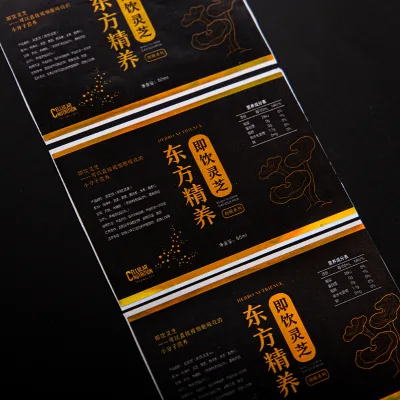
When sourcing gold foil self-adhesive vinyl stickers, the primary technical differentiator lies in the substrate material and the surface finishing process. Based on observed market data, the core material for these products is vinyl, which offers superior durability and water resistance compared to paper alternatives. Vinyl substrates are essential for applications requiring longevity in varying environmental conditions, such as outdoor labeling or exposure to moisture. The gold foil element is typically applied as a surface finishing process, often categorized alongside embossing, debossing, UV coating, and laser printing. This finishing technique provides a metallic aesthetic that is distinct from standard digital or offset printing.
The physical dimensions of these stickers are highly variable. While some standard listings indicate specific dimensions like 5x7.5 cm, the prevailing market trend for custom orders is the acceptance of custom sizes and shapes. Buyers should verify that the supplier supports die-cutting capabilities to achieve specific shapes, including rectangles, circles, ovals, and complex custom contours. The adhesive backing is a critical component; observed product attributes confirm that these items are self-adhesive, designed for immediate application on packaging, bottles, and other surfaces. The printing technology employed often includes digital printing for short runs and offset printing for larger volumes, with color profiles typically supporting CMYK, PMS, and spot colors to ensure the gold foil matches the intended brand identity accurately.
Compliance, Certification, and Standard Verification
In the realm of B2B procurement, verifying compliance and standards is a critical step that often involves distinguishing between observed product attributes and external certifications. The supplied product data indicates that the production standards are often defined by the customization requirements themselves, such as "Custom Size" or specific model numbers like RDY-L06 and RDY0125-5. However, buyers must be cautious regarding broader industry certifications. While background information mentions standards such as ISO 9001:2000, ISO 14001:2004, and EN13432, these should not be assumed to apply to every listed product without explicit verification from the supplier.
For gold foil vinyl stickers, particularly those intended for food, medicine, or beverage packaging, the verification of material safety is paramount. The product usage data lists applications ranging from "Custom Sticker" to "Medicine," "Food," and "Bottled Beverage." This implies that the vinyl and adhesive materials must meet specific safety standards for indirect food contact or pharmaceutical labeling. Buyers should explicitly request documentation confirming that the vinyl substrate and the adhesive used are compliant with relevant regional regulations, such as FDA regulations for food contact in the United States or EU regulations for materials intended to come into contact with food. The absence of a specific certification claim in the product listing does not negate the need for verification; rather, it necessitates a direct inquiry into the supplier's quality management systems and material safety data sheets (MSDS).
Cost Drivers and Pricing Dynamics
The pricing structure for gold foil self-adhesive vinyl stickers is influenced by several distinct variables, primarily driven by the complexity of the finishing process and the order volume. The observed price range in the market is relatively low, spanning from 0 to 2.9 USD per unit, but this figure is highly dependent on the specific configuration of the order. The inclusion of gold foil is a significant cost driver, as it requires additional processing steps such as hot stamping or foil lamination, which are more expensive than standard digital printing.
Order volume is another critical factor. The observed Minimum Order Quantity (MOQ) ranges widely from 1 to 5000 units, with specific listings indicating an MOQ of 1000 pieces for certain custom configurations. This variance suggests that suppliers may offer different pricing tiers based on whether the order is a small, custom run or a large-scale production batch. Buyers should anticipate that the unit cost will decrease as the order quantity increases, but the initial setup costs for custom die-cuts and foil application may remain constant regardless of volume. Additionally, the customization of the design, including the provision of free design services or the requirement for specific artwork formats like PDF, AI, EPS, or high-resolution JPG, can impact the overall project cost. The production time, typically cited as 5-7 work days after artwork and payment confirmation, also plays a role in cost, as expedited services may incur premiums.
Typical Applications and Usage Scenarios
Gold foil self-adhesive vinyl stickers serve a diverse range of applications, extending beyond simple labeling to include branding, authentication, and functional identification. The observed usage data highlights a broad spectrum of industries, including packaging, shipping, medicine, food, and bottled beverages. In the packaging sector, these stickers are frequently used for price tags, product identification, and decorative elements that enhance brand perception. The waterproof attribute of vinyl stickers makes them particularly suitable for products that may be exposed to moisture, such as bottled beverages or items stored in refrigerated environments.
For the pharmaceutical and food industries, the application of gold foil stickers often serves a dual purpose: aesthetic enhancement and security. The metallic finish can be used to create a premium look for high-value products, while the die-cut shapes and custom logos can act as tamper-evident seals or authenticity markers. The versatility of the product allows for use as custom stickers on various surfaces, including cardboard boxes, plastic containers, and glass bottles. The ability to accept custom logos and designs further expands their utility in marketing campaigns, where limited-edition packaging or promotional items require a distinctive visual identity. The specific model numbers and production standards observed suggest that suppliers are equipped to handle these varied applications, provided the buyer clearly communicates the end-use requirements to ensure material compatibility.
Supplier Evaluation and Geographic Considerations
When evaluating potential suppliers for gold foil self-adhesive vinyl stickers, geographic origin and production capabilities are key indicators of reliability. The supplied data consistently identifies the place of origin as China, with specific regions mentioned including Hui Zhou, Guangdong, and Fujian. These regions are known for their robust manufacturing ecosystems, particularly in the printing and packaging industry. However, the presence of multiple locations suggests a fragmented supply chain, and buyers should verify the specific factory capabilities rather than relying solely on regional generalizations.
Supplier evaluation should focus on the ability to handle customization and the quality of their finishing processes. The observed product attributes indicate that suppliers accept custom orders, offer free stock samples, and provide free design services. These are positive indicators of a supplier's flexibility and customer service orientation. Buyers should also assess the supplier's production capacity and lead times, noting that standard production times are around 5-7 work days. It is crucial to verify the supplier's ability to maintain consistency in the gold foil application, as this is a process-sensitive step that can vary significantly between batches. Additionally, the packaging method, described as shrink film, carton, or rolls/sheets, should be evaluated to ensure it protects the stickers during transit, especially given the delicate nature of foil finishes.
Quality Control and Long-Term Procurement Strategies
Ensuring consistent quality in gold foil vinyl stickers requires a robust quality control (QC) framework that addresses both the substrate and the finishing layers. The observed product attributes mention surface finishing techniques such as UV varnishing, matte lamination, and gloss varnishing, which are integral to the final appearance and durability of the sticker. Buyers should implement a QC protocol that includes visual inspection for foil adhesion, color consistency, and die-cut precision. The requirement for high-resolution artwork formats (PDF, AI, EPS) underscores the importance of digital proofing before production begins to prevent costly errors.
For long-term procurement, establishing a clear communication channel regarding material specifications and testing requirements is essential. While specific test results are not provided in the general product data, buyers should request batch-specific test reports for adhesion strength, water resistance, and fade resistance, particularly for applications involving outdoor exposure or food contact. The availability of free stock samples allows buyers to physically test the product before committing to large orders, a practice that should be leveraged to validate the supplier's claims regarding waterproofing and durability. Furthermore, maintaining a relationship with a supplier who offers continuous customization and design support can streamline future procurement cycles, ensuring that the branding remains consistent and that the supply chain remains agile in response to market changes. By focusing on these technical and operational aspects, buyers can secure a reliable supply of high-quality gold foil self-adhesive vinyl stickers that meet their specific business needs.
FAQs
What printing types are available for these stickers?
Digital and offset printing are available for these stickers. Buyers can choose between these methods based on order volume, with digital printing suitable for short runs and offset printing preferred for larger batches.
Can I order custom sizes and shapes for these labels?
Yes, custom sizes and shapes are accepted for these labels. Suppliers support die-cutting for various forms including rectangles, circles, ovals, and complex contours to meet specific branding or packaging needs.
What is the typical production time for custom orders?
The typical production time is 5 to 7 work days after artwork and payment are confirmed. This timeline applies to standard custom configurations and assumes all necessary design files are provided in the required formats.
Which materials are used to make these adhesive stickers?
These stickers are made from paper, vinyl, and metal materials. Vinyl offers superior durability and water resistance, making it ideal for outdoor or moisture-exposed applications like beverage bottles.
How much is the minimum order quantity for these products?
The minimum order quantity ranges from 1 to 5000 units depending on the specific product configuration. Some custom listings require a minimum of 1000 pieces, while others may accept smaller trial orders.
What surface finishing options are available for these stickers?
Surface finishing options include UV varnishing, matte lamination, and gloss varnishing. Additional effects like embossing, debossing, gold stamping, and laser printing can also be applied to enhance the visual appeal.
Are free samples available for testing these stickers?
Free stock samples are available for testing these stickers. Buyers can request these samples to verify quality, adhesion, and waterproofing before committing to a larger production order.
Where are these gold foil stickers manufactured?
These stickers are manufactured in China, specifically in regions like Hui Zhou, Guangdong, and Fujian. Buyers should verify the specific factory location to ensure alignment with logistics and quality expectations.