Source Kawaii Animal Resin Figurines for Gifts, Decor, and Collections
Compare 30 listings of Kawaii Animal Resin Figurines suitable for home decoration, business gifts, and art collections. Buyers can review customization options, materials like resin and plastic, and packaging details from Chinese manufacturers.
Key considerations
Products List







Comprehensive Sourcing Guide
Strategic Sourcing Guide for Kawaii Animal Resin Figurines
The global market for decorative resin figurines, particularly those featuring kawaii animal designs, has expanded significantly as a segment within the home decor and corporate gifting industries. For B2B buyers, sourcing these items requires a nuanced understanding of the intersection between artistic customization, material safety, and supply chain logistics. The following guide synthesizes observed market data and technical specifications to provide a disciplined framework for procurement professionals evaluating suppliers in this category.
Technical Specifications and Material Composition
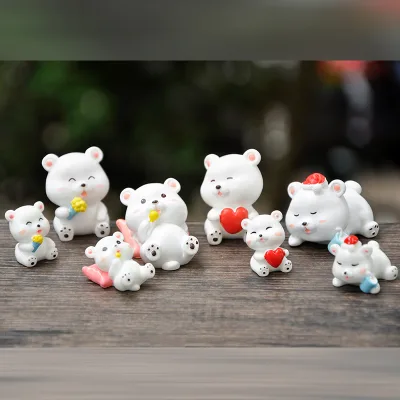
The foundation of any successful procurement strategy for resin figurines lies in a precise definition of technical specifications. Based on current market observations, the primary material utilized for these products is resin, often supplemented by plastic components for specific toy-grade applications. The production process is predominantly hand-made, a critical factor that influences both the aesthetic quality and the unit cost. Hand-crafting allows for the intricate detailing required for "kawaii" (cute) animal motifs, such as the small elephant shapes observed in recent listings, but it also introduces variability that must be managed through strict quality control protocols.
Dimensions and physical attributes vary widely depending on the intended application. Observed standard sizes range from compact 10 cm L units to larger decorative pieces measuring 25 cm in height. Packaging standards are equally diverse, with common configurations including PP bags combined with polyfoam boxes, inner boxes, and export cartons. For smaller items, single package sizes as small as 3x5x5 cm are noted, with corresponding gross weights around 0.019 kg. Buyers must verify that the supplier's stated dimensions align with their logistics requirements, as the "25x23x44cm" standard packaging differs significantly from the "8x13cm" specifications found in other product lines. Furthermore, the surface treatment is typically painted, and the style is often categorized as "Natural" or "Animal," though "Cartoon Toy" styles are also prevalent for younger demographics.
Compliance, Certification, and Safety Standards
Safety and regulatory compliance are non-negotiable for resin products, especially those intended for children or home environments. The observed market data indicates that suppliers often cite certifications such as SGS, CE, Sct, and ENASTM. These certifications are essential for verifying that the materials used are eco-friendly and meet international safety standards. For products targeting the 3-8 years age group, compliance with toy safety standards is particularly critical. Buyers should not assume that a supplier's claim of "Eco-Friendly" status is universal across all SKUs; instead, verification of specific test reports for the exact model number, such as ANI242, is required.
The certification landscape also includes standards related to the production process and material safety. While "ENASTM" is listed as a certification in the data, buyers must confirm the specific version of the standard (e.g., ASTM F963 for toy safety) applicable to their target market. Additionally, the "SGS" and "CE" marks suggest adherence to European and international safety protocols, but these must be validated against the specific batch of goods. For business gifts and holiday items, the "Eco-Friendly" attribute is a significant selling point, but it requires documented proof of non-toxic resin formulations and safe painting processes.
Cost Drivers and Pricing Dynamics
Understanding the cost structure of Kawaii Animal Resin Figurines is vital for accurate budgeting. The observed price range in the market is exceptionally broad, spanning from $0.06 to $12,500. This variance is driven by several factors, including the complexity of the hand-made process, the volume of the order, and the level of customization. The low end of the spectrum likely represents mass-produced, standard-sized items with minimal customization, while the high end reflects large-scale custom orders, intricate hand-painted details, or bulk procurement of premium materials.
Production time and lead times are significant cost drivers. Observed production times range from 30 to 45 days, with sample times varying between 10 and 15 days. These timelines directly impact the total landed cost, as extended lead times may require higher inventory carrying costs or expedited shipping fees. The Minimum Order Quantity (MOQ) also plays a crucial role in unit pricing. Data indicates MOQs ranging from 1 piece to 5,000 pieces, with specific thresholds observed at 500, 864, and 1,000 pieces. Buyers must balance the desire for lower unit costs against the capital tied up in inventory. A higher MOQ often results in a lower per-unit price, but it increases the financial risk if the product does not sell as expected.
Typical Applications and Market Segmentation
The versatility of resin figurines allows them to serve multiple market segments, each with distinct requirements. The primary applications identified include home decoration, business gifts, holiday gifts, and art & collection. For home decoration, the "Natural" style and "Small Elephant" shapes are particularly popular, appealing to consumers seeking subtle, nature-inspired accents. In the corporate sector, these items serve as business gifts, where the ability to accept custom logos and branding is a key differentiator. The "Logo Acceptable" attribute suggests that suppliers can imprint company branding, which is essential for corporate procurement.
The "Art & Collection" segment targets enthusiasts who value the hand-made nature and unique designs of the figurines. These buyers are often less price-sensitive and more focused on the aesthetic quality and the "Natural" style of the product. Additionally, the "Funny, Particular Toys" usage indicates a market for children's products, where the "Cartoon Toy" style and age-appropriate safety certifications are paramount. The "Suitable For" attributes, including both "Home" and "Outdoor" usage, suggest that some products are designed for durability in various environments, though buyers must verify the weather resistance of the painted surfaces for outdoor applications.
Supplier Evaluation and Production Capabilities
Evaluating suppliers for resin figurines requires a deep dive into their production capabilities and customization options. The "Hand-Made" process is a double-edged sword; it ensures high-quality, unique products but can lead to inconsistencies if not managed well. Buyers should assess the supplier's capacity to handle the "Customization" requests, such as specific colors ("as Picture or Custom") and logo printing ("Simple Color"). The "OEM" model number specification indicates that suppliers are equipped for original equipment manufacturing, allowing for private labeling and custom designs.
Geographic location is another critical factor. The data points to "China" as the primary place of origin, with specific mentions of "Zhejiang, China." This region is known for its manufacturing clusters, but buyers should verify the specific factory location to assess logistics and potential supply chain disruptions. The "Brand Name" BAIUFOR is observed in the data, but buyers should not limit their search to a single brand. Instead, they should evaluate multiple suppliers based on their ability to meet the "prod_standard" requirements, which can range from fixed dimensions like "25cm" to fully customizable sizes.
Quality Control and Long-Term Procurement Considerations
Implementing a robust quality control (QC) strategy is essential for maintaining product integrity. Given the "Hand-Made" nature of the production, visual inspection for paint defects, structural integrity, and dimensional accuracy is necessary. The "PP Bag + Polyfoam Box + Inner Box" packaging suggests a focus on protection, but buyers should verify that the packaging is sufficient for the specific weight and fragility of the items. For example, the "Bubble Pack + Inner Box + Export Carton" configuration is designed for higher-value or more fragile items.
Long-term procurement considerations involve establishing a reliable supply chain that can adapt to changing market demands. The "Production Time" of 30-45 days requires advance planning, especially for seasonal items like holiday gifts. Buyers should negotiate clear terms for sample times, which range from 10 to 15 days, to ensure that design iterations can be completed before mass production begins. Additionally, the "Customized" attribute allows for flexibility, but buyers must ensure that the supplier can maintain consistency across large batches. The "Selling Units" being "Single item" indicates that the market supports both bulk and individual purchases, but for B2B buyers, establishing a consistent supply of single units for retail or gift markets is crucial.
Comparative Analysis of Product Attributes
To facilitate decision-making, the following table summarizes key product attributes observed in the market, highlighting the variability that buyers must navigate.
| Attribute Category | Observed Values | Procurement Implication |
|---|---|---|
| Material | Resin, Plastic | Verify material safety for intended use (home vs. toy). |
| Production Process | Hand-Made | Expect higher unit costs and potential variability; require strict QC. |
| MOQ | 1, 500, 864, 1000, 5000 | Align order volume with budget and storage capacity. |
| Lead Time | 30-35 days, 45 days | Plan inventory cycles well in advance of peak seasons. |
| Certifications | SGS, CE, Sct, ENASTM | Request specific test reports for the target market (e.g., EU, US). |
| Packaging | PP Bag + Polyfoam, Bubble Pack | Ensure packaging matches the fragility and value of the item. |
| Customization | Logo Acceptable, Color Custom | Confirm design capabilities and additional costs for branding. |
| Dimensions | 10 cm, 25 cm, 8x13 cm | Verify fit for intended display or shipping constraints. |
In conclusion, sourcing Kawaii Animal Resin Figurines requires a balanced approach that considers the artistic nature of the product alongside the rigorous demands of B2B procurement. By focusing on technical specifications, verifying certifications, understanding cost drivers, and evaluating supplier capabilities, buyers can build a resilient supply chain that delivers high-quality products to their customers. The variability in the market, from small 10 cm items to large 25 cm sculptures, offers opportunities for diversification, but it also necessitates a disciplined, evidence-based approach to ensure compliance and customer satisfaction.
FAQs
What materials are used for Kawaii Animal Resin Figurines?
The primary material is resin, often supplemented by plastic for toy-grade applications. Buyers must verify material safety for intended use, as some items are designed for children aged 3-8 years and require specific certifications.
Can suppliers customize the logo on these figurines?
Yes, logo printing is acceptable and typically uses simple color techniques. Suppliers support OEM models and can customize colors to match pictures or specific requests, making them suitable for business gifts and corporate branding.
What are the typical production times for these orders?
Production times generally range from 30 to 45 days depending on the order complexity. Sample times vary between 10 and 15 days, requiring advance planning for seasonal items like holiday gifts or business promotions.
Which certifications ensure safety for these resin products?
Common certifications include SGS, CE, Sct, and ENASTM to verify eco-friendly and non-toxic materials. Buyers should request specific test reports for the exact model number to ensure compliance with international safety standards for home or toy use.
How does the MOQ affect the unit pricing?
Minimum Order Quantities range from 1 to 5,000 pieces, with common thresholds at 500, 864, and 1,000 pieces. Higher MOQs often result in lower per-unit prices, but buyers must balance this against inventory carrying costs and financial risk.
What packaging standards are used for export?
Standard packaging includes PP bags combined with polyfoam boxes, inner boxes, and export cartons. Some configurations use bubble packs for added protection, ensuring the items survive shipping while maintaining their hand-made aesthetic quality.
Where are these figurines typically manufactured?
The primary place of origin is China, with specific manufacturing clusters noted in Zhejiang. Buyers should verify the specific factory location to assess logistics, potential supply chain disruptions, and the feasibility of on-site quality control inspections.