Source Tapered Roller Bearing for Automotive, Truck, and Gearbox
Find 30 verified options for Mercedes Benz Tapered Roller Bearing suitable for automotive, truck, and trailer applications. Buyers can compare specifications including precision grades, cage materials, and packing methods to select the right component for gearbox or heavy-duty use.
Key considerations
Products List


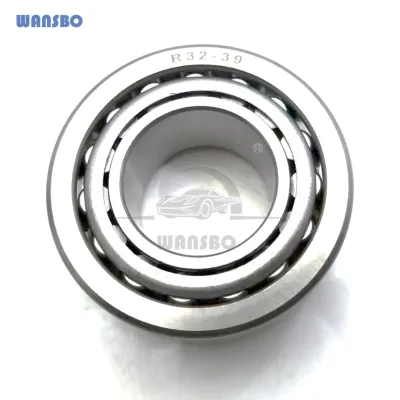
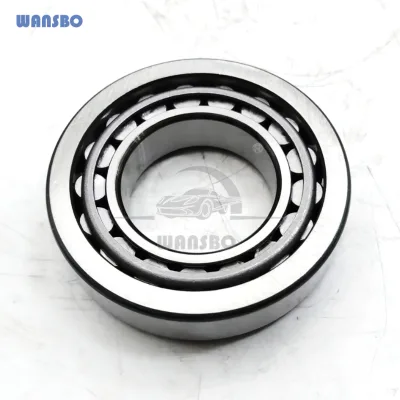
Comprehensive Sourcing Guide
Strategic Sourcing Guide for Mercedes-Benz Tapered Roller Bearings
Procuring tapered roller bearings for Mercedes-Benz applications requires a rigorous approach that balances specific technical requirements with the realities of global supply chain dynamics. The core keyword "Mercedes Benz Tapered Roller Bearing" points to a critical component category where precision, load capacity, and durability are non-negotiable. Buyers must navigate a market where generic specifications often overlap with OEM-specific needs. This guide outlines the essential factors for sourcing these components, focusing on verified product attributes, compliance verification, and long-term value assessment without relying on unverified claims or specific supplier endorsements.
Technical Specifications and Model Identification
The foundation of successful procurement lies in precise model identification. The supplied data indicates a diverse range of specific part numbers and series that are relevant to this category. Common model identifiers observed in the market include the 33009, 30214, 32314B, 30213, 32308, 32307, 30208, 31308, 30321, 30218, 30322, and 2007119*. Additionally, specific part numbers such as 3782 and 2007944* appear in listings, alongside generic descriptors like "durable automotive bearing."
When sourcing for Mercedes-Benz vehicles, it is imperative to cross-reference these generic model numbers with the specific vehicle chassis and axle requirements. The data confirms that these bearings belong to the 33000, 33100, 33200, 306, 30200, 30300, 32000, and 32200 series. These series designations are standard industry codes for tapered roller bearings, but they do not guarantee direct interchangeability with original Mercedes-Benz parts without verification. The standard size specifications often cited include dimensions such as 408016/18mm and specific inner diameters like 42mm. However, buyers must verify that the "Standard Size" designation aligns with the exact dimensions required for the specific axle or gearbox application, as "Customer Customized" sizes are also available in the market.
The internal construction of these bearings is equally critical. The observed data highlights that the rolling body is a roller, and the number of rows is typically single-row. The cage material varies, with options including steel cages and brass cages. The material composition is predominantly Chrome Steel (Gcr15), which is the industry standard for high-load applications. The clearance specifications are noted as C0 or C3, and the precision grades are listed as P0, P6, or P5. These numerical values define the internal play and manufacturing tolerance, directly impacting the bearing's performance under the high rotational speeds and variable loads typical of automotive drivetrains.
Compliance, Certification, and Standard Verification
In the context of automotive procurement, compliance is not merely a formality but a safety imperative. The supplied facts mention standards such as "SAME AS ORIGINAL" and specific series codes like 30200/30300. However, the data also includes entries like "0x0x0" and "111," which appear to be placeholder or non-specific standard references. Buyers must exercise extreme caution when encountering such vague standard listings.
For Mercedes-Benz applications, the bearing must meet rigorous OEM standards. While the data mentions "High Quality" and "OEM: Accept," these are qualitative statements rather than certified compliance. Buyers should verify that the supplier can provide documentation proving the bearing meets the specific ISO standards or DIN standards required by Mercedes-Benz. The precision grades observed (P0, P6, P5) must be validated against the vehicle manufacturer's tolerance requirements. A bearing with P6 precision may be acceptable for some applications, while others may strictly require P5 or higher.
Furthermore, the "Standard Size" claims in the product data must be scrutinized. The presence of "SAME AS ORIGINAL" suggests that the manufacturer claims to replicate OEM specifications. However, without third-party certification or traceability to the original part number, this claim remains an observation rather than a verified fact. Procurement teams should request test reports or certification documents that explicitly link the bearing to the specific Mercedes-Benz part number it is intended to replace. Relying solely on the generic series number (e.g., 30214) without confirming the exact dimensional and material compliance can lead to premature failure.
Cost Drivers and Pricing Dynamics
The pricing for tapered roller bearings in this category is influenced by several factors, including material costs, precision grade, and customization requirements. The observed price range in the market spans from $0.10 to $200.00 USD. This wide variance reflects the difference between standard, off-the-shelf components and high-precision, custom-engineered units.
The material cost is a primary driver, with Chrome Steel (Gcr15) being the standard. Bearings utilizing brass cages may command a different price point compared to those with steel cages, depending on the specific load and speed requirements. The precision grade also significantly impacts cost; a P5 grade bearing will generally be more expensive than a P0 grade unit due to the tighter manufacturing tolerances required.
Customization is a major cost variable. The data confirms that customization is available, and packing can be based on customer requirements. Customized sizes, such as those deviating from the standard 408016/18mm dimensions, will incur higher costs and longer lead times. Additionally, the MOQ (Minimum Order Quantity) ranges from 1 to 100,000 units. Buyers purchasing in small quantities may face a higher unit cost, while bulk orders can leverage economies of scale. However, the high-end MOQs suggest that significant volume is often required to access the lowest price tiers. Buyers must balance the need for immediate availability against the cost benefits of bulk purchasing, considering that the "High Quality" designation does not automatically correlate with a lower price point.
Typical Applications and Operational Requirements
Tapered roller bearings are designed to handle combined loads, making them ideal for automotive applications where both radial and axial forces are present. The supplied data explicitly lists applications in the automotive, truck, trailer, and gearbox sectors. For Mercedes-Benz vehicles, these bearings are typically found in wheel hubs, differentials, and transmission gearboxes.
The "Open" seal type observed in the data is a critical operational detail. Open bearings require external sealing mechanisms to protect against contamination and retain lubrication. In automotive environments, this means the bearing must be paired with appropriate seals and grease to function correctly. If the application involves high-speed rotation or exposure to harsh conditions, the lack of an integrated seal in the bearing itself places a higher burden on the assembly design.
The single-row configuration noted in the specifications is standard for many automotive applications, offering a balance of load capacity and compactness. However, buyers must ensure that the single-row design is sufficient for the specific load profile of the Mercedes-Benz model in question. The clearance options (C0/C3) also play a role; C3 clearance is often preferred for automotive applications to accommodate thermal expansion during operation. Using a C0 clearance bearing in a high-temperature environment could lead to seizure, while a C3 bearing might introduce excessive play in a low-load application.
Supplier Evaluation and Quality Assurance
Evaluating suppliers for automotive bearings requires a focus on consistency and traceability. The data indicates that the origin of these products is China, a major hub for bearing manufacturing. While this does not preclude high quality, it necessitates a robust supplier vetting process. Buyers should verify the supplier's production capabilities, specifically their ability to maintain the precision grades (P0, P6, P5) consistently across batches.
Quality control measures should be a primary criterion. The data mentions "High Quality" and a "1 Years" warranty period. However, these are general claims. A reliable supplier should offer detailed quality control protocols, including in-process inspections and final testing. The warranty period is a useful indicator of confidence, but buyers should review the terms and conditions to understand what is covered. Does the warranty cover premature failure due to manufacturing defects, or does it have exclusions?
Packing methods also serve as a proxy for supplier professionalism. The observed packing options include wooden cases, carton boxes, single boxes, and industrial packaging. For high-value or precision bearings, industrial packaging or single box packing with protective measures is essential to prevent damage during transit. The "Color Box" option suggests retail-ready packaging, which may not be suitable for industrial procurement where bulk handling is required. Buyers should specify their packaging needs clearly to ensure the bearings arrive in optimal condition.
Long-Term Procurement and Lifecycle Management
Sourcing tapered roller bearings is not a one-time transaction but part of a long-term lifecycle management strategy. The availability of "OEM: Accept" and "Customization" options suggests that suppliers can adapt to changing needs. However, buyers must consider the long-term availability of specific models. The data lists numerous model numbers, but the longevity of these specific part numbers in the supply chain is not guaranteed.
Lead times and production capacity are critical factors for maintaining inventory levels. While the data does not provide specific lead times, the wide range of MOQs implies that production schedules can vary significantly. Buyers should establish a relationship with suppliers that ensures consistent supply, especially for critical components like wheel bearings.
The "1 Years" warranty is a baseline expectation. For critical automotive applications, buyers may need to negotiate extended warranties or service level agreements that guarantee replacement within a shorter timeframe. Additionally, the ability to source replacement parts quickly is vital for minimizing vehicle downtime. Buyers should evaluate the supplier's logistics network and their ability to handle emergency orders.
In conclusion, sourcing tapered roller bearings for Mercedes-Benz applications requires a meticulous approach that prioritizes technical verification, compliance, and supplier reliability. By focusing on the specific model numbers, precision grades, and material standards observed in the market, buyers can make informed decisions that ensure the longevity and performance of their vehicles. The wide range of options available, from standard sizes to custom solutions, offers flexibility, but it also demands a disciplined procurement process to avoid the pitfalls of unverified claims and inconsistent quality.
FAQs
What models are available for Mercedes-Benz tapered roller bearings?
Available models include 33009, 30214, 32314B, 30213, 32308, 32307, 30208, 31308, 30321, 30218, and 30322. These units belong to standard series like 30200 and 33000, though specific vehicle compatibility requires cross-referencing chassis requirements.
Which precision grades and clearances are offered?
Precision grades typically include P0, P6, and P5, while clearances are available as C0 or C3. Buyers must verify that the selected precision and clearance align with the specific rotational speeds and load profiles of the Mercedes-Benz application.
Can I request custom sizes and packaging for these bearings?
Yes, customization is available for both size and packaging requirements. Options include customer-specific dimensions and packing methods such as wooden cases, carton boxes, or single boxes, allowing for tailored logistics and storage solutions.
What materials and cage types are used in these bearings?
The bearings are primarily made of Chrome Steel (Gcr15) with either steel or brass cages. This material composition ensures high load capacity, while the cage choice depends on the specific operational speed and friction requirements of the vehicle.
How long is the warranty period for these automotive bearings?
The standard warranty period is one year for the bearing component. This coverage applies to manufacturing defects, but buyers should review specific terms to understand exclusions related to installation errors or improper maintenance.
What is the minimum order quantity for these products?
The minimum order quantity ranges from 1 to 100,000 units depending on the supplier and product type. Smaller orders may incur higher unit costs, while bulk purchases can leverage economies of scale for better pricing.
Where are these tapered roller bearings manufactured?
The products originate from China, which is a major hub for bearing manufacturing. Buyers should verify supplier capabilities to ensure consistent quality control and adherence to the specified precision grades across different production batches.