Source mercedes-benz titanium cat back exhaust for S63, E W213, C63
Compare 30 listings for mercedes-benz titanium cat back exhaust designed for models like S63, E W213, and C63. Buyers can review specifications, materials, and supplier details to find the right fit for their needs.
Key considerations
Products List


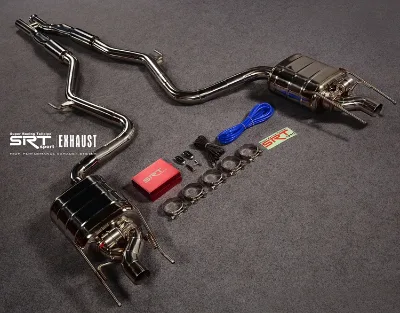
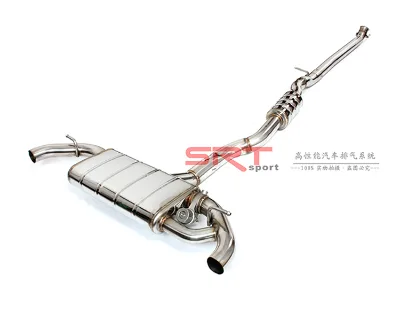
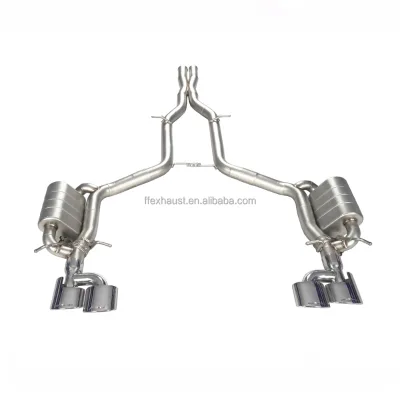
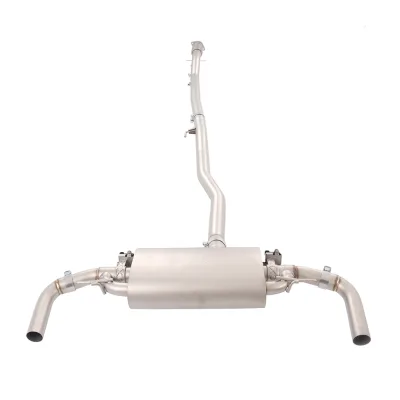
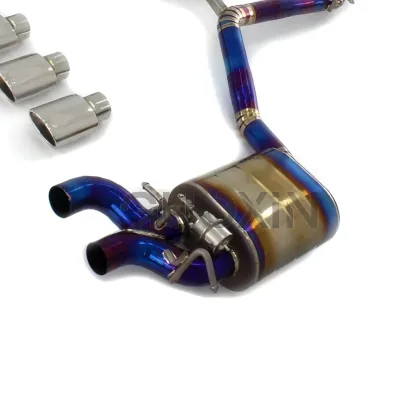
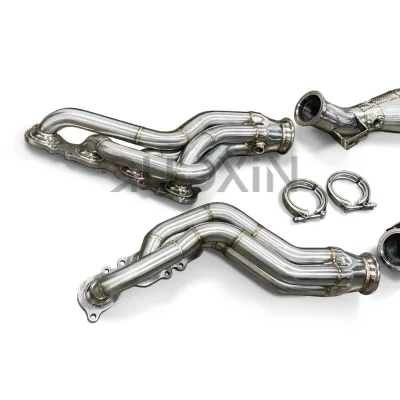
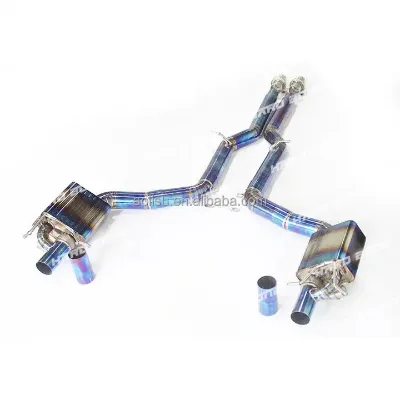
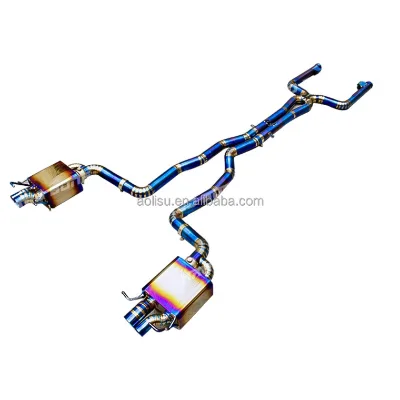
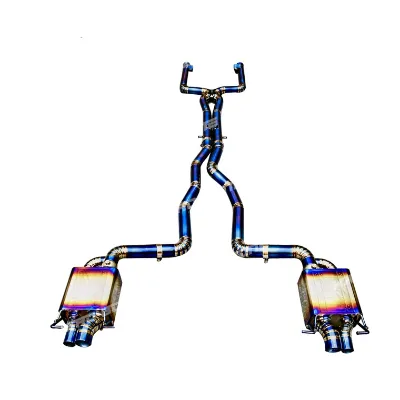
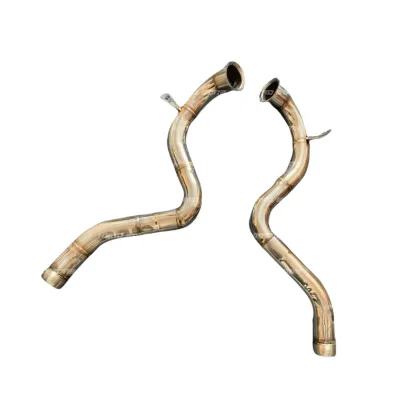
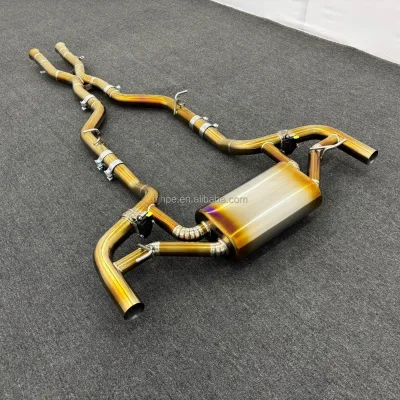
Suitable for M GTS GTC GT GTR 4.0T High-performance Titanium cat Back Exhaust
$1080.00 - $1280.00
MOQ: 1 sets
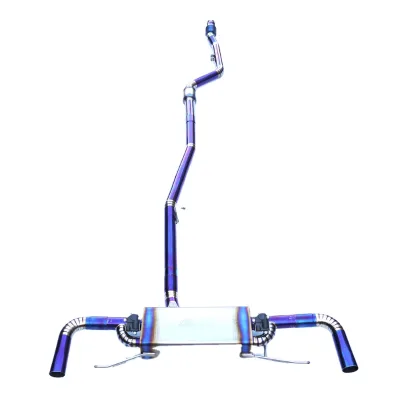
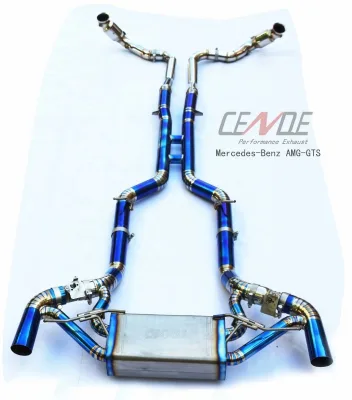
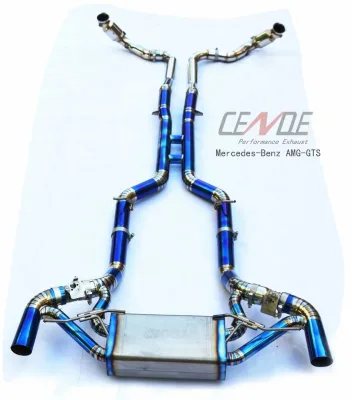
High Performance Titanium or Stainless Exhaust for Mercedes Benz AMG GT GTS
$1686.39 - $2708.44
MOQ: 1 sets
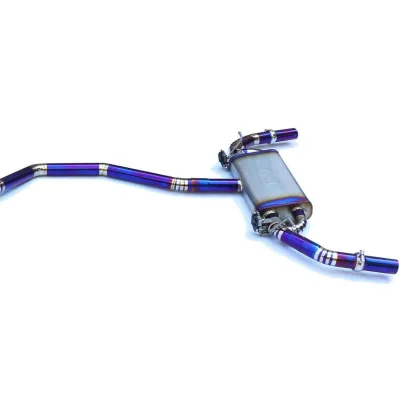
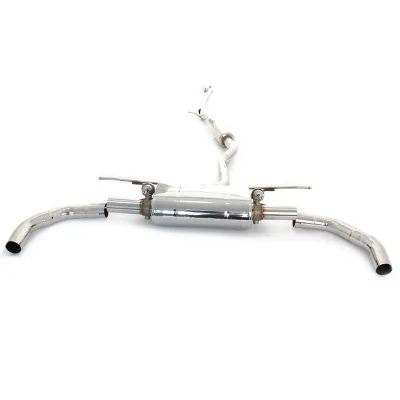
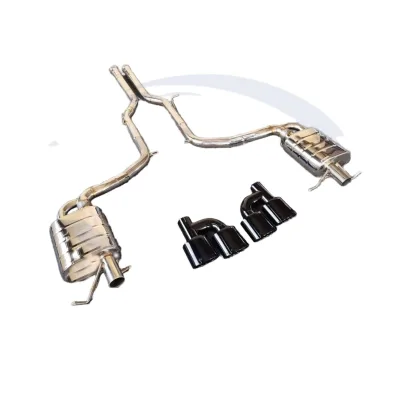
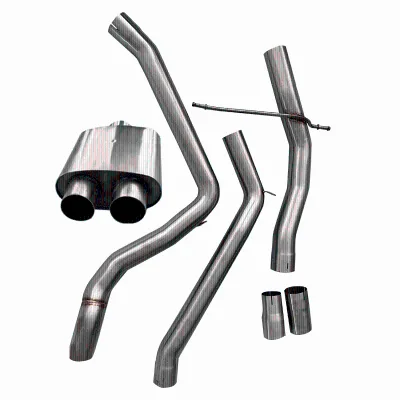


Exhaust Downpipe Mercedes Benz M276 Catted Heat Shield Exhaust Downpipe
$405.00 - $415.00
MOQ: 10 Pieces


China Manufacture Mercedes Benz W213 Heat Shield Decat Exhaust Downpipe
$375.00 - $415.00
MOQ: 10 Sets
Comprehensive Sourcing Guide
Strategic Sourcing Guide for Mercedes-Benz Titanium Cat-Back Exhaust Systems
Understanding Product Definitions and Core Specifications
When sourcing a titanium cat-back exhaust system for Mercedes-Benz vehicles, buyers must first distinguish between material compositions and specific fitment requirements. The market offers a range of options, from standard steel constructions to high-performance titanium alloys. Based on observed product attributes, the core material for premium systems is often identified as SUS304 stainless steel or Titanium Alloy. While some listings specify "304 Stainless Steel" for general durability, the specific request for titanium implies a search for materials that offer superior weight reduction and corrosion resistance compared to standard steel.
The "cat-back" designation refers to the section of the exhaust system starting from the catalytic converter and extending to the tailpipe. This configuration is critical for buyers seeking to enhance engine sound and performance without altering the emission control components mandated by law. Product specifications for these systems frequently cite a "3.5L catback exhaust" configuration, indicating compatibility with specific engine displacements. However, the actual engine fitment varies significantly by model. Observed data indicates compatibility with engines such as the GLA 200 and GLA 220, as well as high-performance variants like the AMG S63 and C63.
Buyers should verify the "Product specification" field carefully, as it often contains the specific engine displacement and system type. For instance, a listing might specify "GLA 220 catback exhaust" while another lists "3.5L catback exhaust." The "Car Fitment" attribute consistently points to Mercedes-Benz, but the specific model range is vast, including the S-Class, E-Class (W213), C-Class (W204, W205), GLC 300, and the AMG GT. The "prod_model" field serves as the primary identifier for compatibility, ensuring the exhaust matches the chassis and engine architecture of the target vehicle.
Technical Compliance and Certification Standards
Compliance with environmental and safety standards is paramount when importing automotive exhaust components. The "Discharge Standard" is a critical attribute that determines whether the product can be legally sold or installed in specific markets. Observed data highlights the "Euro V" standard as a key compliance metric. Buyers must confirm that the specific unit they are purchasing meets the emission regulations of their target destination, as Euro V is a specific benchmark that may not align with newer Euro 6 or regional US standards.
Certification status is another area requiring rigorous verification. The provided facts mention "ISOCE" and "TSComponent" in relation to exhaust pipes. While these codes suggest adherence to certain quality management or component standards, buyers should not assume universal certification without direct confirmation from the supplier. The "Quality" attribute often states "high quality" or "100% Tested," but these are qualitative claims. To validate these, procurement teams should request specific test reports that correlate with the "TSComponent" designation.
Furthermore, the "Noise Source" and "Automobile Chassis Noise" attributes provide insight into the acoustic engineering of the product. The "Noise of Engine" is listed as "Aerodynamic Noise," which is a specific classification. However, exhaust systems are primarily designed to manage engine noise and backpressure. Buyers should ensure that the product's acoustic profile aligns with local noise ordinances, particularly in European markets which are the "Main Market" for many of these listings. The "Surface" finish is described as "smooth," which is typical for titanium and stainless steel, but this does not guarantee compliance with specific decibel limits without empirical testing data.
Cost Drivers and Pricing Dynamics
The pricing for Mercedes-Benz titanium cat-back exhaust systems exhibits significant variance, with observed ranges spanning from $135 to over $2,700 USD. This wide disparity is driven by several key factors, primarily material composition, manufacturing complexity, and brand positioning. The use of "Titanium Alloy" or "SUS304" versus standard steel is a primary cost driver. Titanium is inherently more expensive due to extraction and machining difficulties, justifying the higher end of the price spectrum.
Brand name is another influential factor. Listings reference brands such as "CDY," "SRT," and "FF." While these names appear in the product data, they represent different market segments. A "high quality" claim from a lesser-known brand may result in a lower price point compared to a system from a recognized performance brand, even if the material specifications appear similar. The "Supply Ability" of 300 sets per month suggests that some suppliers operate at a scale that allows for competitive pricing, while others may be smaller operations with higher per-unit costs.
Packaging and logistics also contribute to the final cost. The "Single gross weight" of 35.000 kg and "Single package size" of 75X35X60 cm or 150X60X25 cm indicate substantial shipping volumes. The "Packing Details" mentioning "carton with bubble, plywood to protect" add to the material costs. Buyers must factor in these logistics expenses, as the "Port of dispatch" (Huangpu) and shipping methods (Sea, Air, Air Express) will impact the landed cost. The "MOQ" ranging from 1 set to 50 units also affects unit economics; purchasing a single unit often incurs a higher per-item cost compared to bulk orders, although some suppliers offer a "1 set" minimum.
Typical Applications and Fitment Verification
The application of these exhaust systems is highly specific to the Mercedes-Benz chassis and engine lineup. The "Car Model" and "prod_model" fields provide the necessary data for fitment. Common applications include the Mercedes-Benz S-Class, E-Class (W213), C-Class (W204, W205), GLC 300, and the high-performance AMG GT and S63. The "Engine" attribute further refines this, listing specific engines like the GLA 200 and GLA 220.
Buyers must exercise extreme caution when matching the exhaust to the vehicle. A system designed for a "Benz W204 C63" will not fit a "Benz W205 C63" due to differences in chassis geometry and mounting points. The "Customization" attribute being "Available" is a crucial feature for buyers with non-standard vehicles or those requiring specific modifications. This allows for tailoring the exhaust to unique fitment needs, though it may extend lead times.
The "Thickness" of the material, noted as 1.2 mm in some specifications, is a critical technical parameter for durability and sound quality. Thicker materials generally offer better resistance to heat and corrosion but may add weight. Buyers should verify if the 1.2 mm thickness applies to the specific titanium or stainless steel variant they are purchasing. The "Color" attribute, often listed as "stainless steel" or "like the picture," is less relevant for performance but important for aesthetic matching. The "Place of Origin" is predominantly China, with specific hubs in Guangdong and Jiangsu, which influences the supply chain dynamics and potential for customization.
Supplier Evaluation and Operational Capabilities
Evaluating a supplier for automotive exhaust components requires a focus on their operational stability and logistical capabilities. The "Supply Ability" of 300 sets per month provides a baseline for production capacity. Buyers should assess whether this volume is sufficient to meet their demand, especially if they are sourcing for a fleet or a retail inventory. The "Warranty" of 1 year is a standard offering, but the terms of this warranty should be scrutinized to understand what constitutes a defect versus normal wear and tear.
The "Shipping" options, including Sea Transport, Air Transport, and Air Express, offer flexibility. However, the choice of shipping method impacts both cost and lead time. For heavy items like exhaust systems, sea transport is often the most economical, while air express is reserved for urgent, low-volume orders. The "Port of dispatch" at Huangpu is a major shipping hub, which generally ensures reliable logistics, but buyers should confirm the specific incoterms and who bears the risk during transit.
Quality control is another vital evaluation criterion. The "Quality" attribute stating "100% Tested" is a strong claim, but buyers should request evidence of this testing process. The "Surface" finish being "smooth" suggests a focus on aesthetics and corrosion resistance, but it does not guarantee structural integrity. Suppliers should be asked to provide documentation regarding the "TSComponent" certification and any internal quality assurance protocols. The "Brand Name" listed (CDY, SRT, FF) should be cross-referenced with market reputation, though specific brand endorsements should be avoided in favor of objective performance data.
Long-Term Procurement and Risk Management
Long-term procurement of exhaust systems involves managing risks related to compatibility, supply continuity, and regulatory changes. The "Main Market" being Europe suggests that many products are designed to meet European standards, which may differ from those in North America or Asia. Buyers targeting other regions must verify if the "Euro V" discharge standard is sufficient or if a different certification is required.
The "Customization" availability is a double-edged sword. While it allows for tailored solutions, it introduces complexity in the supply chain. Buyers should establish clear communication channels with suppliers to ensure that custom orders are executed correctly and that any deviations from standard specifications are documented. The "Netural Packing" and "Product specification" details should be agreed upon in writing to prevent misunderstandings regarding the final product.
Lead times and inventory management are also critical. With a "Supply Ability" of 300 sets per month, buyers can plan for steady replenishment, but they must account for potential delays due to the "Place of Origin" being in China. The "Single package size" and "Single gross weight" are essential for warehouse planning and freight cost estimation. Buyers should maintain a buffer stock to mitigate the risk of supply disruptions, especially for high-demand models like the AMG GT or S63.
Finally, the "Warranty" period of 1 year provides a safety net for manufacturing defects. However, buyers should understand the claims process and the geographical limitations of the warranty. If the product is sourced from a supplier in Guangdong or Jiangsu, the logistics of returning defective units for warranty claims can be costly and time-consuming. Establishing a local support network or a clear return policy is advisable for long-term procurement success. By carefully analyzing these factors, buyers can secure high-quality titanium cat-back exhaust systems that meet their technical and commercial requirements.
FAQs
What materials are used for these exhaust systems?
The exhaust systems are constructed from materials such as 304 Stainless Steel, SUS304, or Titanium Alloy. Some listings also specify Steel or Alloy body materials to ensure durability and corrosion resistance for Mercedes-Benz vehicles.
Which Mercedes-Benz models are compatible with these exhausts?
These exhausts fit various models including the Benz S63, GLC 300, E W213, W204 C63, W205 C63, AMG GT, and GLA series. The specific fitment depends on the model number and engine configuration listed in the product specifications.
Can I find suppliers with a minimum order quantity of one set?
Yes, several suppliers offer a minimum order quantity of one set or one piece for these exhaust systems. This allows buyers to purchase single units without needing to commit to bulk orders immediately.
What certification standards do these exhaust pipes meet?
The exhaust pipes are associated with ISOCE and TSComponent certifications and must meet the Euro V discharge standard. Buyers should verify specific test results to ensure compliance with their local emission regulations.
How is the product packaged for shipping?
Products are typically packed in cartons with bubble wrap and plywood protection to prevent damage during transit. The single package size varies, often around 75x35x60 cm or 150x60x25 cm, with a gross weight of approximately 35 kg.
What is the supply capacity for these exhaust systems?
Suppliers report a supply ability of 300 sets per month for these exhaust systems. This capacity indicates that manufacturers can handle moderate volume orders while maintaining production schedules.