Source Transparent Disposable PET Fruit Container for packaging, storage, and tableware
Find 30 Transparent Disposable PET Fruit Container options with varying sizes and shapes. Buyers can compare single or multiple compartment designs, customization features, and packaging details from suppliers in China.
Key considerations
Products List


Disposable Transparent Clear Pet Fruit Box
$0.04 - $0.36
MOQ: 50000 Pieces
JIANGSU JINCAI POLYMER MATERIALS SCIENCE AND TECHNOLOGY CO., LTD.


Disposable Transparent Food Grade Plastic Pet Container Apple Fruit Packaging Box
$0.02 - $0.05
MOQ: 50000 Pieces


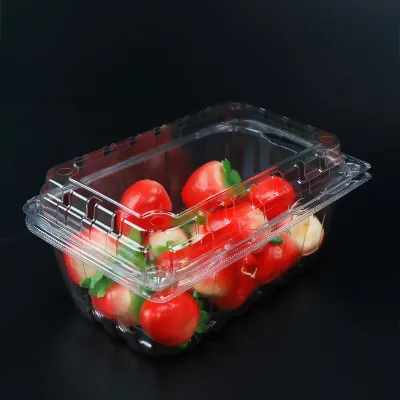

Plastic Blister Disposable Package Transparent Pet Fruits Container with Lid
$0.02 - $0.15
MOQ: 100000 Pieces


Transparent Pet Food Storage Containers with High Transparency Preservation
$0.12 - $0.15
MOQ: 20000 Pieces


Stackable Pet Food Containers for Efficient and Transparent Organization
$0.12 - $0.15
MOQ: 20000 Pieces


Comprehensive Sourcing Guide
Strategic Sourcing Guide for Transparent Disposable Pet Fruit Containers
The global demand for sustainable yet convenient food packaging has elevated the profile of transparent disposable pet fruit containers. These specialized units are designed to maintain the integrity of fresh produce while offering the logistical efficiency required by modern retail and food service sectors. For procurement professionals, navigating the market requires a disciplined approach that distinguishes between generic plastic trays and specialized fruit containers engineered for freshness preservation. This guide synthesizes available market data to provide a structured framework for sourcing these items, focusing on technical specifications, compliance verification, and supply chain reliability.
Technical Specifications and Material Composition
The foundation of a successful procurement strategy lies in understanding the precise technical attributes of the product. The core material for these containers is predominantly PET (Polyethylene Terephthalate), a choice driven by its clarity, strength, and food-safe properties. The observed product standards indicate that these containers are often categorized by specific model numbers such as HS-PET, APL091, GB102602, and PL204, which denote distinct manufacturing runs or design iterations.
Dimensions are a critical variable in the selection process. Market observations reveal a range of standard sizes, including 13511560mm, 17513550mm, and 19517560mm. These measurements suggest a modular approach to sizing, allowing buyers to select containers that fit specific fruit varieties, from small berries to larger melon slices. The volume capacity further supports this versatility, with options ranging from 180ml to 800ml. This range accommodates both single-serve snacks and family-sized portions.
The physical form of the container is equally important. Available shapes include round, rectangular, and square configurations, while the compartment structure can be either single or multiple. Multi-compartment designs are particularly valuable for fruit platters that require the separation of different fruit types to prevent flavor transfer or moisture mixing. The color profile is typically unicolor, emphasizing the transparency that allows consumers to inspect the quality of the fruit without opening the package. Additionally, the weight of the units, such as the observed 24g specification, serves as a proxy for material thickness and durability, influencing both shipping costs and structural integrity.
Compliance and Certification Verification
In the food packaging sector, regulatory compliance is non-negotiable. Buyers must verify that suppliers possess valid certifications that align with the target market's legal requirements. The data indicates that suppliers often hold LFGB (German Food, Feed and Consumer Goods Code) certification, which is a rigorous standard for food contact materials. Furthermore, CE and EU certifications are frequently cited, ensuring the product meets European safety directives.
For operations targeting international markets with strict quality management systems, the presence of ISO22000 (Food Safety Management) and ISO9001 (Quality Management) certifications is a strong indicator of a supplier's operational maturity. The BRC (Brand Reputation Compliance Global) certification is another critical standard to verify, as it is widely recognized by major retailers globally. It is essential to note that while these certifications are observed in the market, buyers should request current, valid certificates for the specific production batches they intend to purchase, rather than relying on general claims.
Cost Drivers and Economic Considerations
The pricing structure for transparent disposable pet fruit containers is influenced by several dynamic factors. The observed price range in the market is between $0.02 and $0.50 USD per unit. This wide variance is not arbitrary but is driven by the complexity of the design, the thickness of the PET material, and the volume of the order. Smaller, simpler trays will naturally fall at the lower end of this spectrum, while larger, multi-compartment, or custom-branded units will command higher prices.
Minimum Order Quantity (MOQ) is a significant cost driver. The market data shows a broad MOQ range, from 600 units up to 200,000 units. Some suppliers list an MOQ of 10 cartons, while others require bulk commitments of 3,000 or 200,000 pieces. Buyers must balance their inventory needs against these thresholds to optimize unit costs. Additionally, packaging density affects logistics costs. Standard packing configurations vary, with observations of 360 pieces per carton, 300 pieces per carton, and even 20,000 pieces per carton for bulk industrial shipments. Selecting the right packing configuration can significantly reduce per-unit shipping expenses.
Typical Applications and Usage Scenarios
The primary application for these containers is the packaging and storage of fresh fruit, but their utility extends to broader food service and retail environments. The "Western" style designation suggests a design aesthetic that aligns with Western dining and retail presentation standards. The usage temperature range of -20°C to 50°C indicates that these containers are suitable for both refrigerated storage and ambient temperature transport, making them versatile for supply chains that involve cold chain logistics.
Beyond simple fruit storage, these units serve as tableware for catering, salad bars, and ready-to-eat meal services. The "Freshness Preservation" feature is a key selling point, implying that the design or material properties help maintain the quality of the produce over time. The "Disposable" nature of the product aligns with single-use policies in many food service establishments, reducing the need for dishwashing infrastructure. The usage categories explicitly listed include packaging, storage, and tableware, confirming their multi-functional role in the food ecosystem.
Supplier Evaluation and Customization Capabilities
When evaluating potential suppliers, buyers should look for flexibility in customization and order fulfillment. The market data confirms that customization is available, including the acceptance of custom orders and customized logos. This capability is vital for brands seeking to differentiate their fruit products on the shelf. Suppliers also appear to support OEM (Original Equipment Manufacturer) and ODM (Original Design Manufacturer) services, allowing buyers to leverage existing designs or develop proprietary solutions.
Sample availability is another critical factor in supplier selection. The data indicates that free samples are often available, with a sample lead time of 3-7 days. However, freight costs for samples are typically collected from the buyer. This policy is standard in the industry but should be factored into the initial budgeting process. Buyers should utilize the sample phase to physically verify the transparency, rigidity, and fit of the container for their specific fruit types before committing to a large order.
Quality Control and Production Standards
Maintaining consistent quality is paramount when sourcing disposable food packaging. The production standards observed, such as specific model numbers (JM-027, JM-036, JM-6D Apple Gift Box), suggest that suppliers have established product lines with defined quality parameters. The origin of these products is primarily Jiangsu, China, a region known for its robust manufacturing infrastructure.
Quality control should extend beyond the final product to the packaging process. The standard packing method involves PE Film inside a Carton, which protects the containers from dust and damage during transit. Buyers must ensure that the supplier adheres to strict hygiene protocols, especially given the food contact nature of the product. The presence of certifications like LFGB and BRC implies that the supplier has implemented internal quality control systems, but buyers should still conduct random inspections upon receipt of goods to verify that the physical attributes match the ordered specifications.
Long-Term Procurement Considerations
Sourcing transparent disposable pet fruit containers is not merely a transactional activity but a strategic partnership. The lead time for delivery is observed to be between 15 and 25 days, which buyers must account for in their inventory planning. For long-term contracts, it is advisable to negotiate fixed lead times and pricing structures to mitigate market volatility.
The ability to handle custom orders and accept varied MOQs provides a safety net for buyers who need to scale production up or down based on seasonal demand. As the market for fresh fruit packaging evolves, suppliers who offer ongoing support for design iterations and material improvements will be more valuable partners. Buyers should also consider the environmental implications of their choices, even within the disposable category, by inquiring about the recyclability of the PET material and the supplier's commitment to sustainable manufacturing practices.
In conclusion, sourcing transparent disposable pet fruit containers requires a meticulous evaluation of technical specs, certifications, and supplier capabilities. By leveraging the observed data on dimensions, materials, and compliance standards, buyers can make informed decisions that ensure product quality, regulatory adherence, and supply chain efficiency. The key to success lies in balancing the cost drivers with the specific operational needs of the business, ensuring that the chosen packaging solution enhances the value of the fruit product while meeting all necessary safety and logistical requirements.
FAQs
What certifications do transparent disposable pet fruit containers typically hold?
These containers often hold LFGB, CE, and EU certifications for food safety. Some suppliers also provide ISO22000, ISO9001, and BRC certificates to ensure compliance with international quality management standards for food contact materials.
How can I customize the logo on these plastic boxes?
Customized logos are acceptable for these disposable plastic boxes. Suppliers support OEM and ODM services, allowing buyers to add branding while maintaining the standard PET material and freshness preservation features required for fruit storage.
What is the minimum order quantity for these fruit containers?
Minimum order quantities range from 600 to 200,000 pieces depending on the supplier. Some vendors accept orders starting at 10 cartons, while others require bulk commitments of 3,000 or 200,000 pieces to optimize unit pricing.
Which dimensions are available for these transparent fruit trays?
Standard dimensions include 135*115*60mm, 175*135*50mm, and 195*175*60mm. These sizes correspond to volumes ranging from 180ml to 800ml, accommodating various fruit types from small berries to larger melon slices in single or multiple compartments.
Can I get free samples before placing a large order?
Free samples are often available with a lead time of 3 to 7 days. However, freight costs for these samples are typically collected from the buyer, allowing you to verify transparency and rigidity before committing to bulk procurement.
What is the typical delivery time for these plastic containers?
The delivery time for these containers is generally between 15 and 25 days. This lead time applies to production and shipping from the origin in Jiangsu, China, and should be factored into your inventory planning for seasonal demand.
Which shapes and styles are offered for these disposable boxes?
Available shapes include round, rectangular, and square configurations with a Western style design. These containers feature single or multiple compartments and are typically unicolor to emphasize transparency, allowing consumers to inspect fruit quality without opening the package.