Source Transparent Crystal Mechanical Keyboard Keycaps for gaming, office, and industrial use
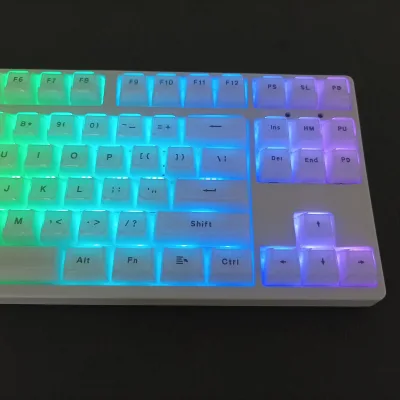
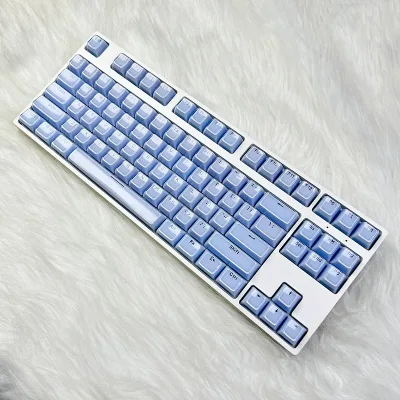
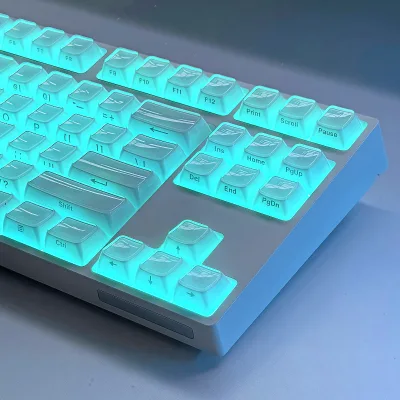
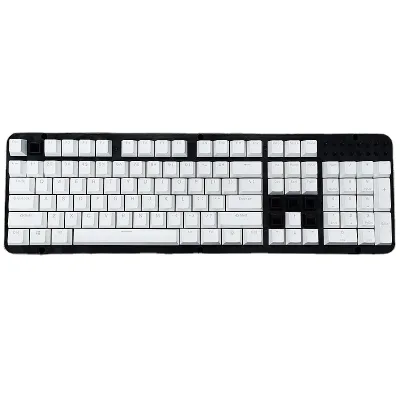
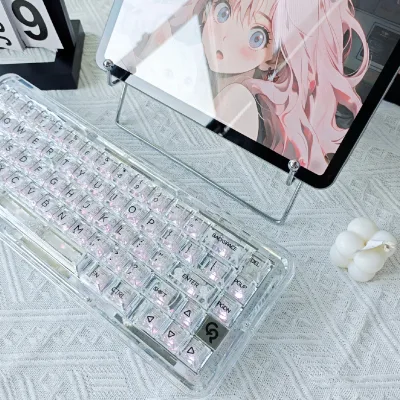
Explore 30 listings for Transparent Crystal Mechanical Keyboard Keycaps with options in ABS and PC materials. Buyers can compare models like BT-18 and BT-13, keycap heights including DSA and KSA, and connectivity features across various keyboard types.
Key considerations
Products List






Comprehensive Sourcing Guide
Transparent Crystal Mechanical Keyboard Keycaps Sourcing Guide
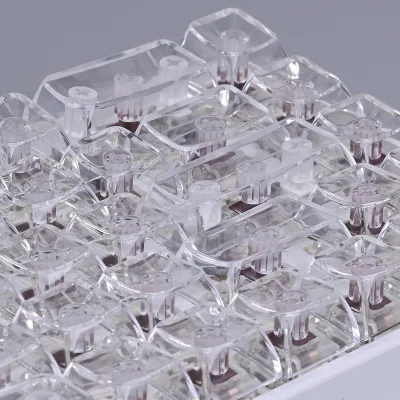
Sourcing Transparent Crystal Mechanical Keyboard Keycaps requires a nuanced understanding of material properties, manufacturing tolerances, and aesthetic consistency. These keycaps are distinct from standard opaque ABS or PBT sets due to their light-transmitting characteristics, which demand precise injection molding or CNC machining to avoid internal stress fractures or cloudiness. Buyers must recognize that "transparent" is not a single standardized attribute; it encompasses a range of finishes from clear PC (polycarbonate) to translucent ABS and specialized "ice crystal" effects. The procurement strategy must therefore focus on verifying the specific polymer grade and the surface treatment process, as these factors directly influence durability, light diffusion, and long-term yellowing resistance.
The market for these components is heavily driven by customization and OEM/ODM opportunities, with suppliers primarily located in manufacturing hubs such as Guangdong, China. This geographic concentration offers competitive pricing and flexible production runs but introduces variability in quality control standards. Procurement teams must navigate a landscape where small order quantities are often accepted, yet bulk pricing structures can vary significantly based on profile selection (such as DSA, KSA, or OEM) and key count. Understanding these commercial dynamics is essential for negotiating favorable terms while ensuring that the aesthetic integrity of the crystal effect is maintained across large production batches.
Product Scope and Observed Listing Signals
The current market listing signals indicate a diverse range of transparent keycap products, with observed prices ranging from $0.21 to $28.20 USD per unit or set. This wide variance reflects differences in material quality, profile complexity, and packaging methods. Listings frequently highlight specific model numbers such as BT-18, BT-13, and BT-12, which often correspond to specific profiles or material compositions like dye-sublimation PBT or clear PC. Buyers should interpret these model numbers as internal supplier identifiers rather than universal standards, requiring direct verification of the actual material composition and dimensional tolerances before placing orders.
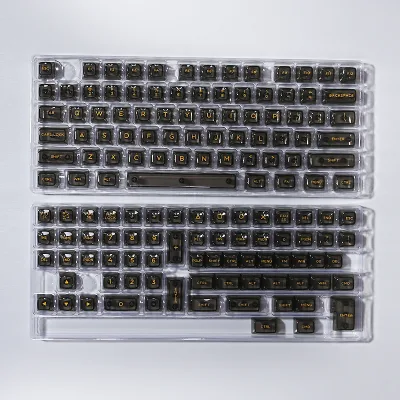
Observed minimum order quantities (MOQs) range from 1 to 1,000 units, indicating a market that accommodates both prototyping and mass production. Many suppliers accept small orders, which is beneficial for testing sample quality before committing to larger volumes. However, the presence of specific key counts in listings, such as 117, 132, 143, or 117 keys, suggests that these products are often sold as complete sets or custom layouts rather than individual keys. Procurement teams must carefully map these key counts to their target keyboard layouts (e.g., ANSI, ISO, or custom mechanical layouts) to ensure compatibility, as transparent keycaps often require precise stem designs to fit specific switch types.
Technical Specifications to Verify
Material composition is the most critical technical specification for transparent keycaps, as it dictates optical clarity and structural integrity. Listings mention materials such as ABS, PC (polycarbonate), and PBT, each with distinct properties. ABS is commonly used for its ease of molding and lower cost but is prone to yellowing over time when exposed to UV light. PC offers superior clarity and durability but can be more expensive and challenging to mold without defects. Buyers must verify the exact polymer grade and whether additives are used to achieve the "crystal" or "ice" effect, as these additives can impact the keycap's resistance to wear and chemical cleaning agents.
Profile and dimensional accuracy are equally vital for ensuring a consistent typing experience and aesthetic uniformity. Listings reference profiles such as DSA, KSA, and OEM, along with specific dimensions like 460mm160mm20mm for packaging or single package sizes of 40X12X4 cm. These dimensions likely refer to the packaging or bulk shipping units rather than the keycaps themselves, but they highlight the importance of verifying the actual keycap height and stem dimensions. Buyers should request detailed CAD drawings or physical samples to confirm that the keycaps fit the intended switch stems (e.g., Cherry MX, Kailh, Gateron) and that the profile height matches the desired ergonomic or aesthetic goals.
Compliance and Safety Documentation
While specific certification statuses are not universally guaranteed for all transparent keycap listings, buyers must ensure that materials comply with relevant safety standards for consumer electronics accessories. This includes verifying that the plastics used are free from harmful substances such as lead, cadmium, or phthalates, particularly if the keycaps are intended for markets with strict environmental regulations like the EU or North America. Although ISO 9001:2015 is mentioned in background contexts, it is not a product-specific certification for keycaps; instead, buyers should request material safety data sheets (MSDS) and declarations of conformity from suppliers to confirm that the polymers meet RoHS, REACH, or other applicable regulatory requirements.
Packaging and labeling compliance are also essential components of the procurement process. Listings indicate packaging methods such as OPP bags, blister packs, and cartons, with some products labeled as "Without Letters" or featuring specific themes like "Transparent Crystal." Buyers must ensure that packaging materials are recyclable or meet local waste disposal regulations, especially if the product is marketed as eco-friendly. Additionally, labeling must accurately reflect the product's material composition, country of origin (often Guangdong, China), and any relevant safety warnings to prevent customs delays or consumer confusion.
Cost Drivers and Commercial Terms
The cost of transparent crystal keycaps is influenced by several factors, including material selection, production volume, and customization requirements. Higher-quality PC or specialized PBT blends will command higher prices than standard ABS, while complex profiles or custom stem designs may increase manufacturing costs. The observed price range of $0.21 to $28.20 USD reflects these variations, with lower prices typically associated with basic ABS sets and higher prices linked to premium materials or intricate designs. Buyers should analyze the cost per key or per set to determine the true value proposition, considering factors such as durability and aesthetic longevity.
Commercial terms, including MOQs and payment conditions, vary significantly among suppliers. The ability to place small orders is a notable advantage for buyers testing new designs or fulfilling small-scale custom requests. However, larger orders may offer better unit pricing and more favorable shipping terms. Buyers should negotiate clear terms regarding sample costs, lead times, and return policies for defective items. It is also important to clarify whether the quoted price includes packaging, shipping, and any customization fees, as these can add up and impact the overall budget.
Supplier Qualification and Quality Control
Supplier qualification is critical when sourcing transparent keycaps, as the aesthetic quality is highly sensitive to manufacturing defects. Buyers should prioritize suppliers with established track records in producing optical-quality plastics and request references or case studies from previous clients. Verification of the supplier's production capabilities, including their injection molding or CNC machining equipment, can provide insight into their ability to maintain consistent quality. Additionally, buyers should assess the supplier's quality control processes, such as in-line inspection and final random inspection, to ensure that defects like cloudiness, scratches, or dimensional inaccuracies are minimized.
Quality control measures should include rigorous sampling and testing procedures before full production begins. Buyers should request pre-production samples to evaluate the keycaps' clarity, color consistency, and fit. During production, periodic inspections can help identify and correct issues early. Post-production, a final random inspection based on statistical sampling methods (such as AQL standards) should be conducted to verify that the batch meets the agreed-upon quality criteria. Establishing a clear communication channel with the supplier for addressing quality issues is also essential for maintaining a successful procurement relationship.
Long-Term Procurement Checks
Long-term procurement success depends on establishing a robust supply chain that can adapt to changing market demands and quality expectations. Buyers should regularly review supplier performance metrics, including on-time delivery rates, defect rates, and responsiveness to issues. Building a relationship with multiple suppliers can mitigate risks associated with single-source dependency and provide flexibility in case of supply chain disruptions. Additionally, staying informed about advancements in materials and manufacturing technologies can help buyers identify opportunities for cost savings or product improvements.
Continuous improvement in product design and quality is also essential for maintaining competitiveness. Buyers should provide feedback to suppliers based on customer reviews and internal testing results to drive incremental improvements in keycap design and manufacturing processes. This collaborative approach can lead to better product quality, reduced costs, and enhanced customer satisfaction. Furthermore, monitoring market trends and competitor offerings can help buyers anticipate changes in consumer preferences and adjust their procurement strategies accordingly, ensuring that their transparent crystal keycap offerings remain relevant and desirable in the market.
FAQs
What materials are used for Transparent Crystal Mechanical Keyboard Keycaps?
These transparent crystal keycap sets are typically made from clear PC (polycarbonate) or ABS plastic, with some dye-sublimation PBT options listed. Polycarbonate offers higher clarity and durability, while ABS provides a smooth feel at lower cost. Confirm the material for each model, such as the BT-13 clear PC keycap, before ordering.
Can I order transparent crystal keycap sets with a low minimum order quantity?
Yes, small orders are accepted across these listings. One listed keycap set has a stated MOQ of 20, while the overall catalog shows MOQs from 1 to 1000 depending on the product. Contact the supplier with your target quantity to confirm the applicable MOQ and pricing tier.
Which keycap profile heights are available for transparent crystal keycaps?
Listed sets include DSA and KSA profile heights, and one model is described as OEM profile. Profile affects typing feel and compatibility with your mechanical keyboard row heights. Check the specific set, such as the KSA Keycaps Set, and match the profile to your keyboard before purchasing.
How many keys come in a transparent crystal keycap set?
Listed sets vary in key count, including configurations with 117, 132, and 143 keys. Larger sets cover more layouts and extra keys for custom arrangements. Verify the key count against your keyboard layout, and note that one set uses an ANSI layout with English legends while others come without letters.
Can transparent crystal keycaps be customized with my own design or branding?
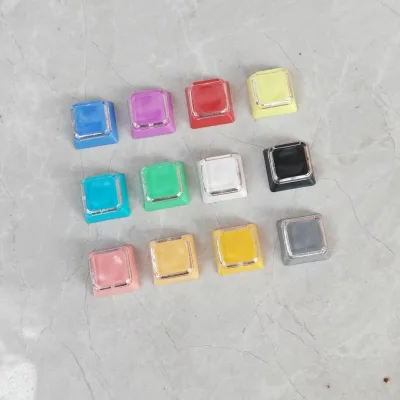
Yes, several listings are branded OEM ODM CUSTOM DIY, indicating customization and private-label support. Options may include legends, colors, and packaging. One set is listed in white and pink colorways and another in black transparent crystal, so discuss available customization with the supplier before confirming an order.
How are transparent crystal keycaps packaged for shipping?
Packaging options listed include blister packs, blister and box, and OPP bag plus carton for bulk shipments. One set has a single package size of 40x12x4 cm with a single gross weight of about 0.24 kg. Confirm the packing method and carton quantities with the supplier for your order volume.