Source Ultra Lightweight Folding Wheelchair for travel, home, and office
Compare 30 Ultra Lightweight Folding Wheelchair options from Tianjin and Jiangsu suppliers. These models feature aluminum alloy or steel frames, varying motor powers, and folding designs suitable for diverse mobility needs.
Key considerations
Products List


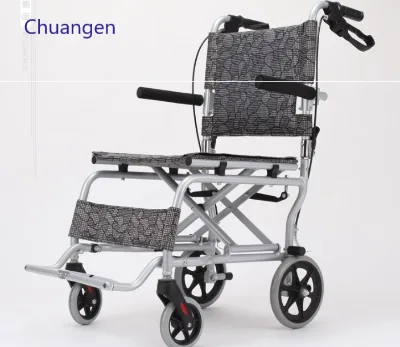
Portable ultra Lightweight but Strong Folding Aluminum Sport Wheelchair
$40.77 - $81.54
MOQ: 1 Minimum


Outdoor Handicapped Rigid Ultra Lightweight Leisure Sport Active Manual Wheelchair
$436.69 - $485.21
MOQ: 1 Pieces


Comprehensive Sourcing Guide
Strategic Sourcing Guide for Ultra Lightweight Folding Wheelchairs
The global demand for mobility aids has intensified, with a specific surge in interest regarding ultra-lightweight folding wheelchairs. These devices are critical for users requiring high portability without sacrificing structural integrity or comfort. For B2B procurement professionals, navigating this market requires a disciplined approach that distinguishes between marketing claims and verifiable product attributes. This guide synthesizes observed market data and technical specifications to provide a framework for sourcing reliable units, focusing on material composition, power systems, and compliance standards.
Material Composition and Structural Design
The foundation of an ultra-lightweight wheelchair lies in its material selection. Analysis of current market offerings reveals a distinct split between Aluminium Alloy and Steel constructions. Aluminium Alloy is the preferred material for ultra-lightweight applications due to its high strength-to-weight ratio. Products utilizing this material often feature a net weight around 17kg, making them significantly easier to transport and maneuver compared to heavier alternatives. In contrast, Steel constructions are observed in models with higher load capacities, such as those rated for 150kg, though they typically result in increased net weights, often exceeding 29kg.
When evaluating suppliers, buyers must verify the specific alloy grade and welding techniques used. The folding mechanism is equally critical; the market data indicates a prevalence of "Folding" designs where the frame collapses for storage. A key observation in the product attributes is the "Leg Rest Type," which can vary between "Both Sides Separate" or fixed configurations. Separate leg rests offer greater customization for different user needs but add complexity to the folding process. Buyers should inspect the hinge mechanisms to ensure they maintain the structural rigidity of the Aluminium Alloy or Steel frame after repeated folding cycles. The "Condition" of the product is consistently listed as "New," implying that refurbished units should be excluded from standard procurement unless explicitly specified.
Technical Specifications and Performance Metrics
Technical specifications are the primary differentiator between standard and ultra-lightweight models. A comprehensive review of available units highlights significant variations in motor power, battery capacity, and dimensions. For electric variants, the market shows a range of motor configurations. Some models utilize Brushless motors with a power output of 150W per unit (totaling 300W), while others employ Brush motors rated at 250W per unit. The choice between brushless and brushed technology impacts longevity and maintenance requirements; brushless motors generally offer longer lifespans and quieter operation.
Battery systems are another critical specification. Observed data includes 24V 10Ah configurations with optional 20Ah upgrades, as well as 24V 12Ah Lithium options. The charging time for these units typically ranges from 7 to 8 hours. Range capabilities vary, with observed mileage figures of 15km and 20km depending on the battery capacity and motor efficiency. Weight capacity is a decisive factor; while some units are rated for a maximum load of 100kg, others support up to 150kg (330lbs). Procurement teams must align these load ratings with the intended user demographic to ensure safety.
Dimensional specifications are vital for logistics and storage. Folding wheelchairs are characterized by their "Before Folding" and "After Folding" sizes. For instance, one observed model measures 345625810mm before folding and reduces to 820880550mm after folding. Another model shows a pre-fold size of 980610960mm and a post-fold size of 750610360mm. These variations significantly impact shipping costs and storage requirements in retail or institutional settings. Wheel size also varies, with rear wheels ranging from 8 inches to 12 inches in PU tire composition, affecting terrain adaptability and ride smoothness.
Compliance, Certification, and Safety Standards
Navigating the regulatory landscape is essential for international procurement. The supplied data indicates that compliant products frequently carry CE, ISO, and RoHS certifications. The presence of these marks suggests adherence to European safety standards (CE), international management system requirements (ISO), and restrictions on hazardous substances (RoHS). However, buyers must treat these certifications as observations of specific listings rather than universal guarantees for all products in the category.
Verification of certification status should be a primary step in the supplier evaluation process. Procurement teams should request valid certification documents directly from the supplier to confirm that the specific batch of wheelchairs meets the claimed standards. The "prod_standard" attribute observed in some listings, such as dimensions like 603076CM, may refer to packaging standards or specific model configurations rather than international safety standards. Buyers should not assume that a listed dimension equates to a safety compliance standard. Instead, they must verify that the product meets the specific regulatory requirements of the destination market, which may include additional testing for electromagnetic compatibility or mechanical safety.
Cost Drivers and Pricing Dynamics
The pricing of ultra-lightweight folding wheelchairs is influenced by a complex interplay of factors, including material costs, motor technology, and battery capacity. The observed price range in the market spans from approximately $40.77 to $1,568. This wide disparity reflects the difference between basic manual frames and advanced electric models with high-capacity batteries and brushless motors.
Several key cost drivers emerge from the data. First, the material choice is a primary determinant; Aluminium Alloy frames generally command a higher price point than Steel due to processing costs and weight benefits. Second, the inclusion of electric components significantly increases the unit cost. Models with 250W brushless motors and Lithium batteries are positioned at the higher end of the price spectrum compared to those with 150W brushed motors and lead-acid or smaller capacity batteries. Third, customization options, such as specific leg rest types or tailored folding mechanisms, add to the production cost.
Minimum Order Quantity (MOQ) is another financial consideration. The observed MOQ range is 1 to 50 units. This flexibility allows small buyers to test the market with low-volume orders, while larger institutional buyers can negotiate better pricing through bulk purchases. Buyers should be aware that lower MOQs may come with higher per-unit costs, whereas larger orders often unlock volume discounts. Additionally, packaging requirements, typically listed as "Carton," must be factored into the total landed cost, as specialized packaging for fragile or heavy items can impact shipping expenses.
Supplier Evaluation and Origin Verification
Identifying reliable suppliers requires a rigorous vetting process that goes beyond the product listing. The origin of the products is a critical factor in the supply chain. Data indicates that many of these wheelchairs originate from Tianjin, China, and Jiangsu, China. These regions are known manufacturing hubs for mobility aids, but buyers must verify the specific factory location to ensure quality control and logistical efficiency.
When evaluating suppliers, procurement teams should prioritize those who offer "Customization" and "Customized" options. This indicates a manufacturer capable of adapting products to specific client needs, such as altering the seat width or adjusting the folding mechanism. The ability to customize is a strong indicator of a mature manufacturing process. Furthermore, the "Condition" of the product must be strictly verified as "New" to avoid receiving refurbished or damaged goods.
Buyers should also assess the supplier's capacity to handle the "prod_packing" requirements. Standard cartons are common, but for international shipping, reinforced packaging may be necessary to prevent damage during transit. The lead time, while not explicitly detailed in the provided data, is a critical metric for supply chain planning. Buyers should request clear timelines for production and shipping, especially when dealing with custom orders that may require additional manufacturing time.
Quality Control and Long-Term Procurement Considerations
Ensuring long-term reliability involves establishing robust quality control protocols. For electric wheelchairs, the brake system is a critical safety component. The observed "Electromagnetic Brake" system is a common feature, but its performance must be tested under various load conditions to ensure it engages reliably. Similarly, the "Maximum Load Weight" must be rigorously tested to prevent structural failure. Buyers should insist on load testing reports that verify the wheelchair can safely support the rated weight without compromising the frame or wheels.
The "Net Weight" of the unit is also a quality indicator. A significant deviation from the stated weight (e.g., 17kg vs. 29kg) may indicate the use of inferior materials or inconsistent manufacturing processes. For manual models, the folding mechanism must be tested for durability, ensuring it can withstand thousands of folding cycles without loosening or breaking.
Long-term procurement considerations include the availability of spare parts and after-sales support. Buyers should verify the availability of replacement batteries, tires, and motor components. The "Charging Time" and battery life are critical for operational continuity; a unit that takes 7-8 hours to charge may not be suitable for high-turnover environments unless charging infrastructure is available. Additionally, the "Mileage" rating should be validated under real-world conditions, as laboratory tests often differ from actual usage scenarios involving varied terrain and user weight.
Comparative Analysis of Key Specifications
To assist in decision-making, the following table summarizes the key technical differences observed in the market data. This comparison highlights the trade-offs between weight, capacity, and power.
| Feature | Model A (Lightweight Focus) | Model B (High Capacity Focus) | Model C (Electric Focus) |
|---|---|---|---|
| Material | Aluminium Alloy | Steel | Steel / Aluminium Alloy |
| Net Weight | 17kg | 29kg | 20kg |
| Max Load | 100 Kg | 150kg / 330lbs | 100kg / 220lbs |
| Motor Power | N/A (Manual) | N/A (Manual) | DC24V 2*250W Brushless |
| Battery | N/A | N/A | 24V 12ah (Lithium) |
| Folding Size | 820880550mm | 750610360mm | Varies by Model |
| Certification | CE, ISO | CE, RoHS, ISO | CE, RoHS, ISO |
| Origin | Tianjin | Tianjin, China | Jiangsu |
This table illustrates that while lightweight models prioritize portability with Aluminium Alloy and lower weights, high-capacity models often utilize Steel for durability. Electric models introduce complexity with battery and motor specifications, requiring careful evaluation of charging infrastructure and range requirements.
Conclusion
Sourcing ultra-lightweight folding wheelchairs requires a balanced approach that weighs technical specifications against cost and compliance. Buyers must carefully evaluate material choices, motor configurations, and certification status to ensure the selected products meet their specific operational needs. By adhering to a disciplined procurement process that verifies all claims and prioritizes quality control, organizations can secure reliable mobility solutions that enhance the independence and safety of their end-users. The market offers a diverse range of options, from basic manual frames to advanced electric models, each with distinct advantages and considerations that must be thoroughly understood before finalizing a purchase.
FAQs
What certifications do these wheelchairs typically have?
Most units carry CE, ISO, and RoHS certifications. These marks indicate compliance with European safety standards and restrictions on hazardous substances, though buyers should verify specific batch documents directly from the supplier.
How much weight can these wheelchairs support?
Maximum load capacities range from 100kg to 150kg depending on the model. Steel constructions often support higher weights like 150kg, while lighter aluminium alloy frames typically handle up to 100kg safely.
Can I find custom options for these wheelchairs?
Yes, customization is available for many models. Buyers can request specific leg rest types, folding mechanisms, or tailored dimensions, indicating a manufacturer capable of adapting products to unique client needs.
What is the net weight of the aluminium models?
Aluminium alloy models typically have a net weight around 17kg. This lightweight design makes them significantly easier to transport and maneuver compared to heavier steel alternatives which often exceed 29kg.
Where are these products primarily manufactured?
Products originate mainly from Tianjin and Jiangsu in China. These regions are known manufacturing hubs for mobility aids, and buyers should verify specific factory locations to ensure quality control and logistical efficiency.
What is the minimum order quantity for these items?
The minimum order quantity ranges from 1 to 50 units. This flexibility allows small buyers to test the market with low-volume orders, while larger institutional buyers can negotiate better pricing through bulk purchases.