Source Universal Ignition Distributor for Chevrolet Nissan Hyundai
Find 30 Universal Ignition Distributor options from verified Chinese suppliers. Buyers can compare specifications like voltage, model codes, and fitment for Chevrolet, Nissan, and Hyundai vehicles to select the right part for their needs.
Key considerations
Products List


OEM 19050-16030 Hot Sale Ignition System Ignition Distributor for Toyota
$35.00 - $45.00
MOQ: 30 Pieces


Good Qualtiy Ignition System Ignition Distributor for Toyota 19050-75011
$35.00 - $45.00
MOQ: 30 Pieces

OEM 19100-44210 Hot Sale Good Quality Ignition System Ignition Distributor for Toyota
$35.00 - $45.00
MOQ: 30 Pieces
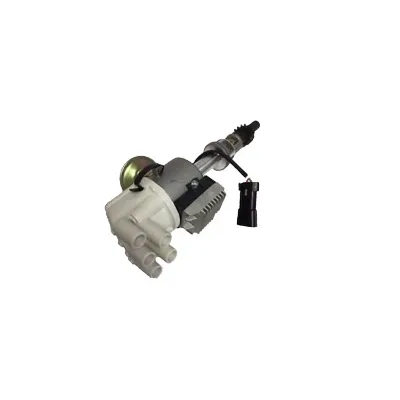


Automobile Ignition Coil, Product Model: 90048-52130, Automobile Ignition Coil
$13.00 - $18.00
MOQ: 10 Pieces


$0.01 - $0.02
MOQ: 100 Pieces
Comprehensive Sourcing Guide
Strategic Sourcing Guide for Universal Ignition Distributors
Navigating the global market for universal ignition distributors requires a disciplined approach that balances technical compatibility with rigorous supplier verification. For procurement professionals, the core challenge lies in distinguishing between generic aftermarket components and those engineered to meet specific OEM standards. The following guide synthesizes available product attributes and industry best practices to assist buyers in sourcing reliable ignition systems without relying on unverified claims or speculative data.
Technical Specifications and Compatibility Verification
The primary technical hurdle in sourcing a Universal Ignition Distributor is ensuring precise compatibility with the target vehicle's engine management system. Unlike OEM-specific parts, universal components often rely on adaptable mounting points or sensor interfaces. Buyers must scrutinize the "Working Model" and "Voltage Model" specifications before placing orders. Data indicates that specific units operate on a Hall Sensor working model, which is a critical distinction from older contact-point systems or newer electronic coil-on-plug configurations. The voltage model is frequently listed as "Negative," a parameter that must align with the vehicle's existing electrical architecture to prevent system failure.
Furthermore, the operating voltage range is a vital specification. Observed data suggests a working voltage range of 6-15V, which covers standard automotive 12V systems but requires confirmation that the specific unit can handle voltage spikes common in older or modified engines. The physical dimensions are equally critical; specifications such as "Same as OE" (Original Equipment) indicate that the distributor is designed to fit existing mounting brackets without modification. However, buyers should verify the "Size" and "Weight" of the specific lot, as observed weights vary significantly, ranging from 0.02kg for smaller electronic components to 0.9kg for heavier mechanical assemblies.
The following table outlines key technical parameters that must be cross-referenced with the vehicle's service manual:
| Parameter | Critical Observation | Verification Requirement |
|---|---|---|
| Working Model | Hall Sensor | Confirm sensor type matches engine ECU requirements. |
| Voltage Model | Negative | Ensure compatibility with vehicle grounding system. |
| Operating Voltage | 6-15V | Verify stability under load and idle conditions. |
| Fitment | Same as OE | Measure mounting flange and shaft length against vehicle. |
| Material | Aluminum (Al) | Check for corrosion resistance in harsh environments. |
Compliance and Certification Standards
In the B2B automotive sector, certification is not merely a marketing asset but a baseline requirement for liability and safety. While the specific product listings mention certifications such as ISO9001 and CE, buyers must treat these as attributes of the supplier's quality management system rather than guarantees of every individual unit's performance. The presence of ISO9001 certification for a distributor implies that the manufacturing process adheres to international quality management standards, but it does not automatically validate the specific ignition component's durability.
Buyers should also look for compliance with specific automotive standards. The data references a "hall sensor" standard and a "12V" standard, which serve as baseline electrical and functional benchmarks. However, relying solely on these generic labels is insufficient. Procurement teams must request documentation proving that the distributor meets the specific regulatory requirements of the destination market, such as ECE regulations in Europe or DOT standards in the United States. The "Reference No." and "OE No." fields, such as 93442429 or 22100-K7201, are essential for tracing the part back to its original equipment design. Verifying that the supplier can provide a direct mapping between their part number and the original OE number is a crucial step in ensuring compliance with vehicle safety standards.
Cost Drivers and Pricing Structures
Understanding the cost drivers for ignition distributors is essential for budgeting and negotiation. The observed price range in the market spans from $0.01 to $90, a wide variance that reflects differences in material quality, manufacturing complexity, and brand positioning. The lower end of this spectrum often corresponds to basic components or those with minimal packaging, while the higher end typically includes units with advanced Hall sensors, comprehensive warranties, and robust packaging.
The "Weight" of the product is a significant factor in logistics costs. With observed weights ranging from 0.02kg to 0.9kg, the shipping cost per unit can vary drastically depending on the volume and density of the order. Heavier units, such as those weighing 0.9kg, will incur higher freight charges compared to lighter electronic modules. Additionally, the "Packing" specification plays a role in cost. Units packaged in "Neutral Box with Foam" or standard "Box" packaging may have different handling costs compared to those requiring custom "to Be Negotiated" packaging solutions.
Buyers should also consider the "MOQ" (Minimum Order Quantity), which ranges from 1 to 1000 units. While a low MOQ of 1 allows for small-scale testing, it often results in a higher unit price. Conversely, ordering at the upper end of the MOQ range can significantly reduce the per-unit cost but increases inventory risk. The "Customization" availability is another cost driver; if a buyer requires specific modifications to the distributor to fit a unique vehicle model, the supplier may charge a premium for tooling or engineering time.
Typical Applications and Vehicle Fitment
The versatility of universal ignition distributors is evident in their application across a wide range of vehicle makes and models. The data highlights specific fitments for Chevrolet, Nissan, and Hyundai, indicating that these components are designed to replace original parts in diverse markets. For instance, a specific model is noted for use in Chevrolet vehicles from 1962-1974, suggesting a strong application in the classic car restoration market. Another model is specified for Nissan Livina and Grand Livina from 2009-2016, demonstrating relevance to modern compact vehicles.
The engine compatibility is equally diverse, with references to engines ranging from 2.0 D to 3.8 liters. This variability underscores the importance of matching the distributor to the specific engine displacement and configuration. The "Color" of the unit, such as Red/Black or Silver, is often an aesthetic choice but can also indicate different material treatments or internal component configurations. Buyers must ensure that the "Year" and "Car Model" specifications align perfectly with their inventory requirements. A mismatch in the production year, even by a single year, can render the distributor incompatible due to changes in engine management systems or sensor placements.
Supplier Evaluation and Origin Verification
Evaluating suppliers requires a focus on their geographic origin and operational transparency. The product data indicates origins in "China" and specifically "Zhejiang, China," a region known for its manufacturing capabilities but also subject to varying quality standards. While the location itself is not a negative indicator, it necessitates a more rigorous vetting process. Buyers should verify the supplier's physical address and request a video tour of the facility to confirm that the claimed ISO9001 certification is active and that the production lines are dedicated to automotive components.
The "Warranty" period is a key metric for supplier confidence. A standard warranty of "1 Years" is observed in the listings, which serves as a baseline for after-sales support. However, buyers should negotiate terms that extend beyond the minimum, particularly for bulk orders. The "Reference No." and "OE No." provided by the supplier should be cross-referenced with independent databases to ensure accuracy. Suppliers who can provide a comprehensive list of compatible vehicles and engine types, rather than just a single model number, are generally more reliable.
Quality Control and Performance Assurance
Quality control in the ignition distributor market hinges on the verification of critical components like the Hall sensor and the voltage regulator. Since the "Working Model" is often a Hall Sensor, the sensitivity and durability of this sensor are paramount. Buyers should request test reports that verify the sensor's response time and resistance to vibration and heat. The "Material" specification, often Aluminum (Al), should be verified for purity and casting quality to prevent corrosion or structural failure.
The "Standard" of the product, such as the "12V" or "2.1KG" specifications, must be validated through independent testing. While the supplier may claim compliance, the buyer should insist on sample testing before committing to a large order. The "Size" being "Same as OE" is a claim that must be physically measured against a genuine part. Any deviation in dimensions can lead to installation issues or premature wear. Additionally, the "Color" and "Packing" should be inspected to ensure they meet the buyer's branding and protection requirements.
Long-Term Procurement Considerations
Sourcing ignition distributors is not a one-time transaction but a long-term partnership that requires ongoing relationship management. The "Customization" availability suggests that suppliers should be flexible enough to adapt to changing vehicle models or customer requirements. Buyers should establish clear communication channels for updates on product changes or discontinuations. The "Lead Time" and "MOQ" should be reviewed periodically to ensure they remain competitive as market conditions evolve.
Furthermore, the "Warranty" terms should be revisited annually to ensure they remain favorable. As the market for universal parts becomes more saturated, suppliers may offer extended warranties or better support packages to differentiate themselves. Buyers should also monitor the "Origin" of the products to ensure that geopolitical factors or trade regulations do not disrupt the supply chain. By maintaining a proactive approach to supplier evaluation and quality control, procurement teams can secure a reliable supply of ignition distributors that meet the demanding standards of the automotive industry.
FAQs
What certifications do universal ignition distributors typically have?
Products often carry ISO9001 and CE certifications. These indicate the supplier follows quality management standards, but buyers must verify that specific units meet destination market regulations like ECE or DOT.
Which working model should I look for in an ignition distributor?
Many units operate on a Hall Sensor working model. This is critical for compatibility with modern engine ECUs, distinguishing them from older contact-point systems or newer coil-on-plug configurations.
Can I find distributors compatible with Chevrolet vehicles from the 1960s?
Yes, specific models fit Chevrolet cars from 1962 to 1974. Buyers must ensure the engine displacement and voltage model match the vehicle's original equipment to prevent system failure.
What is the typical working voltage range for these components?
The observed working voltage range is 6 to 15 volts. This covers standard 12V automotive systems, but stability under load and voltage spikes must be verified for older or modified engines.
How does the product weight affect shipping costs?
Weights vary significantly from 0.02kg to 0.9kg per unit. Heavier mechanical assemblies incur higher freight charges, so logistics costs must be calculated based on the specific lot density.
Are customization options available for these ignition systems?
Customization is available for specific vehicle requirements. Suppliers may charge a premium for engineering time or tooling if modifications are needed to fit unique mounting points or sensor interfaces.
What warranty periods are commonly offered by suppliers?
A standard warranty of 1 year is frequently observed. Buyers should negotiate terms extending beyond this minimum, especially for bulk orders, to ensure adequate after-sales support and liability coverage.