Crystal Ball Candle Holder Suppliers and Manufacturers
Compare 14 verified suppliers offering crystal ball candle holders from China Zhejiang and Shandong. Review response times, lead times, certifications, and MOQs to select a factory. Contact suppliers directly to request samples and confirm customization options; review the available evidence before requesting comparable quotations from suitable candidates.
Suppliers List

Pujiang E-Thing Craft Co., Ltd.
- Manufacturer/Factory
- China Zhejiang
- Lead time0 days
- Avg. response≤ 7h
Main productsAward, Trophy, Gifts, Award Crafts, Business Gifts, Giveaways, Rewards, Recognition Rewards, Trophies Rewards, Decoration
Main marketsSouth America,Eastern Europe,North America,Western Europe

Golden Ace Industrial Co., Ltd.
- Verified by BV
- Combined
- China Shandong
- Lead time60 days
- Avg. response≤ 8h
Main productsGlassware, Kitchenware, Houseware, Glass Vase, Giftware
Main marketsAfrica,Southeast Asia/ Mideast,Europe,Australia,North America


New Arrival Unique Candlesticks Stand Antique Decorative Candle Holders
Contact supplier
MOQ: 300 Pieces


Yiwu Justsy Imp & Exp Co., Ltd.
- Verified by BV
- Combined
- China Zhejiang
- Lead time30 days
- Avg. response≤ 3h
Main productsCrystal Award, Crystal Trophy, China Crystal, Crystal Animal Figurines, Crystal Gift, Crystal Craft, 3D Laser Crystal, Crystal Keychain, Crystal Jewelry, Crystal Wine Stopper
Main marketsAfrica,Southeast Asia/ Mideast,East Asia(Japan/ South Korea),Europe,Australia,North America

- Verified by TUVRHEINLAND
- Trading Company
- China Hunan
- Lead time45 days
- Avg. response≤ 2h
Main productsCeramic Mug, Vacuum Flask, Dinner Set, Cup, Mug, Thermal Bottle, Ceramic Dinner Set, Glass Jar, Glass Cup, Wine Cup
Main marketsSoutheast Asia/ Mideast

Luxury Dinner Wedding Decorations Crystal Candlestick Glass Candle Holder
$0.39 - $0.99
MOQ: 1000 Pieces


Xiamen Athome Household Products Co., Ltd.
- Verified by SGS
- Trading Company
- China Fujian
- Lead time30 days
- Avg. response≤ 4h
Main productsCandle Holders, Drinkware, Arts&Handcrafts & Gifts, Home Decoration, Kicthenware, Tableware
Main marketsSoutheast Asia/ Mideast,East Asia(Japan/ South Korea)

Crystal Candleholder Crystal Raw Stone Candle Stick Home Decorative Crafts
$5.19 - $9.99
MOQ: 50 Pieces


Jiangyin Keling Glass Products Co., Ltd.
- Verified by SGS
- Combined
- China Jiangsu
- Lead time15 days
- Avg. response≤ 3h
Main productsLED Lighting Glass Lens, Outdoor Lighting Glass Cover, Borosilicate Glass Lens, Explosion Proof Light Glass, Street Light Glass Lens, Pressed Glass Components, Optical Glass Lens, Tempered Glass for Lighting, Industrial Glass Parts, Custom Glass Lens
Main marketsDomestic,Europe

Yancheng Xinboyuan Glass Co., Ltd.
- Verified by BV
- Trading Company,Manufacturer/Factory
- China Jiangsu
- Lead time23 days
- Avg. response≤ 12h
Main productsGlass Table Lamp, Glass Perfume Bottles, Glass Lampshade, Glass Labware, Glass Bottles & Jars, Glass Candlesticks, Borosilicate Mug & Cups, Glass Vases & Terrariums, Glass Beakers, Glass Reagent Bottles
Main marketsEastern Europe,Mid East,North America,Western Europe

Zibo Melory Import & Export Trade Co., Ltd.
- Trading Company,Manufacturer/Factory
- China Shandong
- Lead time45 days
- Avg. response≤ 17h
Main productsGlass Candle Holder, Glass Jar, Glass Votive, Glass Diffuser, Glass Bottle, Glass Vase, Matches, Ceramic Candle Holder, Ceramic Holder for Incense, Glass Candle Jar
Main marketsSouth America,Eastern Europe,North America,Western Europe

Xuzhou Risen Industry and Supply Co., Ltd
- Verified by TUVRHEINLAND
- Trading Company
- China Jiangsu
- Lead time30 days
- Avg. response≤ 3h
Main productsHousehold Adornment, Household Supplies, Home Decoration, Compressed Sofa, Dining Furniture, Bothroom Organizer, Kitchen Storage, Glass Ornaments, Ceramic Tableware, Home Fragrance
Main marketsSouth America
Pujiang Kingko Crafts Co., Ltd.
- Verified by SGS Group
- Trading Company
- Lead time10 days
- Avg. response≤ 3h
Main productsCrystal Craft, Rhinestones, Prism Pendants
Main marketsNorth America(40%), Western Europe(30%), Southeast Asia(10%)
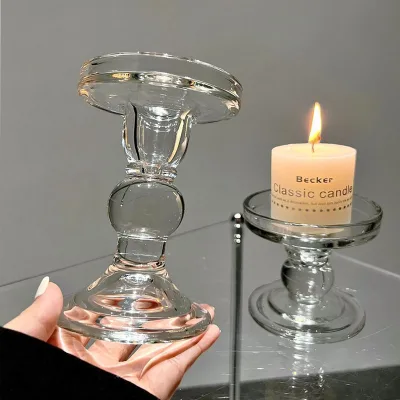
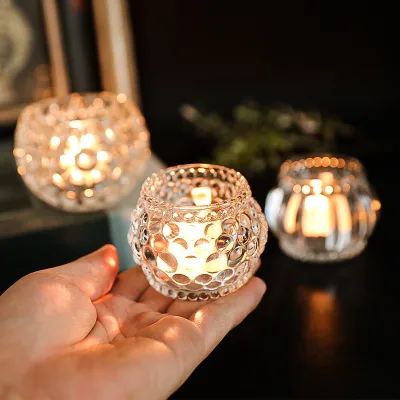
High Quality Small Glass Ornament Glass Candles Holder Candle Stick Holder Glass
Contact supplier
MOQ: 2

Qingdao Art Fortune Imp/Exp Co., Ltd.
- Verified by TUVRHEINLAND
- Trading Company
- China Shandong
- Lead time30 days
- Avg. response≤ 4h
Main productsScented Candle, Reed Diffuser, Glass Jar Candle, Flameless LED Wax Candle, Candle and Home Fragrance, Tealight Candle, Candle Holder, Candle Gift Set, Handmade Pillar Candle, Tin Candle
Main marketsAfrica

Foshan Shuaige Furniture Co., Ltd.
- Verified by TUVRHEINLAND
- Combined
- China Guangdong
- Lead time23 days
- Avg. response≤ 4h
Main productsWedding Chair, Wedding Table, Dining Furniture, Dining Chair, Dining Table Set, Stainless Steel Chair, Wedding Furniture, Wedding Backdrop, Banquet Furniture, Hotel Chair and Table
Main marketsDomestic


Beautiful Candle Holders Candlestick Candle Jars Centerpieces Event Decoration
$25.00 - $80.00
MOQ: 1 Pieces

Shijiazhuang Tabo Candles Sales Co., Ltd.
- Verified by BV
- Combined
- China Hebei
- Lead time15 days
- Avg. response≤ 6h
Main productsCandle
Main marketsSoutheast Asia/ Mideast,East Asia(Japan/ South Korea),Europe,Australia,North America
FUZHOU SHOO-IN IMP & EXP CO., LTD.
- Verified by SGS
- Trading Company
- China Fujian
- Lead time15 days
- Avg. response≤ 3h
Main productsPadel Ball, Tennis Ball, Hat, Pet Leash, Pickleball, Yoga Mat, Sports Towel
Main marketsEast Asia(Japan/ South Korea),North America


Comprehensive Sourcing Guide
Crystal Ball Candle Holder Supplier Concentration and Factory Types
Suppliers marketing a Crystal Ball Candle Holder typically fall into two broad camps: crystal and giftware manufacturers that position candleholders as decorative handcrafts, and glassware producers whose catalogs also cover kitchenware, vases and houseware. Results observed for this category include a manufacturer/factory operation based in Zhejiang whose main products list awards, trophies, business gifts and decoration items, alongside crystal candleholder products in sizes such as 5", 7", 9", 12" and taller floor-style designs. A second supplier type, a combined manufacturer and trading operation in Shandong, lists glassware, kitchenware, glass vases and giftware as core products, with blown glass candleholders in models such as 10x8cmH and Dia.10X22.2cmH formats. Understanding which camp a supplier belongs to helps you predict pricing structure, customization depth and order flexibility.
Beyond the two named regional examples, buyers should not assume concentration is uniform across China. To identify clusters yourself, filter search results by province and note where verified manufacturers repeatedly appear for glass or crystal decor, then cross-check the main-products field for candleholder-specific vocabulary. Factory-type labels matter: a pure manufacturer may offer OEM tooling but enforce higher minimums, while a combined or trading entity may consolidate mixed glass and metal SKUs, such as the metal candleholder listings that appear beside glass items in this category. Record the company type, location and product focus of every candidate before shortlisting.
How to Verify Crystal Ball Candle Holder Suppliers
Verification starts with the platform-displayed attributes, but you must confirm them independently. In the current results, one Shandong-based combined supplier shows ISO9001:2015 and ISO14001:2015 system certifications and a BV verification badge, which is meaningful evidence of audited management systems. However, a certification attached to a company does not automatically cover every candleholder SKU, and one Zhejiang manufacturer in the results displays no listed system certification at all, only OEM capability. Treat missing credentials as a flag to investigate, not an automatic disqualification: request certificate copies with scope statements and confirm they are current, and ask whether the certificate holder is the factory or an affiliated trading company.
For physical and production verification, go beyond paperwork. Ask each candidate for a video walk-through of the glass melting, blowing or crystal polishing lines relevant to a Crystal Ball Candle Holder, and check whether the attribute data they publish is internally consistent — several listings in the observed results declare "Customization: Available" and OEM or OEM/ODM development capability, so ask for concrete examples of past custom projects. Request references from buyers in home decor or giftware, and order pre-production samples under the exact model numbers quoted, such as RZT3003 or PA80, so that the sample you approve matches a traceable listing. Finally, confirm the supplier responds within the displayed window: one supplier shows a response time near 6 hours and another near 7.5, but you should measure actual reply speed on your own inquiries over several days.
What to Compare Across Crystal Ball Candle Holder Suppliers
Build a comparison sheet using the dimensions actually displayed on supplier profiles, without assuming every supplier shows every attribute. Useful columns include location, company type, main products, response time, lead time, minimum order quantity, research capability (OEM versus ODM/OEM), and any certification or verification badges. In the observed results, one Zhejiang factory lists a lead time of zero — which likely reflects an unpopulated field rather than instant shipping, so always confirm — while the Shandong combined supplier shows 60 days. That spread alone justifies independent confirmation of production calendars before you commit to a retail launch date. Response times of roughly 6 versus 7.5 hours suggest comparable communication levels, but measure this yourself over multiple exchanges.
Product-level comparison is equally important. Minimum order quantities in the observed listings range dramatically: a glass rod candleholder at an MOQ of 1, crystal candleholders at 5 and 6 units, a wedding table crystal candleholder at 300, and a glass golden ball candle holder at 5,000 pieces with a unit price band of roughly $1.00 to $1.50. Low MOQs usually mean stock designs at higher unit cost; high MOQs with low unit prices suit mass retail. Also compare packing declarations — gift box, secure packing, brown box, carton — and declared sizes, since a 4.75" diameter by 20.5" height piece has very different freight characteristics than a 22cm stick.
Common Crystal Ball Candle Holder Sourcing Risks
The most frequent risk in this category is material ambiguity. Several observed listings describe the material as "artificial crystal," which generally means glass rather than cut lead crystal, yet product names use "crystal" freely. If your market requires genuine crystal or lead-content declarations, confirm the composition in writing and through testing before mass production, because a buyer expecting optical-grade crystal may receive polished glass. A second risk is size and finish drift: listings quote mixed units — 12", 22cm, 4.75"d x 15.5"h — and a supplier quoting in inches and producing in centimeters can deliver pieces off by a noticeable margin. Insist on a signed dimensioned drawing with tolerances.
Certification scope is a third risk. A supplier may hold ISO9001:2015 and ISO14001:2015 certificates for its management system while the candleholder itself carries no product-safety test report, and candleholders that hold lit candles can face flammability, stability or food-adjacent decor rules in some markets. Ask what product-level testing exists; if evidence is unavailable, budget for third-party testing. Other common pitfalls include misreading a zero or blank lead time as fast delivery, assuming an OEM label means in-house tooling rather than outsourced finishing, and underestimating breakage. Glass and crystal decor shipped in cartons or brown boxes without secure inner packing generates high damage claims, so specify drop-test-validated packaging and a stated breakage allowance in the contract, especially for heavy ball-topped designs.
Crystal Ball Candle Holder Regional Sourcing and Logistics
The observed evidence points to two sourcing regions worth tracking. Zhejiang suppliers in this results set position themselves as crystal gift and decoration manufacturers, offering items like a 12-inch crystal candleholder and multi-size sets, with OEM capability listed — a fit for buyers seeking ornamental, handcrafted-feeling pieces and lower MOQs in the single-digit range. Shandong suppliers position themselves as glassware and houseware producers, with blown glass candleholders, 60-day lead times, MOQs from 300 to 5,000 pieces, and ODM/OEM development — a fit for volume home decor programs. Keep these profiles as working hypotheses for this category only; glassware clusters and gift clusters shift, and the same province can host both types.
Logistically, plan around the product's weight and fragility. A tall crystal or glass piece of 20.5 inches with a dense ball element is dimensional-weight sensitive, so compare sea freight per unit against express for samples, and confirm whether quotes are FOB, EXW or CIF — the observed listings do not state incoterms, so ask before comparing prices. Packing declarations matter here too: gift box packing supports retail-ready shipments but adds volume, while secure packing prioritizes protection. For mixed orders, a combined glassware supplier may consolidate candleholders with vases and kitchenware into one container, improving load efficiency, whereas a single-product crystal factory may ship partially filled containers. Confirm consolidation ability and container utilization calculations with each candidate.
Crystal Ball Candle Holder Commercial Terms and Order Planning
Structure commercial terms around the wide MOQ and price spread visible in this category. With listings ranging from single-piece minimums to 5,000-piece commitments at roughly $1.00–$1.50 per unit, the right strategy depends on your sales channel: order small quantities of assorted stock designs to test the market, then shift to a high-MOQ, low-unit-price program once a design proves out. Negotiate payment terms that protect you on first orders — typically a deposit with balance after inspection — and be explicit about tooling and customization fees when a listing says customization is available, since OEM and ODM arrangements may carry separate mold or sampling charges not shown in the listing price.
Order planning should account for the 60-day lead time shown by the volume-oriented supplier and the possibility that other suppliers' lead times are unpopulated rather than short. Build a calendar backward from your retail window, adding time for sampling, a pre-production approval, mass production, inspection and shipping, and confirm holiday shutdown periods in China, which can extend effective lead times around major festivals. Verify what "secure packing," "gift box," "brown box" or "carton" actually means in cost terms, since packing upgrades change unit price. Finally, revisit the comparison sheet quarterly: response times, MOQs and lead times change, and re-running your search with the same core keyword will surface a different supplier set than the one you first evaluated.
FAQs
Where are crystal candle holders manufactured?
Most listed crystal candle holders originate from China, specifically Zhejiang and Shandong provinces. These regions host manufacturers and factories specializing in glassware and home decor. Buyers should verify specific factory locations during the sourcing process to ensure alignment with logistics needs.
What is the minimum order quantity for these items?
Minimum order quantities vary significantly by product and supplier. Some crystal candle holders require as few as one unit, while others demand 300 or 5000 units. Buyers must check individual product listings to confirm the specific MOQ before placing an order.
How long does it take to receive these candle holders?
Lead times differ among suppliers, with some listing zero days and others requiring up to 60 days. The specific production schedule depends on the manufacturer and order volume. Buyers should confirm the exact lead time with the supplier before finalizing purchase agreements.
Are customization options available for crystal candle holders?
Yes, customization is available for many crystal candle holder models listed. Suppliers offer options for different sizes, materials, and designs. Buyers should verify specific customization capabilities and requirements directly with the manufacturer to ensure the final product meets their unique design specifications.
What certifications do the manufacturers hold?
Some manufacturers hold ISO9001:2015 and ISO14001:2015 certifications. Others may have factory audits like BSCI or FSC. Buyers should request current certification documents from the supplier to verify compliance with international quality and environmental standards before proceeding with large orders.
What materials are used for these candle holders?
Materials include artificial crystal, polished glass, and various glass types. Some products are described as handcrafted or machine-polished. Buyers should review product attributes to confirm the exact material composition and finish to ensure it matches their aesthetic and durability requirements.
How quickly do suppliers respond to inquiries?
Response times vary, with some suppliers responding within approximately six hours and others taking around seven and a half hours. Buyers should expect different reply speeds depending on the specific manufacturer. Prompt communication is essential for clarifying product details and negotiating terms effectively.