Cutting Temporary Paving Mats Suppliers and Manufacturers
Compare 10 verified suppliers of Cutting Temporary Paving Mats based on location, lead times, and certifications. Review product specifications like loading capacity and material type, then request quotes directly from the listed factories; review the available evidence before requesting comparable quotations from suitable candidates.
Suppliers List

Shandong Ningjin Xinxing Chemical Co., Ltd.
- Verified by TUVRHEINLAND
- Combined
- China Shandong
- Lead time15 days
- Avg. response≤ 3h
Main productsHDPE Sheet, Ground Protection Mat, Composite Road Mat, Crane Outrigger Pads, Synthetic Ice, Dasher Board, Shooting Pad, Suction Box Cover, UHMWPE Fender Pad
Main marketsSoutheast Asia/ Mideast,Europe,Australia,North America


Plastic Construction Ground Mats Heavy Duty Composite Temporary Road Mat
$166.94 - $204.03
MOQ: 1000 Square Meters


Dezhou Rich Rubber and Plastic Products Co., Ltd.
- Verified by BV
- Trading Company
- China Shandong
- Lead time15 days
- Avg. response≤ 6h
Main productsRoad Mat, Marine Fender Facing Pad, Synthetic Ice Rink Panels, Shim Pads, Outrigger Pads, Ground Protection Mats, Mc Nylon Sheet, Rubber Fender, PE Sheet
Main marketsNorth America

Abosn (Qingdao) New Plastic Products Co., Ltd.
- Verified by TUVRHEINLAND
- Trading Company,Manufacturer/Factory
- China Shandong
- Lead time23 days
- Avg. response≤ 2h
Main productsComposite Road Mat, Ground Protection Mat, Crane Outrigger Pad, UHMWPE Sheet, PE Rod, HDPE Sheet, PP Sheet, Hockey Dasher Board, Hockey Shooting Pad, Engineering Plastic Component
Main marketsSouth America,Eastern Europe,Mid East,North America,Southeast Asia,Eastern Asia,Oceania,Western Europe,Africa
Ningjin Hongbao Chem Co., Ltd.
- Verified by SGS Group
- Manufacturer, Trading Company
- Shandong, China
- Lead time7 days
- Avg. response≤ 8h
Main productsUHMW PE Sheets, HDPE Boards, Borated Polyethylene Products, Temporary Road Mats, Boron HDPE Sheets
Main marketsOceania(21%), Western Europe(21%), North America(13%)
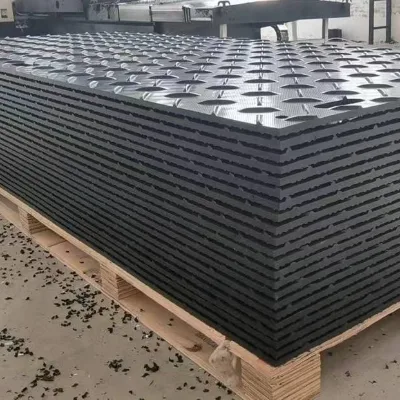
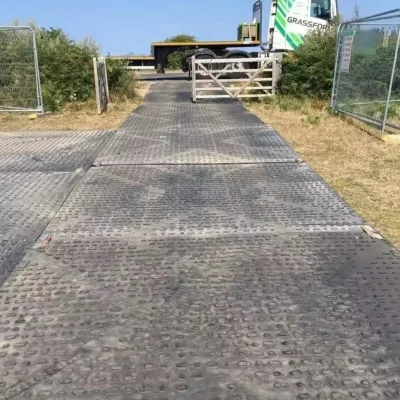
Domestic and International Best-selling Temporary Paving Mats for Protecting Lawns
$1.77 - $3.25
MOQ: 10 kilograms

Hebei Peliou New Materials Technology Co., Ltd
- Verified by TUVRHEINLAND
- Combined
- China Hebei
- Lead time15 days
- Avg. response≤ 4h
Main productsUHMWPE Sheet, HDPE Sheet, PP Sheet, PE1000 Sheet, Ground Protection Mats and Outrigger Pads, UHMWPE Guide Rail, Nylon Sheet, Plastic CNC Parts, PE Cutting Boards, PE Plastic Rod
Main marketsSoutheast Asia/ Mideast

Henan Okay Plastic Industry Co., Ltd.
- Verified by TUVRHEINLAND
- Combined
- China Henan
- Lead time23 days
- Avg. response≤ 10h
Main productsHDPE Sheet, UHMWPE Sheet, Ground Protection Mat, Synthetic Ice, Temporary Road, Borated Polyethylene, Cutting Board, Chopping Board, UHMW Sheet, Plastic Road Plates
Main marketsEast Asia(Japan/ South Korea),Australia,North America

Temporary Mat Road Temporary Road Mats Temporary Roadway Interlocking Mat Protect The Road
$80.00 - $105.00
MOQ: 30 Pieces


Impact Resistant Waterproof Durable Ground Protection Temporary Road Mats or Floor Mats
$2.30 - $2.70
MOQ: 1000 kg


Abosn(Dezhou) New Materials Co., Ltd.
- Verified by TUVRHEINLAND
- Combined
- China Shandong
- Lead time15 days
- Avg. response≤ 2h
Main productsPE1000 Sheets, HDPE Sheets PE 500 PE 300 Sheets, Ground Protection Mats, Composite Heavy Duty Ground Mats, Crane Outrigger Pads Jack Pads, Ice Rink Dasher Board, Hockey Shooting Pads, Hockey Floor Synthetic Ice Tiles
Main marketsSoutheast Asia/ Mideast

Shandong Hongyue Engineering Materials Co., Ltd.
- Verified by SGS
- Combined
- China Shandong
- Lead time15 days
- Avg. response≤ 3h
Main productsGeomembrane, Geotextile, Cement Blanket, Weed Control Fabric, Ground Protection Mat, Composite Geomembrane, Geosynthetic Clay Liner(Gcl), HDPE Sheet, Geocell, Geogrid
Main marketsSoutheast Asia/ Mideast,North America

Cutting Service Temporary Road Mats for Construction Site Grass Protection Mat
$1.30 - $3.00
MOQ: 500 kg

$10.00 - $18.00
MOQ: 1000 Square Meters


$10.00 - $18.00
MOQ: 1000 Square Meters

$10.00 - $18.00
MOQ: 1000 Square Meters

Ground Protection Mat Road Protection Mat 12 7mm Thickness Custom Options
$19.00 - $22.00
MOQ: 1000 Square Meters

Langbo Environmental Engineering Co., Ltd.
- Verified by SGS
- Trading Company
- China Shandong
- Lead time15 days
- Avg. response≤ 1h
Main productsGeocell, Geomembrane, Geotextile, Ground Protection Mat, Geogrid, Geosynthetic Clay Liner, Drainage Board, Geobag, Geonet, Woven Bag
Main marketsSouth America


Customizable Temporary Road Mat and Paving Slabs for Unique Requirements
$8.00 - $50.00
MOQ: 30 Pieces

Henan Yiqi Plastic Products Co., Ltd
- Verified by BV
- Trading Company
- China Henan
- Lead time15 days
- Avg. response≤ 3h
Main productsHDPE Sheet, PP Sheet, Plastic Cutting Board, HDPE Conveyor Roller, Temporary Road Mat, Crane Outrigger Pad, Plastic Pallet, Plastic Irregular Part, Fender Facing Pad
Main marketsSoutheast Asia/ Mideast,Europe


Corrosion Resistant Safety Temporary Ground Plastic Road Mat Plastic Paving Board
$55.00 - $70.60
MOQ: 20 Pieces


Comprehensive Sourcing Guide
Cutting Temporary Paving Mats Supplier Concentration and Factory Types
The supplier results for Cutting Temporary Paving Mats point to a clear manufacturing concentration in Shandong, China, with product origin and location data consistently tied to that province. Shandong is a recognized base for engineered plastic sheet production, which matters because temporary paving mats are manufactured from HDPE and UHMWPE sheet stock pressed or molded into access panels. Buyers sourcing in volume should treat this region as a primary cluster to investigate, while still confirming that any listed location reflects an actual factory rather than a sales office registered in the province.
The company_type label in the current results shows "Combined," meaning suppliers may operate as both manufacturers and trading companies. This hybrid status is common in the plastic sheet sector, where a producer of HDPE sheets also lists ground protection mats, composite road mats, crane outrigger pads, synthetic ice panels, dasher boards, shooting pads, suction box covers, and UHMWPE fender pads. The breadth of this main product range is a useful signal: a supplier deeply invested in polyethylene sheet processing is more likely to control mat pressing, pattern molding, and connector-hole machining in-house. Buyers should ask each candidate which operations are performed on-site and which are subcontracted, because sheet extrusion, mat forming, and CNC cutting are frequently split across different workshops even when one company holds the export contract.
How to Verify Cutting Temporary Paving Mats Suppliers
Verification should start with the credentials actually displayed in the supplier results and then extend to what those credentials do not cover. The current listings show system certifications at the ISO9001:2015 and ISO14001:2015 level, which address quality management and environmental management respectively, plus a TUV Rheinland verification badge on the company profile. These are meaningful starting points, but neither proves that a specific mat batch meets a stated loading capacity, so buyers should request material test reports tied to the exact production run rather than relying on profile-level badges alone.
Practical verification steps for this category include confirming the factory's legal name and address against the Shandong registration, requesting a live video walkthrough of the pressing line and CNC cutting equipment, and asking for references from construction or event-flooring buyers with similar order sizes. Because the results show ODM and OEM capability among listed suppliers, buyers with custom sizes or connector patterns should ask for engineering drawings and a signed specification sheet before sampling. Product attribute data in the listings, such as a 5-year guarantee on one mat model, should be converted into written warranty terms in the purchase contract. Finally, verify that the person responding on the marketplace is an employee of the exporting entity, not a commission agent, since combined trading-manufacturing structures make this distinction easy to blur.
What to Compare Across Cutting Temporary Paving Mats Suppliers
Compare suppliers using the dimensions visible in the results rather than assumptions. Lead time data shows a 15-day figure among the listed suppliers, which gives a benchmark for standard production, but custom colors, thicknesses, or connector configurations may extend it. Response time data of 2.26 hours provides another comparison point for communication speed, though a fast first reply does not guarantee consistent technical answers, so test each supplier with a detailed specification question before shortlisting. MOQs in the current results vary dramatically, from 10 units on one access mat listing, to 50 on another, to 100 on a 12mm portable roadway mat, up to 1000 on a large heavy-duty composite panel, so align MOQ with your real project quantity.
Price ranges also differ sharply by product construction: roughly $2 to $4 per unit on the thin 12mm mat, versus $88 to $204 per panel on larger composite and HDPE road mats. Beyond numbers, compare main product focus, since a supplier listing HDPE sheets and ground protection mats alongside crane pads and synthetic ice demonstrates deeper polyethylene processing capability than a generalist. Check whether ODM or OEM service is offered where customization matters, and note that not every supplier displays a given attribute, so treat missing data as a question to ask rather than a disqualifier. Build a comparison table covering lead time, MOQ, response speed, certification, location, and customization support before requesting quotes.
Common Cutting Temporary Paving Mats Sourcing Risks
The most common risk in this category is a mismatch between advertised loading capacity and actual performance. Listings in the results claim capacities from 60-120 tonnes up to 60-180 tons, and one supplier states 4-300 tonnes depending on construction, but these figures depend on mat thickness, material grade, and subgrade conditions. If a supplier offers recycled HDPE raw material as an option, as one listing shows, clarify the recycled content percentage, because recycled stock can reduce impact strength in cold weather. Request third-party material testing on the specific batch before accepting capacity claims.
A second risk cluster involves specification drift and payment exposure. Product attributes such as 12mm thickness, 5mm pattern height, and water absorption below 0.01% should be written into the contract with tolerance ranges, since "engineering plastic sheet" descriptions can hide meaningful differences between HDPE and UHMWPE. The combined manufacturer-trader structure seen in the results creates a further risk: an intermediary may relay technical questions slowly or inaccurately, so insist on direct factory engineer contact for specification discussions. Beware of suppliers quoting unusually low prices per panel; a range like $88 to $104 versus $167 to $204 may reflect recycled content, thinner sections, or fewer connector features. Finally, verify that certifications shown on the profile cover the entity shipping the goods, and confirm packing details, since pallet-based packing affects both freight cost and on-site handling.
Cutting Temporary Paving Mats Regional Sourcing and Logistics
Because the supplier results place these factories in Shandong, China, buyers should plan logistics around that region's export infrastructure. Shandong's coastal access supports container shipping to most international construction markets, and polyethylene mats are well suited to containerized freight because they are lightweight relative to their load rating. One listing describes a mat weighing 40kg in a 1220x2440mm standard size, which two workers can handle without machinery, so factor manual-handling requirements into your site planning as well as your freight plan.
Packing and dimensional data in the results materially affect landed cost. Mats are packed by pallets or plywood pallets, and one large composite panel is listed at 4200x2195x108mm, a dimension that may require flat-rack or breakbulk handling rather than standard containers. Ask each supplier for pallet dimensions, stacking heights, and container-loading calculations before booking freight, and confirm whether the quoted price is FOB, CIF, or ex-works. The 15-day lead time shown in the results is production time only; add inland transport to port, vessel transit, and customs clearance when planning a construction schedule. For buyers outside East Asia, compare shipping from Shandong against any alternative clusters you identify independently, using freight cost per square meter of mat coverage as the comparison metric rather than unit price alone, since mat density and packing efficiency vary by design.
Cutting Temporary Paving Mats Commercial Terms and Order Planning
Order planning should begin with a pilot purchase matched to the smallest displayed MOQ. The current results show minimums of 10, 50, 100, and 1000 units depending on the product, so a buyer testing a new supplier can start at the low end with a standard-size mat before committing to a custom configuration. Use the pilot order to verify thickness, pattern height, connector-hole fit, and color consistency against the approved sample, then scale up in stages. Because one listing offers a 5-year guarantee, negotiate the same warranty into repeat orders and define claim procedures in writing.
Commercial terms deserve equal attention. Price ranges in the results, from a few dollars per thin mat to over $200 per heavy composite panel, mean small specification changes can move unit cost significantly, so lock dimensions, material grade, and recycled-versus-virgin content before signing. Confirm payment protection options available through the marketplace you use, and understand what escrow or trade assurance actually covers in your jurisdiction, since displayed verification badges do not substitute for payment security. The 15-day production lead time and roughly 2.3-hour response speed are useful planning anchors: place repeat orders ahead of your construction season, and allow extra time for OEM customization. Finally, agree on packing format, pallet quantity, and marking requirements at order confirmation, and keep the signed specification sheet with the proforma invoice as the single reference document for quality inspection before shipment.
Word count check: I'll count sections.
Section 1: heading 9 words + para1 ~103 + para2 ~122 ≈ 234. Section 2 ≈ 232. Section 3 ≈ 233. Section 4 ≈ 233. Section 5 ≈ 230. Section 6 ≈ 233. Total ≈ 1395. Within range.
Count paragraph word estimates more carefully:
S1 P1: "The supplier results... in the province." Count: The(1) supplier2 results3 for4 cutting5 temporary6 paving7 mats8 point9 to10 a11 clear12 manufacturing13 concentration14 in15 Shandong,16 China,17 with18 product19 origin20 and21 location22 data23 consistently24 tied25 to26 that27 province.28 Shandong29 is30 a31 recognized32 base33 for34 engineered35 plastic36 sheet
FAQs
What is the typical lead time for these mats?
The standard lead time for these temporary paving mats is 15 days from order confirmation. This duration applies to standard orders meeting the minimum quantity requirements. Buyers should confirm specific delivery schedules with the supplier before finalizing the purchase to ensure timely arrival at the project site.
What is the minimum order quantity for ground protection mats?
Minimum order quantities vary by product model, ranging from 10 units to 1000 units. Some heavy-duty composite road mats require a minimum of 1000 pieces, while smaller access mats may start at just 10 units. Buyers must check the specific product listing to determine the exact MOQ applicable to their needs.
Are these mats available with custom dimensions and colors?
Yes, customization is available for both dimensions and colors. Suppliers offer options including white, blue, black, and yellow, with sizes tailored to specific project requirements. Buyers can request custom patterns and connector holes to ensure the mats fit their unique temporary roadway or construction site applications perfectly.
What certifications do the manufacturers hold for these products?
Manufacturers hold ISO9001:2015 and ISO14001:2015 system certifications. Some product listings also reference ISO9001:2008 compliance. Additionally, the supplier is verified by TÜV Rheinland, indicating a level of quality assurance and adherence to international standards for their plastic and composite ground protection solutions.
What is the loading capacity of the temporary road mats?
Loading capacities range from 4 to 300 tonnes depending on the specific mat model and thickness. Some heavy-duty options support loads between 60 and 180 tonnes, while others are rated for up to 300 tonnes. Buyers should verify the exact capacity against their equipment weight to ensure safe usage on wetlands or construction sites.
Where are these temporary paving mats manufactured?
These mats are manufactured in Shandong, China. The products originate from this region and are shipped globally to meet international demand. Buyers should consider the shipping logistics and lead times associated with sourcing from this specific location when planning their procurement strategy for large-scale projects.
What is the response time for supplier inquiries?
The average response time for supplier inquiries is approximately 2.26 hours. This indicates a high level of responsiveness for potential buyers seeking quotes or technical details. Quick communication helps streamline the sourcing process and allows for faster decision-making regarding material selection and order placement.