Eco Friendly Christmas Stocking Suppliers and Manufacturers
Compare 15 verified suppliers offering Eco Friendly Christmas Stocking options with varying materials like plush and polyester. Review response times, lead times, and certifications such as BSCI and ISO 9001 to select the right factory for your needs; review the available evidence before requesting comparable quotations from suitable candidates.
Suppliers List

- Trading Company,Manufacturer/Factory
- China Guangdong
- Lead time0 days
- Avg. response≤ 15h
Main productsChristmas Ball, Christmas Decoration, Christmas Ornaments, Christmas Tree, Tinsel Garland, Mirror Ball, Disco Ball, Inside Painted Glass Ball

Jinjiang Jiaxing Supply Management Co., Ltd.
- Verified by TUVRHEINLAND
- Trading Company
- China Fujian
- Lead time30 days
- Avg. response≤ 1h
Main productsEVA Clogs, Flip Flop, Shoe Charms, Shopping Bags, Wristbands, Gifts, Promotional Gifts, Slipper, Sport Cap, Ball
Main marketsNorth America

Ningbo Yinzhou Wenhui Paper Co., Ltd.
- Verified by TUVRHEINLAND
- Manufacturer/Factory
- China Zhejiang
- Lead time45 days
- Avg. response≤ 10h
Main productsStationery Gifts Promotional Homeware, Pen, Pet Products, Board Game, Paper Tube, Notebook, Wooden Toys, DIY Toy, Puzzle, Gift Bag
Main marketsSouth America,Eastern Europe,Mid East,North America,Southeast Asia,Eastern Asia,Oceania,Western Europe,Africa


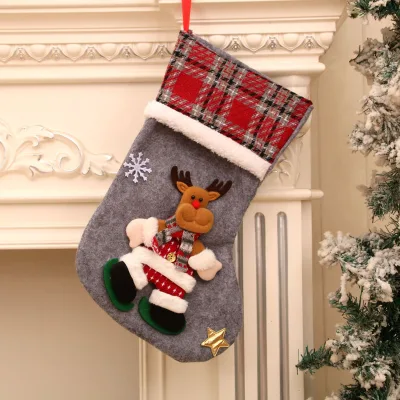
Factory Directly Sale Christmas Stocking Cute 25*2.5*24cm Elf Christmas Stocking
$9.79
MOQ: 5000 Pieces

- Verified by TUVRHEINLAND
- Trading Company
- China Jiangsu
- Lead time30 days
- Avg. response≤ 5h
Main productsHat and Cap, Bandana, Wristband, Bag, Socks, Christmas Items, Knit Hat, Sweatband, Tool Bag, Knitted Hat
Main marketsEurope,North America

ZHENJIANG KIMTEX INDUSTRIAL INC.
- Verified by SGS
- Combined
- China Jiangsu
- Lead time30 days
- Avg. response≤ 15h
Main productsBaseball Cap, Beanie Hat, Trucker Hat, Snapback Cap, Bucket Hat, Gloves, Scarf, Socks, Bandana, T-Shirt
Main marketsAfrica,Southeast Asia/ Mideast,East Asia(Japan/ South Korea),Europe,Australia,North America

Ningbo General Union Co., Ltd.
- Trading Company
- China Zhejiang
- Lead time23 days
- Avg. response≤ 14h
Main productsTable Lamp, Heat Press Machine, Home Appliance, Alarm Clock, Fans, Night Light, Solar Light, Kitchen Appliance, Pet Product, Sport Equipment
Main marketsSouth America,Eastern Europe,Mid East,North America,Southeast Asia,Eastern Asia,Oceania,Western Europe,Africa
Yiwu Monoblanks Import And Export Co., Ltd.
- Verified by TüVRheinland
- Manufacturer, Trading Company
- Lead time30 days
Main productsBags, Christmas Decoration Supplies, Celebration Party Supplies, Easter Decoration Supplies
Main marketsNorth America(50%), Oceania(15%), Eastern Europe(10%)

- Verified by SGS
- Trading Company
- China Zhejiang
- Lead time15 days
- Avg. response≤ 13h
Main productsChristmas Decoration, Christmas Tree, Christmas Gift, Party Decoration, Promotional Product, Festival Items, Gift, Valentine, Party Items, Halloween Decorations
Main marketsEurope,Australia

Wholesale Xmas Decoration High Capacity Christmas Stockings Capacity Knitted Christmas Stocking
$0.62 - $0.68
MOQ: 1500 Pieces


Hangzhou Yaoyang Technology Co., Ltd.
- Trading Company,Manufacturer/Factory
- China Zhejiang
- Lead time15 days
- Avg. response≤ 22h
Main productsPolyester Fiber, Plush Toys, Fabric, Air Cepration Plant, Paper
Main marketsSouth America,Eastern Europe,Mid East,North America,Southeast Asia,Eastern Asia,Oceania,Western Europe,Africa

Yiwu Shuangyuan Christmas Artware Co., Ltd.
- Verified by TUVRHEINLAND
- Combined
- China Zhejiang
- Lead time30 days
- Avg. response≤ 6h
Main productsChristmas Decoration, Christmas Tree, Christmas Ball, Christmas Santa, Christmas Ornament, Christmas Gift, Christmas Wreath
Main marketsOthers(foreignTradeCapacity.exportBusinessCapacityMarketOther)

39cm Hot Sale Christmas Stocking with Painted Soft for Christmas Decoration
$1.66 - $1.80
MOQ: 300 Pieces


UNIQUE ROYAL INDUSTRIES LIMITED
- Trading Company
- China Jiangsu
- Lead time23 days
- Avg. response≤ 6h
Main productsPet Tennis Balls Pet Toys, Drink Ware Mugs Bottle Opener, Apparel and T Shirt Apron, Children Toys, Backpack Lunch Bag Tote Pouch, Lanyards Keychain Luggage Strap, Advertising Products, Caps Hats Sunglasses, Kitchen Ware Home Products, Promotional Products
Main marketsEurope,North America


Custom-by-Image Christmas Stockings - Cross-Border Exclusive Christmas Decorations
$1.62 - $1.70
MOQ: 500 Pieces
Anhui Yilin Commodity Co., Ltd.
- Manufacturer, Trading Company
- Anhui, China
- Lead time0 days
- Avg. response≤ 3h
Main productspaper straw,plastic straw,paper baking cup,cupcake liners,baking cups
Main marketsNorth America(40.0%), South America(15.0%), Domestic Market(10.0%), Western Europe(10.0%), Eastern Europe(5.0%), Eastern Asia(5.0%), Northern Europe(5.0%), Southern Europe(3.0%), Oceania(3.0%), Southeast Asia(2.0%), South Asia(2.0%)

- Verified by TUVRHEINLAND
- Trading Company
- China Guangdong
- Lead time23 days
- Avg. response≤ 5h
Main productsTumbler, Heat Press, T Shirt Printing Machine, Decal Paper, Photo Panel, MDF Sublimation Blanks, Sublimation Blanks, T Shirts, Sublimation Ink, 3D Sublimation Machine
Main marketsSouth America,Africa,Others(foreignTradeCapacity.exportBusinessCapacityMarketOther),East Asia(Japan/ South Korea),Europe,Australia,North America

Shanghai David International Trade Co., Ltd.
- Verified by TUVRHEINLAND
- Combined
- China Shanghai
- Lead time15 days
- Avg. response≤ 7h
Main productsPromotional Gifts, Gift Sets, Tshirts, Hats, Hot Packs, Hot Cold Packs, Ice Packs, Bags, Umbrellas, Water Bottles
Main marketsSouth America,Africa,Southeast Asia/ Mideast,East Asia(Japan/ South Korea),Domestic,Europe,Australia,North America

Nantong Bi'antong Textile Fabrics Trade Co., Ltd.
- Verified by SGS
- Trading Company
- China Jiangsu
- Lead time0 days
- Avg. response≤ 25h
Main productsCotton Socks, Hat, Scarf, Blanket, Knee Pad, Cap, Underwear, Wash Accessories, Fabric, Tool Bag




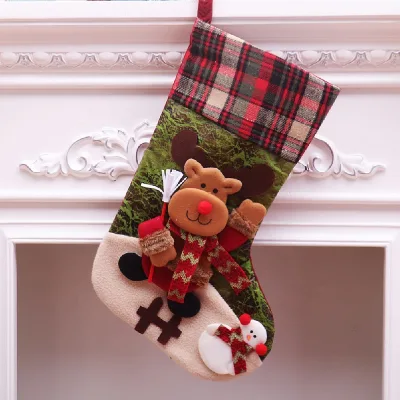


Comprehensive Sourcing Guide
Eco Friendly Christmas Stocking Supplier Concentration and Factory Types
When you search for eco friendly Christmas stockings, the supplier pool on major B2B platforms tends to cluster in a small number of Chinese provinces rather than spreading evenly across the country. Results in this category commonly show suppliers located in Guangdong, Fujian, Zhejiang and Jiangsu, and each province brings a slightly different industrial background. Guangdong and Fujian suppliers often carry broader festive and promotional product lines, Zhejiang factories frequently sit inside gift, stationery and homeware manufacturing ecosystems, and Jiangsu suppliers commonly overlap with knitted hat, sock and textile production. That overlap matters, because a stocking is essentially a cut-and-sew textile item, so adjacent product experience is a useful signal.
Factory types also vary in ways that affect your sourcing outcome. Listings in this category include trading companies, manufacturers with their own factories, and hybrid companies that describe themselves as both. A manufacturer may offer tighter process control over fabric, dyeing and stitching, while a trading company may aggregate multiple stocking styles and handle smaller or mixed orders more flexibly. Note that main product lines are a useful filter: some suppliers in the results center on Christmas ornaments, balls and trees, while others focus on plush stockings, caps or general textile goods. Suppliers whose core catalogue already includes Christmas stockings or knit textiles will usually understand material substitution and eco-friendly finishing requests better than a seasonal generalist.
How to Verify Eco Friendly Christmas Stocking Suppliers
Verification for eco friendly Christmas stockings should start with the platform-visible credentials and then move to evidence the supplier can send you directly. Some listings display third-party verification badges, such as an independent inspection body's mark, and one Zhejiang factory in the category shows system certifications including BSCI, ISO 14001 and ISO 9001. Treat those as screening signals rather than proof: confirm the certificate numbers, scope and expiry dates, and ask whether the environmental management certificate covers the specific dyeing and sewing processes used for your stockings, not just general administration.
The eco-friendly claim itself needs its own verification, because "eco" is not a standardized term. Ask each supplier exactly which material is used, such as polyester fabric or plush, whether recycled content is available, and whether they can provide test reports from an accredited laboratory for the specific fabric batch. Request the product's packing details, country of origin and standard size in writing, since listings in this category already disclose items like polybag packing and 36cm standards that you should confirm match your specification. For claims about washability, colorfastness or child suitability, ask for the actual test method and lab name rather than accepting adjectives. Finally, verify production capability with photos or video of the sewing floor, a signed sample run, and references from buyers who reordered, since a polished listing does not confirm consistent bulk quality.
What to Compare Across Eco Friendly Christmas Stocking Suppliers
Build a comparison sheet using the attributes that supplier profiles actually display, without assuming every supplier publishes every field. Useful dimensions include location, company type, main products, response time, stated lead time, minimum order quantity, price range, and any verification badges or system certifications. In the current category results, displayed response times range from under one hour to roughly fifteen hours, and stated lead times range from around thirty days to forty-five days, while some profiles show no lead time at all. That spread means you should treat responsiveness and quoted production windows as measured values per supplier, not category averages.
Quantities and pricing also vary sharply and must be compared at the same specification level. Listings in this category show minimum orders from 500 pieces on some customized fabric stockings up to 5,000 pieces on a knit machine-made design, with unit prices spanning roughly one-tenth of a dollar to nearly ten dollars depending on size, material and decoration complexity. Compare price only against matching material, size, customization and packing terms. Also weigh main-product fit: a supplier whose core catalogue is plush Christmas stockings may handle seasonal peaks differently from a factory that makes stockings as one line among toys or promotional gifts. Record establishment year, OEM and ODM capability, and own-brand lines where shown, since these indicate depth. Finally, compare how completely each supplier answers technical questions, because answer quality often predicts order execution quality.
Common Eco Friendly Christmas Stocking Sourcing Risks
The most frequent risk in this category is eco-friendly language that does not survive documentation. A listing may describe fabric as eco-friendly without recycled-content certification, lab reports or a defined material standard behind it. Because stockings often ship as children's or household seasonal goods, buyers in some markets face chemical and safety requirements for textiles and dyes; a supplier who cannot name the applicable test methods for your destination market is a warning sign, and you should never accept a certificate photo without verifying it with the issuing body.
Operational risks are just as concrete. Customized stockings involve size, color, embroidery or print logos, and packing choices, and results in this category show packing formats ranging from simple polybags to specified carton quantities; a mismatch between approved sample and bulk production is common when these details are not locked in writing. Lead-time risk is seasonal: results show stated lead times of roughly thirty to forty-five days, and some suppliers show none, so a late October order can miss the retail window entirely. Minimum order quantities of 500 to 5,000 pieces can force overbuying on a first trial. Watch also for supplier-type confusion, where a trading company presents factory imagery, and for single-channel communication, where one salesperson controls all information. Mitigate by staging payments, inspecting before shipment, and confirming exactly who owns tooling and artwork files.
Eco Friendly Christmas Stocking Regional Sourcing and Logistics
The regional picture for this category is concentrated in four Chinese provinces visible in supplier results. Zhejiang suppliers, with factory bases around Ningbo, sit near major export ports and inside gift and homeware manufacturing networks, which generally simplifies container consolidation with other festive goods. Jiangsu suppliers overlap with knit hat and sock production, so textile machinery and skilled sewing labor are locally established. Guangdong and Fujian suppliers tend to combine Christmas products with broader promotional gift capabilities, which can be convenient if you also source complementary seasonal items. Because these provinces differ in industrial base, asking each supplier where production actually occurs, not just where the office is registered, is a necessary early question.
Logistics planning should follow from the product's physical profile. Stockings are lightweight, compressible textiles, so a full container carries high piece counts and freight cost per unit is usually modest; that makes sea freight sensible for planned seasonal volume and air freight a costly emergency option. Confirm the nearest loading port, whether the supplier exports FOB or handles delivery, and realistic production plus shipping time against your retail deadline, given the thirty-to-forty-five-day lead times visible in category results. Packaging choices, such as polybags and specified carton quantities, affect container utilization and retail readiness. If you need mixed designs, ask whether the supplier can consolidate multiple stocking models in one production run and one shipment, and confirm carton markings, labeling and any destination-market documentation requirements before booking space.
Eco Friendly Christmas Stocking Commercial Terms and Order Planning
Commercial terms for eco friendly Christmas stockings should be negotiated in the same written document as the specification, because customization changes both price and risk. Start from the displayed price bands in this category, which run from about 0.12 dollars per piece on a basic customized fabric stocking to several dollars on larger or more elaborate designs, and remember that the lowest quoted price usually corresponds to the simplest specification and the largest quantity. Ask each supplier to price your exact specification at two or three quantity breaks, including packing, so you can compare true landed cost rather than headline unit price.
Order planning should respect the category's quantity and calendar realities. Minimum orders in current results range from 500 pieces for customized fabric designs to 5,000 pieces for a knit style, so plan a first order you can sell through, then scale. With stated lead times of roughly thirty to forty-five days, plus sampling, quality inspection and ocean transit, place orders several months ahead of the holiday season and build in buffer for the Chinese peak-season capacity crunch. Where a platform offers trade assurance or escrow-style protection, use it, and otherwise split payment milestones so the balance follows inspection. Confirm what happens on defects, late delivery and specification drift, and agree that pre-shipment inspection approval is a payment condition. Keep artwork, size specifications and eco-material claims in a signed annex to the contract.
FAQs
What materials are eco friendly Christmas stockings typically made from?
Eco friendly Christmas stockings are commonly made from polyester fabric or plush, both of which appear in current supplier listings. Polyester versions are often marketed as eco-friendly and washable, while plush suits softer children's designs. When comparing options, ask suppliers to confirm material composition, fabric weight, and whether any recycled content or relevant safety documentation is available for your market.
What is the typical minimum order quantity for eco friendly Christmas stockings?
Minimum order quantities vary by supplier and material. Listings in the current results show MOQs ranging from 500 pieces for customized polyester stockings to 1,000 pieces for plush designs and up to 5,000 pieces for knit styles. Confirm the MOQ in writing before ordering, and ask whether mixed sizes or colors can be combined to reach the minimum.
Can eco friendly Christmas stockings be customized with my logo and design?
Yes, customization is widely available. Several supplier listings explicitly state that OEM service is offered, with customized logos, sizes, colors, and packaging supported. Provide your artwork, preferred dimensions, and packing requirements early, since customized production usually extends lead times. Always request a pre-production sample to verify fabric quality, print clarity, and color accuracy before approving mass production.
How long is the lead time for customized Christmas stockings?
Lead times depend on customization level and order volume. Supplier listings in the results show lead times ranging from about 30 days to 45 days. Customized designs, special packaging, and peak-season capacity can extend this window. Confirm the quoted lead time in writing and factor in shipping time, ordering several months ahead of the holiday retail season to avoid delays.
Where are most Eco Friendly Christmas Stocking suppliers located?
The suppliers in the current results are located in several Chinese provinces, including Guangdong, Fujian, Zhejiang, and Jiangsu. These regions host manufacturers and trading companies producing festive goods, knit items, and plush products. Location affects shipping ports, production specialization, and logistics costs, so compare quotations from suppliers in different provinces and verify each company's actual facilities before committing.
What certifications should I verify when sourcing eco friendly Christmas stockings?
Ask suppliers for evidence of quality and social-compliance certifications relevant to your market. System certifications such as ISO 9001, ISO 14001, and BSCI appear among the current supplier results, and third-party verification is also shown. Request copies of certificates directly, check their validity and scope, and ask whether the specific stocking materials have been tested to the safety standards your country requires.
How quickly do Christmas stocking suppliers respond to inquiries?
Response times vary considerably between suppliers. The listings in the current results show average response times ranging from under one hour to around fifteen hours. Faster responders simplify sampling discussions and production coordination, especially during peak season. Test responsiveness yourself before ordering by sending detailed technical questions and evaluating how quickly and completely each supplier answers them.
What sizes and packing options are common for Christmas stockings?
Common options include a 36cm plush stocking shown in the results, plus elf-style stockings around 25 by 24 centimeters and fully customized sizes for OEM orders. Packing typically uses polybags per piece, with one listing specifying 120 pieces per carton. Confirm final dimensions, carton quantities, and packing materials in your purchase contract, and request samples to check size accuracy before production.