For Hyundai Kia AC Compressor Suppliers and Manufacturers
Explore 27 verified options for For Hyundai Kia AC Compressor from factories in China Zhejiang, Jiangsu, and Shandong. Compare response times, lead times, certifications like ISO 9001, and price ranges to find the right fit. Contact suppliers directly to request quotes.
Updated
Suppliers List

Zhejiang Gaocheng Autoparts Co., Ltd.
- Verified by SGS
- Manufacturer/Factory
- China Zhejiang
- Lead time45 days
- Avg. response≤ 4h
Main productsAuto Parts Wet Friction Materials, Fricton Materials, Wet Friction Materials Paper, Clutch Friction Discs, Automobile Clutch Friction Plates, Wet Brake Plates, Hydraulic Fittings, Pneumatic Fittings, Pipe and Tube Fittings, Mechanical Parts
Main marketsEastern Europe,North America,Eastern Asia,Western Europe

OEM Quality Car AC Compressor for Hyundai KIA Auto Air Conditioner Compressor
$73.50 - $125.00
MOQ: 2 Pieces


97701-3r000 for Hyundai Sonata 2012 AC Compressor 2.0I 2.4I KIA Auto Air Conditioning Parts
$73.50 - $125.00
MOQ: 2 Pieces

Wuxi Lierhong Precision Machinery Co., Ltd
- Verified by TUVRHEINLAND
- Combined
- China Jiangsu
- Lead time45 days
- Avg. response≤ 8h
Main productsAC Compressor, Car Compressor, Auto Compressor, Clutch
Main marketsSoutheast Asia/ Mideast
Shandong Best Auto Trade Co., Ltd.
- Trading Company
- Shandong, China
- Lead time7 days
- Avg. response≤ 11h
Main productsEngine parts,Timing chain set,Automotive chassis accessories,Automotive sensors,Automotive exterior components
Main marketsSouth Asia(20.00%), Central America(20.00%), Mid East(20.00%), Southeast Asia(20.00%), North America(20.00%)

Yiwu Hi-Great Auto Parts Co.,Ltd.
- Verified by TUVRHEINLAND
- Trading Company
- China Zhejiang
- Lead time23 days
- Avg. response≤ 5h
Main productsTurbocharger System, Steering System, Chassis Suspension, Brake System, Cooling System, Transmission System, Engine System
Main marketsSouth America,Africa,Southeast Asia/ Mideast,East Asia(Japan/ South Korea),Europe,North America

Auto Parts AC Compressor Air Conditioning Compressor for Hyundai Accent KIA Rio
$85.00 - $90.00
MOQ: 10 Pieces

Auto Parts AC Compressor for KIA Sportage Hyundai Tucson IX35 Air Conditioning Compressor
$85.00 - $93.00
MOQ: 10 Pieces

Auto Parts AC Air Conditioning Compressor for Hyundai Azera Sonata KIA Magentis Optima
$96.00 - $98.00
MOQ: 10 Pieces


Car AC Compressor for Hyundai Sonata KIA Optima Auto Parts 977013V110ru CO29159c
$90.00 - $100.00
MOQ: 10 Pieces

Auto AC Compressor Auto Parts for KIA Sportage for Hyundai Tucson 2.4L
$94.00 - $105.00
MOQ: 10 Pieces

Guangzhou Ruchu Imp. & Exp. Co., Ltd
- Trading Company
- China Guangdong
- Lead time15 days
- Avg. response≤ 5h
Main productsAC Compressor, AC Condenser, AC Evporator, Clutch, Blower Motor, Fan, Fan Motor, Fitting, Rubber Hose, AC Tools
Main marketsAfrica,Southeast Asia/ Mideast,Europe


OEM 97701d1000 Refrigeration Parts Durable Auto AC Compressor for KIA K4
$135.60 - $141.80
MOQ: 4 Pieces


Guangzhou Rizhengda Parts Manufacturing Co., Ltd.
- Manufacturer, Trading Company
- Guangdong, China
- Lead time30 days
- Avg. response≤ 1h
Main productsSpark Plug, Ignition Coil, Tire Pressure Sensor, Fuel Pump, Oxygen Sensor
Main marketsNorth America(40.00%), Africa(30.00%), Southeast Asia(5.00%), South Asia(5.00%), Southern Europe(5.00%), Northern Europe(5.00%), Eastern Europe(5.00%), Western Europe(5.00%)
Guangzhou Clhgo Auto Parts Ltd.
- Verified by SGS Group
- Trading Company
- Lead time0 days
- Avg. response≤ 4h
Main productsAC Compressor, AC Evaporator, AC Condenser, Parking Air Conditioner, Blower
Main marketsSouth America(40%), Western Europe(28%), North America(20%)

Guangzhou Berlin Auto Parts Manufacturing Co., Ltd.
- Verified by SGS
- Combined
- China Guangdong
- Lead time15 days
- Avg. response≤ 20h
Main productsAuto Parts, Auto AC Compressor, Steering Rack &Pump, Auto AC Parts, Steering Parts, Suspension Parts, Automobile Air-Conditioning System Compressor, Power Steering Rack, Power Steering Pump, Steering Gear
Main marketsSouth America,Africa

Car AC Parts Original AC Compressor 97701-D3100 for Hyundai Tucson KIA Sportage
$89.00 - $139.00
MOQ: 1 Pieces


97701-C3000 97701c3000 Brand New Auto AC Compressor for Hyundai Sonata KIA K5
$89.00 - $139.00
MOQ: 1 Pieces


Auto AC Compressor for Hyundai Excavator Car Air Conditioning System Parts Vehicle Accessories
$39.00 - $200.00
MOQ: 1 Pieces
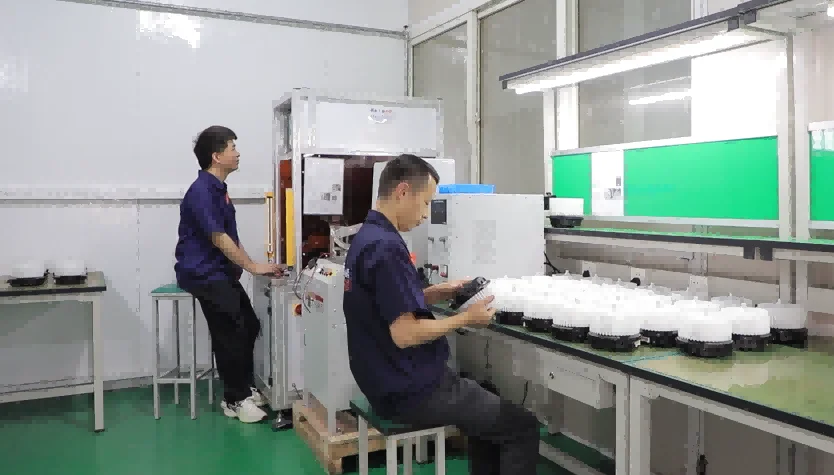
Hangzhou BeGEE Electric Appliance Co., Ltd.
- Manufacturer, Trading Company
- Zhejiang, China
- Lead time40 days
- Avg. response≤ 5h
Main productsBlower Motor,Car Blower,Blower Motor Resistor,AC Compressor,Auto Compressor
Main marketsNorth America(30.00%), Central America(15.00%), Eastern Europe(15.00%), South America(15.00%), Southern Europe(5.00%), Northern Europe(5.00%), Southeast Asia(5.00%), Western Europe(5.00%), Mid East(5.00%)
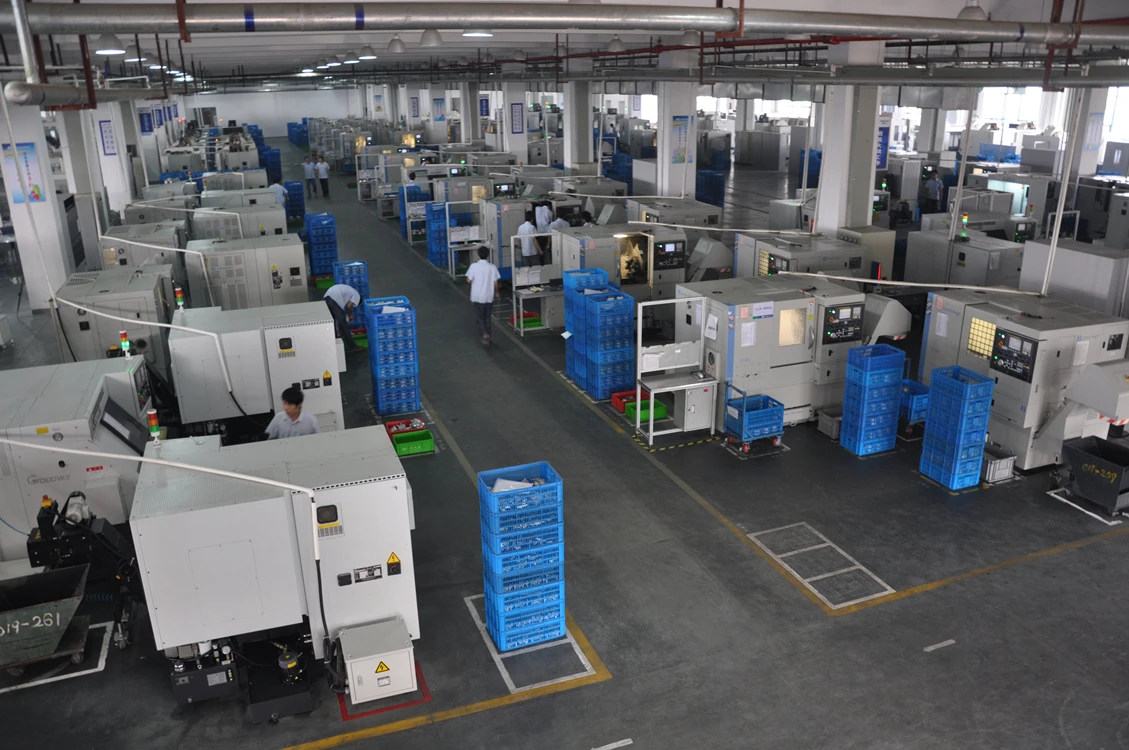
Hangzhou Zhengbang Auto Parts Co., Ltd.
- Trading Company
- Zhejiang, China
- Lead time0 days
- Avg. response≤ 3h
Main productsac compressors,condensers,evaporators,blower fan,control valve
Main marketsDomestic Market(40.00%), Mid East(20.00%), South America(15.00%), North America(15.00%), Eastern Europe(10.00%)
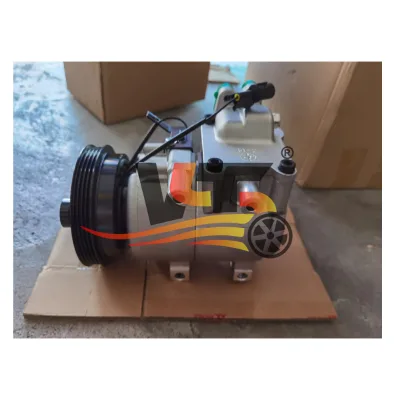
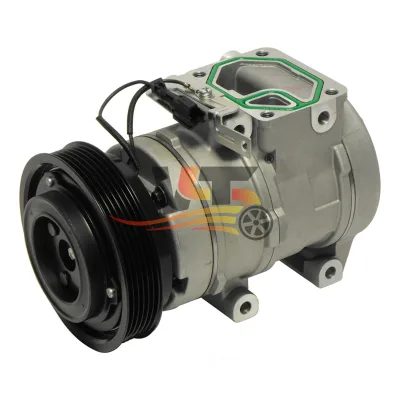
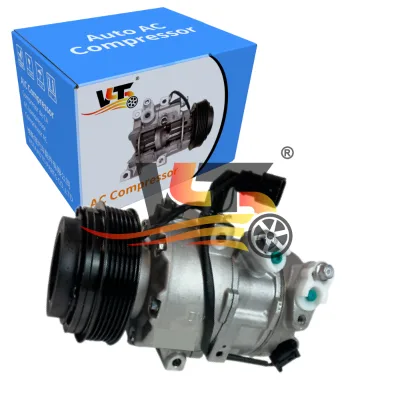
$50.1041 - $102.2513
MOQ: 2 pieces
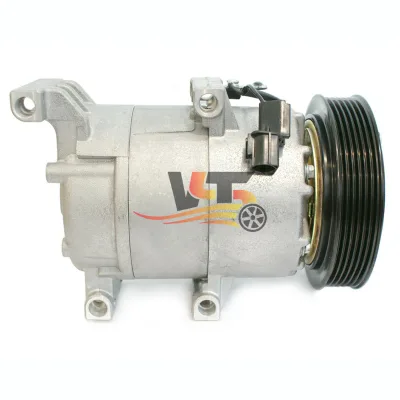
Ac Compressor for Kia Venga/Soul/Hyundai Ix20 97701-2K001 97701-3X000 97701-3X500 8623352
$40.00 - $65.00
MOQ: 2 pieces
Ningbo Bowente Auto Parts Co., Ltd.
- Verified by Intertek
- Trading Company
- Lead time30 days
- Avg. response≤ 6h
Main productsAuto AC Compressor, Parking Air Conditioner, Parking Heater, AC Tools, Auto Fan
Main marketsEastern Europe(40%), South America(36%), Northern Europe(7%)
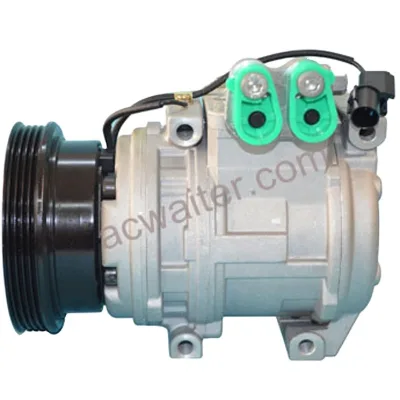
China Manufacture Auto Ac Compressor 10PA15C Ac Compressor for Kia Cerato 1.6 OEM# 97701-2F000
$78.57 - $91.67
MOQ: 2 units
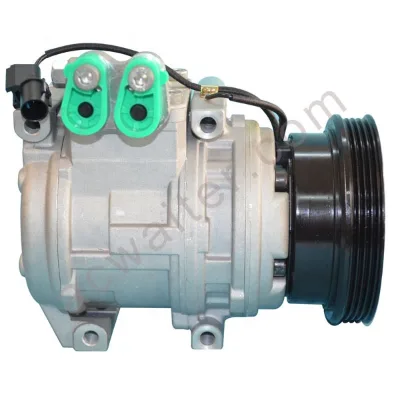
Ac Car Compressor Oem 97701-2F000 for K.I.A CERATO 1.6
$88.71 - $99.83
Guangzhou Fengmaomao Automobile Air Conditioning Fitting Co., Ltd.
- Verified by SGS Group
- Trading Company
- Lead time15 days
- Avg. response≤ 2h
Main productsAc Compressor, Ac Compressor Clutch, Ac Condenser, Ac Evaporator, Ac Blower Motor
Main marketsSoutheast Asia(50%), Africa(10%), Oceania(10%)
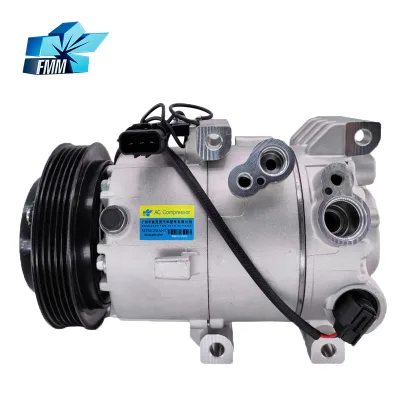
$90.00 - $96.00
MOQ: 1 pieces
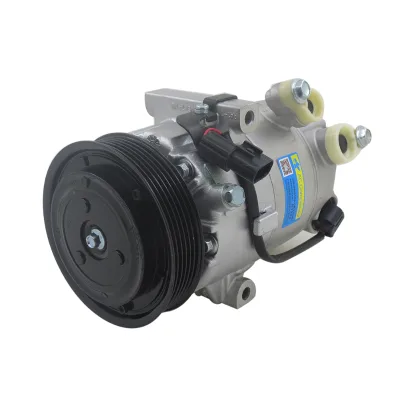
977013S000 AC Part AC Compressor for Sonata K5 Kia MISTRA Car Aircon Compressor Pump 12V 97701-3S000
$119.00 - $125.00
MOQ: 2 pieces
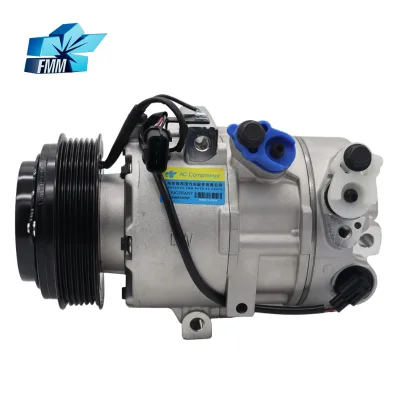
$97.5384 - $121.1522
MOQ: 1 pieces
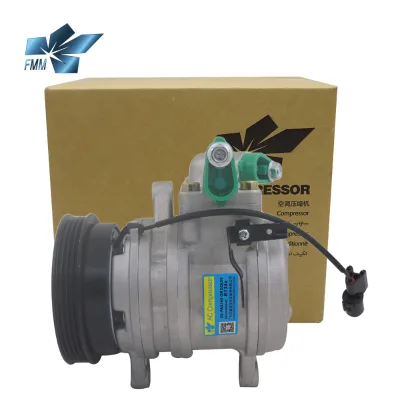
$78.00 - $95.00
MOQ: 1 pieces
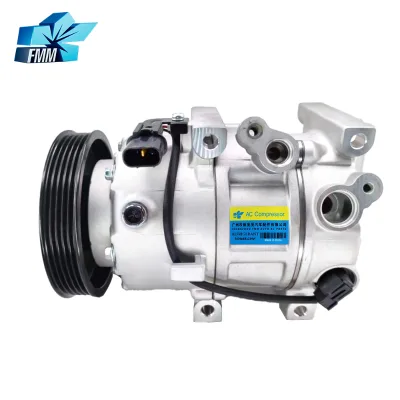
97701A4500 Auto Car AC Compressor 12V for Kia Carens CRDl 1.7CC Air Conditioning Compressor Car 5PK
$106.00 - $126.00
MOQ: 2 pieces
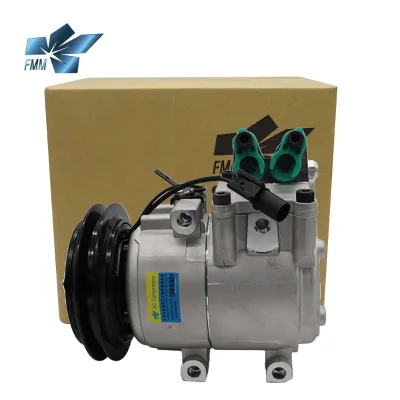
97701-4e500 977014B201 Auto air Conditioning Compressor for Kia Bongo
$85.2421 - $106.0318
MOQ: 4 pieces

GUANGZHOU SONGXUE AIR-CON LIMITED
- Verified by TUVRHEINLAND
- Trading Company,Manufacturer/Factory
- China Guangdong
- Lead time45 days
- Avg. response≤ 5h
Main productsCompressors, Evaporators, Condensers, Magnetic Clutchs, Blower Motors, Cooling Fans, Expansion Valves, Driers, Air Filters, Tools
Main marketsSouth America,Eastern Europe,Mid East,North America,Southeast Asia,Eastern Asia,Oceania,Western Europe,Africa
- Verified by TüVRheinland
- Trading Company
- Lead time20 days
- Avg. response≤ 3h
Main productsAuto AC Compressor, Auto AC Condenser, Auto AC Evaporator, Condenser Fan, Auto AC Parts
Main marketsSouth America(30%), Mid East(25%), North America(10%)
Guangzhou Clhgo Auto Parts Ltd.
- Trading Company
- Lead time旺季: "1 - 2":15,"3 - 20":20,"> 20":"To be negotiated", 淡季: "1 - 2":15,"3 - 20":20,"> 20":"To be negotiated"
- Avg. response≤ 4h
Main productsRooftop Air Conditioner, Electric Ac Compressor, Ac Condenser, Ac Evaporator, Split Air Conditioner
Guangzhou Yongfeng Automotive Air Conditioning Equipment Co., Ltd.
- Verified by Intertek
- Trading Company
- Lead time15 days
- Avg. response≤ 2h
Main productsA/C Compressor
Main marketsDomestic Market(30%), Mid East(20%), North America(10%)
Beijing Jiapin Ruitong Auto Parts Co., Ltd.
- Trading Company
- Beijing, China
- Lead time25 days
- Avg. response≤ 8h
Main productsHYUNDAI and kia auto parts,GENESIS auto parts,Korean auto parts,Ssangyong auto parts,Engine assembly and overhaul parts
Main marketsAfrica(8.00%), Southeast Asia(8.00%), Northern Europe(5.00%), Western Europe(5.00%), North America(5.00%), Mid East(5.00%), Domestic Market(3.00%), South America(3.00%), Eastern Asia(3.00%), Eastern Europe(3.00%), South Asia(2.00%), Central America(2.00%), Oceania(2.00%), Southern Europe(1.00%)
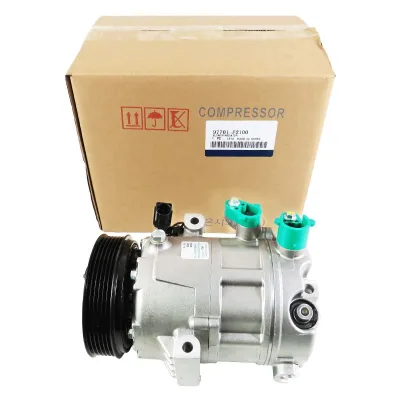
Korean Auto Parts Ac 97701-f2100 97701 F2100 Suitable for hyundai Kia Car air Conditioner Compressor
$70.00 - $85.00
MOQ: 1 pieces
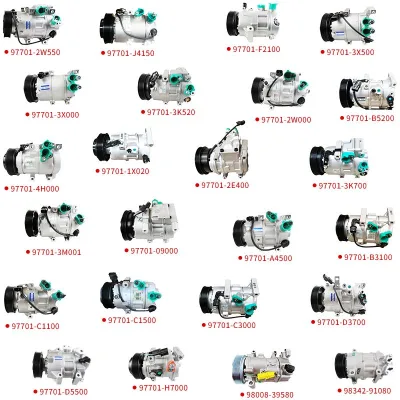
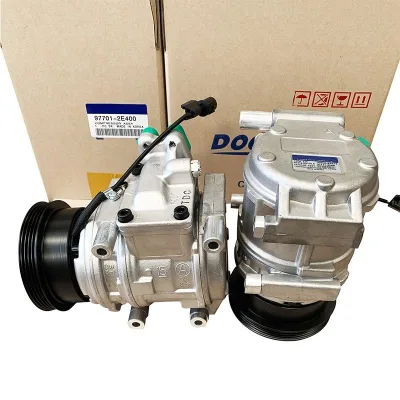
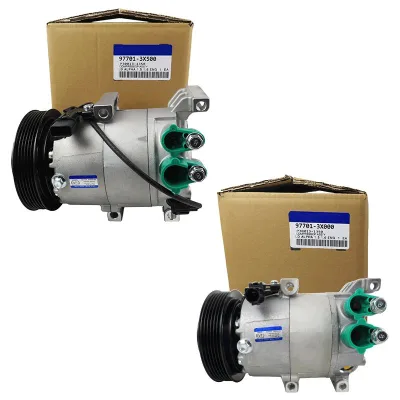
Low Price Ac Compressor OEM 97701-3x000 97701-3x500 Suitable for hyundai Elantra 1.6 Gamma Kia Soul
$84.00 - $95.00
MOQ: 1 pieces
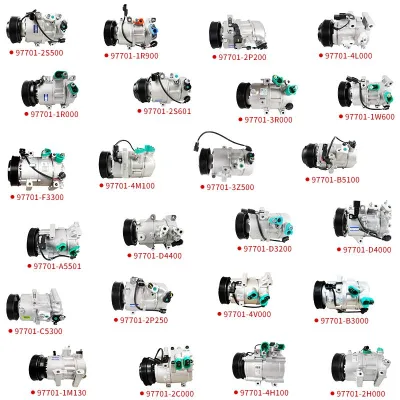
$80.00 - $95.00
MOQ: 1 pieces
Beijing Rongxin Yuanda Trading Co., Ltd.
- Verified by TüVRheinland
- Trading Company
- Lead time60 days
- Avg. response≤ 4h
Main productsEngine, Air Conditioning System, Clutch, Oil Filter, Car Headlights
Main marketsDomestic Market(50%), Southeast Asia(10%), Africa(10%)
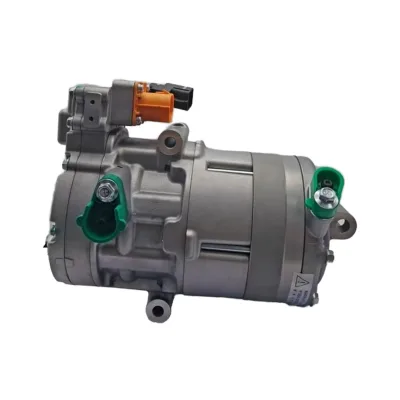
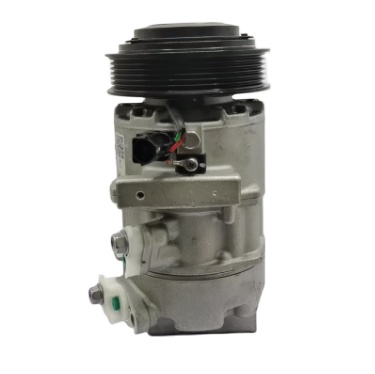
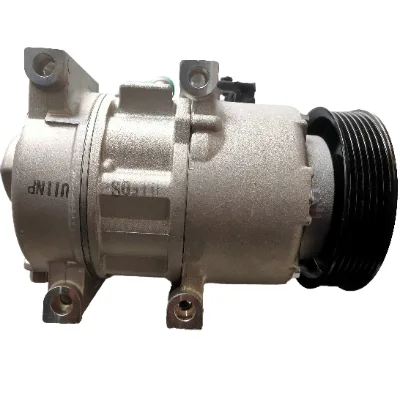
OEM 97701-3R000 977013R000 High Quality Auto Air Conditioner Compressor K-IA K5 H-YUNDAI Sonata
$155.00 - $170.00
MOQ: 5 pieces
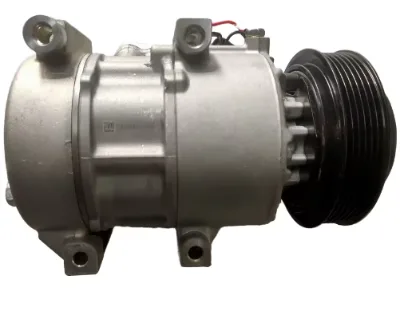
OEM 97701-2P310 977012P310 High Quality Auto Air Conditioner Compressor
$120.00 - $140.00
MOQ: 5 pieces
Guangzhou Berlin Auto Parts Manufacturing Co., Ltd.
- Manufacturer, Trading Company
- Lead time旺季: "1 - 100000":30,"> 100000":"To be negotiated", 淡季: "1 - 100000":30,"> 100000":"To be negotiated"
- Avg. response≤ 13h
Main productsAutomobile Air Conditioner Compressor, Automobile Air Conditioner Condenser, Auto Air-conditioning System, Radiator, Evaporator
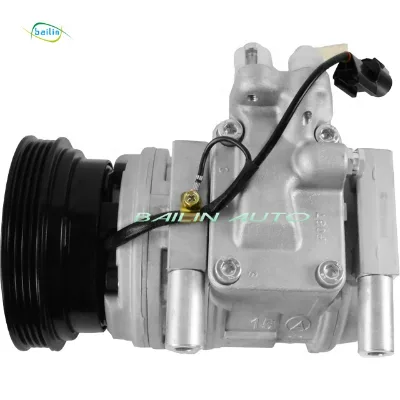
$59.00 - $100.00
MOQ: 2 pieces
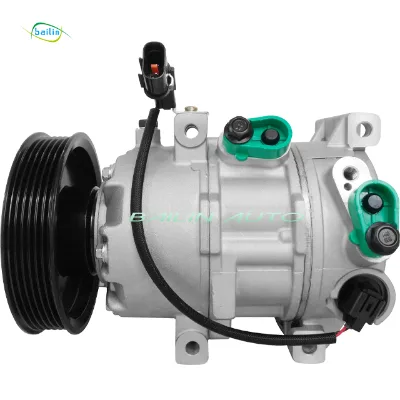
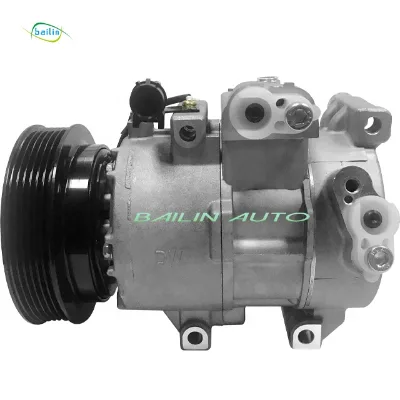
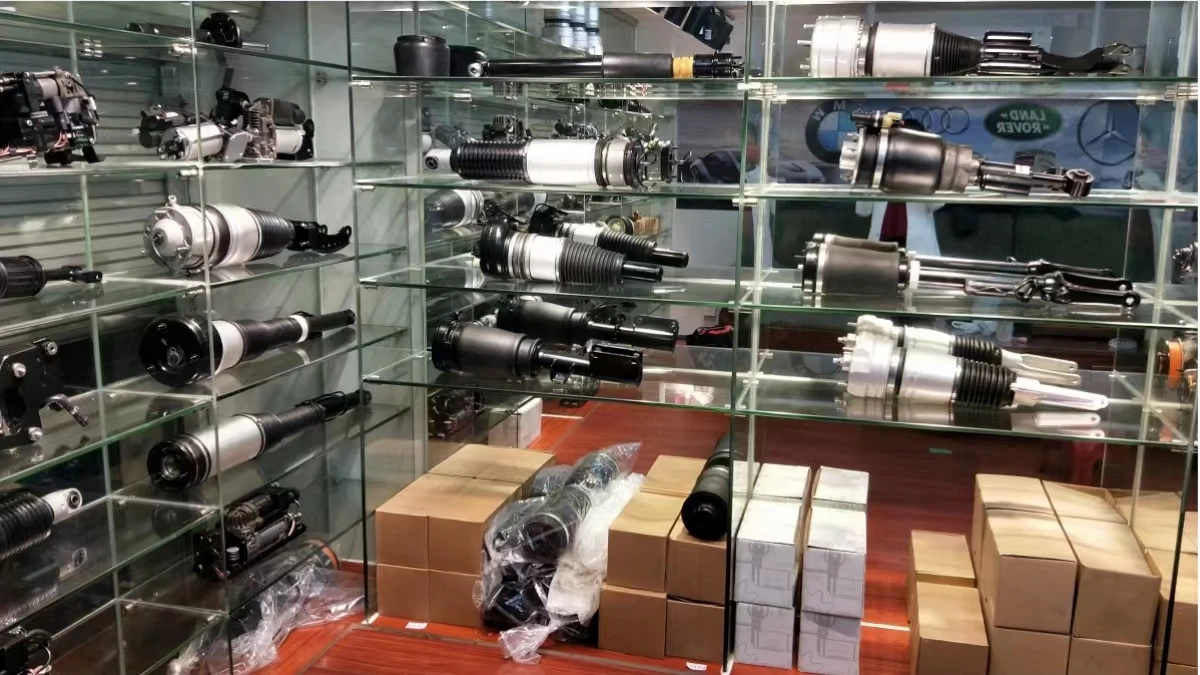
Guangzhou Yuanfa Auto Parts Co., Ltd.
- Manufacturer, Trading Company, Distributor/Wholesaler
- Guangdong, China
- Lead time5 days
- Avg. response≤ 5h
Main productsAir suspension shock absorber,The air pump,Air distributor,Spring shock absorber,The former vice frame
Main marketsNorth America(18.50%), Western Europe(13.50%), Southeast Asia(12.50%), Mid East(11.00%), South America(9.28%), Africa(7.20%), Eastern Europe(6.18%), Southern Europe(5.95%), South Asia(5.00%), Central America(4.56%), Domestic Market(2.00%), Eastern Asia(1.55%), Northern Europe(1.50%), Oceania(1.28%)

Hangzhou Yuqi Industrial Technology Co., Ltd.
- Verified by CTI
- Trading Company
- China Zhejiang
- Lead time15 days
- Avg. response≤ 10h
Guangzhou Chenfengyi Automotive Air Conditioning Co., Ltd.
- Verified by Intertek
- Trading Company
- Lead time0 days
- Avg. response≤ 3h
Main productsAC Auto Compressor, AC Auto Condenser, AC Auto Evaporator, AC Auto Radiator, AC Auto Bearing
Main marketsMid East(60%), North America(5%), South America(5%)
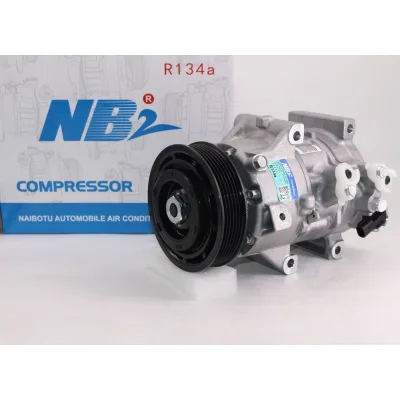
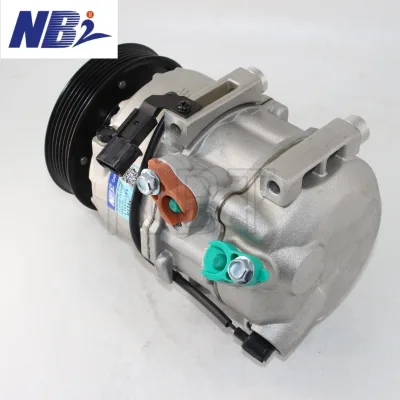
Hyundai High Efficiency Cooling System New Auto AC Air Conditioning Compressor 97701C5350 for Cars
$90.628 - $101.8795
MOQ: 2 pieces
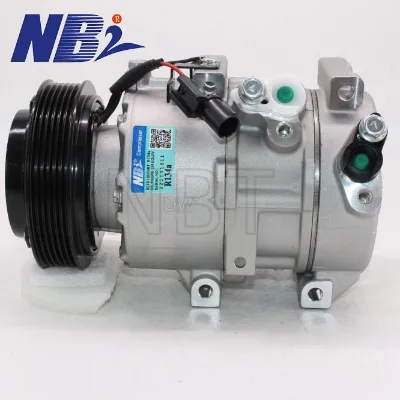
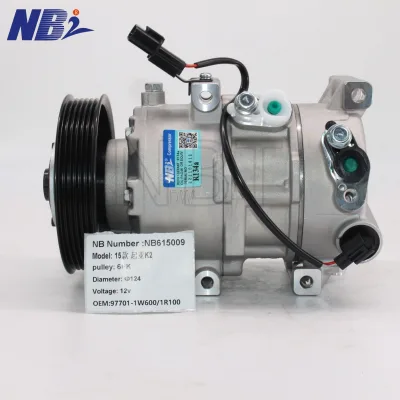

- Verified by BV
- Trading Company
- China Shandong
- Lead time15 days
- Avg. response≤ 11h
Main productsCompressor, Condenser, Evaporator, Auto AC Parts, Refrigeration Part, Sensor, Insulation Tube, Motors, Unit Cooler, Thermostat
Main marketsSouth America,Southeast Asia/ Mideast,East Asia(Japan/ South Korea),Domestic,Europe
Guangzhou Susheng Auto Spare Parts Co., Ltd.
- Manufacturer, Trading Company
- Guangdong, China
- Lead time10 days
- Avg. response≤ 2h
Main productsCompressor,Condenser,Radiator,Wheel Hub Bearing,Alternator
Main marketsNorth America(15.00%), Domestic Market(10.00%), Oceania(10.00%), South America(10.00%), Southeast Asia(5.00%), South Asia(5.00%), Southern Europe(5.00%), Eastern Europe(5.00%), Northern Europe(5.00%), Central America(5.00%), Western Europe(5.00%), Eastern Asia(5.00%), Mid East(5.00%), Africa(5.00%)
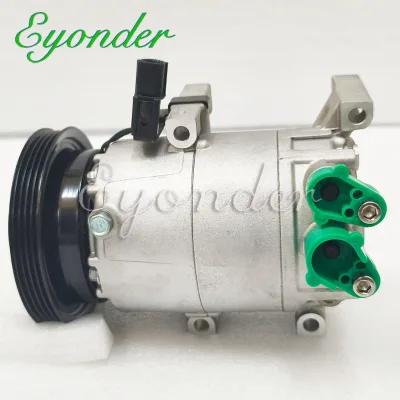
Air Conditioning AC Compressor for Kia Soul 2.0L 1975CC l4 GAS 977012K101 97701-2K101
$95.8131 - $112.2976
MOQ: 1 pieces
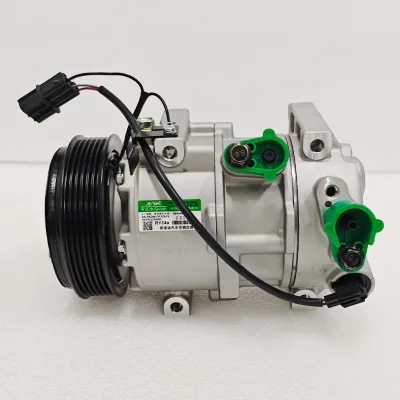
$80.3044 - $93.6875
MOQ: 1 pieces
Chongqing Rongqian Auto Parts Co., Ltd.
- Verified by Intertek
- Trading Company
- Lead time7 days
- Avg. response≤ 3h
Main productsBumpers, Car Headlight, Car Rearview Mirror, Car Taillight, Radiator Frame
Main marketsCentral America(13%), Southern Europe(12%), North America(10%)
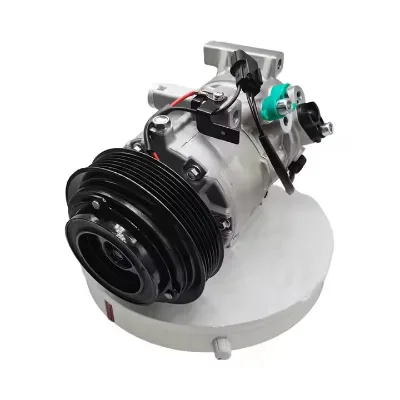
Car Air Conditioner AC Compressor for KIA K3 Forte 1.6 2012 2013 2014 2015 97701-B5000 97701B5000
$94.0143 - $102.3712
MOQ: 2 boxes
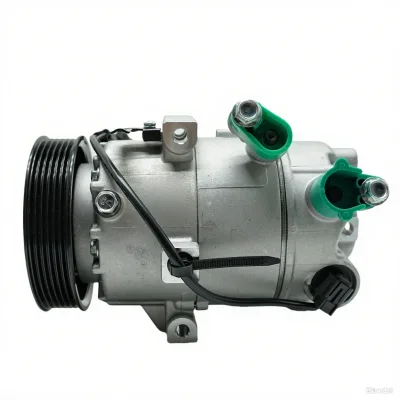
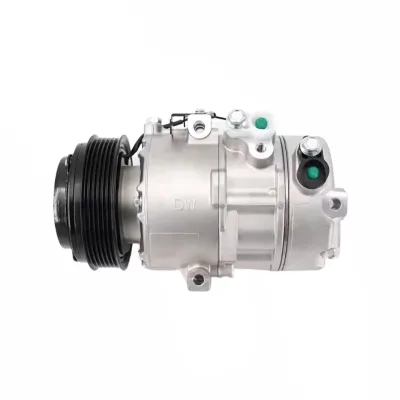
Car air Conditioner A/C AC Compressor 12V for KIA Sportage R 2 2011-2017 97701-4T000 977014T000
$91.9247 - $102.3712
MOQ: 2 boxes
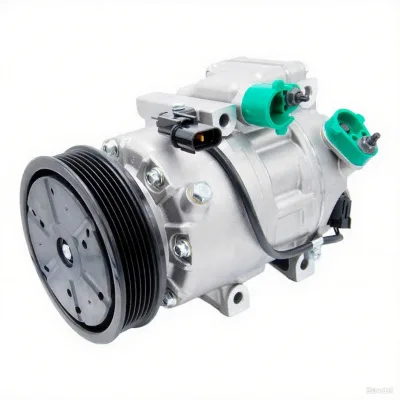

TAIZHOU TOPLONG ELECTRICAL & MECHANICAL CO., LTD.
- Verified by BV
- Trading Company
- China Zhejiang
- Lead time30 days
- Avg. response≤ 22h
Main productsAir Compressor, Scuba Air Compressor, Diving Air Compressor, Paintball Air Compressor, Pet Blowing Compressor, Diaphragm Compressor, Oxygen Compressor Nitrogen Compressor, Oxygen Generator, Nitrogen Generator, Block Making Machine Brick Making Machine
Main marketsSouth America,Southeast Asia/ Mideast,Europe

Changzhou Holicen New Energy Technology Ltd.
- Verified by TUVRHEINLAND
- Combined
- China Jiangsu
- Lead time15 days
- Avg. response≤ 3h
Main productsParking Air Conditioner, AC Compressor, Parking Heater, Car Evaporator, Car Condenser, Truck Air Conditioner, Electric AC Compressor, Compressor Clutch, Auto Air Conditioning System Accessories, Parking Cooler
Main marketsSoutheast Asia/ Mideast,Europe,Australia,North America

$65.00 - $130.00
MOQ: 4 Pieces


Good Price of Auto Air Conditioner Compressor Auto AC Compressor Refrigeration Compressor
$85.00 - $120.00
MOQ: 4 Pieces


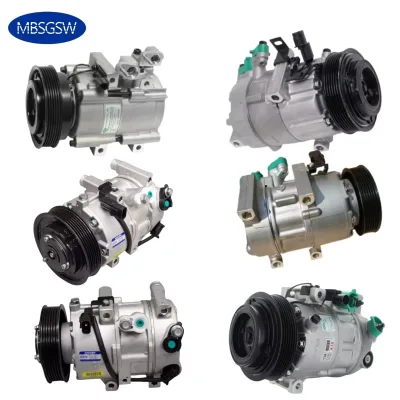
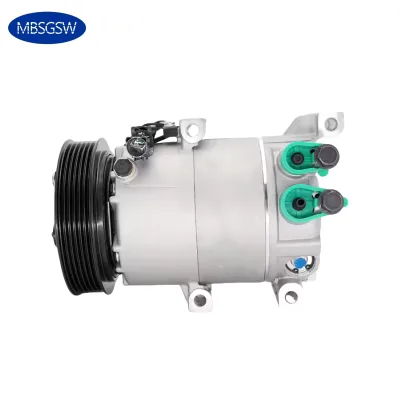
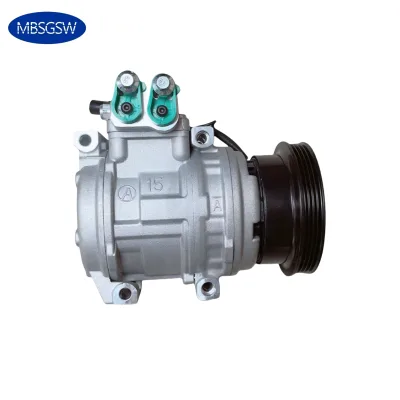
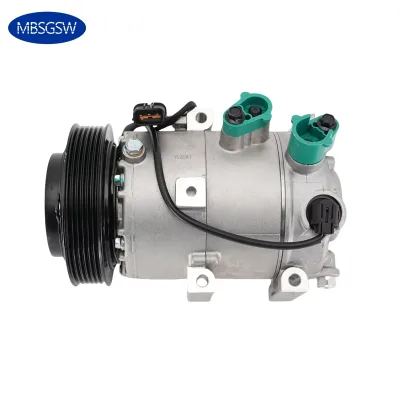


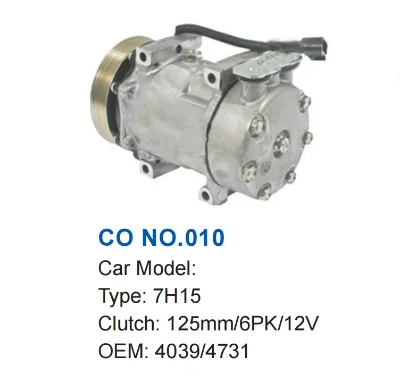
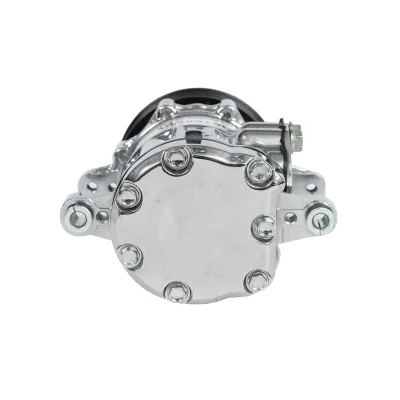
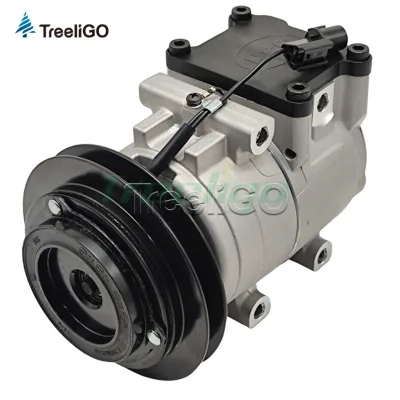
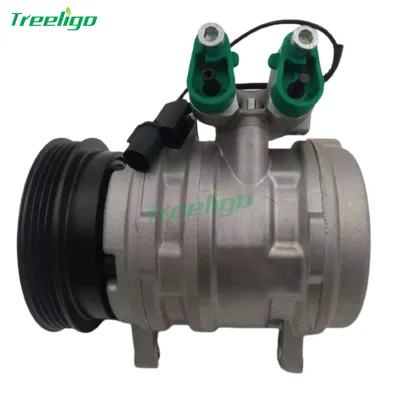
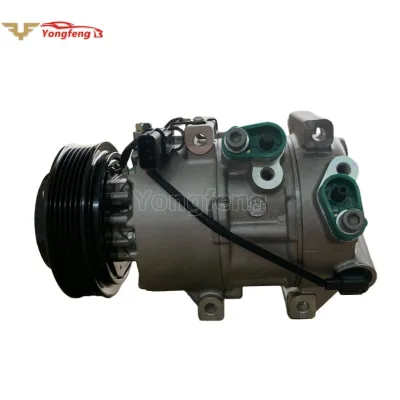
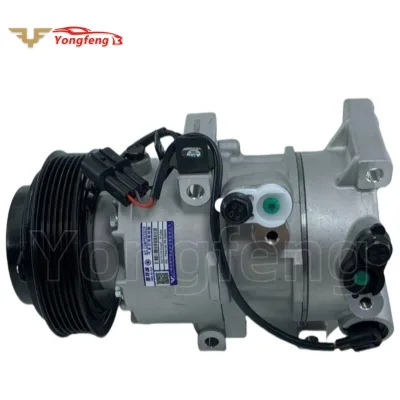
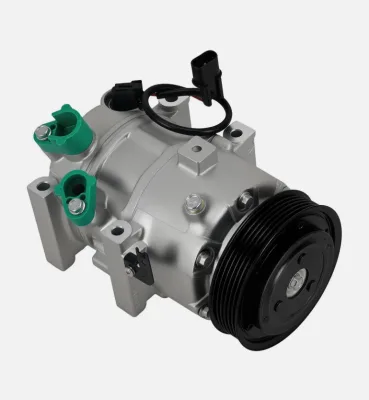
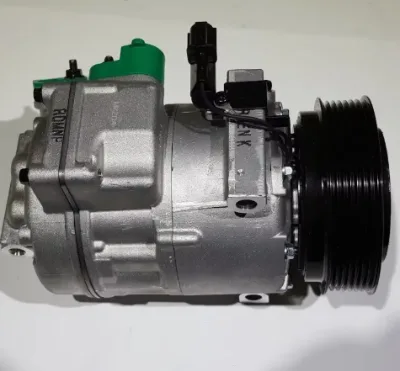


Comprehensive Sourcing Guide
For Hyundai Kia AC Compressor Supplier Concentration and Factory Types
The current supplier landscape for Hyundai and Kia AC compressors reveals a distinct geographic and structural concentration within China. Evidence indicates that manufacturing capabilities are heavily clustered in Zhejiang and Jiangsu provinces, with additional trading entities operating out of Shandong. Suppliers in Zhejiang are predominantly identified as manufacturers or factories, suggesting a direct production capability for wet friction materials and mechanical parts that may extend into compressor assembly or component sourcing. This factory-type designation implies a closer alignment with original equipment manufacturer (OEM) standards and potentially more robust quality control processes compared to pure trading entities. In contrast, suppliers located in Jiangsu are categorized as combined entities, which may blend manufacturing oversight with broader supply chain management. This structural diversity allows buyers to choose between direct factory engagement for volume orders and combined entities for more flexible sourcing arrangements. The presence of Shandong-based trading companies further diversifies the sourcing options, offering access to a wider range of part numbers and brands, such as MBSGSW, without the need for deep manufacturing integration. Understanding these factory types is crucial for determining the level of control a buyer has over production timelines and customization options.
Identifying the correct supplier type requires careful examination of the company profile and product evidence. Buyers should look for explicit declarations of manufacturer status, particularly in Zhejiang, where ISO 9001 certification and SGS verification are present, indicating a commitment to standardized quality management systems. Combined suppliers in Jiangsu may offer different advantages, such as access to variable capacity compressors or specific reciprocating models, which might not be available from specialized friction material manufacturers. The distinction between a pure manufacturer and a trading company is not always binary, as some entities may engage in both OEM and ODM activities. For instance, Zhejiang suppliers explicitly list OEM and ODM capabilities, suggesting they can adapt existing compressor designs to meet specific buyer requirements. Meanwhile, trading companies in Shandong may focus on aggregating products from various sources to offer a comprehensive catalog of part numbers for different car makes, including Toyota, Honda, and Nissan, in addition to Hyundai and Kia. This aggregation capability can be beneficial for buyers seeking a single source for multiple vehicle brands, although it may introduce additional layers in the supply chain.
How to Verify For Hyundai Kia AC Compressor Suppliers
Verification of suppliers for Hyundai and Kia AC compressors relies on a multi-layered approach that combines platform-issued credentials with independent third-party audits. The presence of SGS verification for Zhejiang-based manufacturers and TÜV Rheinland verification for Jiangsu-based combined entities provides a strong baseline for trust. These certifications indicate that the suppliers have undergone rigorous assessments of their production facilities, quality management systems, and business legitimacy. Buyers should prioritize suppliers who display these specific verification badges, as they serve as a proxy for operational reliability and compliance with international standards. Additionally, the display of ISO 9001 system certification for Zhejiang suppliers confirms adherence to recognized quality management principles, which is critical for automotive components where consistency and safety are paramount. This certification is not merely a formality but a testament to the supplier’s ability to maintain consistent product quality across batches, reducing the risk of defects in the final AC compressor units.
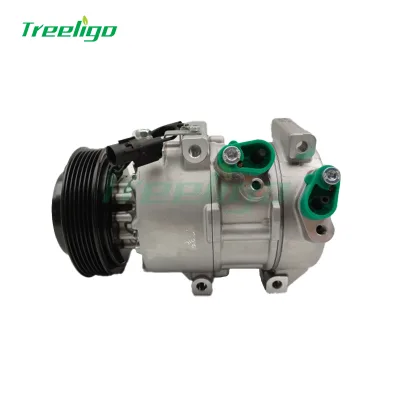
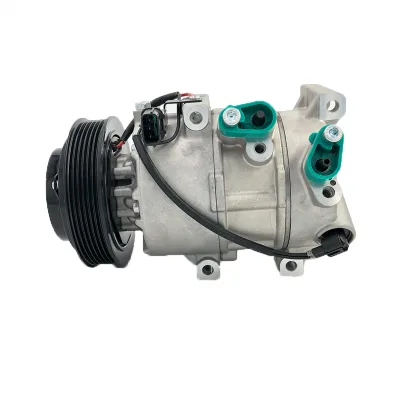
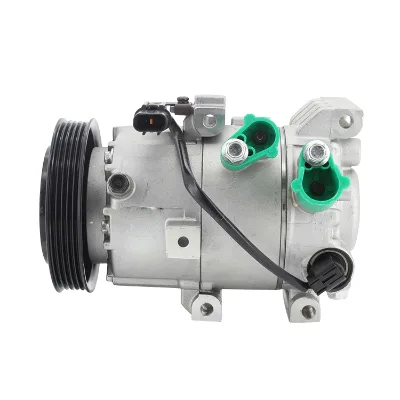
Beyond platform badges, buyers must scrutinize the specific product attributes and technical specifications provided in the supplier listings. For example, detailed product evidence for Hyundai Sonata and Kia Sorento compressors includes precise model numbers like VS16E, DV16, and 97701-3r000, along with technical parameters such as voltage, cooling method, and cylinder stage. These details allow buyers to cross-reference the supplier’s offerings with their own vehicle requirements, ensuring compatibility and performance. Suppliers that provide comprehensive technical data, such as pressure ratings and displacement metrics, demonstrate a higher level of product knowledge and transparency. Furthermore, the inclusion of customization options, such as logo support and OEM/ODM availability, indicates a supplier’s flexibility and willingness to engage in tailored partnerships. Buyers should also verify the origin of the products, with many listings explicitly stating China as the place of origin, which aligns with the geographic concentration observed in the supplier data. This transparency helps buyers assess the authenticity of the products and the legitimacy of the supply chain.
What to Compare Across For Hyundai Kia AC Compressor Suppliers
When evaluating multiple suppliers for Hyundai and Kia AC compressors, buyers must compare key operational metrics such as lead time, minimum order quantity (MOQ), and response time to determine the best fit for their procurement strategy. Zhejiang-based manufacturers exhibit a lead time of 45 days, which is typical for custom or OEM orders requiring production scheduling and quality checks. In contrast, Shandong-based trading companies offer a significantly shorter lead time of 7 days, suggesting they may hold inventory or have faster fulfillment processes for standard part numbers. This difference in lead times can be decisive for buyers with urgent restocking needs or those participating in just-in-time manufacturing processes. Additionally, the MOQ varies across suppliers, with some listing an MOQ of 5 units for customized compressors and others offering an MOQ of just 1 unit for standard items. This flexibility allows buyers to test the market with smaller orders before committing to larger volumes, reducing financial risk and inventory holding costs.
Response time is another critical factor that influences the efficiency of the sourcing process. Suppliers in Zhejiang demonstrate a response time of 3.57, indicating a high level of responsiveness and customer service orientation. This rapid response can facilitate quicker negotiations, clarification of technical specifications, and resolution of any issues that arise during the ordering process. In comparison, suppliers in Jiangsu have a response time of 7.81, which, while still acceptable, may result in slightly longer communication cycles. Buyers should also compare the main products offered by each supplier to ensure alignment with their specific needs. Zhejiang suppliers focus on wet friction materials and mechanical parts, which may indicate a specialization in certain compressor components. Meanwhile, Jiangsu suppliers offer a broader range of AC compressors, including variable capacity models, which may be suitable for more advanced vehicle applications. By carefully comparing these metrics, buyers can select suppliers that best match their operational requirements and strategic goals.
Common For Hyundai Kia AC Compressor Sourcing Risks
Sourcing AC compressors for Hyundai and Kia vehicles involves several inherent risks that buyers must actively manage to ensure a smooth procurement experience. One significant risk is the potential for product incompatibility, given the wide variety of compressor models and part numbers available. Listings include numerous part numbers such as 97701-2p400, 97701-3r000, and 97701d3200, each corresponding to specific vehicle models and engine configurations. Buyers must meticulously verify that the compressor they order matches their exact vehicle specifications, as even minor discrepancies can lead to installation failures and operational issues. This risk is exacerbated by the fact that some suppliers offer compressors for multiple car makes, which may indicate a lack of specialization in Hyundai and Kia specific components. To mitigate this risk, buyers should request detailed technical documentation and cross-reference part numbers with official vehicle service manuals before placing orders.
Another common risk is the variability in product quality and testing standards. While some suppliers claim that their products are 100% tested, the extent and rigor of these tests are not always transparent. Buyers should be cautious of suppliers that do not provide clear evidence of quality control processes, such as ISO 9001 certification or third-party verification. The absence of such credentials may indicate a higher risk of receiving defective or substandard compressors. Additionally, the use of generic branding or lack of clear origin information can obscure the true source of the product, making it difficult to trace quality issues back to the manufacturer. Buyers should prioritize suppliers who provide transparent information about their production processes and quality assurance measures. Furthermore, the risk of supply chain disruptions, such as delays in shipping or customs clearance, should be considered, especially when sourcing from international locations. Establishing clear communication channels and contingency plans can help buyers manage these risks effectively.
For Hyundai Kia AC Compressor Regional Sourcing and Logistics
Regional sourcing strategies for Hyundai and Kia AC compressors are heavily influenced by the geographic distribution of suppliers within China. The concentration of manufacturers in Zhejiang and Jiangsu provinces offers buyers access to established industrial clusters with robust supply chain infrastructure. Zhejiang, in particular, is known for its manufacturing capabilities in automotive parts, including wet friction materials and mechanical components, which may contribute to the production of high-quality AC compressors. The presence of ISO 9001 certified factories in this region suggests a mature ecosystem for automotive component manufacturing. Buyers sourcing from Zhejiang can benefit from the proximity to major ports and logistics hubs, facilitating efficient export processes. However, the longer lead times associated with these manufacturers, typically around 45 days, require careful planning and inventory management to avoid stockouts.
In contrast, suppliers in Shandong province, primarily trading companies, offer a different logistical advantage with their shorter lead times of 7 days. This speed is likely due to their role as aggregators who maintain inventory of standard part numbers, allowing for quicker fulfillment. The ability to ship via various methods, including sea, air, DHL, FedEx, and EMS, provides buyers with flexibility in choosing the most cost-effective and timely shipping option. However, the trading company model may introduce additional layers of complexity in terms of quality control and supplier management. Buyers must ensure that the trading companies they engage with have strong relationships with reliable manufacturers to maintain product consistency. Additionally, the geographic distance from the manufacturing hubs in Zhejiang and Jiangsu may impact shipping costs and transit times for certain orders. Buyers should weigh these logistical factors against their specific needs for speed, cost, and quality when selecting a sourcing region.
For Hyundai Kia AC Compressor Commercial Terms and Order Planning
Commercial terms and order planning for Hyundai and Kia AC compressors require careful attention to pricing structures, payment terms, and customization options. The price range for these compressors varies significantly, with some listings showing prices between $73.50 and $125.00, while others range from $59.00 to $160.00. This variation reflects differences in product specifications, brand reputation, and supplier positioning. Buyers should compare prices across multiple suppliers to identify competitive offers, but should also consider the value provided by each supplier, such as warranty coverage, technical support, and after-sales service. Customization options, including logo support and OEM/ODM capabilities, may incur additional costs, which buyers should factor into their budgeting. Suppliers that offer flexible MOQs, such as 1 unit for standard items, allow buyers to test the market with minimal financial commitment, reducing the risk of overstocking.
Order planning must also account for the specific requirements of the AC compressor models, such as voltage, cooling method, and cylinder stage. For instance, some compressors are designed for 12V systems and air-cooled applications, while others may have different specifications. Buyers must ensure that their orders align with the technical requirements of their vehicles to avoid compatibility issues. Additionally, the packing and shipping details, such as carton/pallet packaging and single package sizes, should be considered to optimize logistics and storage. Suppliers that provide clear information about these details facilitate smoother order processing and delivery. Buyers should also establish clear communication channels with their suppliers to discuss any custom requirements or special instructions. By carefully planning their orders and negotiating favorable commercial terms, buyers can secure a reliable supply of high-quality AC compressors for their Hyundai and Kia vehicles.
FAQs
What is the price range for Hyundai and Kia AC compressors?
Prices for these auto parts typically range from $59 to $160 per unit. The final cost depends on the specific model, such as the DV16 or VS16, and the supplier's location. Buyers should check individual product listings for exact pricing tiers based on order volume and customization needs.
What is the minimum order quantity for these compressors?
The minimum order quantity varies by supplier, with some requiring as few as one piece while others set the bar at five units. Most manufacturers support OEM and ODM customization, allowing buyers to order small batches for testing before committing to larger production runs for their specific vehicle models.
How long does delivery take for these auto parts?
Lead times generally range from seven to forty-five days depending on the supplier's capacity and location. Some manufacturers in Zhejiang or Jiangsu may require up to forty-five days for production, while trading companies might offer faster turnaround times. Buyers should confirm specific schedules with their chosen supplier before ordering.
Are these compressors certified and verified by third parties?
Many suppliers hold ISO 9001 system certifications and undergo verification by agencies like SGS or TÜV Rheinland. These credentials ensure that the manufacturing processes meet international quality standards. Buyers should request valid certificates to verify that the products comply with required automotive safety and performance regulations.
What is the typical response time for supplier inquiries?
Supplier response times vary, with some replying within three to four hours and others taking up to eight hours. Faster response rates often indicate more active sales teams ready to assist with technical questions. Buyers should prioritize suppliers with quick reply times to ensure smooth communication throughout the sourcing process.
Can I customize the logo and packaging for these parts?
Yes, most manufacturers support logo customization and offer flexible packaging options like cartons or pallets. This service is available for both OEM and ODM orders, allowing buyers to brand the products according to their market requirements. Buyers should discuss specific design files and packaging standards with the supplier during negotiation.