Liquid Car Wax Coating Polish Suppliers and Manufacturers
Explore 18 verified suppliers offering Liquid Car Wax Coating Polish with ISO certifications and ODM capabilities. Compare lead times, MOQs, and response rates to find the right partner. Contact suppliers directly to request samples and negotiate pricing; review the available evidence before requesting comparable quotations from suitable candidates.
Suppliers List

Guangzhou Veslee Chemical Co., Ltd.
- Verified by TUVRHEINLAND
- Combined
- China Guangdong
- Lead time30 days
- Avg. response≤ 7h
Main productsCar Care Products, Car Cleaning Products, Auto Maintenance, Aerosol Paint, Atuo Cosmetic, Auto Cleaning Products, Auto Care Products, Home Care and Cleaning Products, Household Products, Auto Washes
Main marketsSoutheast Asia/ Mideast

Zhongshan Tekoro Car Care Industry Co., Ltd.
- Verified by TUVRHEINLAND
- Manufacturer/Factory
- China Guangdong
- Lead time23 days
- Avg. response≤ 25h
Main productsSpray Paint, Car Care Products, Spray Lubricant, Fuel Additive, Auto Parts Cleaner, Car Wax, Dashboard Polish, Car Cleaner, Tire Sealer and Inflator, PVA Chamois Cloth
Main marketsSouth America,Eastern Europe,Mid East,North America,Eastern Asia,Oceania,Western Europe,Africa
Guangzhou Nabowan Fine Chemical Co., Ltd.
- Verified by TüVRheinland
- Manufacturer, Trading Company
- Lead time25 days
- Avg. response≤ 2h
Main productsCeramic Coating, Car Cleaning, Clay Bar, Car Polishing Compound, Car Wash Foam
Main marketsNorth America(25%), Africa(15%), Mid East(15%)
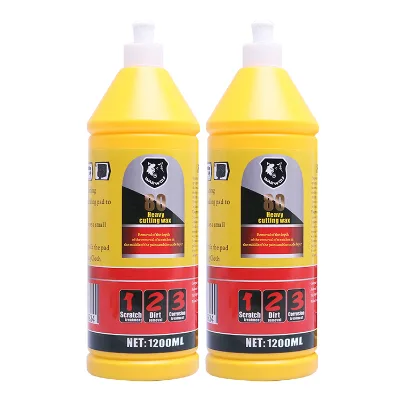
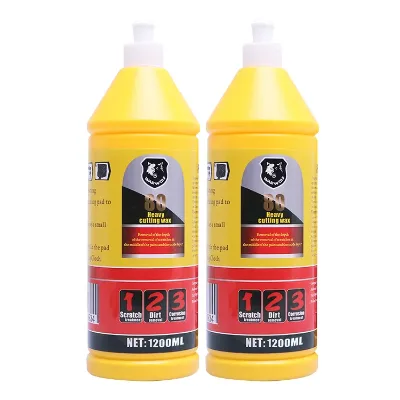
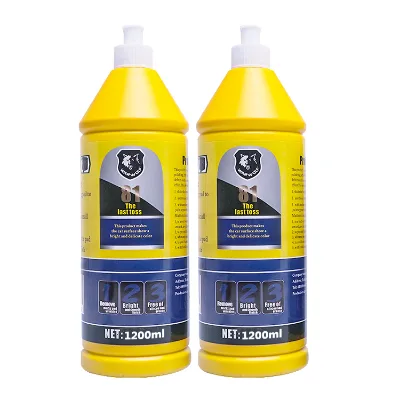
Car Wash Polish Polishingcar Polish Car Wax1.2L
$5.80 - $6.90

Huizhou Best Festivel Articles Co., Ltd.
- Manufacturer
- China Guangdong
- Lead time30 days
- Avg. response≤ 17h
Main productsParty String, Snow Spray, Coloured Hair Spray, Air Horn, Deodorizing Body Spray, Areosol Insecticide, Paint Spray, Dashbroad Polish, Car Care Product
Main marketsSoutheast Asia/ Mideast,Europe,North America

Guangzhou W&X Chemical Co., Ltd
- Verified by CTI
- Combined
- China Guangdong
- Lead time23 days
- Avg. response≤ 5h
Main productsBrake Fluid, Clearing Agent, Table Wax, Washing Liquid
Main marketsSoutheast Asia/ Mideast,Domestic,Europe

Waterproof Protective Coating Restore Surface Luster Car Wax Polish for Car Detailing
$0.50 - $0.65
MOQ: 1200 Pieces

High Performance Car Wax Waterproof Protective Coating Restore Surface Luster Polish
$0.50 - $0.65
MOQ: 1200 Pieces

Factoy Wholesale High-Gloss Soft Shining Car Wax Polish for Various Colors
$0.50 - $0.65
MOQ: 1200 Pieces

Guangzhou Flamingo Car Care Tech Co., Ltd.
- Verified by BV
- Trading Company
- China Guangdong
- Lead time30 days
- Avg. response≤ 3h
Main productsCar Care Products, Car Wax, Foam Cleaner, Tire Foam, Carburetor Cleaner, Brake Cleaner, De-Rust, Wheel Cleaner, Tire Shine, Rubber Spray
Main marketsSouth America,Africa,Others(foreignTradeCapacity.exportBusinessCapacityMarketOther),Southeast Asia/ Mideast,Europe


F087 Car Care Ceramic Coating Liquid Wax Super Car Polish Premium Hard Wax
$2.63 - $2.90
MOQ: 480 pieces


P040 Premium Car Wax Liquid with Long-Lasting Gloss and Easy Application
$1.38 - $1.48
MOQ: 120 pieces

Shanghai Huaqi Industrial Co., Ltd.
- Verified by TUVRHEINLAND
- Trading Company
- China Shanghai
- Lead time15 days
- Avg. response≤ 6h
Main productsCar Mats, Seat Cover, Car Cover, Wiper Blade, Air Compressor, Steering Wheel Cover, Car Lock, Baby Mirror, Car Jack, Racing Seat
Main marketsSouth America,Africa,Southeast Asia/ Mideast,Europe,Australia,North America

Guangdong Sybon New Materials Co., Ltd.
- Verified by BV
- Manufacturer/Factory
- China Guangdong
- Lead time15 days
- Avg. response≤ 4h
Main productsCar Paint, Auto Refinish Paint, Automotive Paint
Main marketsSouth America,Eastern Europe,Mid East,North America,Southeast Asia,Eastern Asia,Oceania,Western Europe,Africa


$1.66 - $9.99
MOQ: 12 Piece/Pieces

$1.66 - $9.99
MOQ: 12 Piece/Pieces

New Product Polish Wax Car Care Protectant Products Car Polishing Compound Rubbing
$1.66 - $9.99
MOQ: 12 Pieces

$1.66 - $9.99
MOQ: 12 Piece/Pieces

Linyi Xingguan Technology Co., Ltd.
- Combined
- China Shandong
- Lead time15 days
- Avg. response≤ 3h
Main productsCar Care Product, Carb & Choke Cleaner, Spray Paint, Lubricant
Main marketsDomestic

Hangzhou Zonki New Materials Co., Ltd.
- Verified by BV
- Trading Company
- China Zhejiang
- Lead time30 days
- Avg. response≤ 3h
Main productsAir Freshener, Detergent, AC Cleaner, Carburetor Cleaner, Rust Remover & Lubricant, Brake & Parts Cleaner, Refrigerant Gas, PU Sealant, Spray Paint, Engine Degreaser
Main marketsNorth America

OEM Car Polish Spray Liquid Ceramic Coating Polish Wax Auto Detailing Polish Shine Protection Spray
$1.49 - $1.96
MOQ: 100 Pieces

Quick Car Polish Spray Ceramic Coating Polish Wax Auto Detailing Polish Shine Protection Spray
$1.49 - $1.96
MOQ: 100 Pieces

Hydrophobic Polish Spray Car Wax Ceramic Coating Polish for Auto Detailing and Shine Protection
$1.49 - $1.96
MOQ: 100 Pieces


Hebei Hongjie International Trade Co., Ltd
- Verified by SGS
- Combined
- China Hebei
- Lead time15 days
- Avg. response≤ 6h
Main productsSponge Polishing Pads, Wool Polishing Pads, Car Polishing Pads, Wool Cutting Polishing Pads, Car Detailing Supplies
Main marketsAustralia,North America

Linyi Yiqun Packaging Products Co., Ltd.
- Verified by SGS
- Manufacturer/Factory
- China Shandong
- Lead time90 days
- Avg. response≤ 3h
Main productsAir Freshener Spray, Insecticide Spray, Butane Gas Cartridge, Brake Cleaner, Carb Cleaner, Dashboard Polish, Tire Foam, Butane Gas Refill, Penetrating Oil, Rust Remover
Main marketsSouth America,Eastern Europe,Mid East,North America,Southeast Asia,Eastern Asia,Oceania,Western Europe,Africa

Zhongshan Michel Chemicel Co., Ltd.
- Verified by BV
- Combined
- China Guangdong
- Lead time23 days
- Avg. response≤ 7h
Main productsTire Sealant Aerosol Paint Industrial Glue and
Main marketsDomestic


Premium Car Care Product Waterproof Liquid Ceramic Coating Spray Wax with Water Repellent Feature
$1.59 - $1.99
MOQ: 6000 Pieces

650ml Tyre Foam Cleaner Spray Car Care Products Tire Shine Liquid Polish Tire Foam Cleaner
$0.90 - $1.20
MOQ: 7500 Pieces


Shenzhen I-Like Fine Chemical Co., Ltd.
- Verified by BV
- Trading Company,Manufacturer/Factory
- China Guangdong
- Lead time45 days
- Avg. response≤ 6h
Main productsSpray Paint, Car Cleaning Products, Car Care Products, Silicone Sealant, PU Foam Spray, Rubber Paint, Tire Sealer Inflator, Construction Foam, Tire Sealant, Expanding Foam Spray
Main marketsSouth America,Eastern Europe,Mid East,North America,Southeast Asia,Eastern Asia,Oceania,Western Europe,Africa


$1.69 - $1.99
MOQ: 6000 Pieces

Hubei Marine Fine Chemical Co., Ltd.
- Verified by TUVRHEINLAND
- Manufacturer/Factory
- China Hubei
- Lead time23 days
- Avg. response≤ 13h
Main productsAir Freshener, Personal Care Product, Hand Sanitizer, Disinfectant Spray, Spray Paint, Household Cleaning Product, Car Care Products, Insecticide Spray, Mosquitco Coil
Main marketsSouth America,Eastern Europe,Mid East,North America,Southeast Asia,Africa


High Grade Waterproof Car Wax Easy to Use Advanced Car Coating Waterproof Spray Wax
$0.50 - $0.95
MOQ: 6000 Pieces
Lanzhou Jialetong Building Materials Processing Co., Ltd.
- Manufacturer
- Gansu, China
- Lead time15 days
- Avg. response≤ 1h
Main productsWhite latex glue,801resin glue,wall paint,epoxy Floor painting,emulsion panit latex
Main marketsWestern Europe(7.00%), Eastern Europe(7.00%), Southern Europe(7.00%), Oceania(7.00%), Domestic Market(6.00%), Eastern Asia(6.00%), South America(6.00%), Northern Europe(6.00%), Africa(6.00%), Southeast Asia(5.00%), South Asia(5.00%), Mid East(5.00%), North America(5.00%), Central America(5.00%)

SANVO Fine Chemicals (Guangdong) Technology Limited
- Verified by SGS
- Combined
- China Guangdong
- Lead time23 days
- Avg. response≤ 3h
Main productsSpray Paint, Paint, Chrome Paint, Graffiti Spray Paint, Car Care, Car Cleaner, Foam Cleaner, Brake Cleaner, Anti Rust Lubricant, Carburetor Cleaner
Main marketsSouth America,Southeast Asia/ Mideast,Domestic


Wax After-Wash Coating for Cars Extra Shine and Wholesale From Manufacturer
$2.99 - $3.10
MOQ: 3000 Pieces


Guangzhou Youyicheng Trading Co., Ltd
- Trading Company
- China Guangdong
- Lead time0 days
- Avg. response≤ 1h
Main productsPaste Compound, Car Wax, Cleaner, Tool




Comprehensive Sourcing Guide
Liquid Car Wax Coating Polish Supplier Concentration and Factory Types
Sourcing results for Liquid Car Wax Coating Polish point clearly to Guangdong, China as an active manufacturing location, and buyers should treat this province as a practical starting point for supplier discovery. Guangdong hosts a broad base of car care chemical producers whose product catalogs typically cover the full spectrum: liquid polish wax, solid carnauba paste wax, silicone spray polish, coating agents, and related household cleaning lines. This clustering matters because a single region visit or consolidated shipment can cover multiple product variants, and nearby component suppliers for aerosol hardware, bottles, and carton packing are easier to coordinate when factories sit close together.
Supplier types in this category split mainly between combined manufacturers and dedicated factories. Combined companies often list wider assortments — car care products, aerosol paint, auto maintenance chemicals, and household products under one roof — which suits buyers building multi-category assortments. Focused factories frequently carry their own brand alongside OEM and ODM capability, indicating in-house formulation rather than pure reselling. Product evidence from the region shows typical models such as 473g liquid polish wax, 300g solid wax, and 230g spray formats, all positioned under the polishing wax category with OEM/ODM service flags. When shortlisting, check whether a listing demonstrates formulation depth (multiple wax types, anti-water and anti-static variants, shelf life specifications) or merely one generic product, since that distinction usually separates formulators from intermediaries.
How to Verify Liquid Car Wax Coating Polish Suppliers
Verification for this chemical category should begin with documentation of the quality management system. Listings in this segment display ISO9001 and ISO14001 certificates, and product-level attributes often cite ISO9001 specifically, so ask each supplier for the actual certificate copies, confirm the certificate scope covers cosmetic/chemical production rather than only trading activities, and check expiry dates. Some suppliers also carry third-party platform verification from TUV Rheinland; treat this as a signal that the company identity and factory were audited, but still request recent business licenses and confirm the registered address matches the production site you would ship from.
Beyond certificates, demand chemical-specific documentation that general merchandise suppliers often cannot produce: safety data sheets for each formulation, ingredient declarations, batch stability records supporting the claimed three-year shelf life, and compliance statements for your destination market's chemical regulations. Verification of production capability should include photos or video of filling lines, and for liquid wax this means checking whether the supplier runs its own mixing and filling or outsources. Practical checks: order paid samples from two or three candidates and compare consistency, scent, ease of buffing, and gloss durability side by side; confirm the sample formulation will match mass production; and verify the packing specification (for example, 24PCS/CTN with stated carton dimensions) against your warehouse handling requirements. Suppliers offering samples and negotiable terms openly tend to be more transparent about what they actually control.
What to Compare Across Liquid Car Wax Coating Polish Suppliers
Build a comparison sheet using the attributes suppliers actually display, and record gaps rather than assuming them. Useful dimensions include: lead time — figures in this category range from roughly 23 to 30 days, and product pages sometimes state 20–25 working days for specific wax models; MOQ — commonly 3,000 pieces per SKU on polishing wax items, though one spray wax listing showed 7,500 units, so per-SKU MOQs vary by format; response time — measured averages differ noticeably between suppliers, and slower response often predicts slower problem-solving during production; and location, which affects freight cost and consolidation options.
Also compare company type (factory versus combined manufacturer), R&D capacity such as ODM and own-brand capability, main product breadth, and whether customization is explicitly offered. On price, observed unit ranges span roughly $0.59–$0.65 for a 230g spray wax, $1.19–$1.25 for a 473g liquid wax, and $1.89–$1.97 for a 300g solid wax — but treat displayed prices as indicative only and require quotes against your exact volume, formulation, and packaging. Compare packaging and shipping specifications too: carton dimensions like 41.3×29.5×16.5cm versus 50.5×37.5×19.1cm change pallet counts and freight economics. Finally, compare service scope — OEM/ODM availability, sample policy, shelf life claims, and payment flexibility — since these determine how much development support you get if you want private-label liquid wax rather than stock formulations in stock cartons.
Common Liquid Car Wax Coating Polish Sourcing Risks
The biggest risk in this category is formulation drift between the approved sample and production batches. Liquid car waxes are emulsions of wax, silicone, solvent, and abrasive components; a supplier may substitute raw materials when costs rise, producing changes in viscosity, gloss, or separation over time. Mitigate by specifying a locked reference sample, requiring advance notice of any raw material change, and including a retained-sample comparison clause in the purchase agreement. Shelf life claims of three years should be supported by stability data, not just stated on the product sheet, especially if goods will sit in port or warehouse storage for months.
Second, watch for certificate mismatch: a supplier may hold ISO9001 for one business scope while the actual filling occurs at a partner site the certificate does not cover. Third, logistics damage risk is real for liquid and aerosol-adjacent products — leakage from inadequate cap sealing or crush damage in transit leads to claims; confirm gross weights (listings show figures like 9kg and 11.2kg per carton) and carton strength, and photograph sealed cartons before loading. Fourth, MOQ pressure: 3,000-piece minimums per SKU mean a multi-SKU private-label program quickly becomes capital-intensive, so confirm whether MOQs apply per color, per scent, or per SKU. Finally, response-time slippage between inquiry and order stages often foreshadows communication failures during production disputes, so weight measured response speed in your evaluation rather than sales-pitch promises.
Liquid Car Wax Coating Polish Regional Sourcing and Logistics
For buyers with evidence pointing to Guangdong, the logistics advantage is concrete: the province's export ports handle consolidated chemical shipments routinely, and factories there commonly pack wax products in cartons of 12 or 24 pieces with defined carton dimensions suitable for palletizing. When arranging freight, classify your goods correctly — liquid waxes in filled bottles may fall under different dangerous-goods or chemical declaration rules than solid paste waxes, and spray formats can trigger aerosol restrictions on certain carriers. Ask suppliers which export classifications they routinely use and which shipping lines accept their products; a factory that exports spray polish regularly will have documentation ready, while a first-time exporter may cause delays.
If no verified cluster is available for your supplier set, identify concentration yourself: run a sourcing search for the exact product keywords (liquid wax, carnauba wax, car polish wax, coating wax), record the origin attributes on product pages, and look for repeated provinces or cities across multiple listings rather than trusting one supplier's claim. Once two or more candidate factories share a region, plan a combined trip or third-party inspection covering both, since inspection costs drop sharply when sites are within driving distance. For order planning, align lead times with your seasonal demand — a 23–30 day production window plus freight means spring car care season orders must be placed months earlier — and confirm whether the quoted lead time starts at deposit, artwork approval, or raw material arrival.
Liquid Car Wax Coating Polish Commercial Terms and Order Planning
Commercial terms in this category are usually negotiable — product attributes explicitly state payment as negotiable — so use that leverage deliberately rather than defaulting to the first quoted structure. Standard practice is a deposit with balance before shipment; for first orders, consider inspection before balance payment, particularly for a chemical product where a filling error cannot be seen from the outside of sealed cartons. Confirm exactly what the unit price includes: bottle, cap, label printing, carton, and palletization are common sources of surprise cost additions in private-label car wax orders. Request a full quotation breakdown per SKU covering volume, packaging count (for example 12PCS/CTN or 24PCS/CTN), and whether artwork and plate charges are one-time or amortized.
For order planning, sequence milestones explicitly: sample approval, formulation lock, label and carton artwork sign-off, deposit, production start, mid-production inspection, pre-shipment inspection, balance, and booking. With lead times of 20–30 days plus shipping, build a calendar that reverses from your target on-shelf date and adds buffer for rework if the first inspection finds filling or labeling defects. For repeat orders, negotiate a rolling forecast arrangement so raw wax and silicone inputs are reserved, which stabilizes both lead time and price. Track per-supplier performance — actual production days versus quoted, defect rate at inspection, and response speed during the order — and re-weight your comparison sheet each cycle, since displayed attributes on platforms can change while real operational performance is the data that determines whether your liquid car wax program scales profitably.
FAQs
What is the minimum order quantity for Liquid Car Wax Coating Polish?
The minimum order quantity is 3000 pieces for most Liquid Car Wax Coating Polish products listed. Some specific items may require 7500 pieces as the baseline. Buyers should verify the exact MOQ per product model before placing an order to ensure compliance with supplier requirements.
How long does it take to receive Liquid Car Wax Coating Polish orders?
Lead times for Liquid Car Wax Coating Polish typically range from 20 to 30 working days. Specific delivery windows may vary between 20-25 working days or up to 30 days depending on the supplier. Buyers should confirm the exact timeline with the manufacturer before finalizing purchase agreements.
Are ISO certifications available for Liquid Car Wax Coating Polish suppliers?
Yes, many suppliers hold ISO9001:2015 and ISO14001:2015 certifications for their Liquid Car Wax Coating Polish lines. Some products also list CE, RoHS, SGS, and GMP standards. Buyers should request valid certificates to verify quality management systems and environmental compliance before proceeding with bulk orders.
Can suppliers provide OEM or ODM services for Liquid Car Wax Coating Polish?
Suppliers offer both OEM and ODM services for Liquid Car Wax Coating Polish customization. Customization options include private labeling and specific formula adjustments. Buyers can request samples to test quality before committing to large production runs for their branded automotive care products.
What is the price range for Liquid Car Wax Coating Polish products?
Prices for Liquid Car Wax Coating Polish range from 0.59 to 2.12 USD per unit depending on the product type. Specific items like spray polish start at 0.59 USD while liquid wax variants may cost up to 2.12 USD. Buyers should compare unit costs against volume discounts and shipping fees.
Where are the manufacturers of Liquid Car Wax Coating Polish located?
Manufacturers of Liquid Car Wax Coating Polish are primarily located in Guangdong, China. This region hosts combined suppliers and factories specializing in automotive care products. Buyers should verify the specific factory address and production capacity to ensure reliable supply chain management for their orders.
What is the shelf life of Liquid Car Wax Coating Polish products?
The shelf life for Liquid Car Wax Coating Polish is typically three years from the date of manufacture. This validity period applies to both liquid and solid formulations listed in the product specifications. Buyers should check expiration dates on packaging to ensure product freshness upon delivery.