Low Medium Frequency Lumbar Massager Suppliers and Manufacturers
Source 22 verified suppliers for Low Medium Frequency Lumbar Massager products. Compare dimensions including ISO certifications, lead times, and MOQs. Review product specifications and request quotes to identify suitable manufacturing partners; review the available evidence before requesting comparable quotations from suitable candidates.
Suppliers List

PUYANG SELFAIDING INDUSTRIAL CO., LTD.
- Verified by SGS
- Manufacturer
- China Henan
- Lead time15 days
- Avg. response≤ 4h
Main productsAdult Bib, Pet Pad, Underpad, Baby Bib, Protective Panties, Washable Sanitary Pad, Compression Stockings, Patient Care Clothing, Pet Nest, Pet Toy


Back Massage Stretcher Device Back Massager Stretcher Lumbar Back Stretcher
$1.08 - $1.30
MOQ: 500 Pieces
Jiangsu Alphay Medical Device Co., Ltd.
- Verified by Intertek
- Manufacturer, Trading Company
- Lead time15 days
- Avg. response≤ 3h
Main productsMassager Products (Knee Massager, Lumbar Massager, Neck Massager), Medical Device (Air Traction Belt, Neck Traction Device)
Main marketsDomestic Market(50%), Eastern Asia(30%), North America(10%)
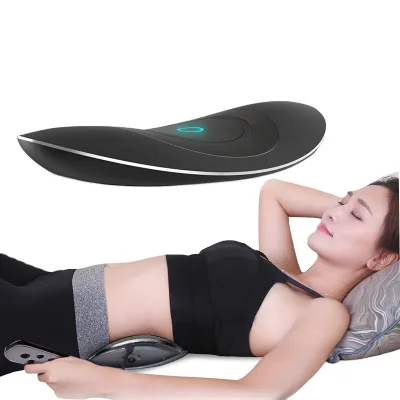
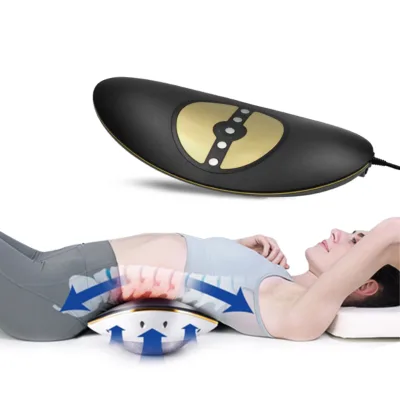
Back Massager New Electric Portable Lower Back Pain Vibration Lumbar Massager Waist Massage Machine
$45.79 - $49.46
MOQ: 100 pieces
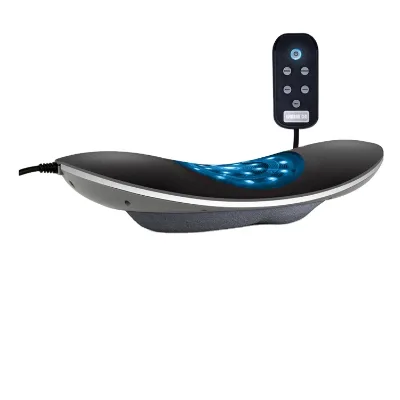
Lumbar Magnet Therapy Lumbar Support Massage, Lumbar Medical Massage, Lumbar Spine Traction
$38.80 - $42.40
MOQ: 100 sets

Shenzhen Pentasmart Technology Co., Ltd
- Verified by TUVRHEINLAND
- Combined
- China Guangdong
- Lead time30 days
- Avg. response≤ 2h
Main productsNeck Massager, Knee Massager, Massage Gun, Lumbar Massager, Head Massager, Massage Cushion, Mini Massager, Foot Massager, Eye Massager, Back Massager
Main marketsSoutheast Asia/ Mideast,East Asia(Japan/ South Korea),Domestic,Europe,North America

EMS+Tens Pulse Stimulation Massager Remote Control Lumbar Massager with Heat
$26.50 - $29.40
MOQ: 2 Pieces


HEFEI MERRYBODY SPORTS CO., LTD.
- Verified by TUVRHEINLAND
- Trading Company
- China Anhui
- Lead time30 days
- Avg. response≤ 9h
Main productsDumbbell, Gym Ball, Exercise Mat, Boules Set, Bench, Foam Roller, Barbell, Pilate Ring, Pilate Products
Main marketsSouth America,Southeast Asia/ Mideast,East Asia(Japan/ South Korea),Europe,Australia,North America

Lumbar Support Back Stretch Lumbar Pain Relief Back Massager Stretcher Device Equipment
$0.85 - $1.25
MOQ: 200 Pieces

$0.85 - $1.25
MOQ: 200 Pieces

Helps with Neck Muscle Pain Massage and Lumbar Pain Relief Treatment Lower Back Stretcher
$3.28 - $3.99
MOQ: 200 Sets

Chenfeng Future (Fu'an) Technology Co., Ltd.
- Verified by SGS
- Manufacturer
- China Fujian
- Lead time15 days
- Avg. response≤ 14h
Main productsMassage Pillow, Massage Shawl, Massage Cushion, Massage Mattress


Ergonomic Spinal Decompression Massager Warm Therapy for Daily Lower Back Recovery
$21.70 - $23.88
MOQ: 50 Pieces
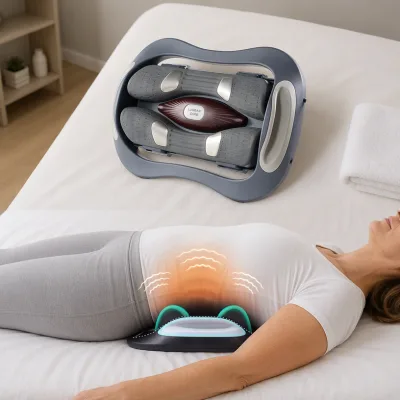
Jiangsu Alphay International Trade Co., Ltd.
- Manufacturer, Trading Company
- Jiangsu, China
- Lead time20 days
- Avg. response≤ 2h
Main productsMassagers,Air Traction Belt/Neck Traction Device/Back Support Belt
Main marketsEastern Asia(15.00%), Western Europe(15.00%), South America(10.00%), South Asia(10.00%), Mid East(10.00%), Southern Europe(10.00%), North America(10.00%), Oceania(5.00%), Southeast Asia(5.00%), Eastern Europe(5.00%), Northern Europe(5.00%)
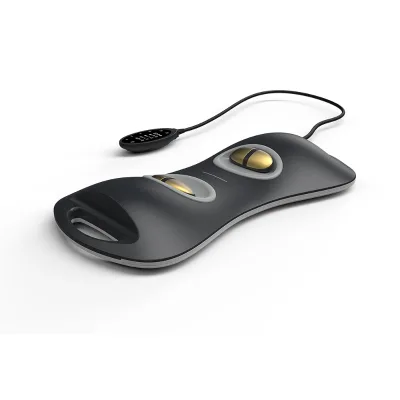
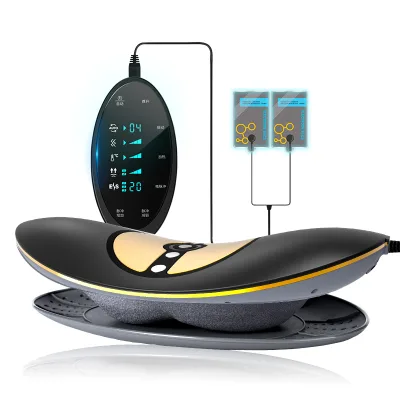
$46.00 - $51.00
MOQ: 5 sets
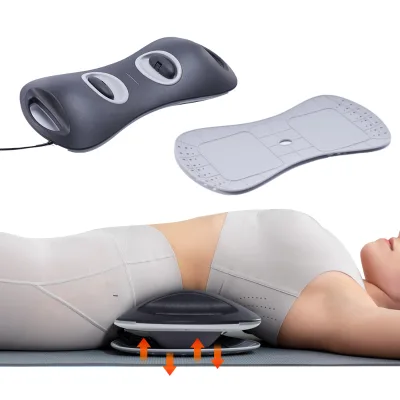
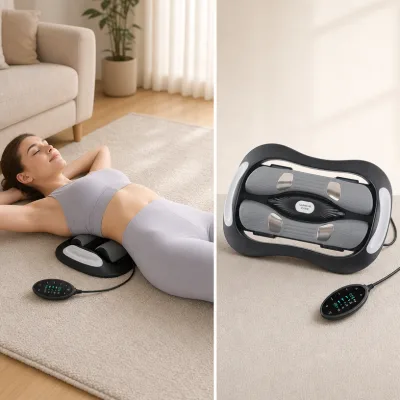
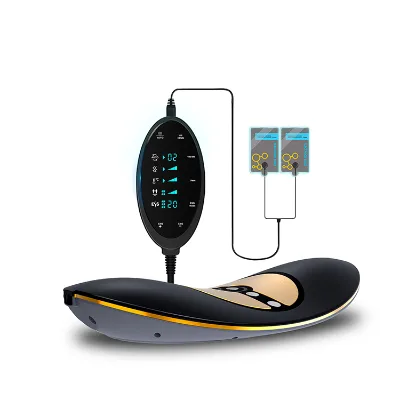
Suzhou Wisdom Optimal Co., Ltd
- Verified by SGS
- Trading Company
- China Anhui
- Lead time15 days
- Avg. response≤ 2h
Main productsMassage Chair, Commercial Massage Chair, Salon Barber Chair, Shampoo Salon Bed, Massage Bed, Beauty Salon Furniture, Hair Washing Chair, Body Massagers
Main marketsSouth America,Southeast Asia/ Mideast
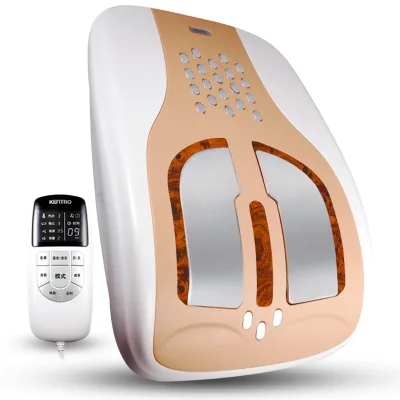
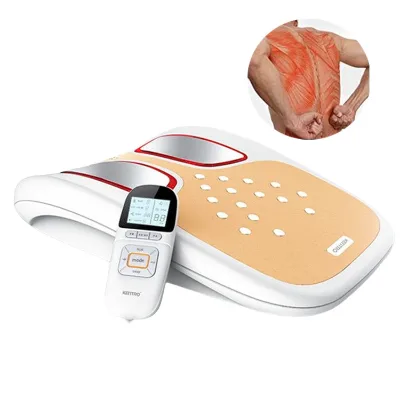
Shenzhen Kentro Medical Electronics Co., Ltd.
- Manufacturer, Trading Company
- Lead time旺季: "1 - 1000":35,"1001 - 3000":40,"3001 - 5000":45,"> 5000":"To be negotiated", 淡季: "1 - 1000":35,"1001 - 3000":40,"3001 - 5000":45,"> 5000":"To be negotiated"
- Avg. response≤ 5h
Main productsNeck Massager, Lumbar Massager, Foot Massager, Low Frequency Therapy Instrument, Pelvic Floor Muscle Trainer
- Verified by SGS
- Manufacturer
- China Guangdong
- Lead time15 days
- Avg. response≤ 13h
Main productsMassage Gun, Electronics Guitar and Bass Tuner, Ar Game Gun
Main marketsNorth America


Fascia Gun Wireless Muscle Massager Multifunctional Massager for Relaxing Spinal Massage Hammer
$28.53 - $29.12
MOQ: 1000 Sets

Xiamen Comfortlife Electronics Co., Ltd.
- Verified by SGS
- Manufacturer
- China Fujian
- Lead time30 days
- Avg. response≤ 8h
Main productsAnti Snore Device, Foot Massage, Personal Care Products
Main marketsSouth America,Australia,North America

- Verified by BV
- Combined
- China Guangdong
- Lead time30 days
- Avg. response≤ 9h
Main productsMedical Air Mattress, Nebulizer, Air Compression Leg Massager, Humidifier, Oxygen Concentrators, Air Mattress, Blood Pressure Monitor, Suction Machine, Therometer, Face Mask
Main marketsSouth America,Africa,Southeast Asia/ Mideast,East Asia(Japan/ South Korea),Europe,Australia,North America


Health Home Use Therapy Air Leg Massager for Pain Relief and Relaxation
$118.00 - $188.00
MOQ: 200 Sets

Ningde Crius Electronic Co., Ltd.
- Verified by TUVRHEINLAND
- Combined
- China Fujian
- Lead time30 days
- Avg. response≤ 6h
Main productsMassage Chair, Jade Massage Bed, Massage Pillow, Tourmaline Bracelet, Foot Massager, Jade Mattress, Massage Cushion, Massage Belt, Eye Massager, Neck and Shoulder Massager
Main marketsAustralia

Wireless Low Frequency Electric Pulse Therapy Machine Neck and Shoulder Massager
$39.80 - $50.00
MOQ: 1 Pieces


HANGZHOU WEIZE IMP & EXP CO., LTD.
- Verified by TUVRHEINLAND
- Trading Company
- China Zhejiang
- Lead time30 days
- Avg. response≤ 4h
Main productsProtective Mask
Main marketsAfrica,Southeast Asia/ Mideast,Europe,North America


Upgrade Back Massager Yoga Practice Lumbar Traction Muscle Relax Back Support
$4.48 - $5.48
MOQ: 1000 Pieces

Lumbar Support Spine Magnetic Therapy Massager Back Stretcher with 10 Magnets
$2.08 - $3.50
MOQ: 200 Pieces

Top Selling Pain Relieve Chiropractic Massager Lumbar Support Adjustable Back Stretcher
$1.88 - $2.25
MOQ: 500 Pieces

Suzhou Hengxiang Import & Export Co., Ltd.
- Trading Company
- China Jiangsu
- Lead time15 days
- Avg. response≤ 19h
Main productsDust Mask, Bandage, Surgical Drape, Suture, Operation Lamp, First Aid Kits, Surgical Tape, Infusion Set, Blood Transfusion Set
Main marketsSouth America,Africa,Europe

- Verified by CTI
- Individuals/Soho,Manufacturer/Factory,Other
- China Guangdong
- Lead time60 days
- Avg. response≤ 2h
Main productsAlkaline Water Ionizer, Water Ionizer, Water Dispenser, Jade Massage Bed, Warm Jade Physiotherapy Device, Electric Potential Therapy Device, High Potential Therapy Device, Electrostatic Field Therapy Device, Far Infrared Jade Mattress., Memory Foam Pillow
Main marketsSouth America,Eastern Europe,Mid East,North America,Southeast Asia,Eastern Asia,Oceania,Western Europe,Africa

- Verified by TUVRHEINLAND
- Trading Company,Manufacturer/Factory
- China Jiangsu
- Lead time23 days
- Avg. response≤ 5h
Main productsMedal, Coin, Lapel Pin, PVC Patch, Embroidery Patch, Keychain, Button Badge, Silicone Wristband, Lanyards, Gift
Main marketsSouth America,Eastern Europe,Mid East,North America,Oceania,Western Europe
Fujian Forwell Health Tech. Co., Ltd.
- Verified by CTI
- Trading Company
- China Fujian
- Lead time0 days
- Avg. response≤ 6h
Main productsMassage Chair, Massage Pillow, Massage Cuhion, Foot Massager, Neck & Shoulder Massager, Massage Bed, Hand Massager, Massage Mattress


Therapeutic Muscle Relief Massager with Rolling Nodes and Soothing Heat
$35.00 - $65.00
MOQ: 500 Pieces


Dongguan Julisheng New Material Technology Co., Ltd.
- Verified by BV
- Combined
- China Guangdong
- Lead time30 days
- Avg. response≤ 7h
Main productsPU Foam, PU Corner Guard, Accessories PU Armrest, PU Self-Skinning, PU High Rebound, PU Slow Rebound, PU Imitation Wood Hard Foam, PU Foam Rugby, PU Traction Pillow, PU Foam Wheel
Main marketsDomestic

Neck Pain Relief Cervical Traction Device Massager Back Shoulder Relaxer
$6.28 - $10.56
MOQ: 100 Pieces


Nanjing Longcare Medical Equipment Co., Ltd.
- Verified by TUVRHEINLAND
- Trading Company
- China Jiangsu
- Lead time0 days
- Avg. response≤ 6h
Main productsImaging Equipment, Lab Devices, ICU Equipment, or Equipment, Ivd Product, Homecare Product, Medical Consumables, Medical Equipment, Hospital Equipment

Ningbo Mingni Import And Export Co., Ltd.
- Verified by SGS
- Manufacturer/Factory
- China Zhejiang
- Lead time23 days
- Avg. response≤ 3h
Main productsWindow Handle, Door Handle, Hinge, Gas Cooker Knob, Oven Knob, Name Plate, Cabinet Handle, Bathroom Hardware, Auto Parts
Main marketsSouth America,Eastern Europe,North America,Western Europe

Hot Selling Equipment Posture Therapy Adjustable Muscle Back Support Massager
$2.80 - $3.50
MOQ: 200 Pieces

Factory Price Equipment Posture Therapy Adjustable Muscle Back Stretcher Posture Massager
$2.80 - $3.50
MOQ: 200 Pieces
Guangzhou Umy Medical Equipment Co., Ltd.
- Verified by SGS
- Manufacturer
- China Guangdong
- Lead time15 days
- Avg. response≤ 5h
Main marketsDomestic
Monica Technology (Shenzhen) Co., Ltd.
- Verified by SGS
- Trading Company
- China Guangdong
- Lead time30 days
- Avg. response≤ 22h
Main productsPet Product, Pet Water Dispenser, Sports Repair Products, Beauty Equipment, Pet Daily Necessities, Tens Products, Outdoor Sports Products, Phototherapy Beauty Products, Work out Repair Products, Phototherapy Sports Rehabilitation Products
Main marketsEast Asia(Japan/ South Korea)




Comprehensive Sourcing Guide
Low Medium Frequency Lumbar Massager Supplier Concentration and Factory Types
When you search for Low Medium Frequency Lumbar Massager suppliers, the results typically show a mix of manufacturer profiles and combined manufacturer-trading company entities rather than a single dominant cluster. In the current supplier set, some listings trace back to Henan province, where the verified companies are manufacturers whose main product lines center on absorbent care goods such as underpads, adult bibs, and patient care clothing, with massage and health-care devices appearing as adjacent categories. Other listings point to Zhejiang and Jiangsu origins on the product level, where folding manual lumbar stretchers and electric vibrating waist traction devices are produced. Guangdong also appears, hosting companies whose core catalog is massage hardware itself, including neck, knee, head, eye, and lumbar massagers.
This spread matters because factory type shapes what you can expect. A pure manufacturer in Guangdong whose main products are massagers is more likely to control molding, electronics assembly, and testing in-house. A manufacturer-trading combination, as seen in some Jiangsu-linked profiles, may broker production while handling export documentation and customization coordination. A Henan care-products manufacturer offering a lumbar-related item may be extending an existing health-care line rather than running a dedicated massager line. Treat the supplier's main-product list, company type label, and product-level place of origin as three separate signals, and reconcile them before assuming any single supplier actually manufactures the device you want.
How to Verify Low Medium Frequency Lumbar Massager Suppliers
Verification starts with the platform-displayed credentials, but only as a filter, not as proof of capability. In the current results, some suppliers carry SGS verification while others show Intertek or TUV Rheinland verification, and system certifications range from an ISO9001:2015 certificate to a combined set including ISO 9001, RoHS, LVD, EMC, CE, and FCC. Because these are electronic therapy-adjacent devices, confirm which certification body issued each document, check the certificate scope covers electrical massagers rather than a different product family, and verify the certificate number against the issuing body's database where possible. Do not assume every supplier in a search result holds any displayed credential at all.
Beyond paperwork, verify production reality directly. For an electric low-medium-frequency device, ask the supplier to identify which factory processes—circuit board assembly, electrode pad production, housing injection, and final electrical safety testing—are performed internally versus outsourced, and request evidence for each claim. Product listings themselves offer verification clues: one Jiangsu-linked electric lumbar traction massager lists CE and Chinese patented status plus a quality certification string of ISO, SGS, TUV, CE, WEEE, and RoHS, while a Zhejiang-origin manual folding lumbar stretcher carries no electrical certifications because it is manual. Match the certification demands to the product's actual power supply. Finally, ask for a sample from current production, inspect its workmanship, and request references from buyers in regulated markets who have imported the same model before committing.
What to Compare Across Low Medium Frequency Lumbar Massager Suppliers
Build a comparison sheet from the attributes the listings actually display, then fill gaps through direct inquiry. Useful displayed dimensions include response time, lead time, MOQ, location, verification body, system certification, R&D or customization capability, and main products. In the current set, response times range noticeably: one Guangdong massager-focused company shows roughly 1.35 hours, a Henan care-products manufacturer around 3.31 hours, and a Jiangsu-linked combined supplier around 3 hours. Lead times differ just as sharply—one listing states 15 days while an electric Jiangsu lumbar massager lists 30-40 working days for delivery. MOQs also diverge, from 100 pieces on an electric lumbar traction massager to 500 pieces on a manual folding back stretcher.
When comparing, weight the dimensions that matter most for your order size and market. A buyer needing quick restocking may prioritize the sub-2-hour responder with the shorter lead time, while a buyer launching a branded electric device may prioritize the supplier advertising OEM acceptance, sample availability, and customization options such as color choices and logo placement. Location affects freight cost and factory-audit travel, so note Henan, Jiangsu, Zhejiang, and Guangdong origins separately. Also compare warranty terms—one electric model advertises a one-year warranty and return-and-replacement after-sale service—and packaging specifics like single gross weight and box dimensions, which materially change your landed cost calculations across candidates.
Common Low Medium Frequency Lumbar Massager Sourcing Risks
The most common risk is category mismatch: suppliers whose core business lies elsewhere listing a lumbar product as a sideline. A Henan manufacturer whose main products are underpads, pet pads, and patient care clothing may source or broker a massager rather than build it, leaving you without leverage over quality or firmware. Similarly, a combined manufacturer-trading company may not disclose which role applies to your order. Ask explicitly whether the quoted entity will be your contracting party and whether the same entity controls production, and walk away from vague answers.
Technical and compliance risks follow. Electric low-medium-frequency devices involve intensity settings, electrode contact, and timers that can drift in production; a model advertised with three adjustable gears must be tested to confirm each gear performs as labeled. Certification claims can be stale, scoped to a different model, or simply copied between listings, so require model-specific certificates. Sample-to-bulk divergence is another trap—approve a golden sample, keep it sealed, and reference it in the contract. Logistics-focused risks include underquoted gross weights: an electric unit listing around 2 to 2.5 kilograms single gross weight will drive freight far differently from a 0.56-kilogram manual stretcher, so validate packed weights before accepting shipping quotes. Finally, confirm spare-part availability for pads, straps, and chargers, since these consumables determine post-sale support cost.
Low Medium Frequency Lumbar Massager Regional Sourcing and Logistics
The regional picture from current results gives you a practical map for logistics planning. Product-level origins in this category include Jiangsu for electric vibrating lumbar traction massagers, Zhejiang for manual folding back stretchers, and company registrations in Henan and Guangdong. Guangdong's role is notable because companies there list massage hardware—massage guns, cushions, neck and lumbar massagers—as their main products, suggesting deeper component-supply ecosystems for electronics in that province. Jiangsu-linked listings show single package sizes around 49-50 by 15 by 36 centimeters with gross weights near 2.5 kilograms, which you should use to estimate container utilization for electric models.
Plan logistics around product weight class and power type. Manual folding stretchers at roughly 0.56 kilograms each, packed one piece per box, ship economically in consolidated cartons and can move by economical sea freight even in trial orders. Electric units, at several times the weight and containing batteries or power supplies, need careful classification for sea and air transport, and you should confirm whether the supplier's packaging meets export carton standards for drop testing. Regional consolidation also matters: if you source manual stretchers from Zhejiang and electric units from Jiangsu, the two origins are close enough to combine into one coastal loading, whereas Henan-origin goods may incur inland drayage. Ask each supplier for FOB quotes from their actual loading port and compare inland costs before ranking regions by total delivered cost.
Low Medium Frequency Lumbar Massager Commercial Terms and Order Planning
Commercial terms in this category vary enough that you should negotiate rather than assume. Displayed pricing shows electric Jiangsu-linked lumbar massagers quoted in ranges roughly from the mid-thirties to high-forties US dollars per unit depending on model, while a manual Zhejiang folding stretcher sits near one to one-and-a-third dollars. These product-level figures illustrate that price scales with power type and features, but treat every number as a starting point to requote against your volume, configuration, and packaging. MOQs of 100 pieces for electric models versus 500 for a manual stretcher mean different cash commitments for market testing, so match the MOQ tier to your validation budget.
Order planning should sequence around lead times and customization. With electric models quoting 30-40 working days delivery and customization options available, add sample iteration time before the production clock starts, and place seasonal orders with buffer for certification renewals. For suppliers advertising ODM and OEM capability, negotiate who owns the customized mold, artwork, or firmware, and include tooling costs explicitly. Use secure payment structures with milestone releases tied to inspection, and confirm whether the platform's trade protections cover your transaction since verification status varies across suppliers. Finally, lock warranty and after-sale terms—one listed electric model advertises a one-year warranty with return-and-replacement service—in writing, and define defect-rate thresholds, spare-part supply, and replacement logistics before releasing the deposit for mass production.
FAQs
What types of lumbar massager models are available from manufacturers?
Listings include manual folding lumbar stretchers, electric vibrating lower-back massagers, magnetic therapy lumbar supports, and heated traction belts. Manual stretchers are compact and lighter, while electric units add vibration, heat, or infrared functions. Buyers should match the model type to their target market, since power features affect certification requirements, unit price, and packaging size.
What is the typical MOQ for low medium frequency lumbar massagers?
Observed MOQs range from 100 pieces for electric vibrating lumbar relaxation massagers to 500 pieces for manual back stretcher devices. Electric models with higher unit values usually carry lower MOQs, while simple manual stretchers require larger volumes. Confirm the exact MOQ per model before quoting, since customization requests can raise the minimum order.
How much do lumbar massagers cost per unit in bulk?
Prices in current listings range from about $1.08 to $1.30 for manual folding back stretchers, $35.80 to $42.40 for electric vibrating traction units, and roughly $45.79 to $49.46 for heated lumbar stretcher belts. Final pricing depends on order quantity, customization level, and feature set, so request itemized quotes for each model.
What certifications should I verify before importing lumbar massagers?
Listings reference ISO 9001 quality systems plus product marks such as CE, RoHS, FCC, EMC, and LVD on some suppliers. One manufacturer holds ISO9001:2015 and another also lists ISO14001:2015. Because certification claims vary by listing, ask each supplier for current, verifiable certificates matched to your destination market's regulatory requirements.
What lead times should I expect when ordering lumbar massagers?
Published lead times vary by supplier and model type. One manufacturer lists a 15-day lead time, while an electric lumbar relaxation massager shows 30-40 working days for delivery. Electric models with heating or vibration features generally take longer than manual stretchers. Confirm production and shipping timelines in writing before placing a deposit.
Can suppliers provide OEM or ODM customization for lumbar massagers?
Yes, customization is widely offered. Listed capabilities include ODM and OEM service, light customization, sample processing, graphic processing, and customized-on-demand production. Electric models show customizable colors, and product pages mark customization as available. Request samples first to evaluate build quality, then agree on branding, packaging, and artwork specifications before mass production begins.
Do suppliers offer samples before a bulk order?
Yes, at least one listing explicitly states samples are acceptable for its electric lumbar massager. Sample costs and freight are typically paid by the buyer and may be credited against later bulk orders. Order samples of every shortlisted model, test them under real use conditions, and compare build quality before committing to a production run.
Which regions in China produce these lumbar massagers?
Current listings point to manufacturers in Henan, Guangdong, Jiangsu, and Zhejiang provinces. Jiangsu suppliers focus on electric vibrating and heated traction models, while Henan and Guangdong suppliers cover broader massage product lines including manual stretchers. Location affects freight costs and access to component supply chains, so factor region into your shortlisting.