Magnetic Holder Golf Ball Marker Suppliers and Manufacturers
Source 27 verified suppliers for Magnetic Holder Golf Ball Marker. Compare key dimensions including ISO9001:2015 certification, SGS verification, lead times of 10-30 days, and MOQs starting at 100 units. Review product specifications and request quotes to streamline your procurement process.
Updated
Suppliers List

Dongguan JT Sporting Goods Co., Ltd.
- Verified by SGS
- Combined
- China Guangdong
- Lead time30 days
- Avg. response≤ 8h
Main productsGolf Headcover, Golf Towel, Golf Tees, Golf Ball Marker, Golf Divot Tool, Golf Glove, Golf Ball, Golf Pouch, Golf Bag, Golf Accessory
Main marketsAfrica,Southeast Asia/ Mideast,East Asia(Japan/ South Korea),Domestic,Europe,Australia,North America
Dongguan Chenyue Gifts Co., Ltd.
- Verified by SGS Group
- Manufacturer, Trading Company
- Lead time10 days
- Avg. response≤ 2h
Main productsMedal, Badge, Keychain, Bottle Opener, Golf Ball Marker
Main marketsNorth America(60%), Eastern Asia(10%), South America(5%)
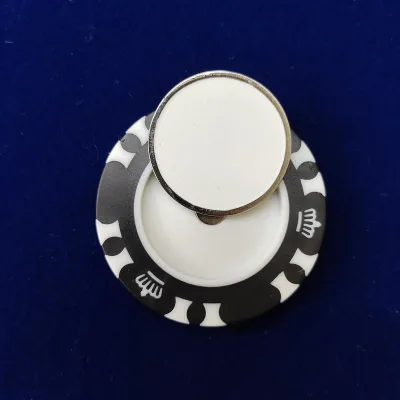
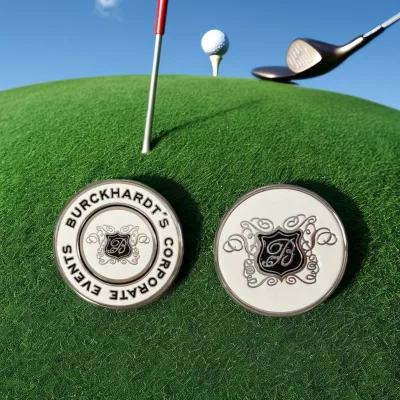
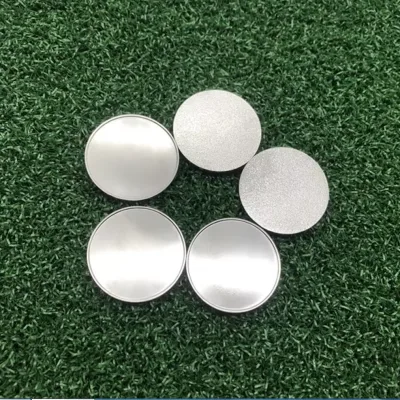
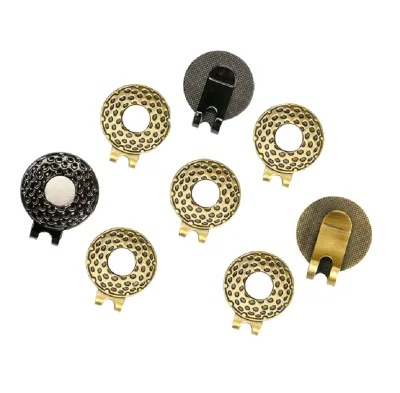
Magnetic Golf Poker Chip Magnet Golf Ball Marker Custom Factory Price Golf Club Ball Markers
$0.5131 - $1.3314
MOQ: 100 pieces
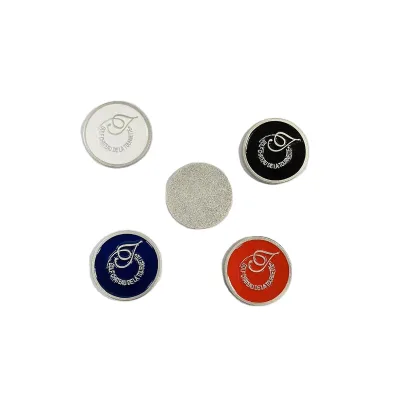
Wholesales Factory Custom Logo Znic Alloy Metal Enamel Magnetic Golf Ball Marker
$0.20 - $0.50
MOQ: 100
- Verified by Intertek
- Manufacturer, Trading Company
- Lead time7 days
- Avg. response≤ 2h
Main productsCustom Flags And Banners , Promotion Gifts, Promotion Apparel And Accessories, Advertising Display , Sports Entertainment Gifts
Main marketsNorth America(43%), Western Europe(25%), Oceania(16%)
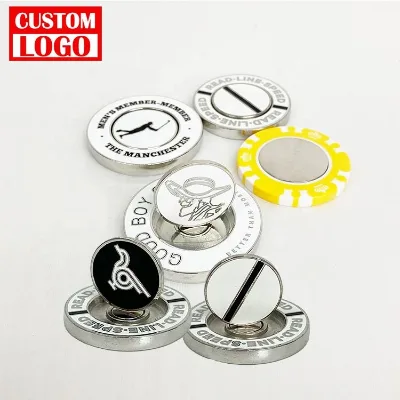
Custom Foldable Design Lightweight Golf Mark Custom Magnetic Ball Marker Golf Marker
$0.5131 - $1.5274
MOQ: 100 pieces
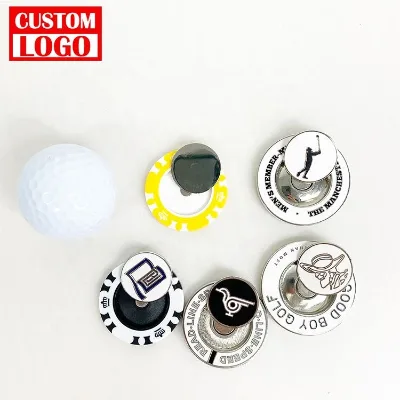
Customized Metal Unique Golf Ball Markers Magnetic Souvenir Golf Ball Marker Marker Golf Accessories
$0.50 - $1.49
MOQ: 100 pieces
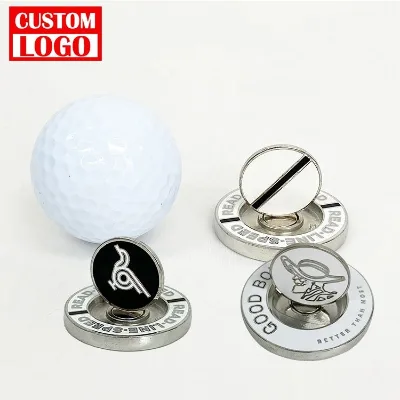

Zhongshan Echo Crafts Co., Ltd.
- Verified by BV
- Combined
- China Guangdong
- Lead time15 days
- Avg. response≤ 4h
Main productsMedal, Badge, Keychain, Coin, Lanyard, Wristband, Bottle Opener, Dog Tags, Lapel Pin, Key Ring
Main marketsSouth America,Southeast Asia/ Mideast,Europe,Australia,North America


Custom Cheap Metal Golf Accessories Golf Ball Marker Magnetic Hat Clip Golf Ball Marker
$0.15 - $0.89
MOQ: 50 Pieces


Factory Custom Golf Accessories Golf Tools Custom Metal Hard Enamel Magnet Golf Ball Marker
$1.15 - $1.89
MOQ: 50 Pieces


Zhongshan Xiangda Metal Arts & Crafts Co., Ltd.
- Verified by BV
- Combined
- China Guangdong
- Lead time15 days
- Avg. response≤ 4h
Main productsBadge, Keychain, Medal, Lapel Pin, Dog Tag, Fridge Magnet, Cufflink, Tie Clip, Bag Hanger, Wrist Band
Main marketsSouth America,Southeast Asia/ Mideast,Domestic,Europe,Australia,North America


Creative Design Custom Enamel Golf Hat Clip Magnetic Removable Golf Ball Marker
$0.25 - $0.86
MOQ: 50 Pieces


New Design Custom Golf Hat Clip Ball Marker 25mm Round Coin Middle Finger Magnet Golf Ball Marker
$1.60 - $2.45
MOQ: 50 Pieces

Wholesale Best Quality Personalized Metal Hat Clip Custom Logo Enamel Magnetic Golf Ball Marker
$0.25 - $0.86
MOQ: 50 Pieces

Shenzhen Yihui Industrial Co., Ltd.
- Verified by SGS
- Trading Company
- China Guangdong
- Lead time15 days
- Avg. response≤ 4h
Main productsGolf Ball Marker, Golf Divot Tool, Golf Equipment, Golf Bag, Golf Tee, Golf Club Brush, Golf Towel, Golf Glove, Golf Pick up Retriever, Golf Training Aids
Main marketsEast Asia(Japan/ South Korea),Domestic,Europe,North America
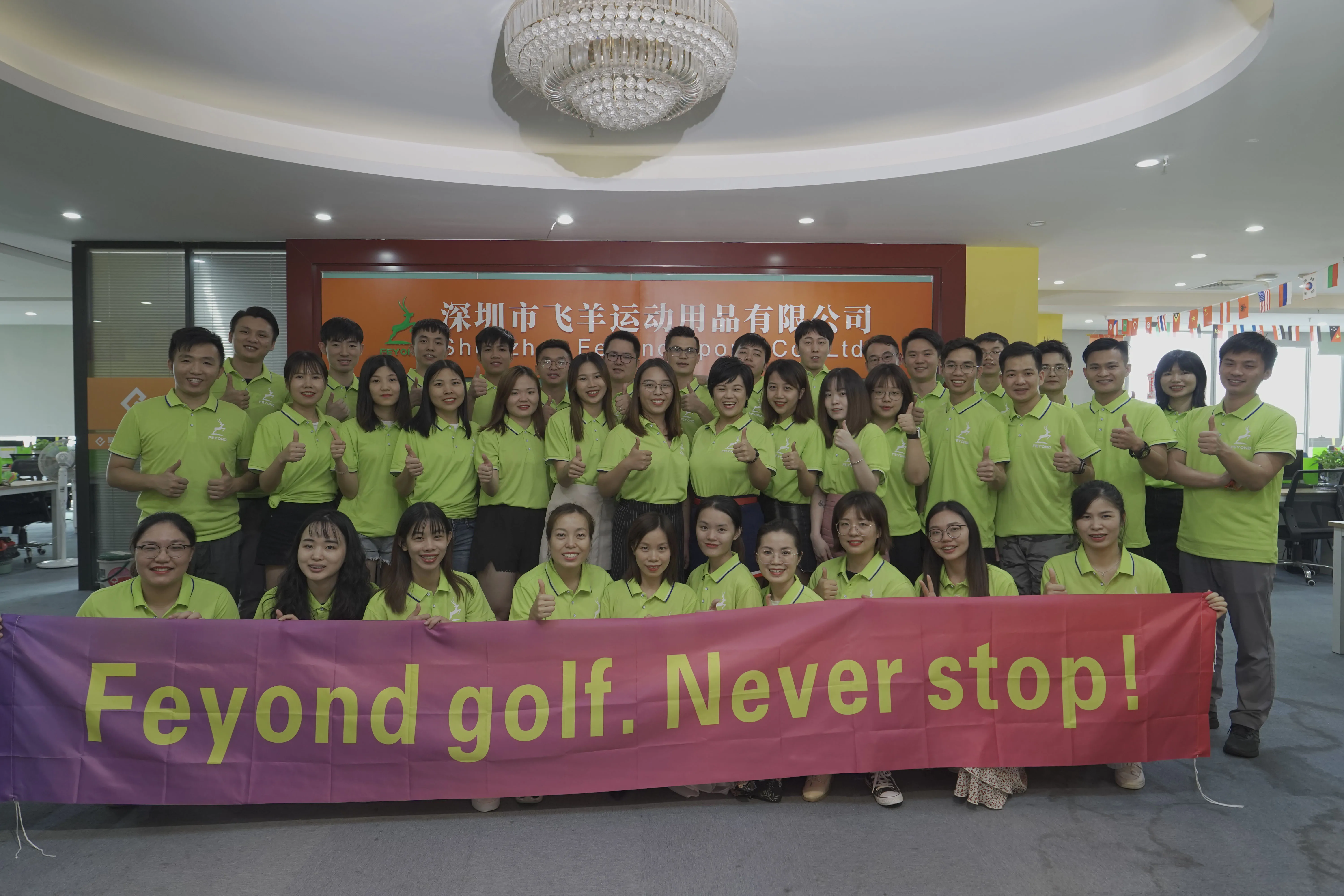
shenzhen feyond sports co., ltd.
- Manufacturer
- Guangdong, China
- Lead time7 days
- Avg. response≤ 3h
Main productsgolf accessories,golf headcovers,golf grips,golf divot tool,golf cap
Main marketsCentral America(16.00%), North America(16.00%), Northern Europe(12.00%), South America(11.00%), Mid East(9.00%), Western Europe(8.00%), Eastern Europe(8.00%), Southern Europe(8.00%), Eastern Asia(3.00%), South Asia(2.00%), Africa(2.00%), Domestic Market(2.00%), Southeast Asia(2.00%), Oceania(1.00%)
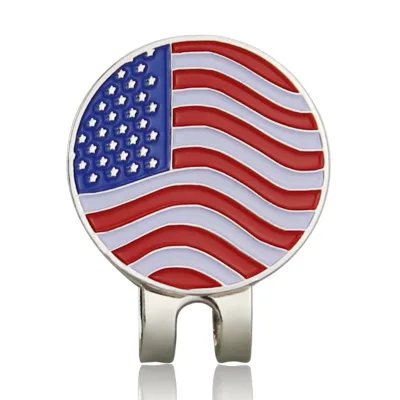
$0.4952 - $0.9185
MOQ: 500 pieces
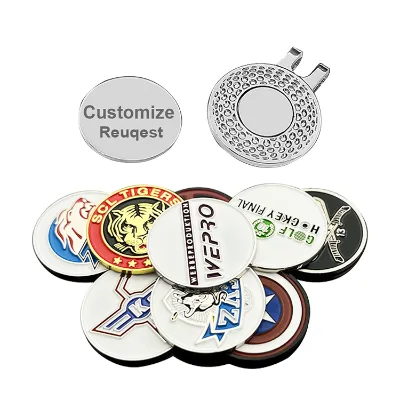
$0.4039 - $0.7241
MOQ: 100 pieces
Dongguan Follow Metal Products Co., Ltd.
- Manufacturer, Trading Company
- Guangdong, China
- Lead time15 days
- Avg. response≤ 16h
Main productsMedal/Pin, Bottle Opener, Stencil, Golf Accessory
Main marketsNorth America(45.00%), Oceania(15.00%), Southeast Asia(15.00%), Western Europe(10.00%), Eastern Europe(10.00%), Eastern Asia(5.00%)
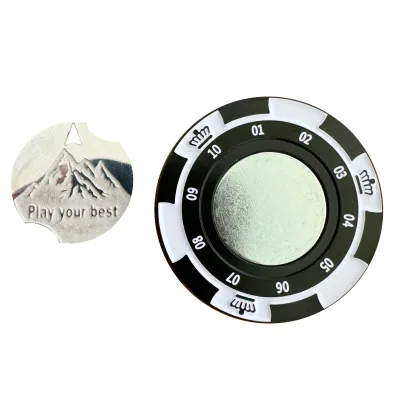
$1.90 - $2.65
MOQ: 100 pieces
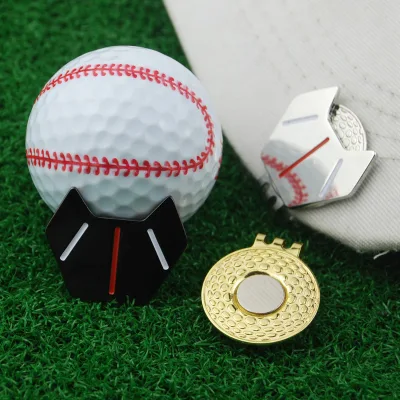
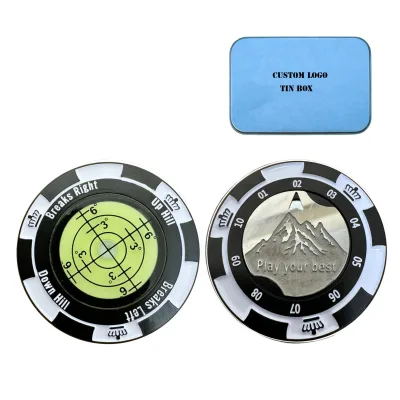
$1.9403 - $2.7048
MOQ: 100 pieces

Xiamen Mlg Sports Equipment Co., Ltd.
- Verified by SGS
- Trading Company
- China Fujian
- Lead time30 days
- Avg. response≤ 3h
Main productsGolf Head Cover, Golf Bag, Golf Towel
Main marketsEast Asia(Japan/ South Korea),Europe,North America

Golf Putting Alignment Tool Ball Marker Metal Magnetic Hat Clip Golf Ball Marker
$0.30 - $0.50
MOQ: 300 Pieces


$0.30 - $0.50
MOQ: 300 Pieces

$0.30 - $0.50
MOQ: 300 Pieces

Golf Ball Marker Custom Logo 25mm High Quality Good Price Bulk Metal Golf Ball Marker Magnet
$0.30 - $0.50
MOQ: 300 Pieces

- Verified by BV
- Trading Company
- China Guangdong
- Lead time15 days
- Avg. response≤ 15h
Main productsGolf Bag, Windcoat, Helmet, Golf Hat, Shirts, Tent, Basketball Jersey, Golf Umbrella, Football Jersey, Golf Grip
Main marketsAfrica,Southeast Asia/ Mideast,East Asia(Japan/ South Korea),Europe,Australia,North America

Ganzhou Ouhua Outdoor Furniture Co., Ltd.
- Manufacturer, Trading Company
- Jiangxi, China
- Lead time0 days
- Avg. response≤ 3h
Main productsgolf tees,golf ball markers,golf divot tools,golf pencils,golf gloves
Main marketsNorth America(40.00%), Northern Europe(10.00%), Central America(10.00%), Western Europe(10.00%), Mid East(10.00%), Eastern Europe(10.00%), Southern Europe(10.00%), South Asia(5.00%), South America(5.00%)

Xiamen Yopral Sports Goods Co., Ltd.
- Verified by TUVRHEINLAND
- Trading Company
- China Fujian
- Lead time30 days
- Avg. response≤ 5h
Main productsGolf Heeadcover, Golf Towel, Golf Hat, Golf Bag, Golf Tee, Golf Polo Shirt, Golf Divot Tool, Golf Ball Marker, Golf Brush, Golf Ball
Main marketsNorth America
- Trading Company
- Lead time旺季: "1 - 100":35,"> 100":"To be negotiated", 淡季: "1 - 100":35,"> 100":"To be negotiated"
- Avg. response≤ 6h
Main productsfashion jewelry,women necklace,women earrings,fashion rings jewelry,fashion bracelets jewelry
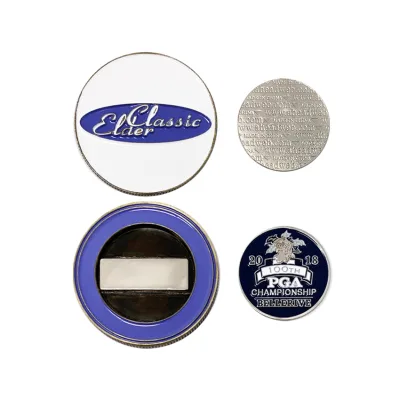
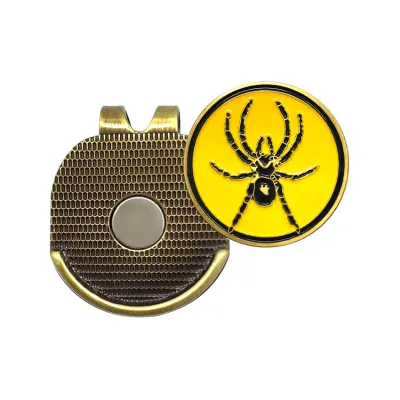
Custom Magnetic Golf Ball Marker Hat Clip Sport Accessories Promotional Gifts
$1.0263 - $1.5439
MOQ: 100 pieces
Dongguan JT Sporting Goods Co., Ltd.
- Verified by Intertek
- Manufacturer, Trading Company
- Lead time20 days
- Avg. response≤ 3h
Main productsGolf Headcovers, Golf Glove, Golf Towel, Golf Hitting Nets, Golf Accessories
Main marketsNorth America(45%), Domestic Market(18%), Eastern Asia(15%)
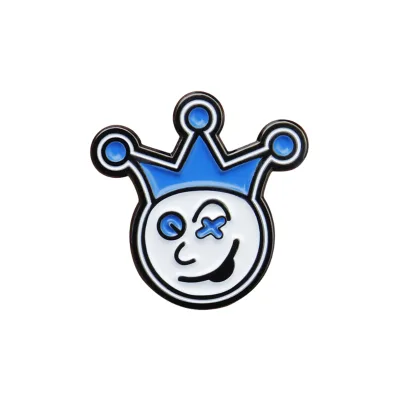
Premium Golf Ball Marker Playful Golf Crown Emblem Ball Marker Durable Golf Position Marker
$0.6463 - $1.4556
MOQ: 200 pieces
LONG-TIME METAL & CRAFTS CO., LTD
- Manufacturer, Trading Company
- Guangdong, China
- Lead time12 days
- Avg. response≤ 5h
Main productsBadges,Medals,Trophies,Golf Accessories,Keychains
Main marketsDomestic Market(30.00%), North America(20.00%), South America(10.00%), Eastern Europe(10.00%), Western Europe(5.00%), Oceania(5.00%), Central America(3.00%), Southeast Asia(3.00%), Eastern Asia(3.00%), Southern Europe(3.00%), Africa(2.00%), South Asia(2.00%), Mid East(2.00%), Northern Europe(2.00%)
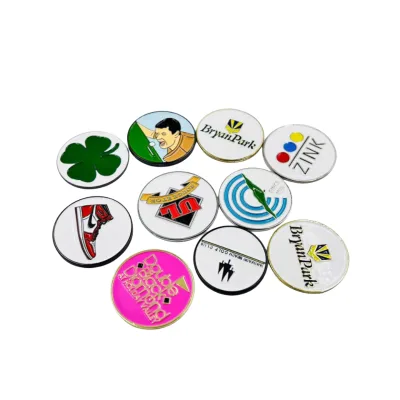
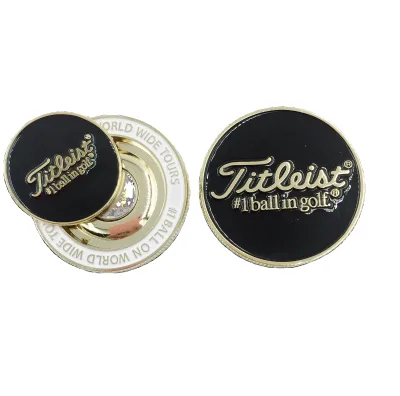
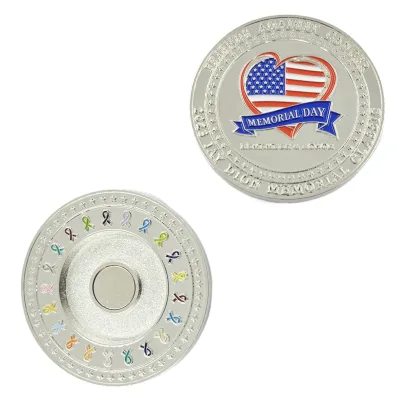
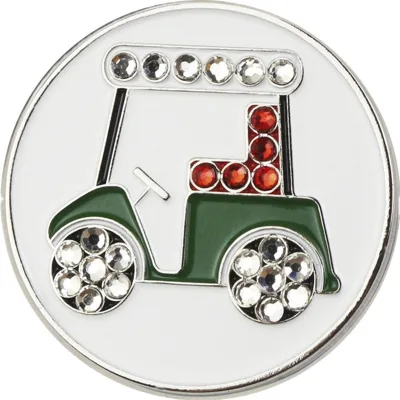
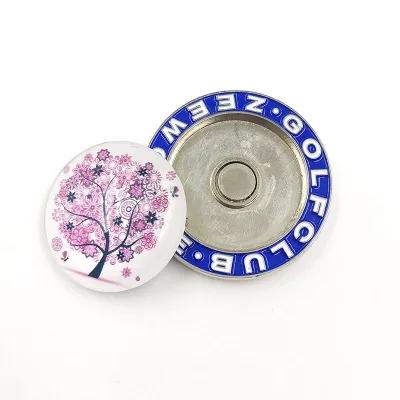
Top Selling Custom Logo Enamel Golf Ball Marker with Shoe Clip High Visibility on Green
$1.3688 - $1.5424
MOQ: 100 pieces

- Manufacturer, Trading Company
- Hong Kong S.A.R.
- Lead time21 days
- Avg. response≤ 4h
Main productsDog Tag,Key Chain,Pin,Badge,Magnet
Main marketsNorth America(25.00%), Eastern Asia(20.00%), Western Europe(20.00%), South America(10.00%), Oceania(5.00%), Southern Europe(5.00%), Eastern Europe(5.00%), Southeast Asia(4.00%), Mid East(1.00%), Domestic Market(1.00%), Africa(1.00%), Northern Europe(1.00%), Central America(1.00%)

- Verified by SGS
- Trading Company
- China Fujian
- Lead time15 days
- Avg. response≤ 6h
Main productsPromotion Gift, Keychain, Timing Belt, Sport Gift, Worm, Reducer, Pulley, Tennis Gift, Pickleball Gift
Main marketsEast Asia(Japan/ South Korea),Europe,Australia,North America
Shenzhen Jinaolong Golf Products Co., Ltd.
- Manufacturer, Trading Company
- Guangdong, China
- Lead time20 days
- Avg. response≤ 2h
Main productsGolf Clubs, Golf Accessories, Golf Set Gifts, Golf Hitting Mats, Golf Putting Trainers
Main marketsDomestic Market(50.00%), North America(15.00%), Western Europe(10.00%), Eastern Asia(10.00%), Southern Europe(5.00%), Northern Europe(5.00%), Eastern Europe(3.00%), Oceania(2.00%)
Dongguan Pinmei Metal Gifts Company Litmited
- Verified by Intertek
- Trading Company
- Lead time25 days
- Avg. response≤ 2h
Main productsGolf Head Cover, Golf Bag, Golf Glove, Golf Towel, Golf Ball Marker
Main marketsNorth America(75%), Western Europe(10%), Eastern Asia(10%)
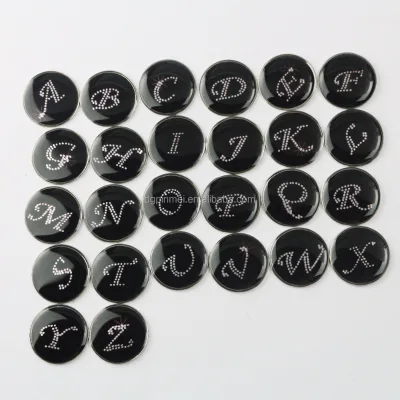
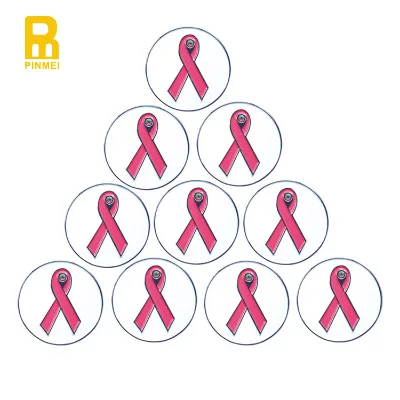
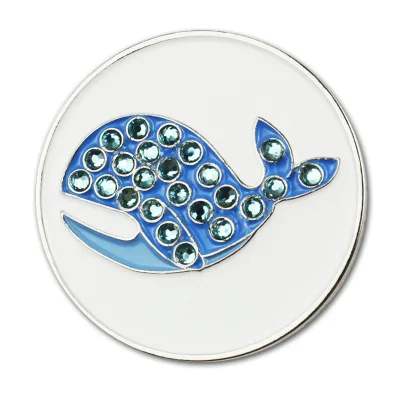
Wholesale Fries Metal Crystal Golf Ball Markers Custom Golf Ball Markers
$0.8722 - $1.0068
MOQ: 50 pieces

Xiamen JTS Sports Equipment Co., Ltd.
- Verified by TUVRHEINLAND
- Trading Company
- China Fujian
- Lead time30 days
- Avg. response≤ 4h
Main productsGolf Balls, Golf Clubs, Golf Bags, Golf Headcovers, Golf Accessories, Golf Tees, Golf Grips, Golf Shafts, Golf Mat, Golf Gloves
Main marketsSoutheast Asia/ Mideast,Europe,North America


Custom OEM ODM Metal Golf Ball Marker Magnetic Golf Ball Marker with Logo Golf Ball Markers Custom
$0.45 - $0.54
MOQ: 500 Pieces

$0.45 - $0.54
MOQ: 500 Pieces


Zhongshan Lucky Art & Crafts Gifts Co., Ltd.
- Verified by BV
- Combined
- China Guangdong
- Lead time15 days
- Avg. response≤ 3h
Main productsCustom Medal, Key Chain, Custom Coin, Custom Lapel Pin, Custom Lanyard, Custom Badge, Custom Patch, Custom Air Fresheners, Custom Silicone Bracelets, Custom Cufflinks
Main marketsEast Asia(Japan/ South Korea),Europe,North America

Factory Price Customized Magnetic Golf Ball Marker Hat Clip Golf Ball Marker
$0.40 - $0.75
MOQ: 100 Pieces

Custom Golf Ball Marker Custom Wholesale Metal Magnetic Ball Marker Golf
$0.40 - $0.75
MOQ: 100 Pieces

Shenzhen Best Sports Products Co., Ltd.
- Manufacturer
- Guangdong, China
- Lead time20 days
- Avg. response≤ 3h
Main productsGolf Ball,Golf tees,Golf Ball Markers,Golf Divot Repair Tools
Main marketsWestern Europe(11.11%), Eastern Asia(11.11%), Mid East(11.11%), Oceania(11.11%), Africa(11.11%), Southeast Asia(11.11%), Eastern Europe(11.11%), South America(11.11%), North America(11.11%)

Jiangxi Double Win Trading Co., Ltd.
- Verified by SGS
- Trading Company
- China Jiangxi
- Lead time15 days
- Avg. response≤ 5h
Main productsWood Golf Tees, Ski Hat, Golf Towel, Golf Headcover, Travel Bag, Golf Pitchfork, Golf Divot Tool, Golf Cap, Ball Marker, Tote Bag
Main marketsSouth America,Africa,Southeast Asia/ Mideast,East Asia(Japan/ South Korea),Europe,Australia,North America
- Manufacturer, Trading Company
- Guangdong, China
- Lead time15 days
- Avg. response≤ 3h
Main productsPickleball Paddle,Yoga and Pilates equipment,Golf clubs and bags,Bicycle,Outdoor camping products
Main marketsNorth America(50.00%), Eastern Europe(20.00%), Southern Europe(5.00%), Central America(5.00%), Western Europe(5.00%), South America(5.00%), Northern Europe(4.00%), South Asia(1.00%), Oceania(1.00%), Mid East(1.00%), Africa(1.00%), Southeast Asia(1.00%), Eastern Asia(1.00%)
Fuzhou Greenmade Import & Export Co., Ltd.
- Trading Company
- Fujian, China
- Lead time15 days
- Avg. response≤ 9h
Main productsGolf Tee,Ball Marker,Divot Tool,Golf Pencil,Golf Ball
Main marketsNorth America(57.00%), Western Europe(43.00%)
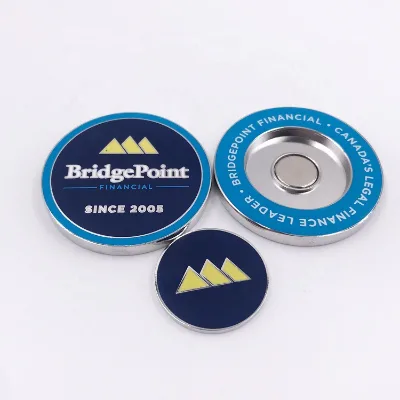
$1.3359 - $1.5409
MOQ: 100 pieces
Shenzhen Hezhao Technology Co.,Ltd
- Verified by Intertek
- Manufacturer, Trading Company
- Lead time7 days
- Avg. response≤ 6h
Main productsGolf Balls, Golf Gloves, Golf Bags, Golf Training Aids, Golf Accessories
Main marketsEastern Asia(41%), North America(20%), Western Europe(15%)
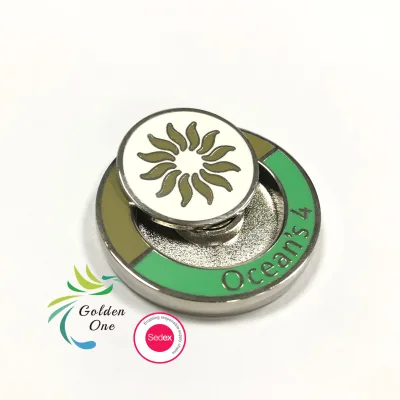
Golden One (Jiangmen) Gifts Co., Limited
- Verified by Intertek
- Manufacturer, Trading Company
- Guangdong, China
- Lead time7 days
- Avg. response≤ 3h
Main productsEnamel Pin, Coins, Medals, Keychains , Belt Buckles
Main marketsWestern Europe(45%), North America(30%), Oceania(10%)






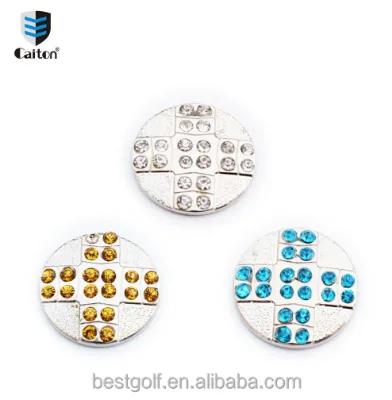
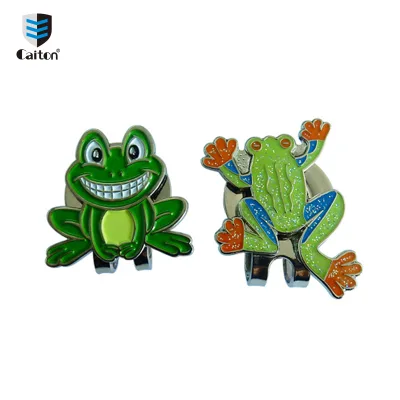


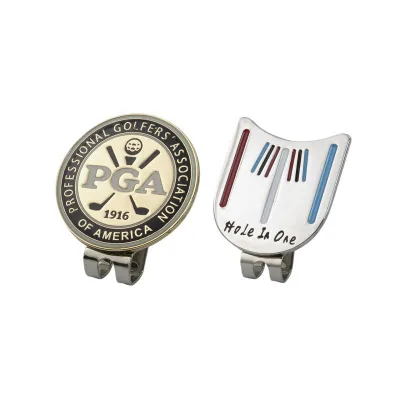
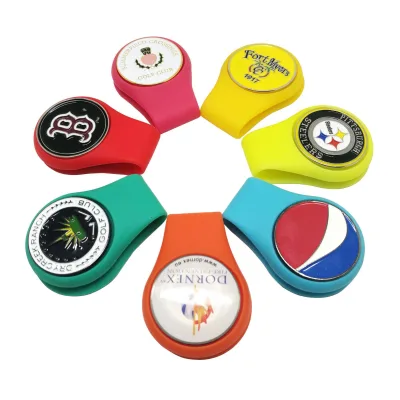
Comprehensive Sourcing Guide
Magnetic Holder Golf Ball Marker Supplier Concentration and Factory Types
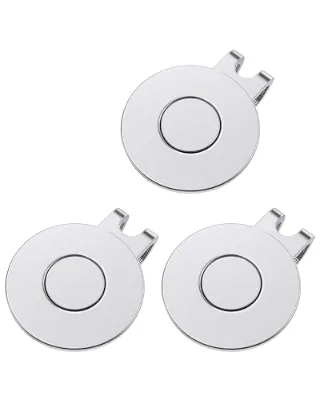
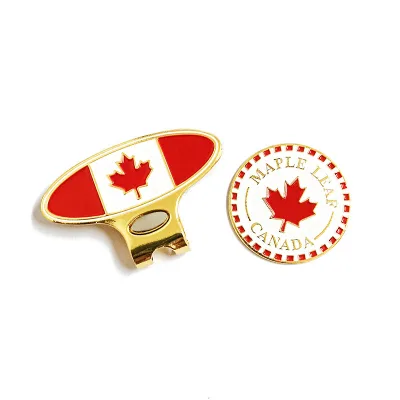
Listings for magnetic holder golf ball markers in these results point strongly to Guangdong, China as the origin region, both at the supplier level and in product-level origin attributes. This matters for buyers because the category sits at the intersection of two manufacturing traditions: metal badge and coin fabrication (stamping, die casting, enamel work) and golf accessory assembly (hat clips, divot tools, towels, tees). Suppliers combining those capabilities can typically handle the magnetic component, the metal marker body, and custom logo decoration in one workflow, which shortens development cycles and reduces the number of parties responsible for quality.
The factory types visible in the data fall into three groups. First, combined manufacturers and trading companies that list a broad golf accessory range — headcovers, towels, gloves, bags, markers — and hold ISO9001:2015 system certification with SGS verification. Second, manufacturer-and-trader hybrids focused on medals, badges, keychains, bottle openers and golf ball markers, where marker production is a natural extension of stamping and enamel capability; these often advertise sample processing, graphic processing and customization on demand. Third, dedicated marker product lines built around zinc alloy, iron, aluminum, or wood-plus-iron constructions with enamel logos and magnetic hat-clip functions. When you shortlist, decide whether you want a golf-accessory specialist with wide catalog depth or a metal-craft workshop with tighter process control, because the better choice depends on whether customization breadth or per-unit finish consistency matters more to your program.
How to Verify Magnetic Holder Golf Ball Marker Suppliers
Verification starts with the credentials displayed in search results, but only as a filter, not a conclusion. In this category you can check whether a supplier is SGS-verified and whether it holds an ISO9001:2015 system certificate — one supplier type in the current results shows both, which signals audited quality management rather than self-declared claims. Confirm the certificate number and scope directly with the issuing body, and remember that verification badges reflect company-level screening, not the quality of any specific marker SKU. Also note the difference between a "Combined" company type and a "Manufacturer, Trading Company" designation, and ask which entity will appear on your invoice and who owns the production of the marker you are buying.
Beyond the badge, request evidence tied to the exact product. Ask for material declarations distinguishing stainless steel, zinc alloy, iron, aluminum, or wood-plus-iron builds, since listings in this category advertise several. One product carries a RoHs-standard eco-friendly attribute, so ask whether compliance documentation exists for the plating and enamel on your specific design. Request stamped, enamel-coated and magnetic-assembly samples before committing, and test magnet strength and retention on fabric and hat-clip configurations yourself. Finally, probe operational signals: response time entries in the results range from roughly two hours to nearly eight hours, and quoted lead times differ substantially between suppliers. Verify who answers your technical questions — a factory engineer or a trading intermediary — because that determines how quickly tolerance, magnet placement, or plating issues get resolved during production.
What to Compare Across Magnetic Holder Golf Ball Markers Suppliers
Build a comparison sheet using the supplier-label dimensions actually displayed, without assuming every supplier publishes every attribute. Lead time is one of the sharpest differentiators in this dataset: one supplier shows a 30-day lead time while another shows 10 days, a gap that can decide whether a supplier fits a tournament deadline or a retail restock. Response time similarly spans from about two hours to just under eight hours, which proxies how much direct attention your account will receive during development. MOQ deserves careful reading because it is stated at the product level: results include entries at 100 pieces and entries at 1,000 pieces, so a supplier-friendly headline can hide a product-level minimum that does not suit a trial order.
Compare main-product breadth next. One supplier lists golf headcovers, towels, tees, ball markers, divot tools, gloves, balls, pouches, bags and accessories, while another lists medals, badges, keychains, bottle openers and golf ball markers — the first suits bundled accessory programs, the second suits metal-craft quality. Location is Guangdong, China across the observed entries, but confirm exact city and district for factory-visit planning. Price bands in the results run roughly from the low $0.40s to about $1.33 depending on product, so normalize quotes by size (25mm and 40mm both appear), material, plating and logo process. Finally, compare customization depth: ODM capability, sample processing, graphic processing and customization-on-demand labels signal who can execute your artwork rather than just print it.
Common Magnetic Holder Golf Ball Marker Sourcing Risks
The most frequent risk in this category is material substitution. Listings advertise stainless steel, zinc alloy, iron, aluminum and even wood-plus-iron constructions, sometimes within the same supplier's catalog. A sample approved in stainless steel can quietly become a zinc alloy production run if your purchase order does not specify the material by grade. Write the exact material, plating and finish into the contract, and require a golden sample retained by both sides. Enamel color is a second classic failure point: soft enamel and printed logos depend on Pantone matching, and small reorders frequently drift in shade.
Magnet-related risks are category-specific. The magnet's pull force determines whether the marker stays attached to a hat clip or divot tool; a supplier can save cost by using a weaker or thinner magnet that passes visual inspection. Specify minimum pull force and test it on arrival. MOQ and price-band mismatches create commercial risk: entries range from 100-piece minimums to 1,000-piece minimums with prices from roughly $0.41 to $1.33, and a low quoted unit price may assume high-volume tooling amortization that a small order will not receive. Lead-time risk appears too — with quotes spanning 10 to 30 days, a supplier whose headline lead time excludes custom-logo tooling can slip a deadline. Finally, beware trading-company opacity: if the factory is undisclosed, you cannot audit stamping, plating or magnetic assembly conditions, and any quality escape will be filtered through a middleman before reaching you.
Magnetic Holder Golf Ball Marker Regional Sourcing and Logistics
Every location signal in the current results — supplier location and product origin attributes alike — points to Guangdong, China, which is consistent with the province's role in metal-craft and golf-accessory manufacturing. Practically, that concentration gives buyers a real advantage: within one region you can typically find stamping and die-casting shops, enamel and plating processors, magnet suppliers, and printing houses within a short drive, enabling factory visits, rapid sample iterations and competitive cross-quoting among nearby makers. Plan any audit trip around that density and request exact factory addresses early, because trading entities sometimes list provincial locations without revealing where production occurs.
On logistics, size the shipment correctly before choosing a freight mode. The product entries show single gross weights from roughly 0.007 kg to 0.05 kg per piece and compact package dimensions, meaning even a 5,000-piece order often weighs well under 200 kg — squarely in air-freight or express-courier territory for urgent replenishment, with sea freight reserved for container-consolidated accessory programs. Lead times of 10 to 30 days quoted in the results cover production only; add realistic transit and customs clearance windows before promising dates downstream. Because markers are small, dense and magnetized, ask how magnets are packaged — loose magnets in mixed cartons can affect sensitive goods and complicate some carrier handling — and request moisture-proof polybag packing, which one listing already specifies as one piece per bag, suitable for direct kit inclusion.
Magnetic Holder Golf Ball Marker Commercial Terms and Order Planning
Structure your first order to de-risk the supplier as much as the product. Where MOQs allow it — and results show both 100-piece and 1,000-piece product-level minimums — use the lower tier to run a paid pilot covering artwork approval, sample confirmation and a small production batch. Negotiate a staged schedule: tooling or setup fees, a sample payment, then balance against shipment after inspection. Confirm whether the quoted price band (roughly $0.41–$1.33 in the observed entries) includes plating, soft enamel logo, magnet insertion and polybag packing, since each is a common add-on that resurfaces on the invoice. Ask which incoterms the price assumes and get export-document commitments in writing.
Plan reorders around the lead-time spread you observed. With quoted production lead times of 10 and 30 days across this category, set reorder points based on your supplier's actual demonstrated time, not the shortest number in the market, and hold safety stock covering the difference. Lock intellectual-property terms before sharing artwork: custom logo markers are routinely reused in supplier catalogs unless prohibited. For payment protection, prefer methods with dispute resolution and milestone payments over full prepayment, especially with unproven factories. Finally, align quality terms with the order: specify AQL sampling for magnet pull force, enamel defects and plating adhesion, define the golden sample as the arbitration reference, and build a claim window into the contract so plating or magnet failures discovered after delivery remain actionable rather than absorbed as losses.
Word count check: sections ≈ 232, 233, 231, 226, 225, 232 = ~1379 words. Total within 1350–1450. Six sections, two paragraphs each, keyword headings exact.
FAQs
What is the price range for magnetic golf ball markers?
Prices typically range from $0.41 to $1.33 per unit depending on material and customization. Stainless steel options start around $0.41, while zinc alloy markers with custom logos may cost up to $1.33. Bulk orders often secure lower rates within this bracket.
What is the minimum order quantity for these markers?
MOQs vary by supplier, generally starting at 100 pieces for standard items. Some manufacturers require 1000 pieces for specific custom designs or complex plating processes. Buyers should verify the exact MOQ with the supplier before placing an order to ensure alignment with their needs.
How long does production take for custom markers?
Lead times typically range from 10 to 30 days after order confirmation. Faster production is available for standard items, while custom logos or complex materials may extend the timeline. Buyers should confirm specific lead times with the supplier to plan their inventory effectively.
What materials are used for magnetic golf ball markers?
Common materials include stainless steel, zinc alloy, iron, and aluminum. Some markers combine wood with iron for unique designs. The choice of material affects durability, weight, and price, allowing buyers to select options that best fit their quality standards and budget requirements.
Are these markers customizable with logos?
Yes, most suppliers offer customization with logos using methods like printing, enamel, soft enamel, die casting, or stamping. Buyers can choose from various materials and shapes. Customization is widely available, but specific design requirements and MOQs should be confirmed directly with the supplier.
Where are these golf accessories manufactured?
These products are primarily manufactured in Guangdong, China. Suppliers in this region offer a wide range of golf accessories, including ball markers, headcovers, and towels. Buyers can verify the origin and production capabilities of specific suppliers to ensure quality and reliability.