Non-Slip Stainless Steel Tongs Suppliers and Manufacturers
Source Non-Slip Stainless Steel Tongs from 30 verified suppliers in China. Compare key dimensions including ISO certifications, FDA and LFGB standards, OEM capabilities, and lead times. Review product specifications and request quotes to streamline your procurement process; review the available evidence before requesting comparable quotations from suitable candidates.
Suppliers List

Shenzhen Kingod Silicone Products Co., Ltd
- Verified by TUVRHEINLAND
- Combined
- China Guangdong
- Lead time15 days
Main productsBaby Set, Baby Products, Baby Goods, Breast Pump, Face Mask, Baby Bottle, Medical Components, Phone Case, Silicone Kitchen Products, Toys
Main marketsNorth America

Guangzhou Chenquan Technology Co., Ltd.
- Verified by SGS
- Trading Company
- China Guangdong
- Lead time15 days
Main productsDailynecessities
Main marketsDomestic
Guangzhou Chenxuan Technology Co., Ltd.
- Trading Company, Distributor/Wholesaler, Other
- Guangdong, China
- Lead time10 days
- Avg. response≤ 2h
Main productssteel kitchenware,round dinner plate,retro cutlery set,gold dinner plate,korean gold dinner plate
Main marketsWestern Europe(30.00%), North America(30.00%), Mid East(15.00%), Oceania(15.00%), South America(10.00%)

Eagle Catering Equipment Co., Ltd.
- Manufacturer/Factory
- China Guangdong
- Lead time30 days
Main productsTrolleys, Gastronorm Containers, Table, Shelves, Sink, Barrier Post, Cookware, Buffetware, Barware, Kitchen Utensils
Main marketsSouth America,Eastern Europe,Mid East,North America,Southeast Asia,Eastern Asia,Oceania,Western Europe,Africa
Yangjiang Kimberi Industry And Trade Co., Ltd.
- Manufacturer, Trading Company
- Guangdong, China
- Lead time0 days
- Avg. response≤ 7h
Main productsKitchen Utensils,Kitchen Gadgets,Bakeware,Container & Storage
Main marketsNorth America(38.00%), Western Europe(35.00%), Domestic Market(10.00%), Oceania(8.00%), Eastern Asia(5.00%), Eastern Europe(2.00%), Southeast Asia(1.00%), South America(1.00%)

Fuzhou Whole Line Trading Co., Ltd.
- Verified by BV
- Trading Company,Manufacturer/Factory
- China Fujian
- Lead time23 days
Main productsCustomized Products, Lanyard Short Strap, Lanyard, Bandana, Pen, Bags, T-Shirt, Pillow Case, Socks, Promotional Gifts
Main marketsSouth America,Eastern Europe,Mid East,North America,Southeast Asia,Eastern Asia,Oceania,Western Europe,Africa

Stainless Steel BBQ Cooking Grilling Food Tongs Kitchen Utensils Stainless Steel Kitchen Tongs
$0.46 - $1.39
MOQ: 500 Pieces

BBQ Tool Kitchen Tongs Cooking Tongs 304 Stainless Steel Food Tools Barbecue Tongs
$0.46 - $1.39
MOQ: 500 Pieces


Premium 304 Stainless Steel Heavy Duty Non-Stick BBQ Cooking Kitchen Food Tongs with Custom Logo
$0.46 - $1.39
MOQ: 500 Pieces

Guangzhou Nantian Sources Co., Ltd.
- Manufacturer/Factory
- China Guangdong
- Lead time15 days
Main productsKitchen Equipment, Kitchenware, Food Machine, Kitchen Appliance, Glassware, Food Machinery, Bakery Equipment, Dinnerware, Kitchen Utensils, Food Processor
Main marketsSouth America,Mid East,Southeast Asia,Eastern Asia,Oceania,Africa

Food Tongs Stainless Steel Food Tongs for Restaurant
MOQ: 100 Pieces

Professional Grade Stainless Steel Kitchen Tongs for Chefs
MOQ: 100 Pieces

Stainless Steel Food Tongs Serving Tong Bread Tong
MOQ: 100 Pieces
Yangjiang Huaqiang Industrial Co., Ltd.
- Verified by SGS Group
- Manufacturer, Trading Company
- Lead time35 days
- Avg. response≤ 4h
Main productsSilicone Kitchenware, Nylon Kitchenware, Silicone Baking Products

- Verified by SGS
- Trading Company,Manufacturer/Factory,Other
- China Zhejiang
- Lead time38 days
Main productsBath Mat, Cushion, Wooden Toys, Fitness Equipment, Cosmetic Bag, Luggage, Festival Products, Gym Items, Face Mask, Paracord Bracelet
Main marketsSouth America,Eastern Europe,Mid East,North America,Southeast Asia,Eastern Asia,Oceania,Western Europe,Africa
Yangjiang Homedailys Houseware Co., Ltd.
- Verified by Intertek
- Trading Company
- Lead time25 days
- Avg. response≤ 2h
Main productsKnives, Kitchenware, BBQ, Wine Opener, Multitools
Main marketsNorth America(48%), Western Europe(24%), Oceania(12%)

Changsha Chengtong Technology Co., Ltd.
- Verified by SGS
- Trading Company
- China Hunan
- Lead time15 days
Main productsCutting Board, Vegetable Chopper, Measuring Cup, Milk Frother, Measuring Spoon, Vegetable Peeler, Kitchen Scissors, Knife Sharpener
Main marketsSoutheast Asia/ Mideast

- Verified by BV
- Trading Company
- China Zhejiang
- Lead time30 days
Main productsHousehold Products, Recreation& Game Products, Outdoor Products, Garden Products, Pet Products, Car Products, Daily Use Products
Main marketsSouth America,Africa,Southeast Asia/ Mideast,East Asia(Japan/ South Korea),Europe,Australia,North America

High Heat Resistant Non-Stick Stainless Steel Kitchen Barbecue Tongs with Non-Slip Comfort Grip
$0.40 - $1.20
MOQ: 500 Pieces

Wholesale Professional Quality Dishwasher-Safe Customised Stainless Steel Barbecue Grill Tongs
$1.00 - $3.00
MOQ: 500 Pieces
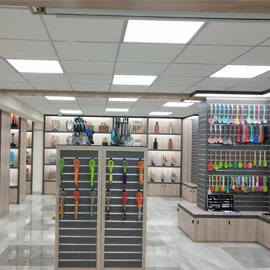
- Manufacturer, Trading Company
- Guangdong, China
- Lead time35 days
- Avg. response≤ 2h
Main productsKitchen Knives,Kitchen Utensils,Kitchen Gadgets,Scissors,Bakeware
Main marketsNorth America(30.00%), Western Europe(18.00%), South America(10.00%), Eastern Europe(10.00%), Oceania(9.00%), Southern Europe(4.00%), Eastern Asia(4.00%), Northern Europe(4.00%), Southeast Asia(4.00%), South Asia(3.00%), Africa(2.00%), Mid East(2.00%)

Yangjiang C&B Consumer Product Limited
- Verified by CTI
- Trading Company
- China Guangdong
- Lead time15 days
Main productsBarbecue Tongs, Grilling Brushes, Outdoor Shovel, Grilling Tools, Kitchen Ware, Outdoor Products, Pizza Tools, Knife Set
Main marketsSouth America,Africa,Southeast Asia/ Mideast,Europe,Australia,North America


Stainless Steel Kitchen Serving Utensils Tongs, BBQ Grilling Food Cooking Tongs
$1.50 - $4.00
MOQ: 1000 Sets

Multifunctional Bar Tongs - Stainless Steel Ice Sugar Server, Bar Kitchen Tool
$0.23 - $0.28
MOQ: 1000 Pieces


Stainless Steel Food Tongs - for Cooking, Barbecue & Buffet (Hotel/Restaurant)
$0.71 - $0.92
MOQ: 1000 Sets

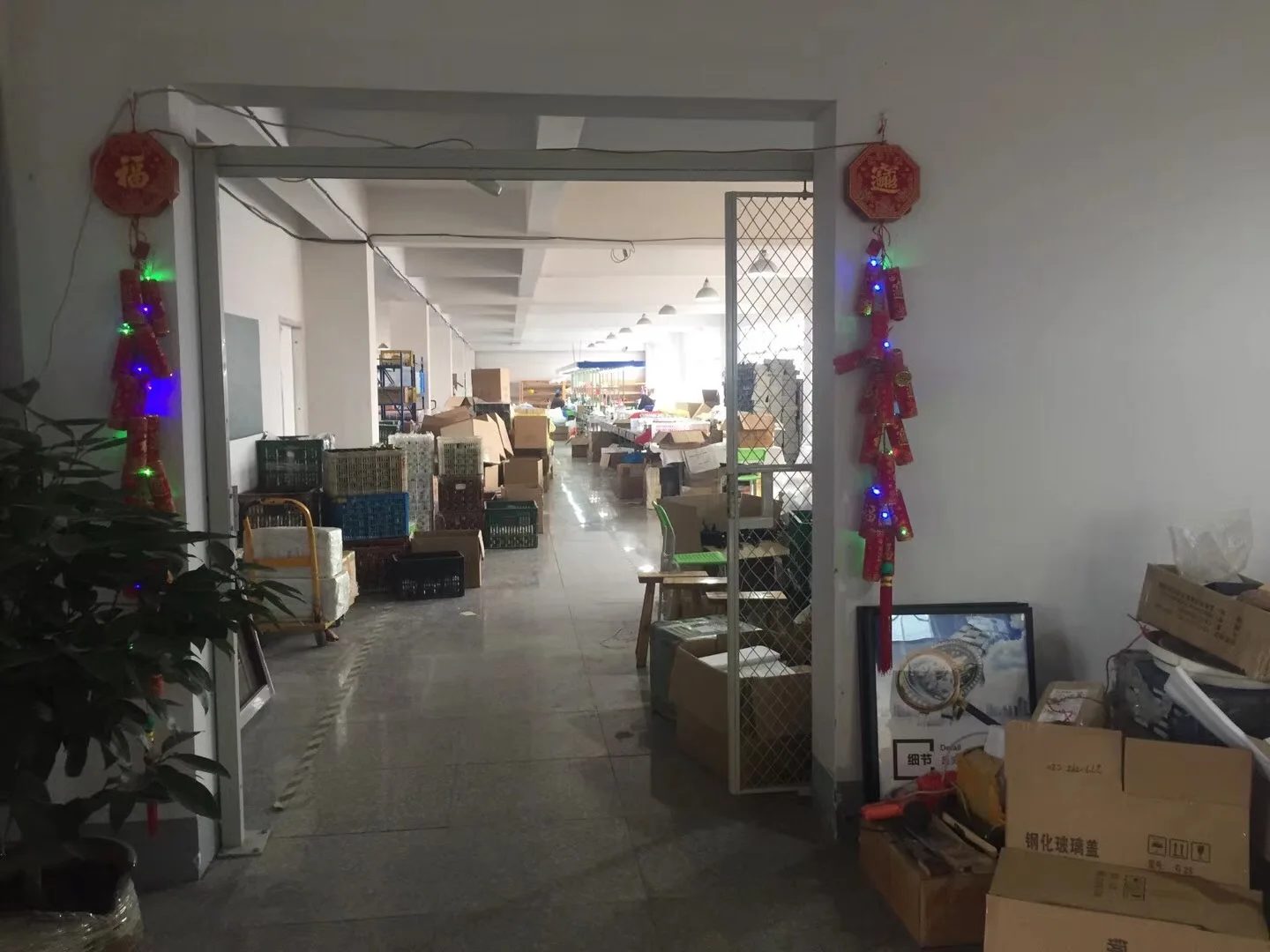
Guangzhou Lucky Electronic Trade Co., Ltd.
- Manufacturer, Trading Company, Distributor/Wholesaler
- Guangdong, China
- Lead time10 days
- Avg. response≤ 5h
Main productsHydrogen water generator,Heating kettle,small kitchen electrical appliances,household appliances,home and office tools
Main marketsNorth America(20.00%), South Asia(10.00%), Southern Europe(10.00%), Northern Europe(10.00%), Central America(10.00%), Western Europe(10.00%), Eastern Europe(10.00%), South America(10.00%), Eastern Asia(2.00%), Mid East(2.00%), Oceania(2.00%), Africa(2.00%), Southeast Asia(2.00%)

Jiangmen Goodman Cleaning Supplies Co., Ltd.
- Verified by TUVRHEINLAND
- Combined
- China Guangdong
- Lead time15 days
Main productsFood Pan, Food Basket Tray, Storage Box, Cleaning Bucket, Trash Can
Main marketsEurope,North America

Home and Kitchen Utensils 7" 9 3/4" Stainless Steel BBQ Salad Food Tongs
$0.75 - $1.01
MOQ: 3000 pieces



Jiangmen Guanqiang Hotel Cooking Utensils Co., Ltd.
- Trading Company
- Guangdong, China
- Lead time60 days
- Avg. response≤ 14h
Main productsfood pans,plastic items,wire product,spade&ladle,platters
Main marketsCentral America(35.00%), Northern Europe(20.00%), Southern Europe(10.00%), Eastern Asia(10.00%), South Asia(10.00%), Western Europe(10.00%), Southeast Asia(5.00%)

JIEYANG CITY JIESHI HARDWARE PLASTIC CO., LTD.
- Verified by TUVRHEINLAND
- Trading Company,Manufacturer/Factory
- China Guangdong
- Lead time30 days
Main productsCutlery, Kitchenware, Flatware, Bar Accessories, Children Tableware, Kitchen Utensils, Bakeware, Dinnerware, Dinner Sets, Kitchen Tools
Main marketsSouth America,Eastern Europe,Mid East,North America,Southeast Asia,Eastern Asia,Oceania,Western Europe,Africa


Cooking Tool Stainless Steel Kitchen Tongs Stainless Steel Cooking Tweezers
$1.58 - $1.85
MOQ: 1000 Piece
Yangjiang Guowall Industrial Co., Ltd.
- Manufacturer, Trading Company
- Guangdong, China
- Lead time7 days
- Avg. response≤ 3h
Main productsKitchen Utensil,Kitchen Gadget,Baking tools,Barbecue tools,Serving tray
Main marketsNorthern Europe(30.00%), North America(20.00%), Western Europe(20.00%), Domestic Market(15.00%), South America(10.00%), Southeast Asia(2.00%), Oceania(2.00%), Mid East(1.00%)

- Verified by SGS
- Trading Company
- China Zhejiang
- Lead time15 days
Main productsTents, BBQ Grill, Folding Table and Chair, Cooler Bag, Outdoor Lamp, Beach Mat, Picnic Blanket, Sleeping Bag, Water Bottle, Hammock
Main marketsEurope,Australia

Factory Price Accessories Cooking Grilling Catering Heat Resistant BBQ Clip Stainless Steel Tongs
$0.07 - $0.09
MOQ: 11600 Pieces

$0.55 - $0.65
MOQ: 1500 Pieces

Popular Sale Anti Slip Clamp Drain Water Oil Stainless Steel Colored Outdoor Barbecue Clip Tongs
$0.28 - $0.33
MOQ: 3000 Pieces

BBQ Grill Tongs for Outdoor Grilling Scissor Metal Food Stainless Steel Tongs
$0.30 - $0.40
MOQ: 2500 Pieces


$0.31 - $0.37
MOQ: 2700 Pieces
Yiwu Shuhuan Import & Export Co., Ltd.
- Trading Company
- Zhejiang, China
- Lead time7 days
- Avg. response≤ 4h
Main productsHome Decor,Kitchen & Tabletop,Festive & Party Supplies,Mobile Phone & Accessories,Camera Photo & Accessories
Main marketsNorth America(30.00%), Western Europe(20.00%), South Asia(5.00%), Southern Europe(5.00%), Northern Europe(5.00%), Central America(5.00%), South America(5.00%), Mid East(5.00%), Oceania(5.00%), Africa(5.00%), Southeast Asia(5.00%), Eastern Europe(5.00%)
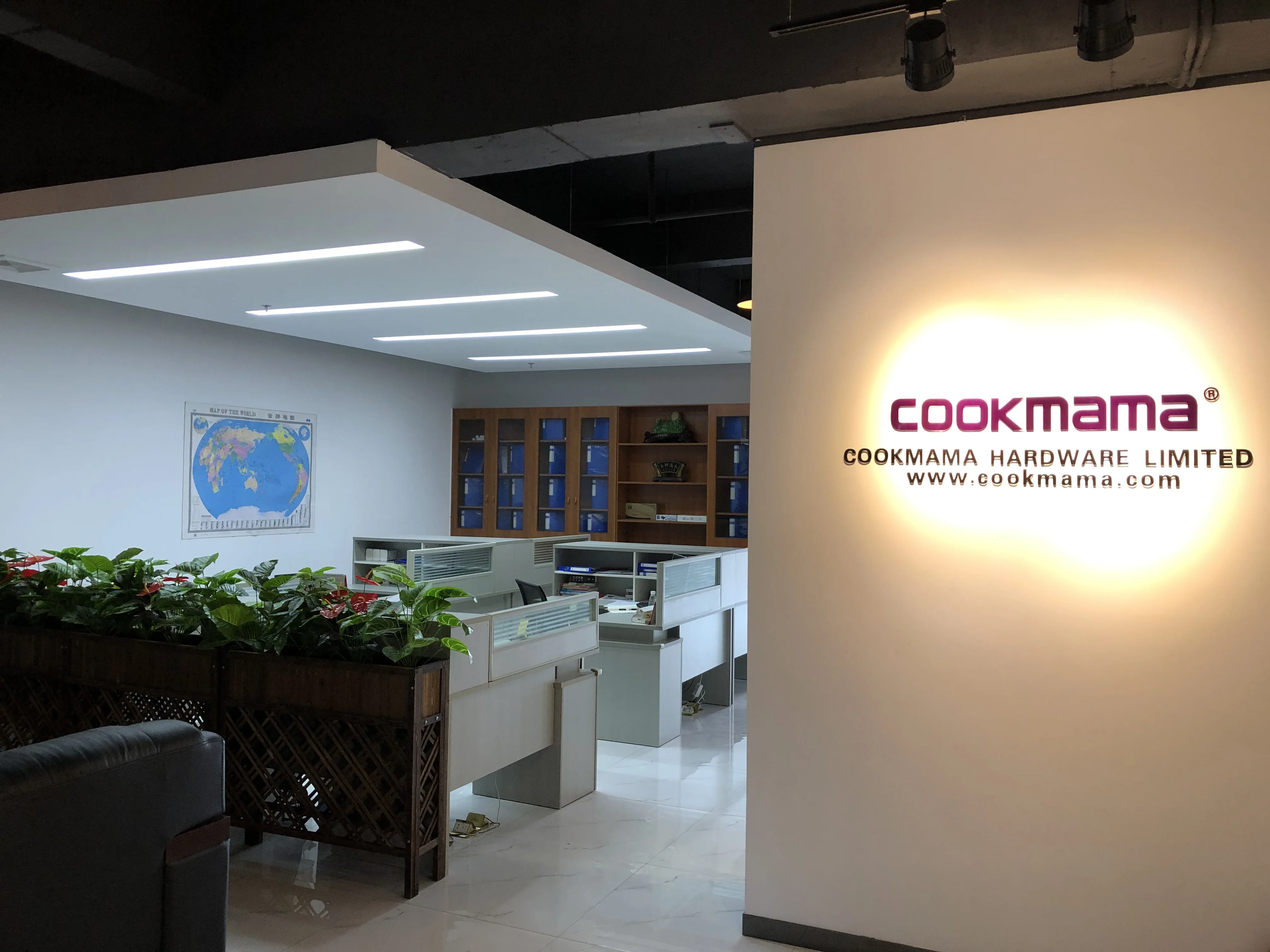
Yangjiang Cookmama Hardware Co., Limited.
- Manufacturer, Trading Company
- Guangdong, China
- Lead time40 days
- Avg. response≤ 7h
Main productsBBQ Tools,Knives,grill basket,kitchen tools,garden tools
Main marketsSouth America(40.00%), North America(20.00%), Southern Europe(10.00%), Northern Europe(10.00%), Western Europe(10.00%), Eastern Europe(10.00%)
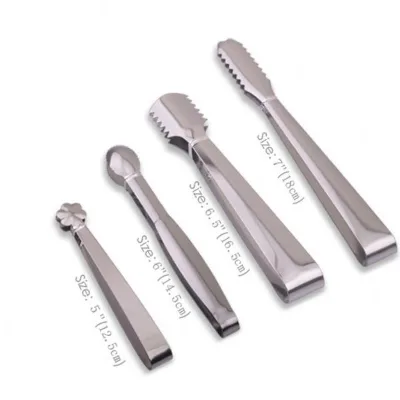
$0.99
Guangzhou Wangyuan Cooking Utensil Co., Ltd.
- Trading Company, Buying Office
- Guangdong, China
- Lead time20 days
- Avg. response≤ 10h
Main productswire basket,stainless steel tray,silicone kitchenware,glass coffee ware,silicone kitchenware
Main marketsNorth America(60.00%), Eastern Europe(20.00%), South America(20.00%)
Jieyang Chujufu Hardware Industrial Co., Ltd.
- Manufacturer, Trading Company
- Guangdong, China
- Lead time0 days
- Avg. response≤ 11h
Main productsTong,whisk,Strainer,Kitchen Utensil,Measuring Spoon
Main marketsNorth America(50.00%), Southeast Asia(30.00%), Africa(20.00%)
$0.36 - $0.41
MOQ: 240 Minimum
Huizhou Aicheng International Trade Co., Ltd.
- Verified by SGS Group
- Trading Company
- Guandong, China
- Lead time旺季: "1 - 30":7,"> 30":"To be negotiated", 淡季: "1 - 30":7,"> 30":"To be negotiated"
- Avg. response≤ 5h
Main productsTPU Apron, TPU Sleeve, PVC Gloves, Nitrile Gloves, Plastic Bags
Main marketsNorth America(40%), Eastern Europe(20%), Eastern Asia(20%)
Eagle Catering Equipment Co., Ltd.
- Verified by SGS Group
- Trading Company
- Lead time45 days
- Avg. response≤ 1h
Main productsTrolley, GN Pan, Stock Pot, Utensils, Kitchen Tools
Main marketsWestern Europe(35%), Eastern Europe(20%), North America(10%)
- Trading Company
- Lead time旺季: "1 - 3000":30,"> 3000":"To be negotiated", 淡季: "1 - 3000":30,"> 3000":"To be negotiated"
- Avg. response≤ 7h
Main productsUmbrellas, Bags, Keychain, Cups, Hats

Zhong Xing Da (Hangzhou) Import & Export Co., Ltd.
- Verified by SGS
- Manufacturer/Factory
- China Zhejiang
- Lead time45 days
Main productsCooking, Cookware, Waterfun, Fishing, Camping, RV
Main marketsSouth America,Eastern Europe,North America,Western Europe

Non-Scratch Silicone Tongs for Grilling - BPA-Free Stainless Steel Kitchen Utensil
$0.58 - $0.69
MOQ: 1000 Pieces

Professional Food Tongs: BPA-Free Stainless Steel Construction with Silicone Grip for Barbecue
$0.58 - $0.69
MOQ: 1000 Pieces

Heat-Resistant Silicone Cooking Tongs BPA-Free Stainless Steel for Safe Grilling & Frying
$0.58 - $0.69
MOQ: 1000 Pieces
Jieyang Aien Household Products Co., Ltd.
- Manufacturer, Trading Company
- Guangdong, China
- Lead time15 days
- Avg. response≤ 2h
Main productsstainless steel tableware,stainless steel kitchenware,Stainless steel bar,Stainless steel dinnerware set
Main marketsEastern Europe(30.00%), North America(30.00%), South America(20.00%)

- Verified by TUVRHEINLAND
- Trading Company,Manufacturer/Factory
- China Zhejiang
- Lead time23 days
Main productsKitchenwares, Homewares, Kitchen Gadgets, Kitchen Utensils, Kitchen Accessories, Home Organizations, Kitchen Tools
Main marketsSouth America,Eastern Europe,Mid East,North America,Southeast Asia,Eastern Asia,Oceania,Western Europe,Africa


Stainless Steel Premium Food Kitchen Tongs for Cooking and Serving Mi12247
$0.80 - $0.96
MOQ: 100 Pieces




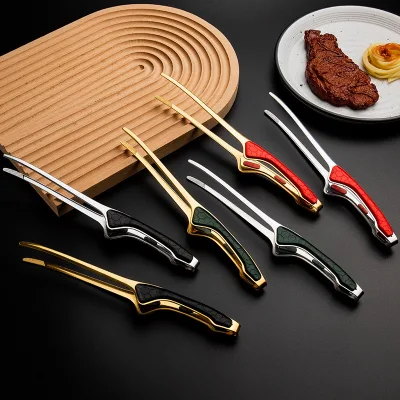
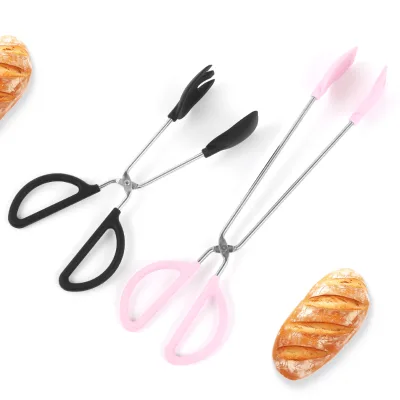


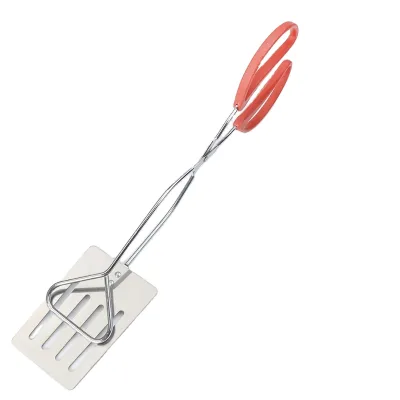
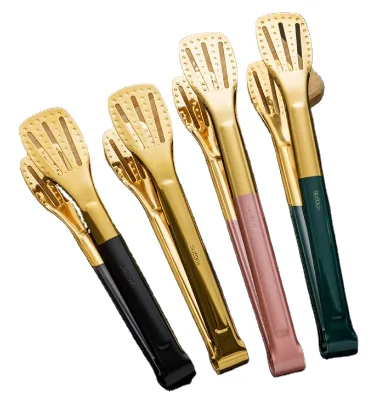


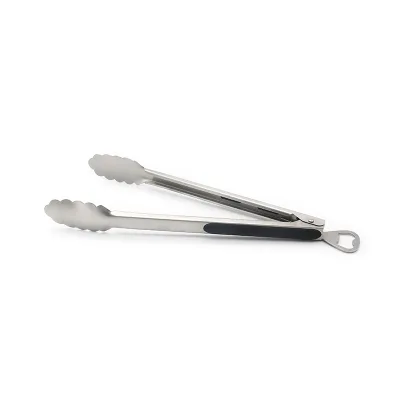
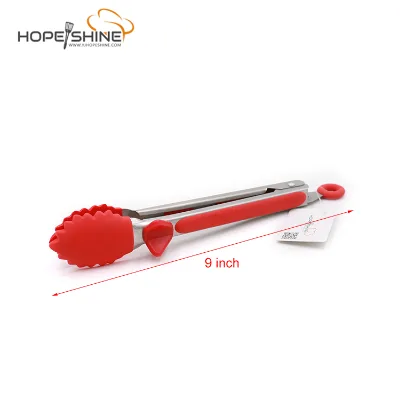
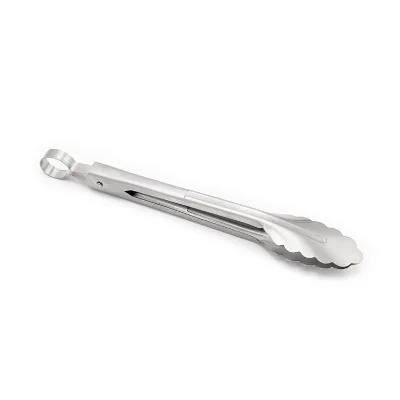
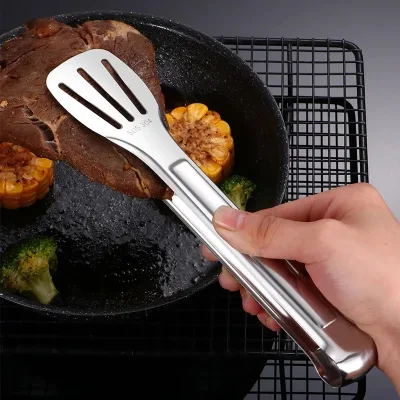
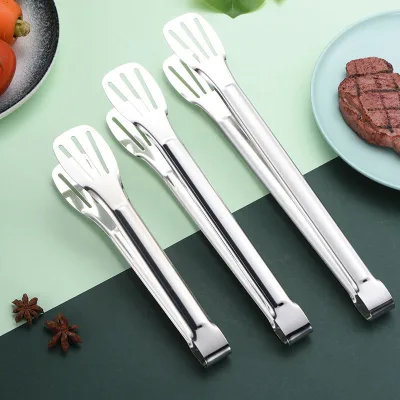
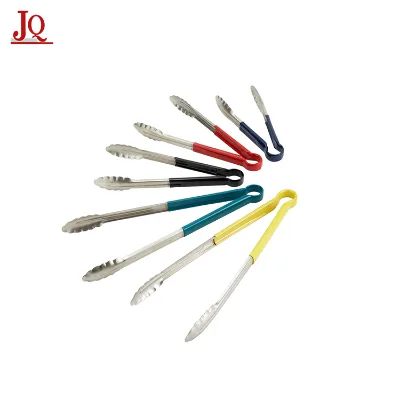
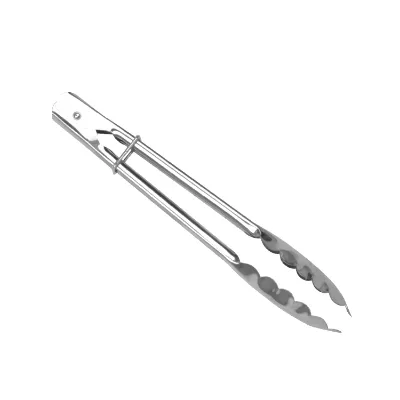
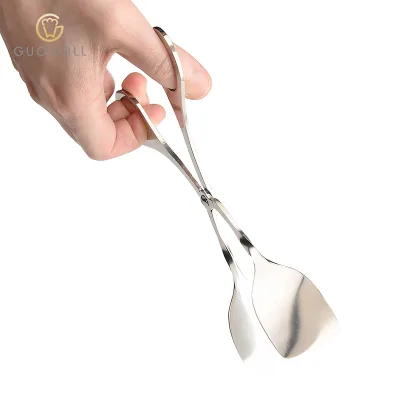
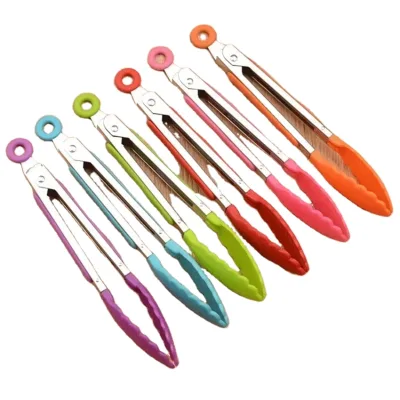
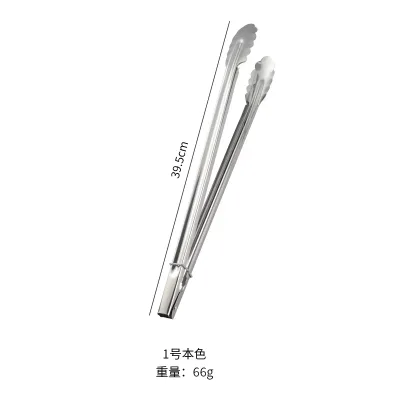
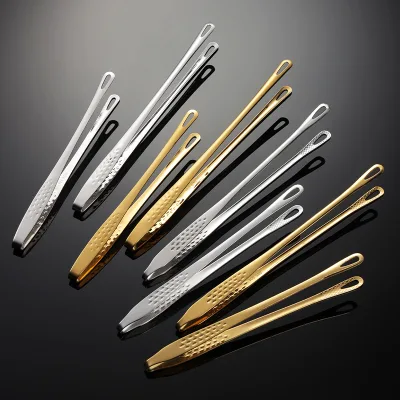
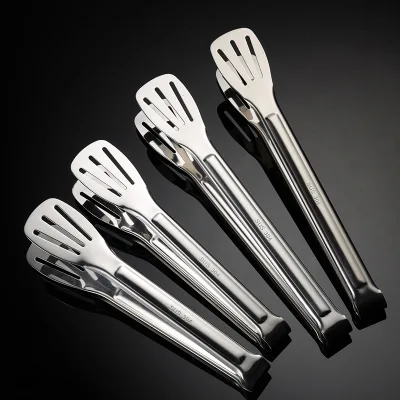
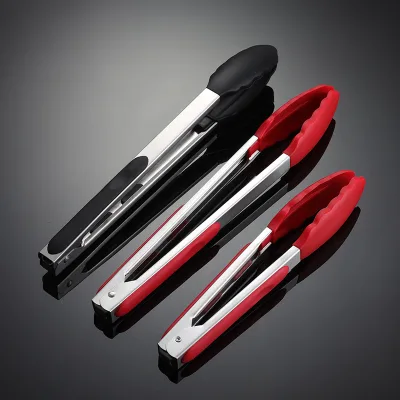
Comprehensive Sourcing Guide
Non-Slip Stainless Steel Tongs Supplier Concentration and Factory Types
The available data indicates a concentration of manufacturing activity in China, specifically within the Guangdong province, which serves as a primary hub for kitchenware production. This region hosts a mix of combined manufacturing entities and trading companies that facilitate the sourcing of Non-Slip Stainless Steel Tongs. Some suppliers in this cluster operate with ODM and OEM capabilities, allowing for customization of product specifications such as material composition and grip design. The presence of these combined entities suggests a supply chain that integrates production with distribution, potentially streamlining the logistics for international buyers seeking bulk orders.
Factory types vary significantly among the verified suppliers, ranging from pure trading companies to those with direct manufacturing capacity. Trading companies often act as intermediaries, offering a broader portfolio of goods like baby products and medical components alongside kitchen tools. In contrast, combined suppliers may possess the internal infrastructure to handle both design and production, evidenced by their ability to offer customization services for food-grade silicone and stainless steel materials. Buyers should verify the specific operational model of each potential partner, as the distinction between a trading company and a manufacturer impacts quality control, communication speed, and the ability to implement custom engineering changes for the tongs.
How to Verify Non-Slip Stainless Steel Tongs Suppliers
Verification of supplier credibility relies heavily on third-party audit reports and specific certification standards. Several suppliers in the current results have undergone verification by recognized bodies such as TÜV Rheinland and SGS, which provides a baseline of trust regarding their business operations. Additionally, system certifications like ISO9001:2015 and ISO14001:2015 are present in the data, indicating adherence to quality management and environmental standards. Buyers must confirm that these certifications are current and applicable to the specific production lines for stainless steel kitchenware, rather than being generic corporate credentials that do not cover the manufacturing of food-contact items.
Product-specific evidence further validates a supplier's capability to deliver Non-Slip Stainless Steel Tongs that meet safety requirements. The data shows products carrying FDA and LFGB certifications, which are critical for items intended for food handling and cooking. These certifications ensure that the silicone tips and stainless steel materials used in the tongs are free from harmful substances and safe for daily use. When evaluating a supplier, buyers should request documentation proving that the specific models they intend to purchase have undergone these tests. Relying on general company verification without confirming product-level compliance can lead to regulatory issues in the destination market, making it essential to cross-reference supplier claims with tangible test reports for the exact tongs being sourced.
What to Compare Across Non-Slip Stainless Steel Tongs Suppliers
Comparing suppliers requires a detailed analysis of operational metrics such as lead times, minimum order quantities, and response speeds. The observed data reveals a lead time variance, with some suppliers offering a 15-day turnaround while others can deliver within 10 days. Response times also differ, with certain suppliers indicating a two-day response window, which is crucial for resolving technical queries or custom design requests quickly. Buyers should prioritize suppliers whose lead times align with their inventory planning needs and who demonstrate a rapid response capability to ensure smooth project management throughout the sourcing process.
Pricing and customization options are equally critical dimensions for comparison. The price range for similar stainless steel tongs varies from approximately $0.86 to $2.50 per unit, depending on the specific model, material composition, and order volume. Minimum order quantities also fluctuate, with some suppliers requiring as few as 50 units while others set the threshold at 100 units. Furthermore, the availability of OEM and ODM services allows buyers to tailor the tongs' features, such as the length, weight, and grip texture. A comprehensive comparison should weigh the unit cost against the flexibility of customization and the volume constraints, ensuring the selected supplier offers the best balance of affordability and adaptability for the buyer's specific market requirements.
Common Non-Slip Stainless Steel Tongs Sourcing Risks
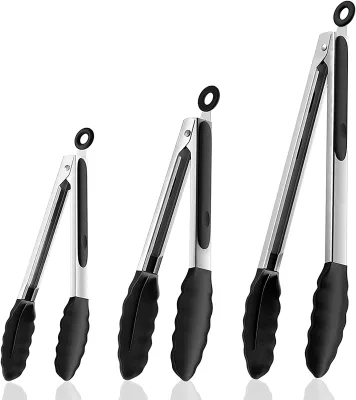
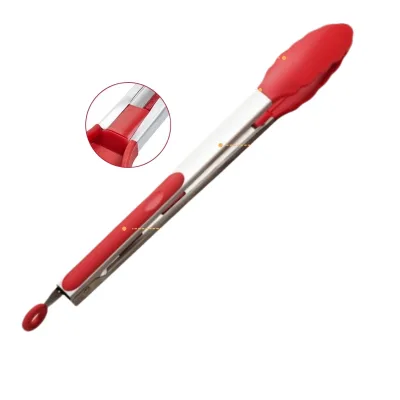
One significant risk in sourcing these kitchen tools involves the discrepancy between claimed material quality and actual product composition. While many listings specify the use of food-grade silicone and 430 stainless steel, buyers must verify that the final products consistently meet these standards. The presence of features like high-temperature stability and rust prevention is noted in product attributes, but without physical inspection or third-party testing, there is a risk of receiving substandard materials that may degrade during use. This is particularly relevant for tongs intended for heavy-duty cooking or grilling, where material failure could compromise food safety and user experience.
Another risk pertains to the reliability of packaging and shipping standards, which can affect the condition of the goods upon arrival. Product attributes indicate various packing methods, ranging from individual boxes to cartons, yet some listings provide vague instructions like "See Details" for packing standards. Inconsistent packaging can lead to damage during transit, especially for items with delicate silicone grips or specific ergonomic designs. Additionally, the lack of standardized product models across different suppliers can create confusion regarding specifications. Buyers should mitigate these risks by explicitly defining packaging requirements and requesting pre-shipment samples to validate that the physical product matches the advertised attributes before committing to a large order.
Non-Slip Stainless Steel Tongs Regional Sourcing and Logistics
Sourcing from the identified region of Guangdong, China, offers logistical advantages due to the area's established infrastructure for exporting kitchenware. The concentration of suppliers in this province facilitates efficient coordination between manufacturing and shipping, often resulting in shorter lead times compared to sourcing from more remote locations. The data confirms that products originate from this region, which is a major manufacturing hub known for its expertise in metalworking and silicone processing. Buyers leveraging this regional concentration can benefit from a dense network of suppliers, potentially reducing the time and cost associated with finding and vetting new partners.
However, logistics planning must account for the specific shipping requirements of stainless steel and silicone products. The weight and dimensions of the tongs, such as the 14.7cm length and 26.8g weight noted in some listings, influence freight costs and container loading efficiency. While some suppliers offer standard packing, others may require custom carton configurations to prevent damage. Buyers should verify the origin details, such as Shenzhen or general Guangdong locations, to estimate transit times accurately. Furthermore, understanding the local export regulations and the supplier's experience with international shipping is vital to ensure that the Non-Slip Stainless Steel Tongs arrive on schedule and in the condition required for retail or commercial distribution.
Non-Slip Stainless Steel Tongs Commercial Terms and Order Planning
Commercial terms for these products often include specific pricing structures based on order volume and customization levels. The observed price points range from $0.86 to $2.50, with some models priced at a flat rate while others vary based on the quantity ordered. Buyers must clarify whether these prices include packaging costs, as some listings specify box or carton packing while others leave this detail open. Additionally, the availability of customization services like OEM and ODM may incur additional fees or require higher minimum order quantities. Understanding the full cost structure, including any potential surcharges for custom molds or special material requests, is essential for accurate budgeting and financial planning.
Order planning should also consider the minimum order quantities and the flexibility of the supplier to accommodate partial shipments or future reorders. With MOQs ranging from 50 to 100 units, buyers need to assess whether these thresholds align with their initial market testing strategies or long-term inventory goals. The lead times of 10 to 15 days suggest a relatively quick turnaround, but buyers should factor in buffer time for quality inspections and potential delays. Establishing clear communication channels for order updates and ensuring that the supplier can maintain consistent quality across multiple batches are key components of a successful order plan. By aligning commercial terms with realistic production schedules, buyers can minimize risks and ensure a steady supply of high-quality Non-Slip Stainless Steel Tongs.
FAQs
What certifications do the stainless steel tongs hold?
Many products carry FDA and LFGB certifications for food safety. Some suppliers also hold ISO9001:2015 and ISO14001:2015 system certificates. Always verify specific product labels to ensure compliance with your regional safety standards before placing bulk orders.
What is the typical lead time for these kitchen tools?
Lead times vary between ten and fifteen days depending on the supplier. Some manufacturers in Guangdong, China, offer faster turnaround for stocked items. Confirm the exact delivery schedule with your chosen vendor to align with your production or sales timeline.
What is the minimum order quantity for stainless steel tongs?
Minimum order quantities typically range from fifty to one hundred units per model. Some suppliers require one hundred pieces for customized options, while others accept fifty for standard stock items. Check the specific product listing to confirm the exact MOQ required.
Are these tongs suitable for high-temperature cooking applications?
Yes, many models feature high-temperature stable silicone tips and stainless steel construction. They are designed for daily cooking use and can withstand heat without melting. Ensure the product description specifies heat resistance levels to confirm suitability for your specific grilling or baking needs.
What materials are used to construct these kitchen tongs?
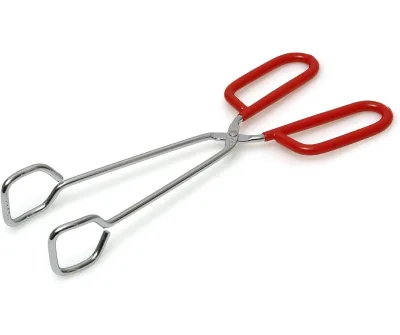
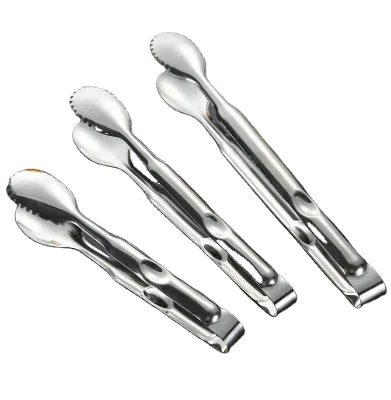
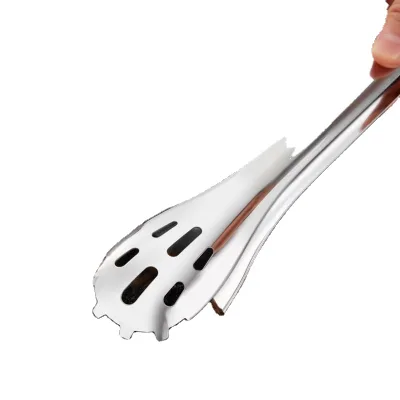
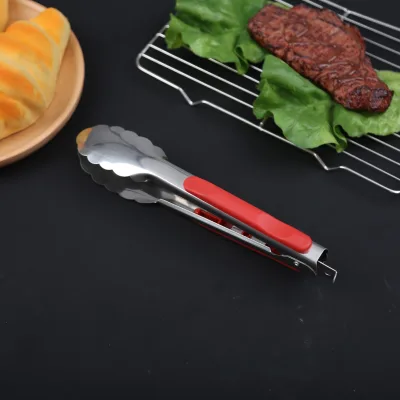
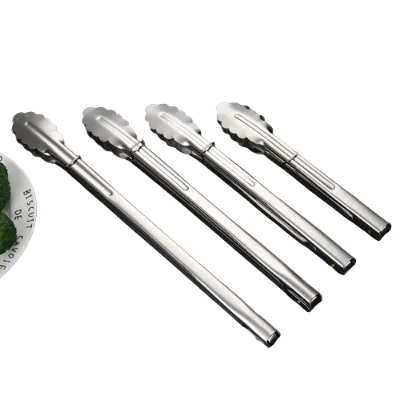
The tongs are primarily made from 430 stainless steel combined with food-grade silicone. Some variations use pure stainless steel with serrated teeth for better grip. The materials ensure durability, rust resistance, and safe contact with various food types during preparation.
Do suppliers offer customization services for these tongs?
Yes, most suppliers provide OEM and ODM customization services for branding and design. You can request specific lengths, weights, or packaging options to match your requirements. Verify the customization availability and any additional costs before finalizing your order with the manufacturer.
What is the price range for these kitchen utensils?
Prices generally range from 0.86 to 25.00 USD per unit depending on the model and features. Basic stainless steel versions start around 0.86 USD, while heavy-duty or specialized options may cost up to 25.00 USD. Bulk orders often influence the final unit price significantly.