Non-Stick Glass Lid Cookware Set Suppliers and Manufacturers
Source a Non-Stick Glass Lid Cookware Set from 13 verified suppliers in China. Compare key dimensions including FDA and LFGB certifications, aluminum or stainless steel materials, MOQs, and lead times. Review product specifications and request quotes to identify the right manufacturing partner.
Suppliers List

Ningbo General Union Co., Ltd.
- Verified by BV
- Trading Company
- China Zhejiang
- Lead time30 days
- Avg. response≤ 11h
Main productsCleaning Brush, Bottle, Kitchenware, Storage Box, Outdoor, Pet, Fitness Equipment, Digital Devices, Camping, Pet Bottle
Main marketsSouth America,Africa,Southeast Asia/ Mideast,East Asia(Japan/ South Korea),Europe,Australia,North America

Jiangmen Ruida Houseware Co., Ltd.
- Verified by TUVRHEINLAND
- Trading Company,Manufacturer/Factory
- China Guangdong
- Lead time60 days
- Avg. response≤ 7h
Main productsCookware, Stainless Steel Kettle, Stainless Steel Cookware, Kettle, Tableware, Kitchenware, Cooker, 30PCS Stainless Steel Cookware, Utensil, Cooking Pot
Main marketsSouth America,Eastern Europe,Mid East,North America,Southeast Asia,Eastern Asia,Oceania,Western Europe,Africa

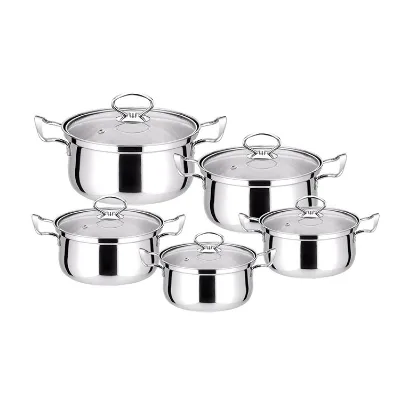
7PCS Non Stick Cookware Set with Glass Lids Stainless Steel Cookware Set
$20.40 - $25.30
MOQ: 1000 Sets


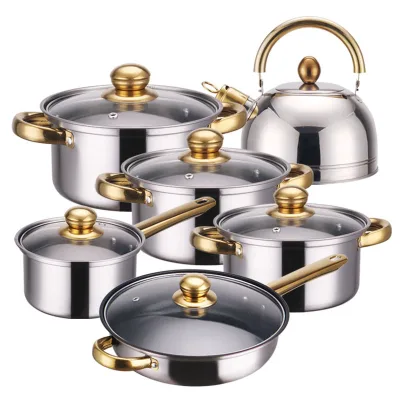
Hot Sale 10 PCS Durable Pots Stainless Steel Nonstick Cookware Set with Glass Lid
$15.30 - $26.90
MOQ: 1000 Sets

12PCS Stainless Steel Nonstick Cooking Kitchenware Pots and Pans Cookware Set
$7.80 - $16.70
MOQ: 1000 Sets

Wenzhou Cathylin International Trade Co., Ltd.
- Verified by TUVRHEINLAND
- Trading Company
- China Zhejiang
- Lead time15 days
- Avg. response≤ 15h
Main productsFlatware, Cutlery, Kitchen Tools, Tableware, Cookware, Bakeware, Drinkware
Main marketsNorth America

Yongkang Manxinge Industry and Trade Co., Ltd.
- Verified by CTI
- Combined
- China Zhejiang
- Lead time23 days
- Avg. response≤ 3h
Main productsCookware, Cookware Set, Fry Pan, Casserole, Saucepan, Wok, Milk Cup, Deep Frypan
Main marketsSouth America,Africa

Yongkang Yuchen Hardware Products Factory
- Verified by SGS
- Combined
- China Zhejiang
- Lead time15 days
- Avg. response≤ 1h
Main productsBakeware, Pan
Main marketsEast Asia(Japan/ South Korea)

GUANGDONG XIANGXINGFA ART GLASS CO., LTD.
- Combined
- China Guangdong
- Lead time15 days
- Avg. response≤ 12h
Main productsGlass Lid, Tempered Glass Lid, Glass Lid for Cookware, Pot Lid, Glass Dome, Glass Cover, Flat Glass Lid, Rim Cover, Rim Lid, Round Cover
Main marketsSouth America,Southeast Asia/ Mideast,East Asia(Japan/ South Korea),Europe

Pots and Pans Non-Stick Cookware Set Tempered Glass Lid with Knob Handle
$0.20 - $2.00
MOQ: 1000 Pieces

C Type Flat Universal Tempered Glass Pot Lid for Non-Stick Cookware Set
$0.20 - $2.00
MOQ: 1000 Pieces


Ningbo Zhongjiang Machinery Co., Ltd.
- Verified by CTI
- Combined
- China Guangdong
- Lead time30 days
- Avg. response≤ 3h
Main productsStainless Steel Kettle Welding Equipment, Tempered Glass Pot Cover Production Line, Net Basket Strainer Vegetable Basket Productio, Flour Screening Equipment, Splitting Sieve Equipment, Automatic Welding Machine for Brake Shoe, Brake System Brake Assembly Line, Stainless Steel Steaming Grid Equipment, Portable Basket Production Line, Rack Net Basket Equipment
Main marketsDomestic

Ningbo Maxtor Houseware Manufacturing Co., Ltd
- Trading Company
- China Zhejiang
- Lead time30 days
- Avg. response≤ 12h
Main productsAluminum Pressed Cookware, Aluminum Forged Cookware, Full Induction Cookware, Fire Pit, Tri-Ply Stainless Steel Cookware, Stone Marble Cookware, Hard Anodized Cookware, Pressure Cooker
Main marketsSouth America,Africa,Southeast Asia/ Mideast,East Asia(Japan/ South Korea),Domestic,Europe,Australia,North America

Jiangmen Weifeng Houseware Co., Ltd.
- Manufacturer/Factory
- China Guangdong
- Lead time30 days
- Avg. response≤ 9h
Main productsStainless Steel Cookware, Kitchenware, Houseware, Cookware Set, Whistling Kettle, Kitchen Utensils, Stainless Steel Cookware Set, Stainless Steel Houseware
Main marketsSouth America,Eastern Europe,Mid East,North America,Southeast Asia,Eastern Asia,Oceania,Western Europe,Africa

- Verified by BV
- Trading Company,Manufacturer/Factory
- China Zhejiang
- Lead time15 days
- Avg. response≤ 9h
Main productsCeramic Mug, Kitchen Storage, Water Bottle, Cookware Set, Charger Plates, Shaker Set, Storage Rack, Food Container, Kitchen Accessories, Yiwu Agent
Main marketsSouth America,Eastern Europe,Mid East,North America,Southeast Asia,Eastern Asia,Oceania,Western Europe,Africa


8-Piece Thicken Marble Coated Non-Stick Cookware with Gold-Plated Handle Cookware Kitchenware
$14.50 - $15.80
MOQ: 10 Sets

Jiangmen Ruida Metal Products Co., Ltd.
- Verified by BV
- Combined
- China Guangdong
- Lead time30 days
- Avg. response≤ 5h
Main productsCookware, Cutlery Set, Tools, Flatware Set, Cookware Set, Kitchenware Set, Kitchenware, Cutlery, Dinnerware Set, Tableware
Main marketsNorth America


OEM 10PCS Casserole Saucepan Stainless Steel Cookware Set with Colander Glass Lid
$28.20 - $32.50
MOQ: 1000 Sets


Zhejiang Mushang Ind & Trd Co., Ltd.
- Verified by SGS
- Combined
- China Zhejiang
- Lead time15 days
- Avg. response≤ 5h
Main marketsSouth America,Southeast Asia/ Mideast,Domestic,Europe,North America
Caiyi Smart Home (chongqing) Co., Ltd.
- Manufacturer, Trading Company
- Lead time旺季: "1 - 3000":7,"> 3000":"To be negotiated", 淡季: "1 - 3000":7,"> 3000":"To be negotiated"
- Avg. response≤ 2h
Main productsCookware, Small Kitchen Appliances, Cookware Sets, Soup & Stock Pots, Cookware Accessories


Comprehensive Sourcing Guide
Non-Stick Glass Lid Cookware Set Supplier Concentration and Factory Types
Current data indicates a concentration of suppliers in China, specifically within the Zhejiang and Guangdong provinces. Fact records show Zhejiang-based entities offering aluminum-based forged cookware sets, while Guangdong suppliers provide stainless steel options with induction bottoms. These regions host both trading companies and manufacturers, with some entities listing dual capabilities as both factory and trading firm. The main product lists for these suppliers extend beyond cookware to include kitchenware, storage boxes, and outdoor equipment, suggesting a broad manufacturing base rather than a specialized single-product factory. Buyers should verify if a specific supplier operates a dedicated production line for glass lid cookware or if it is a secondary product within a larger catalog.
When assessing factory types, the distinction between a pure manufacturer and a trading company is critical for quality control and customization. Some suppliers in the results are verified by third-party agencies like BV or TÜV Rheinland, which adds a layer of credibility to their operational claims. However, the presence of a trading company status does not preclude direct factory access, as some listings explicitly state "Manufacturer/Factory" alongside trading capabilities. Buyers must examine the specific product attributes, such as material composition and model numbers, to determine if the supplier has direct control over the molding and finishing processes required for non-stick coatings and glass lid integration.
How to Verify Non-Stick Glass Lid Cookware Set Suppliers
Verification of supplier credentials relies heavily on third-party audit reports and specific product certifications found in the data. Several suppliers in the current results display FDA and LFGB certifications, which are essential for food-contact materials like aluminum and stainless steel bodies. One supplier also lists CE/EU certification, indicating compliance with European safety standards for kitchen appliances. Buyers should request the original audit reports for these certifications to confirm the scope covers the specific cookware models being sourced. The presence of a BV or TÜV Rheinland verification badge on a supplier profile serves as an initial indicator of operational legitimacy, but it does not replace the need for product-specific testing documentation.
Beyond certifications, buyers must validate the supplier's response time and communication reliability as a proxy for operational stability. The observed response times vary significantly, ranging from approximately 7 hours to over 14 hours, which can impact the speed of negotiation and sample approval. A supplier with a faster response time may indicate a more active sales team or better internal coordination, which is vital for resolving issues related to glass lid fitment or non-stick coating defects. Additionally, checking the "Customization" attribute is crucial; while many suppliers list customization as available, buyers must confirm the specific capabilities regarding handle design, lid material, and packaging before committing to an order.
What to Compare Across Non-Stick Glass Lid Cookware Set Suppliers
Comparing suppliers requires a detailed analysis of minimum order quantities (MOQ) and unit pricing structures, which vary widely across the available data. Some suppliers offer low MOQs of 50 sets for aluminum forged sets, while others dealing in stainless steel cookware require orders of 1,000 pieces or more. Price points also differ substantially, with some aluminum sets listed around $35 per unit and stainless steel options ranging from $6.80 to $25.30 depending on the material grade and set configuration. Buyers must align these financial constraints with their inventory strategy, as high MOQs may be necessary to achieve competitive unit costs but could increase storage risks for new market entrants.
Lead times and production capacity are equally critical comparison factors that influence supply chain planning. The data shows lead times ranging from 15 days to 60 days after deposit, with some suppliers specifying a 30-day window for standard orders. Suppliers with longer lead times may have higher production volumes or more complex quality assurance processes, which could be beneficial for large orders but risky for urgent restocking needs. Furthermore, the material composition, such as 201 stainless steel versus 304 or 316 grades, directly impacts both the price and the durability of the cookware. Buyers should compare these technical specifications alongside the lead time to ensure the selected supplier can meet both quality expectations and delivery schedules.
Common Non-Stick Glass Lid Cookware Set Sourcing Risks
One significant risk involves the discrepancy between advertised material specifications and actual product quality, particularly regarding stainless steel grades. Some product listings mention 201 stainless steel, which is less corrosion-resistant than 304 or 316 grades, yet the price points may not always reflect this difference clearly. Buyers must verify the exact material composition for each model, as using lower-grade steel in high-moisture environments can lead to premature rusting and customer complaints. Additionally, the non-stick coating durability is a common point of failure; while suppliers claim "Best" quality, the specific type of coating and its bonding process to the aluminum or steel body are rarely detailed in standard product attributes.
Another risk stems from the variability in packaging and shipping standards, which can affect the condition of glass lids upon arrival. Product attributes indicate that packaging ranges from simple boxes to customized color boxes, but the internal protection for fragile glass components is often not explicitly detailed. If a supplier uses inadequate cushioning, glass lids may crack during transit, leading to total order rejection or partial losses. Furthermore, the "Customization" availability listed by suppliers may come with hidden costs or extended lead times that are not immediately apparent in the initial quote. Buyers should explicitly request packaging diagrams and sample testing protocols to mitigate these physical and logistical risks before finalizing any purchase agreement.
Non-Stick Glass Lid Cookware Set Regional Sourcing and Logistics
Sourcing from China, specifically the Zhejiang and Guangdong provinces, offers access to established manufacturing clusters but introduces specific logistical considerations. Zhejiang-based suppliers often focus on aluminum and forged cookware, while Guangdong facilities frequently specialize in stainless steel and induction-compatible sets. The geographic concentration of these industries means that freight consolidation is often easier, but buyers must account for the distance between the factory and the port of loading. For instance, suppliers located in Jiangmen City or other specific cities within these provinces may have different port access times compared to those in major coastal hubs, affecting the overall transit duration to international destinations.
Logistics planning must also consider the impact of lead times on inventory turnover and shipping costs. With lead times ranging from 15 to 60 days, buyers need to synchronize production schedules with shipping windows to avoid demurrage charges or stockouts. The response time of the supplier, which can vary from under 7 hours to over 14 hours, plays a role in how quickly shipping documents and customs declarations can be prepared. Buyers should verify if the supplier offers FOB, CIF, or DDP terms, as this determines who bears the risk and cost during transit. Understanding the specific location of the factory within the province helps in estimating the inland transportation time to the port, ensuring a more accurate calculation of the total landed cost for the cookware sets.
Non-Stick Glass Lid Cookware Set Commercial Terms and Order Planning
Commercial terms regarding payment and customization availability are central to successful order planning for this category. While many suppliers indicate that customization is available, the specific requirements for molds, branding, and packaging changes must be agreed upon in writing before production begins. The data shows that some suppliers have a minimum order quantity of 50 sets, while others require 1,000 pieces, which dictates the financial commitment required upfront. Buyers should clarify whether the quoted price includes the cost of custom molds or if these are charged separately, as this can significantly alter the total project budget. Additionally, the lead time of 60 days for some stainless steel sets suggests that customization may extend the production window further.
Order planning must also account for the specific product models and their associated certifications to ensure market compliance. For example, models with FDA and LFGB certifications are suitable for markets with strict food safety regulations, but buyers must confirm that these certifications apply to the specific batch being produced. The price range observed, from $4.46 to $35.00, indicates a wide spectrum of product tiers, requiring buyers to define their target market segment clearly before engaging with suppliers. Establishing a clear timeline that incorporates the supplier's response time, production lead time, and shipping duration is essential to avoid delays. Buyers should also verify the escrow or payment protection mechanisms offered by the platform to secure their funds until the goods are verified and shipped.
FAQs
What certifications do non stick glass lid cookware sets have?
Most available sets hold FDA and LFGB certifications to ensure food safety standards. Some suppliers also provide CE or EU compliance for broader market access. These credentials verify that materials like aluminum or stainless steel meet strict health regulations. Buyers should always request current certificates to confirm product safety before placing large orders.
What is the typical minimum order quantity for these sets?
Minimum order quantities vary significantly by supplier and material type. Aluminum forged sets often require a minimum of 50 units, while stainless steel options may demand 1000 pieces. Some eco-friendly stone cookware sets have a lower threshold of 100 units. Buyers should check specific product listings to determine the exact MOQ required for their purchase volume.
How long does production take for custom cookware orders?
Lead times generally range from 15 to 60 days depending on the supplier and order complexity. Some manufacturers offer faster turnaround times of 15 days for standard items. Others may require up to 60 days after deposit for customized stainless steel sets. Buyers should confirm specific production schedules with suppliers to ensure timely delivery for their business needs.
What materials are used in non stick glass lid cookware?
Common materials include aluminum for forged sets and stainless steel grades like 201, 304, and 316. Aluminum sets are often coated with non-stick surfaces and feature glass lids. Stainless steel options may have induction bottoms and hollow handles. Buyers can choose based on durability needs, with aluminum being lighter and stainless steel offering higher heat resistance.
What is the price range for these cookware sets?
Prices vary widely based on material, piece count, and certification. Aluminum forged sets typically range from 35 dollars per unit. Stainless steel sets can cost between 6.80 and 25.30 dollars depending on the configuration. Some specialized stone cookware sets are priced around 4.46 dollars. Buyers should request detailed quotes to understand total costs including shipping and customization fees.
Can suppliers customize the cookware sets for my brand?
Yes, many suppliers offer customization services including OEM and ODM options. Buyers can often select specific colors, packaging designs, and handle styles. Customization is available for both aluminum and stainless steel sets. Suppliers may require minimum order quantities to accommodate these changes. Buyers should discuss specific branding requirements directly with the manufacturer to ensure feasibility.