OSHA Compliance Noise Dosimeter Suppliers and Manufacturers
Source OSHA Compliance Noise Dosimeter from 15 verified suppliers. Compare response times, lead times, MOQs, and certifications like ISO 9001 and CE. Contact suppliers directly to request OEM customization and pricing details; review the available evidence before requesting comparable quotations from suitable candidates.
Updated
Suppliers List
Hangzhou Aihua Instruments Co., Ltd.
- Verified by SGS Group
- Manufacturer, Trading Company
- Lead time5 days
- Avg. response≤ 3h
Main productsSound Level Meters, Noise Dosimeters, Acoustic Imager, Measurement Microphones, Multi-channel Signal Analyzers
Main marketsDomestic Market(61%), Southeast Asia(8%), South America(7%)
Shenzhen Graigar Technology Co., Ltd.
- Manufacturer, Trading Company
- Guangdong, China
- Lead time3 days
- Avg. response≤ 2h
Main productsUltrasonic Flaw Detector,Ultrasonic Flow Meter,Thickness Gauge,Underground Metal Detector,Leeb Hardness Tester
Main marketsNorth America(20.00%), Western Europe(15.00%), South America(10.00%), Mid East(10.00%), Oceania(10.00%), Africa(10.00%), Southeast Asia(10.00%), Eastern Europe(10.00%), Domestic Market(5.00%)
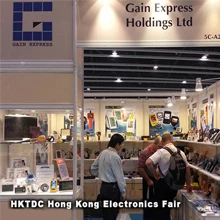
- Trading Company
- Hong Kong S.A.R.
- Lead time5 days
- Avg. response≤ 5h
Main productsAir Quality Monitor,Thermometer,Water Quality Meter,Gem Tester,Measuring Instruments
Main marketsSouth Asia(10.00%), Northern Europe(10.00%), Central America(10.00%), Western Europe(10.00%), Eastern Asia(10.00%), Mid East(10.00%), Southeast Asia(10.00%), Eastern Europe(10.00%), South America(10.00%), North America(10.00%)
Huipu Opto-Electronic Instrument (Zhenjiang) Co., Ltd.
- Manufacturer, Trading Company
- Jiangsu, China
- Lead time0 days
- Avg. response≤ 8h
Main productsLaser Levels/Laser Distance Meters/Rotary Lasers/Total Station/Laser Rangefinder/Theodolite/Auto Level/Analyzers/Test Instrument,Total Station,Rotary laser level,Analyzers/Metal Detectors,Physical Measuring Instruments
Main marketsEastern Europe(30.00%), Western Europe(20.00%), Eastern Asia(14.00%), South America(10.00%), Southern Europe(5.00%), Southeast Asia(5.00%), North America(5.00%), Africa(3.00%), South Asia(2.00%), Mid East(2.00%), Northern Europe(2.00%), Oceania(2.00%)
Shenzhen Langdeli Technology Co., Ltd.
- Verified by Intertek
- Manufacturer, Trading Company
- Lead time20 days
- Avg. response≤ 4h
Main productsLaser Rangefinder+ Metal Detector+GYM Timer, Alcohol Tester, Decibel Sound Level Noise Meter, Gas analyzer, Industrial Temperature Gun
Main marketsNorth America(25%), Western Europe(20%), Southern Europe(14%)

Shenzhen Bestone Industrial Co. Ltd.
- Verified by SGS
- Trading Company
- China Guangdong
- Lead time15 days
- Avg. response≤ 10h
Main productsDigital Infrared Thermometer and Thermometer, Anemometer Sound Level Meter, Ultrasonic/Coating Thickness Gauge, Vibration Meter / Hardness Tester, Laser Distance Meter Roughness Meter, Moisture Meter Push-Pull Force Gauge, Lux/Luminance Meter Glossmeter Colorimeter, Tachometer Endoscope Stroboscope, Earth Resistance /Voltage Insulation Tester, Gas Detector / Refractometer
Main marketsSouth America,Africa,Southeast Asia/ Mideast,East Asia(Japan/ South Korea),Europe,North America

Digital Dosimeter Logging Noise Dose Meter 60-130dB (A and C) , 70-140dB (A and C) SL-1256DOS
$225.00 - $250.00
MOQ: 1 Pieces

$42.50 - $52.00
MOQ: 2 Pieces

Shenzhen Ever Good Electronic Co., Ltd.
- Manufacturer, Trading Company
- Guangdong, China
- Lead time3 days
- Avg. response≤ 18h
Main productsMetal Detector,Instrument Meter,Oscilloscopes,Temperature Instruments,Clamp Meters
Main marketsSoutheast Asia(15.00%), Mid East(15.00%), North America(15.00%), Western Europe(10.00%), Southern Europe(5.00%), Northern Europe(5.00%), Central America(5.00%), Eastern Europe(5.00%), South Asia(5.00%), South America(5.00%), Oceania(5.00%), Africa(5.00%), Eastern Asia(3.00%), Domestic Market(2.00%)
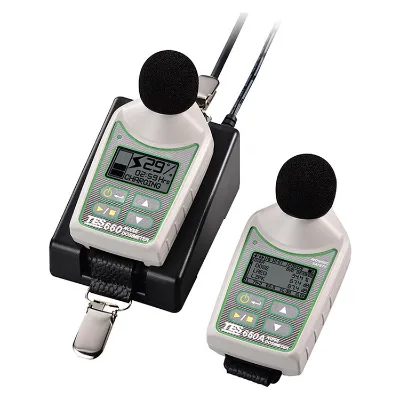
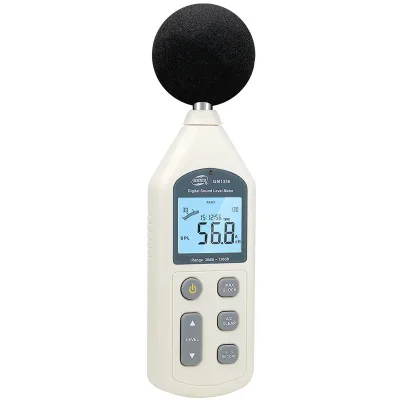
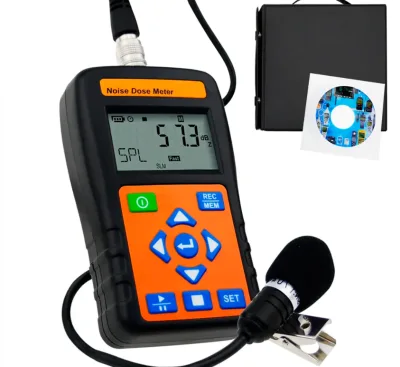
Sound Level Meter Noise Dose Built-in OSHA MSHA DOD ACGIH ISO85 ISO90 USB ST-130
$575.69 - $589.69
MOQ: 1 pieces

Shenzhen Toprie Electronics Co., Ltd.
- Verified by SGS
- Manufacturer
- China Guangdong
- Lead time15 days
- Avg. response≤ 3h
Main productsPressure Sensor, Power Meter, Sensor, Temperature Sensor, Level Transmitter, Paperless Recorder, Iiot Gateway, Data Logger, Data Acquisition Module, Liquid Level Sensor
Main marketsEurope,North America

Guangzhou Amittari Instruments Co., Ltd.
- Trading Company
- China Guangdong
- Lead time0 days
- Avg. response≤ 9h
Main productsPaint Thickness Meter, Coating Thickness Gauge, Roughness Tester, Hardness Tester, Moisture Meter, Vibration Meter, Tension Tester, Window Tint Meter, Glossmeter, Anemometer
Wuhan Chenyun Technology Co., Ltd.
- Verified by TüVRheinland
- Manufacturer, Trading Company
- Lead time0 days
- Avg. response≤ 1h
Main productsWind Speed And Direction Sensors, Ultrasonic Sensors, Temperature And Humidity Sensors, Solar Radiation Sensor & PV Solutions, Soil Sensos
Main marketsSouthern Europe(40%), North America(30%), South Asia(20%)
Chengdu Sentec Technology Co., Ltd.
- Trading Company
- Lead time旺季: "1 - 1000":15,"> 1000":"To be negotiated", 淡季: "1 - 1000":15,"> 1000":"To be negotiated"
- Avg. response≤ 5h
Main productssoil sensor,temperature&humidity sensor,PM gas sensor,light and solar radiation sensor,wind sensor
Shenzhen Handiier Technology Co.,Ltd
- Manufacturer, Trading Company
- Guangdong, China
- Lead time10 days
- Avg. response≤ 12h
Main productsshaver,shaving accessories,hair trimmer,Vacuum Cleaner Parts,Air Purifier Parts
Main marketsNorth America(50.00%), Eastern Europe(10.00%), South America(10.00%), Northern Europe(5.00%), Central America(4.00%), Western Europe(3.00%), South Asia(3.00%), Southern Europe(3.00%), Oceania(3.00%), Eastern Asia(2.00%), Mid East(2.00%), Southeast Asia(2.00%), Domestic Market(2.00%), Africa(1.00%)
- Manufacturer
- Taiwan, China
- Lead time30 days
- Avg. response≤ 5h
Main productsClamp Meter,Refrigerant Leakage Dectector,Gas Leak Detector,Insulation Tester,RTD Thermometer
Main marketsWestern Europe(32.00%), Eastern Asia(28.00%), North America(27.00%), Eastern Europe(2.00%), Southern Europe(2.00%), South America(1.00%), Domestic Market(1.00%), South Asia(1.00%), Northern Europe(1.00%), Central America(1.00%), Africa(1.00%), Mid East(1.00%), Oceania(1.00%), Southeast Asia(1.00%)
Shanghai Total Industrial Co., Ltd.
- Verified by SGS
- Manufacturer/Factory
- China Shanghai
- Lead time0 days
- Avg. response≤ 24h
Main productsFeeder Clamp, Weather Shield Enclosure, Rubber Grommet, Hoisting Grip, Cable Entry, Flexible Jumper Cable, Cablen Ties, Terminal Lugs, Conduit and Fittings, Hole Saw

Shenzhen HOBOY Instruments Co., Ltd.
- Verified by TUVRHEINLAND
- Trading Company
- China Guangdong
- Lead time15 days
- Avg. response≤ 7h
Main productsInsulation Tester, Gas Analyzer, Multimeter, Clamp Meter, Network Tester, Thermometer, Power Quality Analyzer, Shaft Alignment Instrument
Main marketsOthers(foreignTradeCapacity.exportBusinessCapacityMarketOther),Southeast Asia/ Mideast

Awa 5661-3 Portable Noise Meter Sound Level Meter 5661-2 5661-3 Sound Level Meter
$929.00 - $969.00
MOQ: 1 Pieces

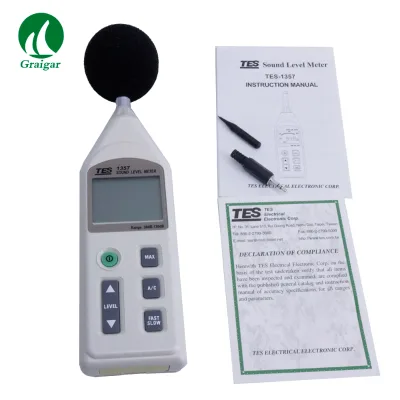
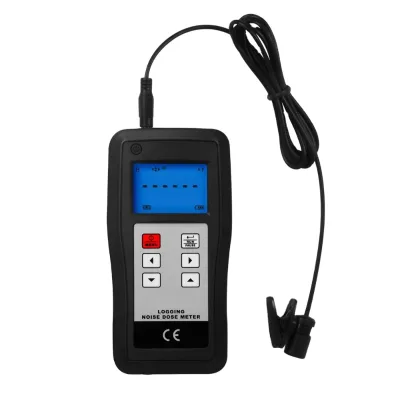
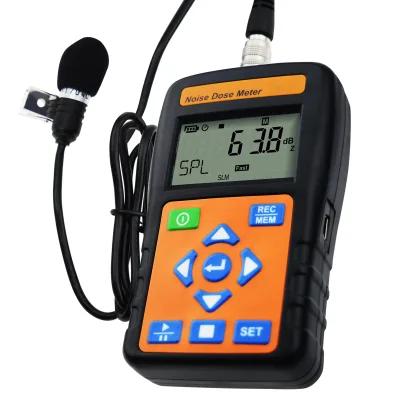
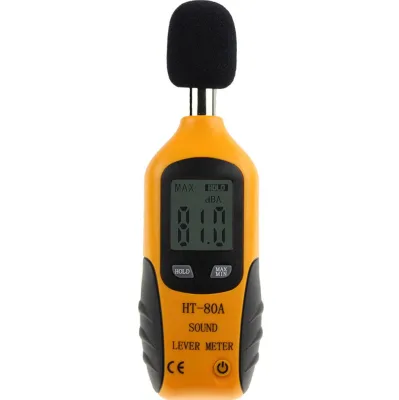


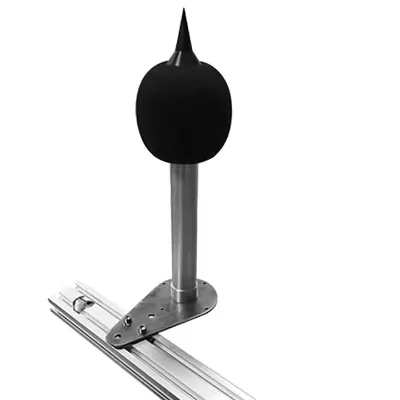
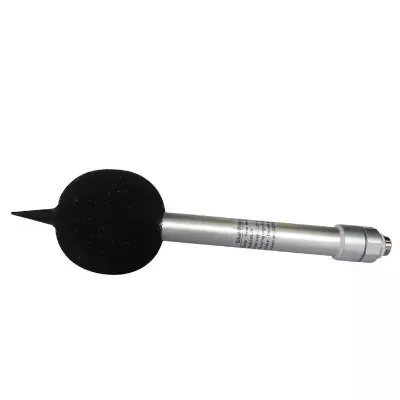
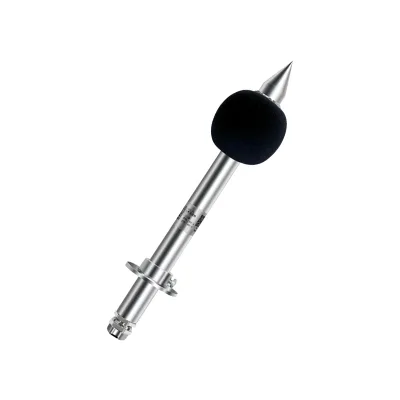
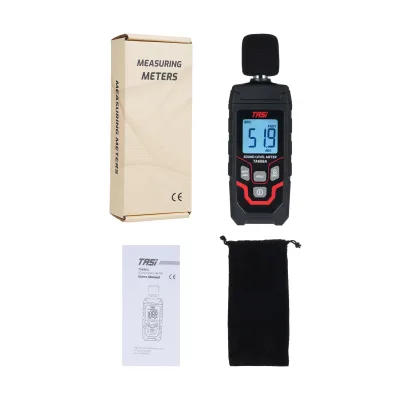
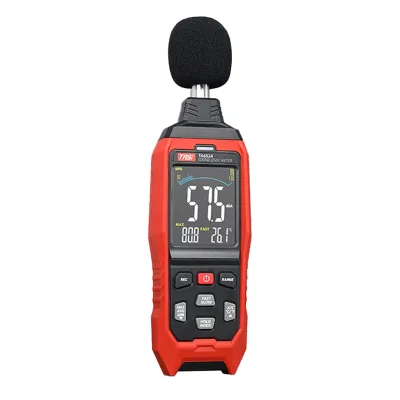
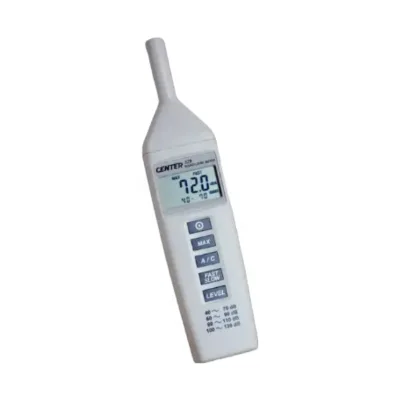
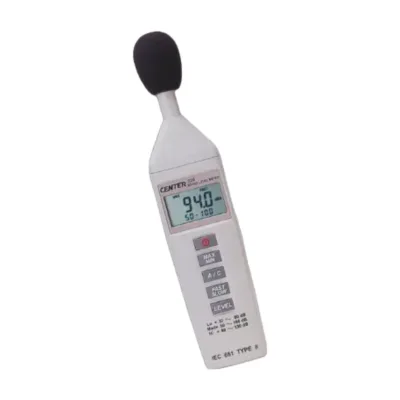


Comprehensive Sourcing Guide
OSHA Compliance Noise Dosimeter Supplier Concentration and Factory Types
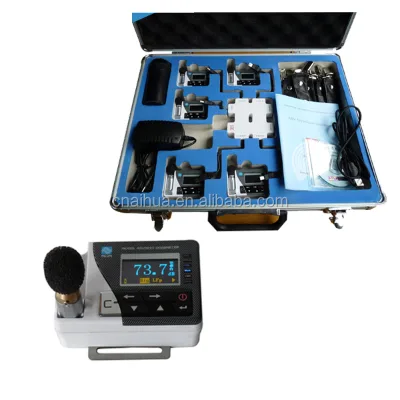
Buyers searching for OSHA Compliance Noise Dosimeter suppliers will encounter two broad company types on B2B platforms: manufacturers and trading companies. Manufacturer listings in this category typically showcase deep acoustic portfolios—sound level meters, noise dosimeters, acoustic imagers, measurement microphones, and multi-channel signal analyzers—indicating in-house instrument engineering rather than generalist reselling. Trading companies may carry dosimeters alongside unrelated test instruments such as ultrasonic flaw detectors, thickness gauges, and hardness testers, which signals a sourcing-agent model. Both can be legitimate partners, but the factory type affects how you handle customization, calibration support, and warranty service.
Where concentration is visible in supplied results, dosimeter production clusters around Zhejiang, China, where several product listings originate, including personal wearable noise exposure dosimeters and mini measurement kits. Additional listings come from Guangdong, China and Taiwan, China, so the category is not confined to a single province. When your search returns no clear geographic pattern, identify clusters yourself by filtering listings for product-level place-of-origin attributes rather than the supplier's registered address, since manufacturers often list products from their production location. Cross-check how many dosimeter models a supplier lists under the same brand; a cluster of related models suggests genuine production depth. Treat any concentration claim as provisional and re-verify with fresh search results, because platform listings and supplier counts change between searches and should never be treated as a stable market snapshot.
How to Verify OSHA Compliance Noise Dosimeter Suppliers
Verification begins with third-party assessment status. In the supplied results, at least one supplier is verified by SGS Group, an independent inspection body, and holds system certifications including ISO 9001, ISO 14001, ISO 45001, CE, and RoHS. Use these labels as screening filters, not as final proof: confirm the certificate scope covers acoustic instruments, ask for the certificate number and issuing body, and check validity dates yourself. Suppliers who resist sharing verifiable certificate documentation should move down your shortlist, particularly for compliance-critical measurement equipment where accuracy claims matter.
Second, verify through product evidence rather than marketing copy. Credible dosimeter listings in this category include full attribute sets—measuring range (for example, 63dBA–140dBA or 51–142dBA), frequency range (20Hz–12.5kHz), resolution (0.1dB), accuracy (±1.0dB or ±0.5dB), weight, dimensions, and warranty terms. A listing with precise attributes and a stated model number is easier to verify against a datasheet than a bare photo. Third, verify service capacity: one manufacturer lists light customization, sample processing, graphic processing, and customized-on-demand options, which you can test by requesting a small OEM sample run. Finally, request a live product demonstration or video calibration check before committing, and ask whether the dosimeter is supplied with a calibration certificate. Note that verification labels are displayed per-supplier and per-listing; do not assume every supplier in your results carries the same credentials, and never treat a displayed brand name as evidence of certification.
What to Compare Across OSHA Compliance Noise Dosimeter Suppliers
Build a comparison sheet from the supplier-label dimensions actually displayed on listings, since not every supplier shows every attribute. Core columns should include company type (manufacturer versus trading company), main products, location, response time, lead time, verification status, system certifications, and customization capability. In the supplied results, response times of 2 and 3 hours and lead times of 3 and 5 days appear on different suppliers—a meaningful spread when you need replacement units quickly for a safety program. Do not extrapolate these figures to suppliers who have not disclosed them; instead, message each shortlisted supplier and record their stated response and production times against the same request.
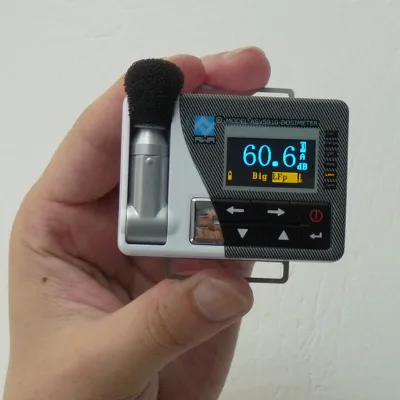
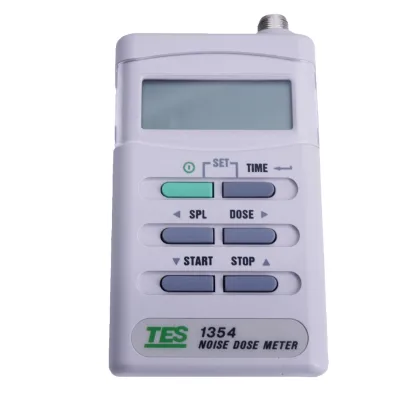
On the product side, compare measuring range, accuracy, resolution, frequency weighting, display type, weight, warranty, and OEM support across listings. One wearable dosimeter lists a 51–142dBA range, ±0.1% accuracy, A/C/Z frequency weighting, F/S/I time weighting, 1/1 and 1/3 octave filters, an IP65 rating, and a 1.3-inch TFT-LCD display, while a badge-style competitor lists a price range of roughly USD 800–852 with a minimum order of one unit. Another portable kit lists USD 5,200, and a mini dosimeter lists an MOQ of 5 with a 1.5-year warranty. Price variance this wide reflects different product classes—badge dosimeters versus full measurement kits—so always compare like-for-like specifications. Compare warranty length explicitly, because 1.5-year and 1-year terms both appear in this category and directly affect lifecycle cost.
Common OSHA Compliance Noise Dosimeter Sourcing Risks
The first risk is specification drift between listing and delivered unit. Dosimeter listings sometimes display a different model number in the product name than in the attribute block—for example, a title referencing ASV5910+-3 while attributes state ASV5910+-2. Always reconcile the model number, measuring range, and accuracy before ordering, and put the exact model and full attribute list into your purchase contract. Without this, you may receive a variant with a different display, memory, or logging capability than the compliance workflow you planned around.
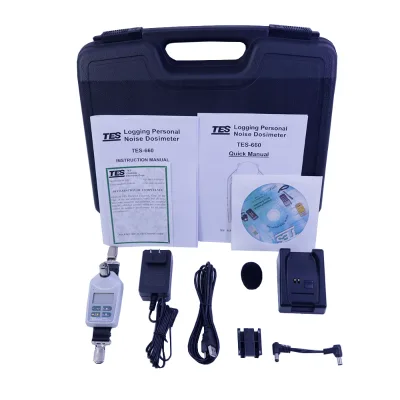
The second risk is credential over-assumption. Brand names shown on a listing do not transfer to your order unless the contract names the brand and model, and supplier certifications may cover the factory's management system rather than each instrument's calibration. Third, beware mixed portfolios: a trading company selling dosimeters alongside flaw detectors and metal detectors may lack acoustic-specific after-sales support, so clarify who performs warranty repairs and where calibration services are located. Fourth, packaging and shipping damage is a documented concern for precision instruments; one listing describes multi-layer packaging—plastic film, rigid padding, an aluminum case, then a strapped carton weighing 5 kg—so specify equivalent packaging for your order. Fifth, warranty gaps matter: terms of 1 year and 1.5 years both appear in this category, and a dosimeter failing outside warranty can cost more than the unit. Finally, do not rely on displayed prices alone; single-unit badge pricing and full-kit pricing are not comparable, and quoted prices may exclude calibration certificates or data-logging accessories you assumed were included.
OSHA Compliance Noise Dosimeter Regional Sourcing and Logistics
Regional sourcing for this category should start from the place-of-origin attributes visible on product listings. Zhejiang, China appears repeatedly as the origin for personal noise dosimeters and measurement kits from acoustic instrument manufacturers, making it a natural first region for factory visits or consolidated sourcing. Guangdong, China and Taiwan, China also appear as origins for noise dose testers and badge-type dosimeters, giving buyers multiple sourcing options across the region. Because origins are stated per product rather than per company, always confirm which factory actually produces the model you intend to buy—especially when a trading company lists instruments from multiple origins.
Logistics planning should account for the physical characteristics of dosimeters. These are compact instruments—one wearable unit weighs 85 g with dimensions of 68×48×20 mm—so air freight is practical for samples and small orders, while a full kit packed in an aluminum case and carton can reach 5 kg per set, which changes freight economics at volume. Supplied lead times of 3 and 5 days on certain suppliers suggest short production windows for stocked models, but only treat these as representative for the suppliers who display them; request written lead-time confirmation for your specific model, quantity, and customization level. Build buffer time for pre-shipment inspection and calibration checks before dispatch, since instrument accuracy verification at origin prevents disputes after arrival. For multi-region sourcing, keep customs documentation consistent: declare the correct model number, origin, and unit value per shipment to avoid clearance delays on repeat orders.
OSHA Compliance Noise Dosimeter Commercial Terms and Order Planning
Order planning for dosimeters should mirror how safety programs actually consume the instruments. Minimum order quantities in this category range from a single unit on a badge-type dosimeter listing to an MOQ of 5 on a mini dosimeter kit, which makes both pilot purchases and scaled rollouts feasible. Start with a sample order regardless of MOQ: test the unit against your measurement protocol, verify data export and logging behavior, and confirm accessories before committing to volume. When negotiating, anchor quantity discounts to the displayed list price—one wearable dosimeter is listed at USD 1,239, a badge-type at roughly USD 800–852, and a full kit at USD 5,200—so unit economics differ sharply by product class.
Commercial terms to lock in writing include the exact model number, full attribute list, warranty term (1-year and 1.5-year terms both appear), OEM/customization scope, packaging specification, and lead time for your quantity. Use escrow or platform-protected payment where offered rather than direct transfer for first orders, and stage payments for customized runs—one supplier advertises customized-on-demand capability, which justifies milestone payments tied to sample approval and pre-shipment inspection. Verify certification copies (ISO 9001, ISO 14001, ISO 45001, CE, RoHS where displayed) as order attachments. Plan reorders around lead times of 3 to 5 days displayed by certain suppliers, but hold safety stock for replacements since calibration failures or damage can idle a compliance program. Finally, confirm response commitments: suppliers displaying 2-hour and 3-hour response times set an expectation you can contractually reference for after-sales support.
FAQs
What is the typical lead time for noise dosimeters?
Manufacturers generally require 3 to 5 days to process and ship orders. This timeframe allows for quality checks and packaging preparation. Buyers should confirm specific delivery schedules with suppliers before placing bulk orders to ensure timely project completion.
What is the minimum order quantity for these devices?
The minimum order quantity is typically 5 units for standard models. Some suppliers may accept orders for just 1 unit depending on stock availability. Buyers should verify the specific MOQ with the supplier to understand pricing tiers and shipping requirements.
What certifications do these noise dosimeters hold?
Most devices carry ISO 9001, ISO 14001, ISO 45001, CE, and RoHS certifications. These standards ensure quality management and environmental compliance. Buyers should request certification documents to verify that the equipment meets specific regional regulatory requirements for workplace safety.
What is the measurement accuracy of these dosimeters?
Accuracy typically ranges from ±0.1% to ±1.0 dB depending on the model. High-end units offer precise measurements for occupational health monitoring. Buyers should check the specific accuracy rating in the product specifications to ensure it meets their required measurement standards.
What is the warranty period for noise dosimeters?
The standard warranty period is usually 1 to 1.5 years. This coverage protects against manufacturing defects and ensures product reliability. Buyers should confirm the exact warranty terms with the supplier to understand the scope of support and repair services provided.
Can these devices be customized for specific needs?
Suppliers offer OEM customization, sample processing, and graphic processing services. Buyers can request specific branding or functional adjustments to meet unique requirements. It is advisable to discuss customization options and potential additional costs directly with the manufacturer before finalizing the order.