Outdoor Exercise Bluetooth Headphone Suppliers and Manufacturers
Source 14 verified suppliers for Outdoor Exercise Bluetooth Headphone products. Compare dimensions like lead times, MOQs, certifications, and response rates. Review product specs and request quotes to streamline your procurement process; review the available evidence before requesting comparable quotations from suitable candidates.
Suppliers List

Shenzhen Tina Nis Electronics Co., Ltd.
- Verified by SGS
- Trading Company
- China Guangdong
- Lead time15 days
- Avg. response≤ 8h
Main productsEarphone, Headphone, Adapter, Phone Case, Speaker, Stylus, Earbuds
Main marketsEurope

Huizhou Simba Technology Co., Ltd.
- Verified by CTI
- Manufacturer/Factory
- China Guangdong
- Lead time15 days
- Avg. response≤ 8h
Main productsSmart Sweeping Robot, Ai Glasses, 4G Smart Watch, Smart Watch, Bluetooth Earphone, Charger, Cable, Bluetooth Speaker, Microphone
Main marketsSouth America,Eastern Europe,Mid East,North America,Southeast Asia,Eastern Asia,Oceania,Western Europe,Africa

NINGBO HAISHU HOPE-U INTERNATIONAL TRADING CO., LTD.
- Manufacturer/Factory
- China Zhejiang
- Lead time45 days
- Avg. response≤ 6h
Main productsGift, Beauty Device, Bluetooth Speaker, Skin Care, Cosmetics, Promotional Products, Camping Lamp, Fan, Keyboard and Mouse, Humidifier
Main marketsSouth America,Eastern Europe,North America,Southeast Asia,Western Europe

Shenzhen Haizhi Trading Company Ltd.
- Verified by SGS
- Trading Company
- China Guangdong
- Lead time15 days
- Avg. response≤ 7h
Main productsUSB Drive, USB Memory, USB Disk, USB Flash Stick, USB Stick
Main marketsNorth America

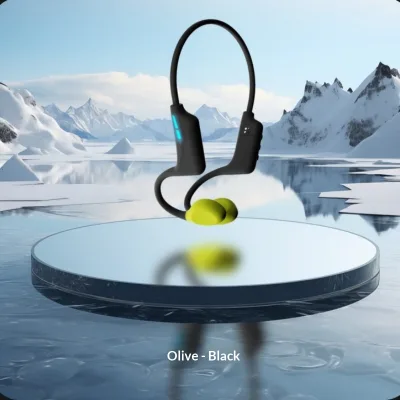
High Quality Bluetooth 5.0 Earphone Waterproof Sport Wireless Bone Conduction Headphone
$16.90 - $22.80
Moq: 100

Sports Wireless Bluetooth Headphone for Mobile 2016
Contact supplier

- Verified by SGS
- Trading Company
- China Zhejiang
- Lead time15 days
- Avg. response≤ 12h
Main marketsOthers(foreignTradeCapacity.exportBusinessCapacityMarketOther),North America


Hot Selling Bluetooth Headphones Foldable Wireless Headset Deep Bass Stereo Sound
$4.61 - $5.16
Moq: 200


Shenzhen Jilianuo Technology Co., Ltd. (Group)
- Verified by TUVRHEINLAND
- Trading Company
- China Guangdong
- Lead time30 days
- Avg. response≤ 2h
Main productsBluetooth Speaker, Tws Earbuds, Ai Glass
Main marketsEast Asia(Japan/ South Korea),Europe,North America

Heifei Yue Ting Shan Lian Technology Co., Ltd
- Verified by SGS
- Trading Company
- China Anhui
- Lead time15 days
- Avg. response≤ 6h
Main productsEarphone Headphone, Tablet Case, Bluetooth Keyboard, Phone Case, Smartwatch, Data Cable, Bluetooth Speaker, Game Console, Wireless Charger, Power Bank
Main marketsDomestic

SHENZHEN AIL INDUSTRIAL LIMITED
- Verified by TUVRHEINLAND
- Trading Company,Manufacturer/Factory
- China Guangdong
- Lead time15 days
- Avg. response≤ 6h
Main productsPower Bank, Bluetooth Earbuds, Bluetooth Speaker, Bluetooth Watch, USB Flash Drive, Video Book, Promotional Gifts, USB Fan, Book, T Shirt
Main marketsSouth America,Eastern Europe,Mid East,North America,Southeast Asia,Eastern Asia,Oceania,Western Europe,Africa

Shantou Jia Sheng Tai Electronic Factory
- Verified by SGS
- Combined
- China Guangdong
- Lead time15 days
- Avg. response≤ 12h
Main marketsDomestic

Guangzhou Aspor Electronics Co., Ltd.
- Verified by BV
- Combined
- China Guangdong
- Lead time15 days
- Avg. response≤ 4h
Main productsVape, E Cig
Main marketsSouth America,Africa,Southeast Asia/ Mideast,East Asia(Japan/ South Korea),Domestic,Europe,Australia,North America

Guangdong Besell Electronics Co., Ltd
- Verified by SGS
- Combined
- China Guangdong
- Lead time30 days
- Avg. response≤ 5h
Main marketsSouth America,Africa,East Asia(Japan/ South Korea),Europe,Australia,North America

Shenzhen Xinshuoya Electronics Co., Ltd
- Verified by TUVRHEINLAND
- Combined
- China Guangdong
- Lead time45 days
- Avg. response≤ 5h
Main productsBluetooth Headphone, Bone Conduction Headphone, Wireless Earphone, Open Ear Headphone, Sport Headset, Swimming Headphone
Main marketsEast Asia(Japan/ South Korea)

Dongguan kailexin trading co., LTD
- Trading Company
- China Guangdong
- Lead time15 days
- Avg. response≤ 3h
Main productsPower Bank, Bluetooth Speaker, Bluetooth Earphone, Phone Screen Protector, Phone Case, Car Dash Cam, Smart Watch, Smart Glasses, 4G Camera, Phone Holder
Main marketsSoutheast Asia/ Mideast
Shenzhen Huchangshen Yang Electronic Technology Co., Ltd.
- Trading Company, Distributor/Wholesaler
- Guangdong, China
- Lead time10 days
- Avg. response≤ 3h
Main productsPOWER BANK,MOBILE PHONE,WIRELESS CHARGER,MASSAGER,game
Main marketsNorthern Europe(60.0%), North America(30.0%), South America(10.0%), Central America(5.0%), Eastern Asia(5.0%), Southeast Asia(2.0%)


Comprehensive Sourcing Guide
Outdoor Exercise Bluetooth Headphone Supplier Concentration and Factory Types
Buyers searching for Outdoor Exercise Bluetooth Headphone products will encounter a mix of manufacturer-factories and trading companies, and the distinction shapes everything from pricing to customization depth. Supplier results in this category commonly cluster in China, with Guangdong appearing as a documented sourcing location. Guangdong's electronics supply chain supports earphone, headphone, earbuds, adapter, speaker and phone case production, so a single supplier listing may span multiple accessory lines rather than focusing solely on sports audio. When reviewing results, check whether the company type is listed as a factory or as a trading company, because factories typically control tooling and assembly while traders aggregate capacity from multiple workshops. Neither model is inherently better; traders can simplify communication and consolidate mixed orders, while factories may offer more direct engineering input.
Because search results change and not every listing discloses a location, buyers should treat concentration claims as provisional. Identify clusters independently by noting where verified suppliers repeatedly appear, then confirm the cluster's fit for sports-grade audio: sweat exposure, secure fit and battery housing all demand assembly experience that general accessory workshops may lack. Note that main-product lists are a weak proxy for specialization. A supplier advertising smart watches, sweeping robots, cables and microphones alongside Bluetooth earphones likely operates a broad accessory business, which can be fine for standardized TWS units but weaker for ruggedized outdoor designs. Use product-line breadth as a screening question, not a disqualifier.
How to Verify Outdoor Exercise Bluetooth Headphone Suppliers
Verification starts with third-party credentials shown in supplier results. Some listings carry verification from bodies such as SGS or CTI, which signals that a platform or audit process has reviewed the company, though the scope of such verification varies and should be confirmed directly. Ask any prospective supplier for a business license, export history for audio products, and photos or video calls showing their actual production floor. A factory claiming manufacturer status should be able to show assembly lines; a trading company should be transparent about which partner factories build the goods. Response time is a practical verification signal too — logged response times in this category run around seven and a half hours, so a supplier who takes days to answer a simple quote request is telling you something about post-order communication.
For the product itself, verification means documentation. Some listings in the results state certificates such as CE, RoHS and FCC for specific models; always request the actual certificate files and check that the model number, Bluetooth module and battery match what you are buying. Battery safety is the highest-risk element in wireless earphones, so ask for battery test reports and confirm the cell brand. Where a listing claims OEM, ODM or an own-brand capability, verify with references or sample tooling evidence. Finally, place a paid sample order before committing: it tests product quality, packaging, documentation accuracy and shipping behavior in one low-cost transaction. A supplier unwilling to provide samples — one listing advertises free customized samples, another charges per sample — deserves extra scrutiny either way.
What to Compare Across Outdoor Exercise Bluetooth Headphone Suppliers
Build a comparison sheet using the attributes suppliers actually display. Useful dimensions include lead time — one documented result shows 15 days — quoted response time, MOQ, price band, company type, verification status, location and main products. Do not assume every supplier publishes all of these; some listings omit MOQ or establishment details entirely, and missing data is itself a comparison point because it suggests an incomplete commercial profile. On price, results in this category span roughly three to seventeen US dollars per unit across different models, reflecting differences between basic in-ear units and feature-rich over-ear or power-display TWS designs. Compare like-for-like specifications rather than headline prices, since a low quote without battery capacity or playtime data is not comparable.
Product-level attributes matter more than company-level labels for this category. Compare flight or play time, battery capacities for earbuds and charging cases, transmission range, Bluetooth class, ear style (in-ear versus headband), weight, and whether customization is supported — several documented listings state customization is available, while at least one explicitly states it is not. Note packing details, model identifiers and origin statements, which help you trace the same item across multiple suppliers. Sample policy is another differentiator: free versus paid samples, and willingness to customize samples, reveal how a supplier handles small-scale commitments. Finally, compare quality-assurance language; claims that goods are checked and tested one by one should be backed by an inspection protocol you can review before production.
Common Outdoor Exercise Bluetooth Headphone Sourcing Risks
The most frequent risk is specification drift between sample and bulk production. Outdoor exercise units face sweat, impact and temperature stress, and suppliers may quietly substitute cheaper batteries, drivers or housings once the order scales. Mitigate this with a golden sample signed by both parties, a bill of materials attached to the purchase contract, and pre-shipment inspection against that sample. A second risk is certificate mismatch: a listing may display CE, RoHS or FCC marks for one model while you order a different variant with no such coverage. Always bind certification claims to specific model numbers in writing, and verify certificate authenticity through the issuing body's database where possible.
Communication risk shows up in the data you already have. Response times logged around seven to eight hours mean a simple question-and-answer cycle can take a day or more across time zones; slow responses during quoting usually worsen after deposit payment. Trading-company structures add a second risk layer, since the trader may relay your technical requirements through another factory and lose detail in translation — insist that technical drawings and test requirements travel with the order. MOQ-driven risk is also real: listings here show MOQs as low as five to ten units on some models, which is convenient for testing but may indicate resold stock rather than production control, with no guarantee the same configuration remains available on reorder. Finally, undated or missing establishment information prevents you from judging track record, so treat unverifiable company history as a risk requiring references.
Outdoor Exercise Bluetooth Headphone Regional Sourcing and Logistics
Guangdong, China is the documented location visible in current supplier results, and its role in consumer electronics sourcing is well established: dense component supply, experienced earphone assembly, and freight-forwarder access through major Pearl River Delta ports. Sourcing from a concentrated region shortens component lead times and makes factory visits practical — several factories can be audited in a single trip. However, verify each supplier's actual address rather than assuming a provincial listing means a local factory; trading companies may register in one city while production happens elsewhere. If your search results show no cluster data, identify candidate regions by mapping where verified audio suppliers concentrate, then validate with an audit agency before travel.
Logistically, this category ships well: individual units are small and light, with documented full-set weights around 60 grams for TWS-style sets and around 200 grams for headband models. Air freight is viable for samples and urgent top-ups, while sea freight suits volume orders; lithium batteries impose dangerous-goods rules, so confirm your supplier can provide UN38.3 test summaries and correct battery markings for both air and sea channels. A documented lead time of 15 days gives a baseline for planning, but confirm whether it covers production only or includes buffer for component sourcing, and ask how it shifts during peak seasons. Consolidate earphone orders with other accessory purchases from the same region when possible, and agree on carton specifications, drop-test standards and labeling before the first shipment leaves.
Outdoor Exercise Bluetooth Headphone Commercial Terms and Order Planning
Commercial terms should be negotiated against the data suppliers display. Where a listing shows a price band — for example, documented ranges from about 6.5 to 8.8 dollars or 7.05 to 10.38 dollars depending on model — ask what drives the top and bottom of the band: order quantity, packaging, chip version or battery capacity. Confirm the currency, Incoterm and validity period of every quote, since electronics component prices move quickly. MOQs as low as five to ten units on documented models are attractive for market testing, but clarify whether low-MOQ pricing holds at volume and whether customization triggers a separate MOQ. Payment terms deserve explicit attention: for first orders with an unfamiliar supplier, prefer structures that protect the buyer, such as escrow where offered, or staged payments tied to inspection milestones.
Order planning should sequence risk cheaply. Start with samples — free where offered, paid where necessary — then a pilot order sized to test packaging and logistics, then volume. Documented lead times around 15 days support relatively fast replenishment, but build calendars around supplier response behavior too: with replies averaging several hours, complex approvals can consume a week. Lock re-order configurations by model number, packing standard and certificate set so repeat orders do not drift. Plan inspections before balance payment, and align your launch calendar with battery shipping constraints and holiday production shutdowns. Suppliers stating OEM, ODM or own-brand capacity should have those terms priced separately in the contract, including tooling ownership.
Word count check: roughly — S1 ~229, S2 ~231, S3 ~231, S4 ~232, S5 ~230, S6 ~228 → ~1381. Within range.
FAQs
What is the price range for wireless Bluetooth headphones?
Prices for wireless Bluetooth headphones typically range from $3.00 to $16.90 per unit. The cost varies based on features like noise cancellation, battery capacity, and certification standards. Buyers can find budget-friendly options starting at $3.00 or premium models with advanced functions up to $16.90.
What is the minimum order quantity for these headphones?
The minimum order quantity (MOQ) for these headphones is generally 5 to 10 units. Some suppliers require a minimum of 10 pieces, while others offer lower thresholds starting at 5 units. This flexibility allows buyers to test market demand with smaller initial orders before committing to larger volumes.
How long does production and delivery take?
The standard lead time for manufacturing and delivering these headphones is approximately 15 days. This timeframe covers production, quality checks, and packaging. Buyers should confirm specific delivery schedules with suppliers, as rush orders or customizations may affect the final completion date and shipping logistics.
Are these headphones certified for international markets?
Yes, many wireless Bluetooth headphones come with CE, RoHS, and FCC certifications. These standards ensure compliance with safety and electromagnetic compatibility regulations in various regions. Buyers should verify specific certificate documents with suppliers to ensure the products meet the regulatory requirements of their target export markets.
Can I get a sample before placing a bulk order?
Suppliers often offer free samples or welcome customized sample requests. Some may charge a sample cost, which is typically USD per piece. Buyers can evaluate product quality, battery life, and sound performance before committing to bulk orders. Confirm sample policies and shipping costs directly with the supplier.
What battery life can I expect from these headphones?
Battery life varies by model, with playing times ranging from 3 hours to 24 hours. Some models offer standby times up to 90 hours. Features like noise cancellation and Bluetooth version impact endurance. Buyers should check specific battery capacity details, such as 25mAh for earbuds or 200mAh for larger units.