Semi-Automatic Squid Skin Peeler Suppliers and Manufacturers
Source 23 verified suppliers for Semi-Automatic Squid Skin Peeler equipment. Compare grounded dimensions including Henan and Guangdong locations, ISO certifications, 15-23 day lead times, and prices from $2,200 to $7,000. Request quotes to verify response times and MOQs.
Suppliers List

Henan Chanda Machinery Co., Ltd
- Verified by TUVRHEINLAND
- Trading Company,Manufacturer/Factory
- China Henan
- Lead time15 days
- Avg. response≤ 3h
Main productsFood Machine, Vegetable Cutting Machine, Bun Making Machine, Roti Making Machine, Samosa Making Machine, Skin Vacuum Packing Machine, Peeling Machine, Tablet Press Machine, Noodle Boiler, Meat Cutting Machine
Main marketsSouth America,Eastern Europe,Mid East,North America,Southeast Asia,Eastern Asia,Oceania,Western Europe,Africa

Automatic Squid Skin Peeling Machine Fish Skin Removing Machine Fish Skin Peeler
$2800.00 - $2850.00
MOQ: 1 Pieces

Multi-Functional Fish Skin Removing Machine Industrial Fish Squid Skin Peeler Peeling Machine
$2800.00 - $2850.00
MOQ: 1 Pieces

Guangdong Shenghui Machinery Co., Ltd
- Verified by TUVRHEINLAND
- Combined
- China Guangdong
- Lead time23 days
- Avg. response≤ 10h
Main productsFood Machine, Vegetable Cutting Machine, Vegetable Washing Machine, Fruit Cleaning Machine, Bone Sawing Machine, Grinding Machine, Peeling Machine, Packing Machine, Fish Skinning Machine, Fish Extraction Machine
Main marketsSoutheast Asia/ Mideast,Domestic


Automatic Fish Skinning Machine Squid Skin Peeling Machine Squid Skinner
$6000.00 - $6200.00
MOQ: 1 pc


Automatic Squid Mullet Fish Skinner Squid Skin Peeling Machine Squid Skinning Machine
$2200.00 - $2380.00
MOQ: 1 pc

Automatic Tilapia Salmon Basa Fish Skin Removing Peeler Machine Squid Skinner
$4600.00 - $5000.00
MOQ: 1 pc

Zhaoqing Tengsheng Machinery Co., Ltd.
- Verified by SGS
- Combined
- China Guangdong
- Lead time15 days
- Avg. response≤ 6h
Main productsVegetable Machine
Main marketsSoutheast Asia/ Mideast,Europe,North America

Fish Skin Peeler Seafood Processor Automatic Peeling Squid Skinning Machine
$7000.00 - $7500.00
MOQ: 1 Pieces

Precision Automatic Peeling Squid Cuttlefish Skin Peeler Kitchen Fish Skinning Machine
$7000.00 - $7500.00
MOQ: 1 Pieces


Commercial Skin Peeler Squid Skinning Machine Automatic Fish Processing Equipment
$7000.00 - $7500.00
MOQ: 1 Pieces

Seafood Kitchen Skin Removal Peeler Automatic Fish Processing Machine
$7000.00 - $7500.00
MOQ: 1 Pieces

$2000.00 - $2300.00
MOQ: 1 Pieces

Henan Wealth Machinery Co., Ltd
- Verified by SGS
- Trading Company
- China Henan
- Lead time15 days
- Avg. response≤ 4h
Main productsGrain Product Making Machine, Meat Processing Machine, Fruit & Vegetable Processing Machine, Biscuit/ Cookies Machine, Frying Machine, Candy Making Machine, Tortilla Machine, Sausage Production Line, Egg Roll/ Ice Cream Cone Making Machine
Main marketsSouth America,Southeast Asia/ Mideast,Europe

304 Stainless Steel Fish Skin Removal Tilapia Fish Skinning Machine Automatic Squid Peeler
$1500.00 - $3300.00
MOQ: 1 Sets

$1500.00 - $3300.00
MOQ: 1 Sets

$1500.00 - $3300.00
MOQ: 1 Sets

$1500.00 - $3300.00
MOQ: 1 Sets

$1500.00 - $3300.00
MOQ: 1 Sets

Hot Sale Skinner Remove Machinesalmon Squid Peeler Machine Fish Skin Removing Fish Peeler on Sale
$1500.00 - $3300.00
MOQ: 1 Sets

Zhengzhou Jawo Machinery Co., Ltd.
- Verified by TUVRHEINLAND
- Manufacturer/Factory
- China Henan
- Lead time15 days
- Avg. response≤ 6h
Main productsSausage Making Machine, Dumpling Machine, Frozen Meat Cutter, French Fries Production Line, Garlic Separator, Egg Grading Machine, Sand Blasting Machine, Metal Detector, Embroidery Machine, Spray Dryer
Main marketsSouth America,Eastern Europe,Mid East,North America,Southeast Asia,Eastern Asia,Oceania,Western Europe,Africa


Squid Skin Peeler Fish Machine Fish Skin Remover Machine with High Efficiency
$800.00 - $1599.00
MOQ: 1 Sets


ZHENGZHOU HONGLE MACHINERY EQUIPMENT CO., LTD.
- Trading Company,Manufacturer/Factory
- China Henan
- Lead time0 days
- Avg. response≤ 9h
Main productsVegetable Fruit Production Machine, Meat Processing Machines, Nuts Processing Machine, Water Treatment System, Snack Processing Machine
Main marketsSouth America,Eastern Europe,Mid East,North America,Southeast Asia,Eastern Asia,Oceania,Western Europe,Africa

Automatic Remover Stainless Steel Peeling Squid Fish Skin Peeler Machine Hot Sale
$2500.00 - $5500.00
MOQ: 1 Pieces

Electric Salmon Skin Peeler Squid Skin Peeling Skinner Skinning Fish Skin Removing Machine
$2500.00 - $5500.00
MOQ: 1 Pieces

Fish Tilapia Peeling Skin Removing Machine Squid Peeler Machine Electric Fish Skinner
$999.00 - $1200.00
MOQ: 1 set


Stainless Steel Remover Tilapia Squid Fish Skin Peeling Machine with Good Service
$2500.00 - $5500.00
MOQ: 1 Pieces

HE NAN PENG HUI MACHINERY AND EQUIPMENT CO., LTD.
- Verified by CTI
- Manufacturer/Factory
- China Henan
- Lead time15 days
- Avg. response≤ 4h
Main productsMeat Processing Machine, Fruit Processing Machine, Vegetable Processing Machine, Seafood Processing Machine, Grain Product Processing Machine, Snack Machine, Nuts Processing Machine, Quilting Machine, Textile Machine, Paper Product Processing Machine
Main marketsSouth America,Eastern Europe,Mid East,North America,Southeast Asia,Eastern Asia,Oceania,Western Europe,Africa

Automatic Fish Skin Removing Machine Salmon Skin Remover Squid Peeling Skinning Machine
$2000.00 - $3000.00
MOQ: 1 Pieces

Comomercial Fish Skin Peeling Machine Squid Peeling Salmon Fish Skin Remover Machine
$2000.00 - $3000.00
MOQ: 1 Pieces

Hot Sell Salmon Squid Fish Peeling Skinner Tilapia Fish Skin Remover Machine
$1000.00 - $1500.00
MOQ: 1 Pieces

Stainless Steel Electric Fish Skin Peeler Skinner Fish Tilapia Catfish Skinning Machine
$2000.00 - $3000.00
MOQ: 1 Pieces

Commercial Desktop Electric Fish Skinning Machine Fish Skin Peeler Catfish Skinner Machine
$1000.00 - $1500.00
MOQ: 1 Pieces

Funen (Shandong) Industrial Co., Ltd.
- Verified by TUVRHEINLAND
- Trading Company
- China Shandong
- Lead time15 days
- Avg. response≤ 7h
Main productsPotato Chips Production Line, French Fries Production Line, Burger Patty Processing Line, Vegetable and Fruits Processing Machines, Sterilizer Retort, Meat Processing Machines, Pasteurization Line, Cooking Machines
Main marketsSoutheast Asia/ Mideast,East Asia(Japan/ South Korea),Australia,North America

$1500.00 - $2500.00
MOQ: 1 Sets


Zhengzhou Honest Machinery Co., Ltd.
- Trading Company,Manufacturer/Factory
- China Henan
- Lead time15 days
- Avg. response≤ 6h
Main productsFood Machinery, Packing Machines, Microwave Equipment, Drying Machines, Grain Product Making Machines, Commodity Making Machines, Texitle Machines, Construction Machinery
Main marketsSouth America,Eastern Europe,Mid East,North America,Southeast Asia,Eastern Asia,Oceania,Western Europe,Africa


Factory Price Fish Skin Peeler / Squid Skinner / Fish Skinning Machine
$3609.00 - $4329.00
MOQ: 1 Sets


Tianjin Sure International Trading Co., Ltd.
- Verified by SGS
- Combined
- China Tianjin
- Lead time30 days
- Avg. response≤ 6h
Main productsFood Processing Machinery, Refrigeration & Heat Exchange Equipment, Agricultural & Food Processing Machinery, Meat Processing Machinery, Vegetables & Fruits Processing Line, Bakery Machinery, Quick-Freezing Equipments
Main marketsSouth America,Europe,North America

Zhengzhou Hento Machinery Co., Ltd.
- Verified by SGS
- Trading Company,Manufacturer/Factory,Group Corporation
- China Henan
- Lead time15 days
- Avg. response≤ 6h
Main productsMeat Processing Machinery, Egg Processing Machinery, Dairy Processing Machinery, Fruit & Vegetable Processing Machinery, Grain Product Making Machines, Snack Machines, Nuts Processing Machinery, Packing Machines, Drying Machines, Commodity Making Machines
Main marketsSouth America,Eastern Europe,Mid East,North America,Southeast Asia,Eastern Asia,Oceania,Western Europe,Africa


Electric Tilapia Peeling Machine / Squid Skinner / Fish Peeling Skinning Machine
$3609.00 - $4329.00
MOQ: 1 Sets


Zhengzhou Bogen Machinery Equipment Co., Ltd.
- Verified by CTI
- Trading Company
- China Henan
- Lead time30 days
- Avg. response≤ 3h
Main productsPeanut Butter Machine, Spice Grinder, Meat Grinder, Meat Slicer, Meat Chopper, Potato Washing and Peeling Machine, Vegetables and Fruits Cutting Machine, Sausage Stuffer, Sausage Filler, Sausage Making Machine
Main marketsAfrica,Europe,North America
Zhengzhou Havery Machinery Technology Co., Ltd.
- Trading Company
- Henan, China
- Lead time20 days
- Avg. response≤ 7h
Main productsFruit and vegetable processing machinery,food processing machinery,Spice powder production line,Fried French fries and banana chip food production line,Fruit and vegetable cleaning production line
Main marketsSoutheast Asia(12.00%), Eastern Europe(12.00%), Domestic Market(10.00%), Eastern Asia(10.00%), South America(10.00%), North America(10.00%), Africa(7.00%), South Asia(5.00%), Central America(5.00%), Western Europe(5.00%), Mid East(5.00%), Oceania(3.00%), Northern Europe(3.00%), Southern Europe(3.00%)

Vipstar Machinery Technology Co., Ltd.
- Verified by SGS
- Trading Company
- China Hebei
- Lead time15 days
- Avg. response≤ 5h
Main marketsSoutheast Asia/ Mideast

High-Efficiency Automatic Sausage Skin Peeler for Use Sausage Peeler
$3000.00 - $40900.00
MOQ: 1 Pieces

Automatic Sausage Skin Peeler Remover Sausage Peeling Machine Stripper Peeler
$13600.00 - $22600.00
MOQ: 1 Pieces

Sausage Skin Remover Automatic Sausage Peeling Machine Sausage Peeler
$10000.00 - $15000.00
MOQ: 1 Pieces


Rizhao Zhike International Trade Co., Ltd.
- Verified by SGS
- Combined
- China Shandong
- Lead time15 days
- Avg. response≤ 3h
Main marketsSouth America,Southeast Asia/ Mideast,Europe

Zhucheng Changhe Machinery Technology Co., Ltd.
- Verified by SGS
- Combined
- China Shandong
- Lead time30 days
- Avg. response≤ 5h
Main productsSlaughtering Equipment
Main marketsDomestic

Henan Chuang Qin Mechanical Equipment Co., Ltd.
- Verified by TUVRHEINLAND
- Manufacturer/Factory
- China Henan
- Lead time15 days
- Avg. response≤ 4h
Main productsCoffee Roaster, Meat Processing Machinery, Flour Food Machinery, Vegetable and Fruit Processing Machine, Egg Processing Machine, Snack Food Machinery, Packaging Machine
Main marketsSouth America,Eastern Europe,Mid East,North America,Southeast Asia,Eastern Asia,Oceania,Western Europe,Africa
Zhengzhou Hento Machinery Co., Ltd.
- Verified by SGS Group
- Trading Company
- Lead time5 days
Main productsMeat Processing Machinery, Egg Processing Machinery, Dairy Processing Machinery, Fruit and Vegetable Processing Machinery, Grain Product Making Machines
Main marketsSoutheast Asia(14%), Western Europe(12%), North America(10%)

High Productivity Squid Peeling Machine / Skin Off Fish Machine / Fish Skin Remove Machine
$3685.68 - $4420.97
MOQ: 1 sets


Henan Huafood Machinery Technology Co., Ltd.
- Manufacturer, Trading Company
- Henan, China
- Lead time20 days
- Avg. response≤ 6h
Main productsFruit& Venetable Washing Machine, Food Processing Lines, Meat Processing, Fries Frying Production Line, Fruit & Vegetable Grading Machine
Main marketsSouth America(30.00%), Southeast Asia(30.00%), North America(10.00%), Eastern Europe(10.00%), Domestic Market(10.00%), Mid East(5.00%), Western Europe(2.00%), Africa(2.00%), Southern Europe(1.00%)

Nanjing Skycity Industrial Technology Co., Ltd
- Verified by CTI
- Trading Company
- China Jiangsu
- Lead time23 days
- Avg. response≤ 6h
Main productsFreeze Dryer, Fruit and Vegetable Washing Machine, Fruit and Vegetable Sorting Machine, Fruit and Vegetable Cutting Machine, Meat Cutting Machine, Fruit and Vegetable Drying Machine, Packaging Machine, Ice Cube Making Machine, Food Dehydrator, Mixing Machine
Main marketsDomestic
Henan Share M&E Equipment Co.,Ltd
- Verified by SGS Group
- Trading Company
- Lead time7 days
Main productsTextile Machinery, Printing Machinery, Construction Machinery, Wood Machinery
Main marketsNorth America(20%), South America(20%), Eastern Europe(10%)
Zhengzhou Beres Machinery Co., Ltd.
- Trading Company
- Henan, China
- Lead time5 days
- Avg. response≤ 1h
Main productsFood machine,snack machine,nut machine,meat processing machine,fruit machine
Main marketsEastern Europe(20.00%), North America(20.00%), Mid East(10.00%), South Asia(10.00%), Central America(10.00%), Southeast Asia(10.00%), Africa(5.00%), Northern Europe(5.00%), South America(5.00%), Eastern Asia(5.00%)

Automatic Fish Skin Skinner Machine Fish Skin Peeling Machine to Remove Fish Skin
$1331.28 - $1843.31
MOQ: 1

High Quality Fish Skin Peeling Machine / Fish Skin Peeler Machine / Fish Skinning Machine
$1331.28 - $1843.31
MOQ: 1

New Arrival Fish Skin Removing Machine Salmon Peeling Machine Squid Peeler Machine
$1331.28 - $1843.31
MOQ: 1

Stainless Steel Chicken Leg Skin Fish Skinning Peeling Fish Skin Peeler Machine
$1315.90 - $1822.02
MOQ: 1
Henan Wisely Machinery Equipment Co., Ltd.
- Verified by SGS Group
- Manufacturer, Trading Company
- Lead time7 days
Main productsFeed Processing Machines, Pellet Machine, Meat Processing Machines, Grain Cleaning Machine, Flour Mill
Main marketsAfrica(50%), Southern Europe(20%), Mid East(20%)




Comprehensive Sourcing Guide
Semi-Automatic Squid Skin Peeler Supplier Concentration and Factory Types
Buyers searching for a Semi-Automatic Squid Skin Peeler will notice that the visible supplier pool clusters in two Chinese provinces: Henan and Guangdong. Henan-based listings in this category come from companies describing themselves as either trading companies or manufacturer/factories, and their main product lines extend well beyond seafood equipment into vegetable cutting, bun making, roti and samosa machines, noodle boilers, and tablet presses. Guangdong suppliers often identify as "combined" operations, pairing factory production with trading functions, and their catalogs feature fish skinning machines, fish extraction machines, bone saws, washing machines, and packing equipment alongside peelers. This breadth signals that squid skin peeling equipment is usually one line within a broader food machinery portfolio, not a standalone specialization.
Because specialization varies, buyers should not assume that every supplier operating in this category is a dedicated seafood-processing equipment manufacturer. Some factories clearly build skin peelers as a core product family, evidenced by multiple models and price tiers within one catalog, while others list a peeler among dozens of unrelated machines. Both structures can deliver reliable equipment, but they imply different engineering depth, spare-parts availability, and customization capability. A practical approach is to shortlist suppliers whose main products overlap substantially with fish and seafood processing, then ask each directly whether the peeler is produced in-house or sourced from a partner workshop, since that answer affects quality control and after-sales accountability.
How to Verify Semi-Automatic Squid Skin Peeler Suppliers
Verification should begin with the credentials displayed in supplier listings, then move to evidence the buyer requests directly. In the current category results, some suppliers hold third-party verification badges such as TÜV Rheinland or SGS, while others display system certifications including ISO 9001, ISO 13485, and GMP. Note that these are not uniform: at least one supplier in this category lists no system certification at all, and the presence of an ISO 13485 medical-device standard does not by itself confirm competence in food machinery. Treat a verification badge as a starting signal that the company exists and has been audited at a basic level, not as a product-quality guarantee.
Buyers should then verify the specific claims that matter for this machine type. Ask for business-license documentation confirming legal entity name and scope, and cross-check that the entity name matches the one on quotations and contracts. Request photos or a live video call showing the peeler models running, since listing images can be reused across the industry. Confirm whether the stated manufacturer role is genuine by asking for workshop footage of the specific model being quoted. For seafood-contact surfaces, request material documentation for the stainless steel grade used. Finally, ask for two or three reference customers who purchased the same peeler model, and verify their feedback independently rather than relying on screenshots supplied by the seller.
What to Compare Across Semi-Automatic Squid Skin Peeler Suppliers
Build a comparison sheet using the supplier-label dimensions that actually appear in category listings. Response speed is one useful signal: observed response times in this category range from roughly three hours to more than nine, and a slow responder during the quoting stage usually becomes a slower partner after payment. Lead time is another displayed attribute, with examples of about fifteen days and about twenty-three days in current results, but confirm in writing whether the clock starts at deposit or at artwork approval. Location matters for both cost and logistics, so record Henan versus Guangdong origins separately. Main products reveal whether the supplier is a seafood-equipment specialist or a diversified food-machinery trader.
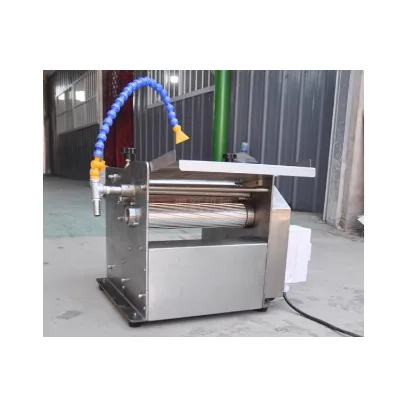
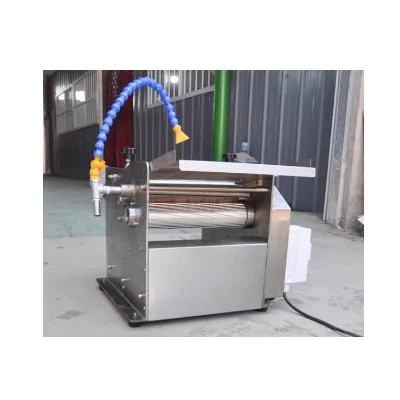
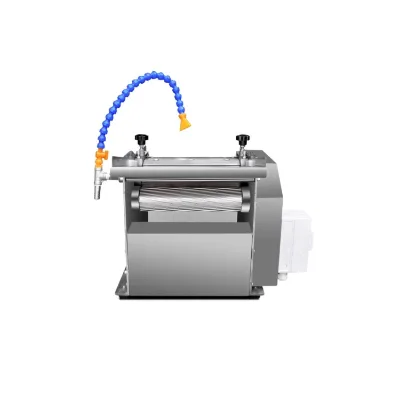
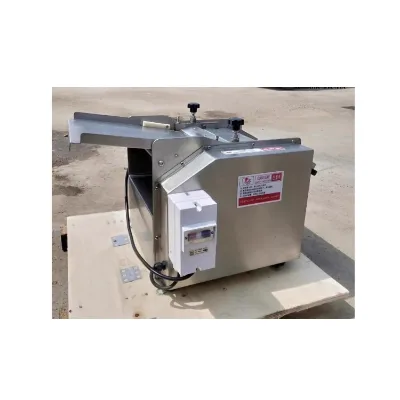
Beyond the labels, compare machine-level evidence. Current listings show semi automatic and automatic peelers at 220V and 380V, in stainless steel, with model dimensions and weights ranging from compact benchtop units around 48 kg to floor-standing machines around 110 kg, and published capacities of 50-70 pieces per minute on some models. Recorded price ranges in this category span from roughly the low thousands of US dollars for compact models to around seven thousand for larger units, so a quote far outside this band deserves scrutiny in either direction. Also compare R&D capability labels such as OEM and ODM availability, warranty terms, and whether video or online technical support is offered after sale.
Common Semi-Automatic Squid Skin Peeler Sourcing Risks
The most common risk is over-reading certifications and badges. A supplier with no system certification may still produce dependable machines, while a supplier carrying multiple certifications may quote from a catalog without deep engineering involvement. Similarly, "factory direct" claims appear widely in this category, including explicit statements such as "Yes, We Are Factory Directly Supply," yet a combined trading-and-manufacturing structure means the peeler itself could be outsourced. Buyers who skip the step of confirming where the specific model is assembled risk discovering mid-production that their order was subcontracted to a third workshop with different quality standards.
Technical and logistics risks follow. Semi automatic peelers are quoted at either 220V or 380V in current listings; ordering the wrong voltage configuration for your plant is an expensive and entirely avoidable error. Stainless steel grade is often asserted but rarely documented, so insist on material certificates for food-contact parts. Shipping-related expectations are another trap: one listing states delivery by air in 8-12 days or by sea in 30-60 days, which is the transit window only, not the production lead time, and buyers who conflate the two schedule their seafood season against the wrong date. Finally, spare blades, rollers, and conveyor parts are consumables; ordering from a supplier with slow response times or a narrow product focus can leave a production line idle while replacement parts travel internationally.
Semi-Automatic Squid Skin Peeler Regional Sourcing and Logistics
The two provinces visible in current results, Henan and Guangdong, imply different logistics profiles that buyers should evaluate before ordering. Guangdong hosts major deep-water ports and dense food-machinery manufacturing, which typically shortens inland transit to port and offers frequent sailing schedules to most destinations. Henan is an inland province, so machines usually travel by road or rail to a coastal port before export, adding time and handling to the journey. Neither profile is inherently better; a compact 48 kg benchtop peeler ships easily from either origin, while a 110 kg floor-standing machine in a wooden export case benefits from closer port access and more freight-forwarder options.
Plan logistics around machine dimensions and packing method rather than assuming standard freight categories. Current listings describe packing in standard export cases or exported wooden cases, with dimensions ranging from about 540×420×410 mm for compact models to 1630×640×980 mm for larger units. Confirm whether the wooden case is heat-treated and ISPM-15 stamped, as many destination countries require it for wood packaging. Ask each supplier to quote both air and sea freight, and to state whether the price is EXW, FOB, or CIF, because inland-origin suppliers differ in how much of the journey they arrange. Finally, request the machine's gross weight and packed dimensions in writing before booking freight, since catalog dimensions sometimes describe the unpacked machine.
Semi-Automatic Squid Skin Peeler Commercial Terms and Order Planning
Commercial planning should start with the order minimums and pricing bands actually displayed. Current category listings show MOQs as low as one set, which makes trial purchases and line trials feasible without committing to container volumes. Observed price ranges span from roughly 2,200-2,850 US dollars for compact peeler models, 4,600-6,200 for mid-size units, up to around 7,000 for higher-capacity machines, so a quote should be benchmarked against the specific model, capacity, and voltage configuration rather than against the category average. Some listings advertise first-cooperation discounts; treat these as negotiable starting points and ask what the reorder price will be, since long-term parts and consumables pricing matters more than the initial unit discount.
Structure the payment and delivery schedule to match verified lead times rather than marketing promises. Where a supplier displays a lead time of around fifteen or twenty-three days, confirm that figure applies to your chosen model and voltage, then add inspection time before shipment. Favor terms that keep funds released until pre-shipment inspection passes, and ask whether platform escrow or trade assurance mechanisms are available for the transaction. Clarify warranty scope in writing: some listings in this category state a one-year warranty with video and online technical support, while others advertise lifetime technical support, and the difference determines who pays for on-site service if remote diagnosis fails. Finally, order a set of wear parts with the first machine.
(Total: approximately 1,390 words)
FAQs
What is the typical lead time for a Semi-Automatic Squid Skin Peeler?
Lead times for these machines typically range from 15 to 23 days depending on the supplier. This duration covers manufacturing and preparation for export. Buyers should confirm specific timelines during the inquiry phase to align with production schedules.
What is the minimum order quantity for these peeling machines?
The minimum order quantity is generally one set. This low threshold allows buyers to test the equipment before committing to larger volumes. Confirming the exact MOQ is essential for budgeting and logistics planning.
What voltage options are available for squid skin peelers?
Machines are available in both 220V and 380V configurations. The correct voltage must match the facility's electrical infrastructure to ensure safe operation. Buyers should verify their local power standards before finalizing the purchase.
What materials are used in the construction of these machines?
Stainless steel is the primary material used for the machine body. This choice ensures durability and compliance with food safety standards. The robust construction supports long-term use in industrial processing environments.
What certifications do suppliers of these machines typically hold?
Suppliers often hold ISO 9001, ISO 13485, or GMP certifications. These credentials indicate adherence to quality management and safety standards. Verifying current certification status is a critical step in supplier due diligence.
What is the average response time from suppliers?
Response times vary, with some suppliers replying within three hours and others taking up to nine hours. Faster response times can indicate better customer service readiness. Buyers should prioritize suppliers who communicate promptly during the initial contact.
What after-sales support is provided for these machines?
Support typically includes video technical assistance and online support. Some suppliers offer lifetime technical support or a one-year warranty. Understanding the scope of post-purchase service helps mitigate operational risks.