ESP32-S3 Microprocessor Suppliers and Manufacturers
Source 23 verified suppliers for the ESP32-S3 Microprocessor. Compare grounded dimensions including lead times, MOQs, response times, and pricing. Verify certifications and origin details to streamline procurement. Contact suppliers directly to request quotes and confirm specifications; review the available evidence before requesting comparable quotations from suitable candidates.
Suppliers List

Shenzhen Sinosky Electronics Co., Ltd.
- Verified by SGS
- Trading Company
- China Guangdong
- Lead time15 days
- Avg. response≤ 3h
Main productsIntegrated Circuits, Semiconductor, Transistor, Relays, Connector, Capacitor, Resistor, Switch, Module, LED Diode
Main marketsSouth America,Africa,Southeast Asia/ Mideast,Europe,Australia,North America

New Original Semiconductor Integrated Circuits RF Transceiver IC Microcontroller Esp32-S0wd
$1.39 - $1.61
MOQ: 10 Pieces

Stmicroelectronics Brand Semiconductor Embedded Microcontroller MCU IC Stm32f302c8t6
$0.75 - $1.73
MOQ: 10 Pieces


Esp-S3-32s Electronic Components Wireless Development Board IC Chips Integrated Circuits WiFi Module
$0.96 - $1.89
MOQ: 10 Pieces

Original Stmicroelectronics Embedded Microcontroller Stm32f405rgt7 DSP & Fpu 1 Mbyte of Flash
$6.13 - $11.04
MOQ: 10 Pieces

Shenzhen Donghan System Technology Co., Ltd.
- Verified by SGS
- Trading Company
- China Guangdong
- Lead time15 days
- Avg. response≤ 3h
Main productsElectronic Components, Integrated Circuits, Microcontrollers, Diodes, Transistors, Capacitors, Resistors, PCBA, IC, PCB
Main marketsDomestic

Shenzhen Leruan Electronics Co., Ltd.
- Verified by TUVRHEINLAND
- Trading Company
- China Guangdong
- Lead time15 days
- Avg. response≤ 9h
Main productsElectronic Product, SSD, RAM
Main marketsDomestic
WuHan Aismartlink Intelligent Technology Co., Ltd.
- Trading Company
- Hubei, China
- Lead time旺季: "1 - 10":3,"11 - 100":5,"101 - 500":7,"> 500":"To be negotiated", 淡季: "1 - 10":3,"11 - 100":5,"101 - 500":7,"> 500":"To be negotiated"
Main productsTire Pressure Detector, Raspberry Pi Development Board, Sensor Module, PCB electronic Board, LCD Display Screen
Main marketsNorth America(30.00%), Eastern Europe(25.00%), Southeast Asia(15.00%), South America(10.00%), Western Europe(6.00%), Oceania(5.00%), Eastern Asia(4.00%), Mid East(3.00%), Africa(1.00%)

Shenzhen Chengsuchuang Technology Co., Ltd.
- Verified by BV
- Trading Company,Manufacturer/Factory
- China Guangdong
- Lead time23 days
- Avg. response≤ 2h
Main productsElectronic Hardware, Development Board, Sensors, Electronics Module, Development Accessorries, PCB&PCBA Manufacturing Service
Main marketsSouth America,Eastern Europe,Mid East,North America,Southeast Asia,Eastern Asia,Oceania,Western Europe,Africa
Shenzhen Icslove Technology Co., Ltd.
- Manufacturer, Trading Company, Distributor/Wholesaler
- Guangdong, China
- Lead time15 days
- Avg. response≤ 2h
Main productsIC,Module,Development board,PCBA,BOM Procurement
Main marketsMid East(50.00%), South Asia(40.00%), Northern Europe(10.00%)

Shenzhen Jin Da Peng Technology Co., Ltd.
- Trading Company
- China Guangdong
- Lead time23 days
- Avg. response≤ 13h
Main productsTransistor, IC, IGBT, Sollcon- Controlled Rectifier, Three End Comstant Voltage
Main marketsSouth America,Others(foreignTradeCapacity.exportBusinessCapacityMarketOther),Southeast Asia/ Mideast,Europe


Stm32f103vbt6 Stm32f103 32 Bit Arm Cortex M3 Microcontroller Qfp100 Electronic Components
$0.01 - $2.00
MOQ: 10 Pieces

Emi International (Hk) Co. Ltd
- Verified by SGS
- Manufacturer/Factory
- China Guangdong
- Lead time38 days
- Avg. response≤ 8h
Main productsIntergrated Circuit, IC, Electronic Components, IC Chips, IGBT, Chips, MCU, Fpga, Semiconductors, Electronic Connectors
Main marketsEastern Europe,North America,Eastern Asia,Western Europe


Original Stm32f407vet6 Microcontroller Integrated Circuit IC Chip St MCU Bss138PS, 115, Nc7sb3157p6X
$0.10 - $0.50
MOQ: 10 Pieces
Shenzhen Chenyusheng Technology Co., Ltd.
- Trading Company, Buying Office, Distributor/Wholesaler, Other
- Guangdong, China
- Lead time0 days
- Avg. response≤ 2h
Main productsIntegrated Circuit (IC),Module,Inductor,Resistor,Capacitor
Main marketsNorth America(22.00%), South America(14.00%), Eastern Asia(12.00%), Western Europe(11.00%), Eastern Europe(8.00%), Mid East(8.00%), Oceania(5.00%), Southeast Asia(5.00%), Africa(4.00%), Southern Europe(3.00%), Northern Europe(3.00%), Domestic Market(3.00%), Central America(2.00%)

- Trading Company
- China Guangdong
- Lead time15 days
- Avg. response≤ 2h
Main productsIC, Capacitor, Resistor, Electronic Components, Integrated Circuit, Transistor, Relay, Diode, MCU, Connector
Main marketsSouth America,East Asia(Japan/ South Korea),Europe

ESP32-S3-CAM module ESP32-S3-N16R8 CAM development board with OV2640/OV3660 camera
$4.00 - $10.00
MOQ: 5 Pieces


ESP32-Micro ESP-32-PICO WiFi Bluetooth control module ESP32-PICO-D4 development board
$9.00 - $35.00
MOQ: 100 Pieces

ESP32-S3 ESP32 ESP32-S3R8 ESP32-S3FH4R2 ESP32-S3FN8 RF System on a Chip SoC IoT IC
$2.45 - $340.00
MOQ: 1 Pieces

ESP32-C3 ESP32-C3FN4 ESP32-C3FH4 RF TXRX Bluetooth WiFi Transceiver IC MCU SoC IoT chip
$1.30 - $340.00
MOQ: 1 Pieces

$3.00 - $340.00
MOQ: 10 Pieces

Beijing Jingbei Components Co., Ltd.
- Verified by CTI
- Combined
- China Beijing
- Lead time15 days
- Avg. response≤ 4h
Main productsAutomotive Connector, Auto Connector, Wire Harness, Wiring Harness, PCBA, Circuit Board, Terminal Connector, Electronic Component, Transducer, Wire Connector
Main marketsSoutheast Asia/ Mideast,East Asia(Japan/ South Korea),Domestic,Europe,Australia,North America

Shenzhen rCloud Technology Co., Ltd
- Manufacturer
- China Guangdong
- Lead time15 days
- Avg. response≤ 10h
Main productsCard Reader, RFID Card Reader, Magnetic Card Reader, IC Card Reader, Hybrid Card Reader, DIP Card Reader, Bar Type LCD Display, Double Sided Monitor, LED Gaming Monitor, Curved Gaming Monitor
Main marketsSouth America,Southeast Asia/ Mideast,Europe,North America


Esp32 S3 Development Board with 4.3 Inch Touch Display Wi-Fi & Bluetooth IoT
$45.00 - $50.00
MOQ: 100 Pieces

Sunhokey Electronics Co., Ltd.
- Trading Company
- China Guangdong
- Lead time15 days
- Avg. response≤ 8h
Main products3D Printer
Main marketsEurope,North America


Esp32-S3 Core Board Development Board N8r2/N8r8/N16r8 Compatible with Devkitc-1
$4.50 - $6.50
MOQ: 10 Pieces


Shenzhen New Chip international Ltd
- Verified by TUVRHEINLAND
- Combined
- China Guangdong
- Lead time30 days
- Avg. response≤ 8h
Main productsPCB, PCBA, IC
Main marketsSoutheast Asia/ Mideast

Shenzhen Hstd Import and Export Trade Co., Ltd.
- Verified by SGS
- Trading Company,Manufacturer/Factory
- China Guangdong
- Lead time15 days
- Avg. response≤ 4h
Main products3D Depth Camera, Camera Module, Thermal Imaging Camera, Microphone Array Board
Main marketsSouth America,Eastern Europe,Mid East,North America,Southeast Asia,Eastern Asia,Oceania,Western Europe,Africa
Shenzhen Dalu Electronics Co., Ltd.
- Manufacturer
- Guangdong, China
- Lead time0 days
- Avg. response≤ 7h
Main productsRaspberry Pi,Development board,Electronics module and kits,Display screen,PCB/Experimental Board
Main marketsSouthern Europe(22.00%), Western Europe(22.00%), Oceania(22.00%), Eastern Europe(14.00%), Domestic Market(2.00%), South Asia(2.00%), Southeast Asia(2.00%), Northern Europe(2.00%), Central America(2.00%), South America(2.00%), Eastern Asia(2.00%), Mid East(2.00%), North America(2.00%), Africa(2.00%)
Shenzhen Qianbao Technology Co., Ltd.
- Trading Company
- Guangzhou, China
- Lead time7 days
- Avg. response≤ 10h
Main productsGraphic card,CPU,Motherboard,Cooling plate,Fans
Main marketsNorth America(20.00%), Northern Europe(10.00%), Domestic Market(10.00%), Eastern Europe(10.00%), Mid East(10.00%), Western Europe(8.00%), Southern Europe(8.00%), Southeast Asia(5.00%), South America(5.00%), Eastern Asia(5.00%), Central America(3.00%), Africa(2.00%), South Asia(2.00%), Oceania(2.00%)
Shenzhen Dongheng Electronic Technology Co., Ltd.
- Trading Company, Distributor/Wholesaler
- Guangdong, China
- Lead time0 days
- Avg. response≤ 1h
Main productsElectronic Components,Cables,Integrated Circuit,Development Boards,3D Printer Parts
Main marketsNorth America(40.00%), Southeast Asia(30.00%), South Asia(10.00%), Central America(10.00%), Mid East(10.00%)
Shenzhen Chengfangchip Electronic Technology Co., Ltd.
- Verified by Intertek
- Trading Company
- Lead time0 days
Main productsPCBA, ICs, Transistor, IGBT, Development Board
Main marketsNorth America(40%), Southeast Asia(20%), Mid East(20%)


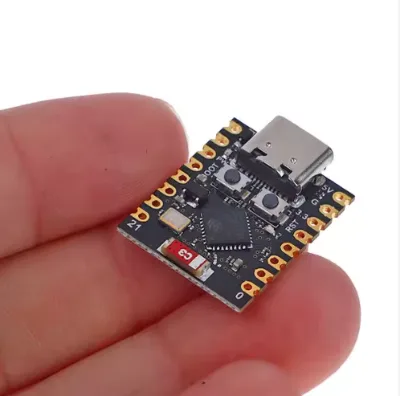
ESP32-C3 Super Mini Development Board 4MB Flash WiFi Bluetooth-Compatible Microcontroller Board
$1.79 - $1.92
MOQ: 10 pieces


Shenzhen Chuangheying Electronic Technology Co., Ltd.
- Trading Company
- Guangdong, China
- Lead time0 days
- Avg. response≤ 8h
Main productsIntegrated Circuit; Discrete Semiconductor; Optoelectronic Components; Modules; Connectors
Main marketsSouth America(15.00%), Northern Europe(12.00%), Southeast Asia(10.00%), Eastern Asia(10.00%), Mid East(8.00%), North America(8.00%), Africa(8.00%), Domestic Market(6.00%), Southern Europe(6.00%), Eastern Europe(5.00%), Central America(5.00%), Western Europe(3.00%), Oceania(2.00%), South Asia(2.00%)

Shenzhen Hechuang Lianying Technology Co., Ltd.
- Trading Company
- Guangdong, China
- Lead time0 days
- Avg. response≤ 5h
Main productsElectronic Components; 3C Digital Electronics; Module; Inductor
Main marketsDomestic Market(50.00%), North America(11.00%), Eastern Europe(10.00%), Southeast Asia(6.00%), South America(5.00%), South Asia(5.00%), Mid East(3.00%), Southern Europe(3.00%), Northern Europe(3.00%), Western Europe(3.00%), Eastern Asia(1.00%)
Shenzhen Gang Shun Microelectronics Co., Ltd.
- Manufacturer, Trading Company, Distributor/Wholesaler
- Guangdong, China
- Lead time15 days
- Avg. response≤ 2h
Main productsasd
Main marketsCentral America(10.00%), Western Europe(10.00%), Eastern Asia(10.00%), Mid East(10.00%), Oceania(10.00%), Africa(10.00%), Southeast Asia(10.00%), Eastern Europe(10.00%), South America(10.00%), North America(10.00%)

Shenzhen Junbo Trading Co., LTD
- Verified by SGS
- Trading Company
- China Guangdong
- Lead time15 days
- Avg. response≤ 3h
Main productsIC Chip, Integrated Circuit, Electronic Components, PCB, Light Emitting Diode, Memory RAM, SMD, Relay, Resistors, Modules
Main marketsNorth America

New Stm32f030f4p6 Stm32f042f6p6 Tssop-20 Microcontroller Integrated Circuit Chip MCU
$0.05 - $0.30
MOQ: 1 Pieces


High Quality Chips Integrated Circuits Electronic Components Microcontroller Stm32f101zet6
$0.10 - $0.39
MOQ: 1 Pieces


New Original Microcontroller Chip Micro Chip Tracker IC Programmer Xc3s400-4fg456c
$0.86 - $1.96
MOQ: 1 Pieces

Electronic Components Cn3302 Sop-8 IC Chip Processors Microcontrollers Integrated Circuit
$0.01 - $0.04
MOQ: 100 Pieces




![[Official Guarantee]Waveshare ESP32-S3 Mini Development Board, Based On ESP32-S3FH4R2 Dual-Core Processor, Microcontroller](https://file.focusaim.com/api/image/preview/d26b548735407f00434b750dc62c0ac0.png?bi=true&local=true)


Comprehensive Sourcing Guide
ESP32-S3 Microprocessor Supplier Concentration and Factory Types
The current supplier landscape for the ESP32-S3 Microprocessor reveals a distinct concentration of trading companies rather than direct manufacturing entities. Observations indicate that the primary operational base for these suppliers is located in China Guangdong, a region known for its robust electronics supply chain. This geographic clustering suggests that buyers will likely encounter intermediaries who facilitate the aggregation of components from various manufacturers. The company type is predominantly identified as a Trading Company, which implies that the entities presenting these products may not own the fabrication facilities for the semiconductor chips themselves. Instead, they act as crucial links in the distribution network, sourcing from original manufacturers and providing logistical support to international buyers. This structure is common in the electronic components industry, where specialized trading firms manage inventory, quality checks, and shipping logistics more efficiently than individual factories might for small to medium-sized orders.
Understanding this factory type distinction is vital for setting realistic expectations regarding direct factory engagement. Since the verified supplier results point to trading companies, buyers should anticipate a service model focused on convenience and breadth of stock rather than custom manufacturing capabilities. The main products listed alongside the ESP32-S3 Microprocessor include a wide array of integrated circuits, semiconductors, transistors, relays, connectors, capacitors, resistors, switches, modules, and LED diodes. This diverse portfolio indicates that these suppliers are likely generalist electronic component distributors rather than specialized MCU manufacturers. Consequently, the value proposition lies in their ability to provide one-stop shopping for bill of materials (BOM) lists, allowing buyers to source the microprocessor alongside necessary passive components and connectors from a single source. This consolidation can simplify procurement processes, reduce administrative overhead, and streamline shipping logistics, even if the buyer is not dealing directly with the chip’s original equipment manufacturer.
How to Verify ESP32-S3 Microprocessor Suppliers
Verification is a critical step when sourcing the ESP32-S3 Microprocessor, particularly given the prevalence of trading companies in the current results. Buyers should prioritize suppliers who have undergone third-party verification processes, as indicated by the presence of SGS verification in the observed data. This external validation provides a layer of confidence regarding the supplier’s business legitimacy and operational stability. However, verification alone is not a guarantee of product authenticity or quality. Buyers must look for explicit statements regarding the condition of the goods, such as "New Original 100%" or "Original Manufacturer" branding, which are frequently cited in product descriptions for these microcontrollers. These claims suggest that the suppliers are dealing in genuine, unused components rather than refurbished or counterfeit parts, which is a significant risk in the semiconductor market.
Beyond basic verification, buyers should assess the supplier’s responsiveness and service capabilities as indicators of reliability. The observed response time of 2.79 hours suggests a relatively quick turnaround for initial inquiries, which is beneficial for time-sensitive procurement projects. Additionally, the availability of specific services, such as one-stop BOM list service, indicates a mature operational framework capable of handling complex orders. Buyers should also examine the warranty terms provided, with some suppliers offering a 365-day warranty, which demonstrates confidence in their product quality. It is essential to verify that the supplier can provide documentation proving the origin and authenticity of the esp32 s3 microprocessors, such as certificates of conformity or traceability records. Without such documentation, the risk of receiving non-compliant or counterfeit components increases significantly, potentially jeopardizing the integrity of the final electronic product.
What to Compare Across ESP32-S3 Microprocessor Suppliers
When evaluating multiple suppliers for the ESP32-S3 Microprocessor, buyers should systematically compare key operational metrics to identify the most suitable partner. Lead time is a crucial factor, with observed data indicating a standard lead time of 15 days for some suppliers, while others may offer faster turnaround times of 1-3 days for specific items. This variation can significantly impact production schedules, so buyers must align supplier capabilities with their project timelines. Minimum order quantity (MOQ) is another critical comparison point, with some suppliers requiring a minimum of 10 units. This low MOQ is advantageous for prototyping and small-batch production, allowing buyers to test components without committing to large inventory purchases. Comparing these thresholds helps buyers determine which suppliers can accommodate their specific volume requirements and budget constraints.
Price and payment terms also require careful comparison across different suppliers. The price range for esp32 s3 microprocessors and related modules varies, with some products listed between $1.39 and $1.61, while others may be higher depending on the specific model and packaging. Buyers should not only look at the unit price but also consider the total cost of ownership, including shipping and handling fees. Payment methods such as Bank Transfer, Western Union, and PayPal are commonly accepted, offering flexibility for different financial arrangements. Additionally, buyers should compare the technical specifications and certifications associated with the products, such as operating temperature ranges, supply voltage, and package types like QFN-48 or LQFP-48. Ensuring that the technical parameters match the design requirements is essential for successful integration into the final electronic device.
Common ESP32-S3 Microprocessor Sourcing Risks
Sourcing the ESP32-S3 Microprocessor involves several inherent risks that buyers must actively manage to ensure supply chain integrity. One of the primary risks is the potential for counterfeit or substandard components, especially when dealing with trading companies that may not have direct control over the manufacturing process. The market for popular microcontrollers like the esp32 s3 is often targeted by counterfeiters who produce high-quality replicas that can fail in critical applications. Buyers must be vigilant in verifying the authenticity of the chips, looking for clear markings, proper packaging, and documentation that confirms the origin. The risk is exacerbated by the fact that some suppliers may not provide detailed traceability information, making it difficult to verify the supply chain history of the components.
Another significant risk is the variability in product quality and consistency across different batches. Even if a supplier provides genuine components, there may be inconsistencies in performance or reliability between different production runs. This is particularly relevant for electronic components where minor variations can affect the overall functionality of the device. Buyers should also consider the risk of supply chain disruptions, which can lead to delays in delivery and impact production schedules. The observed lead times of 15 days or more indicate that there may be a lag between ordering and delivery, which requires careful planning to avoid stockouts. Additionally, the risk of logistical issues, such as damage during shipping or customs delays, should be mitigated by choosing suppliers with reliable shipping partners and clear return policies.
ESP32-S3 Microprocessor Regional Sourcing and Logistics
The regional sourcing of esp32 s3 microprocessors is heavily influenced by the geographic concentration of suppliers in China Guangdong. This region serves as a major hub for electronic component manufacturing and distribution, offering buyers access to a wide variety of products and competitive pricing. Sourcing from this region can provide logistical advantages, such as established shipping routes and experienced freight forwarders who are familiar with handling electronic components. However, buyers must also consider the implications of international shipping, including potential customs duties, import taxes, and regulatory compliance requirements in their home country. The choice of shipping method, such as DHL, FedEx, TNT, UPS, or China Post, can significantly impact the cost and speed of delivery, so buyers should evaluate these options based on their specific needs and budget.
Logistics planning is essential to ensure that the esp32 s3 microprocessors arrive in good condition and on time. Buyers should work with suppliers who offer reliable packaging solutions, such as reel, tray, tape, tube, bag, or box, to protect the components during transit. The single package size and gross weight, such as 10x10x5 cm and 0.100 kg for some items, should be considered when calculating shipping costs and storage requirements. Additionally, buyers should verify the supplier’s ability to handle international shipments, including providing necessary documentation for customs clearance. The observed shipment options indicate that suppliers are equipped to handle global logistics, but buyers should confirm the specific shipping terms and responsibilities to avoid unexpected costs or delays. Effective logistics management can enhance the overall sourcing experience and ensure the timely availability of critical components.
ESP32-S3 Microprocessor Commercial Terms and Order Planning
Commercial terms and order planning are critical components of a successful sourcing strategy for the ESP32-S3 Microprocessor. Buyers should clearly define their order quantities, delivery schedules, and payment terms before engaging with suppliers to ensure alignment and avoid misunderstandings. The observed MOQ of 10 units suggests that suppliers are flexible with small orders, which is beneficial for initial testing and prototyping phases. However, for larger production runs, buyers should negotiate volume discounts and long-term supply agreements to secure better pricing and priority service. Payment terms such as Bank Transfer, Western Union, and PayPal offer various levels of security and convenience, so buyers should choose the method that best fits their financial policies and risk tolerance.
Order planning should also account for the lead times and production capacity of the suppliers. With a standard lead time of 15 days and ODM capabilities, buyers can plan their inventory levels more effectively to minimize stockouts and overstock situations. It is important to maintain open communication with suppliers to stay informed about any changes in lead times or product availability. Additionally, buyers should consider the warranty and return policies offered by the suppliers, such as the 365-day warranty observed in some cases, to protect against potential quality issues. By carefully managing commercial terms and order planning, buyers can build a resilient supply chain that supports their production goals and minimizes operational risks.
FAQs
What is the price range for ESP32-S3 modules?
Prices for ESP32-S3 modules typically range from $0.96 to $4.05 per unit. The specific cost depends on the exact model variant, such as the ESP32-S3-WROOM-1 or ESP32-S3-MINI-1. Buyers should check the minimum order quantity, which is often set at 10 units, to determine the final per-unit cost for their specific procurement needs.
What are the lead times for ESP32-S3 orders?
Standard lead times for these integrated circuits are generally around 15 days. However, some specific microcontroller listings indicate faster processing times of 1-3 days. Buyers should verify the exact delivery schedule with the supplier before placing an order, as availability and shipping methods like DHL or FedEx can impact the final arrival date.
Are ESP32-S3 components verified as original?
Suppliers often list these components as new original items with a 365-day warranty. Verification services such as SGS are available for some trading companies. Buyers should request specific datasheets and confirm the manufacturing date code, which may be listed as 2025+, to ensure the authenticity and quality of the semiconductor integrated circuits.
What communication standards do ESP32-S3 chips support?
These microcontrollers support 2.4 GHz frequency bands with Bluetooth 4.2 and WiFi 802.11b/g/n protocols. They feature serial interfaces including I2C, I2S, SPI, and UART. The maximum data rate is up to 150Mbps, making them suitable for wireless communication modules and embedded applications requiring reliable data transmission.
What is the minimum order quantity for these ICs?
The minimum order quantity is typically 10 units for many ESP32-S3 listings. This low MOQ allows buyers to test samples or order small batches for prototyping. Buyers should confirm the exact MOQ with the supplier, as it may vary depending on the specific packaging type, such as reels, trays, or tubes.
Where are these ESP32-S3 suppliers located?
Most suppliers for these electronic components are located in Guangdong, China. These trading companies specialize in integrated circuits, semiconductors, and microcontrollers. Buyers can expect shipments via carriers like DHL, FedEx, or China Post, with products originating from this region. It is advisable to verify the specific supplier location and shipping policies.