Silicone Rubber Self-Adhesive Bumper Pads Suppliers and Manufacturers
Source 14 verified suppliers for Silicone Rubber Self-Adhesive Bumper Pads. Compare locations in China, ISO certifications, lead times, and MOQs to find the right partner. Contact suppliers directly to request samples and pricing; review the available evidence before requesting comparable quotations from suitable candidates.
Suppliers List

Tianjin Wortai International Trade Co., Ltd.
- Verified by SGS
- Trading Company,Manufacturer/Factory
- China Tianjin
- Lead time23 days
- Avg. response≤ 4h
Main productsRubber Seal, Door Seal, Shower Door Seal Strip, Shower Screen Seals, Magnetic Shower Seals, Window Screen Mesh, Cleaning Ball, Rubber Fender, Auto Door Seal, Weather Strip
Main marketsSouth America,Eastern Europe,Mid East,North America,Southeast Asia,Western Europe


Self Adhesive Rubber Bumper Pads Rubber Bumpons Adhesive Silicone Rubber Feet
$0.01 - $0.20
MOQ: 1000 Pieces


Self-Adhesive Clear Rubber Feet Bumpers Transparent Door Bumpers Bumper Pads
$0.01 - $0.20
MOQ: 1000 Pieces

QINGDAO GOFAI RUBBER & PLASTIC PRODUCTS CO., LIMITED
- Verified by BV
- Combined
- China Shandong
- Lead time15 days
- Avg. response≤ 6h
Main productsResilient Sound Isolation Clip, Marine Rubber Fender, USB RJ45 HDMI DVI VGA PS2 SATA 2.0 Dust Cover, Dva Rubber Vibration Dumping, 3m Self Adhesive Rubber Pad, Washing Anti-Vibration Pads, Dock Fender, Tug Boat Fender, Ship Fender, Mooring Bollard
Main marketsSoutheast Asia/ Mideast,East Asia(Japan/ South Korea),Europe,Australia,North America


$0.01 - $0.10
MOQ: 3000 Pieces

$0.10 - $1.00
MOQ: 100000 Pieces


Xiamen Neway Rubber & Plastic Products Co., Ltd.
- Verified by BV
- Combined
- China Fujian
- Lead time15 days
- Avg. response≤ 4h
Main productsPlastic Injection Molding, Plastic Parts, Silicone Rubber Parts, Gasket Seals, Rubber Grommet, Mould, O Ring, Extrusion Strip, Metal Parts, Suction Cup
Main marketsSouth America,Africa,Southeast Asia/ Mideast,East Asia(Japan/ South Korea),Europe,Australia,North America

Black Adhesive Silicone Rubber Pad Adhesive Bumper Pads Self Stick Bumpers Furniture Foot Pads
$0.15 - $0.55
MOQ: 1 Pieces


Non-Slip Silicone Rubber Mat Silicone Bumper Adhesive Crash Pad Circle Silicone Rubber Bumpers
$0.15 - $0.55
MOQ: 1 Pieces


$0.15 - $0.55
MOQ: 1 Pieces


Fuzhou Fuqiang Precision Co., Ltd.
- Verified by CTI
- Manufacturer/Factory
- China Fujian
- Lead time23 days
- Avg. response≤ 8h
Main productsWiring Harness, Automotive Wire Harness, Battery Harness, Electric Vehicle Wire Harness, Electronic Wiring Harness, Auto Wire Harness, Wire Harness Tape, Harness Connectors, Wire Harness Terminals
Main marketsSouth America,Eastern Europe,Mid East,North America,Southeast Asia,Eastern Asia,Oceania,Western Europe,Africa


Black Self Adhesive Silicone Bumper Pads for Door Handle Anti Collision
$0.20 - $0.24
MOQ: 1000 Pieces


Qingdao Senseco Materials Co., Ltd.
- Manufacturer
- China Shandong
- Lead time15 days
- Avg. response≤ 17h
Main productsO Ring, Oil Seal, Rubber Seal, Rubber Damper, Damper, Silica Rubber Seal, Magnetic Rubber, Rubber Gasket, Rubber Product, Damping Rubber
Main marketsEurope,Australia,North America

Xiamen Best Seal Imp. and Exp. Co., Ltd.
- Verified by SGS
- Manufacturer
- China Fujian
- Lead time30 days
- Avg. response≤ 5h
Main productsRubber O-Rings, X-Rings, Rubber Gaskets, Rubber Washers, Rubber Molded Parts, Metal/Plastic Bonded to Rubber Parts
Main marketsEurope,North America


$0.01 - $0.09
MOQ: 100 Pieces


Anti-Slip Pad Silicone Rubber Anti-Slip Pad Anti-Slip Pad with Adhesive Backing
$0.01 - $0.09
MOQ: 100 Pieces

Changzhou Galaxy Rubber and Plastic Technology Co., Ltd.
- Verified by TUVRHEINLAND
- Combined
- China Jiangsu
- Lead time15 days
- Avg. response≤ 7h
Main productsPE Foam, EVA Foam, PE Roll, EVA Roll, EVA Packing, EVA Mat
Main marketsSoutheast Asia/ Mideast,Europe

$0.20 - $0.30
MOQ: 2000 Pieces

$0.20 - $0.30
MOQ: 2000 Pieces

SHENZHOU CITY SANSHI RUBBER CO., LTD.
- Verified by BV
- Combined
- China Hebei
- Lead time15 days
- Avg. response≤ 4h
Main productsRubber Part, Oil Seal, Rubber Gasket, Rubber Sealing, Operation of Machinery Parts, Handle, Knob, Handwheel, Nylon Gaskets, PTFE Gasket
Main marketsSouth America,Africa,Southeast Asia/ Mideast,East Asia(Japan/ South Korea),Domestic,Europe,Australia,North America

Rubber Bumper for Trucks Silicon Rubber Bumper Water Resistance Rubber Pad
$0.05 - $0.10
MOQ: 1000 Pieces


Ningbo Yombo Rubber & Plastic Products Co., Ltd.
- Combined
- China Zhejiang
- Lead time30 days
- Avg. response≤ 18h
Main productsPlastic Products, Rubber Products, Silicon Rubber Products, Rubber Roof Flashing, Roof Flashing, Rubber Seal, Master Flash, Rubber Auto Parts, Rubber Parts, Plastic Parts
Main marketsDomestic,Europe,Australia,North America

Hangzhou Bright Rubber Plastic Product Co., Ltd.
- Verified by TUVRHEINLAND
- Manufacturer/Factory
- China Zhejiang
- Lead time15 days
- Avg. response≤ 5h
Main productsCustom EPDM/NBR/Silicone Rubber Molding Parts, Custom Nylon/ABS Plastic Injection Molding Parts, Silicone Extrusion Profiles/Tube/Strip, Spong Silicone Extrusion Profiles/Tube/Strip, Rubber Extrusion Profiles/Sealing/Tube/Strip, Rubber Bumper/Shock Absorber/Buffer/Damper, Rubber Seal/Gasket/Ring/O-Ring/Base, Rubber Cushion/Grommet/Bushing/Spacer/Hose/Grip, Plastic Extrusion Profiles/Sealing/Tube/Strip, Metal Parts
Main marketsSouth America,Eastern Europe,Mid East,North America,Southeast Asia,Eastern Asia,Oceania,Western Europe,Africa

Zhongde (Beijing) Machinery Equipment Co., Ltd.
- Verified by TUVRHEINLAND
- Trading Company
- China Beijing
- Lead time30 days
- Avg. response≤ 7h
Main productsCustom Molded Rubber Parts, Custom Molded Plastic Parts, CNC Machined Parts, High Pressure Oil Hoses, PU Rollers, Bushings, End Caps, Gaskets, Sealing Strips, Gears
Main marketsEurope,Australia,North America

Low Cost Injection Molding Black Rubber Silicone Pads for Feet / Round Rubber Bumpers
$0.01 - $0.10
MOQ: 100 Pieces

High Quality Durable Shock Absorber Rubber Buffer Silicone Rubber Bumper
$0.01 - $0.10
MOQ: 100 Pieces

Dongguan Meijoin Plastic Products Co., Ltd.
- Verified by SGS
- Trading Company,Manufacturer/Factory
- China Guangdong
- Lead time45 days
- Avg. response≤ 13h
Main productsKitchen Adjustable Leg, Cutlery Tray, Cabinet Hardware Fittings, Furniture Fittings, Office Accessory, Furniture Minifix Fittings, Knock Down Fittings, Plastic Clips Connector, Cabinet Fittingss, Shelf Support
Main marketsSouth America,Eastern Europe,Mid East,North America,Southeast Asia,Eastern Asia,Oceania,Western Europe,Africa
Foshan Shunde Ronggui Aigao Foam Rubber Products Factory
- Verified by SGS Group
- Manufacturer, Trading Company
- Lead time5 days
- Avg. response≤ 2h
Main productsPacking Foam Product, Silicone Rubber Product, Adhesive Tape Product, Mica Series Product, Electronic Hardware Accessories
Main marketsNorth America(25%), South America(15%), Domestic Market(13%)
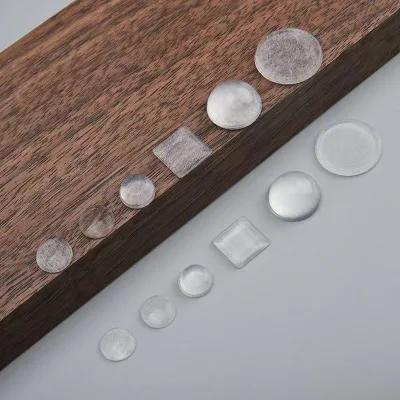
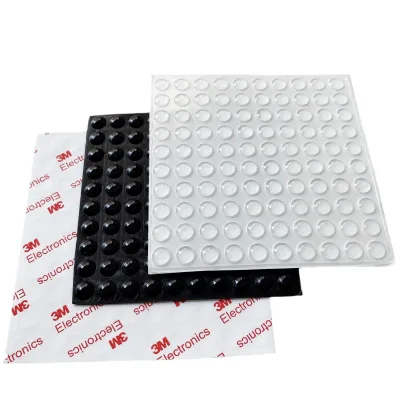
$0.05 - $0.15
MOQ: 300 pieces

Anhui Boom Auto Parts Co., Ltd.
- Verified by SGS
- Combined
- China Anhui
- Lead time30 days
- Avg. response≤ 17h
Main marketsNorth America


Comprehensive Sourcing Guide
Silicone Rubber Self-Adhesive Bumper Pads Supplier Concentration and Factory Types
Current data indicates that active suppliers for Silicone Rubber Self-Adhesive Bumper Pads are concentrated in specific Chinese provinces, with verified results showing operations in Tianjin, Shandong, and Fujian. These regions host a mix of company types, including trading companies, manufacturers, and factories that often combine both roles. In Tianjin, suppliers list main products such as rubber seals, door seals, and magnetic shower seals alongside the target bumper pads, suggesting a broader rubber product ecosystem. Shandong-based entities often focus on resilient sound isolation clips, marine rubber fenders, and various dust covers, indicating a specialization in industrial and marine-grade rubber applications. Fujian suppliers appear to emphasize plastic injection molding and silicone rubber parts, which aligns with the manufacturing capabilities required for custom silicone bumper pads.
When evaluating the factory type, buyers should note that many listed entities operate as combined trading companies and manufacturers. This dual status can influence pricing structures and communication flows. A manufacturer might offer direct control over the molding and cutting processes, while a trading company may aggregate products from multiple sources. The presence of OEM and ODM capabilities is a common attribute across these verified suppliers, allowing for customization of shape, size, and adhesive backing. Buyers must verify if the specific supplier they engage is the actual production unit or an intermediary, as this distinction affects lead times and quality control protocols. The concentration in these three provinces suggests established supply chains for raw materials like natural rubber and silicone, which are critical for producing high-quality self-adhesive feet and bumpers.
How to Verify Silicone Rubber Self-Adhesive Bumper Pads Suppliers
Verification of suppliers in this category relies heavily on third-party audit reports and system certifications. Available data shows that some suppliers hold ISO 9001 certification, while others display specific product attributes like IATF 16949, Reach, RoHS, and MSDS compliance. These certifications are crucial for ensuring that the silicone rubber materials meet international safety and environmental standards. Buyers should look for verification badges from recognized agencies such as SGS or BV, which indicate that the supplier's business license and production capabilities have been physically inspected. The presence of these credentials provides a baseline of trust, confirming that the company exists and adheres to documented quality management systems.
Beyond certifications, response time and verification status serve as immediate indicators of supplier reliability. Data points show response times ranging from approximately 3 to 5 hours, which reflects the operational efficiency of the sales team. A faster response time often correlates with better communication channels and a more active sales operation. Buyers should also examine the specific product evidence provided, such as detailed attributes for customization, color options, and processing services like molding and cutting. If a supplier claims to offer custom shapes or specific adhesive types like 3m tape, the buyer must request physical samples to validate these claims before placing a large order. The combination of third-party verification, clear certification lists, and responsive communication creates a robust framework for assessing supplier legitimacy.
What to Compare Across Silicone Rubber Self-Adhesive Bumper Pads Suppliers
When comparing suppliers, the primary dimensions to evaluate include lead time, minimum order quantity, and price ranges. The observed data reveals significant variation in these metrics; for instance, lead times can range from 15 to 23 days, while some suppliers offer faster turnaround times of 10 to 20 days for specific orders. Minimum order quantities also differ substantially, with some suppliers requiring as few as 1 unit, while others mandate orders of 1,000 or even 100,000 units. Price points vary from as low as $0.01 to $1.00 per unit, depending on the customization level, material thickness, and order volume. Buyers must align these commercial terms with their specific production schedules and budget constraints to avoid bottlenecks or unexpected costs.
Another critical comparison factor is the scope of customization and material specifications. Suppliers offer varying degrees of flexibility regarding shape, size, and color, with options ranging from standard hemispherical and square shapes to fully customized molds. Some suppliers specify raw materials like natural rubber or pure gum rubber sheets, while others focus on silicone rubber with specific shore values between 35A and 90A. The availability of services such as 3D design, custom logo printing, and specific packing methods like inner plastic bags and outer cartons also differs. Buyers should create a comparison matrix that lists these attributes side-by-side to identify which supplier best matches their technical requirements. This detailed comparison ensures that the selected partner can deliver the exact product specifications needed for the application.
Common Silicone Rubber Self-Adhesive Bumper Pads Sourcing Risks
One significant risk in sourcing Silicone Rubber Self-Adhesive Bumper Pads is the discrepancy between advertised capabilities and actual production capacity. While many suppliers claim OEM and ODM services, the actual ability to handle complex customizations or large volumes may vary. Buyers must verify if the supplier has the necessary molding equipment and quality control processes to handle specific requests, such as custom adhesive strength or unique color matching. Relying solely on product descriptions without physical validation can lead to receiving products that do not meet performance standards, such as insufficient adhesion or incorrect hardness levels. This risk is particularly high when dealing with trading companies that may not have direct oversight of the manufacturing floor.
Another risk involves the variability in lead times and the potential for delays in shipping. The data shows lead times ranging from 10 to 23 days, but these figures can fluctuate based on raw material availability and production scheduling. If a supplier does not have a clear buffer for unexpected delays, the buyer's production line could face interruptions. Additionally, the lack of standardized packaging or shipping methods can lead to product damage during transit. Some suppliers use bulk packing, while others use individual cartons, which affects the protection of the adhesive surfaces. Buyers should explicitly discuss packaging requirements and include penalty clauses for late deliveries in their contracts to mitigate these risks. Clear communication regarding these potential pitfalls is essential for a successful sourcing outcome.
Silicone Rubber Self-Adhesive Bumper Pads Regional Sourcing and Logistics
Sourcing from the identified regions of Tianjin, Shandong, and Fujian offers distinct logistical advantages and challenges. Tianjin, being a major port city, often provides efficient access to international shipping routes, which can reduce transit times for overseas buyers. Shandong suppliers, with their focus on industrial and marine rubber products, may have specialized logistics networks for heavy or bulk shipments. Fujian, known for its plastic and silicone manufacturing, might offer competitive shipping rates due to the high volume of similar exports from the region. Buyers should consider the proximity of the supplier to the nearest port to minimize inland transportation costs and potential delays.
Logistics planning must also account for the specific nature of the product, which includes self-adhesive surfaces that require careful handling. The packaging methods described, such as inner plastic bags and outer cartons, are designed to protect the adhesive from dust and damage. However, buyers should verify if the supplier uses additional protective measures like separators or rigid inserts for large orders. Shipping terms like FOB or CIF should be clearly defined to determine who bears the risk and cost during transit. Understanding the regional logistics infrastructure helps buyers estimate total landed costs accurately. By selecting suppliers in regions with robust export capabilities, buyers can ensure a smoother supply chain from the factory floor to their destination.
Silicone Rubber Self-Adhesive Bumper Pads Commercial Terms and Order Planning
Commercial terms for Silicone Rubber Self-Adhesive Bumper Pads vary significantly based on order volume and customization needs. The observed data indicates that minimum order quantities can range from 1 unit to 100,000 units, allowing flexibility for both small prototype runs and large-scale production. Price points are similarly flexible, starting as low as $0.01 per unit for standard items and rising to $1.00 for customized or high-specification products. Buyers should negotiate payment terms that align with their cash flow, often seeking a balance between upfront deposits and final payments upon shipment. Understanding these commercial structures is vital for accurate budgeting and financial planning.
Order planning requires a strategic approach to managing lead times and sample approvals. With lead times ranging from 10 to 23 days, buyers should initiate the ordering process well in advance of their production schedules to accommodate any potential delays. The availability of sample services, often taking 3 to 7 days, allows buyers to validate product quality before committing to a full order. Buyers should also consider the impact of customization on the timeline, as custom molds or specific adhesive requirements may extend the lead time. Clear communication regarding these timelines and the establishment of a detailed project plan will help ensure that the supply chain remains efficient and responsive to changing market demands.
FAQs
What is the minimum order quantity for these pads?
The minimum order quantity varies by supplier, with some requiring 1,000 units while others need 100,000 units. Buyers should verify specific MOQs before placing orders to ensure they meet the supplier's production thresholds and avoid unnecessary costs.
How long does it take to receive the products?
Lead times range from 10 to 23 days depending on the supplier and order volume. Some manufacturers in China offer faster turnaround times, while others may require up to three weeks for production and shipping to complete the delivery process.
Are these pads available in different colors?
Yes, suppliers offer transparent, black, and white options for these silicone rubber pads. Custom colors are also available upon request, allowing buyers to match specific design requirements or branding needs for their furniture or automotive applications.
Do suppliers offer customization for size and shape?
Customization is widely available for size, shape, and model specifications. Buyers can request diameters from 5mm to 22mm or custom shapes like hemispherical, square, or round designs to fit unique application requirements without compromising on quality or performance standards.
What certifications do the suppliers hold?
Many suppliers hold ISO 9001 certification, ensuring quality management systems are in place. Some also provide IATF16949, RoHS, and Reach certifications, verifying compliance with international safety and environmental standards for rubber products used in various industries.
Can I get samples before placing a large order?
Yes, sample availability is confirmed by multiple suppliers, with sample times ranging from 3 to 7 days. This allows buyers to test product quality, adhesion strength, and durability before committing to larger production runs or bulk purchases.
Where are these suppliers located?
Suppliers are located in major manufacturing hubs including Tianjin, Shandong, and Fujian in China. These regions are known for their robust rubber and plastic production capabilities, offering efficient logistics and competitive pricing for international buyers seeking reliable sources.