Taiwan Drive Bit Socket Suppliers and Manufacturers
Explore 14 verified suppliers offering Taiwan Drive Bit Socket options with varying lead times, response speeds, and certifications. Compare specifications like material grades and socket sizes to select the right partner for your needs; review the available evidence before requesting comparable quotations from suitable candidates.
Suppliers List

Ningbo A-Line Cable & Wire Co., Ltd.
- Verified by TUVRHEINLAND
- Combined
- China Zhejiang
- Lead time23 days
- Avg. response≤ 3h
Main productsPower Cord, Power Plug, Work Light, Wire Harness, Plug Insert, Electric Wire, Extension Cord, Wiring Harness, Power Cable
Main marketsEast Asia(Japan/ South Korea),Domestic,Europe,North America
- Verified by SGS Group
- Manufacturer, Trading Company
- Lead time0 days
- Avg. response≤ 2h
Main productsHand tools, Pneumatic tools, Knife Sharpeners
Main marketsMid East(50%), Domestic Market(20%), North America(15%)
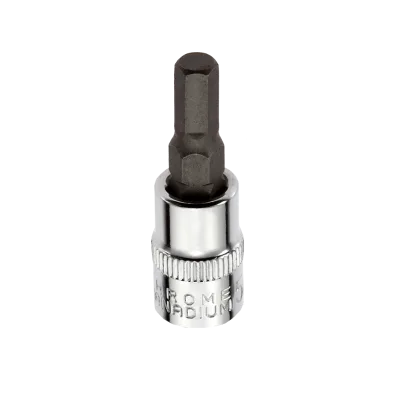
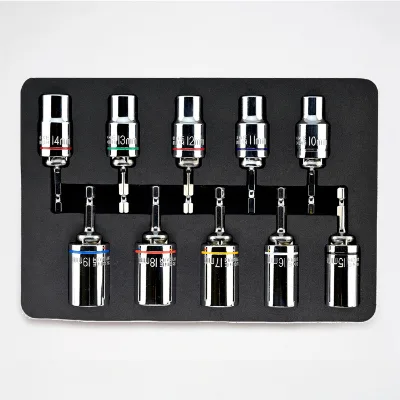
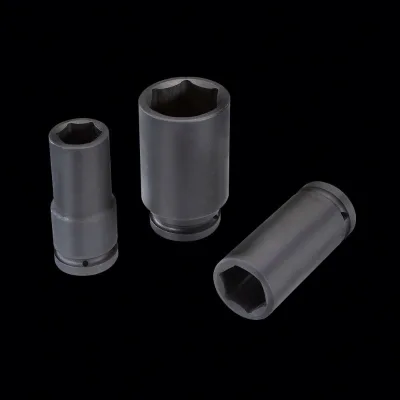
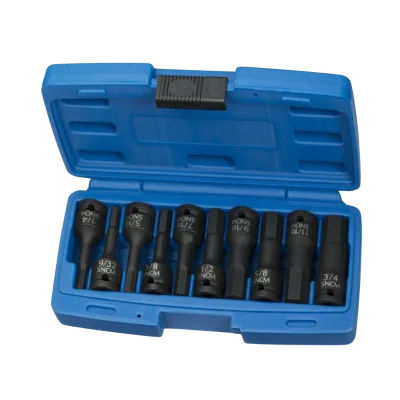
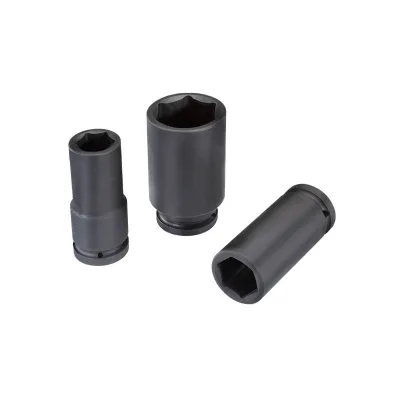
Cheap Hot Sale New Design 3/4''dr. Impact Deep Socket
Contact supplier

Guangzhou Longgui Intelligent Technology Co., Ltd.
- Verified by BV
- Combined
- China Guangdong
- Lead time30 days
- Avg. response≤ 6h
Main productsCable Cubby, Projector Lift, TV Lift, TV Bracket, Monitor Lift, Pup-up Sockets, Wall Panel, Hotel Socekt, Customrized Goods, Customerized Alumnium or Steel Parts
Main marketsOthers(foreignTradeCapacity.exportBusinessCapacityMarketOther)

Wenzhou Gaoxinte Electric Co., Ltd.
- Trading Company,Manufacturer/Factory
- China Zhejiang
- Lead time38 days
- Avg. response≤ 21h
Main productsSwitch, Socket, Plug, Outlet, Lampholder, Switch Socket, Switched Socket with USB Outlet, Socket with Switch, GFCI, Type C
Main marketsSouth America,North America,Eastern Asia

Nanjing TOOLJOY Hardware Technology Co., Ltd.
- Verified by TUVRHEINLAND
- Trading Company,Manufacturer/Factory
- China Jiangsu
- Lead time45 days
- Avg. response≤ 7h
Main productsScrewdriver Bit, Driver Bit, Trox Bit, Philips Bit, Socket Bit, Pozidriv Bits, Slotted Bits, Screwdriver, Square Bit
Main marketsSouth America,Eastern Europe,Mid East,North America,Southeast Asia,Eastern Asia,Oceania,Western Europe,Africa


Quality Taiwan S2 Steel High Standard Spline Socket 3/8" Inch Shank Spline Driver Nut Bits Driver
$2.00 - $2.50
MOQ: 1000 Pieces


- Manufacturer/Factory
- China Guangdong
- Lead time15 days
- Avg. response≤ 13h
Main productsDIN41612 Connectors, PCB Connectors, RJ45 with Magentic and PCB Jack, Wire to Board Conncetors, Terminal Block, Wire to Wire Connectors, Flat Cables, Board to Board Connectors, Wire Harness, Automotive Connector
Main marketsSouth America,Eastern Europe,Mid East,North America,Southeast Asia,Eastern Asia,Oceania,Western Europe
CHINA RAILWAY MATERIAL TRADE GROUP SHANGHAI CO., LTD.
- Verified by BV
- Trading Company
- China Shanghai
- Lead time15 days
- Avg. response≤ 8h
Main productsDuctile Iron Pipe, Pipes, Electric Water Pump, Cable Wire, Hardware Tools, Container, Scaffolding System, Steel
Main marketsSouth America,Africa,Southeast Asia/ Mideast,Domestic

Anhui Shengshi Hardware Tool Manufacturing Co., Ltd.
- Verified by SGS
- Combined
- China Anhui
- Lead time30 days
- Avg. response≤ 9h
Main productsTool Set, Screwdriver Bit, Impact Bit, Screwdriver Bit Sets, Bit Holders, Nut Setters, Screwdriver, Socket Sets, Drill Bit, Hardware
Main marketsSouth America,Domestic,North America


High Quality Socket Adaptor Drill Bit Fast Change Bit Holdersocket Adaptor
$0.10 - $0.15
MOQ: 200 Pieces

Ningbo Magma Tooling Co., Ltd.
- Trading Company,Manufacturer/Factory,Other
- China Zhejiang
- Lead time45 days
- Avg. response≤ 12h
Main productsAutomotive Tools, Socket Sets, Auto Repair Tools, Ratchet Handle, Garage Equipment, Car Repair Tools, Car Tools Set, Car Maintenance, Injection Moulding, Plastic Injection Mould
Main marketsSouth America,Eastern Europe,North America,Western Europe

Kunshan Winconn Electronic Technology Co., Ltd.
- Verified by SGS
- Manufacturer
- China Jiangsu
- Lead time15 days
- Avg. response≤ 1h
Main productsConnectors, Cables, Wire Harnesses, Housings, Contacts, Dockings, Spacer Support, Header Connector, Power Connector, I/O Connector
Main marketsSoutheast Asia/ Mideast,East Asia(Japan/ South Korea),Domestic,Europe,North America

Dongguan Tianrui Electronics Co., Ltd.
- Combined
- China Guangdong
- Lead time15 days
- Avg. response≤ 6h
Main productsFuse, Thermal Fuse, Auto Fuse, Thermal Protector, Fuse Holder, Auto Circuit Breaker
Main marketsSouth America,Africa,Others(foreignTradeCapacity.exportBusinessCapacityMarketOther),Southeast Asia/ Mideast,Domestic,Europe,Australia,North America

Hangzhou Fanxi Tools Co., Ltd.
- Verified by CTI
- Trading Company
- China Zhejiang
- Lead time30 days
- Avg. response≤ 7h
Main productsDrill Bits,Saw Blades,Tct Saw Blades,Diamond Saw Blades,Abrasive Wheel,Flap Disc,Sanding Disc,Hole Saw,Chisel,Grinding Wheel
Main marketsSouth America,Southeast Asia/ Mideast,Europe,Australia,North America

Difanmax Tech Lianyungang Co., Ltd.
- Verified by BV
- Manufacturer/Factory
- China Jiangsu
- Lead time23 days
- Avg. response≤ 4h
Main productsConsumer Electronics, Kinesiology Tape Adhesive Tapes, Industrial Tools, Home & Garden, Gifts & Crafts, Sport Products Entertainment, Health & Medical, Auto Parts E-Bike Auto Tools & Components, Clothes Apparel, Bicycle Hardware Laboratory Measuring Protective
Main marketsSouth America,North America,Southeast Asia,Oceania,Western Europe

Shandong Jiexili Tools Manufacturing Co.,Ltd
- Verified by SGS
- Combined
- China Shandong
- Lead time30 days
- Avg. response≤ 8h
Main productsImpact Socket Set, Spanner, Wheel Nut Wrench, Cross Wrench, Labor-Saving Wrench, Axle Nut Socket, Socket Wrench Set, Ratchet Wrench, Cylinder Sleeve, Jack
Main marketsSoutheast Asia/ Mideast,Europe


Comprehensive Sourcing Guide
Taiwan Drive Bit Socket Supplier Concentration and Factory Types
Current supplier data indicates manufacturing clusters primarily located in China Zhejiang and China Guangdong, rather than within Taiwan itself. Suppliers in these regions offer a mix of combined company types, including manufacturers and trading companies, which suggests a diverse supply chain structure for Taiwan Drive Bit Socket products. Some entities list main products such as hand tools, pneumatic tools, and knife sharpeners alongside socket sets, while others focus on electrical supplies like power cords and plugs. This variation implies that buyers must distinguish between specialized tool manufacturers and general trading firms that may source sockets from different factories. The presence of ODM and OEM capabilities in the data confirms that many suppliers can customize designs, though the specific origin of the tooling varies by supplier type.
When evaluating factory types, buyers should note that some suppliers hold verification from entities like TUVRHEINLAND, SGS Group, or BV, which adds a layer of credibility to their operational claims. However, the data does not confirm a specific establishment year for any supplier, so buyers cannot rely on historical longevity as a primary filter. Instead, the focus should be on the supplier's declared capacity for customization and their ability to handle specific drive sizes like 1/4, 3/8, or 1/2 inch. The mix of product evidence showing both electrical sockets and mechanical drive bits suggests that some suppliers operate across multiple hardware categories. Buyers should verify if a supplier's primary focus aligns with their specific need for high-torque impact sockets or standard hex bit sets to ensure quality control matches the application.
How to Verify Taiwan Drive Bit Socket Suppliers
Verification of supplier credentials is critical when sourcing Taiwan drive bit sockets, as the market contains both specialized manufacturers and general trading companies. The available data shows that some suppliers have undergone third-party verification by organizations such as TUVRHEINLAND, SGS Group, and BV. These verifications serve as a baseline for assessing the legitimacy of the business entity, though they do not guarantee the quality of every individual product batch. Buyers should request current verification certificates and cross-reference them with the issuing body's database to ensure the status is active. It is important to note that while some suppliers display ISO9001:2015 certification, this standard applies to the management system rather than specific product performance metrics for steel hardness or torque resistance.
Beyond corporate verification, buyers must scrutinize product-specific attributes to confirm the supplier's capability to deliver genuine Taiwan drive bit sockets. The data indicates that materials such as Chrome Vanadium Steel and Chrome Molybdenum Steel are used in various socket listings, but these claims require independent validation through mill test reports or third-party lab testing. Buyers should ask for detailed specifications regarding socket sizes, ranging from 5.5 mm to 70 mm, and verify that the listed dimensions match the actual inventory. Additionally, the presence of customization options suggests that suppliers can modify designs, but buyers must confirm the lead time required for these customizations. Relying solely on the supplier's self-reported attributes without requesting physical samples or test results poses a significant risk to product integrity.
What to Compare Across Taiwan Drive Bit Socket Suppliers
Comparing suppliers requires a systematic analysis of key operational metrics such as lead time, minimum order quantity, and response speed. The data reveals significant variation in these areas; for instance, some suppliers report a lead time of 23 days, while others indicate 30 days or even 0 days for specific items. Minimum order quantities also differ widely, ranging from 50 units for certain impact sockets to 100,000 units for standard power sockets. Buyers should prioritize suppliers whose lead times align with their production schedules and whose MOQs fit their budget constraints. Response times, measured in hours, also vary, with some suppliers responding in approximately 2 hours and others taking over 5 hours. Faster response times often correlate with better communication channels, which is essential for resolving technical queries regarding drive sizes and material grades.
Price and customization capabilities are equally critical factors in the comparison process. Product evidence shows price points ranging from $0.036 to $23.00 per unit, depending on the socket type, size, and material composition. Buyers must ensure that the quoted price includes all necessary packaging standards, such as export cartons, and that the pricing reflects the specific material grade, such as Chrome Vanadium versus Chrome Molybdenum. Customization availability is another differentiator, with some suppliers offering tailored solutions while others provide standard catalog items. When comparing, buyers should also consider the supplier's main product focus; a company specializing in hand tools may offer better technical support for drive bit sockets than a general trading firm. Aligning these commercial terms with the buyer's specific volume and quality requirements will lead to more successful sourcing outcomes.
Common Taiwan Drive Bit Socket Sourcing Risks
One of the primary risks in sourcing Taiwan drive bit sockets is the potential mismatch between product descriptions and actual specifications. The data shows that some listings include electrical sockets alongside mechanical drive bits, which can lead to confusion regarding the intended application. Buyers must carefully distinguish between power sockets and mechanical sockets to avoid receiving the wrong product type. Additionally, the variation in material claims, such as Chrome Vanadium Steel versus Chrome Molybdenum Steel, presents a risk if the supplier does not provide verifiable test results. Without independent verification, buyers may receive sockets that do not meet the required hardness or durability standards for high-torque applications. This discrepancy can result in premature tool failure and increased costs for replacement.
Another significant risk involves the reliability of lead times and the consistency of supply. While some suppliers list a lead time of zero days, others indicate 23 to 30 days, creating uncertainty in production planning. Buyers should not assume that a short lead time is sustainable for large orders or custom requests. Furthermore, the lack of established year data for suppliers makes it difficult to assess their long-term stability and capacity to handle volume fluctuations. Buyers should also be cautious of suppliers who claim to offer "Taiwan" products but are located in China, as this may indicate rebranding or sourcing from different origins. Verifying the actual manufacturing location and ensuring that the supplier has a track record of consistent delivery is essential to mitigate these risks.
Taiwan Drive Bit Socket Regional Sourcing and Logistics
Regional sourcing strategies should focus on the identified manufacturing clusters in China Zhejiang and China Guangdong, where the majority of supplier data originates. These regions offer a dense network of tool manufacturers and trading companies, providing buyers with a wide selection of Taiwan drive bit sockets. However, buyers must verify the specific logistics capabilities of each supplier, as shipping times and costs can vary significantly based on the supplier's location and the chosen shipping method. The data indicates that some suppliers use standard carton packaging, while others specify export cartons, which can impact the efficiency of loading and shipping. Buyers should inquire about the supplier's experience with international shipping and their ability to handle customs documentation for the specific product category.
Logistics planning also requires attention to the packaging standards and product origin details provided in the supplier data. Some listings specify a product origin of China, which may affect the perceived value or compliance requirements depending on the buyer's market. Buyers should confirm whether the packaging meets the necessary standards for protecting the sockets during transit, especially for heavy-duty impact sockets. The variation in packaging dimensions, such as 403028CM or 383822cm, suggests that buyers need to calculate freight costs accurately based on the actual volume of the shipment. Additionally, buyers should consider the impact of regional trade policies and tariffs on the final landed cost. Establishing a clear logistics plan with the supplier, including Incoterms and delivery timelines, is crucial for ensuring a smooth supply chain.
Taiwan Drive Bit Socket Commercial Terms and Order Planning
Commercial terms for Taiwan drive bit sockets must be carefully negotiated to align with the buyer's financial and operational goals. The data shows a wide range of minimum order quantities, from 50 units to 100,000 units, which directly influences the pricing structure and payment terms. Buyers should aim to negotiate MOQs that balance inventory costs with the need for sufficient stock to meet demand. Payment terms should be structured to protect the buyer's interests, potentially utilizing escrow services if available, though the data does not explicitly confirm this for all suppliers. It is essential to clarify whether the quoted prices include all taxes, duties, and shipping costs to avoid unexpected expenses later in the process. Clear communication regarding these terms will help prevent disputes and ensure a transparent transaction.
Order planning should also account for the customization capabilities and lead times offered by the suppliers. While some suppliers offer ODM and OEM services, the time required for these customizations can vary significantly. Buyers should factor in the additional lead time needed for design approval, prototyping, and production when planning their orders. The response time of the supplier, which ranges from 2 to 5 hours, can also impact the speed of order processing and issue resolution. Buyers should establish a communication protocol with the supplier to ensure timely updates on order status and any potential delays. By integrating these commercial and operational factors into their order planning, buyers can optimize their supply chain efficiency and reduce the risk of disruptions.
FAQs
What materials are commonly used for Taiwan Drive Bit Socket products?
Chrome vanadium steel is the most common material for hand-use bit sockets, while impact sockets are typically made from chrome molybdenum steel to withstand shock. When comparing suppliers, confirm the material for each product line, since hand sockets and impact sockets have different hardness requirements and are not interchangeable in demanding applications.
What MOQ can buyers expect for drive bit sockets?
Listed MOQs vary widely by socket type and size range. Some hex bit sockets list a minimum of 500 pieces, nut driver sockets start at 300 pieces, impact sockets can start at 50 pieces, and square drive bit sockets at 100 pieces. Always confirm the current MOQ with the supplier, as it often depends on the specific model ordered.
How long does production take for Taiwan Drive Bit Socket orders?
Production lead times differ by supplier and product category. Some electrical socket manufacturers list a 23-day lead time, while other suppliers report around 30 days, and some tool suppliers list no fixed lead time and quote per order. Request written lead time confirmation for your exact socket sizes, finish, and packaging before placing a purchase order.
What socket sizes are typically available in drive bit socket sets?
Hex bit sockets commonly cover sizes from 5.5 mm through 24 mm, including 6, 8, 10, 13, 17, 19, 21, and 22 mm. Deep impact sockets extend much larger, from 13 mm up to 70 mm. Verify the size chart for each drive size, since 1/4, 3/8, 1/2, 3/4, and 1-inch drives support different ranges.
Can suppliers provide ODM or OEM service for bit sockets?
Many listed suppliers advertise ODM, OEM, or own-brand capabilities, so custom branding, packaging, and specifications are generally negotiable. Product listings also mark customization as available. Before committing, ask which customization options apply to bit sockets specifically, what tooling fees exist, and whether samples of your custom marking can be provided for approval.
What certifications should I verify before ordering sockets?
At least one listed socket supplier holds an ISO9001:2015 quality management certificate and third-party verification from TUV Rheinland or SGS. Some power socket products carry CE marking. For drive bit sockets specifically, ask for material certificates, hardness test reports, and current ISO9001 documentation, then validate certificate numbers directly with the issuing body.