Writing Practice Book Suppliers and Manufacturers in China
Compare 16 verified suppliers offering writing practice books with options for spiral or saddle stitch binding, hardcover or soft cover styles, and customization. Review response times, lead times, and certifications like SGS before requesting quotes; review the available evidence before requesting comparable quotations from suitable candidates.
Suppliers List

Hefei Colorfly Stationery Co., Ltd.
- Verified by SGS
- Combined
- China Anhui
- Lead time30 days
- Avg. response≤ 10h
Main productsExercise Book, Notebook, Spiral Notebook, Composition Book, Copy Book, Soft Cover Notebook, Stationery Set, Drawing Book, PP Exercise Book, Counter Book
Main marketsAfrica,Southeast Asia/ Mideast
Foshan Eletree Technology Co., Ltd.
- Verified by SGS Group
- Trading Company
- Lead time7 days
- Avg. response≤ 5h
Main productsTalking Flash Card, Sound Book, Learning Machine, Early Learning Book
Main marketsNorth America(30%), Southeast Asia(10%), Africa(10%)

Anhui Beauty Culture Development Co., Ltd.
- Verified by BV
- Combined
- China Anhui
- Lead time15 days
- Avg. response≤ 11h
Main productsGift Packing Box, Paper Bag, Stationery Printings, Packaging Box, Children Book, Board Games, Book Printing, Magazing Printing, Calendar Printing, Envelope Printing
Main marketsSoutheast Asia/ Mideast,Domestic,Europe,North America

Jinjiang Jiayi Supply Chain Management Co., Ltd.
- Verified by BV
- Trading Company
- China Fujian
- Lead time30 days
- Avg. response≤ 1h
Main productsGift, Shoe, Garment, Machine
Main marketsDomestic

Shenzhen Longyin Printing Packing Co., Ltd.
- Verified by SGS
- Trading Company
- China Guangdong
- Lead time15 days
- Avg. response≤ 3h
Main marketsSouth America,Africa,Southeast Asia/ Mideast,East Asia(Japan/ South Korea),Domestic,Europe,Australia,North America

GUANGZHOU MIYI PRINTING CO., LTD
- Verified by BV
- Trading Company,Manufacturer/Factory
- China Guangdong
- Lead time0 days
- Avg. response≤ 9h
Main productsBook Printing, Custom Magazine, Catalog, Paper Bag, Paper Box, Packageing Box, Toy Box, Sticker, Label, School Supplies
Main marketsSouth America,Eastern Europe,Mid East,North America,Southeast Asia,Eastern Asia,Oceania,Western Europe,Africa

Guangzhou Zhongtian Paper Product Co., Ltd.
- Verified by TUVRHEINLAND
- Trading Company,Manufacturer/Factory,Group Corporation
- China Guangdong
- Lead time38 days
- Avg. response≤ 4h
Main productsBible, Book, Children Book, Paper Box, Jigsaw Puzzle, Notebook Printing, Board Game, Calendar, Paper Bags, Seed Paper Cards
Main marketsSouth America,Eastern Europe,Mid East,North America,Southeast Asia,Oceania,Western Europe,Africa

Fujian Juhui Printing Co., Ltd.
- Verified by BV
- Combined
- China Fujian
- Lead time15 days
- Avg. response≤ 7h
Main productsBooks Printing, Notebooks / Journals / Planners / Diaries / Memo, Paper Packaging, Specialty & Premium Printing, Children's Books / Coloring Books, Food Packaging, Notebook & Stationery Printing, Card & Game Printing, Paper Bags, Posters / Business Cards / Postcards / Booklets
Main marketsSoutheast Asia/ Mideast,Europe,Australia,North America

Hot Sell Custom Book Printing Children Activity Workbook Exercise Book Text Book
$0.50 - $1.50
MOQ: 500 pieces

Custom Publishing Hardcover Book Children Books Printing Kids Books Board Book
$0.50 - $0.90
MOQ: 500 pieces


Custom Printing Paperback Workbooks Softcover Books with Perfect Binding
$0.30 - $0.40
MOQ: 500 pieces

Round Color Printing (Shenzhen) Co., Ltd.
- Verified by BV
- Trading Company
- China Guangdong
- Lead time23 days
- Avg. response≤ 10h
Main productsBook Printing, Catalog Printing, Calendar Printing, Notebook Printing
Main marketsEurope,Australia,North America

Waterproof Custom Handing Writing Practice Booklet for Preschool Coil Printing Journals
$1.00 - $3.00
MOQ: 500 Pieces


Hangzhou Yingyueshufang E-Commerce Co., Ltd.
- Verified by TüVRheinland
- Trading Company
- Lead time30 days
- Avg. response≤ 22h
Main productsBooks Volumes, Home Garden Products, Sports Entertainment Products, Packaging Printing Equipment Products, Office Stationery Educational Supplies
Main marketsNorth America(50%), Western Europe(10%), Northern Europe(10%)

GUANGZHOU TIMI PRINTING CO., LTD
- Verified by SGS
- Combined
- China Guangdong
- Lead time15 days
- Avg. response≤ 7h
Main productsHardcover Book, Paperback Book, Jigsaw Puzzles, Board Book, Activity Book, Casebound Book, Stickers Book, Coloring Book, Planner, Notebook
Main marketsEurope,North America

- Verified by BV
- Manufacturer/Factory
- China Shandong
- Lead time0 days
- Avg. response≤ 12h
Main productsNotebook, Book Printing, Pacakging Boxes, Children Book, Diaries, Organizers, Calendars, Notepads, Note Book, Hardcover Book

Shanghai David International Trade Co., Ltd.
- Verified by TUVRHEINLAND
- Combined
- China Shanghai
- Lead time15 days
- Avg. response≤ 8h
Main productsPromotional Gifts, Gift Sets, Tshirts, Hats, Hot Packs, Hot Cold Packs, Ice Packs, Bags, Umbrellas, Water Bottles
Main marketsSouth America,Africa,Southeast Asia/ Mideast,East Asia(Japan/ South Korea),Domestic,Europe,Australia,North America

Guangzhou Cloud Packaging & Printing Co., Ltd.
- Verified by BV
- Trading Company,Manufacturer/Factory
- China Guangdong
- Lead time23 days
- Avg. response≤ 5h
Main productsPrinting Service, Printing OEM Service, Stick Paper Paper Bag, Printing, Book Printing, Packaging Printing, All Kind of Gift Package Printing, All Kind of Paper Bags Printing, Package Boxes Printing, Hardcover Boxes Printing
Main marketsSouth America,Eastern Europe,Mid East,North America,Southeast Asia,Eastern Asia,Oceania,Western Europe,Africa

Children Book Kids Book Baby Books Cardboard Book Hardcover Books Printing
$1.25 - $2.00
MOQ: 500 Pieces


Guangzhou Vitality Printing Co., Ltd
- Verified by SGS
- Trading Company,Manufacturer/Factory
- China Guangdong
- Lead time105 days
- Avg. response≤ 7h
Main productsPaper Packaging, Paper Folding Box, Booklet, Paper Can, Gift Box, Book Printing Service, PVC Box, Cosmetics Packaging, Food Container, Children Book Printing
Main marketsEastern Europe,North America,Southeast Asia,Eastern Asia,Western Europe,Africa

$0.09 - $0.23
MOQ: 10000 Pieces


Anhui Changxing Paper Printing Co., Ltd.
- Manufacturer, Trading Company
- Anhui, China
- Lead time1 days
- Avg. response≤ 3h
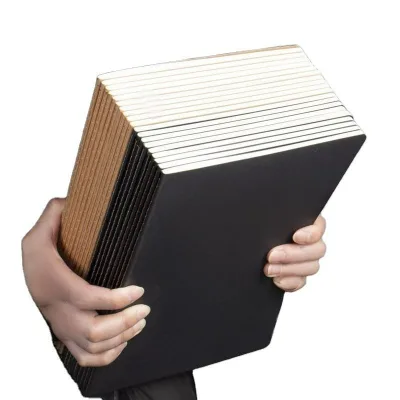
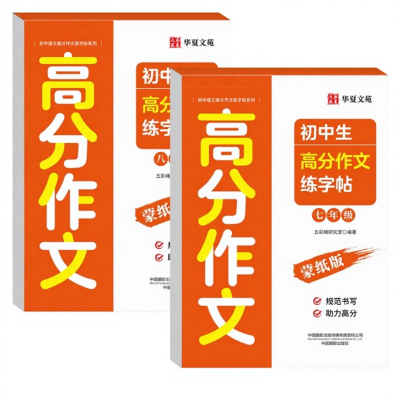
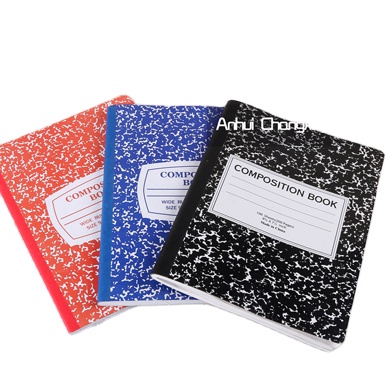
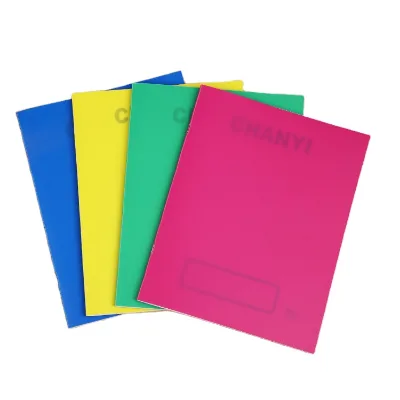
Main productsNotebook,Stationery,Printing goods,spiral notebook,hardcover notebook
Main marketsMid East(35.00%), Africa(30.00%), South America(10.00%), North America(10.00%), South Asia(5.00%), Central America(5.00%), Southeast Asia(5.00%)


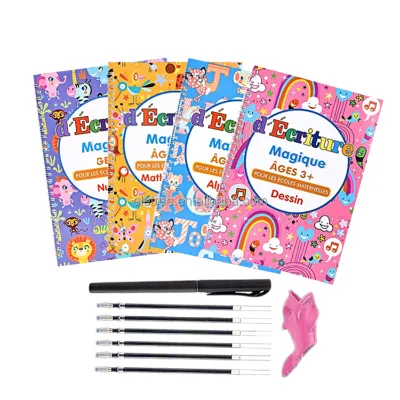
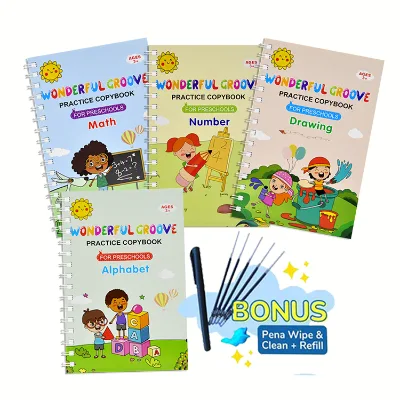


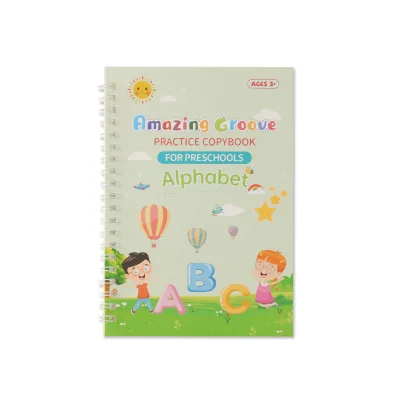


Comprehensive Sourcing Guide
Writing Practice Book Supplier Concentration and Factory Types
When sourcing a Writing Practice Book, start by mapping where production actually happens rather than trusting directory labels. Supplier listings often display a registered location, such as Anhui province in China, which is a recognized base for exercise book and notebook manufacturing. Location data alone is not proof of a factory, however, so treat the listed address as a starting point. Many companies that appear in search results are combined manufacturers and traders, while others are pure trading companies. A combined company may operate its own printing lines for exercise books, spiral notebooks, composition books and copy books, which shortens the chain for custom printing work. A trading company, by contrast, may list a broader early-learning range such as sound books, talking flash cards and learning machines, and it subcontracts the physical printing to partner factories.
To identify clusters without a supplied location, compare the origin fields shown across multiple product listings, since repeated origins for the same category usually indicate a genuine production region. Examine the product category paths as well: paper and paperboard printing services point toward converters, while notebook categories point toward stationery assemblers. Ask each shortlisted supplier whether the registered location is also the shipping address for finished goods. If answers diverge, request photographs of the production floor or a video walkthrough. Understanding which suppliers hold printing equipment directly will later determine how quickly you can iterate on artwork, ruling patterns and cover design.
How to Verify Writing Practice Book Suppliers
Verification begins with third-party audit status. Some exercise book suppliers display an SGS verification badge, which indicates an on-site verification process has occurred, though it does not guarantee product quality on your specific order. For early-learning sound books or electronic learning products, check the listed system certifications, which may include EN 71, ASTM F963, CE, CPC, RoHS and similar standards. Note that certifications belong to the individual supplier, so never assume one supplier's credentials apply across a search results page. Confirm the certificate scope covers your target market and request the certificate numbers so you can validate them against the issuing body's database.
Next, verify manufacturing capability rather than company registration. Ask whether the supplier supports ODM, OEM and own-brand production, since these labels signal in-house design and sampling ability. A supplier whose listed products show "Customization: Available" and "Sample: Available" with a defined sample time, such as three to five working days, is easier to evaluate before committing capital. Request references from buyers in your market segment; some exercise book suppliers explicitly list export markets such as Africa, which tells you they understand regional ruling formats like French-line layouts. Finally, verify factory identity independently: cross-check the registered name, ask for a business license, and match the printed origin on sample units, such as Hefei, China, against the declared location. Discrepancies between listing data and physical samples are early warnings of a hidden middleman.
What to Compare Across Writing Practice Book Suppliers
Build a comparison table from the attributes suppliers actually display, and leave blank cells where a value is missing rather than guessing. Useful displayed dimensions include response time, lead time, supplier type, location, main products, and verification status. For example, one notebook-focused supplier profile shows an average response time of roughly nine and a half hours and a lead time of thirty days, while an early-learning trading supplier shows a response time of about five hours and a lead time of only seven days. These numbers are not interchangeable benchmarks; they reflect different product complexity and supply chains, so compare within your intended product line first.
Then compare product-level evidence. Exercise book listings commonly show price ranges, MOQs, page counts, binding methods and cover materials. One hardcover university book listing displays a price range of 1.23 to 1.89 dollars, a MOQ of 10,000 units, spiral binding, 40 to 60 inner sheets and a 21 by 29.7 cm standard. A softcover staple-bound exercise book shows prices from 0.03 to 0.20 dollars with no displayed MOQ, while another softcover French-line version shows 0.10 to 0.18 dollars with a 100,000-unit MOQ. That spread demonstrates why price alone is meaningless without volume and construction context. Also weigh main-product breadth: a supplier focused on exercise books, notebooks and stationery sets may offer better ruling accuracy than a diversified trading supplier, whereas the latter may consolidate multiple school-supply lines into one shipment.
Common Writing Practice Book Sourcing Risks
The first recurring risk is treating displayed prices as final quotes. Exercise book prices in listings are ranges, and one supplier even states pricing is subject to order quantity, meaning the actual figure depends on paper weight, page count, cover stock and print colors. A listing showing a 0.03 dollar floor price and another showing 1.89 dollars are simply different constructions, not a signal that one supplier is overcharging. Risks emerge when buyers compare unlike items: a PP-covered grid diary at 17 by 22 cm cannot be benchmarked against a hardcover A4 exercise book. Always normalize specifications before negotiating.
The second risk cluster involves hidden trading layers and capability gaps. A company type labeled trading means the printed samples you approve may come from a factory that you cannot audit or hold accountable directly. Combined companies may still outsource peak-season capacity. MOQ risk is also real: a 100,000-piece MOQ on a customized softcover book can lock you into inventory that exceeds a season's demand, while a 10,000-piece MOQ on hardcover books carries a higher per-unit cost. Further risks include inconsistent inner-paper weight, since listings reference 50-gram inner pages and 190 to 450 gram cover weights without guarantees, and shipping assumptions, because one supplier notes sea freight is best, implying long transit times that affect reorder planning. Mitigate each risk by writing specifications, packing formats such as shrink pack plus carton, and sample approval terms into the contract.
Writing Practice Book Regional Sourcing and Logistics
Regional sourcing decisions should rest on the location data suppliers actually display, supplemented by your own verification when it is not. Where a listed origin is given, such as Anhui province with product origins in Hefei, China, buyers can reasonably treat that as a manufacturing region for exercise books and notebooks, because multiple product listings trace to the same declared origin. Concentration matters for logistics: clustered production regions support local paper supply, print finishing and carton packaging, which compresses lead times and reduces the cost of small spec changes. When no origin is displayed, ask the supplier to state the shipping factory location in writing and reconcile it with the commercial invoice, since mismatched origins complicate customs paperwork.
For logistics planning, examine what the listings themselves suggest. A lead time of thirty days on exercise books contrasts sharply with seven days on a trading supplier's early-learning products, showing that printed stationery requires longer production windows, especially when custom covers and CMYK or Pantone printing are involved. One supplier explicitly states sea freight is best, and packing formats like three pieces per shrink wrap with sixty pieces per carton indicate container-optimized cartonization. Confirm carton dimensions, gross weight and loading quantity before booking freight, and clarify Incoterms. If you are ordering 100,000 units of a softcover exercise book, a single full container is likely, whereas a 10,000-unit hardcover trial order may need consolidated or LCL shipping.
Writing Practice Book Commercial Terms and Order Planning
Commercial terms deserve the same rigor as specifications. One exercise book supplier lists payment as "Can Discuss," which is typical but signals that terms are negotiable rather than fixed; confirm the deposit percentage, balance trigger and acceptable methods before sampling concludes. Where escrow or platform-protected payment is available, weigh it against direct transfer, since protected payment reduces counterparty risk on first orders. Negotiate MOQ separately from unit price: a supplier showing a 100,000-piece MOQ may accept a lower trial volume at a higher unit price, and a hardcover book with a 10,000-piece MOQ may tier discounts above that threshold. Always tie the negotiated price to a written specification sheet covering ruling, page count, binding, cover material and packing.
Order planning should reflect lead times and market seasonality. With a thirty-day production lead time on exercise books and additional sampling time of three to five working days where offered, a back-to-school program must start months before retail demand peaks, and sea-freight transit extends the calendar further. Plan a staged approach: first order at the displayed MOQ or negotiated minimum, use it to verify print registration, paper weight and binding strength in-market, then scale. Confirm whether samples are free or charged, who owns approved artwork, and how reorders are priced. Document the packing format, such as shrink packs and carton counts, so warehouse receiving matches the purchase order exactly.
Word count check: Section 1 ~231, Section 2 ~232, Section 3 ~230, Section 4 ~231, Section 5 ~232, Section 6 ~230. Total ≈1386 words plus headings. Within range.
FAQs
What is a Writing Practice Book and which formats are commonly supplied?
A Writing Practice Book is a notebook used by students to practice handwriting, often with horizontal line, grid, or French ruling inside. Suppliers on this page list exercise books with spiral binding, saddle stitching, and hardcover or softcover styles. Inner pages typically range from under 40 sheets to 60 sheets, with sizes such as A4 or 21x29.7cm.
What customization options are available for writing practice books?
Customization is available on the listed products, including custom logos, CMYK or Pantone cover printing, and OEM or ODM design support. Buyers can request bespoke inside printing, custom page counts, and custom sizes, with some suppliers accepting your own dimensions. Cover material options include hard paper, PP, and ivory board, and free cover designs are offered on some listings.
What is the typical minimum order quantity for writing practice books?
Minimum order quantities vary by product on this page. One hardcover exercise book listing shows an MOQ of 10,000 pieces, while a cheaper softcover French line exercise book lists an MOQ of 100,000 pieces. Lower-priced staple-bound formats generally require higher volumes, so confirm the MOQ for your chosen specification before requesting a quotation.
What price range can buyers expect per Writing Practice Book?
Prices depend on binding style, page count, and order volume. Hardcover spiral exercise books on this page range from about $1.23 to $1.89 per unit, while softcover and staple-bound exercise books range from roughly $0.03 to $0.35, with some French line formats listed at $0.10 to $0.18. Prices are typically subject to order quantity.
How long do sampling and bulk production take?
One trading supplier on this page lists a lead time of 7 days, while a manufacturer supplier lists 30 days for bulk production. Sample time for one exercise book listing is 3 to 5 working days, and samples are accepted or available. Confirm the exact timeline for your specification, since lead times can vary by binding and print complexity.
Which certifications and verification should I check before ordering?
One supplier on this page holds SGS verification, and another is SGS Group verified with system certifications including EN 71, EN IEC 62115, EMC, RoHS, FCC, CPSIA, ASTM F963, CE, CPC, and UKCA. For standard paper exercise books, verify current certificates directly and confirm they match your destination market's import requirements before placing a bulk order.
Which product standards and sizes are commonly offered?
Listed standards include 21x29.7cm (A4 format) for hardcover university exercise books, 17x22cm for a smaller saddle-stitched book, 16.5x21.5cm for French line exercise books, and 190g ivory board covers. Inner page weights include 50g with cover weights of 190-450g. Inside ruling options include horizontal lines and grid printing, and custom sizes are accepted on some listings.
How quickly do these suppliers respond to inquiries?
Response times recorded on this page range from about 5 hours to roughly 9.6 hours, so buyers can generally expect a reply within the same business day. Response speed can vary by time zone and season, so send a detailed inquiry covering quantity, ruling, size, and customization requirements to receive faster and more accurate quotations.