Source Apple Slicer for Fruit Processing, Snack Factories, and Dairy Lines
Explore 30 verified Apple Slicer options featuring stainless steel construction and customizable voltage. Buyers can compare specifications like capacity, dimensions, and pitting functions across models from Henan and Zhengzhou manufacturers.
Key considerations
Products List


Apple Peeling Coring Slicing Machine/Industrial Apple Peeler/Apple Peeler Corer Slicer
$1800.00 - $2200.00
MOQ: 1 Pieces


Electric Apple Peeler Corer Slicer, Commercial Apple Peeler Corer Slicer, Apple Peeling Machine
$1800.00 - $2200.00
MOQ: 1 Pieces


Banana Slicer Machine Plantain Slicer Machine Apple Chips Cutting Machine
$3300.00 - $3500.00
MOQ: 1 Pieces


Durable Apple Peeler Cutter Machine / Pear Apple Peeler Slicer and Corer
$1459.00 - $1895.00
MOQ: 1 Sets

Industrial Fruit Orange Persimmon Pear Apple Peeler / Apple Slicer Cutter
$11805.00 - $14165.00
MOQ: 1 Sets

High Automation Fruit Apple Peeling Machine / Apple Peeler Corer Slicer
$11805.00 - $14165.00
MOQ: 1 Sets

High Efficiency Apple Peeling Machine / Electric Apple Peeler Corer Slicer
$1459.00 - $1895.00
MOQ: 1 Sets

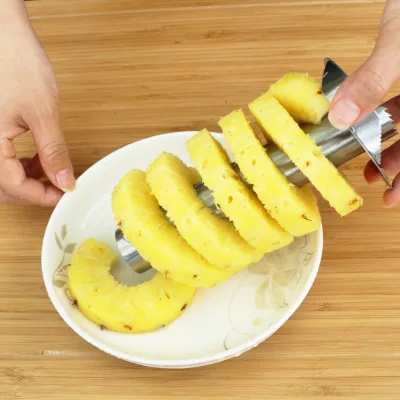


Hot Selling Apple Peeler Corer Slicer Apple Cutter Apple Peeler Machine
$1500.00 - $1750.00
MOQ: 1 Sets


Comprehensive Sourcing Guide
Strategic Sourcing Guide for Industrial Apple Slicers
Procuring industrial-grade apple slicers requires a rigorous approach that balances technical specifications with supply chain reliability. The global market for fruit processing machinery offers a wide array of options, ranging from small-scale units to high-capacity automated lines. For buyers entering this sector, the primary objective is to identify equipment that aligns with specific production needs while ensuring compliance with international safety and material standards. This guide outlines the critical factors for sourcing apple slicers, focusing on technical attributes, material integrity, and supplier evaluation strategies based on observed market data.
Technical Specifications and Operational Capabilities
The core functionality of an Apple Slicer lies in its mechanical design and operational parameters. When evaluating potential units, buyers must scrutinize the power requirements, voltage compatibility, and physical dimensions. Market observations indicate that industrial models often operate on standard industrial voltages such as 380V, which is common for heavy-duty machinery in manufacturing facilities. However, smaller or specialized units may be configured for 220V, necessitating a careful review of the facility's electrical infrastructure before purchase.
Power consumption is another vital metric. Units with a power rating of 1.5KW are frequently observed in mid-range models, suggesting a balance between energy efficiency and cutting throughput. The physical footprint of the machine is equally critical for factory floor planning. Dimensions vary significantly; some compact models measure approximately 120100100cm, while larger industrial units can reach dimensions of 280012801220mm. Buyers should verify the exact size against their available space, noting that some specifications are listed in cubic meters (CBM) for shipping purposes, such as 3 CBM, which impacts logistics planning.
The operational speed and capacity are defining features for high-volume production. High-speed capabilities are a primary advantage sought by processors aiming to maximize output. Capacity ratings can range from 500kg to 700kg per hour, a figure that directly correlates with the machine's motor power and the efficiency of its cutting mechanism. Additionally, the weight of the unit, ranging from 9.5kg for portable models to 160kg for stationary industrial units, influences the stability and installation requirements. A heavier machine generally implies a more robust frame, which is essential for maintaining precision during high-speed operation.
Material Integrity and Hygiene Standards
In food processing, the material composition of the slicer is non-negotiable. The contact parts of the machine must be constructed from materials that resist corrosion, are easy to clean, and do not contaminate the product. The industry standard for such applications is 304 Stainless Steel (often denoted as 304SUS). This material grade offers excellent resistance to rust and chemical cleaning agents, ensuring the longevity of the equipment and the safety of the food product.
Buyers must verify that the "Machine Material" or "Material" specification explicitly states 304 Stainless Steel. While some listings may simply refer to "Stainless Steel," the specific grade is crucial. The use of lower-grade steel can lead to premature degradation, rust formation, and potential food safety violations. Furthermore, the construction should be seamless where possible to prevent food particles from accumulating in crevices. The design should facilitate easy operation and maintenance, a feature often highlighted as a key advantage in modern machinery.
Functional Versatility and Application Scope
While the core keyword is "Apple Slicer," the functional scope of these machines often extends beyond simple slicing. Many units are multifunctional, capable of performing tasks such as coring, pitting, and seed removal. This versatility is particularly valuable for processors handling various stone fruits like peaches and apricots, in addition to apples. The presence of keywords such as "Pitter Machine," "Corer Pitter," and "Peach Pitter" in product descriptions indicates that a single unit may be adaptable to multiple fruit types, reducing the need for specialized equipment for different product lines.
The application fields for these machines are diverse, spanning snack food factories and dairy products factories. In snack production, the uniformity of the slices is critical for consistent cooking or drying. In dairy applications, apple slices might be used as ingredients in specific formulations, requiring precise sizing. The "Function" attribute often lists "Removing Seed" or "Multifunctional," suggesting that the machine can handle the entire preparation process from whole fruit to ready-to-use slices. Buyers should confirm that the specific model, such as the GY-011 or BFS500, supports the specific fruit varieties they intend to process.
Cost Drivers and Procurement Parameters
Understanding the cost structure of industrial apple slicers is essential for budgeting. The price range in the market is vast, observed between 0.85 USD and 30000 USD. This wide disparity reflects differences in automation levels, material quality, brand reputation, and production capacity. Lower-priced units may be manual or semi-automatic, suitable for small batch processing, while high-end models are fully automated with advanced control systems.
Minimum Order Quantity (MOQ) is another significant factor. Suppliers typically offer flexible terms, with observed MOQs ranging from 1 unit to 1000 units. This flexibility allows small enterprises to start with a single unit while larger corporations can negotiate bulk pricing. The availability of "Small Orders" is a positive indicator for buyers who wish to test the equipment before committing to large-scale procurement. Additionally, customization is a widely available attribute, allowing buyers to tailor the machine to specific production line requirements. This could include custom voltage configurations, specific cutting dimensions, or specialized packing solutions like wooden cases or export cases to ensure safe transit.
Supplier Evaluation and Compliance Verification
Selecting the right supplier requires a thorough evaluation of their credentials and operational transparency. The origin of the machinery is a key indicator of manufacturing standards. Many industrial units originate from regions in China, such as Henan or Zhengzhou, which are known hubs for food processing equipment. However, the country of origin alone does not guarantee quality; buyers must verify the supplier's track record and adherence to international standards.
Compliance and certification checks are paramount. While specific certification names should not be assumed, buyers must request documentation proving that the machine meets relevant safety and hygiene standards. This includes electrical safety certifications and food-grade material compliance. The "prod_standard" field often lists dimensions, but buyers should also look for references to international safety standards (such as CE or ISO) in the supplier's documentation. The "Brand Name" and "Model Number" (e.g., DT-174-#7647, QD-14) should be clearly documented to ensure traceability and access to spare parts.
Quality Control and Packaging Standards
Quality control extends from the manufacturing floor to the point of delivery. Packaging is a critical component of this process, as it protects the machine during transit. Common packaging methods include wooden cases, export cases, and wood packing. The choice of packaging depends on the destination and the fragility of the equipment. For international shipments, robust wooden cases are often required to prevent damage during handling.
Buyers should verify the packing specifications before finalizing the order. For instance, a standard export case ensures that the machine is secured against vibration and impact. The weight of the packaged unit must also be considered for logistics planning. If the machine weighs 160kg, the packaging will add significant weight, affecting shipping costs and handling requirements. Additionally, the "Advantage" of high-speed operation should be validated through performance data or video demonstrations, ensuring that the machine delivers the promised throughput without compromising on safety or quality.
Long-Term Procurement and Maintenance Considerations
Investing in an Apple Slicer is a long-term decision that requires consideration of maintenance and lifecycle costs. The "Feature" of being easy to operate and maintain is a crucial attribute that reduces downtime and operational expenses. Buyers should inquire about the availability of spare parts, such as cutting blades and seals, and the lead time for their delivery. A supplier that offers customization and accepts small orders may also be more responsive to future maintenance needs.
The "Capacity" of the machine, such as 500kg-700kg per hour, should be matched with the buyer's long-term production goals. Overestimating capacity can lead to unnecessary capital expenditure, while underestimating it can create bottlenecks. Furthermore, the "Voltage" compatibility must be confirmed to avoid costly retrofitting of electrical systems. By carefully analyzing the technical specifications, material quality, and supplier reliability, buyers can make informed decisions that ensure efficient and safe fruit processing operations. The goal is to secure a machine that not only meets immediate production needs but also serves as a reliable asset for years to come.
FAQs
What voltage options are available for industrial apple slicers?
Industrial apple slicers typically operate on 380V, though some specialized units support 220V. Buyers must verify their facility's electrical infrastructure before purchase to ensure compatibility with the specific model selected for their production line.
Which material grade is standard for food contact parts?
The industry standard for food contact parts is 304 Stainless Steel, often listed as 304SUS. This grade ensures resistance to corrosion and rust, maintaining hygiene standards and preventing contamination during the fruit processing operation.
How much capacity can a typical high-speed Apple Slicer handle?
High-capacity models can process between 500kg and 700kg of fruit per hour. This throughput depends on the motor power and cutting mechanism efficiency, allowing processors to maximize output in snack food or dairy production facilities.
Can suppliers accept small orders for testing equipment?
Yes, many suppliers accept small orders, with minimum quantities ranging from one unit up to 1000 units. This flexibility allows new buyers to test the equipment performance before committing to large-scale procurement for their factory.
What customization options are available for these machines?
Customization is widely available to tailor machines to specific production needs. Buyers can request adjustments to voltage, cutting dimensions, or packing solutions like wooden cases to ensure safe transit and operational fit.
Which fruit types can multifunctional slicers process besides apples?
Multifunctional units can also process stone fruits like peaches and apricots by performing coring and pitting tasks. These machines often feature keywords like Peach Pitter or Corer Pitter, indicating versatility for various fruit preparation requirements.
What packaging methods are used for shipping these machines?
Common packaging includes wooden cases, export cases, or wood packing to protect the unit during transit. The choice depends on the destination and machine weight, which can range from 9.5kg for portable models to 160kg for industrial units.