Source Comfortable LED Dog Collar for Home Training and Night Safety
Explore 30 options for a Comfortable LED Dog Collar designed for home use, training sessions, and nighttime safety. Buyers can compare adjustable sizes, nylon and PVC materials, and various closure types to find the right fit for puppies and adult dogs.
Key considerations
Products List




Comprehensive Sourcing Guide
Strategic Sourcing Guide for Comfortable LED Dog Collars
The global demand for pet safety accessories has driven a significant shift toward smart, visible, and comfortable gear, with the Comfortable LED Dog Collar emerging as a primary category for B2B procurement. Buyers entering this market must navigate a landscape defined by diverse material compositions, varying electronic integration methods, and specific safety standards. This guide provides a disciplined approach to sourcing these products, focusing on the technical realities observed in the current supply chain, including the specific attributes of nylon and PVC constructions, adjustable sizing mechanisms, and the critical role of breakaway and buckle closures in ensuring pet safety.
Technical Specifications and Material Integrity
The foundation of a successful procurement strategy lies in understanding the technical specifications that define product quality. In the current market, the material composition is a primary differentiator. Observations from available product listings indicate a split between Nylon and PVC as the dominant materials. Nylon-based collars are frequently associated with a "Fashion" style and are often designed for "Home" and "Training" applications. These products typically feature a width of 2CM and are constructed with a "Break Away" closure type, a critical safety feature that allows the collar to detach under tension to prevent strangulation. Conversely, PVC materials are often highlighted for their durability and are marketed with "Soft Padding for Comfort," addressing the specific need for "Night Safety" during everyday use.
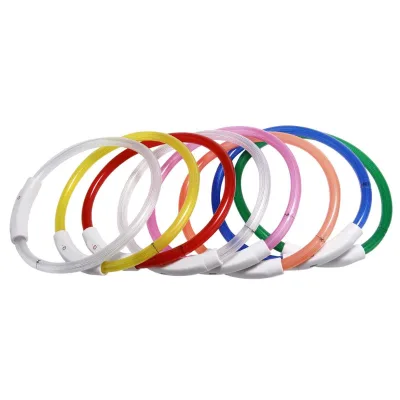
Size adaptability is another non-negotiable technical requirement. The supply chain offers products with "Adjustable" sizing, with specific models ranging from standard lengths of 45-70cm to more complex configurations like 474747 cm for packaging or specific SKU standards. The availability of sizes labeled S, L, M, and Adjustable ensures compatibility with both "Puppies and Adult Dogs." Buyers must verify that the specific LED integration does not compromise the structural integrity of the collar. The product models observed, such as RT-DC-182-J and PD-33, suggest a standardized approach to manufacturing, yet the variation in packing methods—from "Carton" to "Box" and "Corton Packing"—indicates that logistics and protection during transit must be carefully evaluated. The color options, ranging from standard "Yellow, Red, Blue" to "Green" and "Black," are essential for visibility, with specific designs noted for "Nighttime Safety."
Compliance, Certification, and Safety Standards
When sourcing LED collars, compliance is not merely a formality but a critical component of product liability and market access. While specific certification names are not universally listed in the provided product data, the presence of "Customized Designs" and "OEM&ODM: Acceptable" implies that suppliers must be capable of adhering to various regional safety standards. The "Break Away" closure type is a functional standard that aligns with general pet safety expectations, but buyers should verify if the electronic components meet specific electrical safety standards for low-voltage devices used on animals.
The "prod_standard" field in the supply data often references dimensions like 45-70cm*2.5cm or specific SKU codes, which serve as internal quality benchmarks. However, for international trade, buyers must independently verify that the LED components and the battery housing (if applicable) comply with the destination market's regulations regarding hazardous substances and electrical safety. The "4 Seasons" attribute suggests the product is designed for year-round use, which necessitates durability testing against environmental factors like water resistance and temperature fluctuations. Buyers should request test reports that validate the "Durable Buckle and Stitching" claims, ensuring that the stitching does not fray and the buckle remains secure under the stress of a dog's movement. The absence of explicit certification data in the source text means the procurement team must treat these as verification points rather than assumed facts.
Cost Drivers and Pricing Dynamics
Understanding the cost structure of LED dog collars is essential for maintaining healthy profit margins. The observed price range in the market spans from 0.3 to 10 USD, a wide spectrum that reflects differences in material quality, LED technology, and customization levels. The lower end of this range likely corresponds to basic PVC models with simple LED integration, while the higher end may include premium nylon collars with advanced features like "Print Logo Available" and complex "Customized Designs."
Several factors drive these costs. The "Material" choice is a primary driver; Nylon generally commands a higher price point than PVC due to its texture and durability, though PVC offers superior water resistance. The "MOQ" (Minimum Order Quantity) also plays a significant role in unit pricing. The observed MOQ range is 10 to 1200 units, with a specific high-confidence fact noting an MOQ of 20. This variability allows buyers to scale their orders based on demand, but it also means that smaller orders may incur higher per-unit costs. The "Customization" aspect, including the ability to add logos or specific colors, adds a layer of complexity and cost. Suppliers offering "OEM&ODM" services will typically charge a setup fee or a higher unit price for custom runs compared to stock items. Additionally, the "prod_packing" method, whether "Carton" or "Box," influences the final landed cost, as more robust packaging is required for fragile electronic components.
Typical Applications and Market Segmentation
The application of comfortable LED dog collars extends beyond simple illumination; they serve multiple functional roles in the pet care ecosystem. The primary application is "Night Safety," ensuring that dogs are visible to motorists and pedestrians during low-light conditions. This is supported by the "Function: Night Safety" attribute and the "Style: for Nighttime Safety" designation. Beyond safety, these collars are widely used for "Training" purposes, where the visibility of the collar helps owners track their pets in large parks or during evening walks.
The "Application: Home, Training" data suggests a dual-purpose market. For home use, the "Fashion" and "Popular" styles cater to pet owners who view the collar as an accessory. The "Color: Colored" and "Yellow, Red, Blue, Green" options allow for personalization, making the product suitable for gift markets. The "Usage: for Everyday Use" and "Compatibility: Suitable for Puppies and Adult Dogs" attributes indicate that these products are designed for continuous wear, requiring a balance between aesthetic appeal and functional comfort. The "Light-Emitting Leash for Pets" variant mentioned in the data points to a related product category that complements the collar, offering a holistic approach to pet visibility. Buyers should consider these diverse applications when selecting their product mix, ensuring they have options that cater to both safety-conscious owners and fashion-forward pet enthusiasts.
Supplier Evaluation and Verification
Selecting the right supplier requires a rigorous evaluation process that goes beyond the basic product listing. The presence of "OEM&ODM: Acceptable" and "Customization: Available" indicates that the supplier has the capacity for customization, but buyers must verify their actual production capabilities. The "prod_origin: China" is a common fact in this sector, but the specific location and the supplier's track record in exporting to the target market are critical. Buyers should assess the supplier's ability to maintain consistent quality across different "prod_model" numbers, such as RT-DCollar-001-R and PD-79.
The "prod_packing" variations, including "Carton Packing" and "Box," suggest that the supplier may use different packaging strategies for different clients. A reliable supplier will have a standardized packing process that protects the LED components during shipping. The "Logo: Print Logo Available" feature requires the supplier to have in-house printing capabilities or a trusted third-party partner. Buyers should request samples to verify the quality of the logo printing and the durability of the "Soft Padding." Furthermore, the "Condition: New" attribute is standard, but buyers must ensure that the supplier does not sell refurbished or damaged goods as new. The "Style: Fashion" and "Popular" attributes suggest that the supplier is responsive to market trends, but this should be balanced with a commitment to quality control.
Quality Control and Long-Term Procurement
Quality control is paramount in the LED collar sector due to the electronic components involved. The "Features: Durable Buckle and Stitching" claim must be validated through rigorous testing. Buyers should implement a quality control plan that includes visual inspections for stitching defects, functional tests for the LED lights, and stress tests for the "Break Away" and "Buckle" closures. The "Size: Adjustable" mechanism must be tested to ensure it does not slip or become stuck after repeated adjustments.
Long-term procurement considerations involve building a sustainable relationship with the supplier. The "MOQ: 20" fact suggests that the supplier is flexible, which is beneficial for startups, but buyers should plan for volume increases to secure better pricing. The "Standard: 45-70cm*2.5cm" and similar specifications provide a baseline for consistency, but buyers should negotiate clear quality benchmarks for future orders. The "Season: 4 Seasons" attribute implies that the product is not seasonal, allowing for year-round procurement, but buyers should monitor inventory levels to avoid stockouts during peak demand periods. Finally, the "Product Name: LED Dog Collar" and "Glowing Collar for Pets" variations indicate that the market is evolving, and buyers should stay informed about new features and technologies to maintain a competitive edge. By focusing on these technical, compliance, and operational aspects, buyers can secure a reliable supply of high-quality, comfortable LED dog collars that meet the needs of the modern pet owner.
FAQs
What materials are used for comfortable LED dog collars?
These collars are primarily constructed from Nylon or PVC materials. Nylon options often feature a fashion style suitable for home and training, while PVC versions provide soft padding for comfort and durability during everyday use.
Can the collars be customized with logos or designs?
Yes, customization is available including print logo options and customized designs. Suppliers accept OEM and ODM requests, allowing buyers to specify colors like yellow, red, blue, or green to match their brand or preferences.
Which closure types ensure safety for the dog?
The products feature both Break Away and Buckle closure types for safety. Break Away closures detach under tension to prevent strangulation, while buckles offer secure fastening, ensuring the collar remains safe during active training or walks.
How do the sizes fit different dogs?
Sizes are adjustable and available in S, L, and M configurations to fit puppies and adult dogs. Standard specifications range from 45 to 70 centimeters in length, ensuring a proper fit for various breeds and sizes.
What is the minimum order quantity for these collars?
The minimum order quantity typically starts at 20 units, though ranges can extend up to 1200 units depending on the supplier. This flexibility allows buyers to scale orders based on their specific inventory needs and demand.
Where are these LED collars manufactured?
The products originate from China, which is the primary production location for this category. Buyers should verify specific factory locations and lead times when sourcing to ensure timely delivery for their market requirements.