Source eco-friendly disposable paper tablecloth for Home, Hotel, Outdoor
Find 30 eco-friendly disposable paper tablecloth options from suppliers in Fujian and Quanzhou. Compare features like waterproofing, GSM weight, and customization for home, hotel, and outdoor applications. Explore various weights ranging from 10 to 200 GSM and choose from plain or printed designs with custom logos available.
Updated
Key considerations
Products List


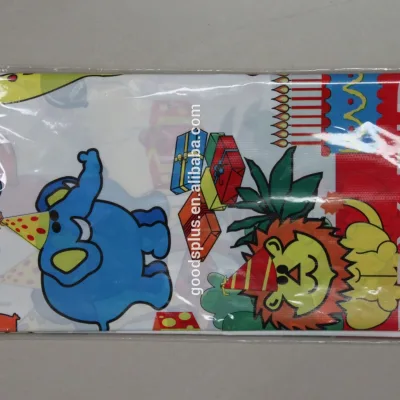
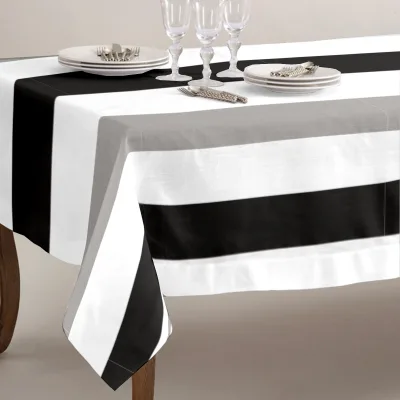
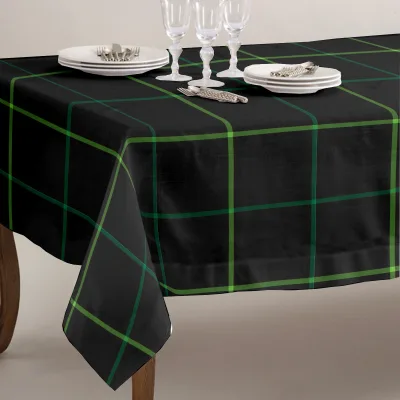
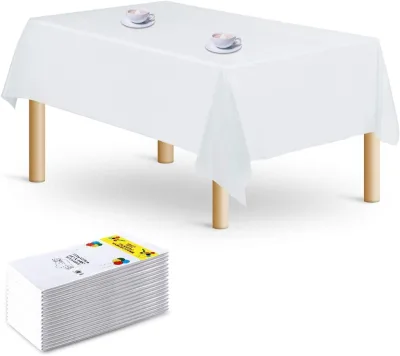
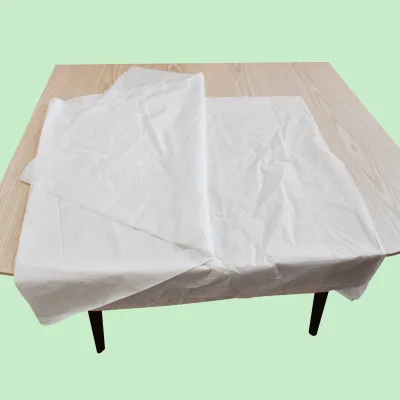
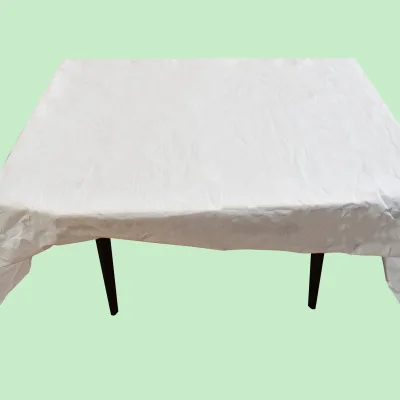
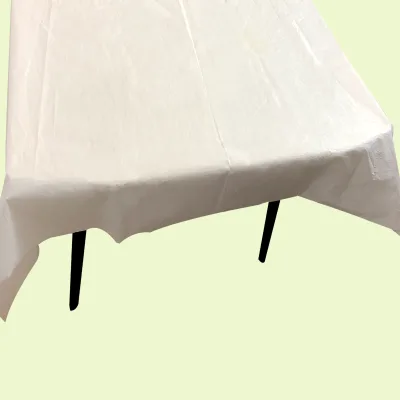
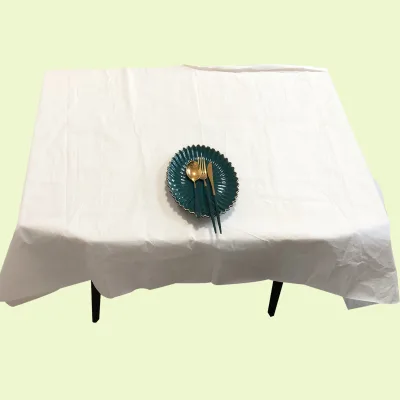
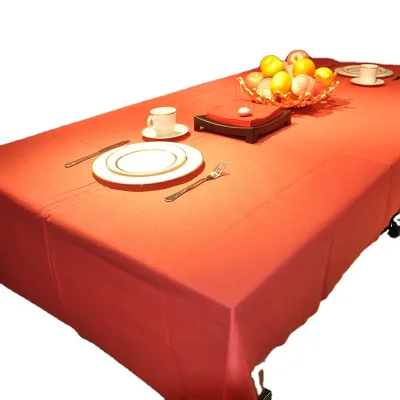
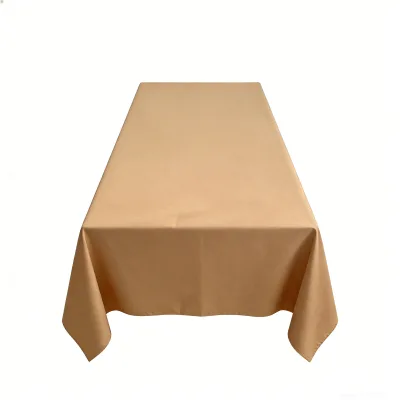


Comprehensive Sourcing Guide
Eco-Friendly Disposable Paper Tablecloth Sourcing Guide
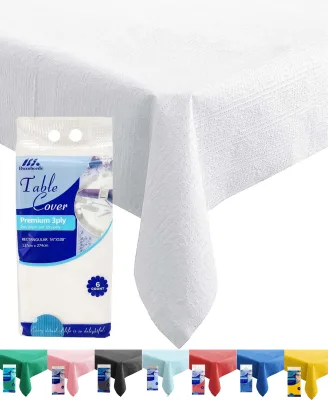
Sourcing an eco-friendly disposable paper tablecloth for hospitality, catering, or home-textile distribution starts with understanding what the market actually lists versus what buyers assume. The observed product pages cover nonwoven and wood-pulp-based table covers in plain, dyed, and printed styles, with weights spanning roughly 10–250 GSM depending on the model, widths from 43/44" up to 3.2m, and standard cut sizes such as 1m×1m, 1.2m×1.2m, and 1.5m×1.5m. One listed product is built on virgin wood pulp; others are 100% polypropylene spun-bonded material, so "eco-friendly" in this category describes marketing positioning rather than a single material family.
This guide walks through the decisions that separate a smooth first order from a costly one: confirming the material and specification mix, assembling the right compliance file, understanding price drivers, qualifying the factory behind the listing, and setting up long-term checks. Treat every listing attribute as an observation to verify in writing and in samples, not a guarantee. The MOQ ranges shown in current listings run from 1,000 kg to a full ton, so volume planning matters from the first enquiry.
Product Scope and Observed Listing Signals
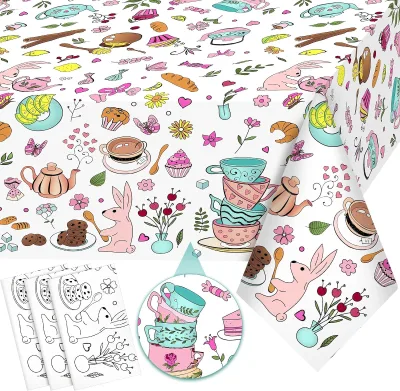
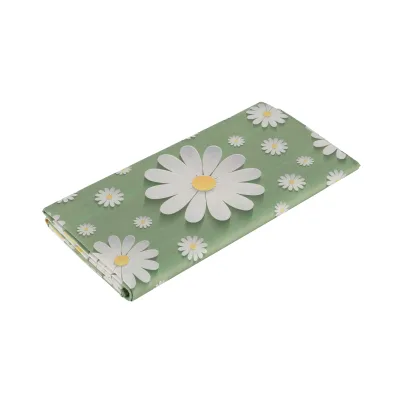
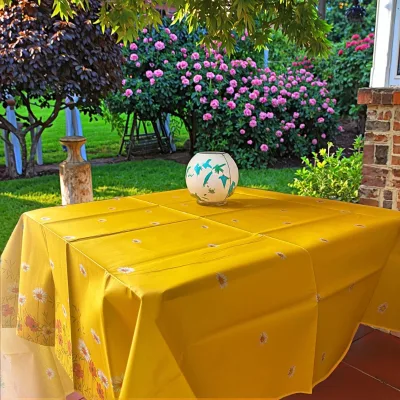
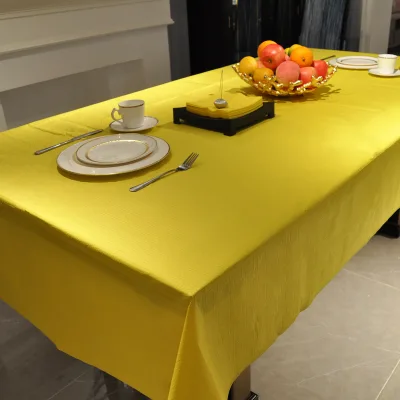
The listings cluster around three product models — Emma, Flora-474, and Lara table cloths — all positioned for table use in home, hotel, and outdoor settings. Application claims are consistent: disposable supplies with decorative styling, quick-dry behavior on some items, and features such as waterproof, oilproof, breathable, anti-static, anti-tear, anti-pull, and anti-bacterial appearing across product pages. Technics split between spun-bonded nonwoven construction and printed finishes, with thickness described as either light or medium weight. Origin is concentrated in Fujian, China, including Quanzhou.
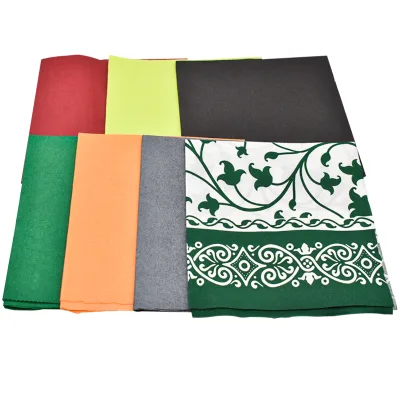
Buyers should read the feature lists as signals of production capability, not uniform product attributes. A single supplier may offer polypropylene spun-bond rolls for converters and finished printed tablecloths for retail simultaneously. Packing details — 2/3" or 3" paper tubes with polybag or PE bag — indicate roll-format supply suited to further converting. Customization is broadly advertised: custom colors, custom logos, custom designs, and custom sizes are all listed as available, with free samples offered. Confirm which model each claim applies to before comparing quotations across listings.
Technical Specifications to Verify
Weight per unit area is the first specification to lock down. Observed ranges differ sharply by product line — one listing shows 20–150 GSM, another 10–200 GSM, and a third cites specific 45/60 GSM gram weights — so ask each supplier to state the actual GSM of the offered grade and the tolerance band they will commit to in a contract. Width also varies: 43/44" and 66/67" for roll goods versus 1.6m, 2.4m, and 3.2m on wider formats. Verify whether the quoted width is usable width or selvedge-to-selvedge.
Material composition requires equal scrutiny. Polypropylene spun-bond and virgin wood pulp behave differently in feel, drape, and liquid handling, and both appear in this category. For finished tablecloths, confirm the standard cut sizes against your market — listings show 1×1m, 1.2×1.2m, and 1.5×1.5m — and whether size customization carries a price or tooling implication. Ask for ply count (one listing states 1 ply), dye method (dyed versus printed), and the fiber grade, since one listing distinguishes "imported" grade material. Request physical samples matched to the exact GSM and width you intend to order.
Compliance and Safety Documentation
Eco-friendly claims should be backed by documentation you can hand to your own customers or regulators. Ask what the supplier can actually evidence for the material you are buying: food-contact suitability for table use, restricted-substance compliance for dyes and prints, and any chain-of-custody or fiber-sourcing documentation for pulp-based products. Do not assume certification from a listing keyword; request the certificate number, scope, and validity, and check that it covers the specific material grade and colorway, since certifications often apply only to part of a supplier's range.
Because these products are marketed as disposable and skin-adjacent, buyers in regulated markets should determine which local requirements apply — for example, migration limits for food-contact surfaces or labeling rules for single-use items — and then ask the supplier for test reports issued against those requirements rather than generic ones. If a supplier cannot produce reports for anti-bacterial or oilproof performance claims, treat those claims as unverified and either remove them from your marketing or commission third-party testing yourself before import. Keep all documentation versioned so reorders can be tied back to the same approved material.
Cost Drivers and Commercial Terms
Price in observed listings spans USD 0.01 to 1.94 per unit, which reflects the enormous spread in format — per-square-meter roll goods versus finished cut tablecloths — rather than a meaningful benchmark. The main cost drivers to model are GSM, width utilization, print method and number of colors, ply count, and packaging format. Moving from plain dyed stock to custom printed designs typically adds setup or plate considerations; confirm whether custom logo printing is charged as a one-time cost or amortized into unit price at your volume.
Commercial terms in the listings give useful anchors: MOQs from 1,000 kg to a ton, and delivery of 7–10 days after receiving the deposit on at least one listing. Verify current MOQ by product, since roll goods and finished pieces often carry different minimums. Clarify Incoterms, deposit percentage, balance timing, and whether sample freight is free only for the sample itself. "Factory price" is a common listing advantage claim — test it by comparing quotes on identical GSM, width, and packing specifications rather than headline unit prices.
Supplier Qualification and Quality Control
Qualify the factory behind the listing, not the storefront. Fujian and Quanzhou are the stated origins, a region with deep nonwoven and table-textile supply, but you should still confirm whether the supplier manufactures or trades, request business licenses and production-equipment evidence, and ask which models they produce in-house versus resell. For a product line this customized — custom colors, logos, sizes, and designs are all advertised — production control at the factory directly determines whether your custom specification survives a reorder.
Set up a pre-shipment inspection protocol tied to the attributes that matter: GSM verification against the agreed tolerance, width measurement, color matching against an approved sample, print alignment, and packaging integrity including the paper tube and polybag specification. Define the acceptable defect classification before the first production run, not after a dispute. For the first order, consider inspecting before balance payment, and retain sealed reference samples from each approved batch. Ask how the supplier handles weight or color deviation claims, because a clear rework or credit process is often the most reliable signal of operational maturity.
Long-Term Procurement Checks
Long-term supply of a customized disposable product depends on consistency more than the initial quote. Establish whether the supplier retains your color standard, print artwork, and GSM specification in a way that guarantees repeat orders match the approval — ask explicitly how lot traceability works for dye lots and pulp batches. For polypropylene grades, resin sourcing can shift; for pulp grades, fiber origin may vary. One listing references imported-grade material, so confirm whether grade changes trigger notification or re-approval.
Build periodic re-verification into the relationship: annual refresh of compliance documentation, spot testing of retained production samples against the original specification, and review of packing condition after transit. Monitor lead-time reliability against the 7–10 day post-deposit benchmark and renegotiate terms as volumes consolidate. Diversify deliberately by qualifying a second Fujian-region source on the same specification so a capacity crunch or quality lapse does not stall your range. Finally, track whether "eco-friendly" claims in your own marketing remain supportable as regulations tighten, and require your supplier to update documentation whenever the material composition or dye system changes.
FAQs
How is the eco-friendly disposable paper tablecloth supplied and packed?
The tablecloth is packed on paper tubes with a polybag or PE bag, keeping rolls clean and protected during transit. Standard roll sizes include 1m x 1m, 1.2m x 1.2m, and 1.5m x 1.5m depending on the model. Buyers can confirm packing details with the supplier before ordering, and customized packing arrangements may be available on request.
What materials are used for this disposable tablecloth?
Two material options are listed across the products: 100% polypropylene spun-bonded fabric and virgin wood pulp. Both are positioned for disposable table use, with features such as waterproof, breathable, and eco-friendly performance. Buyers should confirm which material applies to a specific model, as weight, thickness, and feature sets vary between the polypropylene and wood pulp versions.
What weight and width ranges are available for these tablecloths?
Weight ranges span 10-200GSM overall, with specific models at 45/60GSM and a 20-150GSM option also listed. Widths include 43/44 inches, 66/67 inches, and roll widths of 1.6m, 2.4m, and 3.2m. Thickness ranges from light weight to medium weight, so buyers should match the weight and width combination to their intended table size and durability needs.
Can the tablecloth be customized with my logo and design?
Yes, customized logos and designs are accepted on these tablecloths. Colors can also be customized to customer requirements, and sizes can be made to order on printed models. Customization availability may vary by model and material, so buyers should confirm minimum quantities and design file requirements with the supplier before placing a sample or bulk order.
What is the minimum order quantity for this tablecloth?
Minimum order quantities are stated as 1 ton on some listings and 1000kg on others, which are broadly equivalent thresholds. Individual product pages may show different MOQ values, so buyers should verify the exact MOQ for the specific model and material they want. Samples are freely available, allowing evaluation before committing to a full tonnage order.
How quickly can orders be delivered after payment?
The stated delivery time is 7-10 days after receiving the deposit. This lead time applies to production after order confirmation and may vary with order volume, customization requirements, and current factory scheduling. Buyers planning seasonal or event-driven purchases should confirm lead times in advance and account for shipping time beyond the production window.
Which features do these disposable tablecloths offer for table use?
Listed features include waterproof, quick-dry, mothproof, eco-friendly, breathable, anti-tear, anti-static, anti-pull, and anti-bacterial properties on spun-bonded models, while printed variants add high temperature resistance and oilproof performance. These attributes suit home, hotel, and outdoor table settings. Feature availability differs by model, so buyers should verify which features apply to their chosen material and construction.
Where are these tablecloth products manufactured and what standards apply?
Products originate from Fujian, China, with one listing tied to Quanzhou. Standards cover sizes of 1m x 1m, 1.2m x 1.2m, and 1.5m x 1.5m, plus 9-250GSM weights in 1.6m, 2.4m, and 3.2m widths. One model is identified as Emma-Table Cloth with imported grade material. Buyers should confirm applicable standards for their target model directly with the supplier.