Source handmade eco-friendly wooden jewelry box for Storage, Gifts, and Travel
Explore 30 listings of handmade eco-friendly wooden jewelry box options featuring metal and pine materials. Buyers can compare sizes, customization features, and delivery times to find suitable packaging for jewelry, health care products, and decorative storage needs.
Key considerations
Products List
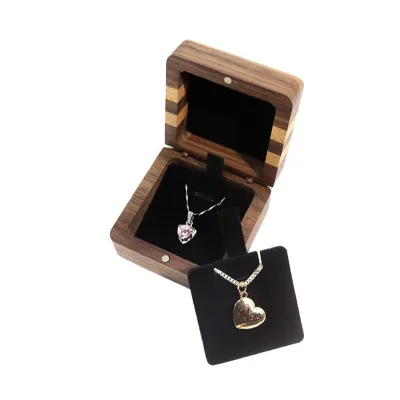
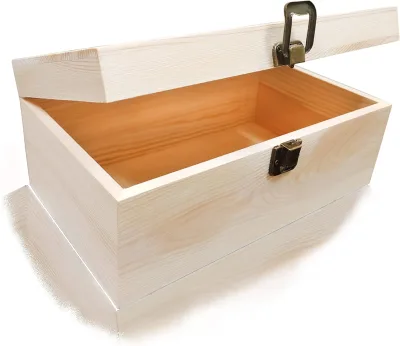


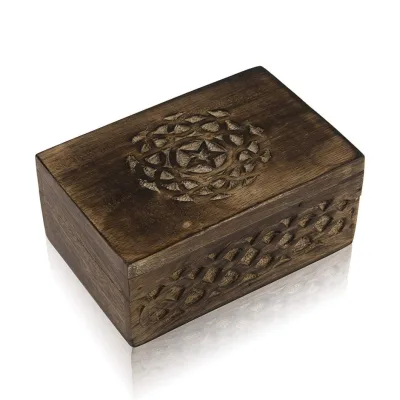


Wooden Jewelry Box Storage Box for Jewelry, Ring Handcrafted Jewelry Storage Box for Gift Wedding
$15.00 - $18.00
MOQ: 100 Pieces


Eco-Friendly Wood Jewelry Box for Jewelry Accessories Gift Box in Gift Box Premium Design Best Look
$15.00 - $18.00
MOQ: 100 Pieces
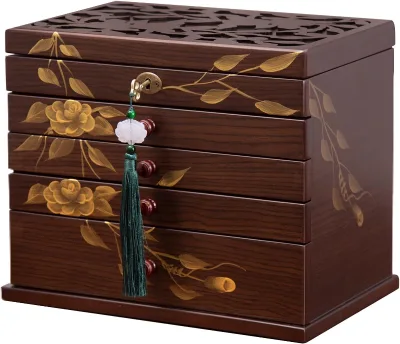
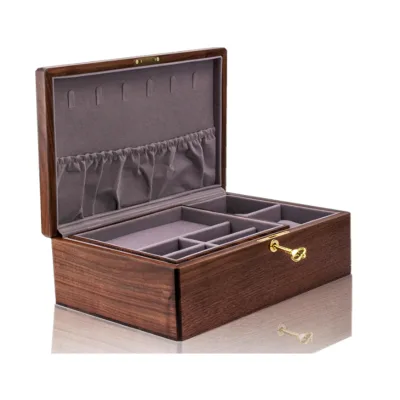
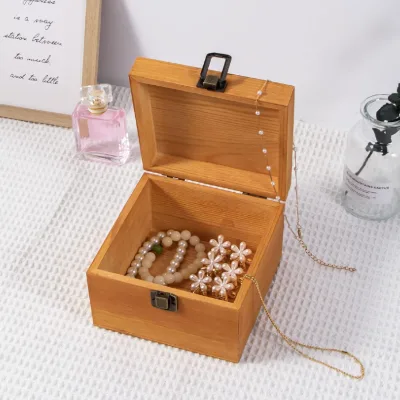
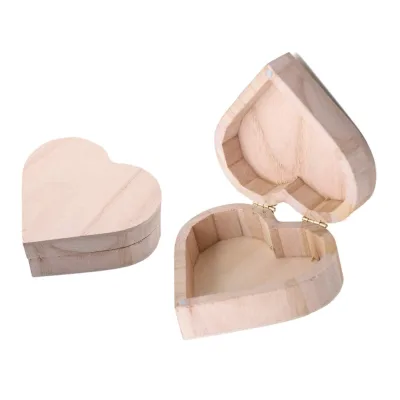
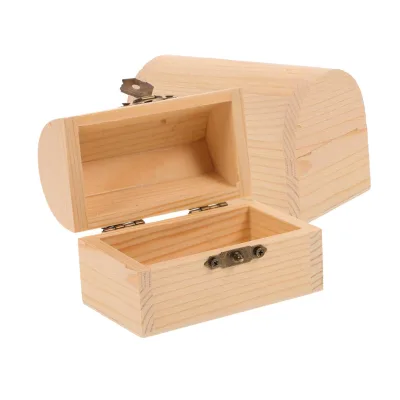
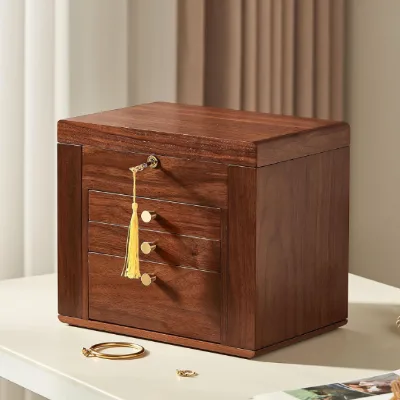
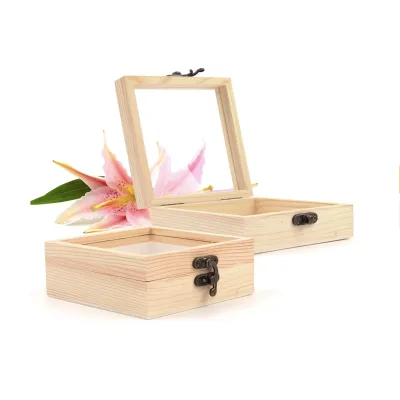


Retro Elegant Custom Handmade Black Matt Rectangular Wooden Jewelry Box
$8.00 - $10.00
MOQ: 500 Pieces

Hot Selling Simple Custom Handmade Black Wooden Jewelry Box with Window
$10.00 - $12.00
MOQ: 500 Pieces
Comprehensive Sourcing Guide
Strategic Sourcing Guide for Handmade Eco-Friendly Wooden Jewelry Boxes
Sourcing handmade eco-friendly wooden jewelry boxes requires a disciplined approach that balances aesthetic appeal with rigorous supply chain verification. The market for these items is diverse, ranging from simple storage solutions to luxury presentation cases. Buyers must navigate a landscape where "handmade" and "eco-friendly" are often used as marketing descriptors rather than verified technical specifications. This guide provides a structured framework for evaluating potential suppliers, ensuring that the final product meets specific functional requirements while adhering to sustainability and quality standards. The following sections detail the technical parameters, compliance checks, and procurement strategies necessary for a successful sourcing initiative.
Technical Specifications and Material Verification
The foundation of any successful procurement project lies in the precise definition of technical specifications. When sourcing wooden jewelry boxes, the material composition is the primary differentiator. The supplied data indicates that "Wood" and "Pine" are specific material attributes observed in the market, alongside "Solid Wood" as a distinct category. Buyers must explicitly verify the wood type, as "Pine" offers a specific grain and softness profile compared to harder solid woods. The production process is equally critical; the data notes "Injection" as a technic, which is unusual for traditional woodworking and may indicate a hybrid manufacturing process or a specific molding technique used for wooden composites. However, for a truly "handmade" product, buyers should prioritize suppliers who can demonstrate manual finishing techniques such as "Varnishing" for surface handling.
Dimensions and tolerances are non-negotiable for inventory planning and retail display. Observed specifications include a size of "6.8*3.8cm" for specific items, while others are categorized as "Medium" or "Square" and "Rectangle" shapes. A critical technical metric is the dimensional tolerance, which the data specifies as "<±1mm". This level of precision is essential for ensuring that lids fit snugly and that the internal compartments align correctly with jewelry items. Furthermore, the "Single package size" is observed at "8X5X8 cm" with a "Single gross weight" of "1.500 KG". These figures are vital for calculating shipping costs and storage requirements. Buyers should also note the "Open Way" mechanism, identified as "Clamshell" in some listings, which dictates the user experience and the structural integrity of the box.
Compliance, Certification, and Sustainability Claims
The term "eco-friendly" carries significant weight in modern procurement, yet it is often loosely applied. While the data mentions "Sustainable" as a feature and lists "FSC" in a low-confidence background section, buyers must treat these as verification targets rather than guaranteed attributes. The "FSC" certification is a recognized standard for responsible forest management, but its presence cannot be assumed without direct supplier documentation. Buyers should request valid FSC chain-of-custody certificates to ensure the wood is sourced from responsibly managed forests.
Beyond wood sourcing, fire safety is a critical compliance area, particularly for products intended for retail or gifting. The data references a "Fire Retardant Standard" with a complex string of codes including "ISO ANSI EBS BS BS CAL EN". This suggests that specific regional standards may apply depending on the destination market. Buyers must verify which specific standard applies to their target region (e.g., CAL 117 for California, EN standards for Europe) and ensure the supplier has the necessary test reports. The "prod_standard" is listed as "customized," indicating that compliance is often a negotiated parameter rather than a fixed baseline. Consequently, the procurement contract must explicitly define the required fire retardant and environmental standards to avoid liability issues.
Cost Drivers and Pricing Dynamics
Understanding the cost structure of wooden jewelry boxes is essential for budgeting and margin analysis. The observed price range in the market spans from 0.5 to 31.4 USD, a significant variance that reflects differences in material quality, craftsmanship, and customization levels. The "MOQ" (Minimum Order Quantity) is observed between 20 and 1000 units, with a specific high-confidence fact noting an MOQ of 200pcs for certain models. This range allows for flexibility; smaller buyers can source samples or small batches, while larger retailers can leverage volume discounts.
Several factors drive the final unit cost. First, the "Customized Logo" and "Customized Color" options add significant value but also increase production time and cost. The data confirms that "OEM/ODM" is available, meaning buyers can alter the design, but this requires a longer lead time. The "Sample Time" is noted as 3-5 days, which is relatively quick, but the "Delivery time" for bulk orders is 25-35 days. This extended lead time must be factored into inventory planning to prevent stockouts. Additionally, the "Single gross weight" of 1.500 KG per unit suggests that shipping costs will be a substantial portion of the total landed cost, especially for air freight. Buyers should compare the cost of the box itself against the logistics expenses to determine the most economical shipping method.
Typical Applications and Functional Design
The versatility of wooden jewelry boxes makes them suitable for a wide array of applications beyond simple storage. The data explicitly lists "Jewelry" as the primary use, but also includes "Health Care Products," "Drinks," "Electronics," "Food," and "Toy." This multifunctional capability suggests that these boxes can be repurposed for various retail sectors. The "Type" is described as "Jewelry Set Box," "Box," and "Decorative wooden box," highlighting their dual role as functional containers and aesthetic display pieces.
The "Style" varies from "Modern" and "Simple" to "Luxury," allowing buyers to target different market segments. A "Luxury" style box might feature intricate varnishing and premium solid wood, while a "Simple" design might focus on clean lines and sustainable pine. The "Feature" list includes "Large Capacity" and "WITH LID," which are crucial for protecting valuable items. The "Functional Design" is noted as "Multifunction," implying that internal layouts can be customized to hold rings, necklaces, or other small items securely. Buyers should align the box design with their brand identity; for instance, a luxury brand would prioritize the "Luxury" style and "Solid Wood" material, whereas a mass-market brand might opt for the "Simple" style and "Pine" material to keep costs down.
Supplier Evaluation and Quality Control
Evaluating suppliers requires a focus on their ability to meet the specific technical and compliance requirements outlined above. The data indicates that the "place of origin" is "Shandong, China," a region known for manufacturing. However, buyers should not rely solely on location; they must verify the supplier's actual production capabilities. Key evaluation criteria include the ability to handle "Customized Logo" and "Customized Color" requests without compromising the "dimensional_tolerance" of <±1mm.
Quality control should be a continuous process, not just a final inspection. The "weight_tolerance" is specified as <±5% (Include), which serves as a benchmark for consistency. Buyers should implement a sampling protocol where random units are weighed and measured to ensure they fall within these tolerances. The "prod_packing" is listed as "Standard Export Carton" or "Standard Export Packaging," which is essential for protecting the boxes during transit. Inspectors should verify that the packaging is robust enough to prevent damage to the "Varnishing" surface and the structural integrity of the "Clamshell" opening. Furthermore, the "OEM/ODM" availability suggests that the supplier should have a dedicated design team; buyers should review past projects to ensure the supplier can execute complex customizations.
Long-Term Procurement Considerations
Sourcing is not a one-time transaction but a long-term partnership. The "Delivery time" of 25-35 days and "Sample Time" of 3-5 days indicate a production cycle that requires careful planning. Buyers should establish a buffer in their inventory management to account for potential delays. The "Capacity" of the supplier is noted as "1-3L," which may refer to production volume or storage capacity; buyers must ensure this capacity can scale with their demand growth.
Sustainability is a long-term consideration that extends beyond the initial purchase. Buyers should prioritize suppliers who can provide transparent documentation on their wood sourcing and manufacturing processes. The "Sustainable" feature mentioned in the data should be backed by verifiable evidence, such as FSC certification or third-party environmental audits. Additionally, the "Customization" aspect allows for product evolution; as market trends shift, the ability to modify the "Style" or "Shape" (e.g., from "Square" to "Rectangle") will be crucial for maintaining product relevance. Finally, the "prod_standard" being "customized" means that buyers must maintain clear communication channels with the supplier to ensure that any changes in standards or regulations are promptly addressed in future production runs.
Comparative Analysis of Product Attributes
To assist in decision-making, the following table summarizes key attributes observed in the market data, highlighting the variability buyers must navigate.
| Attribute Category | Observed Variations | Key Verification Point |
|---|---|---|
| Material | Wood, Pine, Solid Wood | Verify wood type and source sustainability. |
| Dimensions | 6.8*3.8cm, Medium, Square, Rectangle | Check dimensional tolerance (<±1mm). |
| Weight | 1.500 KG (Gross), <±5% Tolerance | Confirm weight consistency across batches. |
| Finish | Varnishing, Customized Color | Inspect surface quality and color accuracy. |
| Compliance | Fire Retardant (ISO/ANSI/EN), FSC (Low Confidence) | Request specific test reports and certificates. |
| MOQ | 20, 200, 1000 pcs | Align order size with budget and storage. |
| Lead Time | 3-5 days (Sample), 25-35 days (Bulk) | Plan inventory to avoid stockouts. |
This table underscores the importance of specificity in procurement. A buyer seeking a "Luxury" box with "Solid Wood" and "FSC" certification will face different challenges and costs compared to one seeking a "Simple" "Pine" box with basic varnishing. By rigorously applying the verification points listed, buyers can mitigate risks and ensure that the final product aligns with their strategic objectives.
Conclusion
Sourcing handmade eco-friendly wooden jewelry boxes is a complex process that demands attention to detail in technical specifications, compliance, and supplier capabilities. The market offers a wide range of options, from simple pine boxes to luxury solid wood cases, each with distinct cost drivers and lead times. Buyers must move beyond marketing claims and demand verifiable data regarding materials, tolerances, and certifications. By adhering to the structured evaluation framework presented in this guide, procurement professionals can build a resilient supply chain that delivers high-quality, sustainable products while managing costs and risks effectively. The key to success lies in clear communication, rigorous quality control, and a commitment to long-term partnership with suppliers who share the same values of quality and sustainability.
FAQs
How long does it take to deliver bulk orders of these boxes?
Bulk delivery typically takes 25 to 35 days from the date of order confirmation. This timeline applies to standard production runs and excludes the separate 3 to 5 days required for sample creation.
What is the minimum order quantity for custom wooden jewelry boxes?
The minimum order quantity is generally 200 pieces for specific models, though some suppliers may accept orders as low as 20 units. Buyers should verify the exact MOQ with the manufacturer before placing an order.
Can I request a customized logo and color for these boxes?
Yes, customized logos and colors are available for these wooden jewelry boxes. This OEM and ODM service allows buyers to tailor the appearance to their brand identity while maintaining standard production capabilities.
What are the standard dimensions for the single package size?
The standard single package size is 8 by 5 by 8 centimeters with a gross weight of 1.5 kilograms. These dimensions are critical for calculating shipping costs and ensuring proper storage during transit.
Which material types are commonly used for these jewelry boxes?
Common materials include pine, solid wood, and general wood composites. Some listings also mention metal components, so buyers must specify their preferred material type to ensure the final product meets their quality expectations.
How precise are the dimensional tolerances for these wooden boxes?
The dimensional tolerance is typically less than plus or minus 1 millimeter. This precision ensures that lids fit snugly and internal compartments align correctly with jewelry items for a professional presentation.
What is the origin location for these manufactured wooden boxes?
The place of origin for these products is Shandong, China. Buyers should consider this location when planning logistics and verifying the supplier's production capacity and lead time capabilities.