Source handmade eco-friendly rigid gift box for Jewelry, Cosmetics, and Gifts
Find 30 options for handmade eco-friendly rigid gift box designs suitable for jewelry, cosmetics, and general gifts. Buyers can compare customization services, paper types, and production timelines across verified suppliers in China.
Key considerations
Products List


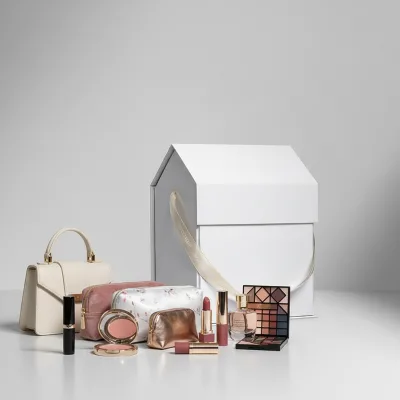


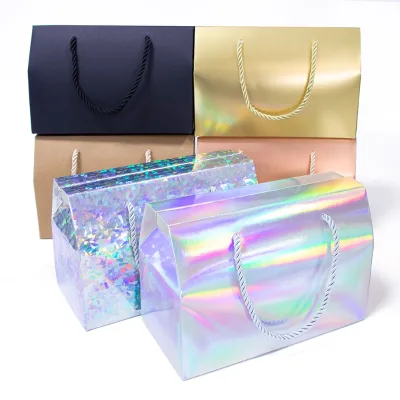
Comprehensive Sourcing Guide
Sourcing Guide for Handmade Eco-Friendly Rigid Gift Boxes
Understanding Product Definitions and Core Attributes
When sourcing handmade eco-friendly rigid gift boxes, buyers must first distinguish between general packaging categories and specific product attributes found in the current market. The core keyword implies a product that combines structural rigidity with sustainable materials and artisanal production methods. Based on available product data, the term "rigid box" is often categorized alongside folding boxes and lid-and-base configurations. While the market offers various shapes including rectangles, squares, and irregular forms, the "rigid" designation typically refers to boxes that maintain their shape without collapsing, often constructed from materials like art paper, coated paper, ivory board, kraft paper, or paperboard.
A critical observation in the current supply landscape is the variation in product definitions. Some listings describe the product as a "Flat Packing Gift Box," which suggests a design that is shipped flat and assembled by the end-user or a third party, yet still offers a rigid final structure. Others explicitly list "Rigid Boxes" as the box type. The "handmade" aspect is frequently associated with the "Customization" and "Design Service" attributes, where specific cuts, folds, and finishes are applied manually or through specialized processes rather than fully automated mass production lines. The "eco-friendly" claim is supported by the presence of "Recyclable," "Eco-Friendly," and "Recycled Materials" as standard features. Buyers should verify that the specific supplier's definition of "handmade" aligns with their quality expectations, as this can range from fully hand-assembled luxury packaging to semi-automated processes with manual finishing touches.
Technical Specifications and Material Composition
The technical foundation of a rigid gift box lies in its material composition and structural specifications. The supplied data indicates a diverse range of paper types available, including art paper, coated paper, ivory board, kraft paper, and paperboard. The choice of material directly impacts the perceived value, durability, and environmental profile of the final product. For instance, kraft paper is often associated with a natural, rustic aesthetic and high recyclability, while ivory board and coated paper offer a smoother surface for high-quality offset printing and a more premium feel.
Dimensions and models vary significantly across suppliers. Specific product models such as "yx-26-3," "006," "008," "BCPBOX-121X," and "BCPBOX-301G" suggest that buyers will encounter a wide array of pre-defined sizes or custom configurations. The size range spans from "Small" to "Large," with some specifications noting standard dimensions like "15x10x2," though these should be treated as examples rather than universal standards. The weight of individual units is typically listed as less than 0.5 kg, indicating that the packaging is lightweight enough for efficient shipping but substantial enough to provide protection.
Surface handling is another critical technical specification. The data confirms that "Offset Printing" is a common process, allowing for high-resolution graphics and branding. Buyers should also note that "Surface Handling" can be customized "as Your Need," which may include embossing, debossing, foil stamping, or UV coating. The "Flat Packing" attribute is particularly relevant for logistics; it implies that the boxes are shipped unassembled to save space, reducing freight costs and carbon footprint, before being assembled at the destination. However, for rigid boxes, the assembly process must be robust to ensure the final product maintains its structural integrity.
Compliance, Certification, and Environmental Claims
Navigating the compliance landscape for eco-friendly packaging requires careful verification of certifications and standards. The provided facts list "ISO9001" as a specific certificate associated with some products. This certification indicates that the supplier has a quality management system in place, ensuring consistency in production processes. However, ISO9001 is a management standard and does not inherently certify the environmental sustainability of the materials used.
For the "eco-friendly" and "handmade" claims, buyers must look for specific material certifications. While the data mentions "Recyclable" and "Recycled Materials" as features, it does not provide definitive proof of third-party verification for these claims in the supplied text. The background information mentions "FSC" (Forest Stewardship Council) as a low-confidence background item; therefore, buyers should not assume a supplier holds FSC certification unless explicitly verified. To ensure the product meets strict environmental standards, procurement teams should request documentation for FSC, PEFC, or other relevant forestry certifications.
Furthermore, the "Customized" standard and "Cutomization Acceptable" attributes suggest that many products are made to order. This flexibility allows for the use of specific sustainable materials but also introduces variability. Buyers should verify that the "Customized" standard includes clear specifications for material sourcing, ensuring that the paperboard or paper used is indeed sourced from sustainable forests or contains a verified percentage of post-consumer recycled content. The "Recycled Materials" feature should be backed by a chain of custody certificate to validate the claim.
Cost Drivers and Pricing Dynamics
The pricing of handmade eco-friendly rigid gift boxes is influenced by several interconnected factors. The observed price range in the market spans from $0.03 to $6.80 USD, a wide variance that reflects differences in material quality, customization complexity, and order volume. The lower end of the spectrum likely corresponds to simple, flat-packed designs with minimal customization and standard paper types, while the higher end reflects complex rigid structures, premium materials like ivory board, and extensive hand-finishing processes.
Order volume is a primary cost driver. The Minimum Order Quantity (MOQ) ranges from 1 to 3,000 units. For buyers seeking small batches or prototypes, an MOQ of 1 is advantageous, though the unit cost will be significantly higher. Conversely, larger orders can leverage economies of scale to reduce the per-unit cost. The "Bulk Production Time" is noted as 15 working days, which is a standard lead time for custom manufacturing. However, this timeline can be extended by the complexity of the design, the availability of specific eco-friendly materials, and the "Sample Time" of 3-7 working days required for pre-production approval.
Additional cost factors include the "Design Service," which is listed as "Free" in some contexts, but the complexity of the design can still impact the overall project cost. The "Custom" accessories and specific surface handling requirements, such as foil stamping or embossing, will also add to the final price. Buyers should request detailed quotations that break down material costs, printing costs, and assembly labor to understand the true cost drivers.
Typical Applications and Use Cases
The versatility of handmade eco-friendly rigid gift boxes makes them suitable for a broad spectrum of industries. The data lists a comprehensive set of usage scenarios, including Arts and Crafts, Electronic Products, Jewelry, Food, Garment & Shoes, Greeting Cards, Letters, Gifts, Cosmetic, and Health Care Products. This wide applicability stems from the ability to customize the box type, size, and finish to meet the specific needs of each industry.
For the jewelry and cosmetic sectors, the "Rigid Box" and "Lid and Base Box" types are particularly popular due to their premium feel and ability to protect delicate items. The "Square" and "Rectangle" shapes are standard for these applications, offering a classic and elegant presentation. In the food and gift sectors, the "Recyclable" and "Eco-Friendly" attributes are crucial selling points, as consumers increasingly prefer sustainable packaging. The "Applicable Scene" data highlights uses in Shopping, Packing, and Festival contexts, indicating that these boxes are often used for retail displays and holiday gifting.
The "Flat Packing" feature is particularly beneficial for businesses with limited storage space or those looking to reduce shipping emissions. By shipping boxes flat and assembling them on-site, companies can optimize their logistics. The "Custom" accessories allow for the inclusion of inserts, ribbons, or magnetic closures, enhancing the unboxing experience for high-end products.
Supplier Evaluation and Quality Control
Evaluating suppliers for handmade eco-friendly rigid gift boxes requires a multi-faceted approach. The data indicates that suppliers are located in various regions of China, including Fujian, Shenzhen, Qingdao, and Foshan. While these locations are known for manufacturing, buyers should not assume uniform quality across all regions. Instead, they should focus on the supplier's specific capabilities and track record.
Key evaluation criteria include the supplier's ability to handle "Customization" and "Design Service." A supplier that offers free design services may be more collaborative, but buyers must ensure the design team understands the technical requirements of rigid box construction. The "ISO9001" certification is a positive indicator of quality management, but it should be complemented by on-site audits or third-party quality reports.
Quality control should focus on the consistency of the "Handmade" process. Since manual assembly can introduce variability, buyers should request samples that demonstrate the precision of the folding, gluing, and finishing. The "Surface Handling" quality, particularly for offset printing, should be checked for color accuracy and registration. Additionally, the structural integrity of the "Rigid Box" must be tested to ensure it can withstand stacking and handling during transit. The "Sample Time" of 3-7 working days allows for a thorough evaluation of the prototype before committing to bulk production.
Long-Term Procurement Considerations
Sourcing handmade eco-friendly rigid gift boxes is not just a one-time transaction but a strategic decision that impacts brand reputation and supply chain resilience. The "Custom Order" and "Customization Acceptable" attributes suggest a flexible partnership model, but buyers must establish clear communication channels to manage changes in design or material requirements over time. The "Bulk Production Time" of 15 working days should be factored into inventory planning to avoid stockouts, especially during peak seasons like festivals or holidays.
Sustainability is a long-term driver. As regulations and consumer expectations evolve, the demand for verified eco-friendly materials will likely increase. Buyers should prioritize suppliers who are transparent about their material sourcing and are willing to adapt to new environmental standards. The "Recycled Materials" feature is a good starting point, but future-proofing the supply chain may require investing in suppliers who can provide full lifecycle assessments of their packaging.
Finally, the "Carton" and "Standard Corrugated Carton with Bubble Wrap Protec" packing methods indicate that the supplier considers the protection of the product during shipping. However, for long-term procurement, buyers should consider the environmental impact of the secondary packaging as well. Ensuring that the shipping cartons are also recyclable or reusable can further enhance the overall sustainability profile of the procurement strategy. By maintaining a focus on quality, compliance, and flexibility, buyers can build a resilient supply chain for their rigid gift box needs.
FAQs
What customization options are available for these boxes?
Customization is available for logo printing, colors, and shapes. Buyers can request specific paper types like kraft or art paper, and the standard allows for customized dimensions and surface handling to meet unique branding needs.
How long does bulk production take for custom orders?
Bulk production time is typically 15 working days for custom orders. This timeline applies to the manufacturing process after sample approval, which usually takes 3 to 7 working days to ensure design accuracy.
Which certifications do the suppliers hold for quality management?
Suppliers hold ISO9001 certification to ensure consistent quality management systems. While features like recyclable materials are listed, buyers should verify specific environmental certifications separately as FSC is not confirmed in the provided data.
Can I order small quantities with a low minimum order?
Yes, the minimum order quantity ranges from 1 to 3000 units depending on the supplier. This flexibility allows buyers to test prototypes with low MOQs or scale up to larger volumes for cost efficiency.
What paper types are used for these rigid gift boxes?
Common paper types include art paper, coated paper, ivory board, kraft paper, and paperboard. These materials support offset printing and offer varying levels of rigidity and aesthetic finish for different product applications.
How are the boxes packed for shipping to reduce costs?
Boxes are often shipped in flat packing configurations to save space and reduce freight costs. Some suppliers use standard corrugated cartons with bubble wrap protection to ensure safety during transit before final assembly.