Source Handmade Rolled Edge Enamel Pot for Cooking, Art, and Daily Use
Explore 30 listings for the Handmade Rolled Edge Enamel Pot, featuring options in mosaic, simplicity, and Chinese styles. Buyers can compare specifications including sizes from 12cm to 34cm, capacities up to 1000ML, and certifications like FDA and LFGB from manufacturers in China.
Key considerations
Products List


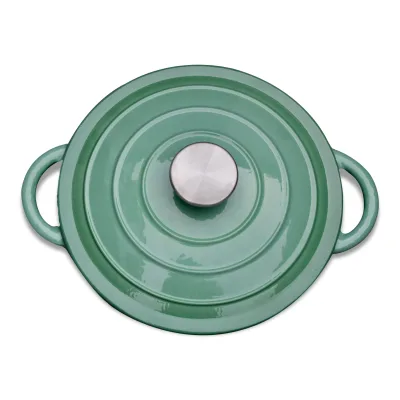
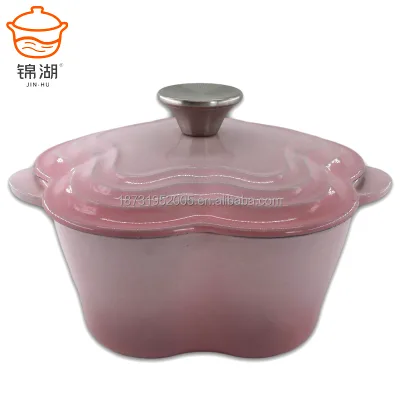
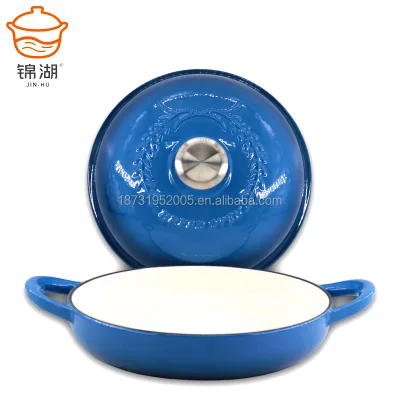


Enamelled Cast Iron Dutch Oven Pot with Lid Heavy Duty Non Stick Casserole Pot
$6.00 - $14.00
MOQ: 500 Pieces

Comprehensive Sourcing Guide
Strategic Sourcing Guide for Handmade Rolled Edge Enamel Pots
Understanding Product Attributes and Manufacturing Variations
When sourcing handmade rolled edge enamel pots, buyers must first navigate the complex landscape of manufacturing methods and product definitions. The term "handmade" in the context of enamel cookware often implies specific artisanal techniques, yet market listings frequently present a dichotomy between handcrafted and machine-made processes. In the current supply chain, some products labeled with handmade attributes utilize techniques such as mosaic artistry or specific stylistic approaches like Chinese or simplicity themes. These items often feature distinct visual characteristics, such as flower themes or multicolor printed finishes, which differentiate them from mass-produced industrial cookware.
However, a critical observation in the market is the coexistence of "Machine Made" products alongside those described as handmade. Buyers must verify the actual production method for each specific SKU. While some listings emphasize "Handmade" techniques, others explicitly state "Machine Made" as the making method. This distinction is vital for quality assurance and pricing strategies. The rolled edge feature, often associated with safety and durability, is a common specification, but the method of its creation—whether by hand or automated machinery—directly impacts the tactile feel and structural integrity of the rim.
Furthermore, the customization landscape for these pots is extensive. Suppliers often offer "Customization" options that include size, logo, packaging, and color. The available color palette can range from "Any Color" to specific "Multicolor" or "Printed" designs. Some products feature "Color Changing" capabilities or specific accessories like handles, which are listed as "with Handle" or "Cup Accessories." The ability to customize packaging, ranging from "Inner Box + Carton" to "1PCS/OPP Bag," allows buyers to tailor the product for retail or wholesale distribution. Understanding these variable attributes is the first step in defining a precise procurement specification that aligns with the intended market segment.
Technical Specifications and Standard Compliance
Technical specifications for enamel pots vary significantly based on the intended application, whether for daily use, art, or health care. The market data indicates a wide range of standard sizes and dimensions. Buyers should expect to encounter models defined by specific centimeter measurements, such as 12cm, 14cm, 16cm, 18cm, 20cm, 22cm, 24cm, and even larger diameters up to 33cm. Some specifications are presented as a range, such as 12-14-16-18-20-24CM, while others are listed as specific model numbers like FF-HCP-4 or FF-CSR-12.
Capacity is another critical technical parameter. Listings reference capacities ranging from 1000ML to 14 oz, with some products defined by their physical dimensions, such as 2812.5cm or 3425.5*13cm. The weight of the product is also a key specification, with some items listed at a net weight (N.W.) of 3kg. These physical attributes must be cross-referenced with the intended heat source compatibility. The enamel pots are designed to function with various heat sources, including Hob, Gas, Induction, Ceramic, and Halogen. This versatility is a significant technical advantage, but it requires verification that the specific enamel coating and base construction are suitable for the intended heat source, particularly induction, which requires a magnetic base.
Compliance and certification checks are paramount when sourcing cookware. The supply chain data highlights several recognized certifications, including FDA, LFGB, CE/EU, CIQ, and EEC. These certifications indicate that the product meets specific safety and material standards for food contact. However, buyers must treat these as observations of specific listings rather than universal guarantees for all products. The presence of these certifications suggests a higher level of regulatory compliance, but verification of the current validity and scope of these certificates for the specific batch being ordered is essential. Additionally, while some background knowledge references standards like EN13983 or BSCI, these should be treated as background context rather than confirmed specifications unless explicitly stated in the supplier's documentation.
Cost Drivers and Pricing Dynamics
The pricing structure for handmade rolled edge enamel pots is influenced by a complex interplay of factors, including manufacturing method, customization level, and order volume. The observed price range in the market spans from 1 to 179 USD, a broad spectrum that reflects the diversity of product types and quality levels. Several key drivers contribute to this variance. First, the "Handmade" designation often commands a premium over "Machine Made" items due to the labor intensity involved in the production process. Artistic elements, such as mosaic techniques or specific themes like flowers, further increase the cost.
Second, the level of customization significantly impacts the final price. Products offering "Customized" options for size, logo, and packaging require additional setup and production steps. For instance, a product with a specific "Color Box" packaging or a custom logo printed on the enamel surface will cost more than a standard "Inner Box + Carton" configuration. The "Sample" availability, often listed as "Free," can influence the initial cost structure, as suppliers may absorb sample costs to secure larger orders.
Order volume is perhaps the most significant cost driver. The Minimum Order Quantity (MOQ) ranges from 1 to 3000 units. Products with an MOQ of 3000, such as those with the "Best Mommy" branding or specific model numbers like Bst084, typically operate on a high-volume, low-margin model. Conversely, suppliers accepting an MOQ of 1 allow for smaller, more flexible orders but at a higher unit price. Buyers must balance the need for inventory flexibility with the economies of scale offered by larger orders. The "N.W." of 3kg for certain models also affects shipping costs, which is a hidden component of the total landed cost. Understanding these dynamics is crucial for developing a competitive procurement strategy that aligns with budget constraints and sales projections.
Typical Applications and Market Segmentation
The versatility of handmade rolled edge enamel pots allows them to serve multiple market segments, from functional kitchenware to decorative art pieces. The primary application is "Daily Use," where the durability and safety of the enamel coating are essential. These pots are suitable for cooking on various heat sources, making them ideal for home kitchens, restaurants, and catering services. The "Health Care" function mentioned in some listings suggests that these products may be marketed towards health-conscious consumers or used in medical and wellness settings where non-toxic materials are a priority.
Beyond functional cooking, these pots are also utilized in "Art" applications. The "Chinese" style, "Simplicity" theme, and "Mosaic" techniques indicate a strong potential for decorative use. Products with "Flower" themes or "Multicolor" designs can serve as centerpieces or artistic displays. The "Color Changing" feature adds a dynamic element that appeals to novelty markets or children's products. The "Best Mommy" branding suggests a specific niche targeting parents or family-oriented gifts.
The "Cup Accessories" and "with Handle" features further expand the application scope to include serving vessels or specialized drinkware. The "Printed" fancy designs allow for branding opportunities, making these pots suitable for promotional items or corporate gifts. Buyers should analyze their target demographic to determine which attributes are most relevant. For example, a retailer focusing on high-end kitchenware might prioritize the "Handmade" and "Eco-Friendly" aspects, while a gift shop might focus on the "Art" and "Theme" characteristics.
Supplier Evaluation and Geographic Considerations
Evaluating suppliers for handmade rolled edge enamel pots requires a careful assessment of their geographic location, production capabilities, and compliance history. The supply chain data identifies specific origins, including "Linyi City Shandong Province," "Zhou Kou, He Nan," and general "China" origins. These regions are known for their manufacturing capabilities, but buyers should verify the specific factory's capacity and reputation. Linyi, for instance, is a significant hub for wood and related industries, which may influence the supply chain for packaging materials like "Carton Packing."
Supplier evaluation should also focus on the "Customization Options" and "Sample" availability. Suppliers offering "Free" samples demonstrate confidence in their product quality and are more likely to be reliable partners. The ability to customize "Size, Logo, Packaging, Color" indicates a flexible production line capable of meeting diverse buyer requirements. Buyers should request detailed information on the "Making Method" to ensure the product matches the "Handmade" or "Machine Made" specification.
Compliance verification is another critical step. Suppliers should provide up-to-date documentation for certifications such as FDA, LFGB, CE/EU, CIQ, and EEC. While background knowledge mentions BSCI, buyers should confirm if the supplier holds this certification or equivalent social compliance standards. The "Standard" values, such as 18-26# or 22#, should be cross-referenced with the buyer's technical requirements. A supplier that can consistently meet these standards and provide clear documentation is more likely to deliver a high-quality product.
Quality Control and Long-Term Procurement Strategies
Implementing a robust quality control (QC) strategy is essential for sourcing handmade rolled edge enamel pots. Given the variation in "Making Method" and "Style," buyers should establish clear acceptance criteria before production begins. Key QC checkpoints include verifying the "Rolled Edge" integrity, ensuring the "Enamel" coating is free from chips or bubbles, and confirming the "Heat Source" compatibility. The "N.W." of 3kg for certain models should be checked to ensure consistency across the batch.
For long-term procurement, buyers should focus on building relationships with suppliers who offer consistent quality and reliable lead times. The "MOQ" of 3000 for some products suggests a commitment to volume, which can lead to better pricing and priority production slots. However, for buyers with lower volume needs, the "MOQ" of 1 offers flexibility but may require a different pricing strategy.
Buyers should also consider the "Packaging" options, such as "Inner Box + Carton" or "Color Box," to ensure the product arrives in good condition. The "Customization" of packaging can be a strategic advantage for branding. Finally, maintaining open communication with suppliers regarding "Certification" updates and "Standard" changes will help mitigate risks and ensure continued compliance. By combining rigorous QC with strategic supplier relationships, buyers can secure a steady supply of high-quality handmade rolled edge enamel pots that meet their specific market needs.
Comparative Analysis of Product Specifications
To facilitate decision-making, the following table summarizes key product attributes observed in the market. This comparison highlights the diversity in specifications, helping buyers identify products that align with their specific requirements.
| Attribute Category | Product A (Art/Handmade) | Product B (Daily Use/Machine) | Product C (Custom/High Volume) |
|---|---|---|---|
| Making Method | Handmade | Machine Made | Machine Made |
| Style | Chinese, Mosaic, Flower | Simplicity, Simple | Simple, Printed |
| Standard Sizes | 18-26#, 22# | 12cm-24cm | 20/26/30/33cm |
| Capacity | N/A | 1000ML | 14 oz |
| Certifications | N/A | FDA, LFGB, CE/EU | FDA, LFGB, CE/EU, CIQ |
| MOQ | 1 | 3000 | 3000 |
| Origin | Linyi City, Shandong | Zhou Kou, He Nan | China |
| Customization | Color, Theme | Size, Logo, Packaging | Size, Logo, Packaging, Color |
| Heat Source | N/A | Hob, Gas, Induction | Hob, Gas, Induction, Ceramic |
| Packaging | Inner Box + Carton | Carton Packing | Color Box |
This table illustrates that while some products focus on artistic and handmade attributes, others prioritize mass production and standard compliance. Buyers must select the product type that best fits their business model, balancing the unique appeal of handmade items with the cost-efficiency of machine-made alternatives.
FAQs
How are handmade rolled edge enamel pots made?
Some products are handmade using mosaic techniques, while others are machine made. Buyers must verify the specific production method for each SKU to ensure it matches their quality expectations.
What certifications do these enamel pots have?
Certified listings include FDA, LFGB, CE/EU, CIQ, and EEC standards. These indicate compliance for food contact, but buyers should verify the validity for specific batches before ordering.
Which heat sources are compatible with these pots?
These pots function with Hob, Gas, Induction, Ceramic, and Halogen heat sources. Compatibility depends on the specific base construction and enamel coating suitable for the intended heat application.
Can I customize the size and logo of the pot?
Yes, customization options include size, logo, packaging, and color. Buyers can request specific dimensions like 12cm to 33cm or custom packaging such as color boxes or OPP bags.
What is the minimum order quantity for these products?
The MOQ ranges from 1 to 3000 units depending on the supplier and product model. High-volume orders like those with 3000 MOQ often offer lower unit prices compared to flexible single-unit orders.
Where are these enamel pots manufactured?
Products originate from locations such as Linyi City in Shandong Province and Zhou Kou in He Nan. Buyers should confirm the specific factory location to assess logistics and supply chain reliability.
What packaging options are available for these pots?
Packaging includes Inner Box plus Carton, Color Box, or 1PCS per OPP bag. Custom packaging requirements can be specified to align with retail needs or wholesale distribution strategies.