Source Internal Pressurization Testing Instrument for Textiles, Fabrics, Tarpaulin
Find 30 internal pressurization testing instruments from verified Chinese manufacturers. Compare models like GLT-01 and LU-LKD-40-RC for testing textiles, fabrics, and tarpaulin with varying pressure ranges and accuracy levels; compare the available evidence and request quotations based on your requirements.
Updated
Key considerations
Products List
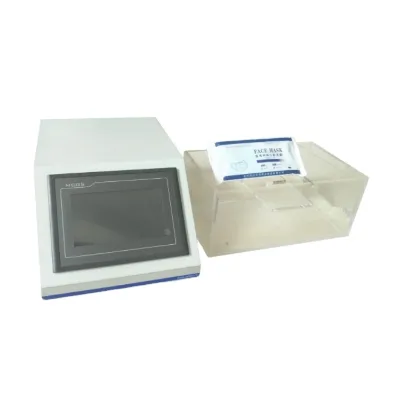
Cheap Internal Pressurization Testing Instrument for Chocolate Bar Packaging for Sale
$3000.00 - $5000.00
MOQ: 1 Minimum


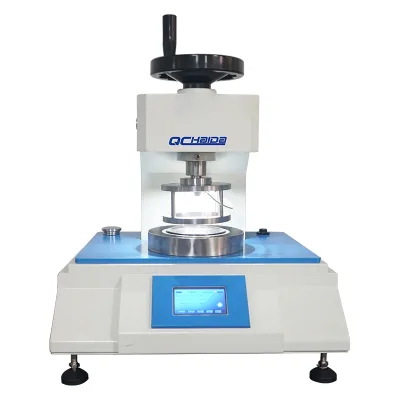


$10000.00 - $50000.00
MOQ: 1 Sets

$10000.00 - $50000.00
MOQ: 1 Sets
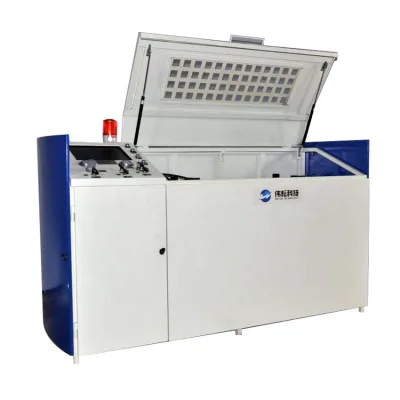

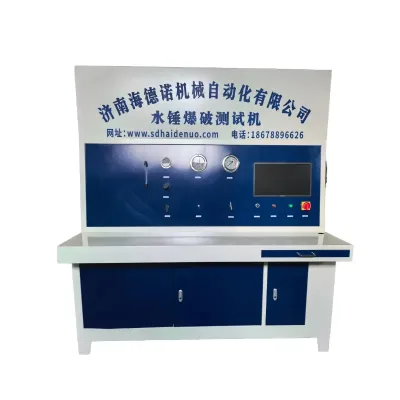
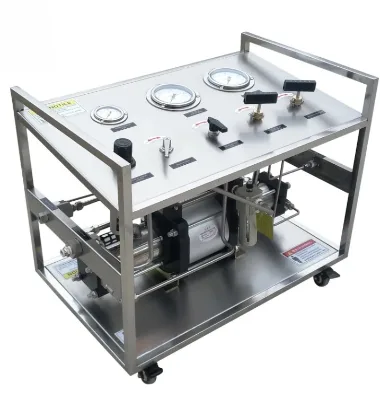
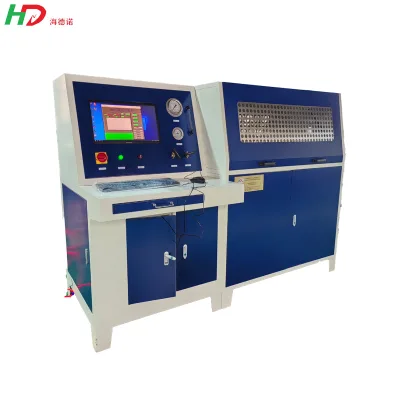

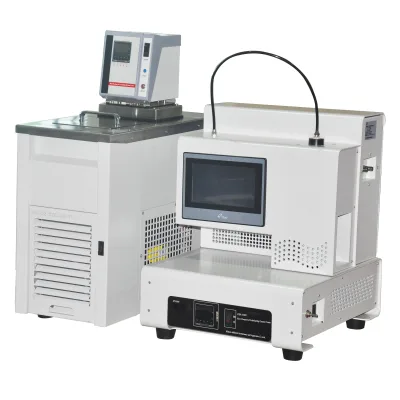
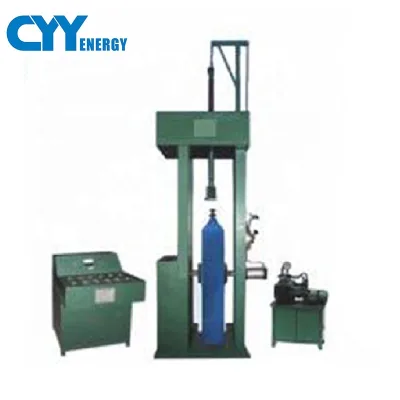

ISO1167 Hydrostatic Pressure Resistance Tester Pressure Test Equipment Pipe Test Equipment
$2000.00 - $3000.00
MOQ: 1 Sets

Hydrostatic Pressure Testing Equipment with Pipe Hydrostatic Testing
$13000.00 - $150000.00
MOQ: 1 Sets


Hydrostatic Testing Machine Pressure Test System Suitable for Various Industrial Components
$166670.00 - $3333340.00
MOQ: 1 Pieces

Comprehensive Sourcing Guide
Internal Pressurization Testing Instrument Sourcing Guide
Procuring an Internal Pressurization Testing Instrument requires balancing laboratory-grade accuracy against production-floor practicality, and the market offers configurations that span single-channel benchtop units to multi-channel industrial systems. The instruments observed in this product category are designed to evaluate how a specimen or finished product withstands internal pressure, whether that means detecting gross leaks, holding a set pressure over time, or cycling pressure to assess fatigue behavior. Because these instruments are frequently bought by quality-control laboratories, third-party testing houses, and production plants, the buyer's first task is to define the testing objective clearly before comparing models.
This guide organizes the procurement decision into the questions that actually determine satisfaction after delivery: what the instrument must measure and at what range, which standards the laboratory must satisfy, how the total cost of ownership is structured, and what qualification steps separate a reliable supplier from a risky one. Each section identifies one decision point so the purchasing team can divide the evaluation work, request comparable documentation from every vendor, and avoid the common failure mode of selecting an instrument whose specifications look strong on paper but whose terms, support, and verification obligations remain vague.
Product Scope and Observed Listing Signals
Listings under this keyword show a meaningful spread of equipment types. Gross leak testers such as the GLT-01 model are configured with an acrylic chamber measuring 34×20×15 cm (L×W×H), use compressed air prepared by the user at 0.6 MPa, and operate on 110–220 V, 50/60 Hz power with roughly 100 W consumption. Hydrostatic pressure testing machines, including a model designated HST-02, serve textiles, fabrics, canvas, and tarpaulin applications and follow standards such as ISO 811, ISO 139, and ISO 3696. Compression testing machines like the LU-LKD-40-RC and LU-LDD-100 also appear, indicating keyword overlap that buyers should resolve early.
Several listing signals deserve attention when shortlisting. Origins concentrate in Jinan and Shandong, China, with one item traced to Chengde, indicating a regional manufacturing cluster where direct factory purchasing is common. Customization is explicitly offered (OEM support is a listed attribute), and warranty terms of one year appear on at least some listings. Observed prices range dramatically, from about one hundred dollars into the millions, which strongly suggests mixed listings where the keyword surfaces loosely related equipment; buyers must confirm each listing actually corresponds to an internal pressurization instrument before requesting quotations.
Technical Specifications to Verify
The most consequential verification is the pressure envelope. Observed listings show test ranges of 0–30 kPa for gross leak detection, 0–600 kPa testing pressure with 0.01 kPa resolution for hydrostatic fabric testing, and pressure ranges of 4 bar to 200 bar for higher-pressure rigs, with elevation speeds adjustable from 1.0 kPa/min to 20.0 kPa/min. Accuracy claims of ±0.5% F.S. and pressure accuracy bands of −1% to +2% appear, but the buyer must confirm which figure applies to which operating point, because accuracy near the bottom of a range is often materially worse than at mid-scale.
Beyond range and accuracy, verify the practical operating details that affect daily use. For leak testers, confirm whether the 0.6 MPa compressed-air supply, which the user must prepare, matches your facility's air infrastructure and whether drying or filtration is needed. For multi-channel systems, confirm channel count (observed as 1 to 20 test channels), whether control runs through an industrial computer, and timing ranges that extend up to 1,000 hours for long-duration pressure-holding tests. For fabric-oriented machines, confirm the sample testing area of 100 cm² and whether chamber dimensions accommodate your largest specimens.
Compliance and Safety Documentation
Standards references appear inconsistently across the observed listings, and this is where careful buyers earn their price. Fabric hydrostatic testing is explicitly linked to ISO 811 (hydrostatic pressure resistance), ISO 139, and ISO 3696 in the listed data, so if your accreditation or customer contracts require these standards, request written confirmation that the specific model—and not just the product family—conforms, including the edition and any scope limitations. Never accept a standard citation as proof of calibration traceability; those are separate documentation streams.
Safety documentation is equally important because pressurization equipment stores and applies energy. Ask for a pressure-system safety file covering overpressure protection, relief-device sizing, chamber or vessel ratings, and interlocks that prevent operation with the enclosure open. The observed IP65 protection class on one listing applies to ingress protection only and says nothing about pressure safety, so do not conflate the two. Finally, request the factory calibration certificate with actual readings, the declared accuracy grade, and confirmation that certificates come from a traceable laboratory, since self-declared compliance without measurement data offers little defense during customer or accreditation audits.
Cost Drivers and Commercial Terms
Observed listing prices span roughly one hundred dollars to several million dollars, which tells buyers less about individual instruments than about the range of equipment the keyword captures. The real cost drivers are capacity (single channel versus 1–20 test channels), maximum pressure (30 kPa leak testing versus 200 bar rigs), automation level (industrial computer control versus manual operation), and customization. Custom-built chambers, non-standard pressure ranges, and OEM branding all move price upward and lengthen production time, so separate your must-have customizations from optional ones before negotiating.
Commercial terms observed in the listings include MOQs as low as one unit, single-item selling units, and packaging described variously as a veneer case, wooden package, standard export plywood case, or wooden case packing. Confirm in writing what each packaging tier includes, because export transit of pressurized equipment with acrylic chambers demands proper crating. Verify the warranty scope—one year is listed—by asking what it covers: parts, labor, shipping, remote support, and whether it voids on user-prepared utilities such as compressed air. Agree on payment milestones tied to factory acceptance testing rather than paying fully before performance verification.
Supplier Qualification and Quality Control
Because the observed cluster of suppliers is concentrated in Shandong and Chengde, China, with Jinan prominent among listed origins, buyers should treat supplier qualification as a structured exercise rather than a trust decision. Request the supplier's business registration scope to confirm the company actually manufactures testing equipment, ask for factory photographs or a video audit of the assembly and calibration areas, and identify whether the contact represents the factory or a trading intermediary. With OEM customization explicitly offered, clarify who retains design responsibility for custom chamber geometries and pressure components.
Quality control should be verified through a pre-shipment protocol, not promises. Require a factory acceptance test at the pressure points you will use daily—ideally witnessed live or recorded on video—using your own reference gauge where possible, with readings documented against the claimed ±0.5% F.S. or −1% to +2% accuracy. Ask how each unit is calibrated before dispatch, what reference instruments the factory maintains, and how calibration records are retained for warranty claims. For multi-channel systems, insist the acceptance test exercises every channel, not just a representative sample, since channel-to-channel variance is a common field failure.
Long-Term Procurement Checks
Plan for the instrument's second year before signing the first order. Spare-parts availability is the primary long-term risk: seals, fittings, valves, pumps, and pressure sensors wear under cyclic pressurization, and for customized or OEM units, proprietary parts can create single-source dependence. Negotiate a recommended spares list with prices at time of order, confirm whether consumables are standard industry components or proprietary, and establish how firmware or control software updates are delivered for industrial-computer-controlled systems.
Institutionalize verification and service after installation. Schedule in-house recalibration against a traceable reference gauge at an interval you define based on usage intensity, and document results so drift trends become visible before accuracy slips outside your process tolerance. For standards-based testing such as ISO 811 hydrostatic work, retain all original certification documents for accreditation audits. Finally, record the supplier's actual support responsiveness during commissioning—response time to a support request during installation is the best predictor of warranty-period service—and capture utility requirements (110–220 V power, user-supplied 0.6 MPa compressed air) in your facility documentation so relocation or duplication of the installation remains straightforward.
FAQs
What is the accuracy of the Gross Leak Tester?
The accuracy is ± 0.5% F.S. or 0.5% Fs depending on the specific model configuration. This precision ensures reliable detection of leaks within the specified test range of 0 to 30KPa or up to 600kpa for various textile applications.
Can the machine operate with different voltage inputs?
Yes, the device supports both 220 V and 110 V power inputs. It operates on a 110~220V 50/60Hz power supply with a power consumption of 100w, allowing flexible installation in regions with varying electrical standards.
Which standards does the testing instrument comply with?
The instrument complies with ISO811, ISO139, and ISO 3696 standards. These certifications ensure the machine meets international requirements for testing textiles, fabrics, canvas, and tarpaulin materials under pressurization and leakage conditions.
How is the product packed for international shipping?
Products are packed in veneer cases, wooden packages, or standard export plywood wooden cases. This robust packaging protects the testing machine during transit and ensures it arrives safely at the destination without damage.
What is the warranty period for this equipment?
The warranty period is one year from the date of purchase. This coverage applies to the Gross Leak Tester and related components, providing assurance of quality and support for the initial year of operation.
Can the testing pressure range be customized?
Yes, customization is available for the test range and other specifications. The standard range is 0 to 30KPa or 0 to 600kpa, but users can request specific requirements to suit their unique testing needs and sample types.
Where is the product manufactured and what is the origin?
The product originates from Shandong, China, specifically from Jinan or Chengde locations. This regional manufacturing base ensures consistent quality control and efficient logistics for international buyers seeking reliable testing machinery.