Source Japandi Style Ceramic Dinner Plate for Dining, Catering, and Retail
Compare 30 listings for Japandi Style Ceramic Dinner Plate from Chinese manufacturers in Jingdezhen, Fuzhou, and Zibo. Buyers can evaluate sizes, certifications, and packaging options to find suitable eco-friendly ceramic and porcelain options for various needs.
Key considerations
Products List


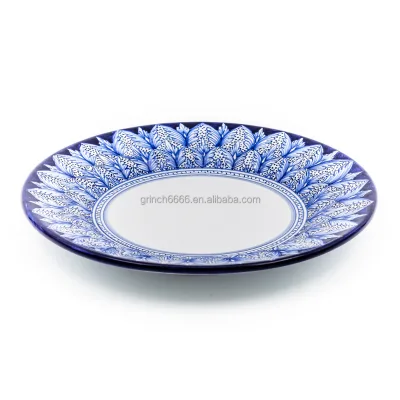


Luxury Ceramic Dinner Plate Round Ceramic Fruit Plate Custom Porcelain Food Plate
$1.00 - $5.00
MOQ: 5000 Sets


Comprehensive Sourcing Guide
Strategic Sourcing Guide for Japandi Style Ceramic Dinner Plates
The Japandi aesthetic, a fusion of Japanese minimalism and Scandinavian functionality, has become a dominant trend in modern dining ware. For B2B buyers, sourcing ceramic dinner plates that embody this style requires a nuanced understanding of material properties, manufacturing origins, and compliance standards. The market offers a diverse range of options, from traditional porcelain to modern ceramic composites, each with distinct implications for cost, durability, and supply chain logistics. This guide synthesizes available market data to provide a disciplined framework for procurement, ensuring that buyers can identify suppliers capable of delivering high-quality, style-compliant products without relying on unverified claims.
Understanding Material Composition and Aesthetic Alignment
The foundation of any Japandi-style dinner plate lies in its material composition. The observed market data indicates a strong prevalence of "Ceramic & Porcelain" and "Ceramics" as the primary materials. Specifically, "Porcelain" is highlighted as a raw material, which is critical for achieving the refined, translucent, and smooth finish characteristic of the style. The distinction between general ceramic and porcelain is significant; porcelain typically offers a denser body and a finer grain, allowing for the subtle, matte, or semi-gloss finishes often preferred in Japandi design.
When evaluating potential products, buyers must verify the specific grade of the material. The data references "Ab Grade" ceramics, a classification that suggests a specific tier of quality control regarding impurities and structural integrity. For a style defined by simplicity and elegance, surface defects are unacceptable. Buyers should request detailed specifications on the raw material source, as the origin of the clay directly influences the final texture and color consistency. The "Multicolor" attribute observed in the market suggests that while Japandi is often associated with neutral tones, the supply chain supports a broader palette. However, for authentic Japandi applications, the focus should remain on earth tones, soft whites, and muted blues, ensuring the "Blue and White Ceramic Dinner Plate" examples align with the intended aesthetic rather than appearing overly ornate.
Technical Specifications and Dimensional Standards
Precision in dimensions is paramount for Japandi dining ware, where the interplay of size and proportion defines the visual harmony of a table setting. The available product data reveals a wide spectrum of standard sizes, ranging from small 5.5-inch plates to large 16-inch serving platters. Specific models listed include dimensions such as 7 inches, 8 inches, 9 inches, 10 inches, 11 inches, and 12 inches, alongside metric equivalents like 12.5 cm in diameter with a 1 cm height.
Buyers must navigate a complex matrix of sizing standards. Some suppliers offer standardized models like "S/M/L" or specific model numbers such as "PL096," "PL110," and "RY1011," while others provide fully "customized" sizing options. The data also notes a standard range of 11.5 cm to 21 cm, indicating flexibility in production capabilities. When sourcing, it is essential to confirm whether the listed dimensions refer to the rim diameter or the overall footprint, as this affects stacking and storage logistics. Furthermore, the "Standard Export Carton" and "Cardboard Boxes and Wooden Frames" packaging options suggest that dimensional stability is a key concern for manufacturers, likely due to the fragility of the ceramic material during transit.
Compliance, Certification, and Safety Standards
In the B2B food service and retail sectors, compliance is non-negotiable. The ceramic industry is heavily regulated to ensure that dinnerware is safe for food contact and free from harmful substances like lead and cadmium. The observed market data highlights several critical certifications that buyers should prioritize. These include "CE/EU," "FDA," and "SGS." The presence of "FDA" certification is particularly relevant for the North American market, confirming that the materials meet U.S. Food and Drug Administration standards for food safety. Similarly, "CE/EU" indicates compliance with European safety directives, which is essential for exports to the European Union.
The "SGS" certification serves as a third-party verification of quality and safety, often covering both material composition and manufacturing processes. Additionally, the data mentions "Thermostability" and "Health Care" as functional attributes, suggesting that the ceramics are designed to withstand temperature variations without degrading or releasing toxins. Buyers should verify that the "SGS" test results specifically cover thermal shock resistance and chemical leaching, as these are the primary failure points for ceramic dinnerware. It is also important to note that while "Non-Disposable" is a listed attribute, this implies a focus on durability and reusability, which aligns with the sustainability ethos of the Japandi style.
Cost Drivers and Minimum Order Quantities
The economics of sourcing ceramic dinner plates are influenced by material costs, manufacturing complexity, and logistics. The observed price range in the market is vast, spanning from $0.30 to $10,000. This extreme variance suggests that the market includes both low-cost, mass-produced items and high-end, artisanal pieces. For a Japandi style, which often emphasizes quality over quantity, buyers should be wary of the lowest price points, as they may indicate inferior materials or compromised quality control.
Minimum Order Quantities (MOQs) vary significantly across suppliers. The data shows an MOQ range from 10 units to 5,000 units, with specific instances of 500 pieces and even 25 tons. The "25ton" figure likely applies to bulk industrial orders or raw material shipments, whereas the "500PCS" figure is more typical for finished goods. Buyers must align their order volume with the supplier's capacity. For smaller retailers or boutique hotels, suppliers offering "Single Item" selling units or low MOQs are preferable. However, larger chains may benefit from the economies of scale offered by suppliers with higher volume thresholds. The "Freely Sample" attribute is a crucial cost-saving measure, allowing buyers to validate quality before committing to large orders, thereby mitigating the risk of inventory loss.
Supplier Evaluation and Geographic Origins
Geographic location plays a pivotal role in the quality and cost structure of ceramic production. The data identifies three primary manufacturing hubs: Jingdezhen, China; Fuzhou, China; and Zibo, Shandong, China. Jingdezhen is historically renowned as the "Porcelain Capital" of China, suggesting a deep heritage in high-quality ceramic production. Fuzhou and Zibo are also significant industrial centers, with Zibo specifically noted for its ceramic capabilities.
When evaluating suppliers, buyers should consider the specific strengths of each region. A supplier in Jingdezzen may offer superior craftsmanship for intricate designs, while a Zibo-based manufacturer might excel in large-scale, standardized production. The "Customized" attribute is available across these regions, indicating that local manufacturers are capable of adapting to specific design requirements. However, buyers must verify the supplier's ability to maintain consistency across batches, especially when dealing with "Multicolor" options or specific glaze finishes. The "Individual Wrapping" and "Bulk Packing" options also reflect the supplier's logistical maturity, which is essential for protecting fragile ceramic items during international shipping.
Quality Control and Long-Term Procurement Considerations
Ensuring long-term supply chain stability requires a robust quality control (QC) framework. The "Non-Disposable" nature of the products implies a need for rigorous testing against breakage, chipping, and glaze wear. The "Thermostability" and "Discoloring" attributes listed in the data highlight the need for thermal shock testing and colorfastness verification. Buyers should establish clear acceptance criteria for these parameters before finalizing any contract.
Packaging is another critical aspect of quality control. The data mentions "Cardboard Boxes and Wooden Frames" as well as "Standard Export Carton" and "Individual Wrapping." For high-value Japandi plates, individual wrapping is essential to prevent micro-fractures that can occur during transit. Wooden frames provide an additional layer of protection for bulk shipments. Buyers should also consider the environmental impact of packaging, aligning with the sustainability values inherent in the Japandi philosophy.
Finally, long-term procurement considerations involve the supplier's ability to scale and adapt. The availability of "Customized" models and "Multicolor" options suggests a flexible supply chain. However, buyers must ensure that the supplier can maintain the "Ab Grade" quality standards as production volumes increase. Regular audits and consistent sampling protocols are necessary to verify that the "SGS" and "FDA" compliance levels remain constant over time. By focusing on these technical and operational details, buyers can secure a reliable supply of Japandi-style ceramic dinner plates that meet both aesthetic and functional requirements.
FAQs
What certifications are available for these ceramic dinner plates?
Products carry FDA, CE/EU, and SGS certifications to ensure food safety and compliance. These standards verify that the ceramics are free from harmful substances like lead and cadmium, making them suitable for global export markets.
Which material grades are used in the production of these plates?
The plates are manufactured using Ab Grade ceramic and porcelain materials sourced from Jingdezhen and Zibo. This specific grade ensures high structural integrity and a refined finish suitable for the Japandi aesthetic style.
Can buyers obtain samples before placing a large order?
Yes, freely available samples are offered to validate product quality before bulk purchasing. This allows buyers to inspect the ceramic texture and glaze finish without immediate financial commitment to large inventory quantities.
What is the minimum order quantity for these ceramic plates?
The standard minimum order quantity is 500 pieces for finished goods, though some bulk options exist. Buyers should verify specific MOQs as they can vary by supplier location and customization requirements.
How are the plates packaged for international shipping?
Packaging options include individual wrapping, standard export cartons, and cardboard boxes with wooden frames. These methods protect the fragile ceramic items from breakage during transit and align with export safety standards.
Which Chinese cities manufacture these ceramic dinner plates?
Manufacturing originates primarily from Jingdezhen, Fuzhou, and Zibo in Shandong province. These regions are known for their specific ceramic capabilities, ranging from traditional porcelain craftsmanship to large-scale industrial production.