Source Japanese 10-Piece Matcha Tea Set for Ceremonies, Daily Use, and Gifts
Explore 30 listings for the Japanese 10-Piece Matcha Tea Set, featuring bamboo and ceramic options with customizable designs. Buyers can compare specifications, pricing, and customization services from verified manufacturers.
Key considerations
Products List


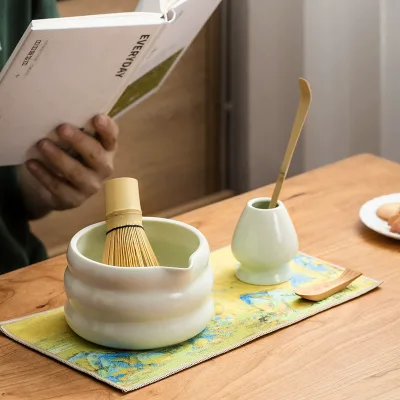
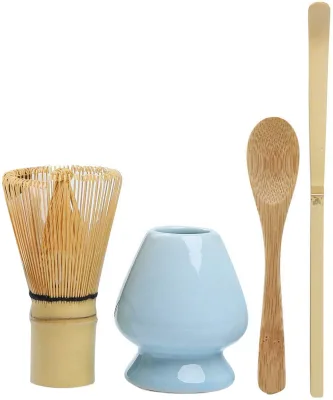
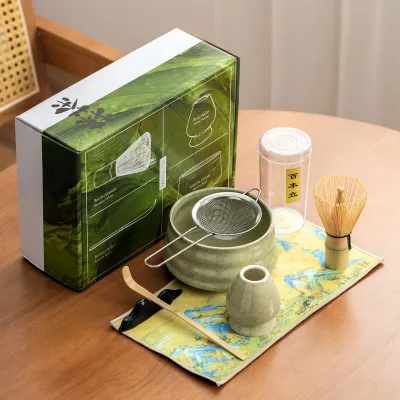
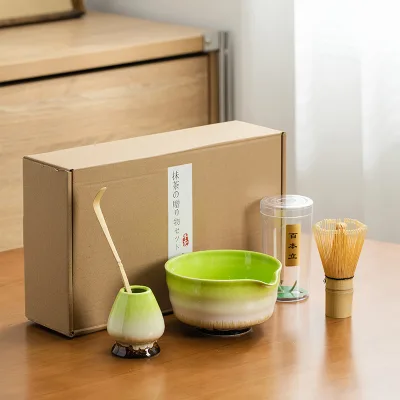
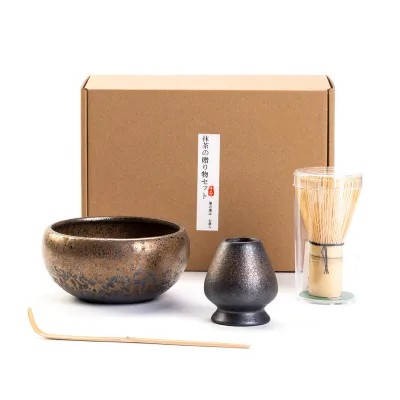
Custom Design Matcha Tea Set 5-Pieces Japanese Matcha Bowl Tea Whisker Set
$7.19 - $7.49
MOQ: 20 Pieces







Comprehensive Sourcing Guide
Strategic Sourcing Guide for Japanese-Style 10-Piece Matcha Tea Sets
The global demand for authentic tea culture equipment has elevated the Japanese 10-piece matcha tea set from a niche cultural item to a staple in B2B procurement catalogs for home goods, hospitality, and lifestyle retailers. Sourcing this specific configuration requires a nuanced understanding of material composition, set composition, and the regulatory landscape governing food-contact ceramics and bamboo. Buyers must navigate a market where "Japanese style" often denotes a specific aesthetic and functional philosophy rather than a strict geographic origin, necessitating rigorous verification of supplier claims against actual product attributes. This guide provides a disciplined framework for evaluating suppliers, analyzing technical specifications, and ensuring compliance for the procurement of 10-piece matcha sets.
Defining the 10-Piece Configuration and Material Composition
The core challenge in sourcing a "10-piece" set lies in the variability of component inclusion. Unlike standardized dinnerware, matcha sets are modular. A typical 10-piece configuration generally includes a matcha bowl (chawan), a bamboo whisk (chasen), a tea scoop (chashaku), a tea caddy (natsume or chaire), a tea cloth (chakin), a tea scoop rest (chashaku-oki), and various auxiliary tools like a tea caddy lid, a whisk holder, or additional scoops. However, the supplied product data indicates a fragmented market where specific sets are defined by piece counts such as 5-pieces, 6-pieces, and 8-pieces. When targeting a 10-piece set, the buyer must explicitly verify the inventory list against the "Type" attribute.
Material selection is the primary differentiator in this category. The data highlights two dominant material profiles: Bamboo and Ceramic. Bamboo is frequently cited for the whisk and scoops, with specific attributes noting "Eco-Friendly" features and "Multicolor" options, though traditional bamboo is often natural. Ceramic components, specifically "Porcelain" as noted in the data, are standard for the bowls and caddies. The "Ceramic Type" attribute specifies Porcelain, which offers a smooth, non-porous surface ideal for tea preparation. Buyers must distinguish between sets where the entire 10-piece count is ceramic versus hybrid sets where bamboo tools are included. The "Room Space" attribute indicates these are designed for "Desktop" use, implying a compact footprint suitable for home or office environments.
Technical Specifications and Dimensional Standards
Precision in dimensions is critical for both packaging efficiency and user experience. The supplied facts reveal specific dimensional data points that serve as benchmarks for quality assessment. For instance, one observed standard is listed as "D6* H10cm," which likely refers to a specific component like a tea caddy or scoop. Another detailed specification notes a size of "2417.510.7cm," which may represent the outer packaging or a specific large bowl. Additionally, a standard item is described as "11.85 x 7.09 x 3.7 inches," providing a clear metric for international shipping calculations.
When evaluating a 10-piece set, the buyer must ensure that the sum of individual component dimensions aligns with the overall packaging size. The "prod_packing" attribute mentions "Inner Box + Export Carton," suggesting a two-tier packaging system essential for protecting fragile ceramic items during transit. The "Standard Items" attribute indicates that some suppliers offer pre-defined configurations, but the "Customized" attribute confirms that bespoke dimensions and piece counts are available. Buyers should request a detailed bill of materials (BOM) that lists the exact dimensions of each of the ten pieces to verify if they fit the claimed packaging size. Discrepancies between the sum of parts and the total package volume often indicate inefficient packing or missing components.
Compliance, Certification, and Food Safety Verification
Food safety is non-negotiable for any product intended for tea preparation. The supplied data explicitly lists "LFGB, FDA, CE / EU" as certifications associated with specific product models. These are not optional marketing claims but mandatory regulatory requirements for selling in the European Union and the United States. LFGB (German Food Code) and FDA (US Food and Drug Administration) compliance ensures that the glazes on the ceramic and the treatment of the bamboo do not leach harmful substances like lead or cadmium.
The "Ceramic Type" being Porcelain is generally favorable for compliance, as high-fired porcelain is less prone to leaching than low-fired earthenware. However, the presence of a "Certification" attribute does not guarantee that every SKU in a supplier's catalog holds these credentials. Buyers must verify that the specific 10-piece set model number carries the valid certification documents. The data also mentions "OEM & ODM: Yes," which implies that custom designs are possible. When customizing, the buyer must re-verify that the new glazes or finishes used in the custom design still meet the LFGB and FDA standards. The "Standard" attribute "D6* H10cm" and "11.85 x 7.09 x 3.7 inches" should be cross-referenced with the test reports to ensure the certified dimensions match the actual product being shipped.
Cost Drivers and Pricing Dynamics
The observed price range in the market spans from $0.10 to $68.00 USD. This wide variance is driven by several factors: material quality, the complexity of the 10-piece assembly, and the level of customization. The lower end of the spectrum likely represents basic ceramic bowls with standard bamboo whisks, possibly sourced in high volumes with minimal packaging. The higher end reflects sets with premium porcelain, intricate designs, custom gift boxes, and comprehensive certification documentation.
The "MOQ" (Minimum Order Quantity) range of 1 to 1000 pieces offers flexibility. For a 10-piece set, the unit cost is heavily influenced by the packaging. The "Inner Box + Export Carton" requirement adds significant material and labor costs compared to bulk packing. Furthermore, the "Customized" attribute allows for logo printing and unique designs, which increases the unit price due to setup costs and lower economies of scale. Buyers should note that "Sample Time" is listed as 5-7 days, which can impact the initial cost of prototyping a custom 10-piece set. When negotiating, the buyer must clarify whether the price includes the cost of the custom gift box, as the "Package" attribute mentions "Customed Gift Box" as a distinct option.
Supplier Evaluation and Customization Capabilities
Evaluating a supplier for a 10-piece matcha set requires looking beyond the basic product listing. The data indicates that "Design: Accept Customized Designs" and "Logo: Customized Logo" are available features. This suggests that suppliers are capable of OEM (Original Equipment Manufacturer) and ODM (Original Design Manufacturer) services. However, the presence of multiple model numbers (e.g., BB054, BB046, KTC73-121) suggests a large catalog where not all models may support full customization.
Buyers should prioritize suppliers who demonstrate a clear separation between "Standard Items" and "Customized" options. The "Partten: Customed" and "Mold: New Designed" attributes indicate that some suppliers have the capability to create new molds for unique shapes, which is essential for a truly distinct 10-piece set. The "Keyword" attributes like "Best Matcha Whisk" and "Matcha Starter Whisk Set" suggest that suppliers often market specific components rather than the full set. A reliable supplier will be able to assemble a cohesive 10-piece narrative, ensuring that the whisk, bowl, and caddy share a consistent aesthetic and functional design language. The "prod_origin: China" is a common fact, but buyers should verify the specific factory location to ensure it aligns with their supply chain risk management strategies.
Quality Control and Long-Term Procurement Strategy
Quality control for matcha sets must address both the fragility of the ceramic and the durability of the bamboo. The "Eco-Friendly" attribute for bamboo implies a focus on sustainable sourcing, but buyers must verify the treatment process to prevent mold or cracking. For ceramic, the "Porcelain" type requires rigorous testing for thermal shock resistance, as matcha preparation involves hot water. The "Certification" of LFGB and FDA covers chemical safety, but mechanical integrity must be verified through internal drop tests and thermal cycling.
Long-term procurement considerations include the stability of the supply chain for replacement parts. If a buyer orders a 10-piece set, they must ensure that the supplier can provide individual replacements for broken components like the whisk or scoop without requiring a full set reorder. The "Sample Time" of 5-7 days is a positive indicator of responsiveness, but lead times for bulk orders should be confirmed. The "prod_packing" of "Inner Box + Export Carton" is a standard that should be maintained to prevent damage during shipping. Buyers should also consider the "Keyword" trends, such as "Matcha Starter Whisk Set" versus "Best Matcha Tea Sets," to align their inventory with current market demand.
Comparative Analysis of Set Configurations
To assist in decision-making, the following table compares common set configurations based on the observed data attributes. This comparison highlights the differences in piece count, material focus, and customization potential.
| Feature | 5-Piece Set | 8-Piece Set | 10-Piece Set (Target) |
|---|---|---|---|
| Typical Components | Bowl, Whisk, Scoop, Caddy, Cloth | Adds Rest, Holder, or Extra Scoop | Full ceremonial set with all auxiliaries |
| Material Focus | Mixed (Bamboo/Ceramic) | Mixed (Bamboo/Ceramic) | High emphasis on Porcelain & Bamboo |
| Customization | Available (Logo/Design) | Available (Logo/Design) | High (Mold/Design/Kit Assembly) |
| Packaging | Standard / Gift Box | Inner Box + Carton | Inner Box + Export Carton |
| Certification | LFGB, FDA (Verify per SKU) | LFGB, FDA (Verify per SKU) | LFGB, FDA (Verify per SKU) |
| Price Range | Lower end of spectrum | Mid-range | Higher end due to complexity |
| Model Examples | KTC73-70, KTC73-30 | BB054, BB046 | KTC73-121, KTC73-227 |
Final Procurement Recommendations
Sourcing a Japanese 10-piece matcha tea set is a complex process that balances aesthetic appeal with functional rigor. Buyers must move beyond generic keywords and demand specific evidence for the 10-piece composition, material integrity, and regulatory compliance. The availability of customization, from "Customized Logo" to "New Designed" molds, offers significant opportunities for brand differentiation, but it requires a disciplined approach to quality control. By verifying the "LFGB, FDA, CE / EU" certifications for the specific model and ensuring the "Inner Box + Export Carton" packaging meets the fragility requirements of the "Porcelain" and "Bamboo" components, buyers can secure a high-quality supply chain. The wide price range and MOQ flexibility allow for strategic inventory planning, but the final selection must be grounded in verified technical specifications and a clear understanding of the set's component list.
FAQs
What materials are used in Japanese matcha tea sets?
These sets typically combine bamboo for whisk and scoop components with ceramic porcelain for bowls and caddies. Buyers should verify the specific ceramic type is porcelain to ensure non-porous surfaces suitable for tea preparation.
Which certifications ensure food safety for these tea sets?
Valid products often carry LFGB, FDA, and CE / EU certifications to guarantee safety for food contact. Buyers must confirm these specific credentials apply to the exact model number before purchasing to prevent chemical leaching.
How can I customize the logo and design of the set?
Suppliers accept customized designs and offer logo printing services for OEM and ODM projects. Customization options include unique molds and gift box packaging, though setup costs may vary based on the complexity of the new design.
What is the typical packaging for export shipping?
Standard export packaging usually consists of an inner box combined with an outer export carton. This two-tier system is essential for protecting fragile porcelain and bamboo components during international transit and handling.
Can I order a sample before placing a bulk order?
Yes, sample time is typically listed as 5 to 7 days for custom or standard designs. This allows buyers to verify quality and dimensions before committing to larger quantities that may have higher minimum order requirements.
What is the price range for these matcha tea sets?
Market prices observed range from 0.10 to 68 USD depending on material quality and customization. Lower costs often reflect basic ceramic and bamboo combinations, while higher prices include premium porcelain and custom gift box packaging.
Which product models are available for this tea set type?
Available models include BB054, BB046, KTC73-121, and KTC73-70 among others in the catalog. Buyers should check specific model numbers to confirm piece counts, as sets vary between 5, 8, and 10 pieces.