Source Non Spill Airless Bottle for Skin Care, Cosmetics, Personal Care
Compare 30 Non Spill Airless Bottle options from Ningbo and Yuyao suppliers. Evaluate customization, sealing types, and capacities ranging from 10ml to 100ml for skin care and cosmetics packaging needs.
Key considerations
Products List


Plastic Airless Bottle Airless Pump Bottle for Eco-Friendly Skin Care Use
$0.11 - $0.65
MOQ: 10000 Pieces


5ml*2 Spray and Pump Function Eco-Friendly Double-Headed Airless Bottle
$0.47 - $0.52
MOQ: 10000 Pieces

Hot Sale High Quality White Plastic Empty Airless Bottles with Plastic Cap
$0.53 - $0.80
MOQ: 3000 Pieces


Stylish Design and Eco-Friendly Materials Airless Bottle Versatile Deostick Bottle
$0.17 - $0.18
MOQ: 10000 Pieces


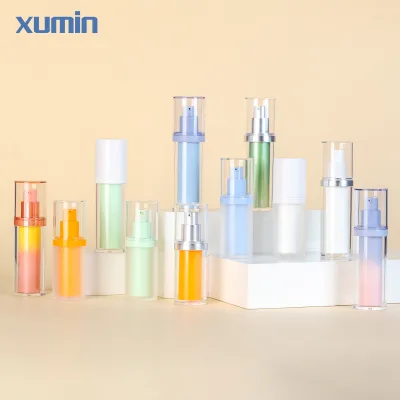

High Quality 150ml Elegant Airless Bottle with Pump for Liquid Storage
$0.40 - $0.60
MOQ: 10000 Pieces


Comprehensive Sourcing Guide
Strategic Sourcing Guide for Non-Spill Airless Bottles
Understanding Technical Specifications and Core Attributes
When sourcing non-spill airless bottles, buyers must first distinguish between the mechanical functionality of the pump mechanism and the structural integrity of the container. The core keyword "non-spill" implies a specific engineering feature designed to prevent leakage during transport or accidental drops, often achieved through a locking mechanism or a specialized valve system. Based on observed product attributes, the sealing type for these units frequently involves a screw cap or a pump sprayer, with the latter being critical for airless dispensing systems that utilize a piston to push product upward without air intake.
The material composition is a primary technical determinant. The supplied data indicates that the body material is predominantly Plastic, with specific references to Polypropylene (PP). PP is favored in this category for its chemical resistance and durability, making it suitable for various cosmetic formulations. The shape of these bottles is typically round, which offers structural advantages and ergonomic handling. However, buyers should verify if the specific model, such as the SXMJ series or the KA series, aligns with the desired aesthetic and functional requirements.
Capacity standards vary significantly across the market. Observed specifications list volumes ranging from 10ml and 15ml up to 30ml, 50ml, and 100ml. It is crucial to note that the "MOQ" attribute in some listings refers to volume capacities (e.g., "30ml 50ml") rather than a unit count, which can be a source of confusion during the initial inquiry phase. Buyers must clarify whether the Minimum Order Quantity is based on piece count, such as the 10,000 pieces observed in certain listings, or if it is tied to specific volume configurations. The actuator options further define the application, with choices including lotion or spray mechanisms, which directly impact the user experience and the type of product being packaged.
Compliance, Certification, and Safety Standards
In the realm of cosmetic packaging, compliance is not merely a formality but a prerequisite for market access. The supplied facts mention "SGS" as a product standard, indicating that third-party testing and certification are available for these products. SGS is a recognized global inspection, verification, testing, and certification company, and its presence suggests that suppliers may offer documentation regarding material safety and chemical resistance. However, buyers should not assume that every listed model automatically carries this certification without explicit verification.
The "Feature" attribute lists "Recyclable" for certain models, which aligns with growing environmental regulations and corporate sustainability goals. When evaluating suppliers, procurement teams should request proof of recyclability claims, such as material composition reports or compliance with local recycling standards. Additionally, the "Standard" attribute often references volume capacities (e.g., 15/30/50ml) rather than safety standards, so buyers must explicitly ask for compliance with international safety standards like ISO or specific regional regulations (e.g., EU Cosmetics Regulation) relevant to their target market.
The "Surface Treatment" and "Surface Handling" processes, including printing, hot stamping, silk screen, and matte finishes, introduce additional compliance considerations. Inks and coatings used in these processes must be non-toxic and safe for contact with cosmetic products. Buyers should verify that the supplier uses inks that meet relevant safety standards for food or cosmetic contact, ensuring that no harmful substances migrate from the packaging to the product. The "Customized" nature of the processing and molding allows for unique designs but requires rigorous quality control to ensure that customization does not compromise the structural integrity or safety of the bottle.
Cost Drivers and Pricing Dynamics
The pricing landscape for non-spill airless bottles is influenced by several variable factors. The observed price range in the market spans from $0.11 to $1.00 USD per unit. This wide variance is not arbitrary; it is driven by the complexity of the mold, the material grade, the volume capacity, and the level of customization required. Smaller capacities like 10ml or 15ml may fall at the lower end of the spectrum, while larger 100ml units or those with complex actuator options like lotion pumps may command higher prices.
Material costs are a significant driver. While the general material is listed as Plastic, the specific grade of PP or other polymers can vary in cost based on purity and performance characteristics. Customization is a major cost factor. The "Customization" attribute is marked as "Available," and the "Logo" attribute confirms that customized branding is accepted. However, customization often incurs additional tooling fees and higher Minimum Order Quantities (MOQ). The observed MOQ range is substantial, spanning from 3,000 to 30,000 units, with some specific listings requiring 10,000 pieces. High MOQs are necessary to amortize the cost of custom molds and setup, which directly impacts the unit price.
Packing and logistics also contribute to the final cost. The "prod_packing" attribute lists options such as "Carton" or "Paper Carton," and "Packing Info" specifies "Standard Export Packing Box." The choice of packaging material and the density of the packing affect shipping costs, especially for heavy or bulky items. Furthermore, the "Delivery Time" of 15-25 days suggests that lead time is a critical component of the total cost of ownership. Rush orders or expedited shipping will inevitably increase the overall expenditure. Buyers should also consider the "Sample" policy; while some suppliers offer samples "One Free of Charge," others may charge for samples, which adds to the initial prototyping cost.
Typical Applications and Usage Scenarios
The primary application for non-spill airless bottles is clearly defined in the data as "Skin Care Packaging" and "Cosmetics." The "Usage" attribute explicitly lists "Cosmetics" and "Personal Care Product," while the "Industrial Use" field broadens this to "Personal Care, Beauty Packaging." These bottles are particularly well-suited for high-value skincare products such as serums, moisturizers, and anti-aging creams. The airless mechanism protects sensitive ingredients from oxidation and contamination, extending the shelf life of the product.
The "Non Spill" feature is particularly valuable for travel-sized products or items intended for use in environments where leakage could be problematic, such as gym bags or toiletry kits. The "Refill" attribute is listed as both "Yes" and "No" across different models, indicating that the market offers both single-use and refillable options. Refillable systems are increasingly popular in the sustainable beauty sector, allowing consumers to purchase replacement cartridges or pouches rather than discarding the entire bottle.
The shape and size of the bottle also dictate its application. Round bottles are versatile and fit well in hand, making them ideal for lotions and creams. The "Actuator Option" of "Lotion/Spray" allows for precise dispensing, which is essential for products that require controlled application. The "Surface Treatment" options, including matte and silk screen printing, enable brands to create a premium unboxing experience, which is a key differentiator in the competitive beauty market. Buyers should match the bottle specifications to the viscosity and packaging requirements of their specific product formulation.
Supplier Evaluation and Verification Protocols
Evaluating suppliers for non-spill airless bottles requires a multi-faceted approach that goes beyond price comparison. The "prod_origin" attribute indicates that suppliers are located in regions like Ningbo, Yuyao, and Zhejiang, which are known manufacturing hubs in China. While these locations suggest a mature supply chain, buyers must verify the specific capabilities of the supplier. The "Customized" processing and molding capabilities suggest that the supplier can handle bespoke orders, but this requires a robust engineering team and quality assurance processes.
Buyers should request detailed product catalogs that clearly distinguish between standard and custom models. The presence of specific model numbers like SXMJ55, SXMJ49, and KA1000 indicates a structured product line, but buyers must ensure that the specific model meets their technical requirements. The "Sample" attribute, which includes "Accept" and "One Free of Charge," is a critical evaluation tool. Requesting samples allows buyers to test the non-spill mechanism, the actuator smoothness, and the overall build quality.
Payment terms are another area of scrutiny. The "Payment" attribute lists options such as Cash, TT, LC, DDP, and OA. These terms vary in risk for the buyer. Letters of Credit (LC) offer more security for large orders, while Open Account (OA) terms carry higher risk. Buyers should negotiate terms that align with their cash flow and risk tolerance. Additionally, the "Delivery Time" of 15-25 days should be confirmed in writing, as delays can disrupt production schedules.
Quality Control and Long-Term Procurement Considerations
Quality control is paramount when sourcing packaging that directly contacts consumer products. The "Feature" attribute includes "Non Spill," which must be rigorously tested. Buyers should implement a quality control plan that includes drop tests, leakage tests, and actuator cycling tests to ensure the bottle performs as advertised. The "Surface Handling" processes, such as hot stamping and silk screen printing, must be checked for adhesion and durability to prevent ink flaking or fading.
Long-term procurement considerations involve building a sustainable supply chain. The "Refill" attribute and "Recyclable" feature highlight the importance of sustainability. Buyers should prioritize suppliers who demonstrate a commitment to environmental responsibility, such as using recycled materials or offering refillable systems. This not only aligns with consumer trends but also mitigates regulatory risks associated with plastic waste.
The "Customization" aspect allows for brand differentiation, but it also introduces complexity. Buyers should establish clear specifications and approval processes for custom designs to avoid costly errors. The "Standard" attribute, which lists volume capacities, should be used as a baseline, but buyers must verify that the supplier can consistently meet these standards across large production runs. Finally, maintaining a relationship with the supplier for ongoing support and potential future expansions is essential for long-term success in the competitive beauty and personal care market.
Comparative Analysis of Product Attributes
To facilitate decision-making, the following table summarizes key attributes observed in the market for non-spill airless bottles. This comparison highlights the variability in specifications and helps buyers identify the most suitable options for their needs.
| Attribute Category | Observed Options | Key Considerations for Buyers |
|---|---|---|
| Material | Plastic, PP | Verify chemical resistance and food-grade safety. |
| Shape | Round Bottle | Ensure ergonomic fit and structural stability. |
| Sealing Type | Screw Cap, Pump Sprayer | Match actuator to product viscosity and dispensing needs. |
| Capacity | 10ml, 15ml, 30ml, 50ml, 100ml | Confirm volume accuracy and compatibility with product formulation. |
| Customization | Available (Logo, Molding, Surface) | Assess tooling costs and MOQ implications for custom designs. |
| MOQ | 3,000 - 30,000 Units | Plan inventory levels and cash flow based on minimum order thresholds. |
| Origin | Ningbo, Yuyao, Zhejiang | Verify logistics capabilities and lead time reliability. |
| Features | Non Spill, Recyclable, Refill | Test non-spill mechanisms and verify recyclability claims. |
| Surface Treatment | Printing, Hot Stamping, Silk Screen | Check ink adhesion and color consistency. |
| Delivery Time | 15-25 Days | Confirm lead times in writing and plan for potential delays. |
This structured approach ensures that buyers can navigate the complexities of sourcing non-spill airless bottles with confidence, leveraging the available data to make informed decisions that align with their business objectives and quality standards.
FAQs
What materials are used for non spill airless bottles?
The body material is predominantly plastic, specifically Polypropylene (PP). This material is selected for its chemical resistance and durability, making it suitable for various cosmetic formulations and ensuring the bottle maintains structural integrity during transport.
Which sealing types are available for these airless bottles?
Available sealing types include screw caps and pump sprayers. The pump sprayer is critical for airless dispensing systems that utilize a piston to push product upward without air intake, preventing contamination and oxidation of sensitive ingredients.
Can buyers request customization for logo and surface treatment?
Yes, customization is available for logos and surface treatments like printing, hot stamping, and silk screen. Buyers should note that customization often incurs additional tooling fees and requires higher minimum order quantities to amortize the setup costs effectively.
What is the typical minimum order quantity for these bottles?
The minimum order quantity ranges from 3,000 to 30,000 units, with some specific listings requiring 10,000 pieces. Buyers must clarify if the MOQ refers to piece count or volume capacity to avoid confusion during the initial inquiry phase with suppliers.
How long is the delivery time for custom orders?
The standard delivery time is between 15 and 25 days. This lead time is a critical component of the total cost of ownership, and buyers should confirm it in writing as rush orders or expedited shipping will inevitably increase the overall expenditure.
Which certifications are available for these cosmetic packaging products?
SGS certification is listed as a product standard for some models, indicating third-party testing is available. Buyers should verify if specific models carry this certification and request proof of recyclability claims to align with environmental regulations and safety standards.