Source Non Spill Glass Dropper Bottle for skincare, perfume, and medicine
Compare 30 verified listings for Non Spill Glass Dropper Bottle options featuring customizable caps, various volumes from 5ml to 100ml, and international packaging standards. Buyers can review lead times, MOQs, and certification details like FDA and ISO to select the right supplier for their needs.
Key considerations
Products List




Comprehensive Sourcing Guide
Strategic Sourcing Guide for Non-Spill Glass Dropper Bottles
Understanding Technical Specifications and Material Integrity
When sourcing non-spill glass dropper bottles, the primary focus must be on the material composition and the mechanical precision of the dropper assembly. The core material identified in the available market data is glass, which offers superior chemical resistance and clarity compared to plastic alternatives. This is critical for preserving the integrity of sensitive liquids such as essential oils, serums, and pharmaceuticals. The product attributes indicate that the glass body is often paired with a plastic cap material, a common configuration that balances cost with functionality. The structural integrity of the bottle is further defined by specific model numbers, such as 24MARK12-017, 24MARK12-018, and 22AT628, which suggest distinct manufacturing runs or design variations.
Capacity is a fundamental specification that dictates the utility of the bottle for different applications. The observed standards in the supply chain include a wide range of volumes, specifically 5ml, 10ml, 15ml, 20ml, 30ml, 50ml, and 100ml. Some suppliers offer a broader spectrum including 60ml, 80ml, and up to 150ml in certain configurations. The "non-spill" functionality is heavily dependent on the dropper mechanism itself. The market data references specific components like "Dropper" and "dropper bottle" models, alongside closure types described as "Screw Cap." To ensure a truly non-spill experience, buyers must verify that the dropper bulb creates a sufficient vacuum seal and that the glass pipette fits snugly within the cap to prevent leakage during transport. The thickness of the glass, noted in some listings as 0.2CM, is a key indicator of durability; thinner glass may be more prone to breakage during shipping or handling, while thicker glass offers better protection but may increase the unit weight and shipping cost.
Compliance, Certification, and Safety Standards
For B2B procurement, especially in the cosmetics and health sectors, compliance with international safety standards is non-negotiable. The supply data explicitly lists several certifications that buyers should request and verify. These include RoHS, REACH, LFGB, FDA, and ISO. The presence of these certifications indicates that the manufacturer has undergone testing for hazardous substances, food contact safety, and general quality management. Specifically, the FDA and LFGB certifications are vital for products intended for human use, ensuring that the glass and the plastic components do not leach harmful chemicals into the contents. The REACH certification is particularly relevant for European markets, regulating the use of chemicals in manufacturing.
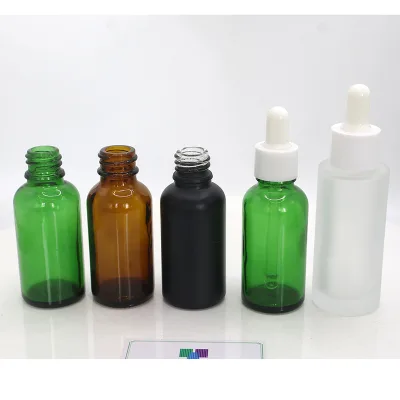
It is important to note that while "ISO" is listed, the specific standard number (e.g., ISO9001) is not explicitly confirmed in the high-confidence facts, though it is mentioned in low-confidence background data. Buyers should not assume a specific ISO standard applies without direct verification from the supplier. Instead, the procurement strategy should involve requesting the actual certificate documents for the specific batch or production line. The color of the bottle, which can be Green, Black, Coffee, or Transparent, also plays a role in compliance. Darker colors like Green and Coffee often provide UV protection, which is essential for light-sensitive formulations, whereas Transparent bottles allow for visual inspection of the product but offer less protection. The "Color" attribute is listed as customizable, meaning buyers can request specific shades to match brand identity, but this customization may trigger a separate Minimum Order Quantity (MOQ) requirement.
Cost Drivers and Pricing Dynamics
The pricing landscape for glass dropper bottles is influenced by several variables, with the observed market range falling between 0 and 2.8 USD per unit. However, this wide range suggests significant variation based on order volume, customization level, and specific model complexity. The primary cost driver is the Minimum Order Quantity (MOQ). The data reveals a diverse MOQ structure, ranging from 3,000 pieces to 10,000 pieces, with some suppliers requiring as high as 30,000 pieces. A supplier with an MOQ of 30,000 PCS likely offers a lower unit price due to economies of scale, whereas a supplier with an MOQ of 3,000 PCS may charge a premium for flexibility.
Another significant cost factor is the customization of the logo and color. The data confirms that logo customization is acceptable and that colors can be customized, but it also notes a specific "Color MOQ" of 20,000 PCS. This implies that if a buyer requests a specific color other than the standard transparent or green, they must meet this higher volume threshold to make the production run economically viable. Additionally, the packaging method affects the final cost. Options include "International Standard Packaging," "Packaging in Carton," "Box," and "Carton+Pallet." More robust packaging solutions, such as those designed for palletized shipping, may incur higher costs but reduce the risk of breakage during transit. The daily capacity of some suppliers is listed as 150,000 PCS, indicating that high-volume orders can be fulfilled rapidly, potentially reducing the per-unit cost through efficient production scheduling.
Typical Applications and Market Fit
Non-spill glass dropper bottles are versatile and serve a wide array of industries. The primary application is in the cosmetic and personal care sector, where products like facial serums, eye creams, and essential oils require precise dosing and protection from light. The availability of 5ml to 100ml sizes makes these bottles suitable for travel-sized samples as well as full-size retail products. The pharmaceutical industry also utilizes these containers for liquid medications and tinctures, where the chemical inertness of glass is paramount. The "Perfume Bottle" model designation in the data points to a specific niche within the fragrance industry, where the aesthetic appeal of the bottle and the precision of the dropper are critical for the consumer experience.
The specific model numbers, such as YH-ZZ011 and EOB230803, suggest that manufacturers often have specialized designs for different applications. For instance, a model designated as a "Perfume Bottle" might feature a more decorative cap or a specific dropper tip designed for fine misting or precise application. The "Dropper" specification indicates a focus on the mechanism, which is essential for viscous liquids that do not pour easily. The ability to customize the logo allows brands to differentiate their products in a crowded market. Furthermore, the "Sample: Free" and "Sample: Offer" attributes indicate that buyers can test the functionality of the non-spill mechanism before committing to a large order, which is a crucial step in validating the product for specific use cases.
Supplier Evaluation and Geographic Considerations
When evaluating suppliers, geographic origin is a key factor in logistics and communication. The data indicates that manufacturers are located in various regions of China, including Hefei, Anhui, Zhejiang, and Ningbo. Each region may have different supply chain strengths; for example, Ningbo is a major port city, which could facilitate easier export logistics. The lead times provided in the data range from 7-15 days to 15-20 days, with some specific delivery times noted as 25 days. These variations suggest that lead time is dependent on the order volume and the specific production schedule of the supplier. Buyers should verify the current lead time for their specific order size, as high-volume orders may require longer production windows.
Supplier reliability can be assessed through their capacity and flexibility. The "Daily Capactity" of 150,000 PCS is a strong indicator of a supplier's ability to handle large orders without significant delays. The acceptance of ODM/OEM services suggests that the supplier is willing to collaborate on design and branding, which is essential for private label projects. However, the varying MOQs (3,000 to 30,000 PCS) mean that buyers must align their order size with the supplier's capabilities. A supplier with a 30,000 PCS MOQ may not be suitable for a startup with a smaller budget, while a supplier with a 3,000 PCS MOQ might be too expensive for a large-scale enterprise. The "Customization: Available" and "Customization: Accept" attributes confirm that flexibility is a common feature, but the specific terms, such as the 20,000 PCS Color MOQ, must be negotiated clearly.
Quality Control and Long-Term Procurement Strategy
Quality control is paramount when dealing with glass products, as breakage during shipping or use can lead to significant financial loss and brand damage. The "International Standard Packaging" and "Packaging in Carton" options suggest that suppliers are aware of the need for protection, but buyers should insist on specific packaging protocols, such as the use of dividers or bubble wrap, to ensure the bottles arrive intact. The "Certification: ISOColor:Color,Transparent" entry implies that color consistency is a quality metric, and buyers should request color samples to ensure the final product matches the brand requirements.
For long-term procurement, establishing a relationship with a supplier who offers a "Sample: Free" option is advantageous. This allows for rigorous testing of the non-spill mechanism under various conditions, such as temperature changes and pressure fluctuations. The "Lead Time" of 7-15 days is relatively short, which is beneficial for maintaining lean inventory levels. However, buyers should also consider the "Delivery Time" of 25 days mentioned in some contexts, which may include shipping time. A robust procurement strategy involves maintaining a buffer stock and diversifying suppliers to mitigate risks associated with supply chain disruptions. The ability to customize the logo and color provides a competitive edge, but buyers must ensure that the customization process does not compromise the structural integrity of the bottle or the functionality of the dropper. By focusing on these technical and logistical details, buyers can secure a reliable supply of high-quality non-spill glass dropper bottles that meet their specific market needs.
FAQs
What certifications are available for non spill glass dropper bottles?
Available certifications include RoHS, REACH, LFGB, FDA, and ISO. These indicate compliance with safety standards for hazardous substances and food contact, ensuring the glass and plastic components do not leach harmful chemicals into sensitive liquids like serums or essential oils.
How long is the lead time for non spill glass dropper bottles?
Lead times typically range from 7 to 20 days depending on the supplier and order volume. Some suppliers offer a 7-15 day window, while others may require 15-20 days or up to 25 days for delivery, so specific timelines must be confirmed before ordering.
Which minimum order quantities apply to non spill glass dropper bottles?
Minimum order quantities vary significantly, ranging from 3,000 to 30,000 pieces per supplier. Specific color customization often requires a higher threshold of 20,000 pieces, while standard orders may start as low as 500 or 10,000 pieces depending on the manufacturer.
Can I customize the logo and color for non spill glass dropper bottles?
Yes, logo customization and color options are acceptable for most manufacturers. However, requesting specific colors like green, black, or coffee may trigger a separate minimum order quantity of 20,000 pieces to ensure economic viability for the production run.
What materials are used for the body and cap of non spill glass dropper bottles?
The bottle body is made of glass, which offers superior chemical resistance and clarity. The cap material is typically plastic, balancing cost with functionality, and the closure type is often a screw cap designed to work with the dropper mechanism.
Where are the manufacturers of non spill glass dropper bottles located?
Manufacturers are located in various regions of China, including Hefei, Anhui, Zhejiang, and Ningbo. These locations influence logistics, with Ningbo being a major port city that may facilitate easier export processes for international buyers.
What is the daily production capacity for non spill glass dropper bottles?
Some suppliers report a daily production capacity of up to 150,000 pieces. This high capacity allows for rapid fulfillment of large orders, potentially reducing per-unit costs through efficient production scheduling and economies of scale.