Source Organic PMU Pigment for Textile, Paint, and Cosmetic
Compare 30 available products including Organic PMU Pigment suitable for textile, paint, and cosmetic applications. Buyers can review specifications such as solubility, color options, and packaging to find the right supplier for their needs.
Key considerations
Products List


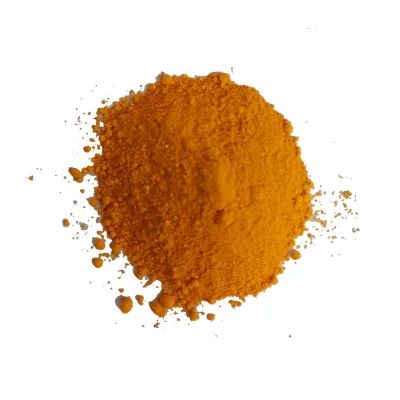
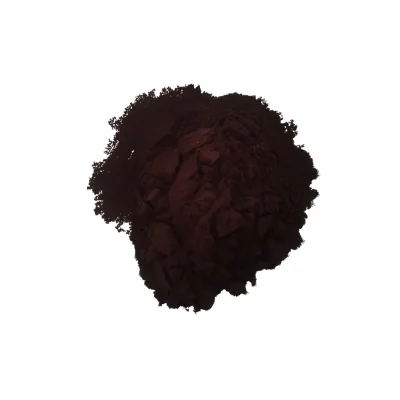
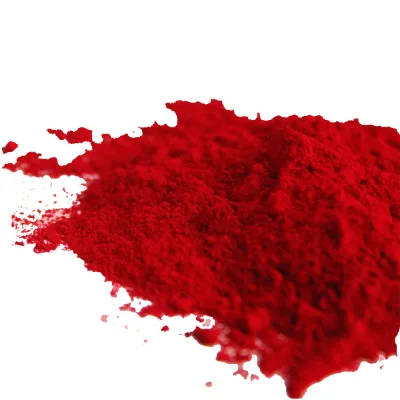


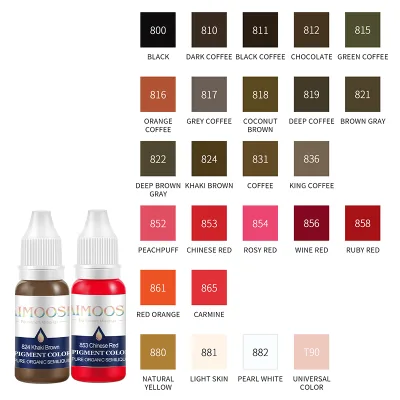
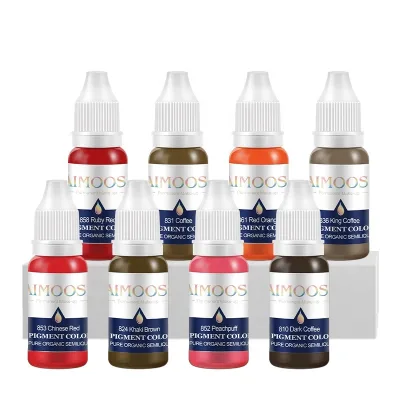
Comprehensive Sourcing Guide
Strategic Sourcing Guide for Organic PMU Pigment Procurement
Understanding the Material Landscape and Technical Definitions
When initiating a procurement strategy for permanent makeup (PMU) pigments, the buyer must first navigate the complex distinction between organic and inorganic classifications, as the supplied product data reveals a market heavily populated by oxide-based and synthetic inorganic options. The core keyword "Organic PMU Pigment" often leads buyers to seek carbon-based colorants, yet the available supply chain data indicates a prevalence of products defined by their oxide composition, such as Iron Blue, Chrome Oxide Green, and Lead Chrome Yellow. These materials are explicitly categorized as "Oxide" or "Synthetic" in the observed listings, with specific model identifiers like "mica powder" and "Masterbatch Color Pigment" appearing alongside traditional pigment descriptions.
The technical reality for the PMU industry requires a rigorous definition of the material being sourced. While the term "organic" in a chemical sense refers to carbon-containing compounds, the commercial supply of PMU pigments often relies on stable inorganic oxides for their lightfastness and biocompatibility. The observed product attributes list "Composition: Oxide" and "Type: Natural" or "Type: Synthetic" as distinct categories. A buyer must verify whether the specific lot intended for PMU application is truly an organic dye or if the market offering is a high-stability inorganic pigment that mimics organic hues. The data shows specific pigment types such as "Iron Blue" and "Chrome Oxide Green," which are inorganic. Therefore, the initial technical specification phase must clarify if the procurement goal is strictly carbon-based organic dyes or if the broader category of stable, high-performance pigments (including the observed oxides) is acceptable for the intended cosmetic application.
Regulatory Compliance and Certification Verification
Compliance is the most critical risk factor in the PMU sector, as these pigments are injected into the dermis. The supplied data explicitly mentions "REACH" certification and "Environmental Protection: Yes" as attributes for certain pigment products. However, the data also notes that "CE" and "REACH" appear in low-confidence background sections, suggesting that while these standards are relevant, their specific application to every listed product is not guaranteed without direct verification. Buyers cannot assume that a product labeled with "REACH" in a general catalog entry meets the specific regulatory thresholds for dermal injection in all target markets, such as the European Union or the United States.
The procurement guide must emphasize that "Environmental Protection: Yes" is a qualitative claim that requires supporting documentation. The observed product data includes a "Standard" attribute listing various packaging sizes (5g, 10g, 20g, 25g, 50g, 500g, 1kg), but it does not provide specific regulatory standard numbers (e.g., ISO 10993 for biocompatibility) for the pigments themselves. Consequently, the buyer's verification protocol must demand a Certificate of Analysis (CoA) that explicitly references the heavy metal limits, specifically for the "Lead Chrome Yellow" and "Chrome Oxide Green" variants observed in the data. The presence of "Lead" in the pigment name (Lead Chrome Yellow) is a significant red flag that requires immediate confirmation of purification levels and compliance with strict heavy metal restrictions for cosmetic use. The buyer must verify that the "Oxide" composition listed does not exceed permissible limits for lead, chromium, and other heavy metals, as these are inherent risks in the inorganic pigment supply chain.
Cost Drivers and Pricing Structure Analysis
The pricing structure for PMU pigments is influenced by a combination of raw material complexity, purification levels, and packaging standards. The observed price range in the market data spans from $0.10 to $119.00 USD. This wide variance suggests that the cost is not driven solely by the raw pigment but by the level of refinement, the specific model (e.g., "Chameleon Powder" vs. "Pigment powder"), and the packaging format. The "Production Cost: Low" attribute observed in the data likely applies to bulk raw materials, but the final price for PMU-grade pigment includes the cost of sterilization, heavy metal testing, and specialized packaging.
Buyers should analyze the cost drivers based on the "MOQ" (Minimum Order Quantity) and "prod_packing" attributes. The data shows an MOQ range of 1 to 5000 units, with specific mentions of "MOQ: 1kg" and packaging options like "25kg/Bag," "Carton Box," and "Plastic Bag with Kraft Cartoon." The transition from bulk industrial packaging (25kg bags) to retail or clinical packaging (5g, 10g, 20g bottles) significantly impacts the unit price. The "OEM Packing" and "retail packaging" options indicate that customization adds a layer of cost. Furthermore, the "Customization: Available" attribute suggests that buyers can negotiate specific color formulations or packaging, which may alter the price point. The "Low Production Cost" claim must be weighed against the "Free Sample" availability, which allows buyers to test the dispersion and color stability before committing to larger orders. The buyer must understand that the $0.10 price point likely corresponds to raw, unrefined bulk material, while the $119.00 range likely reflects high-purity, certified, small-batch clinical products.
Application Specifics and Performance Characteristics
The application of PMU pigments demands specific performance characteristics that differ from general industrial pigments. The observed product data lists a wide array of "Usage" categories, including "Textile, Paper, Leather, Ink, Paint, Plastic, Food, Cosmetic, Ceramic." While "Cosmetic" and "Ink" are relevant to PMU, the inclusion of "Food" and "Ceramic" indicates that the supply chain is diversified and not exclusively focused on dermal safety. The buyer must filter these general applications to find those specifically validated for "Ink" and "Cosmetic" use in a medical or semi-permanent context.
The "Appearance" attribute in the data lists "Powder" and "Granular" forms. For PMU, the particle size and dispersion are critical. The "Advantages" section notes "Easy Dispersion" and "Easy to Handle," which are essential for the artist's workflow. However, the "Solubility" attribute presents a contradiction in the data, listing both "Insolubility" and "Solubility." For PMU pigments, insolubility is generally preferred to prevent the pigment from migrating or bleeding under the skin. The buyer must verify the solubility profile of the specific product, ensuring that the "Insolubility" claim aligns with the "Oxide" composition, as soluble pigments may pose a higher risk of allergic reactions or color instability. The "Performance" attribute lists "Ink, Dye, Coloring," which confirms the functional intent, but the buyer must ensure that the "Color" stability (Violet, Yellow, Orange, Blue, Red, Green, Brown, Black, White) meets the long-term retention requirements of permanent makeup. The "Chameleon Powder" and "Mica Powder" models suggest iridescent or shimmering effects, which may not be suitable for all PMU techniques and require specific artist training.
Supplier Evaluation and Origin Verification
Evaluating suppliers requires a deep dive into the "prod_origin" and "prod_standard" attributes found in the data. The observed origins include "China," "Hunan," "Dongguan City, Guangdong Province, China," and "India." The concentration of supply in China, specifically in regions like Hunan and Dongguan, suggests a robust manufacturing ecosystem, but it also necessitates rigorous due diligence regarding quality control consistency. The "Location" data does not provide a single source, indicating a fragmented market where buyers must compare multiple suppliers.
The "prod_standard" attribute lists various packaging standards (5g, 10g, 20g, etc.) and "To be negotiated" terms. This variability implies that there is no single universal standard for the product size or quality across all suppliers. The buyer must establish their own internal standards for batch consistency and purity. The "Certification" attribute mentions "REACH," but as noted earlier, this must be verified for the specific batch. The "Sample: Free" attribute is a valuable tool for supplier evaluation, allowing the buyer to test the "Easy Dispersion" and "Easy to Handle" claims in a real-world setting. The buyer should request samples from suppliers in different regions (e.g., China vs. India) to compare the "Appearance" (Powder vs. Granular) and "Color" consistency. The "Customization: Available" attribute suggests that suppliers are willing to adapt to specific needs, but the buyer must assess the supplier's capacity to maintain quality during customization. The "Production Cost: Low" claim should be treated as a baseline, with the understanding that higher costs may be necessary for certified, high-purity PMU-grade materials.
Quality Control and Long-Term Procurement Strategy
Establishing a robust quality control (QC) protocol is essential for long-term procurement success. The data highlights "Environmental Protection: Yes" and "REACH" as key attributes, but the buyer must implement a multi-stage QC process. The first stage involves verifying the "Composition: Oxide" and ensuring that the specific oxide (e.g., Iron Blue, Chrome Oxide Green) is free from toxic impurities. The second stage involves testing the "Solubility" to confirm that the pigment remains insoluble in the dermal environment. The third stage involves checking the "Color" stability over time, as the observed color range includes "Violet, Yellow, Orange, Blue, Red, Green, Brown, Black, White," and some of these may fade or shift differently.
The "MOQ" range of 1 to 5000 offers flexibility, but the buyer should consider the "Lead Time" and "Production Cost" implications. The "Free Sample" option allows for initial testing without significant financial risk. The "OEM Packing" and "Carton Box" options suggest that the buyer can control the branding and presentation, which is crucial for the cosmetic industry. The "Standard" attribute listing "5g, 10g, 20g, 25g, 50g etc" indicates that the buyer can negotiate packaging sizes that match their inventory needs. The "Customization: Available" attribute allows for tailored formulations, but the buyer must ensure that the customization does not compromise the "Environmental Protection" or "Certification" status. Long-term procurement should focus on building relationships with suppliers who can consistently provide "Easy Dispersion" and "Easy to Handle" products that meet the "REACH" and "Environmental Protection" standards. The buyer must also monitor the "Product Model" changes, such as the shift from "Pigment powder" to "Masterbatch Color Pigment," to ensure that the supply chain remains stable and that the product specifications do not drift over time.
Finalizing the Procurement Decision
The final step in the procurement process involves synthesizing all the gathered data into a clear decision matrix. The buyer must weigh the "Price Range" of $0.10 to $119 against the "Certification" status and "Origin" reliability. The "Low Production Cost" and "Free Sample" attributes are attractive, but they must be balanced against the "Heavy Metal" risks associated with "Lead Chrome Yellow" and "Chrome Oxide Green." The "Solubility" contradiction in the data requires immediate clarification to ensure the pigment is suitable for dermal injection. The "Usage" list, which includes "Textile, Paper, Leather, Ink, Paint, Plastic, Food, Cosmetic, Ceramic," requires the buyer to filter for "Cosmetic" and "Ink" applications specifically validated for PMU.
The "Customization: Available" and "OEM Packing" options provide significant value for branding and product differentiation. However, the buyer must ensure that the "Standard" packaging sizes (5g, 10g, 20g, etc.) align with their operational needs. The "Location" data, showing suppliers in China and India, suggests that the buyer should diversify their supplier base to mitigate supply chain risks. The "Environmental Protection: Yes" and "REACH" certifications are critical, but they must be verified for each batch. The "Performance" attributes, such as "Ink, Dye, Coloring," confirm the functional utility, but the "Appearance" (Powder, Granular) and "Color" stability must be tested in the field. Ultimately, the buyer must prioritize safety, consistency, and compliance over cost savings, ensuring that the selected pigments meet the rigorous standards required for permanent makeup applications. The "MOQ" flexibility allows for small initial orders, enabling the buyer to validate the product quality before scaling up to larger quantities. The "Sample: Free" option is a strategic tool for this validation process, allowing the buyer to test the "Easy Dispersion" and "Easy to Handle" claims in a controlled environment. By following this evidence-based approach, the buyer can secure a reliable supply of high-quality PMU pigments that meet both regulatory and performance requirements.
FAQs
What is the composition of organic PMU pigments listed?
The listed pigments are primarily composed of oxides rather than organic carbon compounds. While the keyword suggests organic materials, the data shows products defined as Oxide, Natural, or Synthetic types like Iron Blue and Chrome Oxide Green.
Which certifications are available for these pigment products?
Some products explicitly list REACH certification and Environmental Protection status. However, CE and REACH appear in low-confidence sections, so buyers must verify specific batch compliance documents before assuming global regulatory acceptance.
Can buyers find pigments with specific color options?
Yes, the available colors include Violet, Yellow, Orange, Blue, Red, Green, Brown, Black, and White. Customization is available, allowing buyers to request specific formulations or color blends within the observed product range.
How does solubility affect the choice of pigment?
The data presents conflicting solubility attributes, listing both Insolubility and Solubility. For permanent makeup, insolubility is generally preferred to prevent migration, so buyers must verify the specific product profile matches this requirement.
What are the minimum order quantities for these pigments?
The observed MOQ range spans from 1 unit up to 5000 units, with specific listings showing 1kg as a standard minimum. Buyers can negotiate packaging sizes like 5g, 10g, or 25kg bags based on their volume needs.
Where are the primary manufacturing locations for these products?
Products originate from China, specifically regions like Hunan and Dongguan City, as well as India. The fragmented supply chain requires buyers to evaluate multiple sources to ensure consistent quality and reliable lead times.
Are samples available for testing pigment quality?
Yes, the data indicates that free samples are available for evaluation. This allows buyers to test attributes like easy dispersion, handling, and color stability before committing to larger orders with specific MOQs.