Source Poultry Farming Pressure Regulator for Chicken, Bird, and Poultry Farm
Find 30 Poultry Farming Pressure Regulator options for chicken, bird, and poultry farm applications. Compare models like KD623 and BC-695 with features such as accurate pressure stabilization and water-saving capabilities from verified Chinese suppliers; compare the available evidence and request quotations based on your requirements.
Updated
Key considerations
Products List


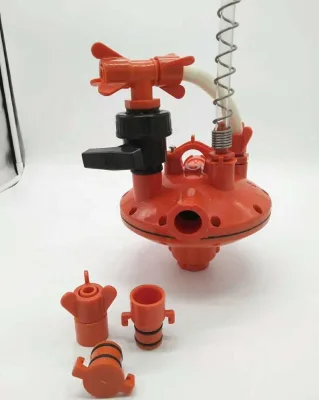


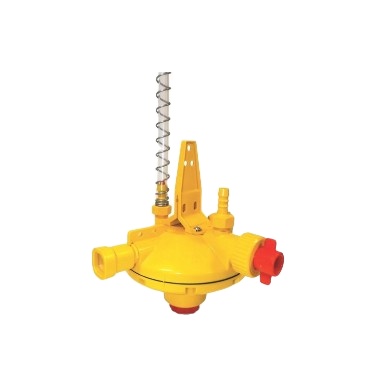
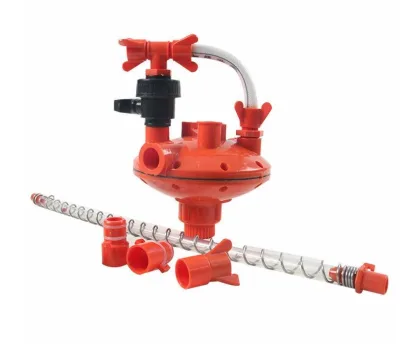


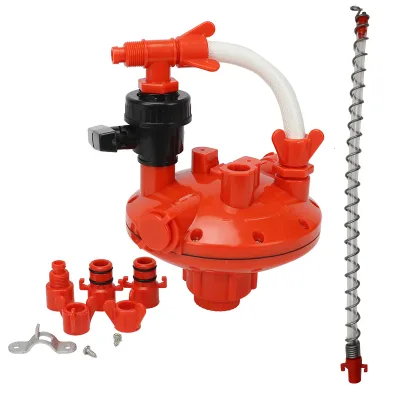
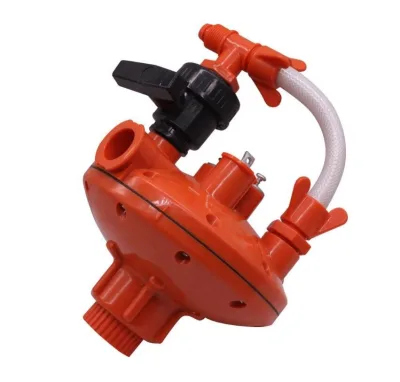
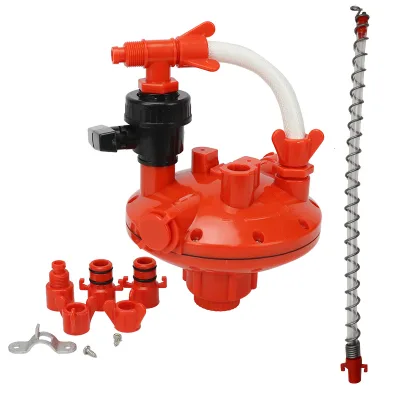
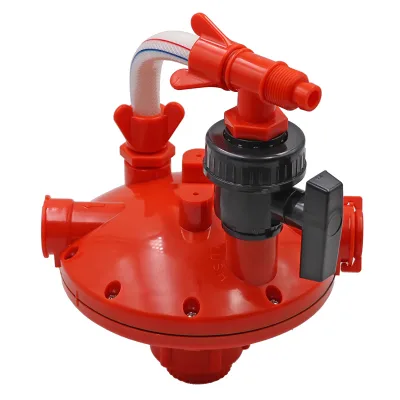
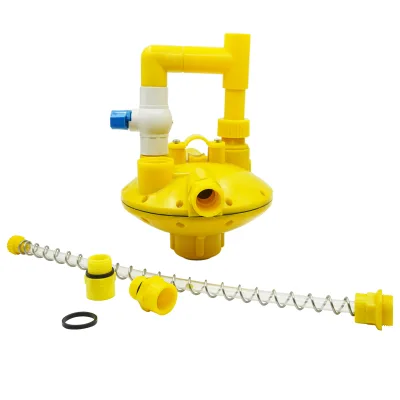
Comprehensive Sourcing Guide
Poultry Farming Pressure Regulator Sourcing Guide
Pressure regulators sit at the heart of any nipple or cup drinking line in a poultry house, holding water pressure within the narrow band that birds of a given age can drink from comfortably. When the regulator drifts, feed conversion, litter quality, and medication dosing all suffer quietly, which is why experienced farm managers treat the regulator as a consumable precision part rather than a fitting. For B2B buyers, this means the purchasing decision deserves the same rigor applied to automation components: verify operating characteristics, confirm material suitability for farm disinfectants, and insist on documented quality checks before committing to volume orders.
This guide walks through the sourcing process for poultry farming pressure regulators based on signals observed across current product listings, most of which originate from manufacturers in China Mainland, including Hebei. Listings describe items such as bi-directional backflushing regulators, optima-style drinking line valves, and models like KD623, BC-695, BC-1422, BC-1417, BC-693, BC-697, BC-1187, and PH112. Use these observations as a checklist of what reputable sellers disclose — and treat any attribute a prospective supplier will not confirm in writing as a red flag worth investigating before you place a sample order.
Product Scope and Observed Listing Signals
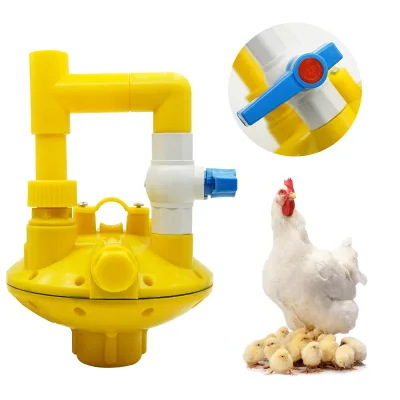
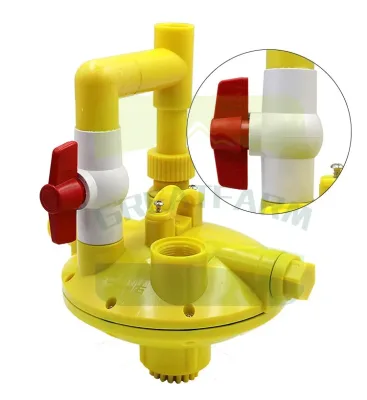
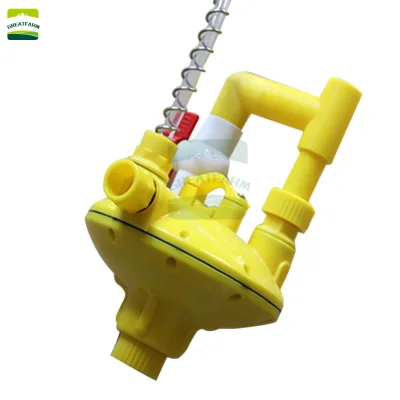
The listings reviewed fall into a coherent product family: water pressure regulators for poultry drinking lines, mounted on 45mm square pipe, with applications stated for chickens and water line systems in poultry farms. Several listings describe bi-directional backflushing capability, which allows the line to be flushed in both directions to clear sediment and biofilm — a feature worth prioritizing if your water source carries mineral or organic load. One listing markets water-saving and environmental protection as its core advantage, reflecting buyer demand for regulators that keep drinking lines running at low, bird-appropriate pressure.
Observed listing signals give you a baseline for comparison. Stated attributes include new condition, plastic construction (PP in one listing, ABS in another), red as a common color, animal labour power source, and one or two outlets. Models such as BC-695 and BC-1422 appear with carton packing at 20 or 25 pieces per carton, while the KD623 lists a package size of 76×46×36cm at 25kg per carton. Prices in the observed range span roughly USD 4.6 to 23, and MOQs range from 1 to 200 pieces — a spread that tells you sampling and small trial orders are feasible before scaling to full-house quantities.
Technical Specifications to Verify
Before comparing quotations, fix your own specification sheet and require each supplier to confirm every line in writing. Key items to verify include: inlet diameter (one listing states a 19mm water inlet), pipe connection type (45mm square pipe is referenced), the number of outlets (one or two), and the working pressure range and stabilization accuracy. The phrase "Accurate Pressure Stabilization" appears in the listings, but accuracy is only meaningful if the supplier can tell you the regulated output range and the tolerance band the regulator maintains under varying line pressure. Ask specifically how the regulator performs at the low pressures needed for young birds versus finished birds.
Construction details matter as much as hydraulic performance. Confirm the body material — PP and ABS are both cited — and whether internal diaphragms and seals are compatible with the disinfectants and acidifiers used in your water program. If your drinking lines use dosing for vaccines or acids, ask what chemical concentrations the seals tolerate. Also clarify mounting hardware: a regulator sold without the correct bracket or saddle clamp for your pipe profile can stall installation. Request dimensional drawings, exploded diagrams, and spare-parts availability for wear items before finalizing any model choice such as BC-1417 or PH112.
Compliance and Safety Documentation
Documentation is where low-cost regulators most often disappoint. One observed listing claims CE and ISO9001 certification, but certification status must be verified, not assumed: ask for the certificate number, the issuing body, and the scope of the certificate to confirm it actually covers the product category you are buying. A generic ISO9001 registration for "plastic products" is weaker evidence than a certificate naming pressure regulators or poultry drinking equipment. If your market requires additional conformity evidence, confirm which documents the supplier can supply before the order rather than discovering gaps at customs.
Beyond certificates, request the routine quality paperwork that a disciplined factory should already produce. One listing states that video outgoing-inspection is provided — a useful practice to replicate across all candidate suppliers, since a short video of each batch being pressure-checked gives you evidence without travel costs. Ask whether each unit is leak-tested and function-tested before packing, and whether test records can be shared per batch. For shipments arriving at Qingdao Port or another export port, confirm that carton labeling, model numbers, and packing lists match the agreed specification so inspection at your end can trace each carton to a production batch.
Cost Drivers and Commercial Terms
Observed listing prices span USD 4.6 to 23, and MOQs range from 1 to 200 pieces. That spread reflects real cost drivers you can negotiate: body material (PP versus ABS), single versus dual outlet configuration, backflushing functionality, and customization. One listing states customization is available, which typically raises unit cost but can align the regulator with your existing line brand, pipe profile, or color requirements. When comparing quotes, normalize for configuration first — a dual-outlet backflushing unit at a higher price may be cheaper per drinking line than two single-outlet regulators plus fittings.
Structure commercial terms to reduce risk on a first order. A sensible pattern is a small paid sample batch at the low end of the MOQ range, followed by a larger order once the units have run in your houses for a full flock cycle. Confirm packing details in the contract: listings cite cartons or bags, 20 or 25 pieces per carton, package sizes such as 76×46×36cm, and per-carton weights of 25kg or per-batch gross weights around 28kg. Confirm who arranges freight to Qingdao Port, and clarify warranty terms — one listing states a 1-year warranty, which is a reasonable benchmark to request from every supplier.
Supplier Qualification and Quality Control
Qualify suppliers on demonstrated process discipline rather than listing polish. Useful qualification steps include: verifying the factory can produce the specific models quoted (KD623, BC-695, BC-1187 and similar model numbers should correspond to real tooling), requesting photos or video of assembly and testing stations, and checking whether the supplier provides samples as one listing states ("Sample: Supplied"). A supplier that hesitates to send a sample, or sends a unit that differs from the listing's stated materials, has told you something important before you spend on freight or tooling.
Build a simple incoming quality control routine at your end even for repeat orders. On receipt, sample a fixed percentage of each carton: check inlet diameter against the agreed 19mm specification where stated, verify the connection fits your 45mm square pipe, run each sampled unit through a pressure stabilization test on your own line, and inspect the diaphragm and seals for molding defects. Keep one sampled unit per batch as a retained reference. For customized orders, agree the acceptance criteria in writing before production, including color (red is the common listing color), packaging, and marking, so disputes can be settled against a document rather than an opinion.
Long-Term Procurement Checks
Plan regulator purchases as a recurring program, not a one-off transaction. Regulators are wear items: diaphragms age, springs relax, and housing threads suffer from repeated installation. Build a replacement schedule based on your own flock cycles and record failure modes — leaking seals, drifting output pressure, sticking in backflush mode — and share that data with your supplier at annual reviews. A supplier willing to discuss failure statistics and adjust materials or assembly accordingly is worth a modest price premium over the cheapest listing in the observed range.
Finally, protect continuity of supply. Confirm that the supplier holds tooling for your chosen models, will notify you of material or mold changes, and can maintain customization across repeat orders. Keep a documented specification file — drawings, confirmed materials, test criteria, packaging details, and certificate copies — so any alternative factory can be benchmarked quickly if needed. Re-verify certification status periodically rather than relying on a document supplied at the first order. Buyers who treat pressure regulators as specified, tested, and version-controlled components consistently see fewer drinking-line problems and lower lifetime cost per house than those who re-buy on price alone each season.
FAQs
What is the core function of a Poultry Farming Pressure Regulator?
It provides accurate pressure stabilization for water lines in poultry farms. This ensures consistent water flow to drinking nipples. The device prevents pressure fluctuations that could cause leaks or insufficient supply. It is designed specifically for chicken and bird applications. This maintains a healthy environment for the animals.
Which certifications are available for these poultry water regulators?
Products typically carry CE and ISO9001 certifications. These indicate compliance with international quality and safety standards. Buyers should verify specific documentation during sourcing. The presence of these marks ensures reliable manufacturing processes. It is a key factor for global procurement compliance.
Can the regulator be customized for specific farm needs?
Yes, customization is available for many models. Buyers can request specific outlet numbers or pipe connections. The product supports bi-directional backflushing for maintenance. Custom options help integrate the regulator into existing systems. This flexibility ensures a better fit for unique farm layouts.
What materials are used to construct these pressure regulators?
Manufacturers use durable materials like plastic, PP, and ABS. These materials resist corrosion and withstand farm environments. The choice depends on the specific model and application. Durable construction ensures long-term performance and reliability. It protects the internal components from wear and tear.
How is the product packaged for international shipping?
Items are packed in cartons or bags for protection. Standard packaging includes 20 to 25 pieces per carton. The package size varies by model, such as 76x46x36cm. This ensures safe transit and easy handling. Proper packaging minimizes damage during global logistics operations.
What is the typical warranty period for these devices?
A standard warranty of one year is commonly offered. This covers manufacturing defects and component failures. Buyers should confirm warranty terms with the supplier. The warranty provides assurance of product quality. It supports long-term operational confidence for poultry farms.