Source Whitening Honey Handmade Soap for Laundry, Face, and Body
Explore 30 listings for Whitening Honey Handmade Soap with features like whitening, anti-acne, and high foam. Buyers can compare specifications, MOQs, and customization options from suppliers in China for laundry, face, and body care applications.
Key considerations
Products List

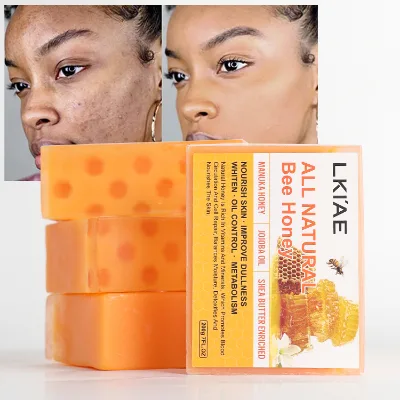
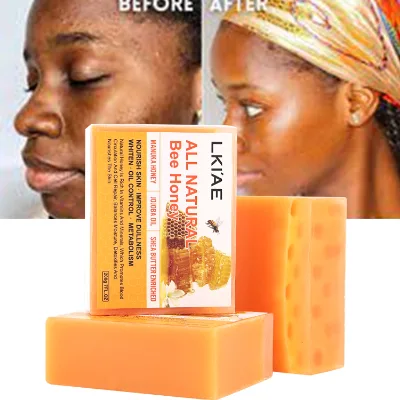
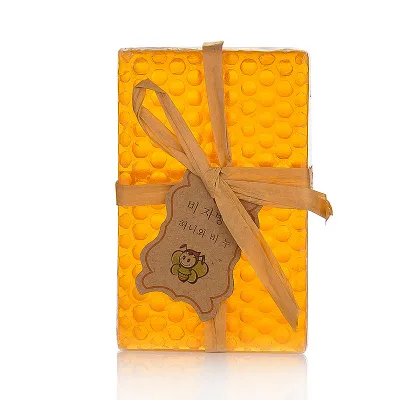
Handmade Organic Soap Skincare Deep Cleaning Whitening Beauty Bath Honey Soap
$0.11 - $0.16
MOQ: 220000 Pieces

90g Handmade Organic Soap Skincare Deep Cleaning Whitening Beauty Bath Honey Soap
$0.14 - $0.20
MOQ: 30000 Pieces

Handmade Soap Whitening Deep Cleaning Lightening Milk Soap for Hand Wash
$0.15 - $0.30
MOQ: 180000 Pieces


Best Moisturizing Handmade Soap Honey Soap in Bulk Bath Soap Toilet Soap
$0.11 - $0.30
MOQ: 30000 Pieces

Papaya Honey Sea Salt Rose Soap Handmade Soap Face Cleansing Body Bath Whitening Soaps 100g
$0.15 - $0.30
MOQ: 180000 Pieces


Beauty Cosmetics Skin Care Moisturizing Cleansing Whitening Honey Loofah Soap
$0.50 - $0.80
MOQ: 100 Pieces


Skin Care 100% Brightening Moisturizing Handmade Whitening Soap for Bath
$1.30 - $1.38
MOQ: 1000 Pieces

Private Label 100% Natural Moisturizing Handmade Whitening Soap for Bath
$1.30 - $1.38
MOQ: 1000 Pieces


Natural Organic Whitening Soap Honey Oatmeal Soap Cleansing Soaps for Face
$1.18 - $1.52
MOQ: 3000 Pieces




Comprehensive Sourcing Guide
Strategic Sourcing Guide for Whitening Honey Handmade Soap
The global market for personal care products has seen a sustained shift toward natural, ingredient-driven formulations, with Whitening Honey Handmade Soap emerging as a significant niche. For B2B procurement professionals, sourcing this specific category requires a nuanced understanding of the intersection between cosmetic efficacy, manufacturing capabilities, and regulatory compliance. This guide provides a structured approach to evaluating suppliers and products that align with the core keyword, ensuring that procurement decisions are grounded in verifiable facts rather than marketing assertions. The following sections detail the technical parameters, compliance frameworks, cost structures, and quality assurance protocols necessary for a successful sourcing strategy.
Technical Specifications and Product Attributes
When evaluating Whitening Honey Handmade Soap, buyers must first distinguish between the various functional and physical attributes that define the product's market positioning. The supply chain for this category is diverse, ranging from general laundry soaps to specialized beauty and toilet soaps. A critical observation in the current market is the variation in product form and shape. While many suppliers offer solid, rectangular blocks, others provide square or round formulations. The physical state is consistently solid, and the transparency of the soap varies; some products are transparent, while others are opaque in colors such as green, pink, blue, or purple.
The ingredient profile is a primary differentiator. The core keyword implies the presence of honey, yet the broader market data indicates a wide spectrum of main ingredients, including olive oil, charcoal, herbal extracts, and fruit-based components. For a product specifically labeled as "honey handmade soap," the buyer must verify the presence of honey or honey-derived ingredients alongside other active components like turmeric or wormwood, which are often associated with whitening and anti-acne properties. The functional claims are equally varied, with products marketed for general laundry, face washing, body cleansing, and specific beauty functions such as whitening or acne treatment.
Scent profiles also play a pivotal role in product selection. The market offers a range of fragrances, including floral scents like lavender, jasmine, and flower blends, as well as fruit scents and lemon notes. The foam generation is another technical specification to consider; high foam is a common attribute for soaps intended for general washing, whereas specific formulations may prioritize a milder lather for sensitive skin. The packaging standard is typically carton-based, with variations in the number of units per carton, such as 20, 72, or 80 pieces, depending on the manufacturer's standard operating procedures.
Compliance and Certification Verification
Navigating the regulatory landscape is essential for importing cosmetic and personal care products. While the specific certification status of every supplier cannot be universally guaranteed, the presence of specific documentation is a strong indicator of manufacturing maturity. The most frequently observed certification in this sector is the Material Safety Data Sheet (MSDS). This document is crucial for logistics and safety compliance, detailing the chemical composition and handling requirements of the product. Buyers should explicitly request the MSDS for any Whitening Honey Handmade Soap they intend to import to ensure the chemical profile aligns with safety regulations in their target market.
Beyond the MSDS, buyers must be cautious regarding broader industry standards. While some suppliers may claim adherence to standards like ISO22716 or hold certifications such as BSCI, these are often listed as background information rather than guaranteed facts for every listed product. Therefore, the procurement strategy should prioritize direct verification. The buyer must confirm whether the supplier holds valid, current certifications for the specific batch or product line being purchased. Relying on general market claims without specific documentation can lead to compliance failures at customs or regulatory bodies.
The origin of the product is another compliance factor. A significant portion of the supply for this category originates from China, with specific manufacturing hubs like Guangzhou being prominent. Understanding the origin helps in assessing the logistical chain and potential regulatory requirements specific to that region. Additionally, the product's classification as either medicated or non-medicated is a critical compliance distinction. Most observed products in this category are non-medicated, functioning as cosmetic or toiletry items rather than pharmaceuticals. This distinction dictates the regulatory pathway, often requiring cosmetic registration rather than drug approval, but the exact requirements vary by destination country.
Cost Drivers and Pricing Dynamics
The pricing structure for Whitening Honey Handmade Soap is influenced by several variable factors, primarily related to customization, volume, and ingredient quality. The observed price range in the market is quite broad, spanning from $0.01 to $2.90 USD per unit. This wide disparity indicates that price is not a linear function of the product's existence but is heavily dependent on the specific configuration. Factors driving the lower end of the price spectrum likely include bulk production of standard, non-customized items with generic packaging. Conversely, the higher end of the range may reflect specialized formulations, such as those with high concentrations of honey or other premium ingredients like olive oil or charcoal, as well as custom branding and packaging services.
The Minimum Order Quantity (MOQ) is a significant cost driver that interacts directly with the unit price. The market data reveals an MOQ range from as low as 3 pieces to as high as 220,000 pieces. A specific observation notes an MOQ of 100 pieces for certain models, suggesting that small-batch orders are possible but may carry a premium per unit. For buyers seeking to minimize upfront capital expenditure, targeting suppliers with lower MOQs is a viable strategy, though it may result in a higher cost per unit. Conversely, large-scale procurement can leverage economies of scale to reduce the unit cost, provided the buyer can meet the higher volume thresholds.
Customization services, such as OEM (Original Equipment Manufacturer) and ODM (Original Design Manufacturer), also impact the cost structure. Suppliers offering these services allow buyers to tailor the soap's shape, scent, color, and packaging to their brand identity. However, this level of customization often involves additional setup costs and potentially higher MOQs. The packing standard, such as the number of pieces per carton (e.g., 20, 72, or 80 pieces), also affects shipping costs and storage efficiency, which are indirect but important components of the total landed cost. Buyers should calculate the total cost of ownership, including shipping, duties, and storage, rather than focusing solely on the unit price.
Typical Applications and Market Segmentation
The versatility of Whitening Honey Handmade Soap allows it to serve multiple market segments, from personal care to household cleaning. The functional applications are clearly defined in the product attributes. One primary segment is personal hygiene, where the soap is used for washing the face, hands, and body. In this context, the product is often marketed as a toilet soap or beauty soap, with specific features like "weak-acid" formulations to maintain skin pH balance. The whitening feature is a key selling point in this segment, appealing to consumers seeking skin brightening benefits. Ingredients like honey, turmeric, and wormwood are frequently highlighted for their potential to improve skin tone and texture.
Another significant application area is laundry care. Some products in this category are explicitly designed for washing general clothes, with features such as "high foam" and suitability for all types of fabrics. These products are often classified as laundry soap and may have different formulations compared to their personal care counterparts, focusing on stain removal and fabric freshness rather than skin whitening. The scent profiles, such as floral or fruit scents, are particularly important in this segment to ensure the clothes smell fresh after washing.
The market also includes niche applications, such as anti-acne treatments. Products with specific names like "Argy Wormwood Handmade Soap" or "Turmeric Soap" target consumers with specific skin concerns. These products often combine whitening claims with functional benefits like acne reduction. The shape and size of the soap, ranging from 100g to 200g, also cater to different usage scenarios, with smaller sizes often preferred for travel or sample distribution. Understanding these distinct applications is crucial for buyers to align their product selection with the specific needs of their target customer base.
Supplier Evaluation and Selection Criteria
Selecting the right supplier for Whitening Honey Handmade Soap requires a rigorous evaluation process that goes beyond simple price comparisons. The first step is to verify the supplier's capability to meet the specific technical specifications required. Buyers should assess the supplier's range of models, such as the "BS-100," "TS," or "Lavender Handmade Soap," to ensure they can provide the exact product configuration needed. The ability to offer customization, including OEM and ODM services, is a strong indicator of a supplier's flexibility and manufacturing maturity.
The supplier's origin and location are also critical factors. Given that a significant portion of the supply comes from China, specifically Guangzhou, buyers should verify the supplier's physical location and logistics capabilities. Proximity to manufacturing hubs can reduce lead times and shipping costs. Additionally, the supplier's track record in handling large orders should be evaluated, as the MOQ range extends up to 220,000 pieces. A supplier capable of scaling production to meet high-volume demands while maintaining quality consistency is essential for long-term partnerships.
Quality control measures are another vital criterion. Buyers should inquire about the supplier's internal quality assurance processes, including testing for foam generation, ingredient consistency, and packaging integrity. The availability of the MSDS is a baseline requirement, but buyers should also request samples to verify the product's physical attributes, such as color, scent, and texture. The supplier's responsiveness to customization requests and their ability to provide detailed product specifications, such as the volume (e.g., 100g) and shape (e.g., round, square, rectangular), are also key indicators of their professionalism and reliability.
Quality Control and Long-Term Procurement Strategy
Implementing a robust quality control strategy is essential to ensure that the Whitening Honey Handmade Soap meets the buyer's standards and regulatory requirements. The first line of defense is the pre-shipment inspection, where samples are tested against the agreed-upon specifications. This includes verifying the main ingredients, such as honey, olive oil, or charcoal, and ensuring that the product functions as claimed, whether for whitening, anti-acne, or general cleaning. The physical attributes, including the shape, color, and transparency, must also be checked to ensure consistency with the order.
Long-term procurement considerations involve building a sustainable relationship with suppliers who can consistently deliver high-quality products. This requires clear communication of expectations regarding packaging, labeling, and compliance documentation. Buyers should establish a protocol for regular quality audits and performance reviews to ensure that the supplier continues to meet the required standards over time. The ability of the supplier to adapt to changing market trends, such as new ingredient preferences or evolving regulatory requirements, is also a key factor in long-term success.
Finally, buyers should consider the scalability of the supply chain. As demand grows, the supplier must be able to increase production without compromising quality. This involves evaluating the supplier's production capacity, raw material sourcing, and logistics capabilities. By focusing on these long-term factors, buyers can secure a reliable supply of Whitening Honey Handmade Soap that supports their business growth and maintains the trust of their end customers. The integration of these quality control measures and strategic planning ensures a resilient and efficient procurement process in the competitive personal care market.
FAQs
What certifications are available for Whitening Honey Handmade Soap?
MSDS certification is available for these products. Buyers should request this document to verify chemical composition and safety compliance before importing, as other standards like ISO22716 are not guaranteed for every listed item.
Can I customize the scent and shape of the soap?
Customization is available for scent, shape, and packaging. Suppliers offer OEM and ODM services allowing you to select from floral, fruit, or lemon scents, and choose rectangular, square, or round shapes to match your brand requirements.
What is the minimum order quantity for these soaps?
The minimum order quantity ranges from 3 to 220,000 pieces depending on the supplier. Some specific models require a minimum of 100 pieces, while others allow smaller trial orders with potentially higher unit costs.
Where are these soaps manufactured and what is the origin?
The products originate from China, with specific manufacturing hubs located in Guangzhou. Buyers should verify the specific factory location to assess logistics costs and ensure the product meets regional regulatory requirements for import.
What are the main ingredients used in these soaps?
Main ingredients include olive oil, charcoal, herbal extracts, and fruit components. While honey is implied by the keyword, specific formulations may also feature turmeric or wormwood for whitening and anti-acne properties alongside standard chemical or herbal bases.
How is the soap packed and what are the carton standards?
The soap is typically packed in cartons with varying unit counts per box. Standard packing configurations include 20, 72, or 80 pieces per carton, and buyers can often choose between normal packages or customized carton specifications.