CE Certified Aluminum Pontoon Boat with Bimini Top Suppliers and Manufacturers
Source CE Certified Aluminum Pontoon Boat with Bimini Top from 21 verified suppliers. Compare key dimensions including lead times, MOQs, and certifications to identify the right partner for your procurement needs. Request quotes today; review the available evidence before requesting comparable quotations from suitable candidates.
Updated
Suppliers List

- Manufacturer/Factory
- China Shandong
- Lead time45 days
- Avg. response≤ 7h
Main productsAluminum Fishing Boat, Aluminum Work Boat, Custom Aluminum Boat, Speed Boat, Recreational Boat, Catamaran Boat, Passenger Boat, Landing Craft, Pontoon Boat, House Boat
Main marketsSouth America,Eastern Europe,Mid East,North America,Southeast Asia,Eastern Asia,Oceania,Western Europe,Africa


Aluminum Fishing Speed Boat/Aluminium Sport Boat with Pontoon Hull
$28900.00 - $30900.00
MOQ: 1 Pieces


Dongtai Yongshengyinghua Yacht Co., Ltd.
- Verified by SGS
- Combined
- China Jiangsu
- Lead time15 days
- Avg. response≤ 11h
Main productsLure Bass Boat, Aluminum Alloy V Hull Boat, Pontoon Boat, Fishing Boat, Small Speed Boat, Marine Parts & Accessories
Main marketsDomestic,Europe

Shandong Allhouse Houseboat Co., Ltd.
- Verified by BV
- Trading Company
- China Shandong
- Lead time30 days
- Avg. response≤ 4h
Main productsHouseboat, Pontoon Boat, Aluminum Boat
Main marketsSouth America,Africa,Southeast Asia/ Mideast,East Asia(Japan/ South Korea),Europe,Australia,North America


Mmelancho OEM Factory Directly Sale Aluminum Pontoon Boat with Bimini Top for Sale
$96000.00 - $106000.00
MOQ: 1 Pieces


Aluminum Customized Luxury Bimini Sport Speed Pontoon Boat with Electric Motor
$13280.00 - $14280.00
MOQ: 1 Pieces

Allhouse 23FT 14 People Aluminum Party Entertainment Ponton Boat with Bimini Top
$13280.00 - $14280.00
MOQ: 1 Pieces

$11880.00 - $12880.00
MOQ: 1 Pieces
Foshan Kindle Technology Co., Ltd.
- Verified by SGS Group
- Manufacturer, Trading Company
- Lead time30 days
- Avg. response≤ 12h
Main productsAluminum Boat, Pontoon Boat, Truck Camper, Caravan, Camper Trailer
Main marketsOceania(30%), North America(12%), Western Europe(12%)

Guangdong Ecocampor Vehicle Co., Ltd.
- Verified by BV
- Manufacturer/Factory
- China Guangdong
- Lead time45 days
- Avg. response≤ 21h
Main productsPontoon Boat, Fishing Boat, Landing Craft, Cabin Boat, Sport Yacht, Kayak, Boat Trailer, Aluminum Boat, Speed Boat, Passenger Boat
Main marketsSouth America,Eastern Europe,North America,Southeast Asia,Oceania,Western Europe

Kinocean Brand New Party Barge Pontoon Aluminum Boat with Bimini Top for Sale
$25000.00 - $38000.00
MOQ: 2 Sets

Kinocean New Brand Party Barge Aluminum Pontoon Boat with Bimini Top
$25000.00 - $38000.00
MOQ: 2 Sets

Kinocean New Party Barge Aluminum Pontoon Boat with Bimini Top for Sale
$25000.00 - $38000.00
MOQ: 2 Sets


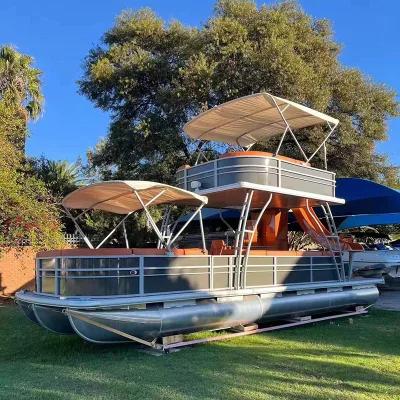
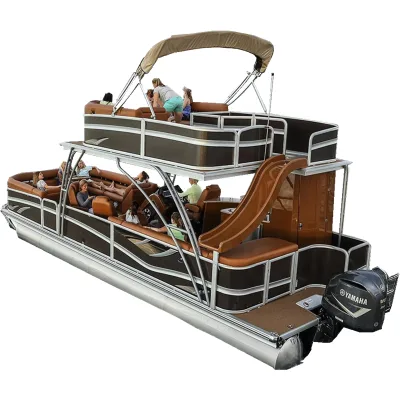
Kinocean Double Decker Luxury Aluminum Pontoon Boat with Slide and Full Bimini
$25800.00 - $38800.00
MOQ: 3 Sets

Kinocean New Design High Quality Semi Submarine Boat Aluminum Boat with Pontoon Tube for Sale
$8297.00 - $13849.00
MOQ: 2 Sets
Wuxi Haiyu Marine Technology Co., Ltd.
- Manufacturer
- Jiangsu, China
- Lead time60 days
- Avg. response≤ 10h
Main productsfishing boat,aluminum fishing boat,aluminum yacht,official boat,sightseeing boat
Main marketsNorthern Europe(50.00%), Mid East(50.00%)
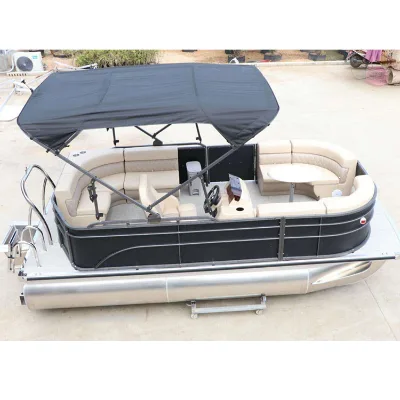
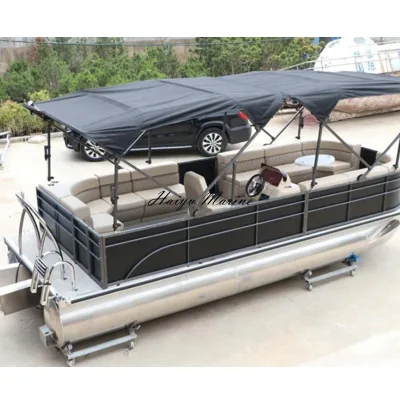
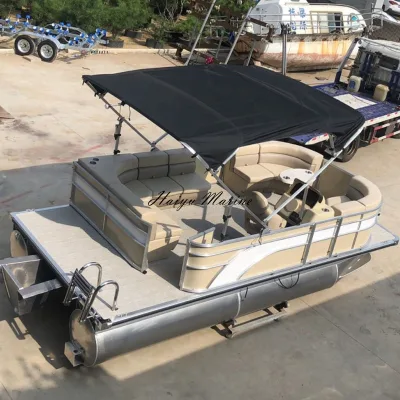
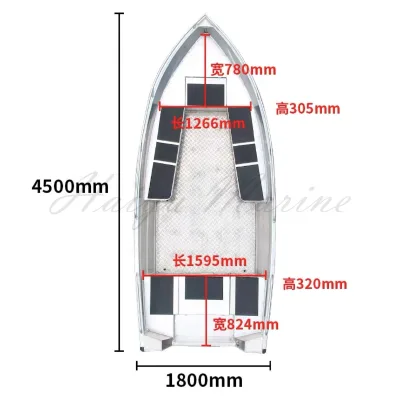
Unsinkable Aluminum Alloy Boat With or Without Bimini
$4056.00 - $4256.00
Foshan Kindle Import&Export Co., Ltd.
- Verified by SGS Group
- Manufacturer, Trading Company
- Lead time30 days
- Avg. response≤ 6h
Main productsPontoon Boat, Truck Camper, Caravan, Fishing Boat, Utility Trailer
Main marketsNorth America(25%), Oceania(25%), Mid East(10%)
$12550.00 - $12999.00
MOQ: 3 units
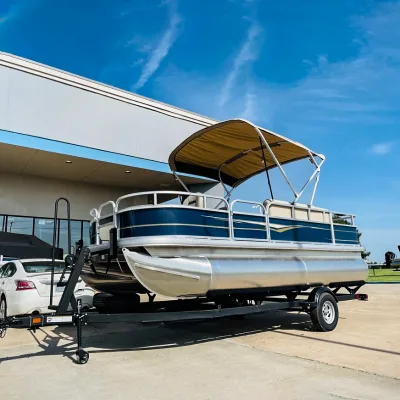
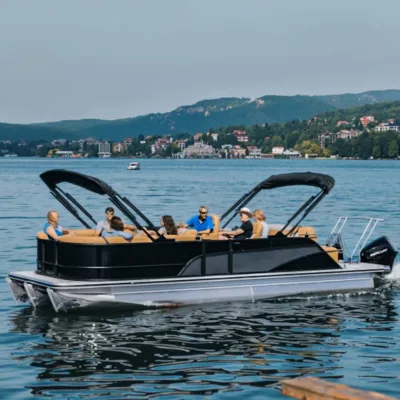
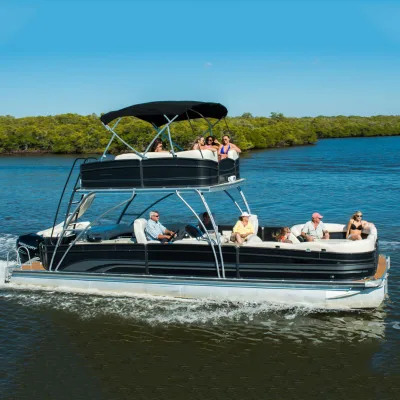
Tri-Toon Double-Deck Aluminum Pontoon Boat With Captain Chairs
$14800.00 - $15000.00

Guangdong Ecocampor Vehicle Co., Ltd.
- Manufacturer, Trading Company
- Lead time旺季: "1 - 2":60,"> 2":"To be negotiated", 淡季: "1 - 2":60,"> 2":"To be negotiated"
- Avg. response≤ 6h
Main productsCamper Trailer, Truck Camper, Caravan, Pontoon Boat, Aluminum Boat
Qingdao Allsea Boats Co., Ltd.
- Verified by SGS Group
- Trading Company
- Lead time35 days
- Avg. response≤ 5h
Main productsAluminum Boat, Fishing Boat, Aluminum Fishing Boat
Main marketsNorth America(22%), Eastern Asia(12%), Eastern Europe(11%)
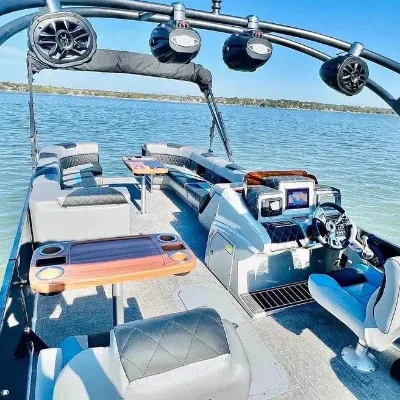
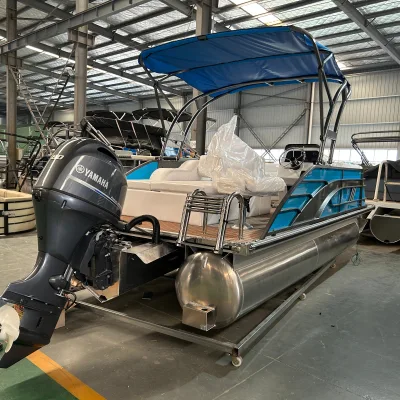
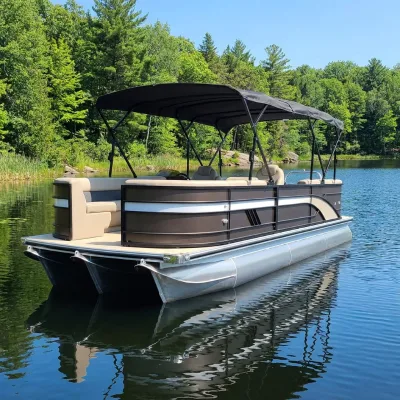
Canada Hottest 25ft CE Certified Crusing Tritoon Aluminum Pontoon Boat with Bimini for Sale
$11869.6889 - $13711.5371
MOQ: 1 sets

Foshan Kindle Technology Co., Ltd.
- Verified by BV
- Combined
- China Guangdong
- Lead time60 days
- Avg. response≤ 18h
Main productsTruck Camper, Aluminum Boat, Caravan, off Road Trailer, Pontoon Boat, Speed Boat, Bass Boat, Jon Boat, Jet Boat, Yacht
Main marketsEurope,Australia,North America

Qingdao Yamane Ryu Yacht Manufacturing Co., Ltd.
- Combined
- China Shandong
- Lead time30 days
- Avg. response≤ 5h
Main productsFiberglass Fishing Boat, Aluminum Alloy Boat, Patrol Pilot Boat, Aluminum Landing Craft, Steel Fishing Trawler Vessel, Passenger Boat, Aluminum Fiberglass Pontoon Boat, Yacht Cruiser, Marine Water Floating Berth Pontoon Dock, PP Honeycomb Boat Trailer
Main marketsSouth America,Africa,Southeast Asia/ Mideast,East Asia(Japan/ South Korea),Domestic,Europe,Australia,North America

36FT Family Leisure Double-Decker Pontoon Boat with Bathroom Bimini Top
$10000.00 - $30000.00
MOQ: 1 Pieces

Aluminum Customized Luxury Bimini Sport Speed Pontoon Boat for Sale
$12500.00 - $16900.00
MOQ: 1 Pieces

36FT 11m Aluminium Pontoon Floating Boat Bimini Top Pontoon Boat with Second Floor
$37000.00 - $39000.00
MOQ: 1 Pieces


7.50m Aluminum Fishing Boat Pontoon Boat Double Deck Pontoon Boat with Second Deck
$12000.00 - $19000.00
MOQ: 1 Pieces

7.50m Aluminum Fishing Boat Pontoon Boat Double Deck Pontoon Boat with Second Deck
$15366.00 - $19899.00
MOQ: 1 Pieces

Qingdao Allsea Boats Co., Ltd.
- Verified by SGS
- Manufacturer/Factory
- China Shandong
- Lead time45 days
- Avg. response≤ 5h
Main productsBoat, Aluminum Boat, Aluminium Boat, Fishing Boat, Pontoon Boat, Landing Craft, House Boat, Leisure Boat, Recreational Boat, Aluminum Fishing Boat
Main marketsSouth America,Eastern Europe,Mid East,North America,Southeast Asia,Eastern Asia,Oceania,Western Europe,Africa


Hottest 15FT Hull Aluminum Mini Floating Leisure Pontoon Boat with Bimini for Sale
$6400.00 - $7600.00
MOQ: 2 set/sets

USA Standard Luxury Pontoon Boats Aluminum with Bimini New Design for Sale
$12000.00 - $13000.00
MOQ: 1 set/sets


Allsea 19FT/5.8m Aluminum Welded Bimini Luxury Family Party Pontoon Boat for Sale
$8400.00 - $9200.00
MOQ: 1 set/sets
Guangdong Ecocampor Vehicle Co., Ltd.
- Manufacturer, Trading Company
- Lead time旺季: "1 - 5":40,"> 5":"To be negotiated", 淡季: "1 - 5":40,"> 5":"To be negotiated"
- Avg. response≤ 10h
Main productsPontoon Boat, Landing Craft Boat, Cabin Boat, Aluminum Boat, Fishing Yacht
Foshan ELT Camp & Outdoor Technology Co., Ltd.
- Verified by TüVRheinland
- Trading Company
- Lead time45 days
- Avg. response≤ 6h
Main productsPontoon Boat, Aluminum Boat, Fishing Boat, Caravan, Camper Trailer
Main marketsNorth America(22%), Oceania(20%), Western Europe(16%)
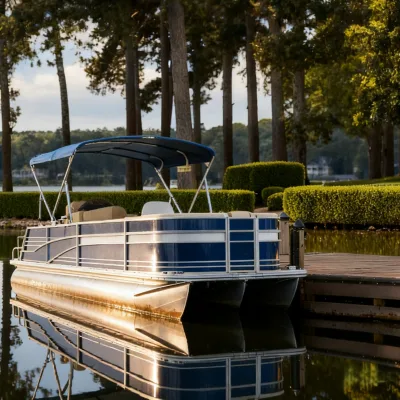
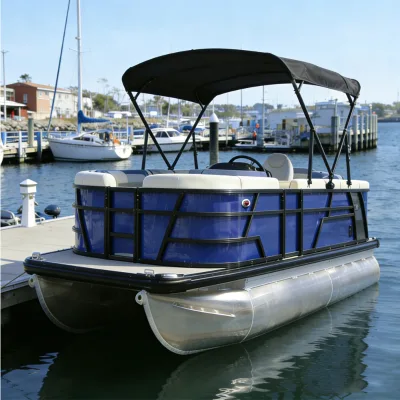
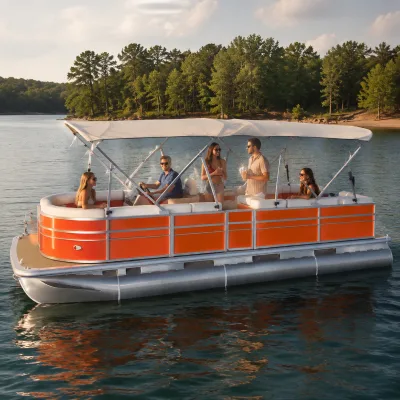
CE Certified Kinocean Aluminum Pontoon Boat 22FT Leisure Party Boat for 12 Persons
$10000.00 - $15000.00
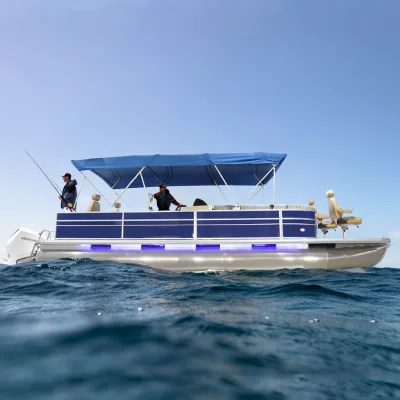
Foshan Kindle Technology Co., Ltd.
- Manufacturer, Trading Company
- Lead time旺季: "1 - 2":45,"> 2":"To be negotiated", 淡季: "1 - 2":45,"> 2":"To be negotiated"
- Avg. response≤ 7h
Main productsPontoon Boat, Fishing Boat, Truck Camper, Travel Trailer, Ute Tray And Canopy
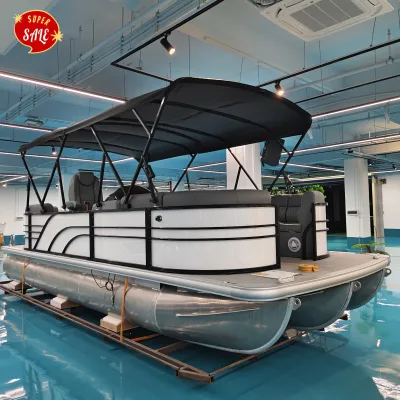
$10796.445 - $10951.4171
MOQ: 2 units
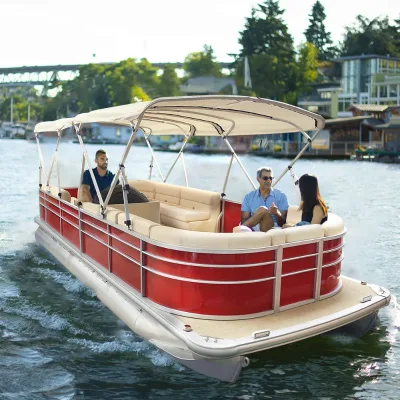
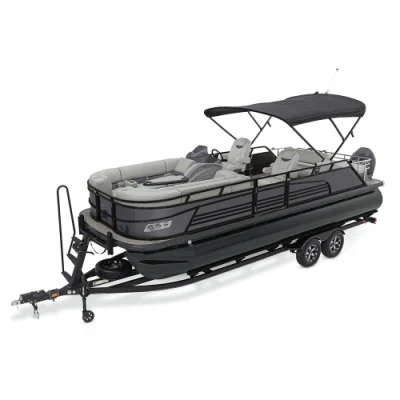
2022 Luxury Pontoon Boats Aluminum With Bimini New Design for Sale
$8000.00 - $8500.00
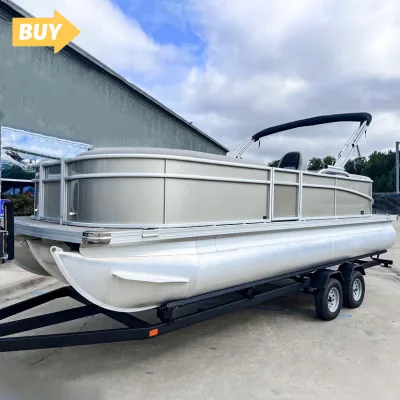

Qingdao Allhonor Boat Co., Ltd.
- Verified by SGS
- Manufacturer/Factory
- China Shandong
- Lead time45 days
- Avg. response≤ 3h
Main productsFishing Boat, Aluminum Boat, Yacht, Aluminum Fishing Boat, Landing Craft, Boat, Fishing Boat Trailers
Main marketsSouth America,Eastern Europe,Mid East,North America,Southeast Asia,Eastern Asia,Oceania,Western Europe,Africa


7.5m 25FT 8people Open Cabin Pontoon Aluminum Tourist Fishing Boat with CE Certification
$22900.00 - $26900.00
MOQ: 1 Pieces


CE Approved 7.5m 24.6FT Aluminum/Aluminium Pontoon Speed Commercial Fishing Boats
$22900.00 - $26900.00
MOQ: 1 Pieces

Aluminum Fishing Boat Manufacturer 9m 30FT High Speed Cabin Pontoon Boat
$36900.00 - $37000.00
MOQ: 1 Sets
Huaian AST Amusement Equipment Co., Ltd.
- Trading Company
- jiangsu, China
- Lead time7 days
- Avg. response≤ 5h
Main productsplayground equipment,artificial grass,fitness equipment,water boat,pontoon boat
Main marketsMid East(30.00%), North America(20.00%), South America(10.00%), Northern Europe(10.00%), Africa(10.00%), Eastern Europe(10.00%), Southern Europe(7.00%), South Asia(3.00%)
Shenzhen Carride Industrial Co., Ltd.
- Manufacturer
- Guangdong, China
- Lead time50 days
- Avg. response≤ 2h
Main productsBoats & Ships,boat trailer,yacht,fishing boat,Boat accessories
Main marketsSouth America(30.00%), Western Europe(20.00%), North America(10.00%), Southeast Asia(10.00%), Mid East(1.00%)
- Manufacturer, Trading Company
- Shandong, China
- Lead time35 days
- Avg. response≤ 2h
Main productsAluminum Boat,Fishing Boat,Catamaran Boat,Landing craft boat,Passenger boat
Main marketsOceania(40.00%), Northern Europe(15.00%), Western Europe(15.00%), Southern Europe(10.00%), North America(5.00%), Southeast Asia(5.00%), Eastern Europe(5.00%), Mid East(5.00%)
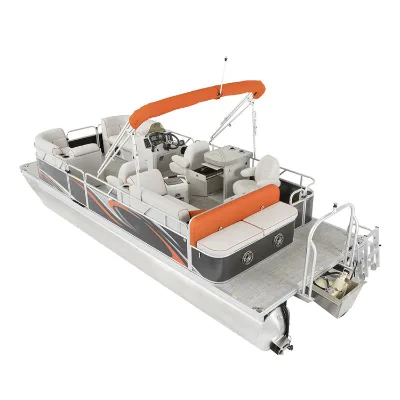
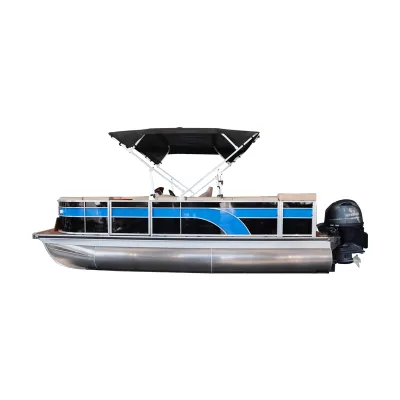
Luxury Aluminum Fishing Pontoon Boat for Sale
$7000.00 - $13000.00
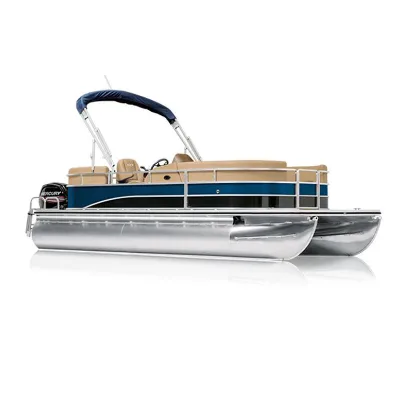
New 6.98m Luxury Offshore Aluminum Pontoon Boat with Bimini Gospel Brand 10-18 Person Capacity
$18596.7461
MOQ: 1 Minimum
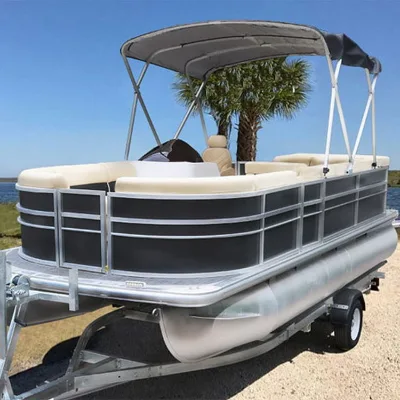
Made in China Boat/Aluminum Pontoon Boat/fishing Boats
$7000.00 - $13000.00

Huaian Kaip International Trade Co., Ltd.
- Trading Company
- Jiangsu, China
- Lead time12 days
- Avg. response≤ 7h
Main productsAmusement Park Equipment,pedal boat,fishing boat,aluminum boat,BBQ donut boat
Main marketsAfrica(30.00%), Eastern Europe(20.30%), Southeast Asia(17.20%), South America(11.60%), Mid East(7.20%), Domestic Market(6.10%), South Asia(5.00%), Eastern Asia(2.60%)
Zhengzhou Buyee Trading Co., Ltd.
- Verified by TüVRheinland
- Trading Company
- Lead time30 days
- Avg. response≤ 2h
Main productsSpeed Boat With Cabin, Speed Boat, Passenger Boat, Park Boat, Yacht
Main marketsSouth America(20%), North America(15%), Southeast Asia(10%)


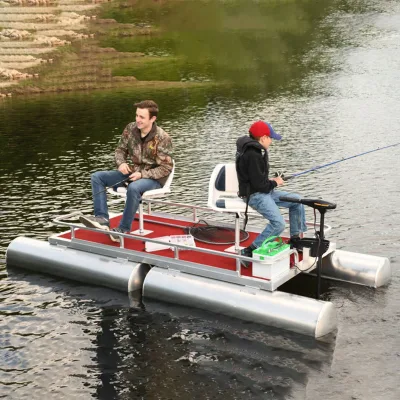


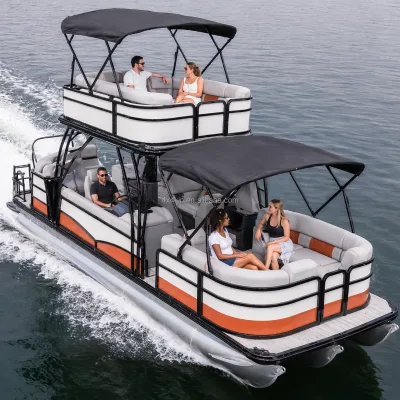
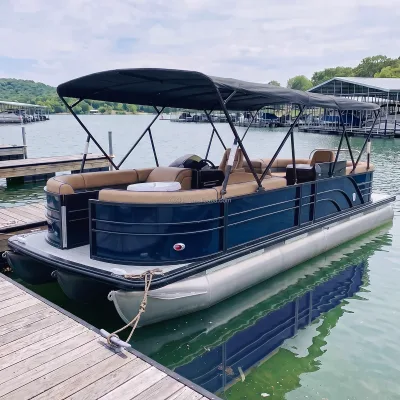
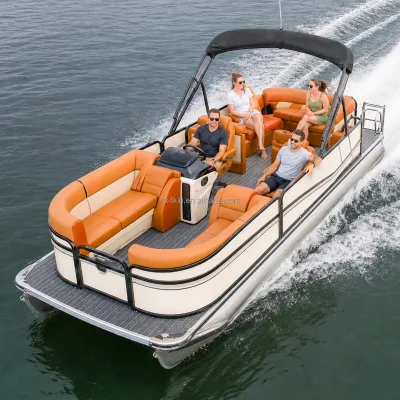
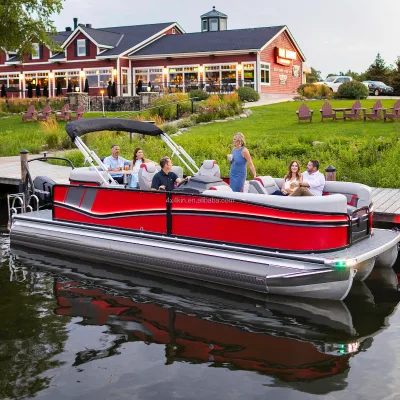
Comprehensive Sourcing Guide
CE Certified Aluminum Pontoon Boat with Bimini Top Supplier Concentration and Factory Types
The sourcing landscape for CE certified aluminum pontoon boats with bimini tops reveals a distinct concentration of manufacturing capabilities within specific Chinese industrial regions. Current supplier data indicates that production facilities are heavily clustered in Shandong and Jiangsu provinces, which serve as primary hubs for marine vessel construction. In Shandong, manufacturers operate as dedicated factories or manufacturer-factory entities, focusing on high-volume output of aluminum work boats, recreational boats, and custom aluminum pontoon models. These facilities often maintain their own brands, such as Gospel, and possess the structural capacity to handle OEM requests for specialized marine equipment. The presence of these established factories suggests that buyers seeking direct manufacturing relationships will find a robust ecosystem in this region, where the supply chain for marine-grade aluminum and outboard engine integration is well-developed. This concentration allows for economies of scale in hull fabrication and assembly, which is critical for maintaining competitive pricing on complex vessels like pontoon boats that require precise welding and finishing standards.
In contrast, suppliers located in Jiangsu province present a different operational model, often categorized as combined entities rather than pure manufacturers. These companies may integrate trading, design, and assembly functions, offering a broader range of services including ODM and OEM capabilities. The Jiangsu-based suppliers listed demonstrate versatility by producing not only pontoon boats but also lure bass boats, aluminum alloy V-hull boats, and marine parts. This combined structure can be advantageous for buyers who require customized design modifications or need a single point of contact for both vessel procurement and accessory sourcing. While the Shandong factories emphasize production volume and standard model efficiency, the Jiangsu suppliers highlight flexibility and comprehensive service offerings. Understanding this distinction is vital for buyers, as the choice between a pure factory and a combined entity will influence communication dynamics, customization limits, and the overall procurement experience. Both types of suppliers are essential to the market, providing buyers with options based on whether they prioritize direct factory pricing or integrated service solutions.
How to Verify CE Certified Aluminum Pontoon Boat with Bimini Top Suppliers
Verifying the legitimacy and compliance of suppliers requires a multi-layered approach that goes beyond simple product listings. A critical first step is confirming the CE certification status, as this mark is mandatory for selling marine vessels in the European market. Buyers should request the specific CE documentation for the pontoon boat model, ensuring it covers the hull material, structural integrity, and safety features like the bimini top mounting points. The product evidence shows that many aluminum pontoon boats carry CE certification, but buyers must verify that the certificate corresponds to the exact model number and specifications being ordered. Additionally, system certifications such as ISO 9001 or ISO 9001:2015 indicate that the supplier follows standardized quality management processes. These certifications are not just badges but evidence of a structured approach to manufacturing consistency, which is crucial for aluminum boats where weld quality and material thickness directly impact safety and longevity. Buyers should ask for copies of these certificates and check their validity dates to ensure the supplier maintains current compliance standards.
Beyond documentation, third-party verification services provide an objective assessment of a supplier’s operational reality. Some suppliers in the current results display verification badges from recognized agencies like SGS, which can offer additional confidence in their business practices and product quality. Buyers should look for these verification indicators and consider engaging independent inspection services before placing large orders. It is also important to assess the supplier’s response time and communication efficiency, as these factors often reflect their overall professionalism and reliability. For instance, response times vary across suppliers, with some averaging around six hours and others taking over ten hours. A faster response time can indicate a more agile and customer-focused operation, which is beneficial when resolving technical questions about boat specifications or customization options. Buyers should also inquire about the supplier’s establishment year and track record, although this information may not always be explicitly displayed. By combining document verification, third-party checks, and communication assessment, buyers can build a comprehensive profile of each potential supplier, reducing the risk of partnering with unreliable entities.
What to Compare Across CE Certified Aluminum Pontoon Boat with Bimini Top Suppliers
When evaluating multiple suppliers, buyers must systematically compare key operational and commercial metrics to identify the best fit for their specific needs. One of the most significant differentiators is the lead time, which varies considerably across the supplier base. Some manufacturers offer a lead time of approximately 45 days, which is typical for custom-built aluminum vessels that require extensive fabrication and finishing processes. In contrast, other suppliers advertise a much shorter lead time of around 15 days, which may indicate the availability of stock models or a more streamlined production workflow. Buyers should align their project timelines with these lead times to avoid delays, especially if they are planning for seasonal sales or specific events. Additionally, the Minimum Order Quantity (MOQ) is a crucial factor, with many suppliers offering an MOQ of just one unit. This flexibility allows buyers to test the market with small orders or procure single vessels for personal or demonstration use without committing to large inventory investments.
Another critical dimension for comparison is the price range and the specific product attributes included in the quote. Prices for aluminum pontoon boats with bimini tops can vary widely, ranging from approximately $11,000 to over $30,000, depending on the size, materials, and included features. Buyers should compare not just the base price but also the specifications such as hull thickness, pontoon diameter, and engine compatibility. For example, some boats are specified with a hull thickness of 5mm and tube thickness of 3mm, while others may have different structural dimensions. The inclusion of a bimini top and its material quality should also be verified, as this affects both the cost and the durability of the vessel. Furthermore, buyers should assess the supplier’s main product focus to ensure they specialize in the type of boat they need. Suppliers listing aluminum fishing boats, speed boats, and pontoon boats as main products are likely to have more expertise in this niche than generalist traders. By meticulously comparing lead times, MOQs, prices, and technical specifications, buyers can make informed decisions that balance cost, quality, and delivery speed.
Common CE Certified Aluminum Pontoon Boat with Bimini Top Sourcing Risks
Sourcing aluminum pontoon boats from international suppliers introduces several risks that buyers must actively manage to ensure a successful procurement outcome. One significant risk is the potential discrepancy between the advertised specifications and the actual product received. Aluminum boats are complex structures where material grade, weld quality, and component sourcing directly impact performance and safety. Buyers may encounter issues if the supplier uses lower-grade aluminum alloys or if the welding standards do not meet the requirements for marine environments. The bimini top, while seemingly a simple accessory, can also be a source of risk if it is not made from UV-resistant materials or if its mounting hardware is not robust enough to withstand rough waters. Buyers should request detailed material certificates and photos of the welding joints to verify quality before shipment. Additionally, the risk of miscommunication regarding customization options is high, as terms like "customized" can have varying interpretations. Clear, written specifications for every custom feature are essential to avoid receiving a boat that does not meet the buyer’s expectations.
Another major risk is the variability in supplier reliability and after-sales support. While some suppliers display verification badges and ISO certifications, others may lack these credentials, making it difficult to assess their long-term viability. Buyers should be cautious of suppliers with inconsistent response times or those who are unwilling to provide comprehensive documentation. The risk of logistical damage is also present, as aluminum boats are often shipped in containers or as semi-knock-down units, which requires careful packing to prevent dents and scratches. Buyers should inquire about the packing method, such as whether the boat is shipped in a 40HQ container or as a semi-knock-down package, and ensure that the supplier uses adequate protective materials. Furthermore, the risk of non-compliance with CE standards cannot be overstated, as selling non-compliant vessels in Europe can lead to legal penalties and market rejection. Buyers must ensure that the CE certificate is valid and covers all aspects of the boat, including the engine and electrical systems. By identifying and mitigating these risks through thorough due diligence and clear contractual terms, buyers can protect their interests and ensure a smooth sourcing process.
CE Certified Aluminum Pontoon Boat with Bimini Top Regional Sourcing and Logistics
The regional location of suppliers significantly influences the logistics and shipping costs associated with sourcing aluminum pontoon boats. Most suppliers in the current results are located in China, specifically in provinces like Shandong and Jiangsu, which are major manufacturing hubs for marine vessels. These regions benefit from established port infrastructure and a dense network of suppliers, which can streamline the procurement process. However, buyers must consider the distance from these manufacturing centers to their destination ports, as this will impact shipping times and freight costs. Aluminum boats are bulky items, and their shipping method can vary depending on the size and configuration. Some boats are shipped fully assembled in containers, while others are shipped as semi-knock-down units to optimize space and reduce costs. Buyers should work with their suppliers to determine the most efficient packing method, such as loading into a 40HQ container, which is commonly used for these vessels. Understanding the packing specifications, such as the dimensions of the boat when packed, is crucial for calculating freight costs and planning warehouse storage.
Logistics planning also involves coordinating with freight forwarders to ensure the safe transport of the aluminum boats. Given the value and fragility of the vessels, buyers should insist on proper insurance coverage and secure packaging. The bimini top and other accessories must be packed separately or securely attached to prevent damage during transit. Buyers should also be aware of any import regulations and duties in their destination country, as these can affect the total landed cost of the boat. For example, some countries may have specific requirements for CE certification documentation at customs, and failure to provide these documents can result in delays or seizures. Additionally, buyers should consider the lead time for production when planning their logistics, as a 45-day lead time means that shipping arrangements should be made well in advance. By understanding the regional advantages and logistical challenges, buyers can optimize their supply chain and ensure that their aluminum pontoon boats arrive in perfect condition and on time.
CE Certified Aluminum Pontoon Boat with Bimini Top Commercial Terms and Order Planning
Effective order planning for aluminum pontoon boats requires a clear understanding of commercial terms and payment structures. Buyers should negotiate favorable payment terms, such as a deposit followed by balance payment against the bill of lading, to mitigate financial risk. It is also important to clarify the Incoterms, such as FOB or CIF, to determine who is responsible for shipping and insurance costs. Suppliers may offer different pricing based on the quantity ordered, so buyers should explore volume discounts if they plan to purchase multiple units. The MOQ of one unit allows for flexibility, but buyers should be aware that smaller orders may incur higher per-unit costs due to fixed production and shipping expenses. Additionally, buyers should inquire about warranty terms and after-sales support, as these are critical for long-term satisfaction. Some suppliers may offer limited warranties on the hull and engine, while others may provide comprehensive support packages. Understanding these commercial terms helps buyers budget accurately and avoid unexpected costs.
Furthermore, buyers should plan for the integration of outboard engines, which are often sourced separately or specified by the buyer. The product evidence shows that boats can be equipped with engines from brands like Yamaha, Suzuki, Honda, and Mercury, with power ratings ranging from 90 to 150 HP. Buyers should coordinate the engine procurement with the boat delivery to ensure compatibility and timely assembly. It is also advisable to request a detailed proforma invoice that lists all components, including the bimini top, seating,
FAQs
What is the price range for CE certified aluminum pontoon boats with bimini tops?
Prices typically range from $11,160 to $23,000 depending on size and customization. Specific models like the 7m pontoon boat are priced between $11,160 and $13,000, while luxury variants with bimini tops can reach up to $23,000. Buyers should verify exact costs based on hull material and engine selection.
What is the minimum order quantity for these aluminum pontoon boats?
The minimum order quantity is generally one unit, allowing buyers to purchase single vessels for personal or commercial use. This low MOQ supports testing market demand or acquiring a specific custom configuration without requiring bulk commitments from the manufacturer or factory supplier.
How long does production take for these aluminum pontoon boats?
Lead times vary significantly by supplier, ranging from 15 days to 45 days. Suppliers in Jiangsu often offer faster turnaround times around 15 days, while those in Shandong may require up to 45 days. Buyers should confirm specific schedules with the manufacturer before placing orders.
What certifications do these aluminum pontoon boats carry?
These boats typically carry CE certification, ensuring compliance with European safety standards. Additionally, manufacturers often hold ISO 9001 system certification for quality management. Some suppliers may also provide SGS verification. Buyers should request valid certificates to confirm regulatory compliance for their specific region.
What materials are used for the hull of these pontoon boats?
Hulls are constructed from marine-grade aluminum, specifically alloys like DNV5083 or 5052. These materials provide high strength and corrosion resistance. The pontoons often feature a diameter of 635mm with a thickness of 3mm, ensuring durability for sport fishing and recreational use in various water conditions.
Where are these aluminum pontoon boats manufactured?
Manufacturing primarily occurs in China, with key production hubs in Shandong and Jiangsu provinces. Shandong suppliers often focus on large-scale aluminum boat production, while Jiangsu facilities may offer combined manufacturing services. Buyers can verify specific factory locations to assess logistics and shipping requirements for their destination.