Kids Finger Painting Ink Pad Suppliers and Manufacturers
Compare 14 verified suppliers offering Kids Finger Painting Ink Pad with OEM, ODM, and customization options. Review locations in China, response times, and lead times to select a partner. Contact suppliers directly to request samples; review the available evidence before requesting comparable quotations from suitable candidates.
Updated
Suppliers List

- Verified by BV
- Manufacturer/Factory
- China Fujian
- Lead time15 days
- Avg. response≤ 25h
Main productsWater Bottle, Kitchen Ware, Shoes, Plastic Product, Bag, Toy
Main marketsSouth America,Eastern Europe,Mid East,North America,Southeast Asia,Eastern Asia,Oceania,Western Europe,Africa

Hunan Yuetu Culture Communication Co., Ltd.
- Trading Company
- Hunan, China
- Lead time30 days
- Avg. response≤ 7h
Main productsEducational Toys, Puzzles, Drawing Toys, Baby Toys, Outdorr Sport Toy
Main marketsNorth America(60.00%), Western Europe(15.00%), South America(10.00%), Southeast Asia(10.00%), Southern Europe(5.00%)
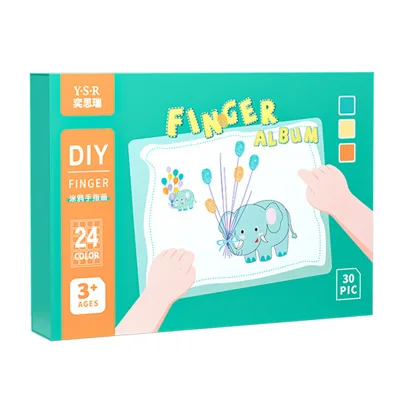
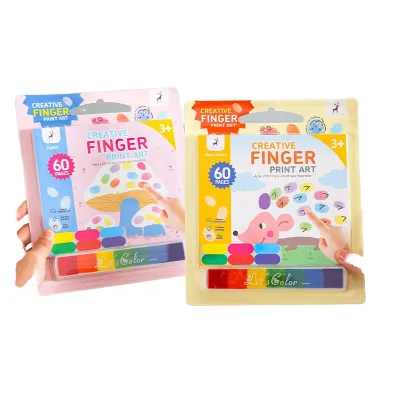
5 Styles Finger Paints Drawing Coloring Book Colorful Finger Palm Paint Ink Pad for Kindergarten Kid
$0.6093 - $3.5194
MOQ: 2 Minimum
$0.6093 - $3.5194
MOQ: 2 Minimum
$0.59 - $3.41
MOQ: 2 Minimum
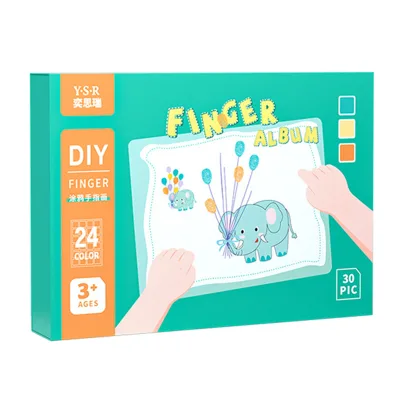
$0.6063 - $3.497
MOQ: 2 Minimum
Diystamp Office Supplies Industry (Suzhou) Co., Ltd.
- Manufacturer, Trading Company
- Jiangsu, China
- Lead time0 days
- Avg. response≤ 2h
Main productsStamps,Stamp Machien,Flash Stamp,self Inking Stamp,Polymer Stamp
Main marketsSouth Asia(10.00%), Southeast Asia(10.00%), Central America(10.00%), Mid East(10.00%), North America(10.00%), South America(5.00%), Domestic Market(2.00%), Africa(2.00%), Southern Europe(2.00%), Northern Europe(2.00%), Eastern Europe(2.00%), Western Europe(2.00%), Eastern Asia(2.00%), Oceania(2.00%)
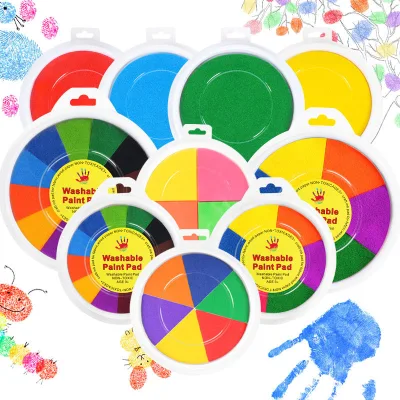
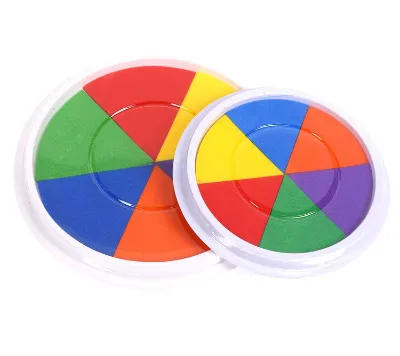
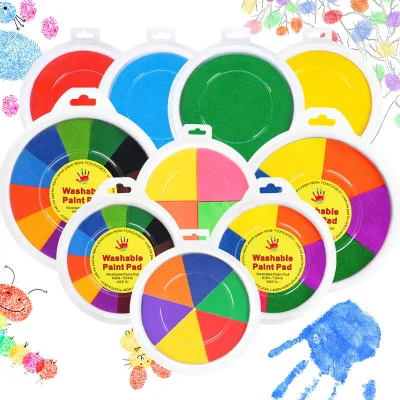
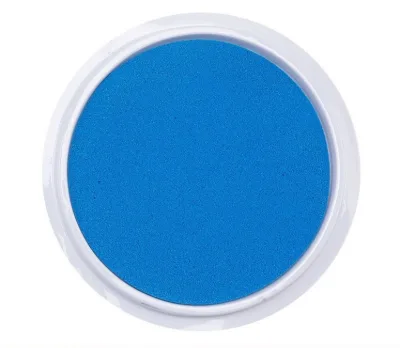
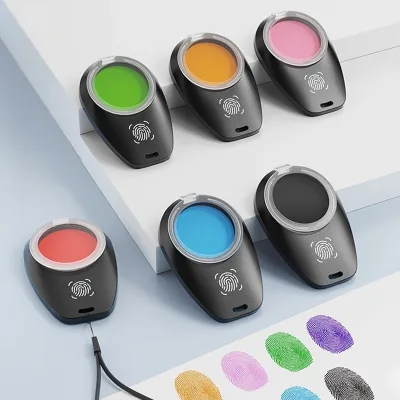
Washable Round DIY Multi Color Finger Painting Ink Pad Printing Stamp Custom Stamp Finger Ink Pad
$0.2485 - $3.003
MOQ: 2 Minimum
NANJING C.PATRICK TRADING CO., LTD
- Trading Company
- Jiangsu, China
- Lead time30 days
- Avg. response≤ 8h
Main productsStretched canvas,wooden easel,Artist painting set,painting brush,piant color
Main marketsWestern Europe(30.00%), Domestic Market(10.00%), Southern Europe(10.00%), North America(10.00%), South America(10.00%), Southeast Asia(5.00%), Central America(5.00%), Eastern Europe(5.00%), South Asia(5.00%), Mid East(5.00%), Eastern Asia(3.00%), Oceania(2.00%)
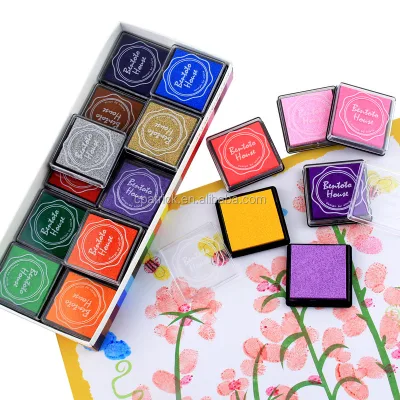
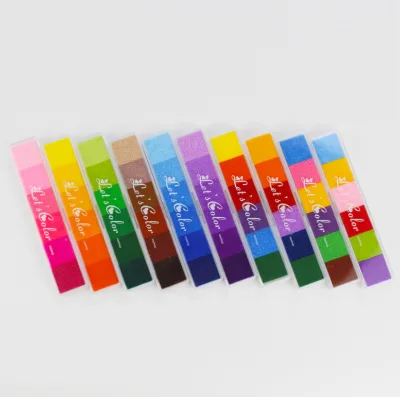
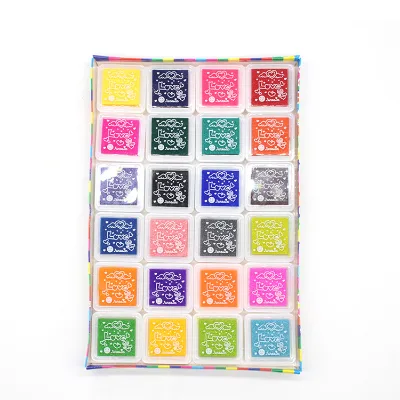
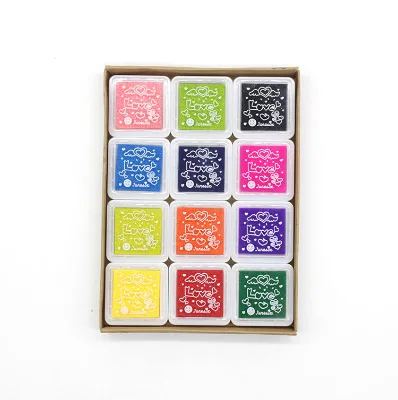
New Kids' DIY Finger Craft Ink Pads of 12colours/set
$1.15 - $1.24
Dongguan Tianyi Stationery Co., Ltd.
- Verified by TüVRheinland
- Manufacturer, Trading Company
- Lead time10 days
- Avg. response≤ 3h
Main productsAcrylic Marker, Chalk Marker, Fabric Marker, Paint Marker, Heat Erasable Marker
Main marketsNorth America(15%), South America(15%), Domestic Market(15%)
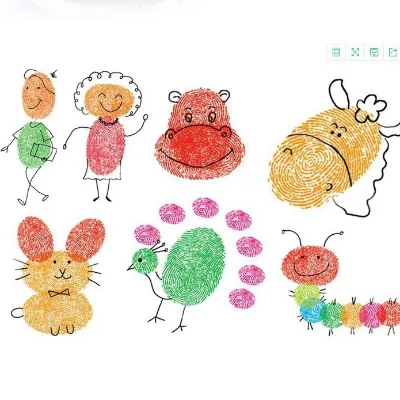
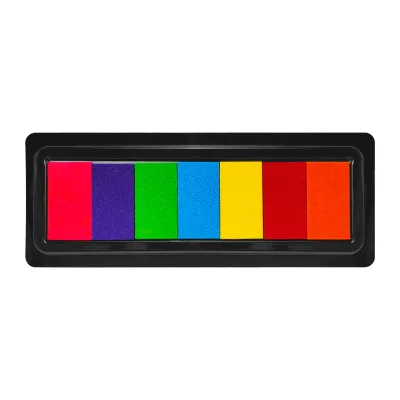
$0.2784 - $0.2994
MOQ: 2 pieces
Sichuan Best-Line Machinery Co., Ltd.
- Trading Company
- Lead time旺季: "1 - 100":15,"> 100":"To be negotiated", 淡季: "1 - 100":15,"> 100":"To be negotiated"
- Avg. response≤ 8h
Main productsart brush,paints,paint brush,art material,drawing pencil

Anhui Sunshine Stationery Co., Ltd.
- Verified by TUVRHEINLAND
- Trading Company
- China Anhui
- Lead time15 days
- Avg. response≤ 3h
Main productsPencil, Stationery Pins, Stationery Clips, Staple, Stapler, Paper Punch, Office Organizer, Document File, Glue
Main marketsSouth America,Africa,Others(foreignTradeCapacity.exportBusinessCapacityMarketOther),Southeast Asia/ Mideast,East Asia(Japan/ South Korea),Europe


Foska Assorted Colors Children Craft Ink Pad for Stamps Fabric Wooden Paper
$2.745 - $3.641
MOQ: 225 Sets


Foska Thumb Print Pad Footprint Handprint No Touch Skin Patented Baby Ink Stamp Pad
$0.322 - $0.431
MOQ: 240 Pieces
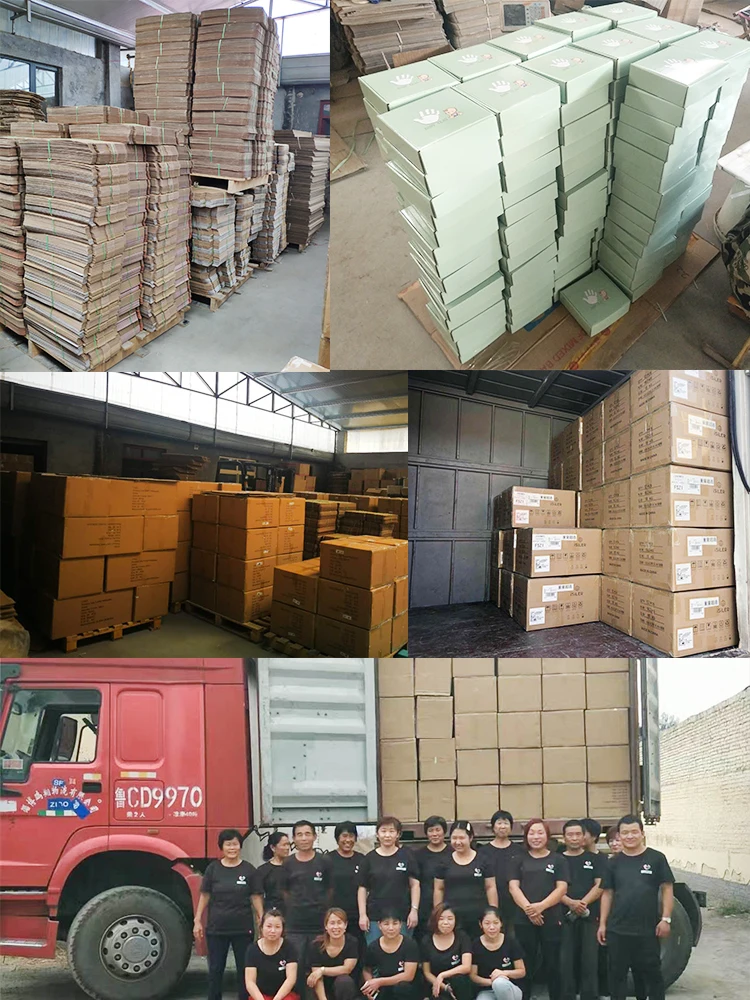
Zouping Aizhiyin Industry and Trade Co., Ltd.
- Manufacturer, Trading Company
- Shandong, China
- Lead time10 days
- Avg. response≤ 3h
Main productsBaby Hand And Foot Print Frame,Pet Paw Print Photo Frame,Baby Clay
Main marketsWestern Europe(50.00%), North America(30.00%), Eastern Europe(10.00%), Domestic Market(10.00%)
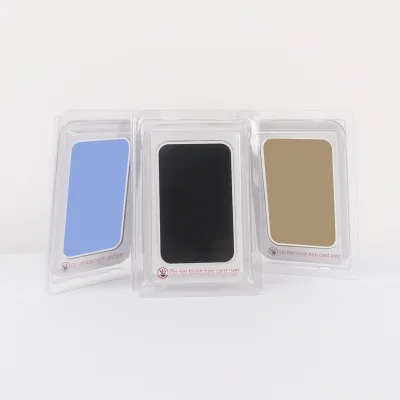
Craft Ink Pad, Finger Washable Ink Pads DIY Stamp for Kids Finger Print Stamp Pad
$1.00 - $1.30
MOQ: 200
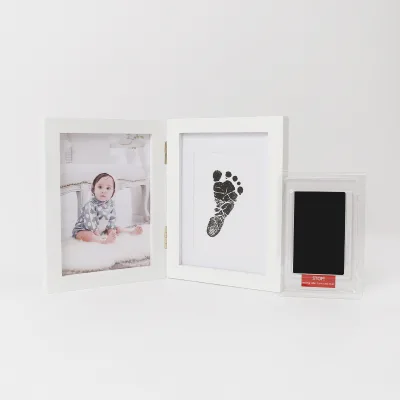
$4.6242 - $4.9326
MOQ: 280 pieces
Ningbo Hardwork Art & Craft Co., Ltd.
- Verified by TüVRheinland
- Manufacturer, Trading Company
- Lead time30 days
- Avg. response≤ 3h
Main productsDIY Kit, Wood DIY, Wooden Stamp, Stationery
Main marketsNorth America(20%), Western Europe(20%), Eastern Europe(15%)
Dejul Office Supplies (Suzhou) Co., Ltd.
- Manufacturer, Trading Company
- Jiansu, China
- Lead time15 days
- Avg. response≤ 2h
Main productsFlash Stamp&Ink,Office Stamp,Kids Stamp,Rubber Stamp,Wax Seal Stamp
Main marketsDomestic Market(51.00%), North America(5.00%), South America(5.00%), Eastern Europe(4.00%), Eastern Asia(4.00%), South Asia(4.00%), Northern Europe(4.00%), Africa(4.00%), Central America(4.00%), Western Europe(3.00%), Mid East(3.00%), Southern Europe(3.00%), Oceania(3.00%), Southeast Asia(3.00%)
Yiwu Forever Print Paper Products Co., Ltd.
- Verified by SGS Group
- Manufacturer, Trading Company
- Lead time15 days
- Avg. response≤ 2h
Main productsEducational Toys, Children Book, Puzzles, Paper Cards, Coloring Books
Main marketsNorth America(35%), Eastern Asia(15%), Western Europe(15%)
Shenzhen Kaihongyu Stationery Co., Ltd.
- Verified by TüVRheinland
- Manufacturer, Trading Company
- Lead time30 days
- Avg. response≤ 6h
Main productsWhiteboard Marker Pens, Fabric Marker, Liquid Chalk Marker, Acrylic Paint Marker, Water Color Pens
Main marketsWestern Europe(45%), North America(30%), Eastern Asia(10%)
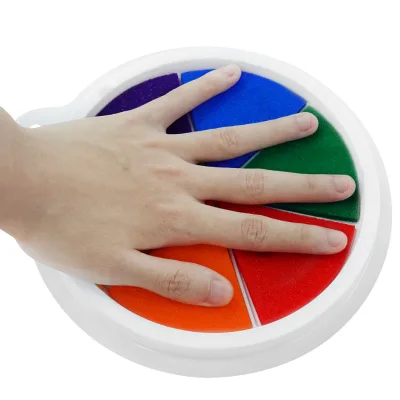
$0.2365 - $0.515
MOQ: 500 Minimum
Yixing Huhua Stationery Co., Ltd.
- Verified by TüVRheinland
- Manufacturer, Trading Company
- Lead time30 days
- Avg. response≤ 6h
Main productsStamp Pad, Stamp Ink, Stamp, Indelible Ink, Marker Pen
Main marketsMid East(14%), South America(13%), Domestic Market(12%)
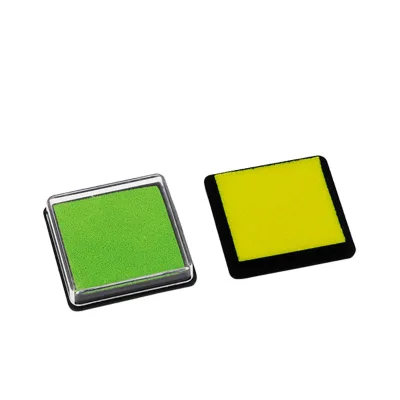
Good Sale Children Ink Mini Stamp Pads
$0.09 - $0.10
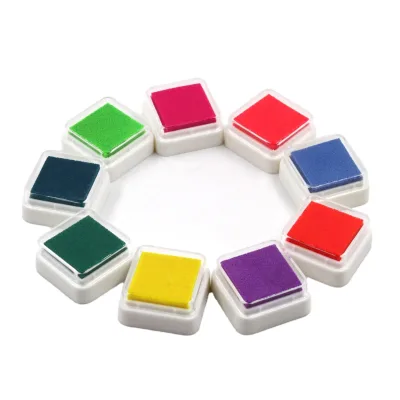
Child-safe New Art Custom Baby Colorful Diy Ink Pad
$0.04 - $0.05
Wenzhou Bonvan Stationery & Gifts Co., Ltd.
- Verified by TüVRheinland
- Trading Company
- Lead time25 days
- Avg. response≤ 3h
Main productsMarkers, Pens, School Stationery, Office Stationery, Art Material
Main marketsNorth America(20%), Domestic Market(20%), Western Europe(15%)


Comprehensive Sourcing Guide
Kids Finger Painting Ink Pad Supplier Concentration and Factory Types
When sourcing kids finger painting ink pads, buyers will encounter two broad supplier archetypes: manufacturers or factories that produce the pads in-house, and trading companies that aggregate products from multiple workshops. The observed results include suppliers self-classified as Manufacturer/Factory, Trading Company, and hybrid Manufacturer and Trading Company entities, so neither archetype dominates exclusively. Factory-type sellers typically list related product lines—water bottles, kitchenware, shoes, plastic products, bags and toys in one case—suggesting diversified manufacturers where ink pads may sit within a broader stationery or toy portfolio. Trading companies, by contrast, tend to focus on educational toys, puzzles, drawing toys and baby toys, positioning ink pads as part of a curated children's product range.
Geographic concentration signals in the current results point to Fujian, Hunan and Jiangsu in China, each hosting suppliers of this category. Buyers should treat these provinces as plausible cluster candidates but confirm whether a given seller actually manufactures or merely trades. A useful screening step is to ask the supplier which products are made in their own facility versus sourced externally, then request evidence such as workshop photos or production capability documentation. Because one supplier in the results lists stamps, stamp machines and self-inking stamps as main products, adjacent-product focus can indicate genuine pad production competence. Buyers should avoid assuming a supplier's declared type tells the full story; verification of actual production or consolidation capability matters more than the label.
How to Verify Kids Finger Painting Ink Pad Suppliers
Verification begins with the credentials displayed on supplier profiles, but buyers must distinguish between what is shown and what is proven. In the observed results, one supplier carries ISO 9001 system certification with BV verification, while another displays a CPC certification—relevant because CPC relates to children's product safety in the United States. However, not every supplier displays a certification at all; one listed supplier shows no system certification in its profile data. Buyers should treat missing credentials as a prompt for direct inquiry rather than an automatic disqualification, asking the supplier to provide current certificates, scope of coverage, and whether the certificate covers the ink pad product specifically or only the broader organization.
Beyond displayed badges, buyers should verify product-level compliance because children's ink pads touch skin and may be mouthed by young users. Ask each supplier for material safety documentation, washability test evidence, and age-grading justification for the target market. Cross-check declared attributes against physical samples: one supplier's listings declare washable pigment formulations and customized standards, which buyers should confirm through independent lab testing before committing to volume orders. Additional verification steps include confirming business license validity, checking whether the supplier's declared main products align with the item being quoted, and using platform escrow or trade assurance mechanisms where available to reduce payment risk. Finally, verify that the entity you contract with is the same entity that holds any certification, since trading companies sometimes display factory credentials that belong to their upstream suppliers.
What to Compare Across Kids Finger Painting Ink Pad Suppliers
Build a comparison matrix from the attributes suppliers actually display, while acknowledging gaps. In the current results, response times range widely—from as fast as 2 hours to as slow as 25 hours—so responsiveness is a meaningful differentiator for buyers who need quick iteration on samples or artwork. Lead times also diverge sharply: one supplier reports 15 days, another 30 days, and a third reports 0 days, which likely reflects stock availability or data quality and should be clarified directly. MOQs vary dramatically too, from 2 units on a drawing-toy listing to 100 and 200 units on ink pad listings, so buyers with small trial budgets should target low-MOQ listings first.
Product evidence offers further comparison dimensions. Price points in the observed listings span roughly from $0.15 to $3.52 per unit depending on configuration, with multi-color sets and picture-book bundles commanding higher prices than single ink pads. Customization capability differs: several listings declare OEM, ODM, custom colors and customized packing available, while other listings focus on fixed color configurations of 6, 12, 13 or 24 colors, some bundled with finger albums. Also compare company type, location, main product focus, establishment year where displayed, and whether escrow or verified-status labels appear. Because not every supplier displays every attribute, record "not displayed" rather than assuming a value, and request missing data during RFQ rounds so the matrix reflects verified facts rather than listing-page optimism.
Common Kids Finger Painting Ink Pad Sourcing Risks
The most significant category-specific risk is chemical safety. Finger painting ink pads are used by children as young as 2 years old according to age-range declarations in the observed listings, meaning skin contact is intensive and accidental ingestion is plausible. Suppliers may declare "non toxic" or "washable" in product titles and keywords, but these are marketing claims, not test results. Buyers who rely on such wording without independent laboratory verification risk importing non-compliant goods, facing customs rejection, or worse, harming end users. Always commission third-party testing against the destination market's applicable children's product requirements before shipment.
Beyond safety, several commercial risks recur. Customization-heavy listings—one declares customized packing, customized standards and custom colors—introduce longer sampling cycles and higher miscommunication risk, especially when color matching is subjective. Low MOQs, such as the 2-unit minimum on some listings, may signal trading stock rather than production capability, raising consistency risk across repeat orders. Very short declared lead times may not account for customization, peak season congestion, or safety testing time. Buyer-oriented risk controls include: ordering pre-production samples from the exact production line, specifying washability and pigment composition in the purchase contract, confirming packing configurations in writing, and staging initial orders small. Also watch for price-driven substitutions, since a supplier quoting at the bottom of a $0.15–$3.52 range may degrade ink quality or pad fill weight to protect margin.
Kids Finger Painting Ink Pad Regional Sourcing and Logistics
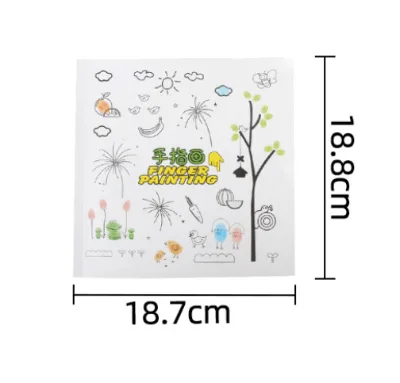
The observed supplier base clusters in three Chinese provinces: Fujian, Hunan and Jiangsu. Hunan-based suppliers in the results focus on educational toys and drawing toys, with products explicitly declared as originating there and package dimensions of roughly 22 by 29.5 by 1.1 cm and 0.5 kg gross weight per unit—specifications that directly shape freight cost calculations. Fujian and Jiangsu suppliers contribute stamp-focused and multi-product manufacturing profiles. Buyers planning consolidation should note that sourcing from multiple provinces means multiple pickup points, which affects inland freight and consolidation timing if combining orders in one export shipment.
Logistics planning for this category should account for the physical profile of the goods: ink pads are compact but heavy relative to value, and multi-color sets with picture books add bulk. Calculate chargeable weight using the declared package dimensions and confirm whether suppliers quote ex-works, FOB or delivered terms, since none of the observed data specifies shipping terms. Lead-time differences across suppliers—15, 30, and near-zero days in the results—suggest differing stock models; stock-carrying sellers can support urgent replenishment while made-to-order sellers need calendar planning. Buyers shipping to regulated markets should also build buffer time for destination-market safety documentation and labeling checks before goods leave the factory. When comparing regional options, weigh total landed cost—product price, inland haulage to port, export clearance and freight—rather than unit price alone, because a cheaper per-unit quote from a distant province can lose its advantage after freight.
Kids Finger Painting Ink Pad Commercial Terms and Order Planning
Commercial negotiation for this category should anchor on the disclosed price bands and MOQ structures. Observed listings range from about $0.15 for single ink pads at 200-unit minimums, to $0.19 for souvenir hand-and-foot pads, to roughly $0.59–$3.52 for multi-color sets and bundled kits at minimums as low as 2 units. Use these anchors to frame negotiations, but treat listed prices as starting points: confirm what configuration, packing and quantity the quoted price assumes, then request tiered quotes at your realistic order volumes. For customized orders—several listings declare OEM, ODM and custom packing available—expect tooling, artwork or color-matching charges and ask explicitly whether they are amortized into unit price or billed separately.
Order planning should sequence a trial order, a safety-test sample pull from that trial batch, and then scale-up. Match supplier lead times—15, 30 or shorter declared days—to your replenishment calendar and add buffer for sample approval cycles, which run longer on customized color and packing requests. Payment terms deserve explicit attention: prefer escrow or platform-protected payment where available, since observed profiles mention verification labels but not payment protection uniformly. Agree in writing on washability performance, pigment composition, age grading, packing configuration and AQL inspection standards before deposit. Finally, plan reorder economics: low-MOQ trial listings are ideal for market testing, but confirm the supplier will honor equivalent or better pricing and consistent color batches at volume before building the category around that supplier.
FAQs
What is Kids Finger Painting Ink Pad?
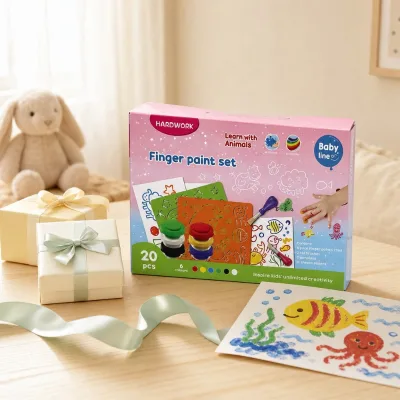
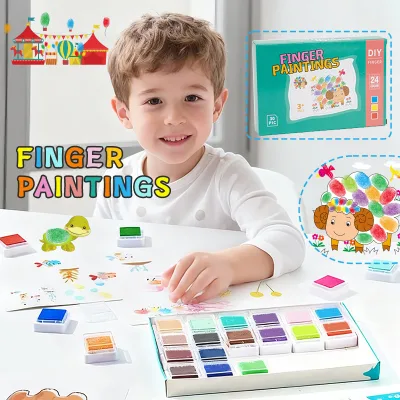
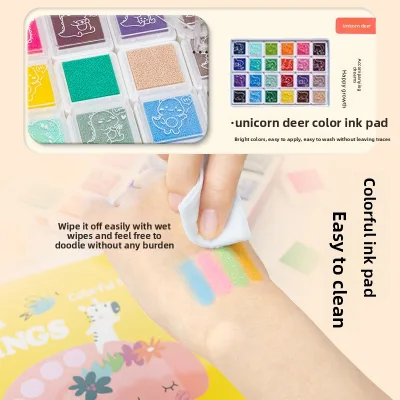
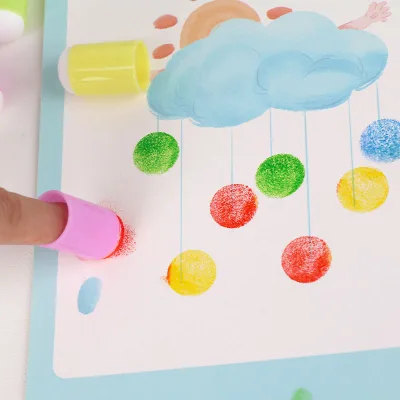
Kids Finger Painting Ink Pad is a large, washable ink pad designed for children to press hands, fingers, or palms onto paper for creative art. Most pads come in multi-color discs, use non-toxic washable pigment, and are marketed for kindergarten and early learning activities. Buyers typically compare color counts, pad diameter, and washability when sourcing.
What is the minimum order quantity for finger painting ink pads?
Published listings in this category show minimum order quantities ranging from 2 pieces for finger paint drawing kits to 100 pieces for kindergarten ink pads and 200 pieces for customizable washable pigment inkpads. Actual MOQ depends on customization level and supplier type. Always confirm the current MOQ in writing before placing a trial order.
How much does a Kids Finger Painting Ink Pad cost?
Listed prices range from about $0.15 to $0.19 per piece for customizable washable pigment inkpads, and roughly $0.59 to $3.52 for finger paint drawing kits and multi-color pads. Price varies with color count, pad size, and whether a picture album is included. Request quotes for your exact specification before comparing suppliers.
Can suppliers provide OEM or ODM customization?
Yes, several listings in this category explicitly offer OEM and ODM services, including custom colors, packing, and standards, with customization marked as available. Product models such as washable pigment inkpads list custom color options directly. Confirm sample approval, artwork requirements, and any extra tooling charges before committing to a customized production run.
What are typical lead times for these products?
Listed lead times range from around 15 days for washable pigment inkpads from a Fujian manufacturer to roughly 30 days for finger paint drawing kits from a Hunan trading company. Lead time usually depends on order quantity and customization complexity. Confirm production scheduling and shipping mode when requesting a formal quotation.
Do these products meet safety standards for children?
Some suppliers list a CPC certification, which relates to children's product safety in the United States, and others hold ISO 9001 system certification. Washable, non-toxic pigment is commonly claimed in listings, but claims vary. Ask each supplier for current certificates, test reports, and material documentation matching your target market's regulations before ordering.
What types of suppliers sell these ink pads?
This category includes manufacturers and trading companies. Manufacturers in Fujian and Jiangsu offer washable pigment inkpads and stamp products with OEM and ODM support, while a Hunan trading company focuses on educational and drawing toys. Factory-direct sourcing can lower unit cost, but trading companies may consolidate related educational toy items in one order.
How quickly do suppliers respond to inquiries?
Published response times in this category range from about 2 hours to 25 hours. Faster responders tend to be stamp-focused manufacturers, while some factory suppliers take around a day to reply. Send a detailed inquiry covering quantity, customization, and target price to speed up quotes, and note response speed as part of supplier evaluation.