Nonstick Glass Lid Titanium Pot and Pan Suppliers
Source 18 verified suppliers for Nonstick Glass Lid Titanium Pot and Pan solutions. Compare grounded dimensions including China Guangdong and Zhejiang locations, response times, lead times, and certifications like FDA and SGS. Review product specs and request quotes to streamline procurement.
Suppliers List

Ningbo Zhongjiang Machinery Co., Ltd.
- Verified by CTI
- Combined
- China Guangdong
- Lead time30 days
- Avg. response≤ 3h
Main productsStainless Steel Kettle Welding Equipment, Tempered Glass Pot Cover Production Line, Net Basket Strainer Vegetable Basket Productio, Flour Screening Equipment, Splitting Sieve Equipment, Automatic Welding Machine for Brake Shoe, Brake System Brake Assembly Line, Stainless Steel Steaming Grid Equipment, Portable Basket Production Line, Rack Net Basket Equipment
Main marketsDomestic

YONGKANG HOMESHINE SILICONE PRODUCTS CO., LTD.
- Combined
- China Zhejiang
- Lead time23 days
- Avg. response≤ 24h
Main productsGlass Lid
Main marketsSouth America,East Asia(Japan/ South Korea),Domestic,Europe,North America

Xi'an Joinxin New Material Technology Co., Ltd.
- Manufacturer, Trading Company
- Shaanxi, China
- Lead time0 days
- Avg. response≤ 11h
Main productsTitanium Mill Products/Titanium Wares/Tungsten Mill Products/Molybdenum Mill Products/Tantalum Mill Products,Titanium cilivian goods,Titanium industrial products,Titanium outdoor ware
Main marketsSoutheast Asia(30.00%), Southern Europe(20.00%), Western Europe(20.00%), Domestic Market(20.00%), North America(10.00%)
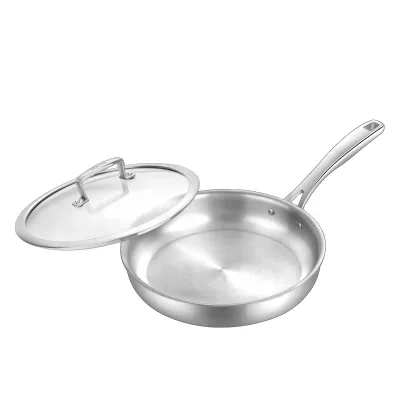
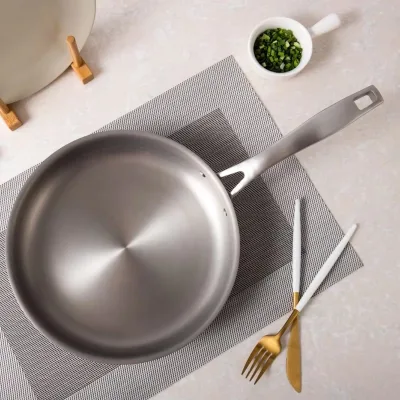
24cm Titanium Cookware Titanium Cooking Pan Food Pot Pan
$39.43 - $41.43
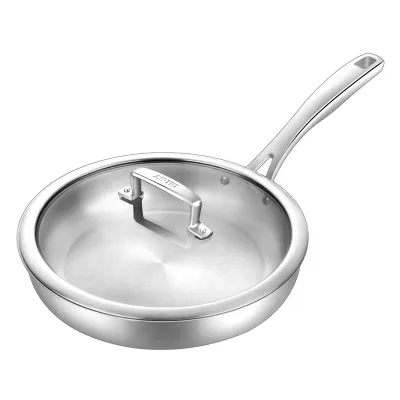
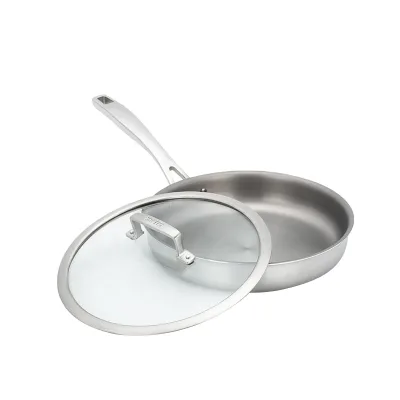

Jiangmen Ruida Houseware Co., Ltd.
- Verified by TUVRHEINLAND
- Trading Company,Manufacturer/Factory
- China Guangdong
- Lead time60 days
- Avg. response≤ 8h
Main productsCookware, Stainless Steel Kettle, Stainless Steel Cookware, Kettle, Tableware, Kitchenware, Cooker, 30PCS Stainless Steel Cookware, Utensil, Cooking Pot
Main marketsSouth America,Eastern Europe,Mid East,North America,Southeast Asia,Eastern Asia,Oceania,Western Europe,Africa

New Style Nonstick Stainless Steel Cookware with Glass Lids Pan and Pot
$20.40 - $25.30
MOQ: 1000 Sets

Hot Sales Nonstick Stainless Steel Cookware with Glass Lids Pan and Pot
$20.40 - $25.30
MOQ: 1000 Sets


Hot Sale Cooking Kitchen Marble Non Stick Pots Stainless Steel Cookware Sets
$20.40 - $25.30
MOQ: 1000 Sets

- Verified by SGS
- Trading Company
- China Chongqing
- Lead time23 days
- Avg. response≤ 5h
Main productsStainless Steel Pot, Aluminum Pot, Pot
Main marketsOthers(foreignTradeCapacity.exportBusinessCapacityMarketOther)
Yongkang Gcook Imp&Exp Co., Ltd.
- Verified by SGS Group
- Trading Company
- Lead time0 days
- Avg. response≤ 2h
Main productsSauce Pots, Roasting Pans, Fry Pans, Stainless Steel Cookware Sets, Soup Pot

GUANGDONG XIANGXINGFA ART GLASS CO., LTD.
- Combined
- China Guangdong
- Lead time15 days
- Avg. response≤ 12h
Main productsGlass Lid, Tempered Glass Lid, Glass Lid for Cookware, Pot Lid, Glass Dome, Glass Cover, Flat Glass Lid, Rim Cover, Rim Lid, Round Cover
Main marketsSouth America,Southeast Asia/ Mideast,East Asia(Japan/ South Korea),Europe


Cookware Sets Stainless Steel Rim Tempered Glass Lids for Frying Pan Pot
$0.20 - $2.00
MOQ: 1000 Pieces


Jiangmen Changshi Industry Co., Ltd.
- Verified by CTI
- Combined
- China Guangdong
- Lead time23 days
- Avg. response≤ 8h
Main productsCookware
Main marketsSouth America,Southeast Asia/ Mideast,Domestic,Europe


Hot Sale Manufacturers Non Stick Stainless Steel Cooking Frying Pan with Glass Lid
$4.80 - $6.50
MOQ: 1000 Sets

Jinan JSV Industrial Co., Ltd.
- Verified by CTI
- Manufacturer/Factory
- China Shandong
- Lead time15 days
- Avg. response≤ 5h
Main productsTransparent Glass Ceramic Black Glass Ceramic, Borosilicate 4.0 Fire Proof Glass Sheet, Borosilicate 3.3 Floated Glass Sheet, Processed Glass Sheet, Oil Level Sight Glass with Threads, Borosilicate Level Gauge Glass, Quartz Glass Tube Quartz Fiber Wool, Borosilicate 3.3 Glass Tube, Lead Free Glass Tube pH360 Glass Tube, Explosion Proof Glass Dome
Main marketsSouth America,Eastern Europe,Mid East,North America,Southeast Asia,Eastern Asia,Oceania,Western Europe,Africa
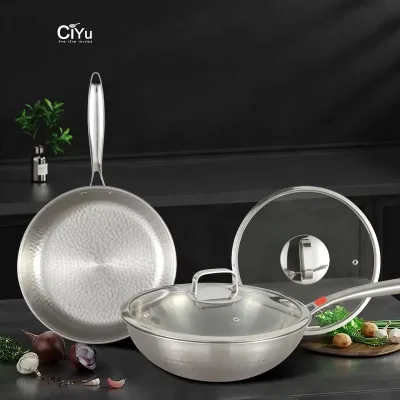
Ciyu Kitchenware (Shandong) Co., Ltd.
- Verified by TüVRheinland
- Trading Company
- Shandong, China
- Lead time20 days
- Avg. response≤ 4h
Main productsTitanium Cookware, Stainless Steel Cookware, Aluminium Alloy Cookwar, Cast Iron Cookware, Bakeware

- Verified by SGS
- Trading Company,Manufacturer/Factory
- China Guangdong
- Lead time45 days
- Avg. response≤ 2h
Main productsStainless Steel Cookware, Stainless Steel Untensil, Stainless Steel Kitchenware, Stainless Steel Colander Bowl, Stainless Steel G. N Pan, Stainless Steel Pressure Cooker, Stainless Steel Buckets, Stainless Steel Dishes Rack, Stainless Steel Chafing Dishes, Stainless Steel Fittings
Main marketsSouth America,Eastern Europe,Mid East,North America,Southeast Asia,Eastern Asia,Oceania,Western Europe,Africa

Kitchenware Non-Stick Cookware Stainless Steel Cooking Pot with Lid Milk Pot
$4.50 - $9.00
MOQ: 100 Pieces

Diversion Mouth Stainless Steel Saucepan Milk Noodle Pan Pot with Glass Lid
$5.72 - $9.49
MOQ: 200 Pieces

Ningbo Galaxy International Trading Co., Ltd.
- Trading Company,Manufacturer/Factory,Group Corporation
- China Zhejiang
- Lead time23 days
- Avg. response≤ 14h
Main productsTitanium, Titanium Bar, Nickel Base Alloy, Titanium Sheet, Nickel Sheet, Titanium Pipe, Nickel Bar, Titanium Tube, Tantalum Bar, Niobium Bar
Main marketsSouth America,Eastern Europe,Mid East,North America,Southeast Asia,Eastern Asia,Oceania,Western Europe,Africa

Shenzhen Pengcheng Haina Foreign Trade Co., Ltd.
- Manufacturer/Factory
- China Guangdong
- Lead time23 days
- Avg. response≤ 18h
Main productsKitchenware, Household Products, Home Appliance, Outdoor Products, Hardware, LED Panel
Main marketsSouth America,Eastern Europe,Mid East,North America,Southeast Asia,Eastern Asia,Oceania,Western Europe,Africa

Eagle Catering Equipment Co., Ltd.
- Manufacturer/Factory
- China Guangdong
- Lead time30 days
- Avg. response≤ 9h
Main productsTrolleys, Gastronorm Containers, Table, Shelves, Sink, Barrier Post, Cookware, Buffetware, Barware, Kitchen Utensils
Main marketsSouth America,Eastern Europe,Mid East,North America,Southeast Asia,Eastern Asia,Oceania,Western Europe,Africa

Jiangmen Weifeng Houseware Co., Ltd.
- Manufacturer/Factory
- China Guangdong
- Lead time30 days
- Avg. response≤ 4h
Main productsStainless Steel Cookware, Kitchenware, Houseware, Cookware Set, Whistling Kettle, Kitchen Utensils, Stainless Steel Cookware Set, Stainless Steel Houseware
Main marketsSouth America,Eastern Europe,Mid East,North America,Southeast Asia,Eastern Asia,Oceania,Western Europe,Africa

Non-Stick Pot Cooking Stainless Steel Cookware with Different Sizes Pot, Kitchenware
$16.00 - $19.00
MOQ: 800 Sets


8PCS Non-Stick Pot Cooking Stainless Steel Cookware with Different Sizes Pot, Kitchenware
$16.00 - $19.00
MOQ: 800 Sets

8PCS Non-Stick Pot Cooking Stainless Steel Cookware with Different Sizes Pot
$16.00 - $19.00
MOQ: 800 Sets
- Verified by TüVRheinland
- Manufacturer, Trading Company
- Lead time0 days
- Avg. response≤ 3h
Main productsChicken shredder, Vegetable cutter, Salad spinner, Food processor, Mini mop
Caiyi Smart Home (chongqing) Co., Ltd.
- Verified by TüVRheinland
- Manufacturer, Trading Company
- Lead time15 days
- Avg. response≤ 2h
Main productsCookware, Small Kitchen Appliances, Cookware Sets, Soup & Stock Pots, Cookware Accessories
Main marketsDomestic Market(56%), North America(9%), South America(7%)

Foshan Ron Hospitality Supplies Co., Ltd.
- Verified by BV
- Manufacturer/Factory,Group Corporation
- China Guangdong
- Lead time45 days
- Avg. response≤ 3h
Main productsRestaurant Furniture, Restaurant Booth, Restaurant Chair, Restaurant Table, Bar Stools, Wedding Chairs, Flatware Sets, Dinnerware Sets, Garden Chairs, Disposable Dinnerware & Tableware
Main marketsSouth America,Eastern Europe,Mid East,North America,Southeast Asia,Eastern Asia,Oceania,Western Europe,Africa


Hot Sale Durable Stainless Steel Stockpot with Lid for Versatile Cooking
$20.00 - $45.00
MOQ: 10 Pieces

High Quality Durable Stainless Steel Stockpot with Lid for Versatile Cooking
$20.00 - $50.00
MOQ: 10 Pieces






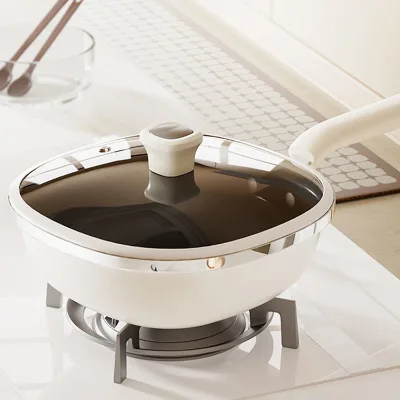
Comprehensive Sourcing Guide
Nonstick Glass Lid Titanium Pot and Pan Supplier Concentration and Factory Types
Current data indicates a concentration of manufacturing capabilities in China, specifically within the Guangdong and Zhejiang provinces, alongside operations in Shaanxi. Suppliers in Guangdong often list diverse equipment including stainless steel welding and glass pot cover production lines, suggesting a robust industrial base for cookware components. In contrast, facilities in Zhejiang frequently specialize in silicone glass lids and universal cookware parts, with some explicitly stating their origin as Ningbo or Zhejiang. A separate cluster in Shaanxi appears to focus on titanium mill products and industrial wares, with specific listings for titanium kitchenware and non-stick fry pans. These regional distinctions help buyers identify potential manufacturing clusters based on the specific material and product type required, rather than assuming a single national hub.
The supplier landscape includes a mix of combined entities, manufacturers, and trading companies. Some suppliers in the results are verified by third-party agencies like CTI, while others display their company type as a combination of manufacturer and trading company. This variation affects the sourcing strategy, as combined entities may offer broader product ranges including flour screening or brake assembly equipment alongside cookware. Buyers should note that not all suppliers in these regions offer the same depth of capability; some focus on ODM and OEM services for cooking sets, while others may prioritize their own brands. Understanding whether a supplier is a pure manufacturer or a trading company is essential for negotiating direct factory terms versus intermediary pricing structures.
How to Verify Nonstick Glass Lid Titanium Pot and Pan Suppliers
Verification of supplier credentials requires checking for specific third-party certifications and company verification statuses found in the data. Some suppliers in the results hold CTI verification, which serves as a concrete indicator of a verified business entity. For product-specific safety, buyers should look for certifications such as FDA, CE/EU, and LFGB, which are explicitly listed for silicone glass lid products in the Zhejiang region. In the Shaanxi cluster, SGS certification is noted for titanium kitchenware items. However, not all suppliers display these credentials; some entries show system certification as NIL. Buyers must request proof of these specific standards rather than assuming they apply to all titanium or glass lid products, as the absence of a listed certification does not confirm compliance.
Response time and lead time data provide additional layers of verification regarding supplier reliability and operational capacity. The observed response times vary significantly, with some suppliers responding in approximately 2.5 hours while others take over 23 hours. A supplier with a 2.51-hour response time may indicate a more active sales team, whereas a 23.36-hour delay could suggest a smaller operation or different time zone management. Lead times also differ, with some suppliers quoting 30 days and others 23 days, while one entry lists a lead time of zero, which requires immediate clarification. Buyers should verify these numbers directly, as a zero lead time might imply a stock item rather than a custom manufacturing order. Confirming these metrics ensures the supplier can meet specific project deadlines without relying on unverified estimates.
What to Compare Across Nonstick Glass Lid Titanium Pot and Pan Suppliers
When comparing suppliers, buyers should prioritize the Minimum Order Quantity (MOQ) and price ranges to align with their budget and volume needs. The data shows a wide range of MOQs, from 500 units for certain stainless steel and glass lid models to 1500 units for silicone glass lids. Price points also fluctuate, with some products listed between $4.00 and $5.00, while others range from $1.37 to $3.70. These variations often correlate with material composition, such as stainless steel versus silicone-rimmed glass, or the inclusion of custom features. Buyers must compare these specific figures against their target margins, noting that lower MOQs might come with higher per-unit costs, while larger orders could unlock better pricing tiers.
Another critical comparison point is the customization capability and after-sales service terms. Several suppliers explicitly state that customization is available for color, size, and logo, with some offering one-year after-sales service. However, other entries indicate that certain products are non-customized or have specific packing standards like bubble bags or cartons. The product origin, whether Ningbo, Zhejiang, or Shaanxi, also influences the final cost and logistics. Buyers should compare the specific product attributes, such as the presence of a steam hole or the type of handle, to ensure the supplier can meet technical requirements. Evaluating these detailed product attributes alongside the commercial terms helps identify the most suitable partner for specific order specifications.
Common Nonstick Glass Lid Titanium Pot and Pan Sourcing Risks
One significant risk involves the discrepancy between advertised capabilities and actual production capacity. While some suppliers list ODM and OEM services, others may only offer standard products without the ability to customize molds or materials. The presence of diverse main products, such as brake assembly lines or flour screening equipment, alongside cookware, suggests that some suppliers may be trading companies with limited direct manufacturing control over specific cookware components. This diversification can lead to quality inconsistencies if the supplier outsources the actual production of glass lids or titanium pots to third parties without adequate oversight. Buyers must verify that the supplier has direct control over the specific production line for their requested item.
Another risk is the variability in lead times and the potential for miscommunication regarding delivery schedules. The data shows lead times ranging from zero to 30 days, with some suppliers indicating a 23-day window. A zero lead time claim requires immediate verification to determine if it refers to stock availability or a misunderstanding of the production cycle. Additionally, response times vary widely, which can delay critical communication regarding order changes or quality issues. If a supplier takes over 23 hours to respond, it may indicate a lack of dedicated support for international buyers. Buyers should establish clear communication protocols and confirm lead times in writing to mitigate the risk of delays that could disrupt their supply chain.
Nonstick Glass Lid Titanium Pot and Pan Regional Sourcing and Logistics
Sourcing from China offers distinct logistical advantages depending on the specific province of the supplier. Guangdong-based suppliers often have access to extensive industrial infrastructure, including welding and glass production lines, which can streamline the manufacturing of complex cookware parts. Zhejiang suppliers, particularly those in Ningbo, appear to specialize in silicone glass lids and universal cookware parts, potentially offering faster turnaround for these specific items. The Shaanxi region, while less common for general cookware, hosts suppliers focused on titanium mill products and industrial wares, which may be ideal for specialized titanium cookware needs. Buyers should consider the proximity of these regions to major ports to optimize shipping costs and transit times for their specific product mix.
Logistics planning must account for the varying product origins and packaging standards observed in the supplier data. Products from Ningbo and Zhejiang often come in cartons or bubble bags, with specific packing standards like 12 pieces per carton. In contrast, titanium products from Shaanxi may have different packaging requirements, such as single package sizes of 20x4x39 cm. These differences impact freight calculations and container utilization. Buyers should verify the exact packing dimensions and weight, such as the 0.65 kg weight for specific titanium pans, to ensure accurate freight quotes. Understanding the regional logistics capabilities helps in selecting suppliers that can handle the specific shipping requirements of glass lids versus titanium cookware without incurring unexpected surcharges.
Nonstick Glass Lid Titanium Pot and Pan Commercial Terms and Order Planning
Commercial terms regarding payment and escrow are critical for securing orders with these suppliers. While specific escrow details are not universally listed in the provided data, buyers should verify if the supplier supports secure payment methods to protect their investment. The presence of CTI verification for some suppliers adds a layer of trust, but buyers must confirm the specific payment terms for each transaction. Lead times and MOQs directly influence order planning, with some suppliers requiring 500 units while others demand 1500. Buyers should plan their inventory levels based on these minimums to avoid overstocking or under-ordering, ensuring that the order volume aligns with the supplier's production capacity and the buyer's sales forecast.
Order planning also requires careful attention to product specifications and customization options. Suppliers offering customization for color, size, and logo allow for brand differentiation, but this may extend lead times or increase costs. The availability of one-year after-sales service is a valuable term that should be confirmed in the contract. Buyers should also verify the product model numbers, such as BLG002 or CY-A1, to ensure they are ordering the exact specifications required. By aligning commercial terms with specific product attributes and lead times, buyers can create a robust order plan that minimizes risk and ensures timely delivery of nonstick glass lid titanium pots and pans.
FAQs
What is the typical lead time for glass lids from China suppliers?
Lead times vary by supplier location and order volume. Suppliers in Guangdong report a 30-day lead time, while those in Zhejiang often complete orders in 23 days. Buyers should confirm specific timelines before placing large orders to ensure timely delivery.
Are silicone glass lids available with FDA and LFGB certifications?
Yes, several suppliers in Zhejiang offer silicone glass lids with FDA, CE/EU, and LFGB certifications. These products are suitable for food contact and meet international safety standards. Buyers can verify these certifications directly in the product attributes section before purchasing.
What is the minimum order quantity for tempered glass pot lids?
Minimum order quantities depend on the specific product and supplier. Some suppliers require 500 units for standard tempered glass lids, while others may ask for 1000 or 1500 units for silicone rim versions. Always check the product page for the exact MOQ.
Do suppliers offer customization for glass lid colors and sizes?
Customization is available for many glass lid models. Buyers can request specific colors and sizes to match their cookware needs. However, some standard silicone lids are sold as non-customized items. Verify the customization options listed in the product attributes.
How quickly do suppliers typically respond to sourcing inquiries?
Response times vary significantly among suppliers. Some suppliers in Guangdong respond within 2.51 hours, while others in Zhejiang may take up to 23.36 hours. Faster response times are often associated with suppliers offering OEM and ODM services for custom orders.
What materials are used for the handles and frames of glass lids?
Most glass lids feature stainless steel handles and frames. Some products also include silicone rims for better sealing and heat resistance. The material composition is clearly listed in the product attributes, ensuring buyers know exactly what they are purchasing.
Are titanium cookware pots with glass covers available from Chinese manufacturers?
Yes, manufacturers in Shaanxi produce titanium kitchenware with glass covers. These items are often eco-friendly and designed for induction cookers. Buyers should note that some listings may not include the pot cover, so checking the product details is essential.
What is the price range for wholesale glass pot lids?
Prices for glass pot lids range from approximately 1.37 to 5.00 USD per unit. The cost depends on the material, certification, and order quantity. Bulk orders often qualify for lower prices, making them ideal for large-scale commercial kitchen procurement needs.