Portable Magnetic Lid Water Bottle Suppliers and Manufacturers
Explore 20 verified options for Portable Magnetic Lid Water Bottle sourcing with dimensions like lead time, certifications, and location. Compare supplier response times and MOQs to find the right partner for your needs; review the available evidence before requesting comparable quotations from suitable candidates.
Suppliers List
Xiamen Charmlite Trading Co., Ltd.
- Verified by SGS Group
- Trading Company
- Lead time25 days
Main productsYard Cups, Plastic Wine Glass, Water Bottle, Plastic Cup, Coffee Mug
Main marketsNorth America(26%), Western Europe(21%), Northern Europe(14%)

Difanmax Tech Lianyungang Co., Ltd.
- Verified by BV
- Manufacturer/Factory
- China Jiangsu
- Lead time23 days
- Avg. response≤ 4h
Main productsConsumer Electronics, Kinesiology Tape Adhesive Tapes, Industrial Tools, Home & Garden, Gifts & Crafts, Sport Products Entertainment, Health & Medical, Auto Parts E-Bike Auto Tools & Components, Clothes Apparel, Bicycle Hardware Laboratory Measuring Protective
Main marketsSouth America,North America,Southeast Asia,Oceania,Western Europe

Anhui Ifun Import&Export Co., Ltd
- Verified by TUVRHEINLAND
- Trading Company
- China Anhui
- Lead time30 days
- Avg. response≤ 7h
Main productsGlass Infuser Water Bottle, Stainless Steel Water Bottle, Plastic Water Bottle, Vacuum Flask, French Press Coffee Maker, Thermos Flask, BPA Free Plastic Water Bottles, Drink Bottles, Travel Mug, French Coffee Press
Main marketsSouth America,Africa,Southeast Asia/ Mideast,East Asia(Japan/ South Korea),Europe,Australia,North America

Wenzhou Guanmin Import and Export Co., Ltd.
- Verified by BV
- Trading Company,Manufacturer/Factory
- China Zhejiang
- Lead time120 days
- Avg. response≤ 6h
Main productsShopping Bag, Cooler Bag, Notebook, Pen, Color Pencil, Lanyard, Beach Ball, Umbrella, Sunshade, Air Freshener
Main marketsSouth America,Eastern Europe,Mid East,North America,Southeast Asia,Eastern Asia,Western Europe

Shenzhen Kingline Technology Development Co., Ltd.
- Verified by BV
- Trading Company
- China Guangdong
- Lead time15 days
- Avg. response≤ 4h
Main productsShaker Bottle, Water Bottle, Sports Water Bottle, Pill Box, Stainless Steel Water Bottle, Vacuum Flask, Water Jug, Travel Water Bottle, Gym Water Bottle, Cycling Water Bottle
Main marketsSouth America,Southeast Asia/ Mideast,Europe,Australia,North America

Jinjiang Jiaxing Import and Export Co., Ltd.
- Verified by CTI
- Manufacturer/Factory
- China Fujian
- Lead time120 days
- Avg. response≤ 1h
Main productsShoes, Slipper, Clothes, Promotion Gifts, Silicone Products, Outdoor Sports Products, Bags, Fashion Accessories, Consumer Electronics
Main marketsSouth America,Eastern Europe,Mid East,North America,Southeast Asia,Eastern Asia,Oceania,Western Europe,Africa

Shanghai Touch Industrial Development Co., Ltd.
- Verified by TUVRHEINLAND
- Combined
- China Shanghai
- Lead time15 days
- Avg. response≤ 5h
Main productsInstant Hot Pack, Hot Cold Pack, Gel Eye Mask, Gel Ice Pack, Gel Bottle Cooler, Instant Ice Pack, Hand Warmer, Heat Pack, Cooling Scarf, Gel Beads
Main marketsSouth America,Others(foreignTradeCapacity.exportBusinessCapacityMarketOther),Southeast Asia/ Mideast,East Asia(Japan/ South Korea),Domestic,Europe,Australia,North America

Foshan yoyomi Household Products Co., Ltd.
- Verified by SGS
- Combined
- China Guangdong
- Lead time15 days
- Avg. response≤ 20h
Main productsPrecision Mold
Main marketsDomestic

Suzhou Flagbank Display Co., Ltd.
- Combined
- China Jiangsu
- Lead time15 days
- Avg. response≤ 5h
Main productsBeach Flag, Flag & Banner, Tent, Tension Fabric Display, 3X5FT Flag, Promotion Counter, Snap Frame, Swooper Flag, Pop up Wall, Pop up Banner
Main marketsSouth America,Africa,Southeast Asia/ Mideast,Domestic,Europe,Australia,North America

Outdoor Sports Magnetic Water Bottle Vacuum Insulated Stainless Steel Water Bottle
$2.58 - $4.18
Moq: 500

Zhejiang Daian Commodity Co., Ltd.
- Verified by TUVRHEINLAND
- Combined
- China Shanghai
- Lead time45 days
- Avg. response≤ 4h
Main productsTumbler, Water Bottle, Stainless Steel Water Bottle, Travel Mug, Coffee Mug, Stainless Steel Tumbler, Mug, Plastic Cup, Barware, Pet Bowl
Main marketsSouth America,East Asia(Japan/ South Korea),Australia,North America


Portable Insulated Water Bottle Stainless Steel Water Bottle Water with Straw and Lid
$3.09 - $3.69
Moq: 1000


Guangzhou Koodee Metal Co., Ltd.
- Verified by CTI
- Combined
- China Guangdong
- Lead time45 days
- Avg. response≤ 10h
Main productsWater Bottle, Stainless Steel Water Bottle, Stainless Steel Tumbler, Coffee Mug, Vacuum Flask, Sport Water Bottle, Drinks Bottle, Stainless Steel Bottle, Doule Wall Water Bottle, Travel Mug
Main marketsSouth America,Southeast Asia/ Mideast,East Asia(Japan/ South Korea),Domestic,Europe,North America

- Verified by TUVRHEINLAND
- Trading Company,Manufacturer/Factory
- China Jiangsu
- Lead time23 days
- Avg. response≤ 3h
Main productsMedal, Coin, Lapel Pin, PVC Patch, Embroidery Patch, Keychain, Button Badge, Silicone Wristband, Lanyards, Gift
Main marketsSouth America,Eastern Europe,Mid East,North America,Oceania,Western Europe
Ningbo East Packaging Technology Co., Ltd.
- Verified by BV
- Trading Company
- China Zhejiang
- Lead time23 days
- Avg. response≤ 3h
Main productsDisposable Gloves, Nitrile Gloves, Vinyl Gloves, Latex Gloves, Food Packaging, Disposable Tableware, PPE Products, Packaging & Labels, Flashlights, General Consumer Products
Main marketsDomestic

LIANYUNGANG KAESHING INTERNATIONAL TRADING CO., LTD.
- Verified by TUVRHEINLAND
- Trading Company
- China Jiangsu
- Lead time15 days
- Avg. response≤ 6h
Main productsGlass Bottle, Glass Jar, Glass Cup, Glassware, High Borosilicate Glass Jar Bottle Mug, Glass Perfume Bottle, Glass Mug, Glass Decanter, Storage Jar, Fused Silica
Main marketsNorth America

Changsha Sunflower B&T Co., Ltd.
- Verified by TUVRHEINLAND
- Manufacturer/Factory
- China Hunan
- Lead time0 days
- Avg. response≤ 5h
Main productsWater Bottle, Sponge, Tumblers, Plastic Water Bottle, Stainless Steel Water Bottle, Mugs, Mat, Make up Sponge, Backpack, Drinlwares
Main marketsSouth America,Eastern Europe,Mid East,North America,Southeast Asia,Eastern Asia,Oceania,Western Europe,Africa


Magsafe Water Bottle Stainless Steel Gym Sports Bottle with Magnetic Phone Holder
$2.93 - $3.39
Moq: 100


18oz 22oz 32oz Insulated Stainless Steel Water Bottle with Magnetic Phone Holder
$2.93 - $3.39
Moq: 100

- Verified by BV
- Trading Company,Manufacturer/Factory
- China Zhejiang
- Lead time15 days
- Avg. response≤ 9h
Main productsCeramic Mug, Kitchen Storage, Water Bottle, Cookware Set, Charger Plates, Shaker Set, Storage Rack, Food Container, Kitchen Accessories, Yiwu Agent
Main marketsSouth America,Eastern Europe,Mid East,North America,Southeast Asia,Eastern Asia,Oceania,Western Europe,Africa
Chaozhou Binsly Stainless Steel Manufactory (sole Proprietorship)
- Verified by SGS Group
- Manufacturer, Trading Company
- Lead time0 days
- Avg. response≤ 3h
Main productsStainless Steel Water Bottle, Silicone Water Bottle, Tritan Bottle, Plastic Water Bottle, Cups
Ningbo General Union Co., Ltd.
- Verified by BV
- Trading Company
- China Zhejiang
- Lead time30 days
- Avg. response≤ 12h
Main productsCleaning Brush, Bottle, Kitchenware, Storage Box, Outdoor, Pet, Fitness Equipment, Digital Devices, Camping, Pet Bottle
Main marketsSouth America,Africa,Southeast Asia/ Mideast,East Asia(Japan/ South Korea),Europe,Australia,North America

New 304 Stainless Steel Large-Capacity Portable Sports Water Bottle with Flip Handle
$3.15 - $3.44
Moq: 300

Hot Selling Creative Sports Outdoor Large-Capacity Fitness Water Bottle with Lid
$1.62 - $1.81
Moq: 500

Yangzhou Shuojia International Trade Co., Ltd
- Verified by SGS
- Trading Company
- China Jiangsu
- Lead time30 days
- Avg. response≤ 5h
Main productsHot Bottle, Hot Bag
Main marketsOthers(foreignTradeCapacity.exportBusinessCapacityMarketOther),Southeast Asia/ Mideast,Europe

Chinapack Ningbo Import & Export Co., Ltd.
- Verified by SGS
- Trading Company,Manufacturer/Factory
- China Zhejiang
- Lead time23 days
- Avg. response≤ 18h
Main productsSnowboard, Water Bottle, Promotional Hats, Glass Bottle, Ski Set, Snowboot, Snowboard Binding, Home Sock, Hood, Scarf
Main marketsSouth America,Eastern Europe,North America,Southeast Asia,Eastern Asia,Oceania,Western Europe
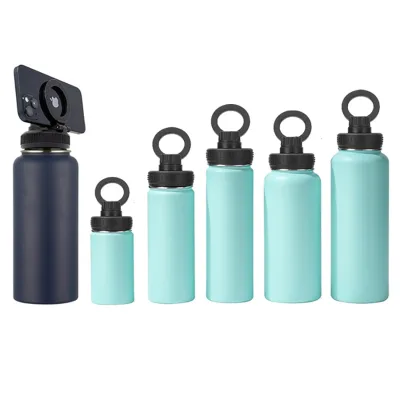
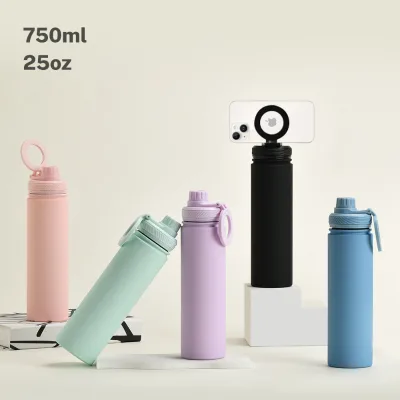


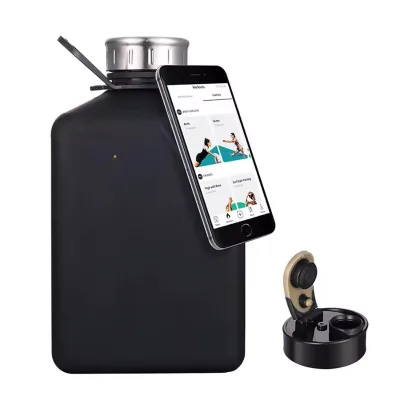
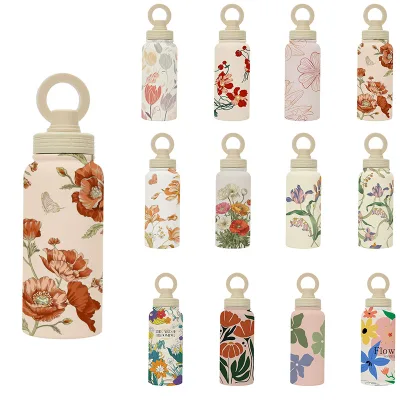


Comprehensive Sourcing Guide
Portable Magnetic Lid Water Bottle Supplier Concentration and Factory Types
When sourcing a Portable Magnetic Lid Water Bottle, it helps to understand that the listings you encounter generally come from two distinct company types. Some results identify themselves as manufacturers or factories, meaning they own production equipment and can control tooling, vacuum-insulation processes, and quality checks directly. Others are trading companies, which aggregate products—such listings in this category may list yard cups, plastic wine glasses, water bottles, plastic cups, and coffee mugs as main products rather than specializing in insulated drinkware. Neither type is inherently better: factories can offer deeper engineering support for features like magnetic phone-holder lids, while trading companies may consolidate multiple SKUs into one shipment.
Geographically, the supplied results point to suppliers located in China's Jiangsu and Anhui provinces, with one product listing noting Fujian as its place of origin. This confirms that this category clusters in eastern and southeastern China, but you should not assume every supplier operates a factory in its registered province. A trading company registered in Anhui may source insulated bottles from a partner plant elsewhere. When reviewing profiles, cross-check the registered location against the product's stated place of origin, and ask suppliers directly which plant will produce your order. For magnetic-lid designs specifically, confirm the factory has experience with magnetic component assembly, since lid magnets and phone-holder alignment add assembly steps that a general bottle plant may outsource.
How to Verify Portable Magnetic Lid Water Bottle Suppliers
Verification should start with the third-party credentials displayed on supplier profiles. In the current results, one trading company shows verification by SGS Group, one manufacturer shows BV verification, and another supplier shows TUV Rheinland verification. These are audit-based trust markers, not guarantees of product quality, so treat them as a screening filter rather than final proof. Certification claims on product pages also matter: one listing cites FDA 21 CFR 177, LFGB, FDA 21 CFR 175, and BS EN 12875 at the company level, while another product page lists FDA, CE / EU, CIQ, LFGB, and EEC for the bottle itself. Always request the actual certificate documents and check whether they cover stainless steel vacuum drinkware specifically, not just generic plastics.
Beyond badges, verification means testing claims against reality. Ask each supplier to confirm which entity holds the certifications—the factory, the exporter, or a component maker—and whether test reports apply to the exact model number you plan to order, such as the magnetic-lid bottle with phone holder. Note that some results show system certification as "NIL," meaning no verified management-system credential is displayed; for those suppliers, request ISO-style audit reports or commission your own inspection before committing. Confirm food-grade material claims (one listing describes its bottle as 100% food grade) with laboratory testing on production samples, and verify that the magnetic lid assembly, gasket, and vacuum wall all pass drop and leak tests under your own specifications.
What to Compare Across Portable Magnetic Lid Water Bottle Suppliers
Build a comparison grid from the attributes suppliers actually display, since not every profile shows the same data. In the current results, lead times range from roughly 23 to 30 days, which is a meaningful spread when planning seasonal launches. Minimum order quantities vary even more sharply: one insulated magnetic bottle lists an MOQ of 500 pieces at unit prices from about $2.80 to $5.90, while a plastic collapsible bottle lists an MOQ of 10,000 pieces at roughly $0.26 per unit, and another plastic bottle sits at an MOQ of 600 with a price near $1.38. These gaps reflect material and construction differences—stainless steel vacuum bottles cost more per unit but allow smaller first orders.
Response speed is another comparable signal: displayed response times in the results range from about 3.6 hours to 6.2 hours, which indicates how quickly quotation questions and spec clarifications may be answered during negotiation. Compare main-product lines to judge specialization—a supplier whose catalog centers on stainless steel tumblers, vacuum flasks, and French presses likely has deeper insulation expertise than one listing consumer electronics and kinesiology tape among many categories. Also compare customization capabilities: some results list light customization, sample processing, graphic processing, and on-demand customization, while another claims OEM, ODM, and an own brand. Finally, weigh verification type, location, and establishment details where shown, and weigh any listed capacity or product sizes (480 ml plastic, 22 oz/32 oz stainless) against your market's preferences.
Common Portable Magnetic Lid Water Bottle Sourcing Risks
The biggest technical risk in this category is the magnetic lid itself. A lid with magnets plus a phone-holder function has more failure points than a standard screw cap: magnets can detach, interfere with the gasket seal, or lose holding strength over time. Product claims in the results advertise thermal insulation performance of 6–12 hours for a double-wall vacuum bottle, but insulation figures are tested under specific conditions; insist on independent vacuum and temperature-retention testing of your exact configuration, since one listing also states the bottle is applicable for boiling water—a claim that demands verified seal integrity. Ask whether the magnetic feature is compatible with the phone models your customers use, as some listings target specific magnet ecosystems.
Commercial risks cluster around mismatched expectations. A 10,000-piece MOQ on a low-cost plastic bottle may be attractive on price but ties up cash and inventory; conversely, a 500-piece MOQ on stainless steel invites you to test the market but usually means higher unit prices and less leverage on customization. Trading companies add a transparency risk—confirm who actually manufactures the bottle and who is responsible for warranty claims. Certification risk is real when a profile shows no system certification or product certificates are listed only in marketing copy. Finally, beware lead-time drift: displayed lead times of 23–30 days typically exclude peak-season delays, magnet component sourcing, and custom-color production, so write delivery commitments into the contract with penalties.
Portable Magnetic Lid Water Bottle Regional Sourcing and Logistics
The supplier results place these listings in Jiangsu and Anhui, with a product origin in Fujian, giving you a realistic picture of China's drinkware belt: eastern coastal provinces with port access and inland provinces with lower production costs. Jiangsu's proximity to Shanghai-area ports typically simplifies container consolidation and reduces inland trucking cost, while Anhui-based suppliers may quote sharper prices but add a leg of overland transport. Fujian-origin products suggest the Xiamen-area drinkware cluster, historically strong in vacuum flasks and thermoses. When a supplier's registered province differs from the product's stated origin—as these results show—ask where production physically happens and factor that into freight cost and lead time.
For logistics planning, use the product data already available: a single packed bottle listed at 15 x 15 x 40 cm and 0.5 kg gross weight lets you estimate container loading, though the boxed dimensions of a phone-holder lid may exceed a plain bottle carton, so confirm actual carton sizes before calculating freight. Stainless steel vacuum bottles are heavy relative to plastic, shifting the cost balance between sea and air freight; at 22 oz/32 oz capacities, sea freight is normally the default. Ask each supplier whether they quote FOB, EXW, or CIF, which ports they ship from, and whether they can consolidate mixed drinkware SKUs—useful if you order bottles alongside tumblers or mugs from the same supplier.
Portable Magnetic Lid Water Bottle Commercial Terms and Order Planning
Order planning should anchor on the numbers suppliers actually display. For the stainless magnetic-lid bottle, a 500-piece MOQ at $2.80–$5.90 suggests a first test order is feasible; confirm which capacity (22 oz or 32 oz) the price applies to, since listings show both. Free samples are advertised on one listing—take advantage, but expect to pay freight and to wait for production-grade samples rather than stock photos. For plastic alternatives, the 10,000-piece MOQ at about $0.26 per unit suits volume promotions, while the 600-piece MOQ at roughly $1.38 offers a middle path. Always confirm whether quoted prices include custom logo printing, which one listing states is acceptable.
Structure payment and timeline terms defensively. With displayed lead times of 23–30 days, build your calendar backward from your launch date and add buffer for sample iterations, magnet-component procurement, and inspection. Use staged payments—typically a deposit with balance after inspection—rather than full prepayment, especially with suppliers showing no system certification or slower response times. Put insulation performance, magnetic holding strength, and food-contact material compliance into the written specification, referencing LFGB and FDA claims only where the supplier produces certificates. Verify whether the supplier or platform offers escrow or trade-assurance-style protection before wiring funds, and keep first orders small enough that a failed magnet-lid batch is a recoverable lesson rather than a write-off.
FAQs
What is the price range for magnetic water bottles?
Prices typically range from $0.26 to $5.90 per unit depending on material and customization. Stainless steel insulated options with magnetic lids cost between $4.80 and $5.90. Basic plastic collapsible bottles are available for approximately $0.26. Bulk orders often secure lower unit costs.
What is the minimum order quantity for these bottles?
MOQs vary by product type and supplier. Stainless steel magnetic bottles usually require a minimum of 500 pieces. Plastic water bottles may have an MOQ of 600 units. Collapsible sports bottles often require larger orders starting at 10,000 pieces. Check specific listings for exact requirements.
How long does production take for these items?
Lead times generally range from 23 to 30 days. Some suppliers offer a 23-day turnaround for manufacturing. Others may require up to 30 days for production. These timelines apply to standard orders. Expedited options might be available upon direct negotiation with the supplier.
Are these bottles safe for boiling water?
Yes, many stainless steel magnetic bottles are applicable for boiling water. They feature double-wall vacuum insulation to maintain temperature. Thermal performance typically lasts 6 to 12 hours. Ensure the specific product listing confirms boiling water compatibility before purchase.
What certifications do these suppliers hold?
Suppliers hold various certifications including FDA 21 CFR 177, LFGB, and CE. Some products are verified by SGS Group, BV, or TÜV Rheinland. Certifications ensure food-grade safety and material compliance. Verify specific certification documents for each product batch before finalizing orders.
Can I customize the logo and color?
Customization is widely available for logos and colors. Suppliers accept customized logos and offer colors like black, white, blue, and pink. Graphic processing and on-demand customization are supported. Confirm design files and color codes with the supplier to ensure accurate production results.