Radiator Vacuum Pressure Leak Tester Suppliers and Manufacturers
Compare 10 verified suppliers offering radiator vacuum pressure leak testers with response times of 4 to 6 days and lead times ranging from 7 to 20 days. Review certifications like ISO14001 and CE, along with origin locations in Guangdong and Taiwan, before requesting quotes.
Updated
Suppliers List
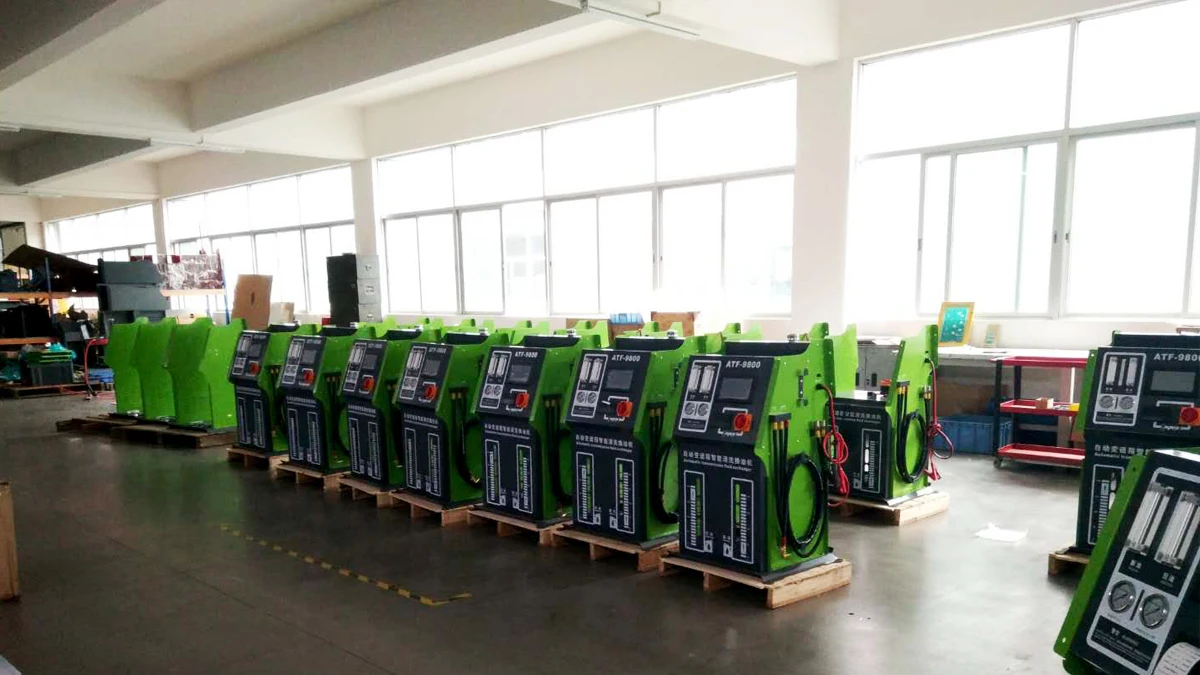
Guangzhou Da Che Ni Automobile Inspection Equipment Co., Ltd.
- Manufacturer, Trading Company
- Guangdong, China
- Lead time20 days
- Avg. response≤ 4h
Main productsAuto transmission oil exchanger,Tyre nitrogen machine,Air conditioning refrigerant recycling refueling machine,Spray nozzle cleaning detector
Main marketsNorth America(50.00%), South America(30.00%), Eastern Europe(20.00%), Central America(5.00%), South Asia(5.00%), Mid East(4.00%), Southeast Asia(2.00%)
- Verified by SGS Group
- Manufacturer, Trading Company
- Lead time7 days
- Avg. response≤ 6h
Main productsAuto Repair tools (TWIST SOCKET), Auto Repair tools (COOLING SYSTEM), Auto Repair tools (ENGINE SYSTEM), Auto Repair tools (BRAKE SYSTEM), Auto Repair tools (SUSPENSION SYSTEM)
Main marketsNorth America(28%), Western Europe(22%), Northern Europe(19%)
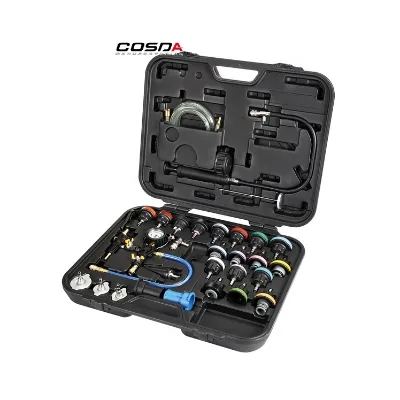
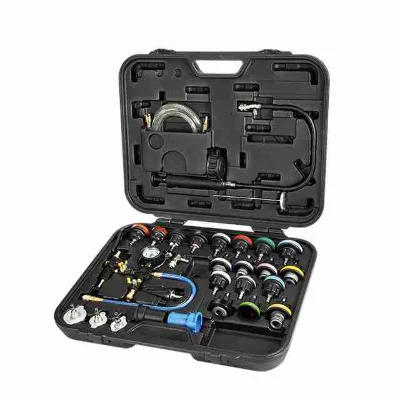
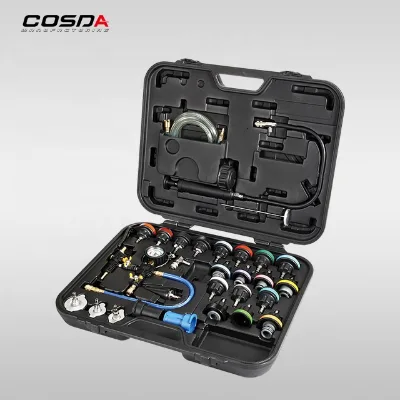
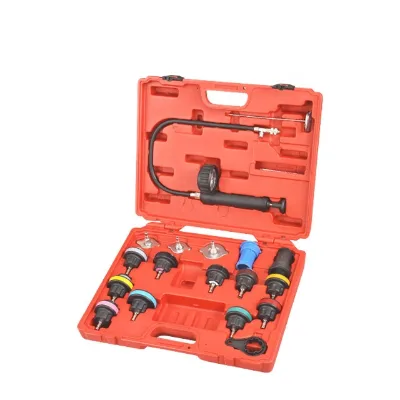
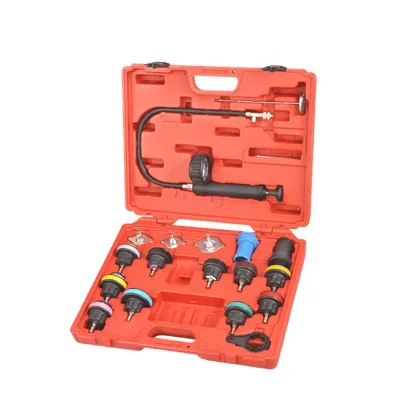
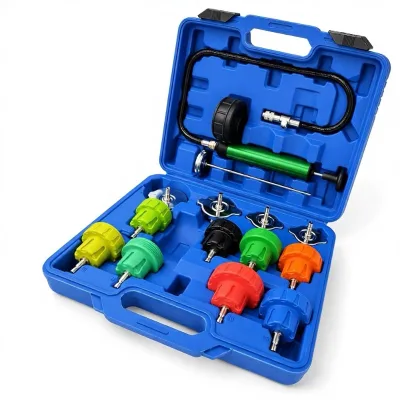
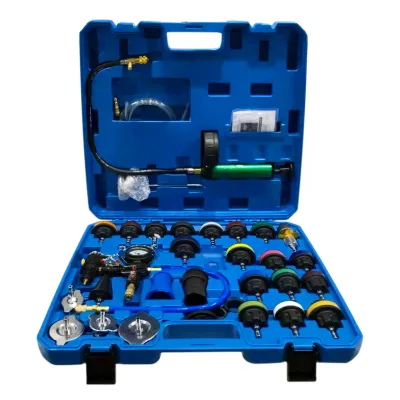
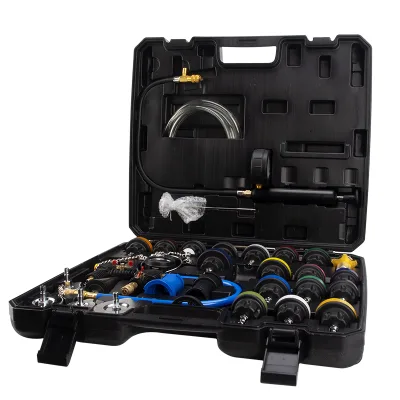
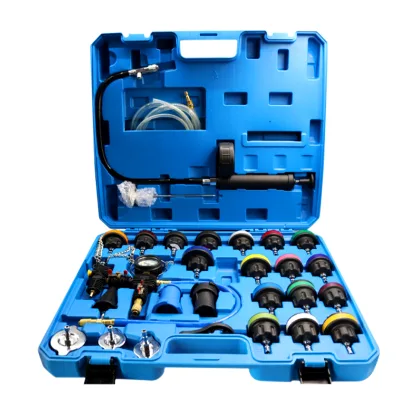
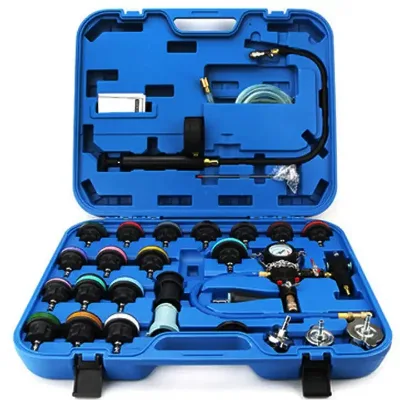
31pcs Water Tank Detector Refill Kit Car Radiator Vacuum Type Pressure Radiator Leak Tester
$125.33 - $165.79
MOQ: 1
Hefei Leyi Energy Technology Co., Ltd.
- Trading Company
- Anhui, China
- Lead time30 days
- Avg. response≤ 2h
Main productsTool Kit,jack,Auto Repair Tools,Agricultural machinery,new energy
Main marketsSouth America(20.00%), North America(20.00%), Eastern Europe(10.00%), Domestic Market(5.00%), South Asia(5.00%), Southern Europe(5.00%), Northern Europe(5.00%), Central America(5.00%), Western Europe(5.00%), Mid East(5.00%), Oceania(5.00%), Africa(5.00%), Southeast Asia(5.00%)
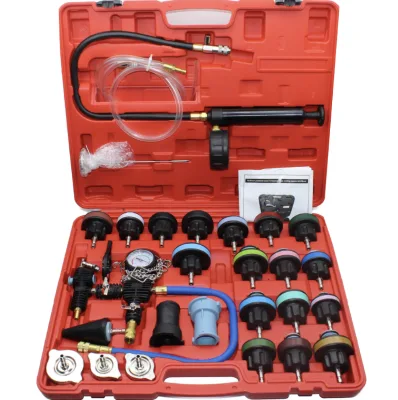
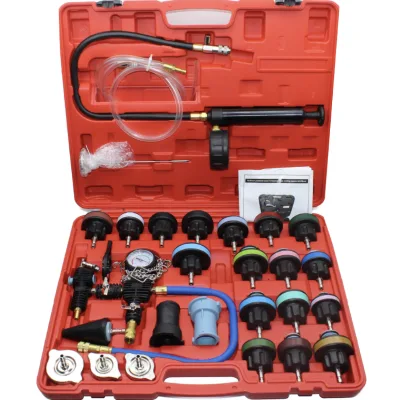
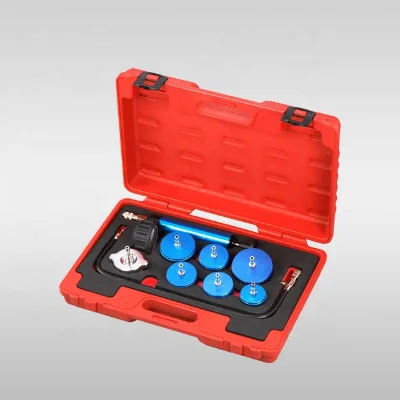
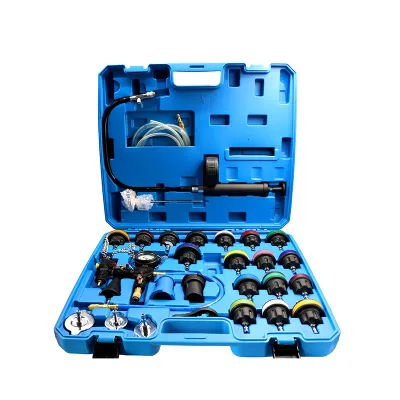
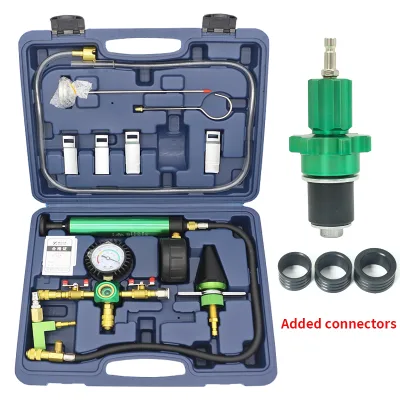
Radiator Pressure Tester,Universal Radiator Pressure Tester,Vacuum Cooling Purge Refill Kit
$35.89 - $42.71
MOQ: 5 pieces
- Verified by TüVRheinland
- Trading Company
- Zhejiang, China
- Lead time15 days
- Avg. response≤ 2h
Main productsCompressor, Fan, Refrigerant Oil, Capacitor, Copper Fitting And Tube
Main marketsSoutheast Asia(26%), Mid East(26%), South America(21%)

Yancheng Biaosin Import&Export Co., Ltd.
- Trading Company
- Jiangsu, China
- Lead time0 days
- Avg. response≤ 7h
Main productsPaint Spray Booth, Retractable Spray Paint Booth, Powder Coating Line, Car Washing Equipment, Car Lift Machine
Main marketsSoutheast Asia(55.00%), Eastern Europe(20.00%), Domestic Market(10.00%), Mid East(10.00%), Oceania(5.00%)
Guangzhou Baohua Auto Maintenance Equipment Trade Co., Ltd.
- Verified by TüVRheinland
- Trading Company
- Lead time2 days
- Avg. response≤ 2h
Main productsSpray Booth, Car Lift, Dent Pulling Machine, Wheel Alignment Machine, Auto Frame Straightening Machine
Main marketsAfrica(25%), Southeast Asia(20%), Eastern Europe(10%)
Hangzhou Qinlai Technology Co., Ltd.
- Trading Company
- Zhejiang, China
- Lead time0 days
- Avg. response≤ 2h
Main productsAC Recovery and Filling Machine, Car Chassis Suspension Abnormal Noise Tester, Automobile Exhaust Analyzer, Car Headlight Tester
Main marketsDomestic Market(100.00%)
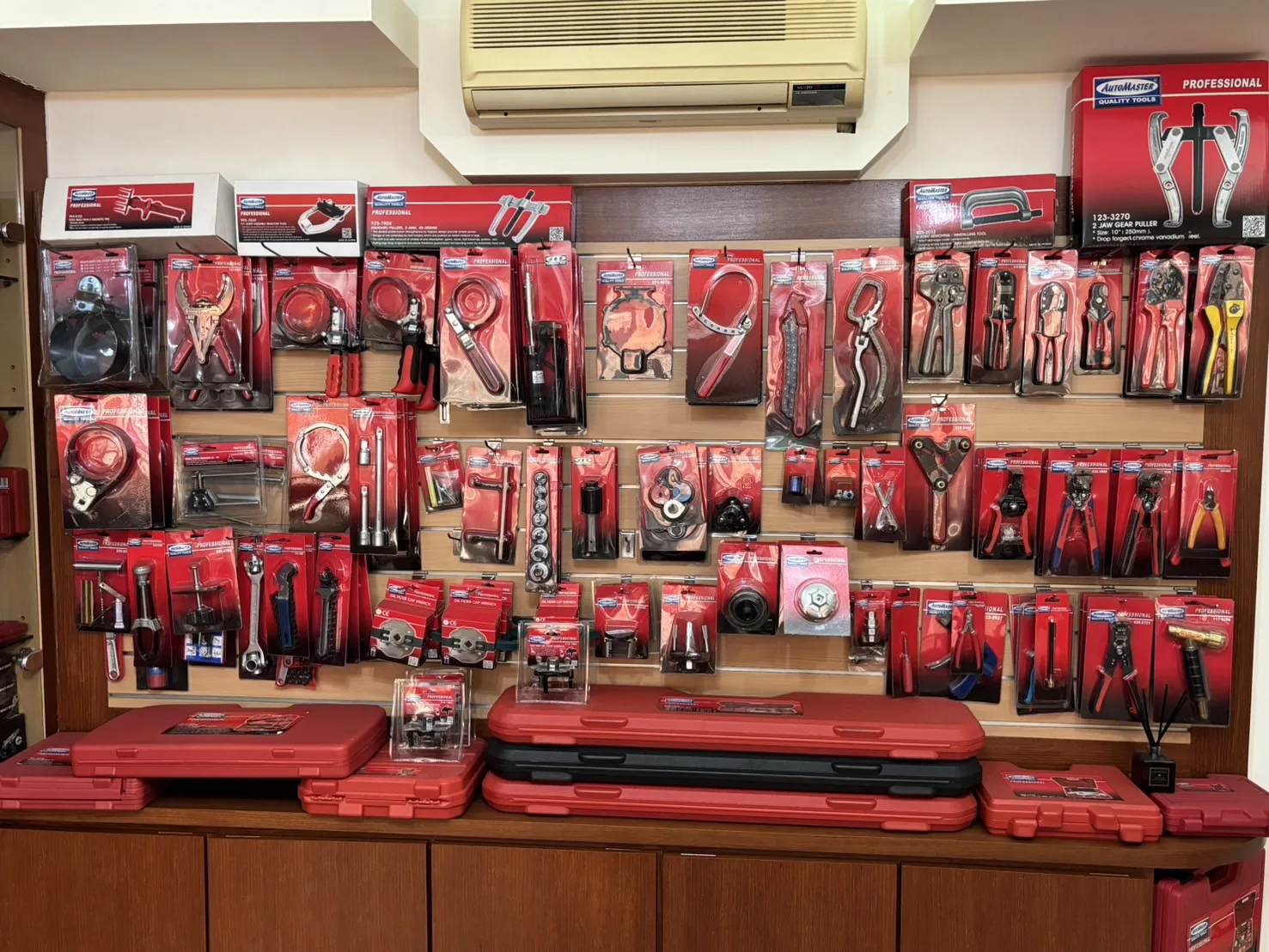
- Trading Company
- Taiwan, China
- Lead time60 days
- Avg. response≤ 2h
Main productsAutomotive tools,Hand tools,Workshop assortment,Air tools,Safety equipment
Main marketsMid East(80.00%), Western Europe(10.00%), Oceania(10.00%)
Ningbo Dicong Machinery Co., Ltd.
- Verified by SGS Group
- Manufacturer, Trading Company
- Lead time45 days
- Avg. response≤ 2h
Main productsAutomotive Tools , Automotive Hand Tools, Engine Timing Tools, Brake Bleeding Kit, Mechanic Tools
Main marketsNorth America(22%), Western Europe(16%), Eastern Europe(13%)

SHANGHAI JUST BETTER TOOLS CO., LTD.
- Trading Company,Manufacturer/Factory
- China Shanghai
- Lead time0 days
- Avg. response≤ 13h
Main productsPdr Tools, Auto Tools, Paintless Dent Repair Tools, Car Dent Repair Tools, Dent Tool Kit, Dent Puller Kit, Pdr Car Body Repair Tool, Pdr Kit


Comprehensive Sourcing Guide
Radiator Vacuum Pressure Leak Tester Supplier Concentration and Factory Types
The current supplier landscape for radiator vacuum pressure leak testers reveals a distinct concentration of manufacturing and trading entities within Guangdong, China. This regional clustering suggests a mature supply chain ecosystem where specialized tool manufacturers and general automotive accessory traders coexist. Buyers evaluating these suppliers will often encounter companies that identify as both manufacturers and trading companies, a hybrid model that can offer flexibility in product sourcing but requires careful due diligence to understand the actual origin of goods. The presence of multiple suppliers in this specific geographic area indicates that logistics infrastructure and component availability are optimized for this type of automotive diagnostic equipment. When assessing potential partners, it is crucial to recognize that while the location is consistent, the operational models vary significantly. Some entities may focus on private labeling and rapid customization, while others prioritize volume production of standard kits. Understanding this dynamic helps buyers align their procurement strategy with the supplier’s actual capabilities rather than just their stated business type.
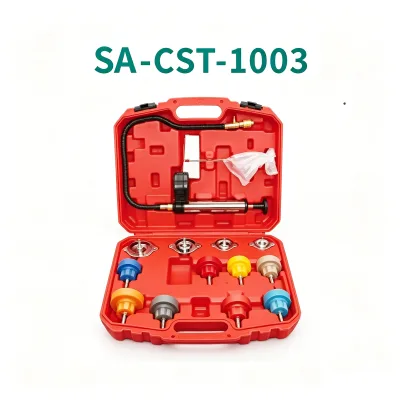
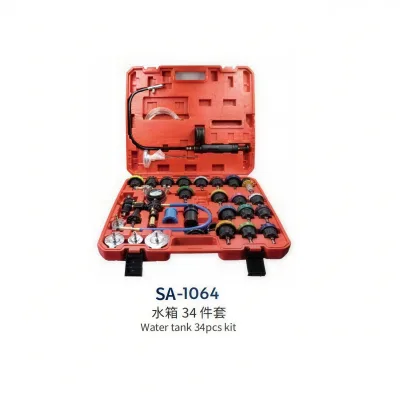
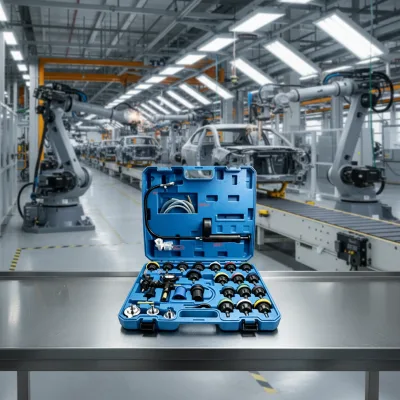
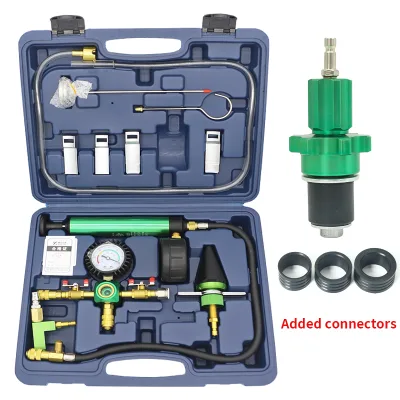
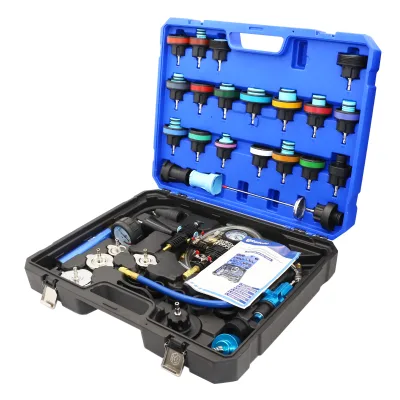
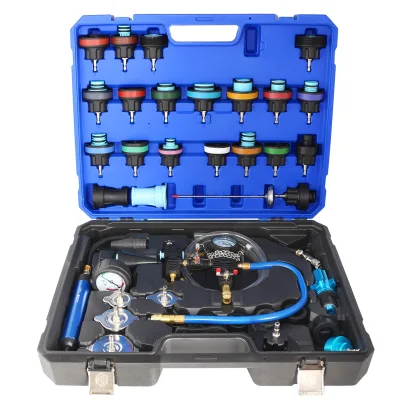
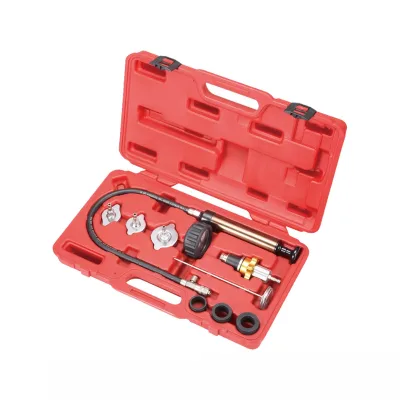
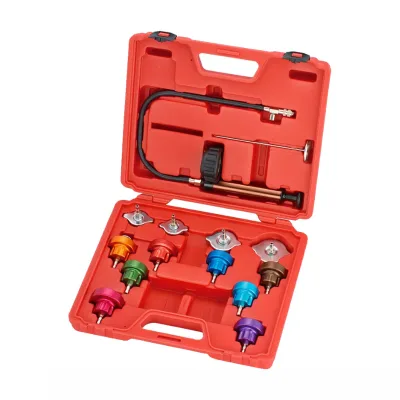
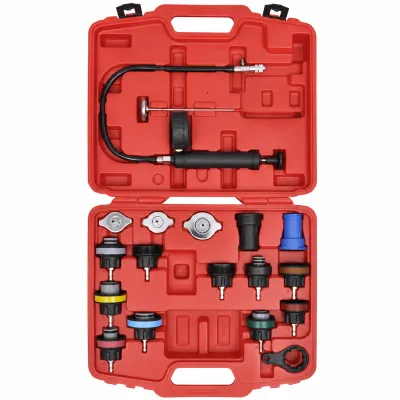
Within this concentrated market, the product range extends beyond simple leak testers to include related automotive care equipment such as auto transmission oil exchangers, tyre nitrogen machines, and air conditioning refrigerant recycling units. This diversification implies that many suppliers possess broader capabilities in automotive tooling, which can be advantageous for buyers seeking a consolidated vendor for multiple tool categories. However, it also means that the core competency in radiator testing tools must be verified independently. The existence of specialized product lines like the 34-piece cooling system radiator pressure tester and the 33-piece water cooling system vacuum leakage test adapter demonstrates a depth of inventory that caters to various diagnostic needs. Buyers should leverage this breadth to negotiate better terms or bundle orders, provided the quality of the specific leak testing components meets their technical specifications. The concentration in Guangdong also facilitates easier factory audits and sample collection, reducing the initial friction in the supplier selection process.
How to Verify Radiator Vacuum Pressure Leak Tester Suppliers
Verification of suppliers requires a multi-layered approach that goes beyond basic profile checks, focusing on tangible evidence of capability and compliance. One critical step is to examine the supplier’s certification status, as some entities display credentials such as ISO14001 and CE marks, which indicate adherence to environmental and safety standards. Additionally, verification badges from third-party inspection groups like SGS Group provide an external layer of trust regarding the supplier’s business legitimacy. Buyers should actively cross-reference these claims by requesting recent audit reports or certificates, ensuring they are valid and not expired. The presence of a response time metric, such as a four-hour or six-hour average, can also serve as a proxy for operational efficiency and customer service readiness. A supplier that responds quickly to initial inquiries is more likely to be responsive during the order fulfillment process, reducing the risk of communication breakdowns.
Another vital verification step involves assessing the supplier’s product evidence and technical specifications to ensure they match the buyer’s requirements. For instance, checking if the products are labeled with specific model numbers like "34set" or "33" helps in identifying standardized offerings versus custom solutions. Buyers should also look for details on material composition, such as nylon or plastic components, and verify that the working pressure ranges, such as 0-35psi, align with industry standards for automotive cooling systems. It is essential to confirm the place of origin listed on product pages, as discrepancies between the supplier’s location and the product’s origin can signal trading company complexities. Furthermore, verifying the warranty terms, such as a one-year or twelve-month guarantee, provides insight into the supplier’s confidence in their product quality. By systematically checking these factual attributes, buyers can build a reliable profile of each potential partner, minimizing the risk of engaging with unreliable vendors.
What to Compare Across Radiator Vacuum Pressure Leak Tester Suppliers
When comparing suppliers, lead time and response speed are pivotal metrics that directly impact project timelines and operational efficiency. Some suppliers may offer a lead time of twenty days, while others might promise a significantly faster turnaround of seven days. This variance can be decisive for buyers with urgent restocking needs or tight production schedules. Similarly, response times can differ, with some suppliers averaging four hours and others taking up to six hours to reply to inquiries. These differences in responsiveness and production speed should be weighed against the price and quality of the products. Buyers should create a comparison matrix that includes these temporal factors alongside other key attributes to make an informed decision. It is also important to note that not all suppliers will display every attribute, so buyers must be prepared to request missing information directly from the supplier to complete their evaluation.
Beyond temporal metrics, buyers should compare the range of main products and customization capabilities offered by each supplier. Some suppliers specialize in a narrow range of cooling system tools, while others offer a broader portfolio including brake system and suspension system repair tools. This breadth can influence the buyer’s ability to consolidate orders and simplify logistics. Additionally, the availability of customization services, such as sample processing, graphic processing, and customized on-demand options, adds value for buyers seeking branded or specialized tools. The minimum order quantity (MOQ) is another critical comparison point, with some suppliers requiring only one set as an MOQ, which is ideal for small-scale testing or initial orders. By evaluating these diverse factors, buyers can identify suppliers that not only meet their immediate product needs but also align with their long-term strategic goals for sourcing and brand development.
Common Radiator Vacuum Pressure Leak Tester Sourcing Risks
One significant risk in sourcing radiator vacuum pressure leak testers is the potential mismatch between advertised specifications and actual product quality. Suppliers may list products with generic model numbers or vague descriptions, making it difficult to verify the exact technical performance. For example, a product labeled as a "radiator pressure tester" might have a working pressure range that does not meet the specific requirements of certain vehicle models. Buyers must be cautious of suppliers who do not provide detailed technical data sheets or who rely solely on marketing images. This lack of transparency can lead to receiving products that are incompatible with the buyer’s target market, resulting in returns and reputational damage. To mitigate this risk, buyers should insist on detailed product specifications and, if possible, request samples for independent testing before committing to large orders.
Another common risk is the variability in supplier reliability and after-sales support. While some suppliers offer warranties of one year or twelve months, the actual enforcement of these warranties can be inconsistent. Buyers may encounter difficulties in claiming warranty services if the supplier lacks a robust support infrastructure or if communication channels break down after the sale. Additionally, the risk of supply chain disruptions is heightened when sourcing from a concentrated region, as local events can impact production and shipping. Buyers should also be aware of the risk of intellectual property infringement, particularly when dealing with suppliers who offer customized products without proper verification of design rights. To address these risks, buyers should conduct thorough background checks, establish clear contractual terms regarding warranty and support, and diversify their supplier base to reduce dependency on a single source.
Radiator Vacuum Pressure Leak Tester Regional Sourcing and Logistics
Sourcing from Guangdong, China, offers logistical advantages due to the region’s advanced manufacturing infrastructure and proximity to major shipping ports like Guangzhou. This geographic concentration facilitates efficient export processes, reducing transit times and costs for international buyers. The availability of multiple suppliers in the same region also allows for consolidated shipping, which can further lower logistics expenses. However, buyers must be mindful of the potential for congestion and delays during peak seasons, which can impact lead times. It is advisable to plan shipments well in advance and maintain open communication with suppliers regarding production schedules. The regional focus on automotive tools and accessories also means that there is a high level of expertise in packaging and handling these specific products, ensuring that items like radiator testers are protected during transit.
Logistics planning should also consider the specific packaging details provided by suppliers, such as carton packaging dimensions and weights. For instance, a 34-piece kit might have a single package size of 550470110 mm and weigh 7kg, while a 33-piece adapter kit might be smaller at 505613cm and weigh 6.45kg. These variations affect freight calculations and storage requirements. Buyers should work with suppliers to optimize packaging for efficiency, potentially reducing void space and protecting contents from damage. Additionally, understanding the port of dispatch, such as Guangzhou, helps in selecting appropriate freight forwarders and insurance coverage. By leveraging the logistical strengths of the Guangdong region, buyers can streamline their supply chain and ensure timely delivery of radiator vacuum pressure leak testers to their customers.
Radiator Vacuum Pressure Leak Tester Commercial Terms and Order Planning
Commercial terms, including pricing and payment conditions, play a crucial role in the final cost of sourcing radiator vacuum pressure leak testers. Prices can vary significantly based on the number of pieces in the kit and the materials used. For example, a 34-piece cooling system radiator pressure tester might range from $61.00 to $68.00, while a 28-piece kit could be priced between $54.00 and $58.70. Buyers should negotiate based on volume and long-term partnership potential to secure better rates. It is also important to clarify whether the quoted prices include shipping, taxes, and duties, as these can add substantial costs to the final invoice. Understanding the full cost structure helps in accurate budgeting and profit margin calculation. Buyers should also consider the supply ability of the supplier, such as 500 pieces per month, to ensure they can meet their demand without facing stockouts.
Order planning should align with the supplier’s lead times and production capacity to avoid disruptions. For suppliers with a twenty-day lead time, buyers need to plan orders further in advance compared to those with a seven-day lead time. This planning is essential for maintaining inventory levels and meeting customer demand. Additionally, buyers should consider the MOQ requirements, which can range from one set for sampling to larger quantities for bulk orders. Establishing a clear order schedule and communicating it to the supplier helps in managing expectations and ensuring timely delivery. Buyers should also review the warranty terms and return policies to understand their recourse in case of product defects. By carefully managing commercial terms and order planning, buyers can build a resilient and cost-effective supply chain for radiator vacuum pressure leak testers.
FAQs
What is the price range for radiator leak testers?
Prices for these kits typically range from $54 to $68 per unit. The cost varies based on the specific adapter count and material quality. Buyers should check the exact listing for current pricing tiers and bulk discounts available from the supplier.
Where are these testing tools manufactured?
Most suppliers manufacturing these tools are located in Guangdong, China. Some specific models may originate from Taiwan. Buyers should verify the place of origin on the product page to ensure it meets their sourcing preferences and logistics requirements.
What is the typical lead time for orders?
Lead times generally range from 7 to 20 days depending on the supplier and order volume. Some manufacturers offer faster turnaround for sample processing or customized requests. Buyers should confirm the specific delivery schedule with the supplier before placing a large order.
What certifications do these products hold?
Many suppliers hold ISO14001 and CE certifications for their manufacturing systems. Some individual products also display CE or patented status. Buyers should request valid certification documents to ensure compliance with safety and environmental standards in their target markets.
What is the minimum order quantity for these kits?
The minimum order quantity is often set at just one set for testing purposes. This allows buyers to evaluate quality before committing to larger volumes. Buyers should verify the specific MOQ policy with the supplier to understand bulk pricing thresholds.
How quickly do suppliers respond to inquiries?
Response times vary, with some suppliers replying within 4 hours and others taking up to 6 hours. Fast response indicates active customer service teams. Buyers should prioritize suppliers with quicker response times for smoother communication and faster order processing.
What warranty is provided for these testers?
Warranties typically cover one year or 12 months for defects. This covers issues with the pressure gauge or adapter integrity. Buyers should confirm the warranty terms and return policy with the supplier to ensure adequate protection for their investment.