Skin Brightening Marine Collagen Peptides Suppliers and Manufacturers
Compare 33 verified suppliers offering Skin Brightening Marine Collagen Peptides from China and Taiwan. Review certifications like GMP and ISO, response times, and pricing to select a partner. Contact suppliers directly to request samples and confirm lead times; review the available evidence before requesting comparable quotations from suitable candidates.
Updated
Suppliers List

Xiamen Yasin Industry & Trade Co., Ltd.
- Trading Company,Manufacturer/Factory
- China Fujian
- Lead time0 days
- Avg. response≤ 16h
Main productsFood Grade Gelatin, Fish Collagen, Empry Capsule, Sprinkle, Gelatin Sheets, Madical Grade Gelatin, Chocolate, Candy
Main marketsSouth America,Eastern Europe,Mid East,North America,Southeast Asia,Eastern Asia,Oceania,Western Europe,Africa

Natural Marine Collagen Powder Food Supplement Vital Proteins Collagen Peptides
$7.00 - $11.00
MOQ: 500 kg


Collagen Marine Peptides Fish Collagen Powder Peptide Collagen Protein Powder
$7.00 - $11.00
MOQ: 500 kg


100% Pure Hydrolyzed Collagen Peptides for Skin Anti-Aging Marine Fish Collagen Powder
$8.00 - $18.00
MOQ: 100 kg

Jialian International Marketing Co., Ltd.
- Trading Company
- Taiwan, China
- Lead time45 days
- Avg. response≤ 8h
Main productsNutritional Supplements
Main marketsSoutheast Asia(46.80%), North America(38.30%), Western Europe(9.10%), Africa(2.00%), Eastern Asia(1.20%), Mid East(1.00%), Oceania(1.00%), Northern Europe(0.40%), Domestic Market(0.10%), Southern Europe(0.10%)
Shaanxi Haoyuan Plant Technology Co., Ltd.
- Verified by Intertek
- Trading Company
- Lead time7 days
- Avg. response≤ 1h
Main productsPlant Extracts, Moringa Leaf Powder, Shilajit Extract, UBE Powder, Mushroom Coffee Powder
Main marketsNorth America(30%), Western Europe(20%), Southeast Asia(10%)

Shaanxi Jina New Biotechnology Co., Ltd.
- Verified by SGS
- Trading Company
- China Shaanxi
- Lead time15 days
- Avg. response≤ 12h
Main productsPlant Extract, Food Additive, Organic Intermediate, Pharmaceutical Chemical, Cosmetics Raw Material, Animal Feed, Vitamin, Fruit Extract, Amino Acid, Enzyme
Main marketsAustralia,North America


Hight Quality Pure Hydrolyzed Marine Collagen Type I Collagen Fish Collagen Peptide Powder
$30.00 - $54.00
MOQ: 10 kg

Xi'an Jenifer Technology Co.,ltd.
- Trading Company
- Shanxi, China
- Lead time5 days
- Avg. response≤ 2h
Main productsPlant Extract/Food Additives/Health Food/Cosmetic Raw Material/Feed Additives
Main marketsNorth America(30.00%), Eastern Europe(30.00%), South America(30.00%), Northern Europe(10.00%)

Weinan Kerrypros Biotech Co., Ltd.
- Verified by CTI
- Trading Company
- China Shaanxi
- Lead time15 days
- Avg. response≤ 2h
Main productsSupplements, Herbal Extract, Veterinary Drug, Food Additive, Sweetener, Cosmetics, Vitamins, Intermediate
Main marketsSouth America,Europe,Australia,North America

Dalian Eastland International Trading Co., Ltd.
- Verified by BV
- Trading Company,Manufacturer/Factory,Group Corporation
- China Liaoning
- Lead time23 days
- Avg. response≤ 9h
Main productsLactic Acid, L-Lactic Acid, Buffered Lactic Acid, Sodium Lactate, Chemical Product, Calcium Lactate, Chemical
Main marketsSouth America,Eastern Europe,Mid East,North America,Southeast Asia,Eastern Asia,Oceania,Western Europe,Africa


OEM Private Label Food and Cosmetic Grade Hydrolyzed Marine Fish Collagen Peptide
$1.00 - $36.00
MOQ: 1 kg

Leading Collagen Manufacturer Provide Best Quality Hydrolyzed Deep Sea Marine Collagen Peptide
$1.00 - $36.00
MOQ: 1000 kg

Glory (Wuxi) Nutrition Technology Co., Ltd
- Verified by SGS
- Combined
- China Jiangsu
- Lead time30 days
- Avg. response≤ 4h
Main productsVitamin, Food Additive
Main marketsDomestic

Skin Hydration Boost with Marine Collagen Peptides Skin Whitening Powder
$0.10 - $0.15
MOQ: 100000 Bags

Hydrolyzed Marine Collagen Peptides Powder (Types I & III) for Skin & Hair
$20.00 - $40.00
MOQ: 100 kg

Tianjin YR Chemspec Technology Co., Ltd.
- Trading Company,Manufacturer/Factory
- China Tianjin
- Lead time15 days
- Avg. response≤ 12h
Main productsVitamin C Derivatives, Panthenol Dl-Panthenol, Ascorbyl Tetraisopalmitate, Kojic Acid Kojic Acid Dipalmitate, Alpha Arbutin Ferulic, Ectoin Ergothioneine, Hydroxypinacolone Retinoate/Hpr, Sodium Acetylated Hyaluronate, Bakuchiol, Tocopheryl Glucoside
Main marketsSouth America,Eastern Europe,Mid East,North America,Southeast Asia,Eastern Asia,Oceania,Western Europe,Africa


High Performance Removing Wrinkles and Anti-Aging Collagen Fish Protein Fish Collagen Peptide
$10.00 - $25.00
MOQ: 1 kg


Shaanxi Bieyouth Biotech Co., Ltd.
- Verified by SGS Group
- Trading Company
- Lead time15 days
- Avg. response≤ 2h
Main productsFood Additives, Health Care Products Raw Materials, Cosmetic Raw Material
Main marketsMid East(25%), Eastern Europe(20%), Africa(10%)

- Verified by SGS
- Trading Company
- China Anhui
- Lead time15 days
- Avg. response≤ 5h
Main productsFood Supplement, Slimming Tea, Chinese Medicine, Traditional Chinese Medicine, Plant Extract, Herbs, Health and Beauty Equipments
Main marketsSouth America,Others(foreignTradeCapacity.exportBusinessCapacityMarketOther),Southeast Asia/ Mideast,Europe,North America

Natural Collagen Boost for Youthful Appearance Collagen Peptides Capsules
$2.20 - $2.90
MOQ: 10 bottle


High Potency Collagen Formula for Skin Hydration Collagen Peptides Capsules
$2.20 - $2.90
MOQ: 10 bottle

Advanced Collagen Complex for Hair Growth Support Collagen Peptides Capsules
$2.20 - $2.90
MOQ: 10 bottle

Vegan Friendly Plant Based Collagen Builder Formula Collagen Peptides Capsules
$2.20 - $2.90
MOQ: 10 bottle

Triple Strength Collagen Support for Tissue Repair Collagen Peptides Capsules
$2.20 - $2.90
MOQ: 10 bottle

Baoding Faithful Industry Co., Ltd.
- Verified by TUVRHEINLAND
- Trading Company
- China Hebei
- Lead time15 days
- Avg. response≤ 3h
Main productsCollagen Powder, Pullulan Powder, Hyaluronic Acid Powder, Erythritol, Pepsin, Olive Leaf Extract, Plant Extract, Food Additives
Main marketsSoutheast Asia/ Mideast,East Asia(Japan/ South Korea),Europe,North America
Hunan Jiayi Biotechnology Co., Ltd.
- Manufacturer
- Hunan, China
- Lead time1 days
- Avg. response≤ 6h
Main productsCollagen Peptide,Food Additive,marine collagen peptides,bovine collagen peptides,tripeptides
Main marketsNorth America(60.00%), Eastern Asia(10.00%), Southeast Asia(10.00%), Eastern Europe(10.00%), Western Europe(5.00%), Oceania(5.00%)
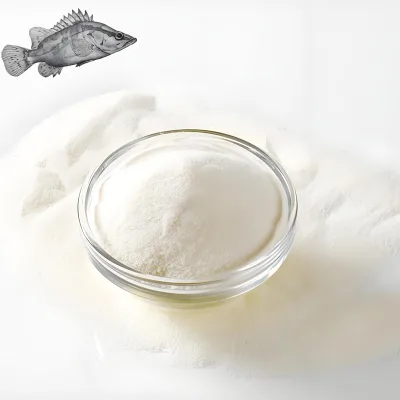


$6.00 - $10.00
MOQ: 1 kilograms

Suzhou Greenway Biotech Co., Ltd.
- Verified by BV
- Trading Company,Manufacturer/Factory
- China Jiangsu
- Lead time15 days
- Avg. response≤ 9h
Main productsGlutathione, Nmn, Pharmaceutical Intermediates, Cosmetic Materials, Nutritional Supplements
Main marketsSouth America,Eastern Europe,Mid East,North America,Southeast Asia,Eastern Asia,Oceania,Western Europe,Africa
Xian Bright Future Biotech Co., Ltd.
- Manufacturer, Trading Company
- Shaanxi, China
- Lead time7 days
- Avg. response≤ 9h
Main productsHerbal Extract,Food Ingredient,Cosmetic Raw Material,Vitamins &Amino Acid,Oils&Oleoresin
Main marketsSouth America(20.00%), Southeast Asia(20.00%), Western Europe(15.00%), Mid East(10.00%), North America(10.00%), Southern Europe(5.00%), Northern Europe(5.00%), Eastern Asia(5.00%)

Anhui Keynovo Biotech Co., Ltd.
- Verified by SGS
- Trading Company
- China Anhui
- Lead time15 days
- Avg. response≤ 4h
Main productsFood Additive, Plant Extract, Peptide, Food Supplement, Hyaluronic Acid Powder, Health Food, Nutritional Products, Pharmaceutical Intermediates
Main marketsSouth America,East Asia(Japan/ South Korea),Europe,Australia,North America


Collagen Peptide Powder Hydrolyzed Fish Collagen Peptide Powder From Marine Fish
$15.00 - $30.00
MOQ: 1 kg

High Quality Marine Fish Collagen Peptide Powder Hydrolyzed Fish Marine Collagen Powder
$15.00 - $30.00
MOQ: 1 kg
Fujian Hydsen Biotechnology Co., Ltd.
- Trading Company
- Fujian, China
- Lead time10 days
- Avg. response≤ 3h
Main productsBovine Collagen,Marine Collagen Peptide,Hydrolyzed Collagen,Bone Collagen,Whey Protein Powder
Main marketsSoutheast Asia(35.00%), North America(15.00%), South America(10.00%), Domestic Market(10.00%), Africa(5.00%), South Asia(5.00%), Northern Europe(5.00%), Central America(5.00%), Eastern Asia(5.00%), Mid East(5.00%)

Xi'an Plantis Biotechnology Co., Ltd.
- Trading Company
- Shaanxi, China
- Lead time7 days
- Avg. response≤ 3h
Main productsGinkgo Biloba Leaf Extract, Scutellaria Extract, Milk Thistle Extract, Green Tea Extract, Ashwagandha Root Extract
Main marketsNorth America(30.00%), Eastern Europe(30.00%), Southeast Asia(20.00%), Eastern Asia(10.00%), South Asia(10.00%)
Anhui Fulai Pharmaceutical Co., Ltd.
- Verified by TüVRheinland
- Manufacturer, Trading Company
- Lead time15 days
- Avg. response≤ 1h
Main productsProtein Powder, Capsules, Softgel, Chewable Tablets, Oral Liquid
Main marketsDomestic Market(90%), North America(4%), Western Europe(3%)
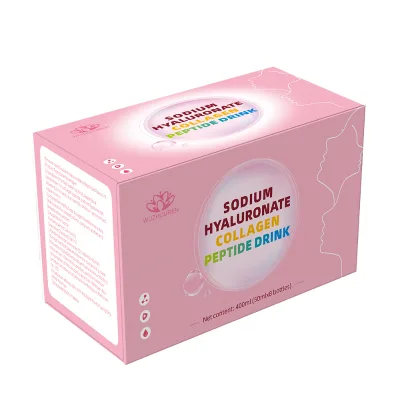
Customised Formulas Sodium Hyaluronate Collagen Peptide Drink Beauty Care for Women
$2.90 - $3.90
MOQ: 1000
Chiieen International Pharmaceutical Biotechnology (guangzhou) Co., Ltd.
- Manufacturer
- Guangdong, China
- Lead time0 days
- Avg. response≤ 6h
Main productsprobiotic,Collagen Peptide,slimming pills,Vitamin,meal replacement powder
Main marketsSouth America(40.00%), Southeast Asia(20.00%), North America(14.00%), Western Europe(5.00%), Domestic Market(5.00%), South Asia(5.00%), Eastern Asia(4.00%), Northern Europe(3.00%), Southern Europe(2.00%), Africa(2.00%)
Guangzhou Anrui Food Ingredients Co., Ltd.
- Verified by Intertek
- Manufacturer, Trading Company
- Lead time5 days
- Avg. response≤ 3h
Main productsSweeteners, Thickeners, Preservative, Enzyme Preparations, Food Colorants
Main marketsSoutheast Asia(20%), North America(15%), Oceania(15%)
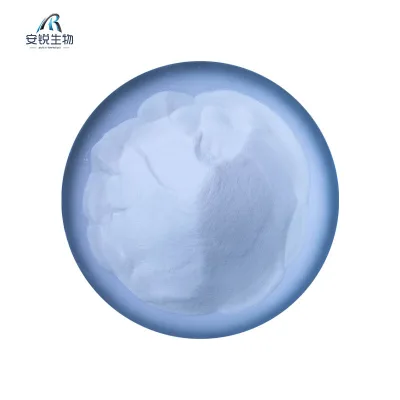
Marine Fish Collagen Peptide Powder - Small Molecular Weight for Skin Care & Dietary Supplement
$9.6791 - $11.9097
MOQ: 100 kilograms
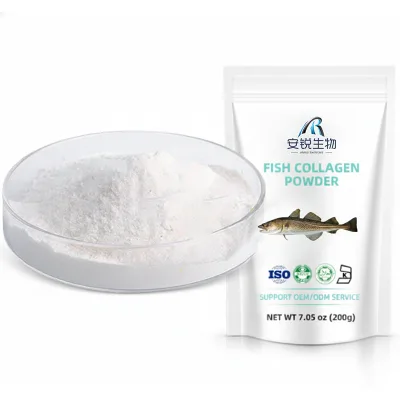
$13.3742 - $14.405
MOQ: 100 kilograms
$14.2763 - $15.2981
MOQ: 100 kilograms

Xi'an Haoze Biotechnology Co., Ltd.
- Verified by BV
- Manufacturer/Factory
- China Shaanxi
- Lead time15 days
- Avg. response≤ 8h
Main productsNmn, Pharmaceutical Intermediates, Melatonin, Lidocaine, Coenzyme Q10, L-Carnitine, Plant Extract, Alpha Arbutin, Resveratrol, Quercetin
Main marketsSouth America,Eastern Europe,Mid East,North America,Southeast Asia,Eastern Asia,Oceania,Western Europe,Africa
Xiamen Huaxuan Gelatin Co., Ltd.
- Verified by TüVRheinland
- Manufacturer, Trading Company
- Lead time30 days
- Avg. response≤ 4h
Main productsCollagen, Pectin, Food Gelatin
Main marketsEastern Europe(21%), Southeast Asia(20%), South America(12%)

Guangzhou Green Health Pharmaceutical Technology Co., Ltd
- Verified by SGS
- Combined
- China Guangdong
- Lead time15 days
- Avg. response≤ 2h
Main productsDietary Supplement, Health Food, Weight Loss Oral Liquid Drink, Slimming Jelly, Weight Loss Capsules, Weight Loss Tablet, Protein Powder, Weight Loss Gummies, Multivitamin Tablets, Collagen Drink
Main marketsEast Asia(Japan/ South Korea)


Personalized Customization Support Skin Whitening Delay Aging Fish Collagen Jelly
$0.15 - $0.18
MOQ: 30000 Bags

Private Label Skin Whitening Hyaluronic Acid Beauty Collagen Oral Liquid Drink
$2.50 - $3.00
MOQ: 1000 box

Shaanxi Hongkang Biological Technology Co., Ltd.
- Verified by TUVRHEINLAND
- Trading Company,Manufacturer/Factory
- China Shaanxi
- Lead time15 days
- Avg. response≤ 4h
Main productsCosmetic Raw Materials, High Concentrate Liquid Flavor, Food Additive Matcha Powder, Food Grade Matcha Powder, Shilajit Extract, Menthol Crystals, Flavor for Heating, Moringa Powder, Mushroom Extract, Essential Oil
Main marketsSouth America,Eastern Europe,Mid East,North America,Southeast Asia,Eastern Asia,Oceania,Western Europe,Africa

Guangzhou Kangmeihui Biotechnology Co., Ltd.
- Trading Company
- China Guangdong
- Lead time15 days
- Avg. response≤ 13h
Main productsSoft Capsule, Hard Capsule, Tablet Candy, Jelly, Oral Liquid, Fitness Underwear, Weight Loss, Whey Protein Powder, Facial Essence, Wipe Hair Essence
Main marketsSoutheast Asia/ Mideast,North America

Marine Collagen Powder Boost Skin Elasticity Collagen Powder for Skin Whitening
$5.00 - $6.00
MOQ: 100 box


Xi'an Eco Biotech Factory Co., Ltd.
- Verified by Intertek
- Manufacturer, Trading Company
- Lead time10 days
- Avg. response≤ 2h
Main productsSoftgels, Drops, Healthcare Products, Gummies, Solid Drink
Main marketsNorth America(30%), Southeast Asia(20%), South America(10%)
Shaanxi Lvlai Biotechnology Co., Ltd.
- Verified by TüVRheinland
- Manufacturer, Trading Company
- Lead time0 days
- Avg. response≤ 1h
Main productsCardamom Powder, Bovine Bone Collagen Protein Powder, Turmeric Powder, Coconut Fruit Powder, Goat Milk Extract Powder
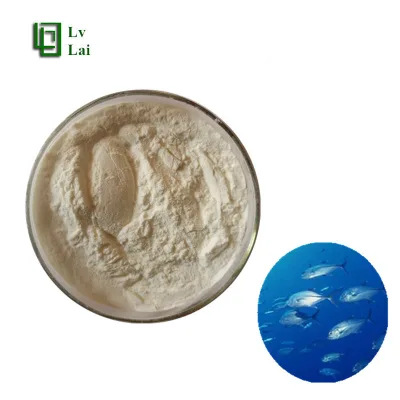
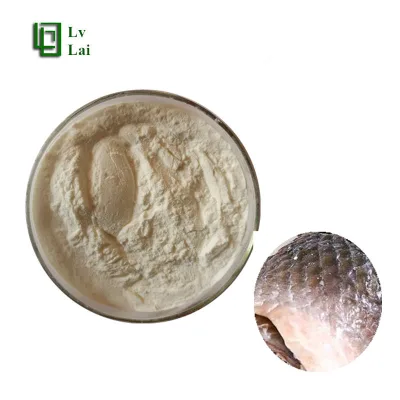
High Content and High Purity 98% Fish Skin Collagen Protein, Food Grade
$28.1876 - $32.3645
MOQ: 1 kilograms

Xiamen Gelken Gelatin Co., Ltd.
- Verified by SGS
- Manufacturer/Factory
- China Fujian
- Lead time15 days
- Avg. response≤ 4h
Main productsEdible Gelatin, Pharmaceutical Gelatin, Halal Gelatin, Fish Gelatin, Hydrolyzed Collagen, Gelatin Leaf, Jelly Glue, Capsule, Paintball, Bone Glue
Main marketsSouth America,Eastern Europe,Mid East,North America,Southeast Asia,Eastern Asia,Oceania,Western Europe,Africa


Hydrolyzed Marine Collagen Peptides 100% Pure for Skin Rejuvenation, Joint Care, and Hair Growth
$6.00 - $8.00
MOQ: 1000 kg

- Manufacturer/Factory
- China Hunan
- Lead time15 days
- Avg. response≤ 9h
Main productsGlutathione, Yeast Beta Glucan, Active Feed Yeast, Indole-3-Cabinol, Dim, L-Theanine, Tongkat Ali Extract, Curcumin/Turmeric Extract, Rutin
Main marketsSouth America,Eastern Europe,Mid East,North America,Southeast Asia,Eastern Asia,Oceania,Western Europe,Africa

Organic Fish Collagen Peptide Powder - Halal & Kosher Marine Collagen Powder
$15.00 - $30.00
MOQ: 25 kg


High Quality Fish Collagen Peptide Powder - Pure Marine Collagen Supplements
$15.00 - $30.00
MOQ: 25 kg

Xi'an Herbking Biotechnology Co., Ltd.
- Verified by TüVRheinland
- Trading Company
- Lead time3 days
- Avg. response≤ 5h
Main productsAstragalus Root Extract, Lycium Barbarum Extract, Ginseng Extract, Jujube Extract, Yam Extract
Biosacc Food Ingredients Co., Ltd.
- Manufacturer, Trading Company
- shandong, China
- Lead time90 days
- Avg. response≤ 1h
Main productsFood Additive,Thickener,Emulsifer,Colloids,Gum Arabic
Main marketsSouth America(30.00%), Domestic Market(30.00%), North America(10.00%), Eastern Asia(10.00%), Mid East(10.00%), Eastern Europe(10.00%)
Xi'an July Health Bio-Tech Co., Ltd
- Trading Company
- Shaanxi, China
- Lead time7 days
- Avg. response≤ 1h
Main productsExtract Powder,Food additive,Cosmetic Ingredients,Health supplements,Enzyme
Main marketsNorth America(25.00%), Northern Europe(15.00%), Eastern Asia(10.00%), Oceania(8.00%), Southeast Asia(8.00%), Western Europe(5.00%), South America(5.00%), Southern Europe(5.00%), Domestic Market(2.00%), Africa(2.00%), Central America(1.00%), South Asia(1.00%), Mid East(1.00%)
High Quality Marine Collagen 100% Fish Collagen Powder Pure Marine Fish Collagen with Free Sample
$8.7591 - $19.5767
MOQ: 500 kilograms











Comprehensive Sourcing Guide
Skin Brightening Marine Collagen Peptides Supplier Concentration and Factory Types
The current supplier landscape for Skin Brightening Marine Collagen Peptides reveals a distinct concentration of manufacturing and trading entities within specific geographic clusters, most notably in China Fujian. This region hosts a mix of Trading Companies and Manufacturer/Factory operations, indicating that buyers can access both direct production sources and intermediary distributors from the same industrial hub. The presence of these dual company types suggests a mature supply chain where raw material processing, such as extracting collagen from fish skin, is integrated with commercial distribution networks. Buyers evaluating this market should recognize that the concentration in China Fujian offers logistical advantages for bulk sourcing, as the proximity to seafood processing facilities likely reduces raw material transit times. However, the coexistence of trading companies implies that not all listings represent direct factory output, requiring careful distinction between primary producers and secondary resellers. This structural diversity allows for flexible engagement models, whether a buyer seeks long-term OEM partnerships or immediate spot purchases of finished goods. Understanding this geographic and operational concentration is the first step in navigating the available options, as it sets the baseline for evaluating the authenticity and capacity of potential partners. The density of suppliers in this area also suggests competitive pricing dynamics, though quality control remains a critical variable that varies significantly between the different company types present in the results.
Beyond the primary cluster, the market also includes suppliers from other regions, such as Taiwan, China, which introduces a different operational profile focused on high-value, specialized products. These suppliers often position themselves as Trading Companies specializing in Nutritional Supplements, emphasizing service-oriented models like OEM, ODM, and private label services. This segment of the market caters to buyers looking for finished, branded solutions rather than bulk raw materials, often highlighting features like anti-aging and brightening functions in their product descriptions. The distinction between the manufacturing-heavy cluster in Fujian and the service-oriented suppliers in Taiwan highlights the need for buyers to align their sourcing strategy with their specific business model. If the goal is to create a branded cosmetic or health supplement, the Taiwan-based suppliers may offer more tailored packaging and formulation support. Conversely, if the objective is to source raw marine collagen peptides for further processing, the Fujian-based manufacturers provide a more direct route. Recognizing these different supplier archetypes helps in filtering the vast array of available options, ensuring that the buyer engages with entities that match their operational needs. The variety in company types and locations underscores the importance of verifying the actual capabilities of each supplier, as the label alone does not guarantee the level of control over the production process or the quality of the final product.
How to Verify Skin Brightening Marine Collagen Peptides Suppliers
Verifying the legitimacy and capability of suppliers requires a rigorous examination of their stated certifications and product attributes, which serve as primary indicators of quality and compliance. In the current results, several suppliers list GMP, ISO 9001, and ISO 22000 certifications, which are critical for ensuring that the marine collagen peptides meet international safety and quality standards. Buyers must cross-reference these claims with valid certification documents, as the presence of a logo does not guarantee active compliance. Additionally, the product attributes provide detailed technical specifications that can be used to validate supplier expertise. For instance, claims regarding molecular weight, such as "Less Than 1000dalton," and purity levels, like "≦96%," should be supported by third-party test reports. The specification of "No Fishy" odor and "Nice" taste indicates a high degree of refinement, which is essential for skin brightening applications where sensory qualities affect consumer acceptance. Buyers should request batch-specific test results to confirm that the raw material, often sourced from fish skin, meets these stringent criteria. Furthermore, the mention of "Every Batch" testing suggests a robust quality control system, which is a strong positive signal for reliability. By focusing on these verifiable data points, buyers can distinguish between suppliers who merely list generic attributes and those who possess the technical infrastructure to deliver consistent, high-quality marine collagen peptides. This due diligence process minimizes the risk of receiving substandard products that could compromise the efficacy of the final skin brightening formulation.
In addition to technical specifications, buyers should assess the supplier's responsiveness and operational transparency as key indicators of reliability. The response time metric, observed at 15.20 hours for some suppliers and as low as 8 hours for others, provides insight into the supplier's customer service efficiency. A faster response time often correlates with better communication throughout the procurement process, which is crucial for resolving issues related to customization or logistics. Buyers should also examine the supplier's main products to ensure alignment with their specific needs. For example, suppliers listing "Food Grade Gelatin" and "Fish Collagen" alongside "Health Care" extracts demonstrate a broader capability in animal extracts, which may indicate a more comprehensive understanding of the collagen market. Conversely, suppliers focusing solely on "Nutritional Supplements" may have a narrower scope. It is also important to verify the origin of the product, as some listings specify "China" or "Taiwan" as the place of origin, which can impact regulatory compliance in different target markets. Buyers should ask for detailed information on the extraction type, such as whether it is a patented extract or wild-sourced, as these factors influence the product's market positioning. By combining technical verification with operational assessment, buyers can build a more complete picture of each supplier's capabilities, ensuring that they partner with entities that can consistently meet their quality and service expectations.
What to Compare Across Skin Brightening Marine Collagen Peptides Suppliers
When evaluating multiple suppliers, buyers must systematically compare key commercial and operational dimensions to identify the most suitable partner for their specific requirements. One of the most critical factors is the Minimum Order Quantity (MOQ), which varies significantly across the results, ranging from as low as 10 units to 500 units. This disparity allows buyers with different scale needs to find appropriate partners, whether they are testing the market with small batches or committing to large-scale production. Alongside MOQ, the price range is a vital comparison point, with observed prices spanning from $7.00 to $18.00 per unit, depending on the product specifications and quantity. Buyers should analyze these prices in the context of the product's purity, certification level, and packaging details to determine the true value proposition. For instance, a higher price may be justified by additional certifications like KOSHER or HACCP, or by more sophisticated packaging options such as vacuum-packed sachets. The lead time is another essential metric, with some suppliers indicating a lead time of 45 days, while others show zero, which may imply immediate availability or require further clarification. Comparing these lead times helps buyers plan their inventory and manage customer expectations effectively. Additionally, the response time, which ranges from 8 to 15.20 hours, should be factored into the decision, as faster communication can expedite the negotiation and order placement process. By creating a comparison matrix of these variables, buyers can objectively assess which suppliers offer the best balance of cost, speed, and flexibility.
Beyond the basic commercial terms, buyers should also compare the customization and branding capabilities offered by each supplier. The results indicate that many suppliers offer OEM, ODM, and private label services, which are crucial for brands looking to differentiate their products in the market. Buyers should inquire about the extent of customization available, such as logo printing, specific packaging designs, and formulation adjustments. Some suppliers specify "Customization: Available" and "Logo Printing: With Logo Printing," which are positive indicators for brand-focused buyers. The product attributes also reveal differences in the target audience, with some products suitable for "Adults" and others for "Elderly, Children, Adult," which may influence the marketing strategy. Furthermore, the application of the collagen peptides, whether for "Functional Foods and Beverages," "Cosmetic," or "Health Care Protect," should be compared to ensure alignment with the buyer's end-use. The loading ability, such as "8tons with Pallets," is another logistical factor that can impact shipping costs and efficiency for larger orders. By thoroughly comparing these operational and customization details, buyers can select suppliers that not only meet their quality standards but also support their brand identity and logistical requirements. This comprehensive comparison ensures that the final selection is based on a holistic view of the supplier's capabilities, rather than just price or availability.
Common Skin Brightening Marine Collagen Peptides Sourcing Risks
Sourcing Skin Brightening Marine Collagen Peptides carries inherent risks related to product authenticity, quality consistency, and regulatory compliance, which buyers must actively mitigate. One significant risk is the potential discrepancy between the claimed certifications and the actual production standards. While suppliers may list GMP, ISO 9001, or HACCP certifications, these credentials must be verified through official channels to ensure they are current and applicable to the specific product being sourced. Without proper verification, buyers risk partnering with suppliers who use certifications as marketing tools without adhering to the underlying quality management systems. Another risk is the variability in raw material sources, as marine collagen can be derived from various fish species, each with different purity and allergen profiles. Suppliers claiming "Fish Skin" as the raw material should provide detailed information on the species and sourcing practices to ensure consistency and safety. The molecular weight of the collagen peptides is also a critical quality parameter, with claims of "Less Than 1000dalton" indicating high bioavailability. However, if this specification is not rigorously tested, the product may not deliver the expected skin brightening benefits. Buyers should request detailed technical data sheets and batch-specific test results to confirm that the product meets these technical standards. Additionally, the risk of odor and taste issues cannot be overlooked, as poor processing can result in a "fishy" smell that negatively impacts consumer acceptance. Suppliers claiming "No Fishy" odor should provide sensory evaluation reports to substantiate these claims.
Regulatory compliance and labeling accuracy present another layer of risk, particularly when sourcing from different regions with varying regulatory frameworks. Suppliers from China Fujian and Taiwan, China, may have different labeling requirements and quality standards, which can complicate the import process into target markets. Buyers must ensure that the product labels accurately reflect the ingredients, certifications, and usage instructions, as mislabeling can lead to customs delays or legal issues. The risk of supply chain disruptions is also heightened by the reliance on specific raw materials, such as fish skin, which can be subject to seasonal fluctuations and environmental factors. Buyers should assess the supplier's ability to maintain consistent supply, particularly if they have high MOQs or long lead times. The observation of a 45-day lead time for some suppliers indicates potential delays that could impact inventory management. Furthermore, the risk of intellectual property infringement exists when working with suppliers offering OEM and private label services, as buyers must ensure that their brand assets are protected. Clear contracts and non-disclosure agreements are essential to mitigate this risk. Finally, the risk of price volatility should be considered, as the observed price range of $7.00 to $18.00 suggests significant variation based on quality and quantity. Buyers should negotiate fixed pricing or long-term contracts to protect against market fluctuations. By proactively addressing these risks, buyers can establish a more secure and reliable sourcing strategy for Skin Brightening Marine Collagen Peptides.
Skin Brightening Marine Collagen Peptides Regional Sourcing and Logistics
The geographic location of suppliers plays a crucial role in determining logistics efficiency, shipping costs, and regulatory compliance for Skin Brightening Marine Collagen Peptides. The concentration of suppliers in China Fujian offers significant logistical advantages, particularly for buyers sourcing from or shipping to Asia-Pacific markets. This region's proximity to major seafood processing hubs ensures a steady supply of raw materials, which can reduce production lead
FAQs
What certifications do marine collagen peptide suppliers hold?
Suppliers typically hold GMP, ISO 9001, HACCP, and ISO 22000 certifications. These credentials ensure manufacturing standards for food-grade and health supplement products. Buyers should verify specific certificates for their target markets to guarantee compliance and product safety during international trade transactions.
What is the typical price range for bulk marine collagen?
Prices generally range from $7.00 to $18.00 per kilogram depending on purity and packaging. Bulk orders often start at $7.00, while specialized formulations may cost up to $18.00. Buyers should request quotes based on specific quantity tiers to secure the best possible pricing for their needs.
What are the minimum order quantities for collagen peptides?
Minimum order quantities vary significantly, ranging from 10 kilograms to 500 kilograms. Some suppliers accept small trial orders of 10 kilograms, while others require 500 kilograms for standard bulk pricing. Buyers should confirm MOQs early to align with their inventory planning and budget constraints effectively.
Where are marine collagen peptide manufacturers primarily located?
Manufacturers are primarily located in China Fujian and Taiwan, China. These regions specialize in fish skin extraction and collagen processing. Buyers can source from trading companies or direct factories in these areas to access competitive pricing and established supply chains for marine-based health supplements.
How quickly do suppliers respond to sourcing inquiries?
Response times vary, with some suppliers responding within 8 hours and others taking up to 15.20 hours. Faster response times indicate active sales teams ready to assist with quotes and samples. Buyers should prioritize suppliers with quicker response rates to streamline the initial sourcing and negotiation process.
What raw materials are used for marine collagen peptides?
Most products use fish skin as the primary raw material. The collagen is hydrolyzed to achieve molecular weights under 1000 daltons for better absorption. This ensures the powder is odorless, tasteless, and suitable for various functional foods, beverages, and cosmetic applications without affecting the final product flavor.