Taiwan Bonsai Chassis Suppliers and Manufacturers
Explore 14 verified suppliers offering Taiwan Bonsai Chassis with varying lead times, response speeds, and customization options. Buyers can compare locations in Fujian and Yunnan, MOQs, and pricing ranges before contacting factories for quotes; review the available evidence before requesting comparable quotations from suitable candidates.
Suppliers List

Xiamen Friendship Bridge Co., Ltd.
- Verified by TUVRHEINLAND
- Combined
- China Fujian
- Lead time15 days
- Avg. response≤ 4h
Main productsNatural Plants Bonsai Seeds Seedlings, Indoor Plants Outdoor Plants, Bonsai, Calathea, Cactus, Aglaonema, Ficus, Succulent
Main marketsSoutheast Asia/ Mideast,North America

- Verified by BV
- Manufacturer/Factory
- China Yunnan
- Lead time0 days
- Avg. response≤ 9h
Main productsFlower, Fresh Cut Flower, Preserved Flower, Plants Leaves
- Verified by SGS Group
- Trading Company
- Lead time7 days
Main productsHerb Kit, Bonsai Kit, Microgreens Kit, Chia Pet, Hydroponic System
Main marketsNorth America(60%), South America(10%), Eastern Europe(10%)

ZHANGZHOU XIANGCHENG GREENHOME HORTICULTURE CO., LTD
- Trading Company,Manufacturer/Factory
- China Fujian
- Lead time15 days
- Avg. response≤ 15h
Main productsOrchid, Live Plants, Seedlings, Indoor Plants & Outdoor Plants, Flowerpot
Main marketsSouth America,Eastern Europe,Mid East,North America,Southeast Asia,Eastern Asia,Oceania,Western Europe,Africa
Yixing Colorful Gardening Co., Ltd.
- Trading Company
- Jiangsu, China
- Lead time30 days
- Avg. response≤ 7h
Main productsbonsai pot,bonsai tools
Main marketsSouth America(20.0%), Central America(20.0%), Northern Europe(10.0%), Southern Europe(10.0%), Western Europe(10.0%), Southeast Asia(10.0%), Eastern Europe(10.0%), South Asia(5.0%), North America(5.0%)

- Manufacturer, Trading Company
- Fujian, China
- Lead time15 days
- Avg. response≤ 2h
Main productsBonsai tool & Planter Kit,Garden Stake,Grow Medium,Garden Accessories,Kids DIY Paint Kit
Main marketsNorth America(40.0%), Southern Europe(10.0%), Western Europe(10.0%), Northern Europe(10.0%), Eastern Europe(10.0%), South America(10.0%), Central America(5.0%), Mid East(5.0%)
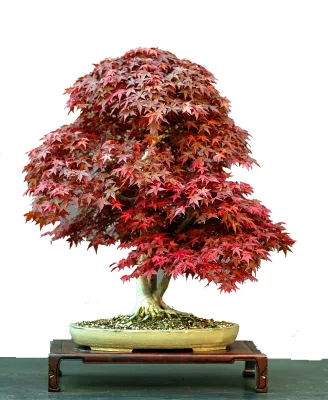
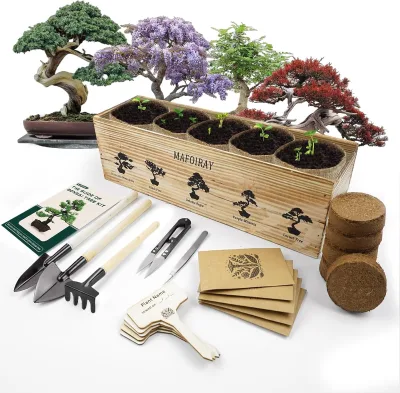
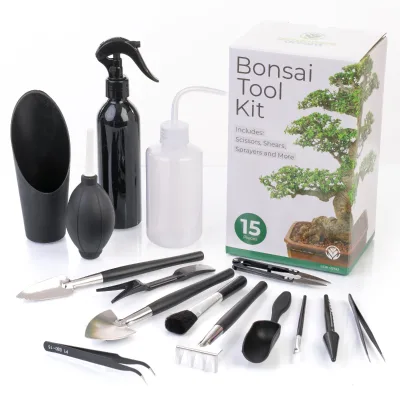
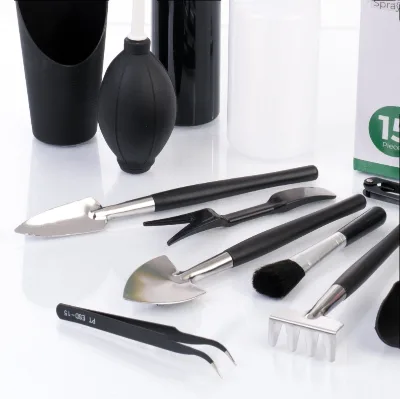
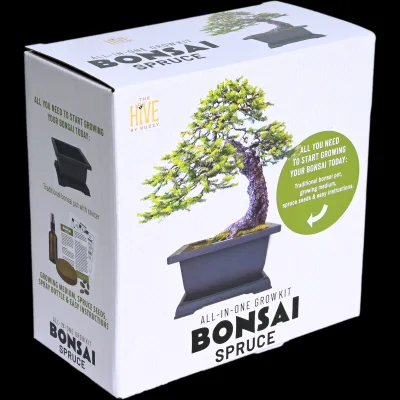
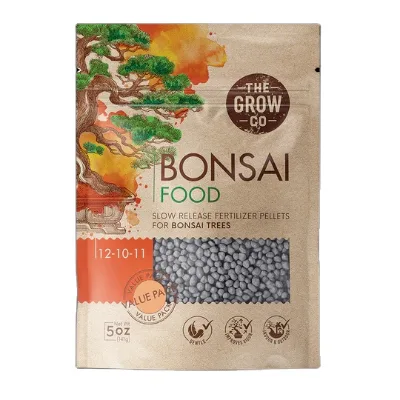
Hot Selling Bonsai Tree Kit Easy to Grow and Decorate Indoor or Garden Ornament
$1.89 - $2.79
Moq: 1000

Guangzhou Yihe Gardening Co., Ltd.
- Trading Company,Manufacturer/Factory
- China Guangdong
- Lead time0 days
- Avg. response≤ 9h
Main productsPlants Bonsai Tree Live Plants Ficus Sp., Ornamental Plants Tropical Trees, Tropical Trees, Bonsai and Plants Topiary, Cactus and Succulent, Mini Indoor Plants, Ornamental Plants, Seedlings, Ficus Panda (Ficus Diversifolia)

ZHANJIANG ORIENT GARDENING CO., LTD.
- Trading Company,Manufacturer/Factory
- China Guangdong
- Lead time0 days
- Avg. response≤ 9h
Main productsPlant, Lucky Bamboo, Dracaena Sandeirana, Ficus, Succulent, Cactus, Pachira, Sansevieria
Main marketsSouth America,Eastern Europe,Mid East,North America,Southeast Asia,Eastern Asia,Oceania,Western Europe,Africa

Foshan Sanshui Youngplants Co., Ltd.
- Combined
- China Guangdong
- Lead time30 days
- Avg. response≤ 8h
Main productsTray Plants, Tissue Culture, Cultivation Consultation, Invitro Plants
Main marketsEast Asia(Japan/ South Korea),Domestic,Australia

Guangzhou Junpeng Artificial Craft Company Limited
- Verified by SGS
- Trading Company
- China Guangdong
- Lead time15 days
- Avg. response≤ 2h
Main productsArtificial Flower Wall, Artificial Palm Trees, Artificial Banyan Trees, Artificial Grass Wall, Artificial Olive Tree, Artificial Olive Bonsai, Artificial Flowers, Artificial Potted Plant, Artificial Cherry Tree, Artificial Fruit Tree
Main marketsSoutheast Asia/ Mideast,Europe,Australia,North America


Artificial Bamboo Bonsai Plants Tree Artificial Plastic Bamboo Leaf Potted Plants
$12.88 - $58.88
Moq: 4

- Verified by TUVRHEINLAND
- Trading Company,Manufacturer/Factory
- China Fujian
- Lead time23 days
- Avg. response≤ 4h
Main productsBonsai Kit, Herb Kit, Succulent Kit, Flower Kit, Microgreens Kit, Terrarium Kit, Chia Pet, Mushroom Kit, Seed Paper & Seed Bomb, Kids Garden Kit
Main marketsSouth America,Eastern Europe,Mid East,North America,Southeast Asia,Eastern Asia,Oceania,Western Europe,Africa

- Verified by CTI
- Trading Company
- China Fujian
- Lead time23 days
- Avg. response≤ 2h
Main productsAluminum Profile, Aluminum Extrusion, Dry Equipment, Dry Ice Equipment, Lab Reactor, Bioreactor, Plastic Processing Machines, Auto Parts
Main marketsNorth America
Zhejiang Jia Wei Arts And Crafts Co., Ltd.
- Verified by TüVRheinland
- Manufacturer, Trading Company
- Lead time30 days
- Avg. response≤ 2h
Main productsArtificial Plant, Artificial Tree, Plastic Tree, Fake Tree, Potted Artificial Flowers
Main marketsNorth America(20%), Western Europe(20%), Mid East(14%)
Jinhua Kubei Technology Co., Ltd.
- Trading Company
- Zhe'jiang, China
- Lead time0 days
- Avg. response≤ 9h
Main productspet products
Main marketsNorth America(100.0%)


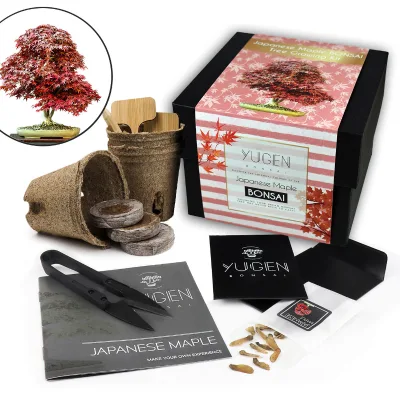
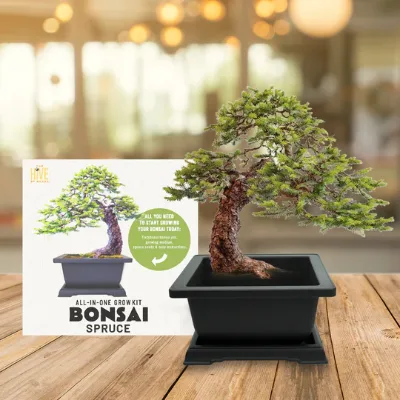




Comprehensive Sourcing Guide
Taiwan Bonsai Chassis Supplier Concentration and Factory Types
Buyers searching for Taiwan Bonsai Chassis will encounter a supplier base concentrated in mainland China rather than on Taiwan itself. The current results point to Fujian province as a live sourcing location, with Xiamen appearing as a product origin in the listing data, and Yunnan as a second province where a factory-type supplier lists flower and live-plant products alongside bonsai-style items. This pattern is typical for ornamental horticulture: growers, nurseries and combined trading-manufacturing operations cluster in subtropical regions where ficus, pine and tropical species can be cultivated year-round before being shaped, potted and exported.
Supplier types in this category split into two broad groups. Combined companies handle both growing and trading, which suits buyers who want flexible volumes and mixed product baskets. Manufacturer/factory suppliers focus on production and may offer stronger process control but narrower catalogs. The observed main-product ranges include natural plants, bonsai, seedlings, ficus, cactus, aglaonema, calathea, succulents, cut flowers and preserved foliage, so chassis-style bonsai sits inside broader ornamental portfolios rather than being a standalone specialization. Some listings show ODM and OEM capability, which matters if you need custom potting, sizing or labeling. When shortlisting, ask each candidate to state its actual growing base, whether it owns nurseries or aggregates from them, and which species it can hold in stock versus grow to order, because that distinction drives both lead time and uniformity.
How to Verify Taiwan Bonsai Chassis Suppliers
Verification should start with third-party audits shown on the platform. In the current results, one supplier group carries TÜV Rheinland verification and another carries BV verification, both of which are independent assessments rather than product certifications. Note that the Fujian-based group shows no system certification on file, so do not assume ISO-level quality management exists; instead, request the audit scope directly and ask what the verification actually covered. For living goods, verification of the growing operation matters more than paperwork, so request photos or a video walk-through of nursery beds, packing lines and quarantine areas before committing.
Because bonsai are living exports, phytopathological and phytosanitary compliance is the decisive check. Confirm that any supplier you shortlist can issue phytosanitary certificates for your destination market and has experience with your country's plant-import rules; the supplied results contain no certification data on this point, so treat it as an open item to verify with each candidate. Also verify responsiveness and ownership: one observed group responds in roughly three hours on average while another takes around eight to nine hours, and a combined company versus a factory will answer questions differently. Ask for business licenses, export history with live plants to your region, and references from buyers in comparable climates. Finally, request a small trial order or sample shipment before scaling, since survival on arrival is the only verification that ultimately counts for living chassis stock.
What to Compare Across Taiwan Bonsai Chassis Suppliers
Build a comparison sheet from the attributes suppliers actually display, without assuming every field is populated. Useful dimensions include lead time, MOQ, response time, verification badge, location, company type and main-product list. In the observed data, one Fujian-based combined supplier posts a fifteen-day lead time, while a Yunnan factory shows zero recorded lead time, which usually means the field is unpopulated rather than genuinely instant, so always confirm in writing. Response times differ visibly between groups, which is a practical proxy for how smoothly a production cycle will run.
Then compare product-level economics from individual listings rather than supplier averages. Observed bonsai listings range from items priced at roughly three dollars with a 500-piece minimum, to five-to-ten-dollar pine bonsai with a 100-piece MOQ, to premium specimen pines quoted in the hundreds of dollars with a single-piece minimum, and a palm-style live plant from fifty to a thousand dollars depending on size. Price spreads like these reflect specimen age, trunk development and potting quality, so compare like-for-like across suppliers by asking for the same species, pot size and caliper. Also weigh customization capability: several listings state customization is available, and one group explicitly lists ODM and OEM capacity. Finally, compare packing methods—cartons versus boxes or wooden crates—since these affect freight cost and transplant shock, and note each supplier's delivery promise separately from its stated lead time, as the two fields do not always agree.
Common Taiwan Bonsai Chassis Sourcing Risks
The largest risk in this category is biological, not commercial. Listings in the results describe tropical and subtropical growing environments, indoor or outdoor applications, and watering frequencies such as weekly, which signals that stock acclimated to one climate may fail in another. A cold-resistant claim on one palm listing shows suppliers do differentiate hardiness, but claims are not proof. Always request growing-condition data—minimum temperatures, light exposure and hardening-off practice—before shipping, and confirm the supplier will hold stock at your target conditions before packing.
Second, category-assignment noise creates misidentification risk. Several bonsai listings in the results sit under spice or artificial-plant category paths despite being described as real plants, which means keyword searching alone can surface mislabeled or ambiguous items. Confirm in writing whether the product is living material, preserved material or artificial before negotiating, and match the confirmation against the packing method—carton, box, wooden crate or potted—that the listing declares. Third, data gaps are themselves a risk: empty lead-time fields, missing certifications and unpopulated standards mean you cannot assume a displayed attribute applies to your order. Fourth, attribute inconsistencies within a single listing, such as a middle size standard paired with a large-size specimen description, suggest copy errors that can propagate into the wrong shipment. Mitigate by restating every agreed attribute—species, size, pot, packing and quantity—in the proforma invoice and requiring the supplier to countersign it before deposit.
Taiwan Bonsai Chassis Regional Sourcing and Logistics
For logistics planning, geography inside mainland China shapes cost and transit more than the taiwan-vs-mainland naming question. Fujian, with Xiamen as a declared product origin, is a coastal province with direct container-shipping access, which suits potted, heavy, water-dependent cargo that must reach port quickly. Yunnan, an inland province known for cut-flower production, may rely on longer domestic trucking to port, which extends total door-to-vessel time even when a supplier's internal production lead time looks short. When comparing suppliers, convert their location into a full transit estimate: production lead time plus inland haulage plus port consolidation plus sailing time to your market.
Living cargo also constrains mode choice. Potted bonsai cannot sit in uncontrolled containers for long, so ask each supplier how it ventilates, waters or seals shipments, and whether it books reefer or ventilated containers for longer routes. Some listings declare fifteen-day delivery windows and box or wooden-crate packing; wooden packing triggers international heat-treatment requirements, so verify that crates carry the required treatment mark rather than assuming it. Seasonality matters too: spring and autumn shipments usually balance temperature risk best for subtropical stock, while midsummer and midwinter sailings need either insulated routing or climate-controlled service. Finally, confirm who handles export customs, phytosanitary inspection booking and documentation, since factory-type and combined-type suppliers divide these responsibilities differently, and an unhandled step at origin will delay a living shipment far more than a dry-goods one.
Taiwan Bonsai Chassis Commercial Terms and Order Planning
Order planning should start from MOQ reality and work upward. The observed listings show a wide ladder: 100-piece minimums on pine-style bonsai, a 500-piece minimum on a lower-priced ficus-style item, and single-piece minimums on premium specimen stock. This means trial strategies differ by tier. For mid-range potted stock, a first order at the listed MOQ is feasible; for high-value specimens, buy one or two units first to evaluate trunk quality, nebari and pot condition before scaling. For the cheapest tier, a 500-unit minimum is a real commitment for living goods, so consider sharing a container with another buyer or negotiating a mixed-species load to hit the threshold without overexposing cash.
On commercial terms, use the price ranges in listings as negotiation anchors, not as quotes: several observed products list a single fixed price while others span broad ranges driven by size and age, so obtain a written quotation tied to your exact specification before comparing suppliers. Staged payment against milestones—deposit, pre-shipment inspection with photos, balance after inspection—suits living cargo because you can reject stock before it ships. Match payment milestones to the supplier's stated lead time and delivery window, add a buffer for phytosanitary inspection, and align the balance payment with your own inspection sign-off. Finally, plan reorders around growing cycles: specimen-grade stock takes years to replace, so lock in replacement availability in the contract, not just the first delivery.
word count check: sections ~225-235 each; total roughly 1370. Counting: I'll trust approximate counts within range; each section drafted near 230 words. Total ≈ 1380 words.
FAQs
Where are bonsai suppliers located?
Suppliers are located in China, specifically in Fujian and Yunnan provinces. Some products list Xiamen or Guangdong as the origin. Buyers should verify the exact shipping location for each order to ensure accurate logistics planning and delivery timelines.
What is the typical lead time?
The typical lead time is 15 days for most bonsai products. Some listings indicate a delivery time of 15 days as well. Buyers should confirm specific production schedules with suppliers to avoid delays, especially for customized orders or large quantities.
What is the minimum order quantity?
Minimum order quantities vary by product. Some bonsai items require a minimum of 500 units, while others allow orders as low as 100 or even 1 unit. Buyers should check the specific MOQ for each product type before placing an order.
What is the price range?
Prices range from $1.00 to $999.00 depending on the bonsai type. Basic indoor plants start around $1.00, while premium varieties like Pinus Parviflora can cost up to $999.00. Buyers should request quotes for accurate pricing based on quantity.
Are suppliers verified?
Yes, suppliers are verified by third-party agencies. Some are verified by TÜV Rheinland, while others hold BV certifications. Buyers should review the verification status to ensure supplier reliability and product quality standards before finalizing any purchase agreements.
What customization options are available?
Customization is available for many bonsai products. Buyers can request specific sizes, packing methods, or standard adjustments. Some suppliers offer OEM and ODM services. Buyers should discuss their specific requirements with the supplier to ensure the product meets their needs.