Source ABS Nylon Buttons for Jackets, Trousers, and Shoes
Compare 30 listings of ABS Nylon Buttons suitable for jackets, trousers, and shoes. Buyers can review specifications like size, material, and customization options to find the right fasteners for apparel and accessories; compare the available evidence and request quotations based on your requirements.
Updated
Key considerations
Products List


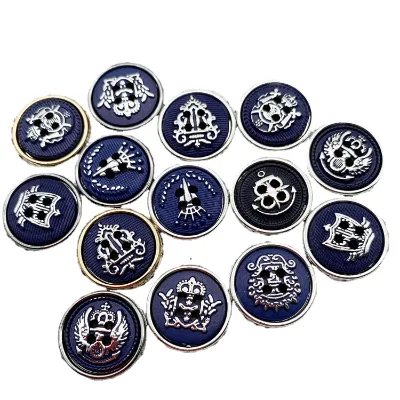


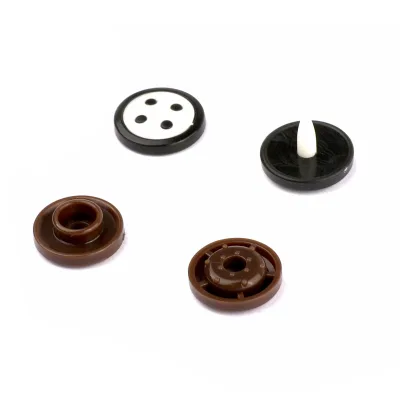
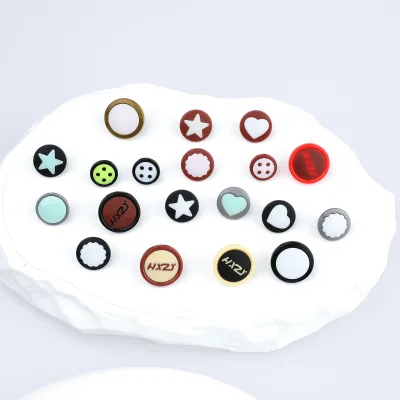


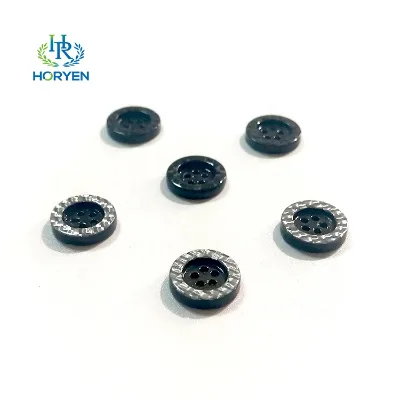


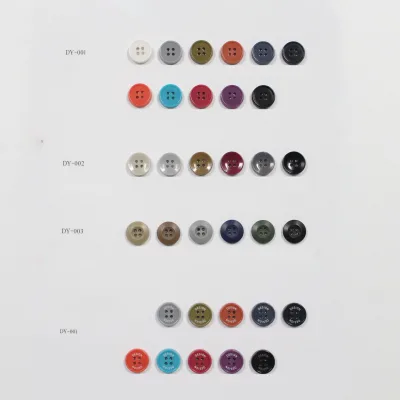
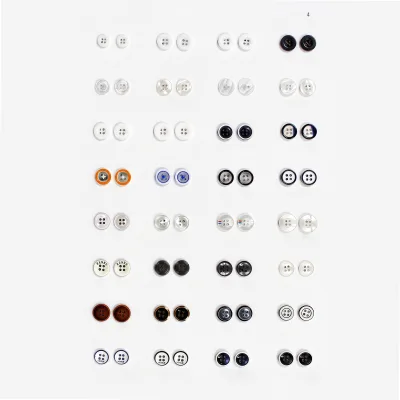
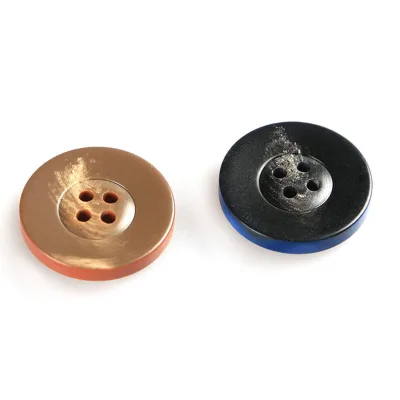
Excellent Design Garment Jacket Buttons Plastic Buttons for Shirt Clothes
$0.0514 - $0.1649
MOQ: 400 pieces
Comprehensive Sourcing Guide
ABS Nylon Buttons Sourcing Guide
Product Scope and Observed Listing Signals
Listings for ABS Nylon Buttons in the supplied product pages cluster around garment fastening hardware, with the "Jeans Button" type explicitly cited and usage fields covering jackets, trousers, sweaters, hats, bags, shoes, and toys. Shapes observed are round, with both flatback and vintage/fashion element styling noted, alongside simple and color-matching color treatments. Materials across the category include plastic and metal variants, so buyers should not assume a single construction under a shared keyword.
Listing signals also reveal commercial structure useful for early screening. Model numbers such as PS5566, 1122, PJ4168, PJ5169, 3689, 6597, and YJ22-81601 appear, and customization is flagged as available with custom logo acceptance. Stock status is listed, sizes commonly fall between 10mm and 25mm, and origins are given as Zhejiang, China or China generally. Treat these as observations from individual listings rather than category-wide guarantees; confirm each attribute directly with the supplier before committing to a specification.
Technical Specifications to Verify
Size discipline is the first technical checkpoint. Observed listings cite diameters from 10mm to 25mm and ligne designations including 20L (12.7mm) and 28L (17.8mm), with one listing spanning 14L through 54L. Because ligne conventions vary between factories, request a physical size card or calibrated measurements of counter samples rather than relying on nominal labels. Confirm shank versus 4-holes button construction, since both appear in the category, and verify flatback geometry for sew-on or machine attachment.
Construction details follow. For ABS and nylon bodies, confirm whether the listing is a single-material plastic button or a plated composite, as the "plating" decoration attribute appears alongside metal materials. Verify color-matching tolerance against your garment fabric swatches, batch-to-batch color consistency, and whether the non-adjustable or adjustable attribute applies to the specific style. Document attachment method, thread count expectations, and pull requirements in your spec sheet so quoted samples are measured against identical criteria across candidate suppliers.
Compliance and Safety Documentation
The only compliance-relevant attribute visible in the supplied context is the "Nickel-Free" feature flag on one listing. This matters for metal-backed or plated buttons destined for apparel with skin contact, but the flag alone is not a certificate. Ask the supplier for the underlying test report or declaration supporting the nickel-free claim, and identify which standard or test method it references before accepting it as documentation. Do not assume the claim applies to every product in the seller's range.
Beyond nickel content, buyers should define their own documentation requirements at RFQ stage. For childrenswear and toy-adjacent applications — both cited usage fields — request small-parts attachment strength data relevant to your market's rules, without asserting any specific standard value here. Verify REACH or equivalent chemical declarations for dyes and plating baths, and confirm which certificates are held at factory level versus brokered through third-party labs. Keep certificate copies, issue dates, and product scope on file so audits can trace claims to the exact model number you purchase.
Cost Drivers and Commercial Terms
Observed listings give useful anchors for commercial planning. The listed price band runs up to about USD 100, MOQs observed range from 10 to 20,000 pieces, and one product page states an explicit MOQ of 1,000 pcs with a selling unit of multiples of 500. Packaging is cited variously as 1,000 units per bag, 100 pcs per polybag, and 200 pcs per bag, with one batch packing 20X20X10 cm and 1.500 kg gross weight. Use these as comparison baselines, not guarantees.
Total landed cost depends on more than unit price. Size, plating finish, color-matching work, and customization each add cost steps, so quote your final specification rather than a generic description. Confirm what the stated delivery time of 5–7 days covers — samples, stock orders, or production — and note that sample order lead time of 7 days is supported. Payment terms observed include Trade Assurance acceptance; verify which escrow or payment protections apply to your order volume before transferring funds.
Supplier Qualification and Quality Control
Qualification should start with the data points listings already expose. Zhejiang origin is common in this category, which offers an established garment-trim supply base, but origin alone is not a quality signal. Check how long the supplier has manufactured the specific model numbers you need, whether customization claims are backed by in-house tooling or outsourced finishing, and whether stock items — flagged in some listings — can actually ship within the quoted 5–7 day window at your required quantity.
Quality control then moves to sampling and inspection. Use the stated 1–3 workday sample time to obtain physical references, then define an inspection plan covering diameter and thickness measurement, color comparison under standard light, plating adhesion for decorated buttons, and pull or wash testing appropriate to the end garment. Agree the acceptance level and defect classification before mass production, and confirm whether the supplier performs in-line inspection or relies on final random inspection. Keep sealed counter samples from the approved lot as the reference for every repeat order.
Long-Term Procurement Checks
Repeat purchasing in trims rewards suppliers who keep specifications stable. For ABS Nylon Buttons, the main drift risks are color-matching shifts between dye lots, plating bath changes altering the finish tone, and mold wear affecting diameter or hole placement on 4-holes styles. Establish a periodic re-measurement routine against your sealed samples, and require notification before any mold, material, or finishing-process change. Price adjustment requests should be tied to verifiable input changes, not asserted informally.
Also track the operational metrics that sustain continuity. Confirm that stock availability remains genuine as your volumes grow, since a supplier relying on made-to-order production will not honor quoted 5–7 day lead times at scale. Re-validate compliance documentation annually, especially nickel-free claims and any chemical declarations tied to your apparel categories. Diversify across at least two qualified sources once annual spend justifies it, and keep model numbers, packing formats — whether 100, 200, or 1,000 units per bag — and batch weight data current in your procurement records.
Supplier Qualification and Quality Control
Returning to qualification discipline as a closing checkpoint: buyers consolidating after initial trials should audit the factory's molding and finishing capability in person or through a third party, since the category's range — from simple plastic bodies to plated metal-composite styles — implies very different process control. Verify the factory can hold the tighter tolerances your larger sizes require, and confirm customized logo work is produced under controlled conditions rather than hand-applied inconsistently.
For ongoing QC, build the supplier's own data into your program. Where listings state batch packaging of 20X20X10 cm and 1.500 kg gross weight, use these figures to sanity-check incoming cartons against expected piece counts; discrepancies often reveal substitution or short packing early. Require lot traceability from carton to production date so any field failure in garments can be isolated quickly. Review supplier performance quarterly on defect rates, on-time delivery against the quoted 5–7 day window, and responsiveness during the 1–3 workday sampling cycle, and score suppliers formally so replacement decisions rest on evidence rather than familiarity.
FAQs
What customization options are available for these buttons?
Customization is available for these buttons, allowing buyers to request specific designs. The product supports customized logos and offers color matching options. Buyers can select from various styles including simple and flatback designs to meet their unique apparel accessory needs.
Which materials are used to manufacture these buttons?
These buttons are manufactured using plastic and metal materials. The product specifications indicate a plastic standard and metal composition for certain models. This variety ensures durability and suitability for different applications like jackets, trousers, and shoes.
Can I order a sample order with a short lead time?
Yes, sample orders are supported with a lead time of 7 days. Additionally, sample time can be as short as 1 to 3 workdays. This allows buyers to verify quality quickly before committing to larger bulk orders for their apparel needs.
What is the minimum order quantity for these buttons?
The minimum order quantity is 1000 pieces for this product. Some listings indicate selling units as multiples of 500, but the standard MOQ remains 1000. Buyers should verify specific requirements as observed ranges vary from 10 to 20000 units depending on the supplier.
How are these buttons packaged for shipment?
Packaging details vary, with options including 100 pieces per polybag or 200 pieces per bag. One specification lists 1000 units per bag. The package size per batch is typically 20 by 20 by 10 cm with a gross weight of 1.5 kg.
Which sizes are available for these buttons?
Available sizes range from 10mm to 25mm, with specific models offering sizes like 20L and 28L. Other models provide a wide range including 14L up to 54L. This variety ensures compatibility with different garment types such as jeans, sweaters, and hats.
Where are these buttons manufactured and shipped from?
These buttons are made in China, specifically originating from Zhejiang. The product origin is listed as China for multiple models. Buyers can expect sourcing from this region for both plastic and metal button varieties.