Source Automatic Cuttlefish Peeling Machine for Restaurants, Factories, and Plants
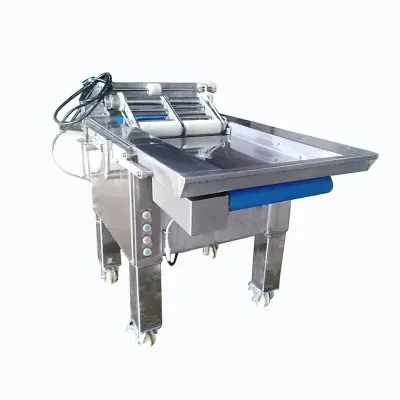
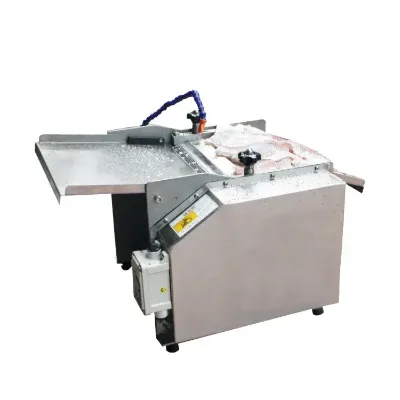
Compare 30 automatic cuttlefish peeling machines from verified suppliers. These units feature electric power sources, 304 stainless steel construction, and models like YP-50 and XBF-A designed for high-efficiency fish skin removal in processing plants and restaurants; compare the available evidence and request quotations based on your requirements.
Updated
Key considerations
Products List


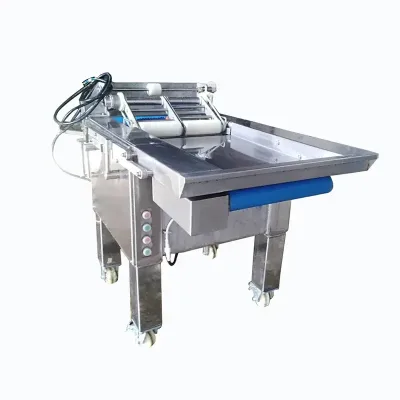
Automatic Fish Peeling Machine with Pressure Roller Squid Skinning Machine
$6000.00 - $6200.00
MOQ: 1 pc


Effective Fish Skin Peeler Squid Tilapia Peeling Machine Seafood Machine
$6000.00 - $6200.00
MOQ: 1 pc
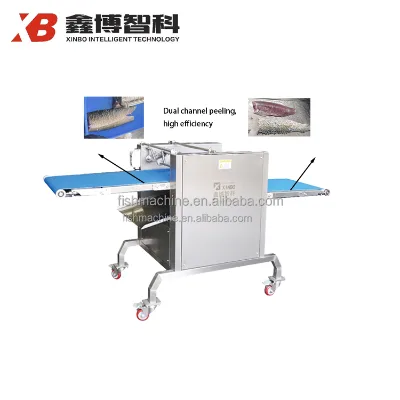
Automatic Fish Skin Peeling Machine Processing Equipment for Fish Peeling
$2054.9355 - $2876.9097
MOQ: 1 sets
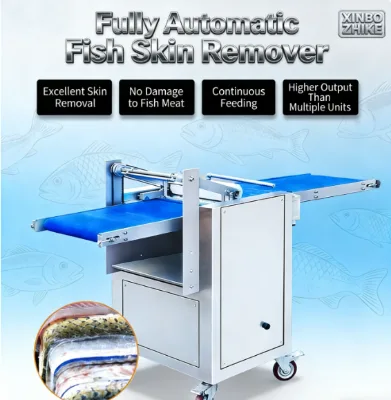
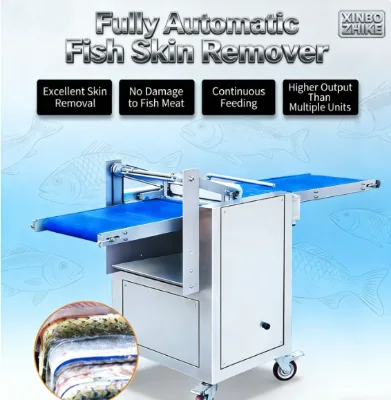
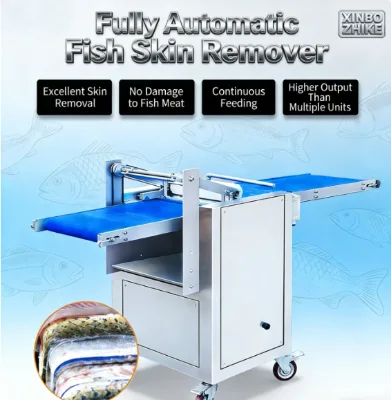
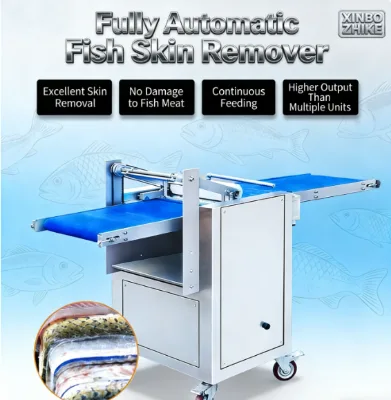


Commercial Skinning Equipment Squid Cuttlefish Automatic Electric Fish Peeling Machine
$7000.00 - $7500.00
MOQ: 1 Pieces

Precision Automatic Peeling Squid Cuttlefish Skin Peeler Kitchen Fish Skinning Machine
$7000.00 - $7500.00
MOQ: 1 Pieces

Seafood Kitchen Skin Removal Peeler Automatic Fish Processing Machine
$7000.00 - $7500.00
MOQ: 1 Pieces

Fish Skin Peeler Seafood Processor Automatic Peeling Squid Skinning Machine
$7000.00 - $7500.00
MOQ: 1 Pieces

Squid Cuttlefish Skin Peeler Electric Fish Peeling Skinning Processing Machine
$7000.00 - $7500.00
MOQ: 1 Pieces

Commercial Automatic Peeling Equipment Fish Squid Cuttlefish Skinning Machine
$7000.00 - $7500.00
MOQ: 1 Pieces


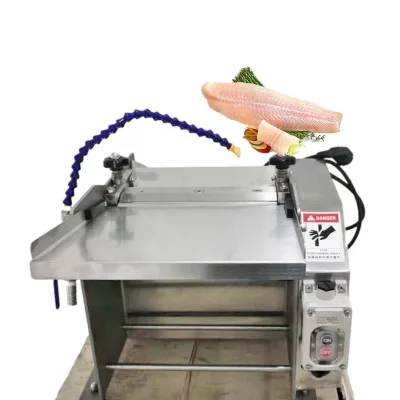
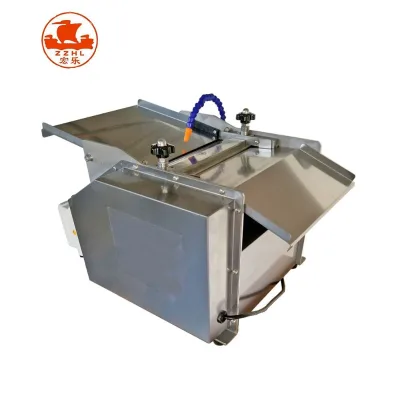
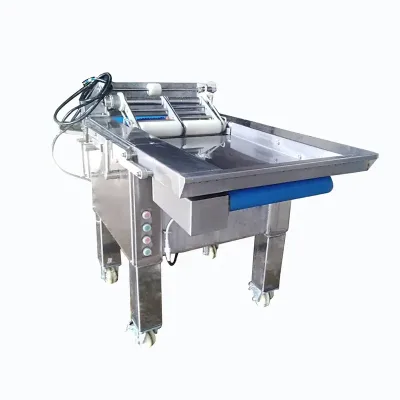
Comprehensive Sourcing Guide
Automatic Cuttlefish Peeling Machine Sourcing Guide
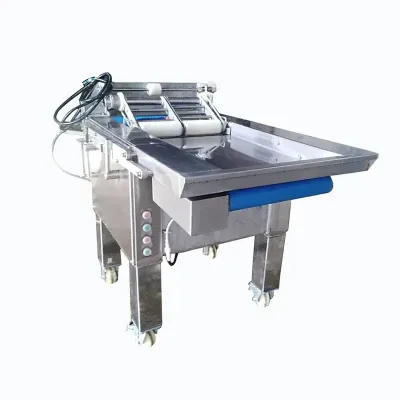
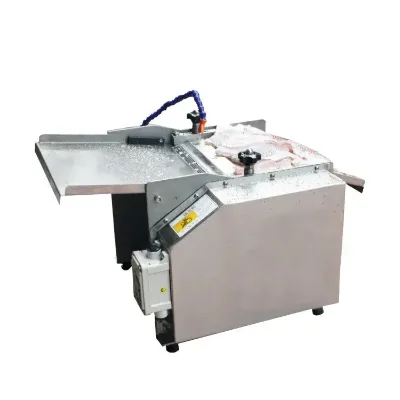
An Automatic Cuttlefish Peeling Machine—often listed alongside related keywords such as fish skinner, squid skinner, squid skin peeling machine, and skin peeling machine—is a specialized piece of processing equipment for seafood operations that need to remove fish skin at volume. Buyers searching for this category on B2B marketplaces will encounter a range of models, including machines marketed under model names such as YP-30, YP-50, YP-50GS, and XBF-A, produced by manufacturers in China, with several listings indicating origins in Shandong province. The category overlaps heavily with fish peeling machines intended for basa, tilapia, and cod processing, and squid skin removal is a closely related application that many listings target.
Because the category is keyword-dense and listings may emphasize different attributes, disciplined sourcing requires separating confirmed product attributes from marketing language. Many observed listings confirm customization availability, automatic grade operation, electric power sources, and 380V or 220V voltage options, while advertised advantages such as easy operation and high efficiency should be treated as seller observations rather than verified performance claims. This guide outlines what buyers should verify at each stage of procurement, from technical fit and documentation through cost structure, supplier qualification, and long-term support.
Product Scope and Observed Listing Signals
The observed listings span a fairly wide spectrum of machine formats. Model YP-30 is listed at 540420410mm, YP-50 at 620570900MM, and YP-50GS at 12706401150MM, while one fish peeling machine is described at 13090120CM—indicating options from compact restaurant-suitable units to larger machines intended for food processing factories and fish processing plants. Stated weights range from 350 to 550, and one listing cites a production capacity of 80-150 pieces per minute with 8 KW power. Core components mentioned include sliders and engines, and material is specified as 304 stainless steel on some listings.
Buyers should use these observed signals to bracket their requirements before contacting suppliers. Match the stated machine footprint and weight to your available floor space and installation surface, and reconcile the advertised capacity—such as the 80-150 pieces per minute figure—with your own line throughput in pieces per minute for the species you process. Note that "suitable for restaurant" and "suitable for food processing factory" describe different duty levels, so confirm which environment a given model is actually built for rather than assuming one machine covers both.
Technical Specifications to Verify
Voltage and power are the first items to confirm against your facility. Observed listings show both 380V and 220V electric power sources, so verify which configuration your supply supports and whether the supplier can deliver the alternative. The 8 KW power figure appearing in one listing is significant for plant electrical planning, and buyers should request the actual motor power draw for the specific model quoted, not a category average. Automatic grade is claimed across listings, but the buyer should clarify the degree of automation: how fish are fed, how skin is discharged, and whether any manual steps remain in the peeling cycle.
Dimensions and capacity claims require equal scrutiny. Compare listed dimensions such as 540420410mm, 620570900MM, or 12706401150MM against your layout, allowing clearance for loading, unloading, cleaning access, and drainage. For peeling performance itself, ask what determines yield: blade or roller configuration, thickness adjustment range, and how the machine handles variation in fish or squid size. Since final product is described simply as "fish peeling," request written clarification of skin removal completeness and flesh-damage expectations for your species before committing.
Compliance and Safety Documentation
Documentation quality varies across listings, and buyers should treat paper as a hard gate before payment. One listing states a machinery test report is provided, and warranties of either one year or three years appear in the observed data—confirm in writing which warranty applies to the exact model and serial batch you purchase, what it covers, and what conditions void it. For food-contact equipment, verify that material claims such as 304 stainless steel are supported by material certificates covering all product-contact surfaces, not just the frame.
Beyond material documentation, request the complete documentation set before shipment: the machinery test report, electrical schematics matching the voltage you ordered, an operating and maintenance manual in your working language, and a packing list consistent with the stated export packaging, whether exported wooden case or plywood case. Ask how safety features are implemented—emergency stops, guarding around the peeling mechanism, and interlocks on access panels—since core components listed as sliders or engines imply moving parts that require protected access. Do not accept verbal assurances on any compliance point.
Cost Drivers and Commercial Terms
Observed listed prices range from 900 to 8820 USD, a spread that reflects real differences in machine size, capacity, automation level, and configuration rather than pure supplier margin. Buyers should treat price as a function of the specification: larger footprints such as the YP-50GS format, higher capacity ratings, higher power draws, and heavier frames all correlate with higher price positions within the range. Customization is listed as available, and customized machines will typically move pricing above standard configurations, so obtain itemized quotes separating the base machine from any requested modifications.
On commercial terms, MOQ is listed at 1 piece across observed listings, which lowers the barrier to a trial purchase and supports a pilot-first strategy. Packaging is stated as exported wooden case or plywood case; confirm which applies to your order and whether seaworthy packing is included in the quoted price. Because selling units are listed as single items, clarify what accessories, spare blades or rollers, and tooling are included. Negotiate Incoterms, payment milestones, and delivery scope explicitly, and never leave freight, insurance, or installation support ambiguous in the contract.
Supplier Qualification and Quality Control
Qualification should start with evidence, not listings. Observed brands include XINBO and XINBO ZHIKE, with production origins in China and Shandong, China, but brand names and locations are not proof of capability. Ask each candidate supplier for the machinery test report referenced in their listings, factory photographs or a live video walkthrough showing the specific model in production, and references from food processing factories or fish processing plants using the same model. A supplier that claims "advantage: easy operation high efficiency" should be able to demonstrate it on video with your target species or a comparable one.
Quality control during manufacturing matters more than inspection at the end. Agree on a pre-shipment inspection covering dimensional conformity to the quoted specification, material verification for 304 stainless steel contact parts, a live run test at the stated capacity, and photographic documentation of the finished machine in its packing case. For the core components—sliders and engines—ask which brands or grades are used and what spares are recommended. Tie final payment to successful inspection results rather than to shipment alone.
Long-Term Procurement Checks
Longevity of an Automatic Cuttlefish Peeling Machine depends less on the purchase transaction than on the support structure behind it. Warranty terms observed in listings range from one year to three years, and one listing states after-sales service provided for one year—confirm exactly what after-sales means in practice: remote video diagnosis, parts shipment timelines, or on-site engineer visits, and at whose cost. Ask for the recommended spare-parts list with prices at time of quotation, so you can budget for blades, rollers, belts, and sliders before they fail rather than negotiating urgently during downtime.
Plan the operational lifecycle from the start. Because customization is available, document any modified configuration in writing with drawings so that future replacement parts match your actual machine, not the catalog standard. Establish cleaning and maintenance routines appropriate to 304 stainless steel food-contact equipment and salt-water environments, and train operators using the supplier's manual before commissioning. Finally, keep a record of capacity achieved in your first months of operation against the advertised 80-150 pieces per minute benchmark where applicable—actual throughput data becomes your strongest negotiating tool for repeat orders and your baseline for evaluating any future supplier switch.
FAQs
What is the power source and voltage for the Automatic Cuttlefish Peeling Machine?
The Automatic Cuttlefish Peeling Machine operates using an electric power source. It supports dual voltage configurations, specifically 220V and 380V, to accommodate different regional electrical standards. This flexibility ensures the equipment can be integrated into various processing plant environments without requiring extensive electrical modifications or adapters for the facility's existing infrastructure.
Which materials are used to construct the fish skinning machine?
The fish skinning machine is constructed from 304 stainless steel. This material choice ensures high durability and resistance to corrosion, which is essential for food processing environments. The use of food-grade stainless steel helps maintain hygiene standards and simplifies cleaning procedures, making the equipment suitable for continuous operation in professional fish processing facilities.
Can the Automatic Cuttlefish Peeling Machine be customized for specific needs?
Yes, the Automatic Cuttlefish Peeling Machine offers available customization options. Buyers can request customized configurations to suit specific operational requirements. This flexibility allows processing plants to tailor the equipment to their unique workflow needs, ensuring optimal performance and integration within their existing production lines while maintaining the core functionality of efficient skin removal.
What is the production capacity of the fish peeling machine?
The fish peeling machine has a production capacity ranging from 80 to 150 pieces per minute. This high-efficiency output makes it suitable for large-scale food processing factories. The consistent speed ensures that bulk fish processing tasks are completed quickly, reducing labor costs and increasing overall throughput for commercial operations requiring rapid skin removal.
What warranty is provided for the Automatic Cuttlefish Peeling Machine?
The Automatic Cuttlefish Peeling Machine comes with a warranty period of one to three years, depending on the specific model and supplier terms. This coverage provides buyers with assurance regarding the equipment's reliability and performance. The warranty typically covers core components, ensuring that any manufacturing defects are addressed promptly to minimize operational downtime.
How is the fish skinning machine packaged for export?
The fish skinning machine is packaged in an exported wooden case or plywood case. This robust packaging method protects the equipment from damage during international shipping and handling. The secure packaging ensures that the machine arrives at the destination in optimal condition, ready for immediate installation and operation without requiring additional protective measures upon receipt.